Overview

The Antop AT-400BV Outdoor TV Antenna entered the market in 2017 as a mid-to-premium option for cord-cutters who wanted genuine over-the-air HD reception without a cable bill. Unlike the cheap flat panels sold at big-box stores, this outdoor antenna was built with an 85-mile range ceiling in mind — making it a serious contender for suburban and rural households sitting far from broadcast towers. At roughly 10 x 23 inches and just under eight pounds, it is noticeably more compact than a traditional Yagi. A smartpass amplifier with switchable long and short range modes adds real placement flexibility depending on how far you are from your local towers.

Features & Benefits

What separates the AT-400BV from basic flat antennas is a pair of features most buyers never think to ask about until it is too late. The detachable VHF enhancer rods are a genuine differentiator — VHF channels like NBC and ABC broadcast on lower frequencies that most compact antennas simply cannot catch reliably. A built-in 4G LTE filter scrubs out cellular interference, keeping the picture stable even in wireless-congested neighborhoods. A single 75 Ohm coax output pairs cleanly with a standard splitter, letting you feed two or three TVs from one antenna. Installation needs no tools, no drill, and no outside help.

Best For

This cord-cutting antenna makes the most sense for households that have already tried an indoor antenna and given up. If you live 50 to 85 miles from the nearest broadcast tower — common in rural towns and outer suburbs — a flat indoor panel simply will not cut it. The AT-400BV is also a smart pick for anyone wanting to feed multiple TVs from a single run, since its coax output pairs cleanly with an off-the-shelf splitter. DIYers who want to avoid hiring an installer will appreciate the included hardware. Where it fits less well: dense urban environments where shorter-range, unamplified antennas often outperform amplified outdoor models.

User Feedback

Owners in fringe reception areas tend to report solid results, though the 85-mile claim is best read as a best-case ceiling rather than a guarantee — terrain, trees, and building materials all take a cut. VHF rod performance draws consistent praise from users in markets where network affiliates broadcast on VHF, which is more widespread than many realize. The amplifier divides opinion: some say switching it on sharpens distant channels noticeably, while others find it introduces noise when they are close to towers. Build quality earns reasonable marks overall, though a handful of long-term outdoor users have flagged concerns about weather seal durability after extended exposure. Satisfaction generally runs high relative to this price tier.

Pros

  • VHF enhancer rods pull in network channels that most compact outdoor antennas cannot receive reliably.
  • The built-in 4G LTE filter noticeably reduces pixelation and dropout in areas congested with cellular signals.
  • Smartpass amplifier toggles between long and short range modes, giving you real flexibility based on your location.
  • Splitter-compatible single coax output makes feeding two or three TVs from one install genuinely practical.
  • At roughly 10 by 23 inches, the AT-400BV is far less visually intrusive than a traditional Yagi-style antenna.
  • Toolless installation with included accessories means most homeowners can set this up in an afternoon without outside help.
  • Supports 4K and 1080P reception, so it stays useful as more households upgrade their displays.
  • Users in fringe reception zones consistently report pulling in channels that smaller antennas missed entirely.
  • Dual indoor and outdoor use gives buyers flexibility on placement before committing to a permanent roof mount.

Cons

  • The 85-mile range claim is a best-case ceiling; hilly terrain, dense trees, or thick walls will reduce real-world reach significantly.
  • Some users report the amplifier introduces noise or signal distortion when mounted close to broadcast towers.
  • At 7.7 pounds, it is heavier than expected for the size, which can complicate certain mounting configurations.
  • Long-term weather resistance has drawn concern from a subset of outdoor users after extended exposure to the elements.
  • The power cord requirement adds a logistical consideration when planning roof or attic placement.
  • No multi-directional motorized rotation means you may struggle if your local towers broadcast from different directions.
  • A few buyers found the included mounting hardware adequate but not confidence-inspiring for high-wind installations.
  • Setup, while toolless, still requires coax cable routing that novice installers can find unexpectedly time-consuming.

Ratings

Our AI rating engine analyzed thousands of verified global reviews for the Antop AT-400BV Outdoor TV Antenna, actively filtering out incentivized, duplicate, and bot-generated submissions to surface what real buyers actually experienced. The scores below reflect both the genuine strengths that earned this cord-cutting antenna its loyal following and the recurring frustrations that kept it from a perfect mark. Nothing has been softened — the wins and the weak spots are represented equally.

Signal Range
76%
24%
Users in suburban and semi-rural areas sitting 40 to 65 miles from their tower cluster consistently reported strong channel counts and stable lock-on with the AT-400BV. The antenna regularly outperformed flat indoor models in head-to-head comparisons from the same location, often pulling in 15 to 25 additional channels.
The advertised 85-mile ceiling is frequently overstated in real-world conditions — buyers in hilly or heavily wooded terrain at the outer range boundary reported inconsistent results and occasional complete signal loss on weaker stations. Expectations need to be set realistically before purchase.
VHF Reception
82%
18%
The detachable VHF enhancer rods are a standout feature that resonates strongly with users who previously struggled to receive NBC, ABC, and PBS affiliates broadcasting on VHF frequencies. In markets where VHF is common, many reviewers called this the single most important reason they chose this antenna over cheaper alternatives.
A portion of buyers in UHF-dominant markets found the rods irrelevant to their setup, making the feature feel like a premium they paid for but never used. A few users also noted the rods feel somewhat flimsy at the connection point and require careful handling during installation.
Amplifier Performance
69%
31%
At distances beyond 50 miles, switching the smartpass amplifier on produced a measurable improvement for a meaningful number of users, pulling in channels that remained stubbornly weak without it. The toggle functionality is genuinely useful and appreciated by buyers who want control rather than a fixed amplified output.
Closer to tower clusters — typically within 25 to 30 miles — several users found the amplifier introduced noise, pixelation, or signal overload artifacts that actually degraded picture quality. The lack of clear guidance on when to use each mode left some buyers frustrated and running repeated channel scans to figure it out empirically.
4G LTE Filtering
84%
In neighborhoods with dense cellular infrastructure, the built-in LTE filter made a noticeable difference for users who had experienced chronic pixelation with previous antennas. Several reviewers in suburban markets near cell towers specifically credited the filter for delivering a consistently clean picture on channels that had previously been unwatchable.
In rural areas with minimal LTE congestion, the filter has no practical effect, making it a non-factor for a segment of buyers. A small number of technically minded users also noted there is no way to bypass the filter if it ever causes unintended attenuation on edge-frequency channels.
Build Quality
67%
33%
Out of the box, the AT-400BV feels reasonably solid for its price tier — the housing is rigid, the VHF rods attach securely, and the overall assembly inspires more confidence than budget competitors. Most users who installed it in protected attic locations reported no structural concerns after extended use.
Outdoor durability over multiple seasons has drawn criticism from a consistent subset of long-term users, with reports of housing discoloration, connector corrosion, and minor cracking around mounting points after prolonged UV and moisture exposure. The build feels calibrated for moderate climates rather than harsh outdoor conditions year-round.
Installation Experience
78%
22%
The toolless design and included mounting hardware genuinely simplify the process for homeowners tackling their first outdoor antenna install. Most users with basic DIY confidence completed the physical mounting portion without consulting additional guides or videos.
Routing the coaxial cable from the install point to the TV, and finding a nearby power outlet for the amplifier, added unexpected complexity for buyers in older homes with limited cable access. A handful of reviewers felt the included instructions skipped over enough practical detail that they had to search for supplemental guidance online.
Multi-TV Compatibility
81%
19%
The 75 Ohm single coax output pairs cleanly with off-the-shelf splitters, and users running signal to two or three televisions from one antenna reported reliable results when using a powered splitter with a strong incoming signal. This is a practical money-saver versus running separate antennas per room.
Signal degradation across a two-way or three-way split becomes a real issue for users already operating near the edge of the antenna's effective range — pixelation and dropout on split outputs were a recurring complaint from fringe-area buyers. A powered distribution amplifier helps, but that adds cost and complexity to the setup.
Channel Count
77%
23%
In markets with robust broadcast infrastructure, the AT-400BV consistently delivered 30 to 50 receivable channels in user testing, covering all major network affiliates alongside a healthy selection of subchannels. VHF coverage in particular filled gaps that left competing antennas with noticeably smaller channel lists.
Channel counts in smaller TV markets or geographically challenged locations were more modest, with some rural users pulling in fewer than 15 channels despite being within the nominal range. The number is entirely dependent on what is actually being broadcast in your area, and the antenna cannot compensate for limited local tower density.
Picture Quality
86%
When the signal is strong and the amplifier setting is correctly matched to the user's distance from the tower, picture quality on this cord-cutting antenna is genuinely excellent — full 1080P and 4K broadcasts come through sharp and artifact-free on compatible displays. Several reviewers noted the picture rivaled or surpassed what they had received from cable in standard definition.
Picture quality is entirely contingent on signal strength, and in marginal reception zones the image can be frustratingly binary — either perfect or completely unwatchable with no middle ground. Unlike cable compression artifacts that degrade gracefully, OTA digital signals either lock cleanly or drop entirely, which some users found disorienting.
Aesthetic & Form Factor
83%
Compared to the large aluminum-boom Yagi antennas that defined outdoor TV reception for decades, the AT-400BV is compact and visually unobtrusive — a meaningful benefit for homeowners with HOA restrictions or aesthetic concerns about rooftop clutter. At under 24 inches wide, it blends into a roofline far more naturally than traditional designs.
Despite being more compact than a Yagi, the antenna is still a visible piece of hardware at nearly two feet across, and a few buyers in strict HOA communities reported receiving objections even with this lower-profile design. It is not invisible, and buyers hoping it would be practically undetectable may be slightly disappointed.
Value for Money
71%
29%
For users who land in the sweet spot — suburban or rural locations 40 to 70 miles out, with local VHF channels to receive — the AT-400BV delivers a tangible capability upgrade over cheaper options and justifies its mid-premium positioning reasonably well. The long-term savings on cable or streaming bills further improve the perceived return.
Buyers who live closer to towers, or who reside in a UHF-only market, often felt they paid a premium for features they did not need and could have gotten equivalent performance from a significantly less expensive antenna. The value proposition weakens considerably outside the specific use case this antenna was designed for.
Ease of Channel Scanning
74%
26%
Once physically installed and connected, running an initial channel scan on any modern smart TV or HD set is a straightforward process that takes only a few minutes, and users generally found the AT-400BV populated a full channel list without requiring manual troubleshooting on the first attempt.
Getting the amplifier setting and antenna orientation dialed in often required two or three rescans before the channel count stabilized, which frustrated buyers expecting a purely plug-and-play experience. Users with televisions that do not retain scan history had to repeat the process each time they adjusted the antenna position during testing.
Weather Resistance
62%
38%
For users in mild climates or those who installed the antenna in an attic rather than on a roof, long-term performance has been largely trouble-free, with no significant degradation reported after one to two years of use in protected or moderate environments.
In regions with harsh winters, sustained heat, or high coastal humidity, the housing and connector points have shown wear earlier than expected for a product at this price point. Weather sealing at the coax connection is particularly vulnerable, and experienced installers recommend adding weatherproofing tape at installation rather than relying on the factory finish alone.

Suitable for:

The Antop AT-400BV Outdoor TV Antenna is the right call for cord-cutters who live in suburban or rural areas where indoor antennas have already let them down. If your home sits 50 to 85 miles from the nearest broadcast tower cluster, this is the category of antenna you need — and the AT-400BV competes well within it. Households that rely on VHF network affiliates like NBC or ABC will especially appreciate the detachable enhancer rods, since most budget antennas skip VHF support entirely. It also suits anyone who wants to run a single outdoor antenna to multiple TVs via a splitter, avoiding the hassle and cost of separate setups per room. DIY-minded buyers who want a cleaner rooftop or attic install — without calling in a technician — will find the included mounting hardware and straightforward setup genuinely manageable.

Not suitable for:

The Antop AT-400BV Outdoor TV Antenna is likely overkill for anyone living within 25 to 30 miles of broadcast towers in a clear line-of-sight environment. In dense urban settings, a simple unamplified indoor antenna often outperforms amplified outdoor models because strong nearby signals can actually overload an amplified input, causing more dropouts rather than fewer. Apartment dwellers or renters without roof or attic access will find this antenna impractical regardless of its range specs. Buyers on a tight budget should also weigh their options carefully — there are capable mid-range outdoor antennas at a lower price point that serve well at distances under 50 miles. Finally, if your local market broadcasts exclusively on UHF frequencies, the VHF rod feature adds no value to your setup and does not justify choosing this model over simpler alternatives.

Specifications

  • Model: This antenna is manufactured by ANTOP ANTENNA INC under the model designation AT-400BV.
  • Dimensions: The antenna body measures 10.23 x 23.46 x 4.72 inches, making it noticeably more compact than traditional Yagi-style outdoor antennas.
  • Weight: The unit weighs 7.7 pounds, which should be factored in when selecting a mounting bracket or mast.
  • Max Range: Rated for reception up to 85 miles from broadcast towers under optimal conditions.
  • Frequency: Covers both VHF and UHF frequency bands, with detachable rods specifically engineered to strengthen VHF signal reception.
  • Impedance: Standard 75 Ohm impedance, compatible with typical coaxial cable setups used in residential installations.
  • Output: Single coaxial output port; supports connection to a passive or powered splitter to distribute signal across multiple TVs.
  • Amplifier: Includes a smartpass amplifier with a switchable mode to toggle between long-range and short-range reception depending on proximity to towers.
  • LTE Filter: Built-in 4G LTE filter reduces cellular signal interference that can cause pixelation or signal dropouts on affected channels.
  • Power Source: Corded electric; the included amplifier requires a power connection, so outlet access near the install point should be planned in advance.
  • Resolution Support: Compatible with 4K Ultra HD and 1080P broadcasts for current and next-generation display setups.
  • Installation: Designed for toolless installation and ships with mounting accessories to support a range of roof, attic, or wall placements.
  • Use Environment: Rated for both indoor and outdoor use, giving buyers flexibility on placement before committing to a permanent exterior mount.
  • Channels: Single antenna input supporting all available free over-the-air channels in the reception area via one coaxial connection.
  • First Available: The AT-400BV has been available since September 2017 and remains an active, non-discontinued product in ANTOP's lineup.

Related Reviews
Antop AT-414BG Omni-Directional Outdoor TV Antenna
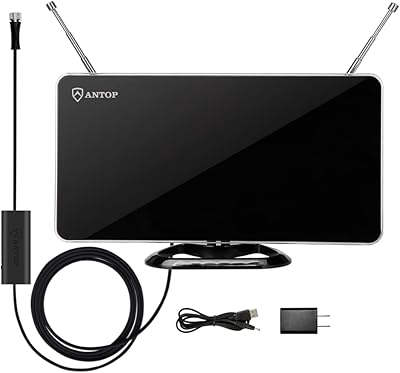
85%
90%
Reception Quality
88%
Ease of Installation
86%
Durability in Outdoor Conditions
92%
Value for Money
87%
Signal Range
More
ANTOP AT-211B Indoor TV Antenna
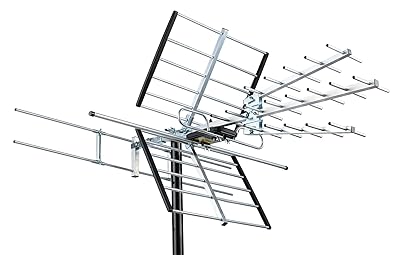
71%
72%
Signal Reception
67%
Amplifier Performance
91%
Ease of Setup
63%
Build Quality
58%
VHF Channel Support
More
PIBIDI UHD-8903 Outdoor TV Antenna
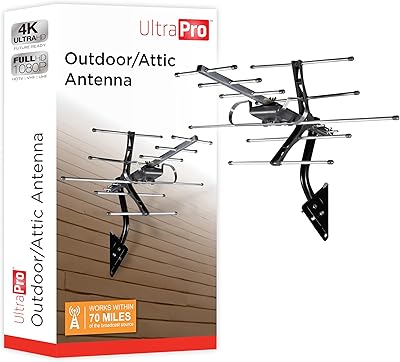
77%
73%
Signal Range & Reception
67%
VHF Band Performance
84%
UHF Band Performance
78%
Build Quality & Durability
81%
Lightning & Grounding Protection
More
iGENJUN ANT-CS8218 Amplified Indoor Outdoor TV Antenna
72%
73%
Signal Reception Quality
67%
Amplifier Performance
88%
Ease of Installation
48%
Range Accuracy vs. Claimed Specs
71%
Build Quality & Materials
More
UltraPro Outdoor 70-Mile HD TV Antenna
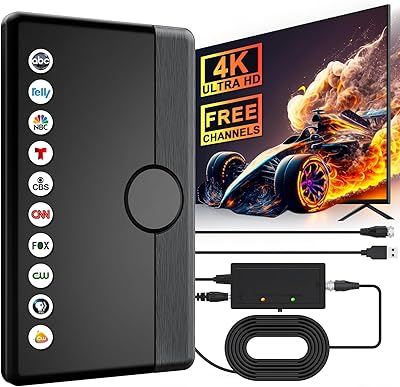
76%
73%
Signal Reception
61%
Range Accuracy
82%
Installation Ease
78%
Build Quality
81%
Weather Resistance
More
GE 29884 Outdoor Long-Range TV Antenna
79%
83%
Signal Reception Strength
88%
Ease of Installation
86%
Build Quality & Durability
79%
Channel Count & Variety
84%
Value for Money
More
1byone 360° Omni-Directional Outdoor TV Antenna
73%
74%
Signal Reception
91%
Ease of Installation
72%
Build Quality
68%
Amplifier Performance
63%
4G LTE Filtering
More
PBD WA-2608 Motorized Outdoor TV Antenna
74%
82%
Signal Reception Quality
78%
Motorized Rotation
84%
Installation Experience
74%
Dual TV Output
71%
Build Quality & Durability
More
MATIS FBA08D Outdoor TV Antenna
73%
71%
Signal Reception
88%
Ease of Setup
84%
Dual TV Output
76%
Motorized Rotation
73%
Weather Resistance
More
Vragey HD012 Indoor/Outdoor TV Antenna
70%
71%
Signal Reception Quality
88%
Ease of Setup
63%
Amplifier Performance
34%
Range Accuracy vs. Marketing Claims
67%
Build Quality & Durability
More

FAQ

The 85-mile figure is the manufacturer's maximum range under ideal conditions — flat terrain, clear line of sight, and minimal interference. In practice, hills, dense trees, tall buildings, and even heavy rainfall can reduce that range meaningfully. Many users 50 to 70 miles out report strong results, but if you are at the outer edge of the claimed range, your mileage will genuinely vary.

Those are the VHF enhancer rods, and they matter more than most people realize. Many major network affiliates — NBC, ABC, PBS — broadcast on VHF frequencies, not just UHF. Most compact flat antennas are optimized for UHF only and will miss VHF channels entirely. The rods on the AT-400BV are designed specifically to fill that gap, and they are detachable if you determine your local market does not use VHF.

Yes. The antenna has a single 75 Ohm coaxial output, which you can connect to a standard passive or powered splitter to distribute the signal to two or three TVs. Keep in mind that splitting a signal does reduce strength, so if your reception is already marginal, a powered splitter or a slightly stronger amplifier setting can help compensate.

It depends on your distance from the broadcast towers. If you are far out — say, 50 miles or more — switching the amplifier on usually helps pull in weaker signals. If you are closer to towers, the amplifier can actually overload the tuner and cause more problems than it solves. A good approach is to run a channel scan both ways and keep whichever setting finds more stable channels.

Most reasonably handy homeowners have managed it without calling anyone in. The kit includes mounting hardware, and no drilling or specialty tools are needed for the antenna itself. The trickier part is routing the coaxial cable from the antenna to your TV and finding a nearby outlet for the amplifier power supply — that is where most DIYers spend extra time.

The AT-400BV is rated for outdoor use and handles typical weather reasonably well. That said, a handful of long-term users have noted wear on the housing after extended exposure to harsh conditions like prolonged UV, ice, or high-humidity climates. It is worth inspecting the connections and housing annually and applying weatherproofing tape to the coax junction as a precaution.

Attic installation is a common and practical choice with this cord-cutting antenna, and many users go that route to avoid weather exposure and HOA restrictions. Signal strength will be slightly reduced compared to a rooftop install since the roof materials add some attenuation, but for most locations within 60 miles of towers, attic placement works well.

Quite possibly, yes. Those channels often broadcast on VHF frequencies that most small flat indoor antennas cannot pick up reliably. The VHF enhancer rods on the AT-400BV are purpose-built for exactly this scenario. If you check a site like rabbitears.info and confirm your local affiliates are on VHF, upgrading to an outdoor antenna with VHF support is likely the right move.

Yes, directional alignment matters. The AT-400BV is not an omnidirectional antenna, so you will get the best results when it is aimed toward your primary broadcast tower cluster. Before mounting permanently, check a tower locator tool to identify where your local towers are relative to your home, then orient the antenna accordingly. If your towers are in multiple directions, you may need to find a compromise angle.

It works with any TV that has a built-in ATSC tuner, which covers virtually all smart TVs and HD televisions sold in the US since 2007. You connect the coax output directly to the antenna input on your TV, run a channel scan, and you are set. If you have an older television without a digital tuner, you would need a separate converter box, but that is a rare scenario for most households today.

Where to Buy