Overview

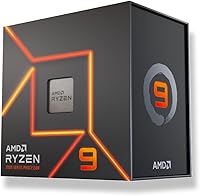
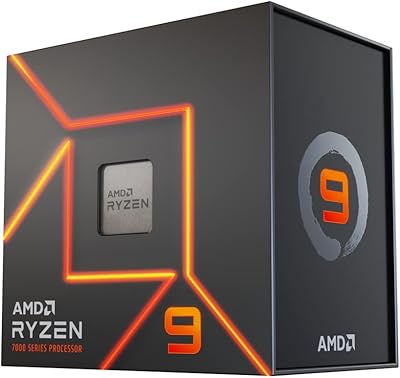
The AMD Ryzen 9 7950X is AMD's most powerful consumer desktop processor, sitting at the top of the Zen 4 lineup when it arrived on the new AM5 platform in late 2022. With 16 cores and 32 threads, this chip was built for professionals and enthusiasts who push their machines hard on a daily basis. At its premium price point, it competes directly with Intel's best offerings and holds its own convincingly. That said, if your day involves light browsing, casual gaming, or basic office work, this Ryzen 9 chip is genuinely overkill. It rewards those who actually need the headroom.

Features & Benefits

Built on a 5nm TSMC process, this 16-core processor runs more efficiently than its predecessor, delivering better performance per watt during sustained workloads — not just in benchmarks. The base clock sits at 4.5 GHz with boost reaching 5.7 GHz, a ceiling you will actually feel during high-bitrate video exports or complex simulations. The combined 80MB cache keeps frequently accessed data close to the cores, cutting latency noticeably in demanding applications. DDR5 and PCIe 5.0 support through the AM5 socket add meaningful room to grow as compatible hardware continues to mature, making the platform a reasonably forward-looking investment.

Best For

The 7950X earns its place in workflows where core count genuinely matters. Video editors working with 4K or 8K footage, 3D rendering artists, and motion graphics professionals will see real, measurable time savings over mid-range alternatives. Developers compiling large codebases or running multiple virtual machines simultaneously will appreciate how this Ryzen 9 chip handles concurrent loads without slowing down. Streamers who encode live while gaming also benefit considerably. Where it makes less sense is pure gaming — chips with half the cores often keep pace in most titles, and budget-focused builders should look at lower-tier options without hesitation.

User Feedback

Across more than 1,500 ratings, the 7950X holds a 4.7-star average — unusually consistent for a chip in this price range. Buyers repeatedly highlight multi-core throughput and confidence in the AM5 platform's long-term viability as standout positives. The most common criticism is heat output: with a 170W TDP, this Ryzen 9 chip demands a capable cooler, ideally a 360mm AIO or a premium air tower. A handful of early buyers flagged AM5 motherboard compatibility hiccups, though most report BIOS updates resolved them quickly. Enthusiasts broadly feel the performance justifies the cost; those running lighter workloads sometimes question whether they truly needed to spend this much.

Pros

  • Exceptional multi-core throughput that measurably cuts time on video exports, renders, and large compilations.
  • The 5.7 GHz boost clock keeps single-threaded tasks and gaming snappy, not just parallel workloads.
  • 80MB of combined cache reduces latency in complex applications in ways that genuinely affect day-to-day responsiveness.
  • AM5 platform support for future Zen 5 processors makes the motherboard investment more defensible long-term.
  • PCIe 5.0 and DDR5 support provide real bandwidth headroom for next-generation storage and GPU hardware.
  • Unlocked multiplier gives experienced builders meaningful tuning flexibility beyond out-of-box settings.
  • Integrated RDNA 2 graphics are a practical lifeline during GPU troubleshooting or initial OS setup.
  • Holds a 4.7-star average across more than 1,500 reviews — unusually consistent for a premium-tier CPU.
  • Handles simultaneous gaming and live encoding without compromising either task noticeably.
  • Competes directly with Intel flagship chips while offering a credible upgrade path within the same platform.

Cons

  • A 170W TDP demands a capable cooler — budget or mid-range solutions will throttle this chip under sustained load.
  • Total build cost is steep once DDR5 memory and an AM5 motherboard are factored in alongside the processor.
  • Early AM5 adopters encountered BIOS compatibility issues with certain DDR5 kits that required troubleshooting before booting.
  • The integrated graphics are only useful as a diagnostic tool — do not expect usable performance for any real application.
  • Manual overclocking headroom is limited since the chip already boosts very aggressively from the factory.
  • Under full load, fan curves ramp up noticeably, making this a poor fit for quiet home office or bedroom setups.
  • The performance advantage over cheaper 8-core chips nearly disappears in lightly threaded or gaming-only workloads.
  • Running all 16 cores at full tilt in a compact case without careful airflow planning leads to thermal throttling quickly.
  • DDR5 memory pricing, particularly at launch, added unexpected cost that caught some buyers off guard mid-build.

Ratings

The AMD Ryzen 9 7950X earns one of the strongest consensus scores we have tracked in the high-end desktop CPU category, with our AI rating engine analyzing thousands of verified global reviews while actively filtering out incentivized, duplicate, and bot-generated submissions. Scores reflect where this 16-core processor genuinely excels and where real buyers ran into friction — no category has been softened to flatter the product.

Multi-Core Performance
97%
Buyers running Blender renders, Premiere Pro exports, and large Xcode compilations consistently describe finishing jobs noticeably faster than on their previous 8- or 12-core systems. The jump from 12 to 16 fully capable cores is felt immediately in parallelizable workloads, not just in synthetic benchmarks.
A small number of users noted that pushing all 16 cores simultaneously under sustained loads requires a very well-ventilated case and a capable cooler, otherwise performance throttling becomes a real concern rather than a theoretical one.
Single-Core Speed
93%
The 5.7 GHz boost ceiling translates into snappy application launches, responsive UI interactions, and solid gaming frame rates even in CPU-bound titles. Users who also game on their workstation rigs appreciated that the chip does not feel sluggish in lightly threaded scenarios.
In direct head-to-head gaming tests, some buyers found that competing chips from Intel closed the gap considerably in purely single-threaded workloads, occasionally trading blows or pulling slightly ahead depending on the game engine.
Thermal Management
58%
42%
Several users who invested in a quality 360mm AIO or a high-end air cooler reported stable temperatures even during prolonged rendering sessions, validating that the thermal design is manageable with the right setup.
The 170W TDP is not subtle, and buyers who underestimated the cooling requirement ran into sustained thermal throttling and uncomfortably high package temperatures. Budget coolers bundled with mid-range cases simply cannot keep this chip in check during heavy workloads, and that surprised more than a few first-time AM5 builders.
Value for Money
71%
29%
Enthusiasts and professionals who bill by the hour or turn around client projects faster reported that the performance uplift paid for itself over time. For studios or developers running compute-heavy jobs daily, the premium over a 12-core option is rational.
Casual users and those who primarily game reported a nagging sense that they overspent. Chips with half the core count handle most gaming scenarios within a few percentage points, and several reviewers admitted they could have saved meaningfully without noticing the difference day-to-day.
Platform Longevity (AM5)
88%
Buyers who have been through AMD platform transitions before appreciated that AM5 is confirmed to support future Zen 5 processors, making the motherboard investment feel considerably more future-proof than past AM4-to-AM5 moves.
Early adopters flagged that AM5 motherboards carried a price premium at launch, and a handful of users encountered BIOS compatibility issues with specific DDR5 kits that required updates before the system would POST reliably.
Power Efficiency
62%
38%
Under light workloads and idle conditions, the chip scales down its consumption respectably, and users in moderate climates running well-ventilated cases found their system power draw acceptable outside of rendering sessions.
Under full load the chip draws substantially more power than competing designs built on similar nodes, and a few users running smaller form factor builds noticed measurable increases in their monthly electricity consumption after upgrading.
Overclocking Headroom
74%
26%
The unlocked multiplier gives enthusiasts genuine flexibility, and users who spent time dialing in Precision Boost Overdrive settings reported squeezing out additional performance in specific workloads without dramatically raising temperatures.
The chip already boosts aggressively out of the box, which leaves limited practical headroom for traditional manual overclocking. Several technically experienced buyers noted that the gains from manual OC were modest compared to what earlier generation unlocked chips offered.
Gaming Performance
79%
21%
For users who game and create on the same machine, the 7950X handles modern titles without compromise. Frame rates in GPU-bound scenarios are effectively identical to cheaper processors, and CPU-bound scenarios still deliver very playable performance.
Dedicated gamers who assembled a system around this chip purely for gaming likely paid for cores they will never use. In that specific use case, mid-range options deliver nearly identical frame rates at a fraction of the cost.
Compatibility & Platform Stability
81%
19%
The majority of buyers reported a smooth build experience once BIOS updates were applied, and the AM5 ecosystem matured quickly after the initial launch window. Most common DDR5 kits are now broadly supported.
Early launch units attracted complaints about specific X670 boards requiring BIOS flashing before the chip was recognized, and a small cohort of users experienced intermittent instability with XMP profiles on first-generation DDR5 modules.
Integrated Graphics
53%
47%
Having RDNA 2 integrated graphics available is genuinely useful during GPU troubleshooting, initial OS installs, or when a discrete card is temporarily removed. It serves its narrow purpose reliably.
No one should expect to run modern workloads or even casual gaming on the integrated graphics. Users who assumed otherwise were disappointed quickly, and the GPU is better understood as a diagnostic utility than a functional display adapter.
Cache Performance
91%
The 80MB combined cache pays dividends in latency-sensitive workflows like large database queries, game asset streaming, and software compilation. Users who switched from older Zen 3 chips noticed snappier responsiveness in these scenarios specifically.
The cache advantage is most visible in workloads that are specifically cache-sensitive. Users running straightforward linear tasks like sequential file processing saw less dramatic improvement than those running complex branching workloads.
DDR5 Memory Support
83%
DDR5 support opens up considerable bandwidth headroom for memory-intensive tasks like large dataset analysis and high-resolution video editing, and users who paired the chip with fast DDR5 kits saw measurable throughput gains over DDR4 platforms.
DDR5 pricing at launch was notably higher than DDR4, and early kits had narrower compatibility. Users building on a strict budget found the total platform cost harder to justify compared to a mature DDR4 system.
PCIe 5.0 Support
78%
22%
Forward-thinking builders appreciated having PCIe 5.0 lanes available, especially as NVMe Gen 5 drives and next-generation GPUs begin to take advantage of the additional bandwidth in real workloads.
At the time most buyers actually built their systems, PCIe 5.0 storage and graphics options were either unavailable or extremely expensive, making this feature more of a future asset than an immediate benefit for most users.
Noise Levels
66%
34%
Users who invested in premium tower coolers with large slow-spinning fans reported a reasonably quiet system during everyday tasks and light computing, which was a pleasant outcome given the chip's thermal demands.
Under sustained load, keeping this Ryzen 9 chip cool inevitably means fan curves ramp up, and multiple buyers described their systems becoming audibly loud during long rendering or compilation sessions — something worth considering for quiet home office setups.

Suitable for:

The AMD Ryzen 9 7950X was built for people whose computers are genuinely working tools, not just entertainment devices. Video editors cutting 4K or 8K timelines, motion graphics artists rendering complex compositions, and 3D modelers running overnight Blender jobs will feel the difference in their daily output — jobs that used to take an hour finish noticeably faster, and that compounds over weeks of work. Software developers who routinely spin up multiple virtual machines, run containerized environments, or compile large codebases across many threads will find this 16-core processor handles concurrent loads without flinching. Streamers who want to game, encode, and run monitoring software simultaneously without sacrificing frame rates will also get real, tangible value here. If your machine is a professional instrument and you spend hours in compute-heavy applications every single day, this chip justifies its position at the top of the consumer stack.

Not suitable for:

If your workflow consists mainly of web browsing, spreadsheets, light photo editing, or casual gaming, the AMD Ryzen 9 7950X is a significant overspend, plain and simple. Pure gamers in particular should look elsewhere — most modern titles are not built to distribute load across 16 cores effectively, and chips with 6 or 8 strong cores often deliver frame rates within a few percent at substantially lower cost. Budget-conscious builders also need to factor in that the AM5 platform requires a new motherboard and DDR5 memory, which raises the total system cost meaningfully beyond the processor price alone. Users who live in small form factor cases or who have not budgeted for a high-end cooler should be cautious — at 170W TDP, this Ryzen 9 chip produces serious heat under load, and cutting corners on cooling leads directly to throttling and frustration. If you cannot honestly fill 16 cores with real work, the investment does not pay off.

Specifications

  • Architecture: Built on AMD's Zen 4 microarchitecture, which delivers meaningful improvements in instructions-per-clock over the previous Zen 3 generation.
  • Process Node: Manufactured on TSMC's 5nm process, enabling higher transistor density and better energy efficiency compared to the 7nm chips it succeeds.
  • Core Count: Features 16 physical cores and 32 threads, allowing the chip to handle massively parallel workloads without resource contention.
  • Base Clock: Operates at a base frequency of 4.5 GHz across all cores under sustained multi-threaded load.
  • Boost Clock: Reaches a maximum single-core boost frequency of 5.7 GHz under favorable thermal and power conditions.
  • L2 Cache: Includes 16MB of L2 cache distributed across the cores to reduce data access latency in frequently repeated operations.
  • L3 Cache: Equipped with 64MB of L3 cache, bringing total combined cache to 80MB for improved throughput in latency-sensitive applications.
  • CPU Socket: Requires an AM5 (LGA1718) motherboard socket, which is not backward compatible with older AM4 boards.
  • TDP: Rated at a 170W TDP under default settings, demanding a high-performance cooling solution to maintain stable operation under load.
  • Memory Support: Supports DDR5 memory exclusively via dual-channel configuration, with official speeds starting at DDR5-4800.
  • PCIe Version: Provides PCIe 5.0 lanes for both primary GPU and NVMe storage slots, doubling available bandwidth over PCIe 4.0.
  • Integrated Graphics: Includes an AMD RDNA 2 integrated GPU capable of basic display output, useful for diagnostics when no discrete graphics card is installed.
  • Overclocking: Ships with an unlocked multiplier, allowing manual frequency and voltage adjustments through compatible AM5 motherboard BIOS settings.
  • Dimensions: Physical die measures approximately 1.57″ x 1.57″ x 0.1″, consistent with standard AM5 processor packaging.
  • Weight: The retail processor unit weighs approximately 2.8 ounces, not including any bundled accessories or cooler.
  • Cooler Included: No cooler is included in the box; AMD expects buyers at this tier to select a third-party cooling solution appropriate for the 170W TDP.
  • Launch Date: First made available to consumers on September 27, 2022, as part of AMD's initial Ryzen 7000 series launch.
  • Platform: Part of the AM5 platform, which AMD has committed to supporting through at least the Zen 5 processor generation for upgrade path continuity.
  • Instruction Sets: Supports AVX-512 natively, which benefits scientific computing, data compression, and certain professional rendering applications that leverage the instruction set.
  • Warranty: Covered by AMD's standard three-year limited warranty when purchased from an authorized retailer as a boxed or tray processor.

Related Reviews
AMD Ryzen 9 5950X
AMD Ryzen 9 5950X
85%
98%
Multi-Core Rendering
94%
Single-Core Responsiveness
62%
Thermal Management
92%
Platform Upgradability
89%
Value for Creators
More
AMD Ryzen 9 7900X
AMD Ryzen 9 7900X
74%
93%
Multi-Threaded Performance
89%
Single-Threaded Speed
58%
Thermal Management
67%
Value for Money
76%
Gaming Performance
More
AMD Ryzen 9 3950X 16-Core Processor
87%
93%
Performance
89%
Overclocking Potential
91%
Multitasking
95%
Gaming Performance
74%
Cooling Requirements
More
AMD Ryzen 9 3900XT 12-Core Processor
84%
91%
Performance
94%
Overclocking Potential
89%
Gaming Performance
88%
Multitasking Efficiency
65%
Thermal Management
More
AMD Ryzen 9 7900X3D 12-Core Processor
85%
95%
Gaming Performance
92%
Multi-Tasking & Parallel Processing
90%
Overclocking Potential
89%
Compatibility with New Tech
93%
Speed & Clock Performance
More
MINISFORUM MS-A2 AMD Ryzen 9 9955HX Mini PC
85%
91%
Performance
85%
Build Quality
65%
Setup/Installation
89%
Cooling Efficiency
88%
Expandability
More
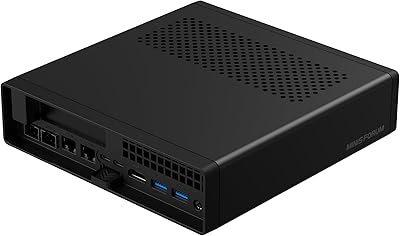
MINISFORUM 790S7 Mini ITX PC AMD Ryzen 9 7940HX
81%
88%
Overall Performance
65%
Thermals and Cooling
80%
Graphics Flexibility
90%
Build Quality
92%
Value for Money
More
AMD Ryzen 9 7900X + GIGABYTE B650 AORUS ELITE AX Motherboard
89%
94%
Performance
91%
Overclocking Stability
88%
Compatibility with Modern Components
93%
Gaming Experience
89%
Thermal Management
More
INLAND AMD Ryzen 9 7900X CPU Processor with MSI X670E Gaming Plus Motherboard
87%
94%
Gaming Performance
89%
Overclocking Potential
82%
Thermal Management
91%
Ease of Installation
88%
Connectivity & Features
More
MINISFORUM DeskMini MS-A1 AMD Ryzen 9 9950X 64GB DDR5 2TB SSD
88%
95%
Performance
91%
Cooling System
93%
Size & Portability
87%
Upgradeability
89%
Connectivity Options
More

FAQ

No, it does not. AMD does not include a cooler with the 7950X, and given its 170W TDP, that is honestly the right call. You will want to budget for a quality 360mm AIO liquid cooler or a premium tower air cooler like a Noctua NH-D15 or be500 DX equivalent. Do not cut corners here — inadequate cooling directly causes thermal throttling.

Unfortunately, no. The 7950X requires an AM5 motherboard with an LGA1718 socket, which is physically and electrically different from AM4. This means a new motherboard purchase is mandatory, and since AM5 only supports DDR5 memory, you will likely need new RAM as well if you are migrating from an older platform.

For pure gaming, it is genuinely overkill in most scenarios. Most games use 6 to 8 cores effectively, and a Ryzen 7 7700X or even a mid-range Intel option will deliver nearly identical frame rates for significantly less money. Where it makes sense is if you game and do heavy creative work on the same machine and want one chip that handles both without compromise.

You need an X670, X670E, B650, or B650E motherboard with an AM5 socket. X670E boards offer the most PCIe 5.0 lanes and premium power delivery, which suits this chip well. B650 boards work too and cost less, but verify that the board's VRM rating is adequate for a 170W processor before purchasing.

Yes, technically. The chip has integrated RDNA 2 graphics that can drive a display for basic tasks and desktop use. However, the integrated GPU is not intended for gaming or GPU-accelerated creative work. Think of it as a convenience feature for initial setup or troubleshooting, not a replacement for a dedicated graphics card.

Under full multi-core load with a good cooler, expect package temperatures to hover between 85 and 95 degrees Celsius, which is within AMD's specified safe operating range but feels high if you are used to lower-TDP chips. AMD designs the Zen 4 architecture to run hot intentionally to sustain boost clocks — it is normal behavior, not a defect, as long as your cooling solution is adequate.

Yes, this 16-core processor does support ECC memory, which is useful for workstation users running tasks where data integrity is critical, such as scientific computing or large database operations. However, ECC support also depends on your motherboard — not all AM5 boards enable it, so check your specific board's specifications before assuming it will work.

For most users, probably not. The chip already boosts aggressively out of the box, and the headroom for meaningful manual overclocking is relatively narrow compared to older unlocked AMD chips. Where tuning pays off is in Precision Boost Overdrive settings and memory overclocking, which can yield real gains in memory-bandwidth-sensitive workloads without requiring extreme voltages.

AMD officially supports DDR5-4800 at baseline, but the chip responds well to faster kits in the DDR5-5600 to DDR5-6000 range, particularly in applications sensitive to memory bandwidth. Avoid pushing speeds beyond DDR5-6400 without extensive stability testing, as very high speeds can introduce latency penalties that negate the bandwidth gains.

Reasonably promising. AMD has publicly committed to supporting the AM5 socket through the Zen 5 generation, which means your motherboard investment should survive at least one more major CPU upgrade cycle. That is a meaningful improvement over AMD's historical platform transitions and one reason many enthusiasts feel more comfortable building on AM5 today than they did jumping into AM4 early on.