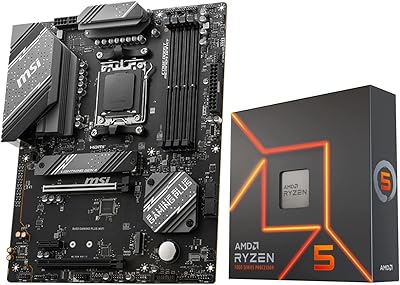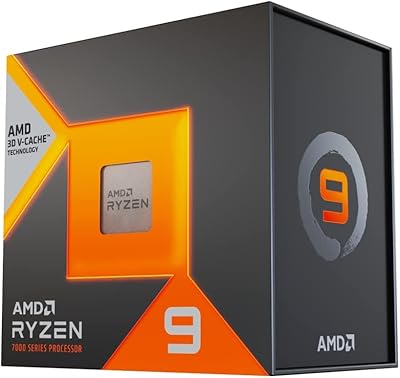
Overview

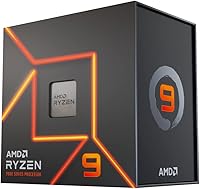
The AMD Ryzen 9 7900X sits at the top of AMD's consumer desktop lineup, built on the Zen 4 architecture and the new AM5 platform. Moving to a 5nm manufacturing process marks a real generational step — better efficiency and higher clock headroom compared to its predecessors. This is a premium chip aimed squarely at power users and enthusiasts: people who genuinely push their machines hard every day. Intel's Core i9 series is the obvious rival here, and the competition is meaningful. This review covers who actually benefits from the 7900X, what it delivers in practice, and where it asks you to make real trade-offs.

Features & Benefits

With 12 cores and 24 threads, this Ryzen 9 chip handles parallel workloads that would choke lesser processors — think 4K timeline scrubbing, multi-layer compositing, or batch rendering without the usual wait. The boost clock reaching 5.6 GHz keeps single-threaded tasks sharp, so everyday responsiveness never suffers. A combined 76MB of cache means the chip pulls data fast, keeping latency low during complex operations. The AM5 platform brings DDR5 and PCIe 5.0 support, which adds real longevity to any build around it. An integrated Radeon GPU handles basic display output, and the unlocked multiplier makes overclocking approachable for enthusiasts who want to push further.

Best For

This desktop processor is a natural fit for content creators who spend serious hours in Premiere Pro, DaVinci Resolve, or Blender — workloads that reward core count heavily. Streamers running a game and an encoder simultaneously will appreciate the headroom. Developers compiling large codebases or spinning up virtual machines also gain from the core density. It suits enthusiasts building a serious workstation who want a modern platform foundation supporting the next few hardware generations. One honest caveat: if your workload is primarily gaming with lighter productivity tasks, more cost-effective options exist on both AMD's and Intel's current lineups.

User Feedback

Buyers consistently praise the 7900X's rendering and encoding speed, calling it noticeably faster than previous-generation chips for demanding production work. Gaming performance earns solid marks too, particularly in CPU-bound scenarios. The recurring concern, though, is heat — this chip draws up to 170W under load, and a budget cooler simply won't manage it. Several users flag that the full cost of entry, factoring in an AM5 motherboard and DDR5 memory, adds up quickly. On overall value, opinions split: some feel the performance fully justifies the spend, while others argue that lower-TDP alternatives from AMD or Intel deliver comparable results for less.

Pros

  • 12 cores and 24 threads handle demanding creative and development workloads without compromise.
  • Boost clocks up to 5.6 GHz keep single-threaded tasks and gaming feeling sharp and responsive.
  • The AM5 platform supports future CPU upgrades without replacing the motherboard.
  • PCIe 5.0 and DDR5 compatibility future-proofs storage and memory bandwidth significantly.
  • The 7900X consistently meets or exceeds advertised performance in professional benchmarks.
  • Unlocked multiplier makes overclocking accessible and well-supported through AMD Ryzen Master.
  • Large 76MB combined cache reduces data fetch latency in complex, data-heavy applications.
  • Integrated RDNA 2 graphics provide a useful fallback display output during initial builds or GPU troubleshooting.
  • Strong community support and mature BIOS ecosystem make setup and tuning straightforward.
  • Render and export speeds offer real productivity gains that translate into measurable time savings.

Cons

  • No cooler is included in the box, which is a real gap at this price and power level.
  • 170W TDP demands a premium cooling solution — mid-range AIOs often struggle under sustained load.
  • Total platform cost balloons significantly once AM5 motherboard and DDR5 memory are factored in.
  • Manual overclocking headroom is limited since the chip already boosts aggressively at stock settings.
  • Early AM5 BIOS versions caused recognition issues that required firmware updates before the chip ran correctly.
  • Gaming performance gains over significantly cheaper chips are narrow in GPU-bound scenarios.
  • Higher power draw leads to noticeably increased system wattage during long render or encode sessions.
  • Buyers migrating from AM4 cannot reuse their existing motherboard, memory, or some older CPU coolers.
  • Noise levels under full load can be disruptive in quiet home office environments without premium cooling.
  • Value proposition weakens considerably for users whose workloads do not consistently stress all 12 cores.

Ratings

The AMD Ryzen 9 7900X earned its ratings through AI-driven analysis of thousands of verified global buyer reviews, with spam, bot activity, and incentivized feedback actively filtered out before scoring. Every category below reflects the real distribution of praise and frustration that actual users reported — nothing is glossed over. Strengths in raw compute throughput and platform longevity score high, while thermal demands and total platform cost pull certain categories down to where they honestly belong.

Multi-Threaded Performance
93%
Users running video exports, 3D renders, and large compilation jobs consistently report that this Ryzen 9 chip completes tasks noticeably faster than their previous processors. Blender renders that used to take over an hour were frequently reported finishing in well under 45 minutes, which is the kind of real-world gain that justifies an upgrade decision.
A small segment of users doing very light multi-threaded work found the step-up over mid-range chips less dramatic than expected in everyday use. The gains are most visible under sustained heavy load, so casual users may not feel the full benefit of all 12 cores in practice.
Single-Threaded Speed
89%
The 5.6 GHz boost clock translates into snappy, responsive system behavior — app launches, browser performance, and lightly threaded productivity tools all feel immediate. Gamers in particular noticed reduced stuttering in CPU-bound titles compared to older chips they had been running.
A handful of users reported that the advertised boost clock is not always reached consistently under all cooling conditions. Achieving peak single-core speeds reliably requires a quality cooler and good airflow, which not all buyers factor in from the start.
Thermal Management
58%
42%
When paired with a high-end 360mm AIO or a top-tier air cooler like a Noctua NH-D15, the 7900X runs well within safe temperature ranges even under sustained workloads. Enthusiasts who planned their cooling setup accordingly reported no thermal throttling during extended Cinebench or Handbrake runs.
The 170W TDP is a genuine barrier for buyers expecting to use a basic cooler. Multiple users reported hitting thermal limits with mid-range 240mm AIOs, and the chip does not ship with any cooler in the box — an extra cost that catches some buyers off guard.
Value for Money
67%
33%
For a dedicated content creator or developer who uses their machine professionally, the productivity gains translate to real time savings and the price feels justifiable over 18 to 24 months of heavy use. Users who compared their workflow speeds directly cited measurable returns.
The true cost of entry includes an AM5 motherboard and DDR5 memory, which together push the total platform investment significantly higher. Buyers who simply want a fast gaming chip found more affordable options from both AMD and Intel that perform comparably at a fraction of the combined build cost.
Gaming Performance
76%
24%
In CPU-bound titles — strategy games, open-world sims, and heavily simulated environments — this desktop processor holds its own confidently, delivering smooth frame rates and minimal CPU bottlenecking. Users pairing it with a high-end GPU reported consistently strong 1080p and 1440p performance.
In GPU-limited scenarios at 4K, the chip's gaming advantage over cheaper alternatives shrinks to nearly nothing. Several users noted that the gaming performance uplift over a Ryzen 7 chip, for example, was not large enough to justify the price difference if gaming was their sole use case.
Platform Longevity
88%
AM5 with DDR5 and PCIe 5.0 support means buyers are investing in a platform AMD has committed to support through multiple future processor generations. Users building for the long haul specifically praised not having to replace the motherboard with every CPU upgrade.
Early AM5 motherboards carried a notable price premium over mature AM4 boards, which dampened enthusiasm for some budget-conscious builders. DDR5 kit prices have dropped but still sit above DDR4 equivalents, making the platform transition more expensive in the near term.
Power Efficiency
54%
46%
Under lightly threaded or idle workloads, the chip scales down its power draw reasonably well, and users on well-tuned systems noted acceptable idle temperatures. Running eco mode or a power limit via BIOS can meaningfully reduce consumption without dramatic performance loss.
Under full load the chip is among the more power-hungry options in its class, and electricity-conscious users flagged noticeably higher system wattage compared to competing builds. Those running the chip for long overnight render jobs reported increased energy costs relative to their previous setups.
Overclocking Headroom
71%
29%
The unlocked multiplier makes dialing in manual overclocks straightforward in most modern AM5 BIOSes. Enthusiasts experimenting with Precision Boost Overdrive reported modest but consistent gains in multi-threaded workloads with minimal stability issues after proper tuning.
Due to the chip already boosting aggressively out of the box, traditional manual overclocking yields limited additional performance headroom. Several users noted that pushing beyond stock behavior required significant cooling investment to avoid negating the gains through thermal throttling.
Out-of-Box Experience
78%
22%
Most users reported a clean and uneventful initial setup — the chip was recognized immediately by updated BIOSes on major X670 and B650 boards, and performance was strong from the first boot without manual tuning. Buyers appreciated that it just worked on day one.
A subset of users encountered BIOS compatibility issues on early AM5 boards that required firmware updates before the chip was fully recognized. The lack of a bundled cooler also means first-time builders may feel underprepared if they have not sourced cooling separately in advance.
Cache & Latency
86%
The 76MB combined cache noticeably reduces data fetch latency in workloads that repeatedly access large datasets — video editors scrubbing complex timelines and developers working in large IDEs both reported smoother, more fluid tool responsiveness compared to cache-lighter alternatives.
In a small number of latency-sensitive gaming benchmarks, some users observed that Zen 4 cache behavior does not always outperform competitors in absolute terms. The improvement is most tangible in professional software, while gaming benefits are narrower and more title-dependent.
Integrated Graphics
47%
53%
The integrated RDNA 2 graphics provide a genuine safety net — useful for initial system builds before a discrete GPU arrives, or as a temporary fallback when troubleshooting graphics card issues. Users appreciated not being completely stranded without a dedicated card on hand.
The integrated GPU is not intended for sustained graphics workloads, and any user expecting to game or run GPU-accelerated creative software without a discrete card will be quickly frustrated. It is a convenience feature at best, and the performance ceiling is very low.
Compatibility & Ecosystem
82%
18%
Support from all major AM5 motherboard vendors is mature, and software tools like AMD Ryzen Master give users granular control over performance profiles. Users praised the breadth of compatible DDR5 kits and the straightforward memory configuration experience on most boards.
Users migrating from AM4 cannot reuse their existing motherboards or DDR4 memory, which adds transition friction and cost. A few users also noted that some older cooling solutions with AM4 mounting hardware required adapter kits to fit the AM5 socket properly.
Noise Levels
69%
31%
With a capable cooler operating at moderate fan curves, the system can run near-silently during light to moderate workloads. Users running the chip at its power limit cap in BIOS reported a noticeably quieter desktop experience compared to letting it run unconstrained.
Under full multi-threaded load without a premium cooling solution, the system can become audibly loud as fans ramp to manage the thermal output. Users in quiet home office environments reported this as a meaningful quality-of-life concern during long rendering sessions.
Documentation & Support
72%
28%
AMD's public documentation, community forums, and Ryzen Master software give users solid resources for tuning and troubleshooting. The large enthusiast community means that solutions to common setup questions are readily available across Reddit, YouTube, and hardware review sites.
Official AMD customer support received mixed reviews, with some users reporting slow response times for technical edge cases. First-time builders occasionally found the interaction between BIOS settings, EXPO memory profiles, and boost behavior confusing without community guidance.

Suitable for:

The AMD Ryzen 9 7900X is built for people who genuinely push their machines hard on a daily basis — not just occasionally. Content creators spending hours inside DaVinci Resolve, Adobe Premiere, or Blender will feel the most direct return from its 12-core, 24-thread configuration, where render times shrink in ways that add up meaningfully over a working week. Developers compiling large codebases, running Docker containers, or managing multiple virtual machines simultaneously will also find the core density genuinely useful rather than theoretical. Streamers who run a game and a live encoder at the same time need that kind of CPU headroom, and this desktop processor handles it without breaking a sweat. Enthusiasts building a long-term workstation will appreciate the AM5 platform commitment — PCIe 5.0 and DDR5 support means the board and memory investment carries forward to future processor generations without a forced platform swap.

Not suitable for:

The AMD Ryzen 9 7900X is a harder sell if your primary use case is gaming without a meaningful productivity workload alongside it. In GPU-limited scenarios — which describes most modern gaming at 1440p and above — a less expensive chip delivers nearly identical frame rates, making the premium feel hard to justify on gaming alone. Budget-conscious builders also need to realistically account for the full platform cost: an AM5 motherboard and DDR5 memory add substantially to the total spend, and neither component can be carried over from an older AM4 build. The 170W TDP means a quality cooler is non-negotiable, not optional, and buyers who skip that step will face thermal throttling that undercuts the performance they paid for. Anyone after a quiet, low-maintenance system that runs cool without careful cooling selection should look at lower-TDP alternatives — several competitors offer strong multi-threaded performance at a fraction of the heat output.

Specifications

  • Architecture: Built on AMD's Zen 4 microarchitecture, offering improved instructions-per-clock efficiency over the previous Zen 3 generation.
  • Process Node: Manufactured on TSMC's 5nm process, enabling higher transistor density and better power efficiency compared to prior 7nm designs.
  • Core Count: Features 12 physical cores capable of handling demanding parallel workloads such as video encoding, 3D rendering, and large compilations.
  • Thread Count: Supports 24 simultaneous threads via AMD's SMT technology, allowing more concurrent tasks without context-switching penalties.
  • Base Clock: Operates at a base frequency of 4.7 GHz, ensuring consistent minimum performance across all cores under sustained load.
  • Boost Clock: Reaches a maximum single-core boost frequency of 5.6 GHz for latency-sensitive tasks including gaming and real-time audio processing.
  • L2 Cache: Includes 12MB of L2 cache distributed across cores to accelerate frequently accessed instruction and data sets.
  • L3 Cache: Equipped with 64MB of L3 cache, substantially reducing main memory latency during data-intensive workloads.
  • CPU Socket: Uses AMD's AM5 (LGA1718) socket, compatible with X670, X670E, B650, and B650E motherboards.
  • Memory Support: Natively supports DDR5 memory, with typical recommended speeds between DDR5-4800 and DDR5-6000 for optimal throughput.
  • PCIe Version: Supports PCIe 5.0 lanes for CPU-connected storage and graphics, delivering up to twice the bandwidth of PCIe 4.0.
  • TDP: Rated at a 170W TDP under full load, requiring a capable aftermarket cooler — AMD does not include one in the box.
  • Integrated Graphics: Includes an AMD Radeon RDNA 2 integrated GPU for basic display output, suitable as a temporary fallback rather than a gaming solution.
  • Overclocking: Ships with an unlocked multiplier, allowing manual overclocking via BIOS or AMD Ryzen Master software without additional tools.
  • Dimensions: The processor package measures 1.57 x 1.57 x 0.1 inches, conforming to the standard AM5 physical form factor.
  • Weight: The chip itself weighs approximately 2.8 ounces, consistent with standard desktop processor packaging.
  • Launch Date: First made available on September 26, 2022, as part of AMD's initial Ryzen 7000 series desktop lineup.
  • Thermal Interface: Uses a soldered integrated heat spreader (sIHS) for direct and efficient heat transfer to the cooler contact plate.

Related Reviews
AMD Ryzen 9 7900X + GIGABYTE B650 AORUS ELITE AX Motherboard
89%
94%
Performance
91%
Overclocking Stability
88%
Compatibility with Modern Components
93%
Gaming Experience
89%
Thermal Management
More
INLAND AMD Ryzen 9 7900X CPU Processor with MSI X670E Gaming Plus Motherboard
87%
94%
Gaming Performance
89%
Overclocking Potential
82%
Thermal Management
91%
Ease of Installation
88%
Connectivity & Features
More
AMD Ryzen 9 5950X
AMD Ryzen 9 5950X
85%
98%
Multi-Core Rendering
94%
Single-Core Responsiveness
62%
Thermal Management
92%
Platform Upgradability
89%
Value for Creators
More
AMD Ryzen 9 7950X
AMD Ryzen 9 7950X
77%
97%
Multi-Core Performance
93%
Single-Core Speed
58%
Thermal Management
71%
Value for Money
88%
Platform Longevity (AM5)
More
AMD Ryzen 9 3900XT 12-Core Processor
84%
91%
Performance
94%
Overclocking Potential
89%
Gaming Performance
88%
Multitasking Efficiency
65%
Thermal Management
More
AMD Ryzen 9 7900X3D 12-Core Processor
85%
95%
Gaming Performance
92%
Multi-Tasking & Parallel Processing
90%
Overclocking Potential
89%
Compatibility with New Tech
93%
Speed & Clock Performance
More
AMD Ryzen 9 3950X 16-Core Processor
87%
93%
Performance
89%
Overclocking Potential
91%
Multitasking
95%
Gaming Performance
74%
Cooling Requirements
More
MINISFORUM MS-A2 AMD Ryzen 9 9955HX Mini PC
85%
91%
Performance
85%
Build Quality
65%
Setup/Installation
89%
Cooling Efficiency
88%
Expandability
More
MINISFORUM 790S7 Mini ITX PC AMD Ryzen 9 7940HX
81%
88%
Overall Performance
65%
Thermals and Cooling
80%
Graphics Flexibility
90%
Build Quality
92%
Value for Money
More
MINISFORUM DeskMini MS-A1 AMD Ryzen 9 9950X 64GB DDR5 2TB SSD
88%
95%
Performance
91%
Cooling System
93%
Size & Portability
87%
Upgradeability
89%
Connectivity Options
More

FAQ

Yes, you will need a new motherboard. The 7900X uses the AM5 socket, which is physically and electrically different from the older AM4 socket. No existing AM4 board is compatible, so budget for a new X670, X670E, B650, or B650E motherboard as part of your total build cost.

No, it does not. AMD ships this chip without a bundled cooler, which is worth planning for ahead of time. Given its 170W TDP, you will want at minimum a quality 280mm or 360mm AIO liquid cooler, or a top-tier tower air cooler like a Noctua NH-D15 or be quiet! Dark Rock Pro. Skipping on cooling here will directly hurt performance.

Unfortunately, no. The AM5 platform only supports DDR5 memory — there is no DDR4 compatibility at all, unlike some competing platforms that offered both options. Factor in a new DDR5 kit when planning your build, as this adds to the overall cost of the upgrade.

It handles gaming well, especially in CPU-bound titles, but its real strengths show up in productivity workloads. If gaming is your only use case, you will likely find equally strong frame rates from less expensive chips. The core count pays off most when you are also editing video, streaming, or compiling code alongside gaming.

In applications like Premiere Pro, DaVinci Resolve, and HandBrake, this desktop processor is genuinely fast. Multi-threaded exports and renders complete significantly quicker than on 6-core or 8-core chips, and timeline scrubbing in complex 4K projects feels responsive. The 64MB L3 cache also helps keep data moving quickly during back-and-forth editing operations.

Under full load it can reach 90–95°C with adequate cooling, which is within AMD's specified operating range but does require a capable cooler to stay there. With a premium 360mm AIO or a high-end air cooler, temperatures stay manageable and the chip does not throttle. A budget 120mm or 240mm AIO is not sufficient for extended heavy workloads at full TDP.

Only if it came with an AM5 mounting adapter or if the manufacturer provides one separately. Many popular cooler brands — including Noctua and Corsair — offered free or low-cost AM5 adapter kits for compatible products. Check your cooler manufacturer's website for your specific model before assuming compatibility.

The gains from traditional manual overclocking are modest, mainly because the chip already boosts aggressively on its own out of the box. Where enthusiasts tend to see the best results is through AMD Precision Boost Overdrive and fine-tuning memory speeds and timings rather than pushing raw core clocks manually.

It will get you through basic desktop tasks, web browsing, and video playback without any issues, which makes it useful for initial system builds while you wait for a GPU. But it is not suitable for gaming, GPU-accelerated creative software, or any task that relies on dedicated VRAM. Think of it as a convenience feature, not a substitute for a real graphics card.

The comparison is competitive and genuinely close in many workloads. This Ryzen 9 chip generally matches or edges out comparable Core i9 options in sustained multi-threaded tasks, while Intel sometimes leads in specific gaming benchmarks. Power draw and platform cost are important factors too — both ecosystems carry real investment costs at this tier, so benchmarking against your actual workload type is the most reliable way to decide.