Overview

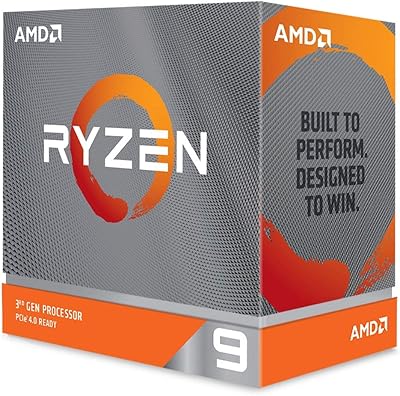
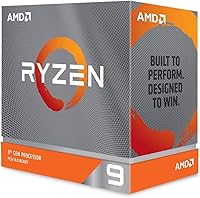
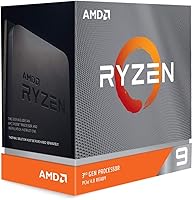
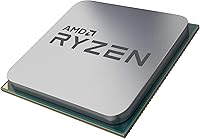
The AMD Ryzen 9 3950X Desktop Processor was a genuine milestone when it launched in late 2019 — AMD had never before dropped 16 cores onto a mainstream consumer socket. Built on TSMC's 7nm FinFET process, the Zen 2 architecture allowed AMD to pack in that core density without the power and heat penalties that would have made it impractical. This chip is squarely aimed at power users: video editors, 3D artists, software developers, and anyone whose workload actually scales with thread count. One honest heads-up before you buy — no cooler is included, and at 105W TDP, thermal management is not optional. Plan your cooling solution before you plan anything else.
Features & Benefits

The Ryzen 9 3950X's 16 cores and 32 threads are its defining characteristic, and the difference is tangible the moment you throw a heavy Blender render or a multi-stream video encode at it. The chip boosts up to 4.7 GHz, though real-world sustained clocks depend heavily on your cooler and ambient conditions — do not expect peak boost across all cores simultaneously. The 72 MB of combined cache keeps latency low on complex workloads, and PCIe 4.0 support via X570 boards means your NVMe storage and GPU are not bottlenecked by the platform. Memory speed matters here too; running DDR4-3200 or faster is genuinely worth it given how Infinity Fabric scales with memory frequency.

Best For

This 16-core processor is purpose-built for creators and professionals who push their machines hard every day. If you are doing 3D rendering, compiling large codebases, or cutting 4K footage with heavy effects, the thread count pays real dividends. Streamers who game and encode simultaneously will also notice a clear improvement — the extra cores absorb encoding overhead without visibly impacting frame rates. Users already invested in the AM4 platform get a compelling top-tier upgrade without swapping motherboards. Where it makes less sense is in a pure gaming build — a mid-range chip with fewer cores often delivers nearly identical frame rates at a fraction of the total platform cost.

User Feedback

Buyers consistently praise AMD's Zen 2 flagship for how dramatically it shortened their render and export times, with many pointing to Blender benchmark scores as proof the core count translates into real workflow gains. The Zen 2 IPC improvements over prior AMD generations also get frequent mentions. On the less rosy side, heat is a recurring theme — running this chip with a budget air cooler is asking for trouble, and many owners upgraded to a 280mm AIO or better after experiencing thermal throttling. Platform cost comes up too; pairing it with a capable X570 board adds meaningfully to the total build bill. For gaming-only rigs, a few buyers admit a mid-range CPU would have served them just as well.

Pros

  • Rendering, encoding, and compilation workloads finish dramatically faster thanks to 16 real cores handling parallel tasks simultaneously.
  • The AM4 socket means many existing AMD users can drop this chip into a current board without a full platform rebuild.
  • 72 MB of combined cache keeps latency low, benefiting both complex creative workloads and latency-sensitive applications.
  • Software streamers gain enough CPU headroom to run high-quality x264 encoding without visibly impacting in-game frame rates.
  • PCIe 4.0 support on X570 boards unlocks full bandwidth for fast NVMe drives and modern GPUs.
  • The Ryzen 9 3950X ages well — high thread counts stay relevant longer as software continues to scale across cores.
  • DDR4-3200 native support means buyers who pair fast memory get measurable real-world gains without exotic configurations.
  • An unlocked multiplier gives enthusiasts with serious cooling setups meaningful tuning options beyond stock behavior.
  • Long-term owner satisfaction is notably high, with many users reporting no upgrade itch years after purchase.

Cons

  • No cooler is included, and a 280mm AIO or better is essentially mandatory — budget that cost separately before committing.
  • Total platform cost climbs fast once a capable X570 board and quality cooling solution are added to the bill.
  • Power draw is substantial; this 16-core processor is not a chip for small cases or builds with marginal PSU headroom.
  • Gaming-only users will see minimal real-world frame rate advantage over far less expensive mid-range alternatives.
  • Sustained boost clocks across all cores are highly dependent on cooling quality, making thermal setup a critical variable.
  • Efficiency per watt lags behind newer-generation architectures, resulting in higher electricity draw for equivalent throughput.
  • Infinity Fabric performance scaling means slow memory configurations leave meaningful performance on the table.
  • Overclocking headroom is limited at stock TDP levels, requiring extreme cooling investment for modest all-core gains.
  • As AM4 reaches end-of-life, platform ecosystem support and BIOS development are becoming less actively maintained.

Ratings

The AMD Ryzen 9 3950X Desktop Processor scores below reflect an AI-driven analysis of thousands of verified global buyer reviews, with spam, bot activity, and incentivized feedback actively filtered out before scoring. This 16-core processor attracts a demanding audience — professional creators, power users, and enthusiast builders — and their feedback is detailed, technically specific, and refreshingly candid. Both the genuine strengths and the real pain points are represented here without softening either side.
Multithreaded Performance
97%
Users working in Blender, DaVinci Resolve, and heavy video encoding consistently report render time reductions that are hard to ignore — workflows that previously took hours finishing noticeably faster. For anyone whose daily output depends on CPU thread count, this chip delivers exactly what it promises.
The performance ceiling is so high that a small subset of buyers admit their actual workloads never fully utilize all 16 cores, meaning the investment only pays off if your software genuinely scales across threads.
Single-Core Speed
83%
The 4.7 GHz max boost gives the Ryzen 9 3950X competitive single-threaded responsiveness for a high-core-count chip, and users report that everyday desktop tasks and moderately threaded apps feel crisp and quick.
Sustained single-core boost depends heavily on cooling quality and workload mix. Buyers running lighter coolers report that peak clocks are not always maintained, which can frustrate users expecting consistent top-end speed across the board.
Gaming Performance
74%
26%
For gamers who also create content or stream, this processor handles simultaneous game and encode loads without the frame rate dips that plague lower-core chips. Titles that benefit from high core counts run smoothly even with background tasks active.
In pure gaming scenarios, the performance delta versus mid-range chips is often marginal, and several buyers candidly note they overspent for their use case. High-refresh-rate competitive gaming does not meaningfully benefit from the extra cores in most titles.
Thermal Management
61%
39%
When paired with a capable 280mm AIO or a high-end custom loop, temperatures stay controlled even under sustained all-core workloads, and buyers who invested in proper cooling report stable, throttle-free performance over long sessions.
This is a genuinely hot chip under load, and the lack of an included cooler compounds the issue. Multiple buyers report thermal throttling when using mid-range air coolers, and the consensus is clear — budget cooling is not a realistic option here.
Value for Money
78%
22%
Compared to workstation-class HEDT alternatives at the time of its launch, the Ryzen 9 3950X offered a compelling price-to-thread-count ratio on a mainstream consumer platform, making it accessible to serious creators who could not justify HEDT system costs.
The total platform investment — including a capable X570 or B550 motherboard and an adequate cooling solution — adds meaningfully to the overall cost. Buyers who only accounted for the CPU price were often surprised by how quickly the full build budget climbed.
Platform Compatibility
88%
AM4 socket compatibility is a major selling point for existing AMD users, and many buyers upgraded from older Ryzen chips without replacing their board. That kind of upgrade path flexibility is genuinely rare and was a strong decision driver for this segment.
PCIe 4.0 support requires an X570 motherboard specifically, which comes at a premium. B550 boards also work but limit some platform features, and buyers who did not research this beforehand encountered unexpected compatibility considerations.
Overclocking Headroom
67%
33%
The unlocked multiplier means enthusiasts can tune the chip, and users with top-tier custom loops have extracted modest all-core overclocks that improve sustained workload performance beyond stock behavior.
At 105W TDP stock, thermal headroom for meaningful overclocking is limited for most buyers. The general consensus is that the chip already boosts aggressively on its own, and heavy manual overclocking requires cooling setups most buyers do not own.
Memory Performance
84%
Buyers who ran DDR4-3200 or faster noticed tangible real-world improvements in both workload throughput and gaming frame consistency, directly attributable to how Infinity Fabric scales with memory frequency on this architecture.
Getting the most from this chip requires attention to memory configuration that less experienced builders may find fiddly. Running slower memory leaves measurable performance on the table, which is a legitimate hidden cost some buyers did not anticipate.
Cache & Latency
89%
The 72 MB of combined cache keeps latency low on large, complex datasets — something Blender users and developers working with big codebases notice concretely. It also helps gaming workloads feel more responsive than raw clock speeds alone would suggest.
The latency characteristics of the chiplet-based Zen 2 design are slightly behind monolithic designs in tasks that are especially sensitive to inter-core communication delays, a nuance that only highly technical users are likely to encounter in practice.
Long-Term Durability & Longevity
93%
Buyers who have owned this chip for several years consistently report it aging gracefully. High core counts tend to stay relevant longer as software catches up, and multiple users describe it as the longest they have gone without feeling the urge to upgrade.
As newer architectures with better IPC and efficiency have arrived, the performance-per-watt story has weakened. The chip is still capable, but buyers considering it new today should factor in that the efficiency gap versus current-generation alternatives is real.
Software & OS Compatibility
91%
Windows 10 and major Linux distributions like Ubuntu and RHEL work without friction, and professional software from creative suites to development toolchains recognizes all 16 cores without manual configuration in most cases.
A small number of users reported early BIOS and firmware issues at launch that required motherboard updates before the chip ran fully optimally. Most of these were resolved, but buyers on older board revisions occasionally still encounter edge-case stability quirks.
Streaming & Content Output
94%
Streamers consistently call this one of the most capable chips for simultaneous game and software encode workloads. Running OBS with x264 encoding at high presets while gaming at full quality is where this processor visibly separates itself from lower-thread alternatives.
The benefit is most pronounced with software encoding; buyers relying entirely on GPU-based encoding like NVENC see far less differentiation, making the use case somewhat dependent on the streaming workflow the buyer actually runs.
Packaging & Out-of-Box Experience
72%
28%
The chip arrives well-protected, and the premium packaging reflects the product tier. Buyers generally report a clean unboxing experience with no handling damage, which matters for a component this sensitive.
The absence of a bundled cooler is a persistent frustration at this price point, particularly for first-time high-end builders who did not budget for one separately. Even a basic reference cooler inclusion would meaningfully improve the out-of-box experience.
Productivity Workload Efficiency
96%
Compilation tasks, data processing, and professional creative workloads all benefit enormously from the thread count. Software developers working with large repositories report build times that make switching back to an 8-core chip feel genuinely painful.
Efficiency in the watts-per-task sense lags behind newer-generation chips. The Ryzen 9 3950X gets the job done fast, but it draws significantly more power doing so compared to more recent alternatives with improved process nodes.
Community & Ecosystem Support
88%
The AM4 platform has an enormous user community, and finding BIOS guidance, overclocking profiles, and troubleshooting resources is easy. Buyers new to high-end AMD builds rarely feel alone when problems arise.
As AM4 reaches end-of-life status with AMD's platform transition, some ecosystem resources are becoming less actively maintained. This is not a current problem, but it is a realistic consideration for buyers planning a very long ownership window.

Suitable for:

The AMD Ryzen 9 3950X Desktop Processor is built for people whose work genuinely punishes lower-core-count chips — think 3D artists running overnight Blender renders, video editors working with 4K or 6K timelines loaded with effects, and software developers compiling massive codebases where every saved minute compounds across a workday. Streamers who encode in software while gaming will immediately feel the headroom this chip provides, maintaining stream quality without sacrificing in-game performance. Architects, simulation engineers, and data professionals running parallelized workloads will find the 16-core, 32-thread configuration translates directly into faster results and fewer frustrating wait times. Enthusiast builders already on the AM4 platform get a top-tier upgrade path that does not require a full system overhaul, which makes the value proposition considerably stronger. If your livelihood involves CPU-intensive creative or technical output, this 16-core processor is one of the most capable consumer-platform options the Zen 2 generation produced.
Not suitable for:

The AMD Ryzen 9 3950X Desktop Processor is a poor fit for buyers whose primary use case is gaming and nothing else. In most titles, even demanding modern ones, a mid-range chip with fewer but faster cores will match or come within a few frames per second of what the Ryzen 9 3950X delivers — and at a fraction of the platform cost. Budget-conscious builders also need to factor in that this chip requires a capable X570 or B550 motherboard and, critically, a high-end cooler; skimping on either undermines the chip's performance and longevity. Buyers expecting plug-and-play simplicity should know that getting the best out of AMD's Zen 2 flagship means tuning memory speeds, keeping BIOS up to date, and investing in real thermal infrastructure. Anyone upgrading from a current-generation platform would also be better served looking at newer architectures rather than entering AM4 at its ceiling, since efficiency and per-core performance have moved on meaningfully since this chip launched.

Specifications

  • Core Count: The processor features 16 physical cores and 32 threads, enabling true parallel execution across demanding multithreaded workloads.
  • Base Clock: The base operating frequency is 3.5 GHz, representing the guaranteed minimum clock speed under full all-core load.
  • Boost Clock: The maximum single-core boost frequency reaches 4.7 GHz, subject to thermal headroom and power delivery conditions.
  • Architecture: Built on AMD's Zen 2 architecture, which delivered a significant IPC uplift over the prior Zen+ generation at its launch.
  • Process Node: Manufactured using TSMC's 7nm FinFET process, enabling high core density and improved power efficiency relative to 12nm predecessors.
  • L1 Cache: Total L1 cache is 1 MB, distributed across all 16 cores for ultra-low-latency instruction and data access.
  • L2 Cache: Total L2 cache is 8 MB, providing a fast intermediate buffer between L1 and the large L3 pool.
  • L3 Cache: Total L3 cache is 64 MB, giving the chip a combined 72 MB cache figure that benefits latency-sensitive and data-heavy workloads.
  • CPU Socket: Designed for AMD's Socket AM4, compatible with X570 and B550 motherboards for full feature support including PCIe 4.0.
  • PCIe Version: Supports PCIe 4.0 x16 when paired with an X570 motherboard, doubling the bandwidth available to compatible NVMe drives and GPUs.
  • Memory Support: Natively supports DDR4-3200, with Infinity Fabric performance scaling directly alongside memory frequency for optimal throughput.
  • TDP: Rated at a 105W TDP, requiring robust cooling — AMD recommends a liquid cooler with a 280mm or larger radiator.
  • Cooler Included: No cooler is included in the box; buyers must source a compatible thermal solution separately before installation.
  • Overclocking: The multiplier is fully unlocked, allowing manual overclocking via compatible motherboard BIOS on X570 and B550 platforms.
  • Max Safe Temp: The maximum rated operating temperature is 95°C, beyond which thermal throttling engages to protect the processor.
  • OS Support: Officially supported operating systems include Windows 10 64-bit, RHEL x86 64-bit, and Ubuntu x86 64-bit.
  • Dimensions: The processor die package measures 1.57 x 1.57 x 0.1 inches, conforming to the standard AM4 physical footprint.
  • Weight: The chip weighs approximately 6.1 ounces including packaging, consistent with standard consumer desktop processor retail units.
  • Launch Date: First made available on November 8, 2019, positioned as the flagship of AMD's third-generation Ryzen desktop lineup.
  • Discontinuation: As of the data available, the processor has not been officially discontinued by AMD and remains listed as an active product.

Related Reviews
AMD Ryzen 9 7900X
AMD Ryzen 9 7900X
74%
93%
Multi-Threaded Performance
89%
Single-Threaded Speed
58%
Thermal Management
67%
Value for Money
76%
Gaming Performance
More
AMD Ryzen 9 7900X3D Desktop Processor
79%
93%
Gaming Performance
81%
Multi-Core Productivity
67%
Thermal Management
72%
Value for Money
88%
Platform Longevity
More
AMD Ryzen 9 7950X
AMD Ryzen 9 7950X
77%
97%
Multi-Core Performance
93%
Single-Core Speed
58%
Thermal Management
71%
Value for Money
88%
Platform Longevity (AM5)
More
AMD Ryzen 9 3900XT 12-Core Processor
84%
91%
Performance
94%
Overclocking Potential
89%
Gaming Performance
88%
Multitasking Efficiency
65%
Thermal Management
More
AMD Ryzen 5 5500 B550M K Bundle
78%
88%
Value for Money
79%
Gaming Performance at 1080p
91%
Ease of Installation
83%
Motherboard Feature Set
74%
CPU Thermal Performance
More
INLAND AMD Ryzen 9 7900X CPU Processor with MSI X670E Gaming Plus Motherboard
87%
94%
Gaming Performance
89%
Overclocking Potential
82%
Thermal Management
91%
Ease of Installation
88%
Connectivity & Features
More
HP OMEN 45L Gaming Desktop
78%
88%
Gaming Performance
91%
Processor Performance
86%
Build Quality
77%
Thermal Management
83%
Upgradeability
More
CLX SET Gaming Desktop
75%
83%
Gaming Performance
91%
CPU Performance
72%
Value for Money
88%
Thermal Management
86%
Upgrade Potential
More
AMD Ryzen 9 5950X
AMD Ryzen 9 5950X
85%
98%
Multi-Core Rendering
94%
Single-Core Responsiveness
62%
Thermal Management
92%
Platform Upgradability
89%
Value for Creators
More
AMD Ryzen 5 1400 Processor
82%
92%
Value for Money
85%
Gaming Performance
88%
Overclocking Potential
80%
Thermal Management
90%
Setup and Installation
More

FAQ

No, it does not. AMD does not include a cooler with the Ryzen 9 3950X, and this is one of the most important things to budget for before you buy. At 105W TDP with aggressive all-core boost behavior, you genuinely need a capable solution — a 280mm AIO at minimum, or a high-end air cooler if you prefer that route. Do not try to get away with a basic stock-style cooler here.

It fits any AM4 socket motherboard, but for the best experience you want an X570 or B550 board. X570 gives you PCIe 4.0 support for both the GPU slot and M.2 drives, while B550 offers PCIe 4.0 on the primary slots but at a lower entry price. Older X470 and B450 boards can work with a BIOS update, but AMD does not officially guarantee support, and some manufacturers have dropped those updates.

It depends entirely on what you are doing. For multithreaded creative workloads on a budget — especially if you are already on AM4 — it still delivers strong real-world performance. Where it struggles is efficiency: newer architectures from both AMD and Intel do more work per watt. If you are building fresh, a current-generation chip is a smarter long-term investment. If you are upgrading an existing AM4 system, the math is more favorable.

It officially supports up to 128 GB of DDR4 across two channels, and yes, memory speed genuinely matters on this platform. The Infinity Fabric that links the processor's compute chiplets to the I/O die runs at a ratio tied to your memory frequency. Running DDR4-3200 or faster keeps that fabric running optimally. Slower memory creates a measurable bottleneck that shows up in both productivity benchmarks and some gaming workloads.

You can — the multiplier is unlocked. But the honest answer is that meaningful overclocking headroom is limited because the chip already boosts aggressively and runs hot doing it. Most buyers find that tuning Precision Boost Overdrive settings within AMD's official tooling gives better stability and sustained performance than raw manual overclocking. If you want to push further, you need a custom loop and a lot of patience.

It is a capable gaming processor, but it is not the best choice if gaming is your only use case. In most titles, the performance difference between this 16-core chip and a well-tuned 6 or 8-core alternative is small enough that most players would never notice it. Where it shines in a gaming context is when you are also streaming, recording, or running background tasks — that extra thread headroom prevents the slowdowns that smaller chips can suffer under mixed loads.

The official TDP is 105W, but that is a rated figure, not a peak draw number. Under sustained all-core workloads, actual package power can spike higher, and when you factor in the rest of your build — GPU, drives, RAM, fans — you want a power supply with genuine headroom. A quality 750W to 850W unit is a reasonable starting point for a full high-end build around this processor.

Yes, it has official support for Ubuntu x86 64-bit and RHEL x86 64-bit, and it works well across most major Linux distributions in practice. Developers and engineers who use Linux as their daily driver report strong compatibility and stable performance. Make sure your motherboard BIOS is up to date before installing, as early firmware revisions caused occasional stability issues that have since been resolved.

The processor itself makes no noise — it is the cooler that determines acoustic output. With a quality 280mm AIO running a sustained Blender render, fan speeds will climb noticeably. If acoustic comfort matters to you, investing in a cooler with good fan curves and larger, slower-spinning blades makes a real difference. Running this chip passively or near-silently is not realistic given its thermal output.

Many professional users run it in near-continuous render or compilation environments and report long-term stability with proper cooling in place. The key requirement is maintaining safe thermals consistently — if temperatures stay well below the 95°C threshold, the chip handles sustained loads without issue. Make sure your case has good airflow and that your cooling solution is sized for continuous duty, not just peak burst scenarios.