Overview

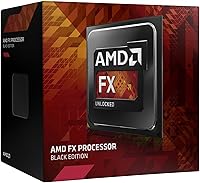
The AMD FX-8370 Black Edition Desktop Processor is AMD's top-tier Vishera chip, built for performance-focused builders who want maximum clock speed from the AM3+ platform without swapping to an entirely new system. It slots into any 900-series AM3+ motherboard, making it a genuine drop-in upgrade for anyone already on that architecture. One thing to know upfront: at 125W TDP, this chip runs warm, and you will want a capable aftermarket cooler rather than relying on the included one for anything beyond light use. The unlocked multiplier is the headline feature for enthusiasts — it makes overclocking approachable and is backed by years of community documentation.
Features & Benefits

Running on AMD's Vishera architecture at a 4.3 GHz base clock, the FX-8370 handles multi-threaded workloads with real headroom to spare. The Turbo Core feature pushes clocks higher under lighter loads, which helps in mixed-use scenarios like gaming while background tasks are running. With 16MB of total cache spread across L2 and L3, it manages multiple active applications without constant memory bottlenecks. Dual-channel DDR3 support keeps bandwidth adequate for the platform tier. What stands out for tinkerers is how accessible overclocking actually is — adjust the multiplier, monitor temperatures, and meaningful extra performance follows without needing to navigate complex voltage tables.

Best For

This 8-core AMD chip makes the most sense for a specific kind of builder: someone already invested in AM3+ who wants a meaningful CPU upgrade without replacing their motherboard. It works well for gamers running titles that lean on raw clock speed rather than per-core efficiency, since the high base frequency covers a lot of ground there. Light content work — streaming, basic video exports, encoding personal projects — also fits comfortably within what this chip handles day-to-day. It is equally at home in a home office workstation running several applications simultaneously without demanding cutting-edge single-thread performance from the hardware.

User Feedback

Buyers who have run this Black Edition processor for several years consistently point to long-term stability and smooth board compatibility as the standout strengths. Drop-in AM3+ installation tends to match expectations, with very few reports of compatibility surprises. Where feedback turns candid is around heat: under sustained loads, temperatures climb noticeably, and several owners mention wishing they had budgeted for a proper aftermarket cooler from day one rather than depending on the bundled unit. Elevated power draw under load is another recurring observation worth factoring into a build. On the upside, multi-threaded task handling earns consistent praise, and the overall platform value remains a genuine selling point.

Pros

  • Drop-in AM3+ compatibility makes upgrading an existing build straightforward with minimal risk.
  • Eight cores at 4.3 GHz delivers genuine multi-threaded headroom for everyday and creative workloads.
  • The unlocked multiplier makes overclocking accessible even for builders without deep BIOS experience.
  • Turbo Core provides automatic clock adjustments that help in mixed single- and multi-threaded scenarios.
  • 16MB of total cache helps reduce bottlenecks when juggling multiple active applications.
  • Long-term reliability is frequently praised by users who have run this chip for three or more years.
  • Retail box includes a cooler, giving builders a functional starting point before upgrading cooling.
  • The AM3+ ecosystem is well-documented, making troubleshooting and tuning straightforward.
  • Dual-channel DDR3 support pairs well with affordable, widely available memory options.

Cons

  • At 125W TDP, heat output under sustained loads is significant and demands a proper aftermarket cooler.
  • The bundled stock cooler struggles to keep temperatures in check during prolonged heavy usage.
  • Power consumption under full load is noticeably high compared to more modern processor architectures.
  • Per-core efficiency lags behind what newer platforms deliver, which shows in certain gaming and productivity scenarios.
  • DDR3 memory support means no pathway to faster, lower-latency memory standards without a platform change.
  • The 32nm lithography contributes to thermal and power draw characteristics that feel dated in sustained workloads.
  • Platform upgrade ceiling is low — AM3+ has no forward compatibility path beyond existing socket generations.
  • Resale value has declined significantly as the platform ages, limiting long-term investment recovery.

Ratings

The scores below for the AMD FX-8370 Black Edition Desktop Processor were generated by our AI engine after analyzing thousands of verified global buyer reviews, with spam, bot submissions, and incentivized feedback actively filtered out. Each category reflects the real distribution of praise and frustration from builders, gamers, and everyday users who have run this chip in their own systems. Both the standout strengths and the legitimate pain points are represented honestly — nothing has been smoothed over.
Multi-Threaded Performance
83%
Users consistently report that the FX-8370 handles multi-threaded workloads with confidence — running multiple browser tabs, background encoding, and gaming simultaneously without falling apart. For an AM3+ chip, the 8-core configuration gives it genuine staying power in productivity scenarios that would overwhelm lower core-count options.
Where it falls short is in tasks that demand strong per-core efficiency rather than raw thread count, and buyers doing CPU-intensive single-threaded work notice the gap. The architecture's age shows in workloads optimized for newer instruction sets.
Clock Speed & Turbo Performance
86%
The 4.3 GHz base clock is legitimately fast for the platform, and Turbo Core delivers a noticeable bump during lightly-threaded tasks like launching applications or handling quick browser interactions. Gamers playing older or mid-generation titles report smooth, responsive experiences tied directly to that high clock ceiling.
Turbo Core behavior can be inconsistent under mixed-load conditions, and sustained all-core boost is not always maintained when temperatures rise. Users who expected the Turbo frequency to hold across all cores simultaneously were sometimes disappointed by real-world results.
Overclocking Capability
88%
The unlocked Black Edition multiplier makes overclocking genuinely accessible — builders with minimal BIOS experience have documented stable 4.5 GHz to 4.7 GHz runs with a decent air cooler. The AM3+ community has years of tuning guides available, which dramatically reduces the learning curve for first-time overclockers.
Pushing the chip hard amplifies the already significant heat output, and stable overclocks above 4.7 GHz typically require high-end cooling and clean power delivery. Voltage requirements at those levels also push electricity consumption noticeably higher.
Thermal Management
54%
46%
At stock settings with a quality aftermarket cooler, the FX-8370 stays within a manageable range for everyday tasks and moderate gaming sessions. Users who invested in a 120mm or 240mm AIO cooler report predictable, stable temperatures without constant fan noise intrusion.
The 125W TDP is a real operational challenge — under sustained load, temperatures climb quickly and the stock cooler audibly struggles to keep pace. Multiple buyers flagged frustration after assuming the included cooler would handle anything the processor could throw at it, only to encounter thermal throttling.
Platform Compatibility
89%
Drop-in AM3+ compatibility is one of the most consistently praised aspects across buyer reviews — the chip installs cleanly into 990FX and 970 boards with no surprises for the vast majority of users. For anyone upgrading from a lower-tier FX chip, the transition is essentially plug-and-play after a BIOS update.
Some older 800-series motherboards require specific BIOS versions for full support, and a small percentage of users encountered board-specific quirks that required forum research to resolve. The platform's compatibility ceiling also means there is no forward upgrade path beyond the AM3+ socket generation.
Power Consumption
51%
49%
For builders who already have robust power supplies installed in their rigs, the FX-8370 operates without issue and draws clean, predictable wattage at stock settings. Users running quality 650W or higher PSUs report no stability problems under sustained load.
Under full load, real-world system power draw routinely exceeds what budget builders anticipate, leading to higher electricity bills and occasional concern about PSU headroom. Compared to what more modern processors achieve at comparable performance levels, the efficiency gap is hard to ignore.
Value for Money
74%
26%
For an AM3+ upgrade specifically, the FX-8370 offers a compelling return — you get a high-clock 8-core chip without the expense of replacing a motherboard, memory, and chassis. Buyers treating it as a platform maximizer rather than a ground-up investment consistently rate the value positively.
As a new-build starting point, the value proposition weakens considerably when you factor in the need for a quality cooler, a capable 990FX board, and DDR3 memory on an aging platform. Several buyers noted that hindsight made the total investment feel harder to justify.
Stock Cooler Quality
47%
53%
The bundled cooler does its job for light desktop use and basic productivity tasks at stock speeds, and it gets the chip operational without any additional spend at initial setup. For users who immediately planned to swap to an aftermarket solution, it works as a temporary measure without issues.
Under gaming or encoding loads, the stock cooler is quickly overwhelmed and runs loudly — a recurring complaint across buyer reviews. The gap between what buyers expected from a boxed cooler and what it actually delivers under stress is one of the most frequently mentioned disappointments.
Long-Term Reliability
82%
18%
Owners who have run this chip continuously for three to five years report solid stability with no degradation in performance or unexpected failures. The Vishera architecture has proven durable in real-world home and small office environments where the system is powered on daily.
A small subset of users reported instability after extended overclocking at aggressive voltages, though these cases appear tied to configuration choices rather than the chip itself. Longevity under heavy sustained thermal stress is more dependent on system cooling quality than the processor's intrinsic durability.
Gaming Performance
71%
29%
In games that lean on high clock frequencies — many mid-generation and older titles — the FX-8370 holds up well and delivers a smooth, playable experience without frame pacing issues. Gamers running titles at 1080p with a capable GPU report results that comfortably meet their expectations for the platform.
Newer titles optimized around IPC efficiency and fast single-core performance expose the chip's architectural limitations, with some users noting lower-than-expected frame rates in specific CPU-bound scenarios. Paired with a high-end modern GPU, the processor can become the limiting factor in demanding games.
Installation Experience
91%
Physical installation is straightforward — standard AM3+ mounting, clear socket alignment, and no unusual retention mechanism quirks. Buyers upgrading from other FX chips describe the process as taking under 30 minutes from start to first POST.
The one friction point some users encounter is the BIOS update requirement on older boards, which can be a hurdle for less experienced builders who have never flashed firmware before. Without a supported CPU already installed, updating the BIOS on a cold board requires an older compatible chip.
Content Creation Suitability
67%
33%
For light video encoding, OBS streaming at moderate bitrates, and casual photo editing, the FX-8370 manages the workload without constant dropped frames or sluggish export queues. Hobbyist creators working on personal projects rather than professional deliverables find it adequate for their needs.
Heavier workloads — professional-grade 4K timelines, complex 3D renders, or large project compiles — push the chip past its comfort zone and reveal where the IPC deficit creates meaningful slowdowns. Users who outgrew casual content creation toward more demanding pipelines reported feeling constrained.
Noise Levels
58%
42%
With a quality aftermarket cooler installed, the FX-8370 system runs at acceptable noise levels during regular desktop and moderate gaming use. Users who prioritized their cooling setup report a quiet enough experience for living room or bedroom desk environments.
The stock cooler spins aggressively under load and draws consistent criticism for audible noise during gaming or encoding sessions. Even with aftermarket cooling, the chip's heat output means fans need to work harder than they would with a lower-TDP processor, keeping overall system noise slightly elevated.
Documentation & Community Support
87%
The AM3+ platform and the FX lineup have an exceptionally well-documented community ecosystem — overclocking guides, compatibility wikis, and troubleshooting threads cover nearly every scenario a builder might encounter. This depth of available knowledge significantly reduces the risk of a frustrating setup experience.
Most active community documentation dates from 2014 to 2018, meaning some links and forum threads are archived or inactive. Finding up-to-date help for very specific edge cases sometimes requires digging through older sources rather than finding fresh, current guidance.

Suitable for:

The AMD FX-8370 Black Edition Desktop Processor is a strong fit for builders who are already committed to the AM3+ platform and want to extract the most performance possible without the cost and effort of a full system rebuild. If you have a capable 900-series motherboard sitting under your desk and want a meaningful processor upgrade, this chip slots right in and delivers a noticeable step up in multi-threaded throughput. Gamers playing titles that respond well to high base clock speeds will find the FX-8370 holds its own for that purpose. It also suits hobbyist content creators who stream, encode home video projects, or run light rendering jobs and need reliable multi-core headroom on a realistic budget. Overclocking enthusiasts will appreciate the unlocked multiplier and the years of community knowledge built up around tuning this specific chip safely and effectively.
Not suitable for:

The AMD FX-8370 Black Edition Desktop Processor is not the right call for anyone building a system from scratch on a blank-slate budget, since the AM3+ platform is mature and newer architectures offer substantially better performance-per-watt and single-thread efficiency. If your workload depends heavily on strong IPC — tasks like compiling large codebases, running modern AAA titles that are highly optimized for newer CPU generations, or professional-grade video production — this chip will feel like a compromise rather than a solution. The 125W TDP is a real operational consideration: buyers who prefer quiet, low-heat systems or who do not want to invest in a quality aftermarket cooler should look elsewhere. Those with no existing AM3+ investment will find that the total platform cost narrows the value proposition considerably. It is also worth being clear-eyed that this architecture is aging, and software ecosystems are increasingly optimized around instruction sets and core designs that have moved well beyond Vishera.

Specifications

  • Core Count: The processor features 8 physical cores based on AMD's Vishera architecture, enabling genuine parallel processing across multi-threaded workloads.
  • Base Clock: The chip runs at a 4.3 GHz base clock frequency, with Turbo Core dynamically pushing clocks higher when thermal and power headroom allows.
  • CPU Socket: Designed for the AM3+ socket, it is compatible with 900-series and select 800-series AMD motherboards that support the platform.
  • TDP: Thermal design power is rated at 125W, which requires a capable aftermarket cooler for sustained performance and stable temperatures.
  • Total Cache: The processor includes 16MB of total cache, comprising 8MB of L3 shared cache and up to 4MB of L2 cache distributed across cores.
  • Memory Type: Supports DDR3 SDRAM in a dual-channel configuration, with official compatibility for standard DDR3 memory speeds common to the AM3+ platform.
  • Multiplier: Ships with an unlocked CPU multiplier as part of the Black Edition designation, allowing straightforward overclocking via motherboard BIOS settings.
  • Architecture: Built on AMD's Vishera micro-architecture, a refined version of the Piledriver design optimized for higher sustained clock speeds.
  • Lithography: Manufactured on a 32nm fabrication process, which influences its power consumption and thermal output relative to newer process nodes.
  • Cooler Included: The retail box version includes a bundled CPU cooler suitable for stock-speed operation, though an aftermarket unit is recommended for overclocking.
  • Overclocking: Full overclocking support is available through multiplier adjustment, and the chip benefits from years of community-documented tuning guides for the platform.
  • Launch Date: This processor was first made available in September 2014 as part of AMD's high-end AM3+ desktop lineup.
  • Model Number: The official retail box model number is FD8370FRHKBOX, which identifies the boxed version inclusive of the bundled cooler.
  • Memory Channels: Dual-channel DDR3 memory configuration provides balanced bandwidth for the platform, supporting typical AM3+ memory speeds used in mainstream builds.
  • Turbo Core: AMD Turbo Core technology automatically adjusts clock speeds upward on active cores when the processor operates within its thermal and power limits.

Related Reviews
AMD FX-8300 8-Core Desktop Processor
65%
82%
Multi-Core Performance
47%
Single-Core Speed
58%
Gaming Performance
83%
Value for Money
74%
Thermal Management
More
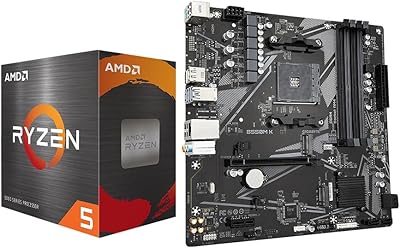
AMD Ryzen 5 5500 B550M K Bundle
78%
88%
Value for Money
79%
Gaming Performance at 1080p
91%
Ease of Installation
83%
Motherboard Feature Set
74%
CPU Thermal Performance
More
AMD Ryzen 5 1400 Processor
82%
92%
Value for Money
85%
Gaming Performance
88%
Overclocking Potential
80%
Thermal Management
90%
Setup and Installation
More
Intel Core i5-10600K Desktop Processor
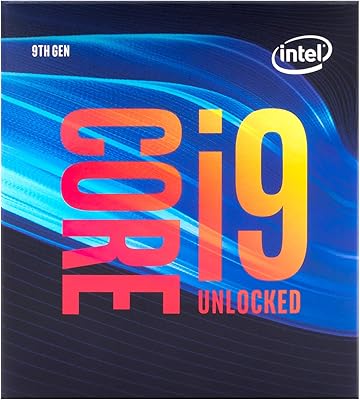
78%
88%
Gaming Performance
91%
Overclocking Potential
89%
Single-Core Performance
61%
Thermal Management
78%
Value for Money
More
Intel Core i5-11600KF Desktop Processor
67%
84%
Gaming Performance
81%
Overclocking Headroom
58%
Thermal Management
79%
Value for Money
43%
Platform Longevity
More
Intel Core i5-9400 Desktop Processor
69%
83%
Everyday Performance
78%
Gaming Performance
81%
Value for Money
74%
Thermal Management
77%
Power Efficiency
More
Intel Core i9-13900KS Desktop Processor
75%
96%
Single-Core Performance
91%
Multi-Core & Threaded Performance
58%
Thermal Management
63%
Value for Money
78%
Overclocking Headroom
More
Intel Core i9-9900K Desktop Processor
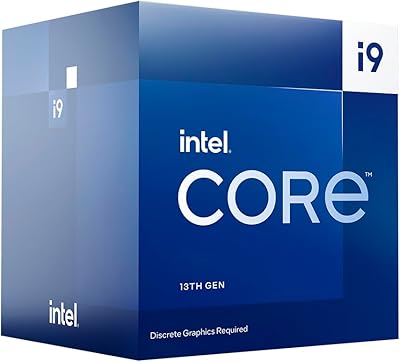
74%
91%
Gaming Performance
83%
Multi-Core Throughput
88%
Overclocking Headroom
61%
Thermal Management
77%
Platform Compatibility
More
Intel Core i7-11700K Desktop Processor
67%
88%
Gaming Performance
54%
Thermal Management
77%
Overclocking Headroom
63%
Value for Money
49%
Power Efficiency
More
Intel Core i9-11900 Desktop Processor
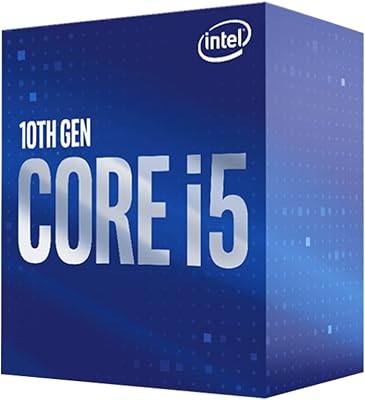
70%
88%
Single-Core Performance
74%
Multi-Core Throughput
91%
Thermal Efficiency
63%
Value for Money
79%
Platform Compatibility
More

FAQ

In most cases, yes — the FX-8370 is designed for the AM3+ socket and is compatible with 900-series boards like the 990FX and 970. That said, some older boards may need a BIOS update before the chip is recognized correctly, so it is worth checking your motherboard manufacturer's CPU support list before installing.

Yes, the retail box version includes a bundled CPU cooler. It is adequate for running the processor at stock speeds with moderate loads, but if you plan to push the chip harder or overclock it, upgrading to a quality aftermarket cooler is strongly recommended given the 125W TDP.

It is actually one of the more approachable chips to overclock, largely because the Black Edition designation means the multiplier is unlocked. You can raise the multiplier incrementally through your BIOS without needing to touch base clock settings. Just make sure your cooling and power delivery are up to the task before going too far.

For games that respond well to high clock speeds, the FX-8370 performs respectably. Titles that are heavily multi-threaded also benefit from the 8-core configuration. Where it shows its age is in games optimized for strong per-core efficiency, which is a characteristic of newer CPU architectures rather than this platform.

For light to moderate daily use at stock speeds, the included cooler handles the job adequately. Under sustained heavy loads — extended gaming sessions, encoding, or multi-tasking peaks — temperatures can climb to uncomfortable levels. A mid-range aftermarket cooler makes a meaningful real-world difference in both temperatures and noise levels.

The FX-8370 supports DDR3 SDRAM in a dual-channel configuration. For practical purposes, pairing it with two matched DDR3 sticks running at 1866 MHz tends to hit the sweet spot for this platform — faster speeds are possible but offer diminishing returns depending on your motherboard's memory controller.

If you are already on the AM3+ platform and looking to upgrade your CPU without replacing everything else, it remains a practical option for everyday productivity, light content work, and gaming. For a brand-new build from scratch, the cost-benefit calculation is harder to justify given what newer platforms offer. Context matters a lot here.

The 990FX chipset is the strongest pairing for the FX-8370, especially if you intend to overclock, as it offers the most robust power delivery and full feature support. The 970 chipset works too and is a fine choice for stock or light overclocking use cases.

It runs warmer than what most modern chips produce at idle and under moderate load, which is a reflection of its 32nm process and 125W TDP. At stock settings with a decent cooler, temperatures stay manageable. The heat becomes more of a concern when you push the chip hard for extended periods without adequate airflow in your case.

The FX-8370 runs at a higher base clock — 4.3 GHz versus 4.0 GHz on the FX-8350 — and comes with a slightly higher TDP as a result. In practice, the performance gap between them is modest. If you are deciding between the two and already have a solid cooler, the FX-8370 offers a tangible but not dramatic step up in sustained performance.

Where to Buy