Overview

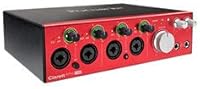
The Focusrite Clarett 4Pre USB Audio Interface sits firmly in the middle ground between Focusrite's popular Scarlett range and full professional-grade equipment — a sensible target for serious home studio owners and semi-pro engineers who need more than entry-level gear. This iteration moved from Thunderbolt to USB connectivity, which might seem like a step back, but in practice it dramatically widens compatibility across virtually every modern Mac and PC without needing a specific port or adapter. Build quality is notably solid: a metal chassis with the brand's signature red-and-black look that feels purposeful rather than decorative. It needs a power outlet — this is not a portable or bus-powered device — and the included software bundle is a genuine starting point for a complete studio setup.

Features & Benefits

The four Air-enabled mic preamps are the headline feature here, and they earn that billing. Air mode simulates the transformer-coupled impedance of Focusrite's own ISA preamp designs — the effect is a subtle high-frequency lift and added presence that works particularly well on vocals and acoustic instruments. You also get a dynamic range of up to 119dB with very low total harmonic distortion, which translates practically to recordings that stay clean and give you real headroom to work with. The 18-in/8-out I/O includes an ADAT input, so connecting an eight-channel external preamp is straightforward if the session demands it. Two headphone outputs with independent level controls and a bundled package — including Ableton Live Lite and the Brainworx bx_console plugin — make this a genuinely complete starting point.

Best For

The Clarett 4Pre USB makes most sense for home studio owners who have hit the ceiling of a two-input interface and need more inputs — especially if drum recording via ADAT expansion is on the horizon. Vocalists and singer-songwriters who care about getting a flattering, present sound without buying separate outboard gear will find real value in the Air mode. Producers running multiple hardware synthesizers alongside vocals will appreciate the eight balanced line inputs and the built-in MIDI I/O. Compatibility is a non-issue: standard USB 2.0 works on virtually every current Mac or PC, and both USB-A and USB-C cables are included. If you want to build a working studio without sourcing plugins separately, the bundled software is substantial enough to get real work done from day one.

User Feedback

Across owner reviews, a few consistent patterns stand out. The biggest praise centers on preamp clarity — particularly how Air mode improves vocal takes, giving them a presence that would otherwise require expensive outboard hardware. Dual headphone outputs come up repeatedly as a practical convenience in collaborative sessions where two people need independent monitoring. On the downside, some early purchasers hit driver stability issues; those have been largely resolved through firmware updates, though it is worth checking you are on the latest version. A recurring concern is value relative to newer competitors — this Focusrite interface holds its ground on audio quality, but buyers should weigh the preamp character and I/O count against current alternatives before committing. Worth noting: it requires a dedicated power outlet, which matters for compact or portable setups.

Pros

  • Air mode preamps add real high-frequency presence to vocals without requiring separate outboard hardware.
  • Up to 119dB dynamic range means cleaner recordings with more headroom before distortion becomes an issue.
  • ADAT expansion input lets you connect an eight-channel preamp bank for drum or full-band tracking.
  • Dual headphone outputs with independent gain controls support collaborative monitoring without a separate headphone amp.
  • USB 2.0 connectivity works on virtually any current Mac or PC without special adapters or ports.
  • Bundled software — Ableton Live Lite, Brainworx bx_console, and XLN Addictive Keys — delivers genuine production value out of the box.
  • Metal chassis feels noticeably sturdier and more professional than cheaper plastic-bodied interfaces in this category.
  • Built-in MIDI I/O handles hardware synthesizer and drum machine routing without needing a separate device.
  • Eight balanced line inputs give producers real flexibility when recording multiple hardware sources simultaneously.
  • Driver stability has improved substantially through firmware updates, making this a more reliable long-term investment than early reviews suggested.

Cons

  • Requires a dedicated power outlet and cannot run off a laptop USB port, which rules out any mobile use.
  • At this price, newer competitors now offer comparable I/O counts and preamp quality that deserve a serious look before buying.
  • Only two instrument inputs may feel limiting for sessions involving multiple guitars or basses at the same time.
  • Focusrite Control software is functional but noticeably less polished than the companion apps offered by some rival brands.
  • No Thunderbolt connectivity may be a sticking point for studios with existing Thunderbolt-based routing infrastructure.
  • Early firmware versions caused real driver instability; anyone on an older installation should update before trusting it in a critical session.
  • Four balanced line outputs is a modest count for producers who need complex monitor mixing or multiple mix-bus routing.
  • The price is a meaningful commitment that hobbyists or occasional recordists with simpler needs are unlikely to recoup in value.

Ratings

The scores below for the Focusrite Clarett 4Pre USB Audio Interface were generated by AI after systematically analyzing verified owner reviews from major global platforms, with spam, bot-generated, and incentivized feedback actively identified and filtered out. Both the genuine strengths this unit delivers and the real pain points buyers have experienced are transparently reflected in every category score. No aspect has been softened or inflated — the goal is an honest, data-driven snapshot that helps prospective buyers make a confident, well-informed decision.

Preamp Quality
91%
The Air-enabled preamps are where this interface earns its keep. Reviewers who record vocals and acoustic instruments consistently report that switching Air mode on adds a presence and clarity that would otherwise need corrective EQ or an outboard transformer-based preamp — a meaningful difference in a home studio context.
Some reviewers coming from higher-end interfaces note that the Air mode character is subtle rather than transformative, and the overall noise floor, while excellent for this price tier, does not quite match true professional-grade ISA hardware. Expectations should be calibrated accordingly.
Build Quality
88%
The all-metal chassis is consistently praised by owners who have previously used plastic-bodied Scarlett units — the contrast in feel is immediately noticeable when you pick it up. Knobs and controls feel weighted and deliberate, and the unit stays firmly in place on a desk during active sessions.
A small number of reviewers report that gain knobs on their units developed a slight wobble after extended use, and the power connector on some units feels less secure than the main audio ports. These are minority observations, but worth noting for a purchase at this investment level.
Audio Conversion
86%
The 24-bit/192kHz conversion and 119dB dynamic range translate into recordings that hold up well under close scrutiny — clean, open, and with enough headroom that engineers rarely need to push gain into uncomfortable territory. Producers tracking at 96kHz particularly appreciate the sonic ceiling the unit provides.
At sample rates above 96kHz, some users report a reduction in available simultaneous channel count, and a subset of reviewers with highly critical ears feel the converters, while excellent, do not clearly outclass dedicated converter options available at a similar price. The gap is narrow but present.
Value for Money
67%
33%
The bundled software package adds genuine cost value — full licenses for Ableton Live Lite, Brainworx bx_console, and XLN Addictive Keys represent software you would otherwise need to purchase separately. For buyers building a studio from scratch, this meaningfully offsets the overall investment required.
Newer competitors at a comparable price point have closed the gap in preamp quality and I/O count, and buyers who do not specifically need the Air mode may find the value proposition harder to defend. This is where owner reviews are most divided, and it warrants careful market comparison before committing.
I/O Versatility
93%
Eighteen simultaneous inputs is a genuine selling point for home studio owners tracking multiple sources at once. The ADAT expansion input is the real multiplier — connecting an eight-channel preamp opens up full drum recording capability without replacing the interface itself, which few units at this price make possible.
The four balanced line outputs feel modest relative to the generous input count. Producers running complex monitor or mix-bus routing may find themselves wishing for more physical output options, and adding that flexibility requires investing in additional hardware or a patch bay at extra cost.
Driver Stability
72%
28%
Firmware updates over the life of the product have substantially improved driver reliability. Recent buyers on both Mac and Windows report stable, consistent performance without unexpected disconnections, and the day-to-day experience is now broadly in line with what buyers expect from an interface at this level.
The history of early driver instability is difficult to ignore — a meaningful number of launch-window buyers had frustrating experiences requiring significant troubleshooting to resolve. Users on older Windows configurations should ensure they are running the latest firmware and driver before trusting the unit in any critical session.
Ease of Setup
83%
Most buyers report a straightforward unboxing and setup experience — connect the USB cable, install Focusrite Control, and the interface is recognized within minutes on both Mac and Windows. The inclusion of both USB-A and USB-C cables removes a common first-day compatibility frustration.
Focusrite Control has a learning curve for users new to routing software, and first-time interface owners occasionally struggle to configure cue mixes and low-latency monitoring without consulting external tutorials. The software could also be more intuitive in how it handles buffer size and sample rate changes mid-session.
Headphone Monitoring
87%
The dual headphone outputs with independent gain controls are among the most consistently praised practical features in owner reviews. Being able to hand a performer their own cue mix — louder, with more reverb — without touching the producer's monitoring setup is a real day-to-day workflow improvement.
The headphone amplifier output level, while adequate for most standard headphones, struggles slightly with high-impedance cans above 250 ohms. Users who rely on higher-impedance studio headphones for critical listening may not achieve sufficient drive without adding an external headphone amplifier to the chain.
Bundled Software
84%
Unlike interfaces that pad their bundle with demo versions or time-limited trials, the software package here delivers full working licenses. Ableton Live Lite is a functional DAW for basic production, and the Brainworx bx_console channel strip is a plugin that engineers genuinely use on professional sessions.
Ableton Live Lite's feature restrictions become limiting fairly quickly for anyone who grows as a producer — track count caps and session limits push users toward a paid upgrade, adding downstream cost. Some buyers also report that redeeming all licenses requires navigating multiple third-party registration portals, which can be tedious.
DAW Compatibility
89%
USB 2.0 connectivity means this Focusrite interface works out of the box with essentially any current DAW — Logic Pro, Ableton, Pro Tools, Reaper, Cubase, Studio One — on both Mac and Windows, without special configurations beyond the standard driver install. The USB transition was the right call from a compatibility standpoint.
A number of Pro Tools users have reported configuration challenges related to buffer settings and aggregate device routing, and users on Linux systems will find no official driver support. The unit is officially supported only on macOS and Windows, leaving a niche of Linux-based studio operators without a clear path forward.
Latency Performance
78%
22%
At typical home studio buffer settings of 64 or 128 samples, round-trip latency is low enough for comfortable real-time monitoring during vocal and instrument tracking. Most users report that latency is a non-issue in day-to-day recording sessions with the standard driver configuration installed.
At lower buffer sizes needed for live instrument monitoring, some Windows users report occasional audio glitching — particularly on machines with competing USB or background audio drivers active. Achieving reliably low latency requires careful system optimization that goes beyond simply installing the Focusrite package.
MIDI Implementation
74%
26%
Having dedicated MIDI In and Out ports onboard consolidates synthesizer and drum machine control into a single unit, which is genuinely useful for producers who want to avoid a separate MIDI interface on the desk. For straightforward hardware connectivity, it handles the job reliably without configuration headaches.
The MIDI implementation is strictly utilitarian, with no DIN Sync or additional MIDI port expansion options included. Users with larger hardware setups involving multiple synths will still need a dedicated MIDI interface or thru box alongside this unit, and the onboard ports offer no routing flexibility beyond basic pass-through.
Portability
41%
59%
The compact desktop footprint — 7.56 x 8.74 inches — keeps the desk presence manageable for an 18-input interface. At just 2.5 inches tall, the unit fits comfortably under most monitor stands, and its low profile does not obstruct sightlines or dominate a tight studio workspace.
This is where the unit falls short for anyone with mobile ambitions — it requires a dedicated power supply and cannot draw from a laptop USB port alone. At 5.52 pounds with a full metal chassis, it is also not something most users would comfortably carry between locations on a regular basis.
Long-term Reliability
79%
21%
The all-metal chassis and quality component selection point to a unit built for longevity in a fixed studio environment. Many owners report using theirs for multiple years without meaningful hardware degradation, with preamp performance and connector integrity remaining consistent through sustained regular use.
A subset of longer-term owners notes that some units develop minor gain knob tracking inconsistencies over time, and firmware dependency means buyers who do not stay current may encounter compatibility friction with newer OS versions. These are not widespread failures, but they are patterns worth monitoring over an extended ownership period.

Suitable for:

The Focusrite Clarett 4Pre USB Audio Interface is the right step up for home studio owners who have hit the ceiling of a basic two-input setup and need to handle more complex sessions — recording a vocalist, guitarist, and keys player simultaneously, or expanding to drum tracking via ADAT. Singers and singer-songwriters will find genuine value in the Air-enabled preamps, which simulate the transformer impedance of high-end ISA hardware to give vocals a flattering openness that would otherwise require separate outboard gear. Producers working with hardware synthesizers, drum machines, or external effects racks will appreciate having eight balanced line inputs and integrated MIDI I/O consolidated in one unit. The switch to USB 2.0 also removes the compatibility barrier of the original Thunderbolt version, making this Focusrite interface accessible to virtually every modern Mac or PC without special adapters. Anyone building a complete studio from scratch will further benefit from the bundled software, which covers a DAW, a respected channel strip emulation, and a virtual instrument without any additional spend.

Not suitable for:

The Focusrite Clarett 4Pre USB Audio Interface will frustrate buyers who need a portable or mobile recording solution — it requires a dedicated power adapter and is not bus-powered, so using it on the road or away from a wall outlet is simply not viable. Anyone who records primarily solo — one microphone, one instrument — will find this overkill, since a simpler two-input interface covers those needs at considerably less cost. Budget-conscious buyers should also research the current market carefully, as competing interfaces at a similar price point have narrowed the gap in recent years and deserve a genuine side-by-side comparison before committing. Those expecting plug-and-play simplicity on older operating systems without first updating drivers may run into friction, since this is a unit that rewards buyers who keep firmware current. If your workflow is entirely in the box with no need for multiple simultaneous inputs, the investment here is genuinely difficult to justify.

Specifications

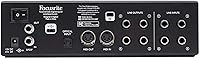
  • Mic Preamps: Equipped with four Air-enabled microphone preamps designed to emulate the transformer-coupled impedance character of Focusrite's classic ISA hardware, with ultra-low noise performance.
  • I/O Count: Supports 18 simultaneous inputs and 8 simultaneous outputs, covering mic, line, instrument, ADAT, and headphone signal paths in a single unit.
  • Sample Rate: Converts audio at up to 24-bit/192kHz, with standard operating rates of 44.1kHz, 48kHz, 88.2kHz, 96kHz, 176.4kHz, and 192kHz all supported.
  • Dynamic Range: Achieves up to 119dB of dynamic range with ultra-low total harmonic distortion, providing clean signal capture and substantial headroom before the signal approaches clipping.
  • Instrument Inputs: Includes two high-impedance front-panel instrument inputs engineered to handle high-output pickups without introducing unwanted distortion into the signal path.
  • Line Inputs: Provides eight balanced analogue line inputs for connecting synthesizers, outboard processors, or other line-level sources alongside the four mic preamp channels.
  • Line Outputs: Fitted with four balanced 1/4-inch jack line outputs, including a dedicated stereo pair intended for primary monitor speaker connection.
  • Headphone Outputs: Offers two independent front-panel headphone outputs, each with its own dedicated gain control knob, enabling separate monitor mixes for producer and performer.
  • MIDI: Features full MIDI In and MIDI Out ports for connecting and controlling hardware synthesizers, drum machines, and any other MIDI-enabled equipment in the studio.
  • ADAT Expansion: Includes an ADAT optical input that accepts up to eight additional channels from a compatible external preamp or converter, expanding the total input count beyond the built-in hardware.
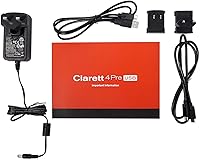
  • Connectivity: Connects to a host computer via USB 2.0, with both a standard USB-A cable and a USB Type-C cable included in the box to cover different port configurations.
  • Power: Requires a dedicated external power supply and is not bus-powered, meaning it must be connected to a wall outlet and cannot operate from a laptop USB port alone.
  • Dimensions: Measures 7.56 x 8.74 x 2.5 inches (W x D x H), proportioned for stable placement on a desktop in a fixed studio environment.
  • Weight: Weighs 5.52 pounds, reflecting the solid all-metal chassis construction rather than the lighter plastic-bodied builds common in entry-level interfaces.
  • OS Support: Compatible with macOS and Windows, with drivers, firmware, and the Focusrite Control routing application available as free downloads from Focusrite's website.
  • Bundled Software: Ships with Ableton Live Lite, Brainworx bx_console Focusrite, Softube Time and Tone Bundle, Focusrite Red Plug-in Suite, and one XLN Addictive Keys virtual instrument, all redeemed via download after registration.

Related Reviews
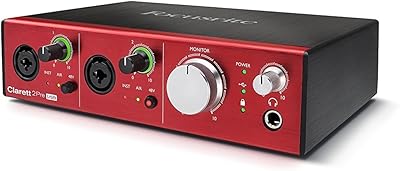
Focusrite Clarett 2Pre USB Audio Interface
83%
93%
Preamp Quality
94%
Noise Floor
67%
Value for Money
82%
Air Mode Performance
71%
Driver Stability
More
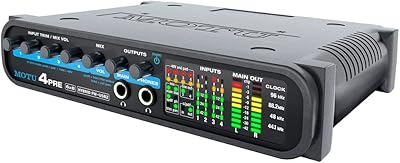
MOTU 4pre USB Audio Interface
68%
81%
Preamp Quality
63%
Driver Stability
58%
Connectivity Options
66%
Value for Money
77%
Build Quality
More
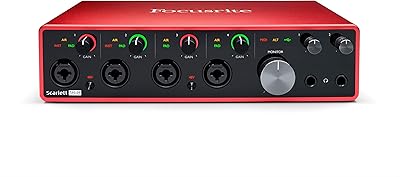
Focusrite Scarlett 18i20 3rd Gen Audio Interface
78%
89%
Preamp Quality
93%
I/O Versatility
67%
Driver Stability
74%
Value for Money
84%
Latency Performance
More
Focusrite Scarlett 4i4 3rd Gen Audio Interface
79%
91%
Preamp Quality
88%
Air Mode
86%
Build Quality
83%
I/O Versatility
82%
Value for Money
More
Focusrite Scarlett 18i8 3rd Gen USB Audio Interface
81%
83%
Preamp Quality
88%
Build Quality
91%
Audio Fidelity
86%
Driver Stability
79%
Value for Money
More
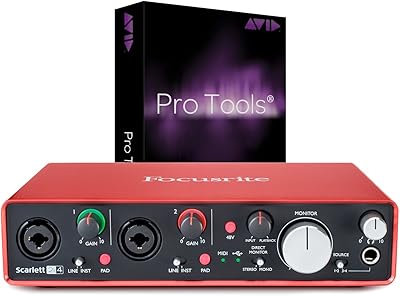
Focusrite Scarlett 2i4 2nd Gen Audio Interface
77%
88%
Preamp Quality
83%
Build Quality
86%
Value for Money
91%
Ease of Setup
79%
RCA Output Utility
More
Focusrite Scarlett 2i2 Studio 3rd Gen Bundle
82%
91%
Build Quality
88%
Preamp Quality
93%
Ease of Setup
86%
Driver Stability
83%
Value for Money
More
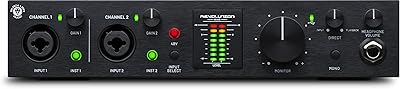
Black Lion Audio Revolution 2x2 Audio Interface
75%
88%
Preamp Quality
91%
Audio Transparency
86%
Clocking Performance
87%
Build Quality
73%
Value for Money
More
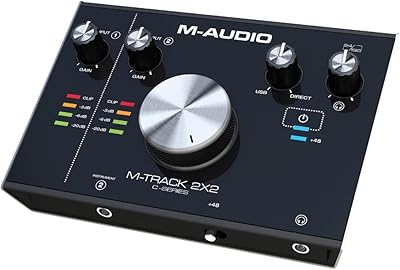
M-Audio M-Track 2X2 USB Audio Interface
76%
84%
Build Quality
76%
Preamp Performance
82%
Ease of Setup
58%
Driver Stability
79%
Value for Money
More
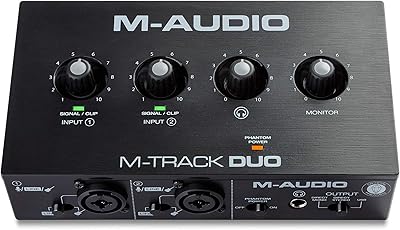
M-Audio M-Track Duo
M-Audio M-Track Duo
83%
88%
Preamp Clarity
93%
Value for Money
62%
Build Quality
91%
Ease of Installation
87%
Portability
More

FAQ

The Focusrite Clarett 4Pre USB Audio Interface carries over the same preamp hardware and core audio quality from the original Thunderbolt model — the connectivity change was about accessibility, not performance. Thunderbolt limited the original to computers with that specific port, while USB 2.0 works on virtually any modern Mac or PC without adapters. In everyday recording use, most people will not hear a difference.

Air mode is a real hardware circuit change that adjusts the input impedance of the preamps to mimic the response of Focusrite's transformer-coupled ISA designs — it is not a software effect or EQ curve applied after the fact. The result is a subtle brightness and increased presence in the upper-mid and high frequencies, which works particularly well on vocals and acoustic instruments. It will not transform a mediocre recording, but it consistently reduces the amount of corrective EQ needed in the mix.

This was a legitimate issue in the first year or so after launch, mostly affecting Windows users on certain configurations. Focusrite has since released multiple driver and firmware updates that have resolved the majority of reported problems, and more recent buyers report solid stability. The key is to install the latest version of Focusrite Control and update the firmware when prompted — running outdated software is where most remaining hiccups originate.

You can, but you will likely need to pair it with an external eight-channel preamp connected via the ADAT input to cover all the drum mics at once. The four built-in mic preamps cover kick, snare, and two overheads — a viable minimal drum setup — but for a full multi-mic kit, the ADAT expansion is how you get there. An eight-channel preamp connected via ADAT brings the total input count up to 18, which is enough for a thorough drum recording setup.

It needs its own power supply — this is not a bus-powered device. You cannot run it from a USB port alone, so a nearby wall outlet is a hard requirement for any session. If you regularly record in locations without reliable power access, this is a real limitation worth factoring into your decision.

No, they can be completely independent. Through Focusrite Control you can assign a different monitor mix to each output, so the performer can have their own cue mix with more reverb or a louder vocal while the producer listens to a flat reference. The independent gain controls on the front panel let each person adjust their own listening level without touching the other output.

Everything in the bundle is a full license, not a time-limited trial. Ableton Live Lite is a genuinely functional version of Ableton — feature-capped, but not expiring. The Brainworx bx_console Focusrite is a channel strip plugin that working engineers use on professional sessions. The Softube Time and Tone Bundle adds reverb, delay, and compression options, and the XLN Addictive Keys instrument is your choice of one keyboard or piano. If you are building a studio from scratch, this bundle removes several software purchases you would otherwise need to make.

The core argument for stepping up is preamp quality. The preamps on the Clarett 4Pre USB measure better than the Scarlett range — lower noise floor, more headroom — and the Air mode option adds a tonal character the Scarlett line simply does not have. If you record a lot of vocals or acoustic instruments and want to extract more from your microphones without outboard gear, that difference has real practical value. If most of your recording involves line-level sources, software instruments, or external preamps, the audible gap in your finished recordings will be smaller.

For the vast majority of recording work, 44.1kHz or 48kHz delivers everything you need, and most professional releases are mixed and mastered from sessions recorded at those rates. Recording at 96kHz gives you a bit more headroom when pitching or time-stretching audio, and some engineers prefer it for that reason. The 192kHz ceiling is mostly a spec-sheet reference point — the file sizes are enormous, latency increases, and the practical benefit over 96kHz is negligible for typical studio work.

The difference is tangible, not just cosmetic. The chassis is all-metal, the knobs have a firm, weighted feel, and the overall unit sits on a desk with the kind of solidity you associate with gear meant to stay in one place for years. It is heavier than most Scarlett models and noticeably more confidence-inspiring to handle. That said, this is still a desktop unit — it is not rack-mounted or built to travel.