Overview

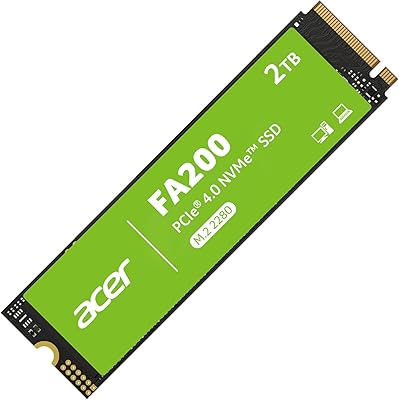
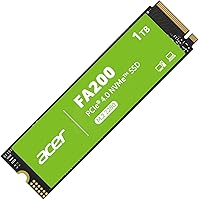
The Acer FA200 1TB NVMe SSD arrived in September 2024 as Acer's push into the Gen 4 storage market, with the actual manufacturing handled by Biwin — a detail worth knowing upfront. It uses the standard M.2 2280 form factor, so it slots into a wide range of laptops, desktops, and even the PS5 without any compatibility headaches. With over 1,600 ratings averaging 4.5 stars, this Gen 4 NVMe drive has built a respectable track record in a short time. It sits comfortably in the mid-range Gen 4 tier — not a bargain-bin drive, but far from the premium end of the spectrum.
Features & Benefits

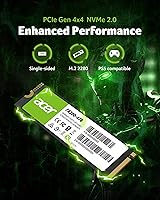
At the core of the FA200 is a PCIe 4.0 x4 interface running the NVMe 2.0 protocol, which translates to sequential read speeds of up to 7200 MB/s. In practical terms, that means Windows boots in seconds and large game installs copy over fast enough that you barely notice. Write speeds hit 6200 MB/s, which holds up well during sustained transfers like offloading 4K footage. Random performance — 1000K read IOPS and 850K write IOPS — keeps everyday app launches and multitasking responsive. It also works in PCIe 3.0 slots, so older systems can use it now and still benefit from full speed on a future board upgrade.

Best For

The FA200 is an obvious pick for anyone expanding PS5 storage, since it hits near the console's bandwidth ceiling without demanding a premium price. PC builders who want solid Gen 4 performance without overspending will find it a sensible choice. Laptop upgraders benefit from its slim, standard 2280 size and featherweight build. Content creators who regularly push large batches of video or photo files will appreciate those sustained write speeds in day-to-day work. And if you are currently on a PCIe 3.0 board but planning to upgrade soon, this Acer SSD is forward-compatible, making it a practical investment rather than a short-term stopgap.

User Feedback

Buyers consistently highlight how straightforward installation is, and many note an immediately noticeable speed improvement coming from an older SATA drive. Benchmark results shared in reviews align closely with the advertised figures, which is reassuring. On the downside, a number of users mention that the drive runs noticeably warm under sustained load — not dangerously so, but worth considering if your case airflow is limited or your laptop runs hot. There is no bundled heatsink, so high-demand workloads may call for one separately. A few technically savvy buyers also flagged the Biwin OEM origin, though this has not meaningfully dented overall satisfaction. Long-term reliability remains an open question given the recent launch, but early signs look encouraging.

Pros

  • Sequential read speeds of 7200 MB/s mean game load times and large file transfers feel noticeably snappier than Gen 3 drives.
  • Real-world benchmark results from buyers closely match the advertised specs, which is not always a given at this price tier.
  • The standard M.2 2280 form factor fits laptops, desktops, and the PS5 without any adapter or compatibility guesswork.
  • Backward compatibility with PCIe 3.0 slots makes it a future-proof buy for users planning a platform upgrade soon.
  • At well under a dollar per gigabyte, the FA200 offers strong value for a genuine Gen 4 drive with 1TB of usable space.
  • Installation is straightforward — the drive is light, compact, and requires no additional software setup out of the box.
  • Over 1,600 buyer ratings averaging 4.5 stars suggest broad satisfaction across a range of use cases and system types.
  • Write speeds of 6200 MB/s hold up well for sustained transfers, making it a practical pick for photographers and video editors.
  • Random IOPS performance keeps everyday multitasking and app responsiveness feeling sharp, not just sequential benchmarks.

Cons

  • No heatsink is included, which can be a real issue in thermally tight builds or laptops with poor internal airflow.
  • Biwin is the actual manufacturer behind the Acer branding, which may concern buyers who research OEM origins before purchasing.
  • The drive launched in late 2024, so long-term reliability data is still limited compared to more established models.
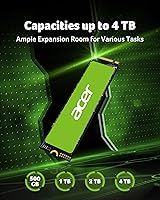
  • Only available in a 1TB configuration under this listing, leaving buyers who need 2TB or more without a direct upgrade path here.
  • Thermal throttling under sustained heavy workloads is a possibility without active cooling, particularly in compact or fanless enclosures.
  • The warranty terms are not prominently communicated, which makes it harder to assess total cost of ownership versus more transparent brands.
  • Buyers coming from premium storage brands may find the Acer-labeled packaging and documentation feel less polished than expected.

Ratings

The Acer FA200 1TB NVMe SSD has been scored by our AI rating engine after processing verified purchase reviews from buyers worldwide, with spam, bot submissions, and incentivized feedback actively filtered out. Scores reflect the full picture — where this Gen 4 NVMe drive genuinely excels and where real buyers have run into friction. Both strengths and honest shortcomings are baked into every category below.

Sequential Read Performance
91%
Buyers running benchmark tools consistently confirm speeds that land very close to the 7200 MB/s ceiling, which is rare for drives at this price tier. In day-to-day use, this translates to Windows loading in under ten seconds on a clean install and large game files copying in a fraction of the time a Gen 3 drive would need.
Peak sequential reads are only achievable on a fully compatible PCIe 4.0 host; users on older platforms will see speeds capped at Gen 3 levels. A small number of reviewers noted that sustained sequential reads over extended periods can drop slightly as the drive warms up without a heatsink.
Sequential Write Performance
87%
At 6200 MB/s write, this Acer SSD handles large data dumps — like exporting a 4K timeline or copying a 50GB game folder — with speed that content creators and power users genuinely notice. Several buyers specifically called out how well it holds up during PS5 game installations compared to slower drives they had tried previously.
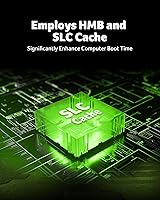
Write speeds under sustained, continuous workloads can taper off once the SLC cache is exhausted, which is a common characteristic of drives in this class rather than a unique flaw. Users transferring very large uncompressed video archives may see a dip in the back half of a prolonged write session.
Real-World Responsiveness
84%
The 1000K random read IOPS figure translates into a noticeably snappier experience when switching between open applications, launching software, or booting into Windows from a cold start. Gamers in particular reported that open-world titles with frequent asset streaming felt more fluid than on their previous SATA drives.
Random write IOPS, while strong on paper at 850K, do not differentiate the FA200 meaningfully from other mid-range Gen 4 drives in mixed light workloads. Users who shifted from a premium flagship NVMe drive rather than a SATA drive may notice less of a day-to-day difference in app responsiveness.
Thermal Management
58%
42%
Under normal desktop use — browsing, light gaming, everyday file management — the FA200 stays within a comfortable operating range and does not throttle. In well-ventilated mid-tower cases with decent airflow, the drive behaves predictably and temperatures remain within spec during typical sessions.
No heatsink is included in the box, and buyers in thermally constrained environments — compact ITX builds, slim laptops, or the PS5 without a third-party heatsink — reported the drive running warm enough to raise concern during sustained workloads. A handful of users experienced brief thermal throttling during very long sequential write sessions, which directly impacts the practical write performance ceiling.
Installation Experience
93%
The standard M.2 2280 form factor means this drive fits into virtually every compatible slot without adapters, and the ultra-light build makes handling during installation straightforward even in tight spaces. Buyers across all experience levels — from first-time PC builders to PS5 owners following Sony's official guide — reported clean, problem-free installs.
There is no installation guide included in the retail package, which means complete beginners will need to rely on third-party tutorials or manufacturer support pages. A small number of laptop upgraders noted that sourcing the correct M.2 screw for their specific chassis was a minor but avoidable friction point.
Value for Money
88%
For a genuine PCIe 4.0 drive with top-tier sequential speeds, the FA200 lands at a price point that undercuts many established storage brands offering equivalent performance, making it one of the more cost-efficient Gen 4 options available. Buyers routinely noted that the performance-per-dollar ratio felt genuinely fair rather than a compromise.
The absence of a heatsink and the limited warranty transparency do add hidden cost considerations — buyers who want proper thermal coverage will spend extra on a third-party M.2 heatsink. If warranty support ever becomes necessary, the process through Acer or Biwin channels is less clearly defined than with dedicated storage brands.
PS5 Compatibility
89%
The FA200 consistently clears Sony's minimum speed threshold for PS5 expansion storage with headroom to spare, and buyers expanding their console library reported seamless recognition and formatting through the PS5 system interface. Multiple reviewers specifically singled out this use case as the primary reason they chose this drive.
Since no heatsink ships with the drive, PS5 users need to budget for and source a compatible slim heatsink separately, as Sony recommends thermal coverage for M.2 drives installed in the console. A small subset of PS5 buyers found this extra step inconvenient given that competing drives sometimes bundle heatsink covers.
PCIe 3.0 Backward Compatibility
82%
18%
The ability to drop this drive into an older PCIe 3.0 motherboard and still get Gen 3-level NVMe performance is genuinely useful for buyers mid-cycle on a platform upgrade. Several users specifically purchased the FA200 with this forward-compatibility strategy in mind and confirmed it works without any manual configuration.
When running in a PCIe 3.0 slot, the drive naturally cannot reach anywhere near its rated speeds, which can create mismatched expectations for buyers who do not read the fine print. There is no visual or software indicator at the drive level to confirm which generation the host slot is negotiating at.
Brand Transparency
61%
39%
Acer is a globally recognized brand that lends a degree of consumer confidence and retail availability that a raw Biwin-labeled drive would not carry. For buyers who simply want a recognizable name on their purchase, the Acer branding delivers that without any functional downside.
The Biwin OEM relationship is not disclosed upfront in most retail listings, which surprised a noticeable segment of technically informed buyers who research manufacturer origins before committing. This lack of transparency around who actually engineered and produced the drive is a recurring frustration in user reviews and erodes some trust in the brand positioning.
Long-Term Reliability
67%
33%
Early ownership reports are broadly positive, with very few buyers flagging drive failures or data integrity issues in the months since the September 2024 launch. The 0 to 70 degree Celsius operating range is a standard and realistic spec for consumer NVMe use, suggesting the drive is not being pushed beyond sensible thermal limits in design.
The drive is simply too new to have a meaningful long-term reliability dataset, and the relative obscurity of Biwin's warranty and replacement process adds uncertainty for buyers who plan to use this drive as their primary system storage for several years. Buyers prioritizing documented long-term endurance ratings and clear TBW figures may find the available data insufficient.
Benchmark Accuracy
86%
One of the more trustworthy aspects of the FA200 is how closely its real-world benchmark scores match the advertised figures — CrystalDiskMark results shared by buyers on PCIe 4.0 systems consistently land within a few percent of the rated speeds. This alignment between marketing claims and measurable results builds genuine confidence.
Benchmark accuracy diminishes on PCIe 3.0 hosts, where results naturally cap at Gen 3 throughput, which can disappoint buyers who ran tests on an incompatible platform and assumed the drive was underperforming. A small number of users also noted minor inconsistencies in write benchmarks depending on drive temperature at test time.
Form Factor Versatility
92%
The M.2 2280 standard is the most universally adopted NVMe footprint across consumer hardware, meaning this drive fits laptops, desktop motherboards, and the PS5 without any physical modification or adapter. Buyers upgrading multiple systems over time can potentially move this drive between platforms without compatibility concerns.
The 2280 length, while the most common, does not fit the handful of ultra-compact laptops or mini-ITX boards that only accommodate the shorter 2242 or 2230 form factors. Buyers with niche or compact systems should verify their slot length before purchasing.
Packaging & Unboxing
63%
37%
The drive arrives securely packaged and undamaged in the vast majority of reported cases, with no buyer complaints about transit damage or static protection failures. The lightweight nature of the product means it ships efficiently and arrives quickly through standard fulfillment channels.
The retail packaging is minimal and does not include documentation, a data migration guide, or any bundled accessories — not even a mounting screw. Buyers accustomed to more complete unboxing experiences from dedicated storage brands may find the presentation underwhelming for the price paid.

Suitable for:

The Acer FA200 1TB NVMe SSD is a strong fit for anyone who wants genuine Gen 4 performance without climbing to the top of the price ladder. PS5 owners looking to expand their console storage will find it hits close to the maximum bandwidth the console can use, making it one of the more practical choices in its tier. PC builders working with a mid-range AM5 or Intel 12th-gen and newer platform will get full PCIe 4.0 throughput, with real-world boot times and game load speeds that feel meaningfully faster than any SATA or Gen 3 drive. Laptop upgraders benefit from the standard M.2 2280 footprint, which fits the vast majority of consumer notebooks. Content creators who frequently move large video projects or RAW photo batches will notice the 6200 MB/s write speed during transfers. Even users still on a PCIe 3.0 board can buy this Acer SSD now and carry it forward to a Gen 4 platform later without leaving performance on the table.
Not suitable for:

The Acer FA200 1TB NVMe SSD is not the right call for buyers who prioritize long-term brand confidence or want a drive backed by a storage-specialist manufacturer with a deep reliability track record. The drive is made by Biwin under the Acer label, which is not a dealbreaker in itself, but buyers who care deeply about OEM provenance should know this upfront. There is no bundled heatsink, so if you are installing it in a thermally constrained laptop or a small-form-factor PC with limited airflow, sustained workloads could push temperatures higher than ideal. Users who need more than 1TB — such as video editors archiving large raw footage libraries — will find this single drive falls short and might be better served by a higher-capacity option. Workstation users running demanding server-adjacent tasks or NAS builds should also look elsewhere, since this is a consumer-class drive rated for standard operating conditions rather than continuous heavy-duty use.
Specifications

  • Capacity: The drive offers 1TB of usable flash storage, suitable for operating systems, game libraries, and large media collections.
  • Interface: It connects via a PCIe 4.0 x4 interface, delivering up to four lanes of high-bandwidth communication between the drive and the host system.
  • Protocol: The drive uses the NVMe 2.0 protocol, which reduces latency and improves command queue efficiency compared to older NVMe 1.x implementations.
  • Sequential Read: Maximum sequential read speed is rated at 7200 MB/s under optimal conditions with a compatible PCIe 4.0 host.
  • Sequential Write: Maximum sequential write speed reaches 6200 MB/s, supporting sustained data transfers such as large file copies and video exports.
  • Random Read: Random read performance is rated at up to 1,000,000 IOPS, contributing to faster application launches and operating system responsiveness.
  • Random Write: Random write performance reaches up to 850,000 IOPS, which benefits workloads involving frequent small file writes such as databases or active project files.
  • Form Factor: The drive uses the M.2 2280 form factor, measuring 3.15 x 0.87 inches in footprint, compatible with the vast majority of consumer motherboards and laptops.
  • Dimensions: Physical dimensions are 3.15″ x 0.12″ x 0.87″, making it a compact and low-profile module that fits standard M.2 slots without obstruction.
  • Weight: The drive weighs just 0.212 ounces, making it among the lightest storage upgrades available for both laptops and desktop builds.
  • Operating Temp: Rated for operation between 0 and 70 degrees Celsius, covering the full range of typical consumer desktop and laptop thermal environments.
  • Storage Temp: Non-operating storage temperature tolerance spans from -40 to 85 degrees Celsius, ensuring the drive survives shipping and long-term shelf storage safely.
  • Backward Compat: The FA200 is backward compatible with PCIe 3.0 slots, functioning in older systems at reduced speeds until a Gen 4 platform is available.
  • Manufacturer: The drive is manufactured by Biwin, a Chinese storage OEM, and sold under the Acer brand through an official licensing arrangement.
  • Brand: Marketed under the Acer brand, the FA200 series represents Acer's consumer-facing push into the internal SSD storage segment.
  • Compatibility: Officially compatible with desktop PCs, laptops, and the Sony PS5 console, provided the host device has an available M.2 PCIe slot.
  • Launch Date: The FA200 1TB variant became available in September 2024, making it a relatively recent entrant in the Gen 4 consumer SSD market.
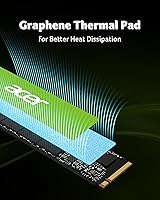
  • Heatsink: No heatsink is included in the retail package; users in thermally limited builds may need to source a compatible M.2 heatsink separately.

Related Reviews

Acer FA200 4TB NVMe Gen4 SSD
79%
88%
Sequential Speed
61%
Sustained Write Performance
91%
Value for Money
86%
PS5 Compatibility
79%
Thermal Management
More
Acer FA200 2TB NVMe Gen4 SSD
87%
94%
Performance
89%
Thermal Management
93%
Read Speed (7200MB/s)
87%
Reliability
90%
Compatibility with PS5
More
RONGSHU 1TB NVMe SSD
87%
91%
Performance
94%
Read Speed
89%
Write Speed
88%
Installation Ease
75%
Thermal Management
More
Acer SA100 480GB Internal SSD
81%
93%
Value for Money
78%
Real-World Speed
91%
Ease of Installation
74%
Long-Term Reliability
88%
Compatibility
More
Addlink S91 1TB NVMe SSD
89%
94%
Performance & Speed
88%
Compatibility with Devices
85%
Ease of Installation
91%
Read Speed (Max)
85%
Write Speed (Max)
More
Samsung 980 1TB NVMe M.2 SSD
83%
91%
Read Speed Performance
78%
Write Speed Performance
83%
Value for Money
89%
Build & Reliability
94%
Installation Ease
More
KingSpec XG7000 1TB NVMe SSD
88%
93%
Performance in Gaming
90%
Ease of Installation
94%
Read Speed
88%
Write Speed
85%
Thermal Management
More
WD_BLACK SN8100 1TB NVMe SSD
89%
95%
Performance
90%
Reliability
94%
Speed (Read/Write)
88%
Installation & Setup
92%
Endurance (TBW)
More
TEAMGROUP MP44L 1TB NVMe SSD
89%
94%
Performance
96%
Speed (Read/Write)
85%
Heat Management
91%
Installation Ease
92%
Compatibility
More
GiGimundo G7400 1TB NVMe SSD
86%
92%
Performance
94%
Speed (Read/Write)
84%
Thermal Management
88%
Compatibility with Gaming PCs
72%
Compatibility with PS5
More

FAQ

Yes, the FA200 is compatible with the PS5 expansion slot and meets Sony's minimum speed requirements with room to spare. Just make sure your PS5 firmware is up to date before installation, and follow Sony's official guide for fitting the drive into the console's M.2 bay. Keep in mind that the PS5 slot does support heatsinks, and since none is included here, picking one up is a reasonable precaution.

It will work, yes. The Acer FA200 1TB NVMe SSD is backward compatible with PCIe 3.0 slots, so it will function normally in older laptops — just at Gen 3 speeds rather than full Gen 4 throughput. You will still see a meaningful improvement over any SATA drive you are replacing.
Biwin is the OEM manufacturer behind the FA200. This is an established arrangement in the storage industry, where brands like Acer license their name to drives produced by third-party manufacturers. Biwin is a real manufacturer with production capacity and industry relationships, so this is not a fly-by-night situation, though it does mean you are trusting Acer's QC oversight rather than a dedicated storage brand's own engineering.

No special software is required. You need a small Phillips-head screwdriver to secure the M.2 screw on your motherboard or laptop, and that is about it. If you are migrating from an existing drive, cloning software like Macrium Reflect Free or Samsung Data Migration will handle the transfer, though neither is bundled with the FA200.

Under sustained loads like large file transfers or game installations, the FA200 can run warm, particularly without a heatsink. In well-ventilated desktop builds, this is generally manageable. In laptops or compact systems with limited airflow, temperatures can climb enough to trigger throttling over extended sessions. Adding a low-profile M.2 heatsink is a worthwhile precaution if your use involves frequent heavy workloads.

Like all NVMe drives, peak sequential speeds are achieved under ideal, controlled test conditions. In practice, buyers running CrystalDiskMark and similar benchmarks report results closely matching the advertised figures on compatible Gen 4 systems. Day-to-day tasks like booting Windows or loading games will feel fast, though you will not sustain 7200 MB/s during a typical mixed workload.

Technically yes, if you use a compatible M.2 NVMe USB enclosure with PCIe support. However, USB bandwidth will cap throughput well below the drive's rated speeds, so you would largely be wasting the Gen 4 advantage. It would function reliably, but it is not what this drive is designed for.

The jump from SATA to this Gen 4 NVMe drive is substantial. SATA SSDs top out around 550 MB/s read, while this Acer SSD reaches into the thousands. In practical terms, you will notice faster Windows startup, quicker game load screens, and snappier large file transfers. If you are currently on a spinning hard disk, the difference will be even more dramatic.

Warranty details have not been prominently published alongside the product listing, which is a point worth flagging. Before purchasing, it is worth checking Acer's official support pages or contacting their customer service to confirm the specific warranty period and what it covers. This is one area where established dedicated storage brands tend to communicate more clearly.

For most gamers, 1TB is a practical starting point but can fill up faster than expected. Modern AAA titles routinely exceed 100GB each, so you are looking at around 8 to 10 large games before running into space pressure. If you regularly keep a large library installed simultaneously, a 2TB drive would serve you better in the long run. For a PS5 secondary slot used for overflow storage, 1TB tends to be a reasonable fit for most users.