Overview

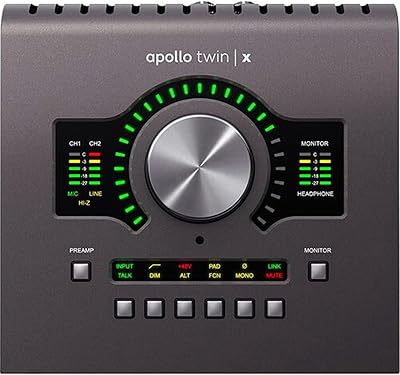
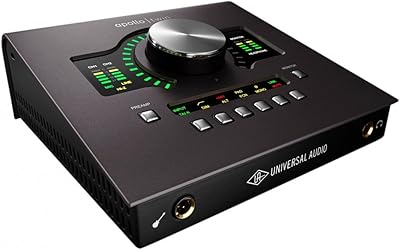
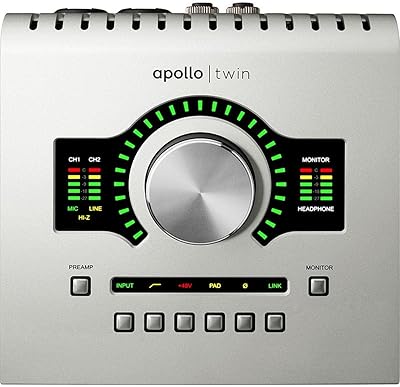
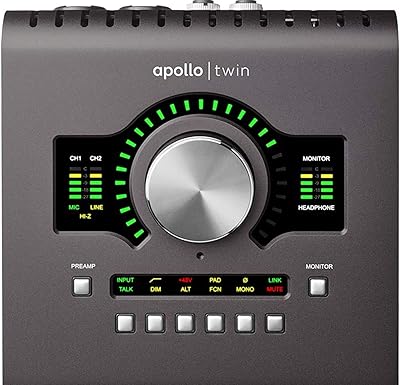
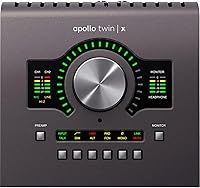
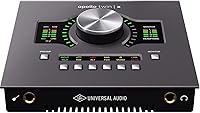
The Universal Audio Apollo Twin X DUO Interface sits in a rare category for desktop gear — a Thunderbolt 3 unit built on conversion circuitry drawn directly from UA's professional rackmount Apollo X line. The Heritage Edition variant ships with five UAD plug-in titles whose combined value well exceeds the cost of the hardware alone. Dual-core UAD DSP runs those plug-ins in real time without borrowing cycles from your CPU. Worth stating plainly: if you work on Windows, UA's LUNA recording environment is simply unavailable. The hardware supports both platforms for standard DAW use, but that caveat is worth knowing before you commit.
Features & Benefits

Where the Apollo Twin X DUO earns its price is in the details most interfaces skip. The Unison mic preamp technology isn't just digital modeling slapped on top — the preamp circuit physically reconfigures itself to match the impedance and gain characteristics of classic tube and transformer designs, which is audible immediately on vocals and acoustic instruments. The front-panel Hi-Z input lets guitarists track with UAD amp sims at near-zero latency, meaning no distracting delay in your headphones while you play. Add up to 8 channels of digital input via ADAT or S/PDIF, and the I/O situation grows well beyond what the unit's compact footprint suggests. A built-in talkback mic handles basic studio communication without any extra hardware.

Best For

This UA desktop interface makes the most sense for Mac-based producers who record one or two sources at a time and genuinely care about what those recordings sound like. Singer-songwriters get studio-grade preamps without buying a rackmount rig. Guitarists who track direct will appreciate how the amp modeling behaves at low latency — convincing enough to actually perform with. Producers already in the UAD ecosystem will find the Apollo Twin X DUO a natural, expandable hub, since the ADAT port means you're not permanently limited to two channels. If you're outgrowing a basic USB interface and want hardware that scales with your work, this is a strong long-term choice.

User Feedback

Across user reviews, the praise is consistent and the criticisms are pointed. Most owners highlight how accurate the Unison preamp modeling sounds compared to their expectations, and new buyers frequently mention the Heritage bundle as the purchase's standout value — getting those flagship UAD titles included makes the entry price feel more reasonable. On the other side, Windows users regularly flag frustration with LUNA's exclusivity, and a recurring complaint is that the DUO's processing cores can feel stretched thin when stacking multiple demanding plug-ins in a session. A smaller group questions the channel count relative to the cost. Still, the overwhelming majority of long-term owners report no regret, with most complaints aimed at UA's platform restrictions, not the hardware itself.

Pros

  • Conversion quality rivals purpose-built rackmount gear, delivering transparent recordings with impressive headroom.
  • Unison preamp modeling goes beyond software — the hardware physically reconfigures itself to replicate classic circuit behavior authentically.
  • The Heritage Edition bundle includes five award-winning UAD plug-in titles most engineers would purchase separately at significant cost.
  • Real-time amp sim tracking at near-zero latency makes recording direct guitar feel like playing through a real amp.
  • ADAT expansion adds up to 8 digital channels without ever swapping out the interface itself.
  • Compatible with all major DAWs via VST, AU, and AAX 64, fitting into virtually any existing production workflow.
  • Built-in talkback mic and front-panel headphone output handle basic session monitoring without requiring extra gear.
  • Compact desktop footprint houses professional-grade internals that punch well above the unit's physical size.
  • Long-term expandability via digital I/O means the Apollo Twin X DUO can grow alongside a producer's evolving needs.

Cons

  • LUNA, UA's integrated recording app, is Mac-only — Windows users lose a meaningful workflow advantage from day one.
  • DUO core DSP can feel stretched thin when stacking several CPU-intensive UAD plug-ins within a single session.
  • All UAD-powered plug-ins require compatible UA hardware to run — this is a closed ecosystem, not portable software ownership.
  • Two analog inputs is a firm ceiling for anyone needing to record more than two sources simultaneously.
  • Price-to-input-count ratio is steep compared to competing Thunderbolt interfaces that offer more channels for less money.
  • Thunderbolt 3 dependency means computers without a Thunderbolt port are entirely incompatible — no USB fallback exists.
  • Unlocking ADAT channels requires purchasing a separate preamp or digital converter, adding both cost and setup complexity.
  • Producers who outgrow the DUO's DSP headroom face a substantial additional investment to step up to the Quad tier.

Ratings

The Universal Audio Apollo Twin X DUO Interface has been assessed by our AI rating engine after analyzing thousands of verified owner reviews sourced from global markets, with automated filtering applied to remove incentivized, duplicate, and bot-generated submissions. Each score reflects aggregated real buyer experiences across a wide range of use cases — from solo home studio tracking to serious project work. Both the strengths that owners consistently highlight and the recurring frustrations are factored into every score, giving you an honest picture of how this interface actually performs in daily studio life.

Sound Quality
93%
Elite conversion circuitry derived from UA's rackmount Apollo X lineage gives recordings a transparency that producers consistently describe as a clear step above their previous desktop interfaces. Tracks sit more cleanly in a mix, often requiring less corrective processing to sound polished and open.
At this level of conversion quality there is little to criticize on technical grounds. A smaller share of users note that the performance advantage over more affordable interfaces is most noticeable on acoustic sources, making it feel less transformative for purely electronic or sample-based production.
Preamp Quality
91%
The Unison preamp technology is consistently cited as the standout feature — the circuit physically reconfigures its impedance to replicate classic tube and transformer designs, a difference vocalists and acoustic instrumentalists notice immediately. Producers transitioning from mid-range interfaces often describe it as finally hearing their microphones perform the way they were intended to.
With only two preamp inputs, producers who regularly track more than two sources at once will feel the limitation regardless of preamp quality. A few users also note that Unison modeling rewards a mid-to-high-end microphone; the sonic gains are subtler through budget-tier condensers.
DSP Performance
74%
26%
Real-time DSP processing lets you track vocals through a vintage compressor or record guitar with a full amp simulation and hear the result in your headphones with barely any perceptible delay. For performers who find software-only monitoring latency distracting, this is a meaningful difference that changes how comfortable tracking sessions genuinely feel.
The DUO configuration handles standard sessions comfortably but can run short on headroom when stacking several UAD plug-ins at once — users running dense mixes with multiple compressors and reverbs in parallel frequently hit the ceiling. For those workflows, the Quad version is a more realistic long-term fit.
Value for Money
81%
19%
The Heritage Edition bundle shifts the value equation significantly — the five included UAD titles represent tools most working engineers budget for separately, and combining them with the hardware makes the overall package feel well-justified for producers entering the UAD ecosystem for the first time.
On raw hardware terms, the price-to-analog-input ratio is steep: two XLR inputs at this price raises fair questions when competing Thunderbolt interfaces offer more channels at lower cost. Buyers who have no plan to build a UAD plug-in library will feel that premium most acutely.
Platform Compatibility
57%
43%
For Mac users the experience is cohesive and well-developed — LUNA offers a tightly optimized recording environment built specifically around Apollo hardware, and the overall software stack on macOS feels polished and reliable. Thunderbolt connectivity is mature on Mac, and users report consistent driver performance across supported macOS versions.
Windows users are effectively excluded from LUNA and receive a noticeably reduced software experience compared to Mac counterparts, which is a recurring theme in critical reviews. The Mac-only restriction on UA's flagship recording environment is a real feature gap that Windows producers should factor in seriously before committing.
Plug-in Bundle
87%
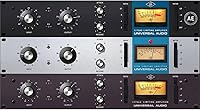
The Teletronix, Pultec, and UA titles in the Heritage bundle are genuine studio workhorses, not lite demos or introductory versions. New buyers consistently report immediate production use from the LA-2A and 1176 compressors and the Pultec EQ within their very first sessions after setup.
The key caveat many buyers discover post-purchase is that UAD plug-ins are hardware-locked — they only run when a compatible UA interface is connected, so the licenses do not travel to other systems. Producers who ever exit the UA ecosystem effectively leave that entire software library behind.
Build Quality
83%
The chassis feels solid and well-engineered for a desktop unit — the main volume knob has a weighted, purposeful feel that users coming from cheaper interfaces immediately notice. Most owners report no meaningful wear or hardware degradation even after extended daily studio use over multiple years.
A subset of long-term users mention the unit runs noticeably warm during extended sessions, which is worth considering in a cramped or poorly ventilated desk setup. The desktop form factor is also more vulnerable to accidental knocks than a rack-mounted alternative would be in a busier studio.
Ease of Setup
79%
21%
Getting up and running is straightforward for most users — install the UA Connect software, connect via Thunderbolt 3, and the interface is recognized quickly. Mac users in particular report a smooth initial experience, with the Console application providing clear routing and monitoring control from the start.
Windows users occasionally encounter driver configuration friction that Mac users avoid, and the UAD plug-in licensing process can feel bureaucratic for first-time buyers unfamiliar with the platform. The overall setup experience is competent but not as frictionless as simpler class-compliant USB interfaces tend to be.
DAW Integration
76%
24%
The Apollo Twin X DUO integrates reliably across Logic Pro, Pro Tools, Cubase, and Ableton Live via VST, AU, and AAX 64 formats, covering virtually every mainstream production workflow without compatibility headaches. UA's Console application handles real-time routing and monitoring with minimal CPU overhead during sessions.
LUNA, the most tightly integrated recording environment, is Mac-only, which leaves Windows producers with a noticeably less complete software experience. Console's routing interface also has a learning curve that newer producers sometimes find unintuitive during the first several sessions before the logic becomes intuitive.
I/O Versatility
63%
37%
The optical ADAT input is a practical addition that lets producers bring in up to 8 digital channels by connecting a compatible external preamp, giving the unit a meaningful growth path without requiring a full interface replacement. Having both ADAT and S/PDIF on the same unit offers flexibility not every competitor at this tier provides.
Two analog inputs is a firm ceiling for anyone beyond solo recording — tracking a vocalist and guitarist simultaneously is about the practical limit before additional hardware is required. Users who regularly need four or more simultaneous analog inputs will find the base configuration genuinely insufficient for their core workflow.
Latency Performance
88%
Near-zero monitoring latency through the UAD DSP chain is one of the most practically significant advantages this unit offers — performers who have previously struggled with distracting delay while tracking through software plug-ins notice the difference immediately. The round-trip latency is tight enough that most musicians cannot consciously perceive it mid-take.
The low-latency advantage applies specifically to the UAD processing path; routing audio through third-party plug-ins outside the UAD environment reverts to standard host-based latency behavior. A small number of users also report occasional Thunderbolt handshake issues on certain laptop configurations that temporarily disrupt stable monitoring.
Expandability
73%
27%
The ADAT optical input gives producers a clear and well-documented upgrade path — connecting an eight-channel preamp later is a common route for Apollo users who outgrow two analog inputs over time. This means the initial investment can serve as a long-term studio foundation rather than a short-term stepping stone.
Expanding the analog channel count requires purchasing additional outboard hardware, an extra cost that some buyers do not anticipate at the time of initial purchase. DSP headroom cannot be upgraded in the field — moving from DUO to Quad-tier processing means buying a different interface model entirely.
Workflow Features
77%
23%
The built-in talkback microphone is a practically useful addition that saves producers from setting up a separate communication chain when working with vocalists or musicians in an isolated room. The front-panel headphone output with its own level control keeps monitoring workflows clean and contained without extra hardware on the desk.
The talkback microphone is functional rather than high-fidelity, and some users find its activation workflow less immediate than dedicated talkback hardware. The single headphone output is also a limitation for producers who need to run two independent headphone mixes simultaneously for themselves and a performer.
Form Factor
84%
The desktop form factor genuinely suits the target audience — most home studio producers have no interest in rack units, and this UA desktop interface fits comfortably on a desk without demanding significant real estate. The front-panel layout is logical, with the instrument input and headphone output positioned exactly where you naturally reach.
The 9 x 8 x 8 inch footprint, while compact for what it houses, is larger than ultra-portable interfaces aimed at mobile recording, and users who travel with their studio setup note it is not genuinely pocket-friendly. Rear-facing cable ports can also create a cluttered appearance in a tight desktop environment.

Suitable for:

The Universal Audio Apollo Twin X DUO Interface is purpose-built for the producer who treats recording quality as non-negotiable but doesn't need a sprawling channel count to get their work done. Mac-based singer-songwriters and solo artists who track vocals, acoustic instruments, or direct guitar will get the most from its Unison preamp technology, which genuinely closes the gap between a home setup and a professional studio chain. Guitarists in particular benefit from tracking through UAD amp simulations at near-zero latency — the processed sound arrives in your headphones almost instantly, making performance feel natural rather than clinical. Home studio owners already in the UAD plug-in ecosystem will find this a logical and expandable hub, especially given the ADAT port that adds up to 8 more digital channels when needed. For anyone upgrading from a basic USB interface who wants their next purchase to last for years, the Heritage Edition's included plug-in bundle — classically modeled compressors, EQs, and amp sims — adds immediate production value without any additional spend.
Not suitable for:

The Universal Audio Apollo Twin X DUO Interface is a harder sell for anyone working outside its intended ecosystem, and the reasons are practical rather than subjective. Windows-only producers are immediately cut off from LUNA, UA's integrated recording environment, which removes one of the platform's genuine workflow advantages before you even open a session. Beyond that OS restriction, buyers who need more than two simultaneous analog inputs — podcast hosts recording multiple guests, bands tracking live, or producers running full session setups — will hit a ceiling fast; ADAT expansion helps, but it demands additional outboard hardware to be useful. The DUO-tier DSP can also feel constrained when stacking several of UA's more demanding plug-ins at once, and the Quad version exists specifically to address that limitation. Finally, if you have no intention of building a UAD plug-in library, you're paying a meaningful premium for onboard DSP processing you'll never actually tap, and competing Thunderbolt interfaces would serve you equally well on raw I/O alone.
Specifications

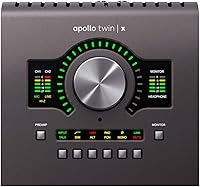
  • Connectivity: Connects to a host computer exclusively via Thunderbolt 3, providing the low-latency, high-bandwidth data path required for real-time UAD plug-in processing.
  • DSP Processing: Equipped with dual UAD-2 CORE processors that handle UAD plug-in computation onboard, leaving the host computer's CPU free for other production tasks.
  • Mic Preamps: Two Unison-enabled XLR mic preamp inputs physically reconfigure their input impedance and gain structure to model classic tube and transformer-based preamp circuits at the hardware level.
  • Instrument Input: A front-panel Hi-Z instrument input (unbalanced) accepts guitar or bass signals directly for real-time tracking through UAD amp simulation plug-ins.
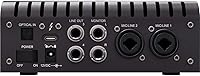
  • Digital I/O: Optical ADAT and S/PDIF inputs provide up to 8 additional digital audio channels, expanding total I/O capacity without requiring an interface upgrade.
  • Headphone Output: A front-panel 1/4-inch headphone output with independent level control supports direct monitoring during tracking without a separate headphone amplifier.
  • Talkback Mic: A built-in talkback microphone allows engineer-to-talent communication during recording sessions without requiring a dedicated external talkback unit.
  • Plug-in Formats: Supports UAD Powered Plug-Ins in VST, AU, and AAX 64 formats, covering all major DAW hosting environments on both Mac and Windows.
  • OS Support: Compatible with Mac and Windows for standard DAW operation; the LUNA Recording System is a macOS-exclusive feature and is not available on Windows.
  • Weight: The unit weighs 2.35 pounds, making it light enough for portable studio setups while remaining stable on a desktop surface.
  • Dimensions: The chassis measures 9 x 8 x 8 inches, occupying a compact footprint well suited to space-limited home and project studio environments.
  • Heritage Bundle: Includes five award-winning UAD plug-in titles from Teletronix, Pultec, and Universal Audio, adding substantial value for producers new to the UAD ecosystem.
  • Analog Classics: Also ships with the Realtime Analog Classics bundle, which includes vintage-modeled compressors, EQs, a tube preamp, and guitar amp simulations ready to use immediately.
  • DAW Support: Works with Logic Pro, Pro Tools, Cubase, Ableton Live, and other major DAWs that support VST, AU, or AAX 64 plug-in formats.
  • Model Code: The official model identifier is APLTWXD-HE, where the D indicates the dual-core DSP configuration and HE denotes the Heritage Edition variant.

Related Reviews

Universal Audio Apollo Twin X QUAD Interface
81%
93%
Audio Conversion Quality
88%
DSP Performance
91%
Preamp Quality
74%
Value for Money
86%
Build Quality
More
Universal Audio Apollo X16 Audio Interface
82%
94%
Conversion Quality
91%
UAD DSP Performance
89%
Build & Hardware Quality
92%
Low-Latency Tracking
88%
I/O Flexibility
More
Universal Audio Apollo 8 QUAD Audio Interface
79%
93%
Preamp Quality
91%
DSP Performance
89%
Audio Conversion
92%
Build Quality
74%
Software & Console 2.0
More
Universal Audio Apollo Twin MkII Solo Interface
78%
93%
Preamp Quality
71%
DSP Performance
91%
Build Quality
89%
Audio Conversion
78%
Software Experience
More
Universal Audio Apollo Twin MKII Quad Interface
81%
93%
Audio Conversion Quality
91%
DSP Processing Performance
88%
Preamp Quality
89%
Latency During Tracking
86%
Build & Hardware Quality
More
Universal Audio Apollo Twin USB Heritage Interface
79%
91%
Audio Conversion Quality
86%
UAD DSP Performance
88%
Preamp Quality
71%
Windows Compatibility
74%
Value for Money
More
Universal Audio Apollo Twin MkII Heritage Edition
86%
93%
Audio Performance
94%
Build Quality
88%
UAD Plug-in Bundle
90%
Latency & Tracking
72%
Software Compatibility
More
Universal Audio Arrow Thunderbolt 3 Audio Interface
77%
93%
Audio Conversion Quality
91%
Unison Preamp Performance
88%
Real-Time UAD Processing
58%
Thunderbolt 3 Connectivity
61%
Windows Compatibility
More
M-Audio M-Track Duo
M-Audio M-Track Duo
83%
88%
Preamp Clarity
93%
Value for Money
62%
Build Quality
91%
Ease of Installation
87%
Portability
More
Universal Audio Apollo x4 Heritage Edition Audio Interface
80%
93%
Preamp Quality
91%
Conversion Quality
89%
DSP Performance
78%
Value for Money
88%
Build Quality
More

FAQ

It works on Windows for standard DAW recording — you can use it with Pro Tools, Cubase, Ableton Live, and similar software without any issues. The limitation is LUNA, Universal Audio's own recording environment, which is Mac-only. If you're on Windows and plan to use a third-party DAW, you're covered; just know that one workflow feature is off the table from the start.

The difference comes down to how many UAD plug-ins you can run simultaneously in real time. The DUO version has two UAD-2 processing cores, which handles most tracking and mixing tasks comfortably but can feel constrained when you're stacking a lot of CPU-intensive plug-ins at once. The Quad version bumps that to four cores, giving noticeably more headroom for complex sessions. For solo producers and singer-songwriters, the DUO is typically more than sufficient.

Thunderbolt 3 is required — there's no USB fallback. Thunderbolt 3 uses the same physical USB-C connector, but the protocol underneath is different, and plugging a standard USB-C cable into a non-Thunderbolt port won't establish a connection. Most modern Macs and many recent Windows laptops include Thunderbolt 3, but it's worth confirming your specific computer's port specification before purchasing.

You can use them inside your DAW of choice — LUNA is entirely optional. The plug-ins run via VST, AU, or AAX 64, so they load inside Logic Pro, Pro Tools, Ableton, Cubase, and other compatible hosts just like any other plug-in. One important caveat: UAD-powered plug-ins only function when compatible UA hardware is connected to your computer, so they aren't portable to a system without the interface.

There are two XLR mic preamp inputs on the back panel, so two microphones simultaneously through the analog inputs. If you need more, the optical ADAT port lets you connect an external preamp with ADAT output to bring in up to 8 additional channels digitally. For most home studio use cases — vocals, acoustic guitar, small podcast setups — two inputs is all you'll realistically need.

It's one of the stronger use cases for this unit. Plugging into the front-panel Hi-Z input feeds your guitar signal into the UAD processing chain, where you can track through amp simulations — including Marshall Plexi and Ampeg SVT models from the included bundle — at near-zero latency. In practice that means you hear a fully processed amp sound in your headphones with barely any perceptible delay, which makes performing feel natural rather than detached.

For anyone new to the UAD ecosystem, they're genuinely useful. The included titles from Teletronix, Pultec, and Universal Audio are among the more respected offerings in the UAD library and would cost considerably more if purchased individually. That said, these plug-ins are tied to UA hardware and won't run on any other system, so if you already own several UAD titles, the Heritage bundle may offer less incremental value than it would for a first-time buyer.

Yes, through the optical ADAT input. Connecting a compatible external preamp or analog-to-digital converter with an ADAT output gives you up to 8 additional channels of digital audio routed into your session. It's a practical path for producers who start small and want to scale up — for example, adding an eight-channel preamp to cover a small drum kit — without replacing the interface entirely.

The included bundles cover the essentials well enough to produce complete tracks from day one. Between the Realtime Analog Classics and Heritage Edition titles, you get vintage-voiced compression tools, a classic EQ, tube preamp emulation, and guitar amp models — the kind of processors working engineers reach for regularly. You'll likely want to expand the library over time as your needs become more specific, but the included content is not filler; it's a capable starting point.

The Universal Audio Apollo Twin X DUO Interface sits in a different category than most competitors at a comparable price. Other brands offer more analog inputs for the same or less money, which is a real trade-off worth acknowledging. Where this unit justifies its positioning is in conversion quality, hardware-level preamp modeling, and access to the UAD plug-in ecosystem — advantages that are hard to match at this form factor. If channel count is your top priority, there are better options; if sound quality and preamp authenticity matter more, the competition thins out quickly.
Where to Buy