Overview

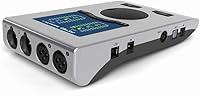
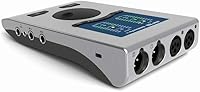
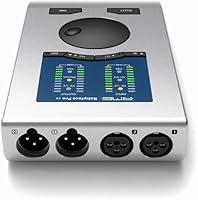
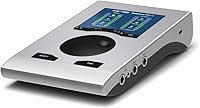
The RME Babyface Pro FS USB Audio Interface sits at the top end of the compact interface market — a space where RME has built its reputation over decades by refusing to cut corners on audio engineering. This is not a brand chasing trends; they make gear for professionals who expect their tools to perform without question. The Babyface Pro FS delivers studio-grade audio quality in a unit small enough to fit in a laptop bag, anchored by RME's proprietary SteadyClock FS technology, which keeps clocking rock-solid even in electrically noisy environments. Having been on the market since 2019, it has earned its standing through consistent real-world performance rather than marketing claims.
Features & Benefits

Twenty-four channels of I/O over a single USB cable is more than a spec — it means routing complex multi-source sessions without reaching for additional hardware. The SteadyClock FS keeps the clock signal exceptionally stable, which translates to cleaner transients and tighter low-end in critical listening situations. On macOS, this compact audio interface operates class-compliant out of the box — no driver installation, no surprises. Windows users need the RME driver, which is among the most reliable in the industry. TotalMix FX, the onboard DSP mixer, provides near-zero-latency monitoring with full EQ and dynamics control, though it takes real time to learn properly. DAW compatibility is a non-issue across every major platform.

Best For

The Babyface Pro FS makes the most sense for professional home studio owners who want rack-level performance without the rack — and for touring engineers who cannot afford driver crashes mid-session. Producers deeply embedded in Pro Tools or Logic Pro will appreciate the rock-solid compatibility and consistently low-latency performance. It also rewards anyone stepping up from a mid-range interface; the difference in preamp character and headroom is noticeable immediately. That said, if your workflow is limited to voice-over work or simple podcast recording, this compact audio interface is more capability than you will ever use. The investment makes sense only when the full I/O and monitoring features are actually part of your daily workflow.

User Feedback

With a 4.6-star average across verified buyers, the consensus around this RME interface is strongly positive, though not without honest caveats. Driver stability and build quality draw consistent praise — users report sessions running without glitches even at very low buffer sizes, which matters enormously in tracking environments. The latency performance in particular earns repeated mentions. The persistent sticking point, however, is TotalMix FX: buyers coming from simpler interfaces frequently describe the learning curve as steep and the software as initially overwhelming. Several long-term owners note the hardware has held up for years without issue. Price comes up often, but the prevailing sentiment is that this compact audio interface delivers on its promise for those who genuinely need what it offers.

Pros

  • Exceptionally stable drivers on both macOS and Windows make it reliable across demanding professional sessions.
  • Class-compliant USB operation on macOS means zero driver installation and immediate plug-and-play use.
  • SteadyClock FS delivers audibly tighter, cleaner audio compared to interfaces in lower price tiers.
  • Twenty-four channels of I/O over a single USB cable supports complex routing without extra hardware.
  • The Babyface Pro FS is compatible with every major DAW on the market, including Pro Tools, Logic, Ableton, and Reaper.
  • Compact and light enough to pack for travel without sacrificing professional-level performance.
  • TotalMix FX provides onboard DSP mixing with near-zero-latency monitoring, fully independent from your DAW.
  • Build quality feels robust and durable — owners consistently report years of reliable use without hardware issues.
  • Low-latency performance holds steady even at small buffer sizes during intensive tracking sessions.
  • A strong long-term investment: this RME interface has remained competitive and relevant since its 2019 release.

Cons

  • TotalMix FX has a steep and time-consuming learning curve that can frustrate users new to RME's ecosystem.
  • The price point is a serious commitment — buyers who do not use the full feature set will not recoup the value.
  • Windows users must install and maintain RME's proprietary driver, adding a layer of setup complexity.
  • Only two analog preamp inputs, which limits simultaneous live tracking for larger ensembles without expansion hardware.
  • The companion software interface feels dated and less intuitive compared to more modern control applications.
  • No onboard touchscreen or hardware shortcut controls — all deep monitoring adjustments require jumping into software.
  • At just over four pounds, this compact audio interface is portable but not as ultralight as stripped-down competitors targeting mobile users.
  • Customer support response times have drawn occasional criticism, particularly for users outside North America and Europe.

Ratings

The scores below reflect an AI-assisted analysis of verified global user reviews for the RME Babyface Pro FS USB Audio Interface, with spam, incentivized, and bot-flagged submissions actively filtered out before scoring. Each category is weighted against real-world usage patterns reported by working engineers, home studio producers, and touring musicians across multiple platforms. Both the standout strengths and the genuine friction points are represented without softening either side.

Driver Stability
94%
Across hundreds of verified sessions, users report that the RME drivers — both the class-compliant macOS implementation and the Windows ASIO driver — hold up under sustained workloads without dropouts or crashes. Engineers tracking live bands at low buffer sizes consistently single this out as the reason they chose this interface over competitors.
A small but notable subset of Windows users encountered conflicts following major OS updates, requiring driver reinstallation. These issues were typically resolved quickly, but they represent a real inconvenience in time-sensitive professional contexts.
Latency Performance
93%
Round-trip latency at 64-sample buffer sizes is among the lowest measured in any USB interface at this form factor, and users consistently confirm that tracking feels natural even for latency-sensitive instruments like vocals and acoustic guitar. The TotalMix FX direct monitoring path removes the computer from the signal chain entirely for zero-perceptible delay.
Achieving the lowest possible latency on Windows requires careful ASIO buffer configuration, which takes time and familiarity to dial in correctly. Users expecting out-of-the-box ultra-low latency on Windows without any setup will need to invest time in driver optimization.
Preamp Quality
88%
Producers upgrading from mid-range interfaces consistently describe the preamps as noticeably cleaner and more transparent, particularly on condenser microphones where noise floor and headroom become audible factors. The gain staging is smooth and well-calibrated across a wide range of sources, from ribbon mics to hot line-level signals.
With only two analog preamp inputs available simultaneously, users who regularly track more than two sources at once will hit a ceiling quickly without adding external preamp hardware. The preamps, while excellent, are considered by some mastering engineers to be just a step below dedicated outboard units at a similar price.
Build Quality
91%
The chassis is solid and the front-panel knobs and jacks feel engineered to withstand daily professional use rather than occasional home studio sessions. Long-term owners — some reporting three or more years of regular use — consistently note that the unit shows no signs of hardware degradation in connectors or controls.
A handful of users noted that the top surface of the unit accumulates scratches more visibly than expected given the price point. The unit also runs noticeably warm during extended sessions, which a few buyers flagged as a concern, though no thermal failures were reported.
TotalMix FX Software
67%
33%
Once mastered, TotalMix FX is one of the most powerful monitoring and routing environments available in any USB interface, giving engineers the ability to create multiple independent headphone mixes, apply DSP effects, and route signals in ways that no DAW-dependent solution can match for live tracking flexibility.
The learning curve is steep enough that multiple verified buyers specifically mentioned feeling overwhelmed in their first week of ownership. The interface design feels rooted in an older era of software UX, and users accustomed to modern companion apps from competing brands will find the workflow adjustment substantial and time-consuming.
Portability
82%
18%
At just over four pounds and with a footprint that fits comfortably in most laptop bags alongside a computer and cables, the Babyface Pro FS is genuinely portable by professional interface standards. Touring engineers report using it regularly in fly dates and hotel-room sessions without needing a dedicated case.
It is not ultralight by the standards of stripped-down mobile interfaces, and the unit does require a reasonably sturdy surface to avoid movement during knob adjustments. Users who prioritize absolute minimum pack weight may find lighter options in the market.
macOS Compatibility
96%
Class-compliant operation means the Babyface Pro FS is recognized instantly on macOS without any software installation at all, which is a meaningful practical advantage for engineers who switch between machines regularly. Apple Silicon compatibility was confirmed early and has remained stable across subsequent macOS releases.
Some advanced TotalMix FX features require the companion application to be installed and running, which slightly undermines the truly plug-and-play experience for users who want full functionality without any setup. Minor UI inconsistencies in TotalMix FX have been noted on higher-resolution Retina displays.
Windows Compatibility
79%
21%
RME's Windows driver is widely considered among the most professionally reliable ASIO implementations available for a USB interface, and users running demanding Pro Tools or Cubase sessions on Windows PCs report very few stability complaints after initial setup is complete.
The requirement to install and maintain a proprietary driver adds a layer of friction that macOS users do not face, and driver updates following major Windows version upgrades have occasionally introduced brief compatibility gaps. This is a real consideration for users in fast-turnaround professional environments.
DAW Compatibility
92%
Compatibility across every major DAW — from Pro Tools to Reaper to Bitwig — is essentially flawless, and users working across multiple platforms report no interface-related issues switching between applications. Avid certification gives Pro Tools users particular confidence in the pairing.
There are no dedicated integration features or custom DAW controller mappings built into the hardware, so users hoping for deeper software-hardware interaction beyond standard audio I/O will need third-party configuration. This is consistent with RME's design philosophy but may disappoint users accustomed to tighter proprietary ecosystems.
Value for Money
74%
26%
Verified buyers who are actively using the full channel count, TotalMix FX routing, and low-latency tracking capabilities consistently describe the investment as justified, particularly when weighed against years of reliable professional-grade performance without the need for repairs or upgrades.
For buyers who only need a basic two-in, two-out recording setup, the price-to-utility ratio becomes very difficult to defend when comparably clean-sounding alternatives exist at significantly lower cost. The value proposition is real but contingent entirely on whether the buyer genuinely needs what this compact audio interface delivers.
Headphone Output Quality
86%
Both headphone outputs deliver clean, well-powered signal with enough drive for demanding high-impedance headphones commonly used in professional monitoring contexts. Having two independent outputs with separate level controls is a practical advantage during tracking sessions with vocalists.
At very high listening volumes, a small number of users noted a faint noise floor audible on sensitive in-ear monitors, though this was not a widely reported issue. Users who do critical headphone mixing at very high gain settings may prefer a dedicated headphone amplifier for absolute precision.
Clock & Jitter Performance
93%
SteadyClock FS is one of the most technically robust clocking implementations in any USB interface, and in real sessions it translates to a consistently clean, stable soundstage with tighter low-frequency reproduction than most competing hardware at similar price points. Engineers working in sync-critical environments specifically seek this unit out for this reason.
The advantages of superior clocking are most audible in critical listening environments with high-quality monitoring chains; in a treated home studio with consumer-grade monitors, the difference over a competent competing clock will be minimal and unlikely to justify the cost difference on clock performance alone.
Setup & Onboarding
61%
39%
On macOS, initial hardware recognition is genuinely instant and the unit produces audio immediately without any configuration steps. Users who invest time in reading RME's documentation report feeling comfortable with the full workflow within a few days.
For users who skip the documentation — which is a common real-world behavior — the TotalMix FX routing model can produce confusing results, including signal routing issues that appear to be hardware problems but are actually software configuration errors. The onboarding experience assumes a level of prior technical familiarity that not all buyers possess.
Long-Term Reliability
89%
Multi-year ownership reports are notably positive, with the majority of long-term verified buyers describing the hardware as functionally identical to its out-of-box condition after sustained daily use. RME's track record as a brand for producing durable, long-lived hardware is consistently reflected in user experience data for this specific unit.
Customer support responsiveness has drawn criticism from a subset of international buyers, with some reporting slower resolution times than expected for a premium-tier brand. Warranty and repair logistics outside major markets remain a practical concern worth researching before purchase.

Suitable for:

The RME Babyface Pro FS USB Audio Interface is built for professionals who refuse to compromise on audio quality just because their setup needs to be portable or space-efficient. Recording engineers who track sessions at multiple locations — whether that means a home studio one day and a client's space the next — will find its combination of stability and compact design genuinely useful rather than a novelty. Producers working inside Pro Tools, Logic Pro, or Ableton Live on demanding projects will appreciate the consistently low latency and the confidence that comes from knowing the drivers simply work, session after session. It is also a strong choice for anyone who has outgrown a mid-range interface and can now hear exactly what their current hardware is holding back — the preamp quality and clocking precision make a real, audible difference on critical recordings. Touring musicians who need a professional monitoring and recording solution that survives life on the road will find the build quality reassuring over time.
Not suitable for:

The RME Babyface Pro FS USB Audio Interface is a serious mismatch for anyone just starting out in home recording or audio production. If your sessions involve a single microphone for podcasting, voice-over work, or basic streaming, you will be paying a significant premium for capabilities you will never touch, and simpler interfaces handle those tasks just as well at a fraction of the cost. Buyers who prefer a straightforward, plug-and-mix experience should also think carefully — TotalMix FX, while powerful, is a genuinely complex piece of software that requires a real time investment to operate confidently. Users who rely entirely on iPad or mobile recording setups may find compatibility more complicated than expected. And for anyone who has never owned a professional-grade interface before, the learning curve across both the hardware and software could make the experience frustrating rather than rewarding.
Specifications

  • Brand: Manufactured by RME, a German audio engineering company known for professional-grade recording and monitoring hardware.
  • Model: Babyface Pro FS, the second-generation revision of RME's compact flagship interface, introduced in November 2019.
  • Dimensions: The unit measures 11.73 x 6.18 x 3.9 inches, making it compact enough for desktop use or travel without a dedicated case.
  • Weight: At 4.16 pounds, the Babyface Pro FS is substantial enough to feel well-built but light enough for regular transport.
  • Connectivity: Connects to computers via USB and supports XLR inputs for microphones and professional balanced line sources.
  • Total Channels: Offers 24 channels of total I/O, enabling complex signal routing across inputs, outputs, and digital connections in a single session.
  • Analog Inputs: Features two combination XLR and TRS inputs on the front panel, each with a high-quality RME preamp capable of handling mic, line, and instrument signals.
  • OS Compatibility: Fully supported on both Windows and macOS, with class-compliant driverless operation available on macOS and a dedicated driver required for Windows.
  • DAW Support: Compatible with all major digital audio workstations including Steinberg Cubase, Avid Pro Tools, Apple Logic Pro, Ableton Live, Reaper, Bitwig Studio, and FL Studio.
  • Clock Technology: Uses RME's proprietary SteadyClock FS technology to minimize jitter and maintain stable clocking even in environments with high electrical interference.
  • Onboard Software: Ships with TotalMix FX, a DSP-powered mixer application that enables near-zero-latency monitoring, EQ, dynamics, and flexible routing independent of the host DAW.
  • Driver Mode: Operates as a class-compliant USB device on macOS for plug-and-play use, and uses RME's proprietary ASIO and WDM driver on Windows for low-latency performance.
  • Headphone Outputs: Includes two independent headphone outputs on the front panel, each with its own dedicated volume control for separate monitoring mixes.
  • Sample Rate: Supports sample rates up to 192 kHz, accommodating high-resolution recording and playback requirements for professional audio production.
  • Bit Depth: Records and plays back at up to 24-bit resolution, which is the current standard for professional studio recording workflows.
  • Bus Power: Can be powered directly over USB without an external power supply, though an optional power adapter is supported for use with certain hardware configurations.
  • Market Tier: Positioned firmly in the professional and premium segment of the USB audio interface market, targeting working engineers and serious home studio producers.
  • Amazon Rating: Holds a 4.6 out of 5 star rating based on 142 verified customer ratings on Amazon as of the time of this listing.

Related Reviews
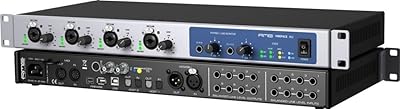
RME Fireface UFX II USB Audio Interface
81%
97%
Driver Stability
94%
Latency Performance
88%
Preamp Quality
93%
I/O Flexibility
66%
TotalMix FX Usability
More
RME Fireface 802 Audio Interface
80%
94%
Driver Stability
91%
Converter Quality
93%
I/O Flexibility
87%
Preamp Quality
74%
TotalMix FX
More
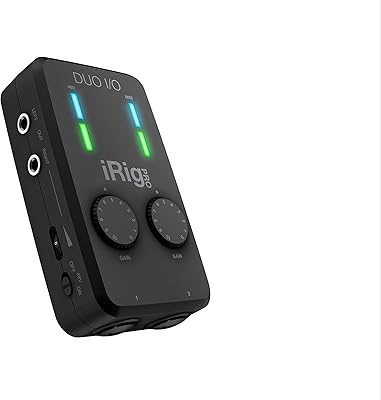
IK Multimedia iRig Pro Duo I/O
85%
94%
Portability
88%
Build Quality
86%
Preamp Performance
92%
Mobile Compatibility
83%
Power Versatility
More
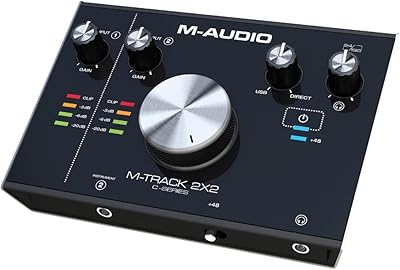
M-Audio M-Track 2X2 USB Audio Interface
76%
84%
Build Quality
76%
Preamp Performance
82%
Ease of Setup
58%
Driver Stability
79%
Value for Money
More
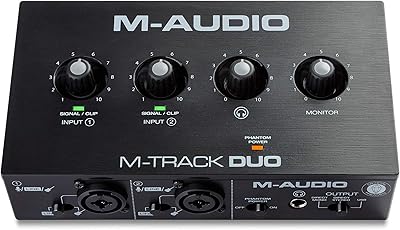
M-Audio M-Track Duo
M-Audio M-Track Duo
83%
88%
Preamp Clarity
93%
Value for Money
62%
Build Quality
91%
Ease of Installation
87%
Portability
More
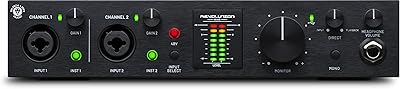
Black Lion Audio Revolution 2x2 Audio Interface
75%
88%
Preamp Quality
91%
Audio Transparency
86%
Clocking Performance
87%
Build Quality
73%
Value for Money
More
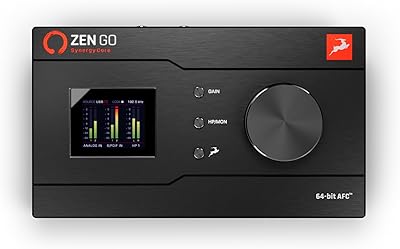
Antelope Audio Zen Go Synergy Core Interface

76%
93%
Preamp Quality
88%
Onboard Effects
54%
Software Experience
57%
Windows Stability
91%
Portability
More
RME UFX+ Audio Interface
83%
94%
Driver Stability
91%
Audio Quality
88%
Channel Count & I/O
83%
TotalMix FX Software
89%
Build Quality
More
RME Fireface UFX Audio Interface
80%
93%
Driver Stability
91%
Low Latency Performance
89%
Channel Count & I/O Flexibility
88%
Build Quality
79%
TotalMix FX Software
More
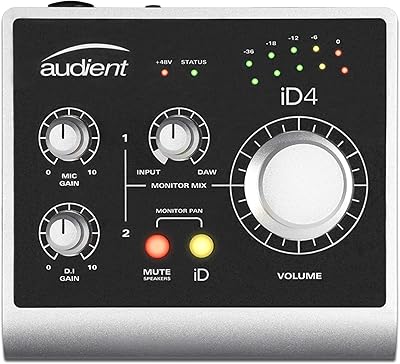
Audient iD4 USB Audio Interface
80%
93%
Preamp Quality
88%
Build Quality
71%
Value for Money
91%
Ease of Setup
84%
Headphone Performance
More

FAQ

No — the Babyface Pro FS operates as a class-compliant USB device on macOS, which means you plug it in and your system recognizes it immediately without any driver installation. That said, installing TotalMix FX separately is strongly recommended if you want to take full advantage of the onboard DSP monitoring and routing features.

Honestly, yes — at least at first. TotalMix FX is a fully featured DSP mixer with its own routing logic, and if you have only used simpler companion software before, the initial setup can feel disorienting. Most users report that it clicks after a few hours of hands-on experimentation, and the payoff in monitoring flexibility is significant once you get there. RME also provides detailed documentation and tutorial videos that help considerably.

Yes, it works reliably with Pro Tools on both Mac and Windows. RME maintains consistent driver updates and the interface meets Avid's requirements for professional operation, so you are unlikely to run into the stability issues that can sometimes plague third-party hardware with Pro Tools.

The unit has two analog combo XLR inputs with preamps, so you can record two microphone sources simultaneously without any additional hardware. If you need more simultaneous mic channels, you would need to connect an external preamp or mic splitter via the ADAT or AES inputs.

It is possible with the right adapter — specifically Apple's USB-C to USB-A camera adapter — but this is not an officially supported or fully tested configuration. Results can vary, and the full TotalMix FX functionality is not available in a mobile context, so iOS use is more of a workaround than a designed feature.

The build quality is consistently one of the most praised aspects of the Babyface Pro FS among long-term owners. The chassis feels solid and the knobs and jacks hold up well under regular use. It does not feel fragile for its size, and many users report years of daily use without any hardware degradation.

With properly configured ASIO drivers on Windows or Core Audio on macOS, most users achieve round-trip latency in the low single-digit milliseconds at buffer sizes of 64 or 128 samples — well within the threshold where most musicians stop noticing delay while tracking. The TotalMix FX direct monitoring path is effectively zero-latency, since it bypasses the computer entirely.

In most desktop and laptop setups, the Babyface Pro FS is powered entirely over USB without needing an external supply. RME does offer an optional power adapter for scenarios where stable power delivery from the USB port cannot be guaranteed, such as certain bus-powered hub configurations.

The gap is noticeable in a few key areas: clock stability, preamp headroom, and driver reliability under demanding conditions. Mid-range interfaces in this form factor can perform admirably for typical recording tasks, but this compact audio interface consistently holds its own on sessions where latency, noise floor, and long-term driver behavior actually matter. The difference becomes clearest when tracking at high channel counts or in acoustically critical monitoring situations.

Not really. The Babyface Pro FS is designed around a professional workflow, and both the hardware capabilities and TotalMix FX software assume a certain level of familiarity with audio production concepts. A first-time buyer would likely find the learning curve steep and would not benefit from the majority of what this RME interface offers. A more approachable and budget-friendly interface would serve a beginner far better until they develop a workflow that genuinely demands this level of performance.

Where to Buy