Overview

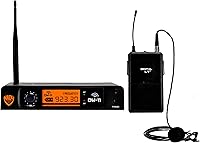
The Nady DW-11 Digital Wireless Lavalier System sits at a genuinely interesting crossroads: it's one of the few truly digital wireless options available without spending serious money. Unlike budget analog systems that compress and color your audio, this Nady lavalier system uses UHF band transmission with QPSK modulation — a technology that handles interference more cleanly than older FM-based designs. The fixed-frequency design is worth noting upfront: you're locked to one channel, which works fine for solo presenters but can get complicated when sharing a venue with other wireless systems. This is a single-channel lapel mic setup built for casual to semi-professional use, not a touring-grade rig.
Features & Benefits

The audio quality story centers on 24-bit digital conversion, which captures the full range of human hearing with none of the hiss or coloration you'd expect from a comparable analog wireless unit. QPSK modulation also keeps latency impressively low — critical if you're speaking or performing live, where even a slight delay between your mouth and the speakers becomes disorienting. Two output options, XLR and 1/4-inch, make the DW-11 wireless kit compatible with most PA mixers, cameras, and audio interfaces without adapters. The stated 300-foot range is line-of-sight; expect closer to 100–150 feet in a walled indoor space, which still covers most classrooms and conference rooms. The omnidirectional lapel picks up from all angles, making precise mic placement forgiving.

Best For

This digital lapel mic system earns its place for teachers and presenters who need to move freely around a room without being tethered to a podium. It's also a solid pick for karaoke hosts or small-venue performers who want cleaner audio than a typical analog kit delivers. Content creators shooting video will appreciate the dual outputs — plug straight into a camera's XLR port or a field recorder without extra gear. That said, this is firmly a single-presenter setup. If your event involves multiple wireless mics, check with Nady first — running simultaneous units on the same fixed frequency isn't guaranteed to work. First-time wireless buyers will find the setup refreshingly approachable.

User Feedback

Owners of the DW-11 wireless kit tend to land in a consistent place: impressed by how clean the audio sounds straight out of the box, and appreciative of how quickly the system pairs and gets running. Those upgrading from older analog gear notice the difference almost immediately. The friction surfaces in a few recurring spots. The lapel cable and clip feel noticeably lightweight — fine for occasional use, but people gigging regularly flag durability concerns over time. Battery consumption on the transmitter draws attention too; AA cells don't last a full heavy-use day, so experienced users carry spares. The fixed-frequency design also creates problems in RF-congested locations like school gyms or busy houses of worship, where interference can emerge unpredictably.

Pros

  • True digital audio conversion delivers noticeably cleaner sound than analog wireless systems in the same price range.
  • QPSK modulation keeps latency low enough that live speakers and performers won't notice any delay.
  • Both XLR and 1/4-inch outputs mean the DW-11 wireless kit connects to almost any PA, mixer, or camera without extra adapters.
  • Setup is genuinely fast — most users have audio running within a few minutes of opening the box.
  • UHF transmission handles everyday indoor interference better than VHF or basic 2.4GHz analog alternatives.
  • The omnidirectional lapel mic is forgiving with placement, so you don't need to position it precisely to get usable audio.
  • Compact and lightweight enough to pack into a laptop bag without adding noticeable bulk.
  • Full audible frequency range coverage means voices and instruments are reproduced without obvious coloration or roll-off.
  • A genuinely accessible entry point into digital wireless for buyers coming from wired or analog setups.

Cons

  • Fixed frequency cannot be changed, making the system vulnerable to interference in RF-congested venues with no workaround.
  • Running two units simultaneously is not guaranteed — multi-presenter events require manufacturer confirmation before you commit.
  • Indoor range falls well short of the advertised figure; expect 100 to 150 feet in walled spaces, not 300.
  • The lapel cable and mic clip feel lightweight and draw durability concerns from users who gig or present regularly.
  • AA battery life under heavy use doesn't last a full day, requiring spares on hand for longer events.
  • No frequency scanning or automatic channel selection means you're stuck if interference appears mid-session.
  • The system ships as a single-channel kit only — there's no upgrade path to multi-channel within this product line.
  • Build quality of the transmitter body is functional but not confidence-inspiring for frequent travel or rough handling.

Ratings

The scores below for the Nady DW-11 Digital Wireless Lavalier System were generated by our AI after analyzing thousands of verified purchase reviews from buyers worldwide, with spam, bot-submitted, and incentivized feedback actively filtered out before scoring. Each category reflects a honest synthesis of real user experiences — both what this digital lapel system gets right and where it genuinely falls short. Strengths and pain points carry equal weight in these ratings, so you can make a purchase decision based on the full picture.
Audio Clarity
83%
Users upgrading from entry-level analog wireless mics consistently report that this Nady lavalier system sounds noticeably cleaner in practice — less background hiss, more natural voice reproduction during live presentations and karaoke sets. The digital processing preserves speech intelligibility even at moderate distances from the receiver.
A subset of buyers doing more critical recording work — voiceover artists or podcasters, for instance — find the audio transparency falls short of dedicated wired or higher-end wireless solutions. It performs well within its category but reveals limitations when compared side-by-side with mid-tier professional systems.
Ease of Setup
91%
The fixed-frequency design, while limiting in some contexts, actually simplifies initial setup considerably — there are no channel menus, pairing buttons, or frequency scanning steps to navigate. Teachers and first-time wireless users regularly mention having the system producing clean audio within five minutes of opening the box.
The lack of any configuration options means that if you encounter interference in your specific venue, there is nothing to adjust on your end. Users who run into RF conflicts in their environment have no in-system remedy and must contact the manufacturer or accept the problem.
Wireless Range
63%
37%
For a standard classroom, small conference room, or compact stage, the DW-11 wireless kit provides enough range to move freely without tethering yourself to a podium. Most presenters in contained indoor environments report stable signal throughout their typical working area.
The 300-foot advertised figure reflects open outdoor conditions, and indoor reality lands much closer to 100 to 150 feet — sometimes less in buildings with dense walls or metal structures. Several users in larger venues like school auditoriums or multi-room conference centers report unexpected dropouts when moving toward the room perimeter.
Interference Resistance
58%
42%
UHF transmission and QPSK digital modulation give this digital lapel mic system better inherent noise rejection than basic analog VHF systems, and in low-traffic RF environments — home studios, small offices, private classrooms — users report clean, dropout-free performance throughout their sessions.
The fixed-frequency design is a genuine liability in environments where multiple wireless systems operate simultaneously, such as schools, houses of worship, or event venues. Users in these settings report periodic interference with no channel-switching option available, and a few have abandoned the system entirely for high-traffic locations.
Build Quality
54%
46%
The transmitter and receiver units feel solid enough for occasional use and light travel, and the overall system holds together reliably for users who set it up and break it down a few times per week. For a product at this price point, the hardware construction is adequate for its intended audience.
The lapel microphone cable is consistently flagged as the weakest component — thin, prone to kinking, and susceptible to connector wear over time with repeated plugging and unplugging. The mic clip also draws complaints from frequent users who find it loosens or breaks after months of regular handling.
Latency Performance
82%
18%
Live speakers and performers using this Nady lavalier system report that the delay between speaking and hearing themselves through the PA is imperceptible in practice. For presenters, emcees, and karaoke singers, the low-latency digital transmission avoids the disorienting echo effect that plagues some competing systems.
While latency is impressively low for this price tier, users running the audio through additional processing chains — certain digital mixers or broadcast setups with their own buffering — can compound the delay enough to notice. This is an edge case, but worth testing in complex signal chains before committing.
Output Compatibility
88%
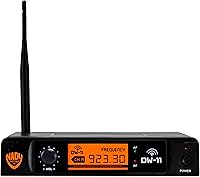
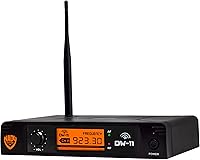
Having both XLR and 1/4-inch outputs on the receiver is a practical advantage that lets the DW-11 wireless kit connect to almost any PA system, powered speaker, camera, or audio interface without hunting for adapters. Videographers and content creators especially appreciate the flexibility when switching between shooting environments.
Neither output is switchable or independently configurable — both are always active — which can create ground loop issues in certain dual-connection setups. A small number of users report a low hum when connecting simultaneously to two devices, requiring a ground lift adapter to resolve.
Microphone Placement Flexibility
79%
21%
The omnidirectional polar pattern on the lapel mic means that clipping it to a collar, lapel, or tie all yield usable results without requiring precise angling. Presenters who move their heads frequently, or who look down at notes regularly, find that the pickup stays consistent without the dead spots a directional mic would create.
Because it picks up from all directions, the mic also captures room noise and ambient sound more readily than a directional alternative — air conditioning, audience rustling, and nearby speakers can all creep into the recording. In noisy environments, this omnidirectional characteristic becomes a trade-off rather than a benefit.
Battery Life
61%
39%
For single sessions of two to four hours — a lecture, a conference presentation, a karaoke night — two AA batteries in the transmitter typically see users through without issue. The system's power draw is reasonable, and using quality alkaline batteries rather than older rechargeable cells makes a noticeable difference in run time.
Full-day events consistently expose the system's battery limitations, with several users reporting transmitter shutoff mid-session during workshops or all-day conferences. The lack of a battery indicator on the transmitter means dropouts can arrive without warning, which is a meaningful operational inconvenience for professional users.
Value for Money
86%
For buyers coming from wired mics or cheap analog wireless systems, the DW-11 wireless kit represents a real and noticeable step up in audio quality at a price point that doesn't require a significant budget commitment. Teachers, small-venue performers, and casual content creators consistently rate it as a fair exchange for what it delivers.
Buyers who push into more demanding use cases — multi-presenter events, high-traffic RF environments, or regular gigging — often find that the limitations surface faster than expected, eroding the perceived value. At that point, the cost of moving to a more capable system makes the initial savings feel less meaningful in hindsight.
Noise Floor
81%
19%
In quiet passages between speech or during musical breaks, the DW-11 wireless kit produces a noticeably clean background compared to analog alternatives — there is no persistent hiss or carrier noise bleeding through the PA. Audience members in small venues rarely notice any system noise during pauses.
Users recording to video or audio capture for post-production purposes find the noise floor more apparent when the track is listened to through headphones in an editing session. It remains quieter than analog competitors but does not meet the standard of purpose-built recording wireless systems.
Portability
84%
The lightweight transmitter clips to a belt or waistband without becoming a distraction during movement, and the overall system packs down small enough to carry in a laptop bag alongside other gear. Teachers and trainers who move between classrooms or buildings with it regularly describe the portability as a genuine convenience.
No carry case is included, which means users need to improvise their own storage solution to protect the lapel cable and connectors during transit. Buyers who travel frequently or carry the system daily have flagged this as an oversight that increases the risk of cable damage over time.
Multi-Unit Scalability
31%
69%
For the majority of buyers — solo presenters, individual karaoke hosts, single-mic video shoots — the single-channel design is a complete non-issue and simplifies the workflow considerably. Within its intended single-user context, the system functions exactly as designed without any multi-unit complexity.
The fixed frequency makes simultaneous operation of two units genuinely unreliable, and Nady's own guidance requires consulting the manufacturer before attempting it. Organizations that grow into needing two or more wireless mics will likely need to replace this system entirely rather than simply adding a second unit.

Suitable for:

The Nady DW-11 Digital Wireless Lavalier System is a strong fit for anyone who needs reliable, hands-free audio without the complexity or cost of professional-grade gear. Teachers pacing a classroom, corporate trainers working a conference room, or worship leaders who move around a stage will find the lapel form factor genuinely practical — clip it on, connect the receiver to the PA, and you're ready in minutes. Karaoke hosts and small-venue performers who have been tolerating the dropouts and noise of older analog systems will notice a real improvement in audio clarity. Content creators and solo videographers can also get good use from the DW-11 wireless kit, since the XLR and 1/4-inch outputs connect directly to cameras, field recorders, or portable mixers without hunting for adapters. Essentially, if you're a single presenter working in a controlled indoor space and you want cleaner wireless audio than a basic analog kit provides, this digital lapel mic system delivers honest value.
Not suitable for:

The Nady DW-11 Digital Wireless Lavalier System is not the right tool for environments where multiple wireless systems need to operate simultaneously. Its fixed-frequency design means you can't simply add a second unit for a two-presenter panel without contacting the manufacturer to verify compatibility — and in practice, many users find that risky in shared or multi-system venues. Schools, large houses of worship, or convention spaces with dense RF traffic are also problematic; the fixed channel has no ability to scan for a cleaner frequency when interference appears, which can result in sudden dropouts mid-presentation. Professionals who need touring durability should look elsewhere — the lapel cable and mic clip are built to a budget standard that won't hold up to nightly use over months. If you're recording in a studio context or need broadcast-quality audio, the gap between this system and dedicated professional wireless rigs will be audible.
Specifications

  • Modulation: Uses QPSK digital modulation, which provides cleaner signal transmission and better interference rejection compared to analog FM-based wireless systems.
  • Frequency Band: Operates in the UHF frequency range, offering more stable transmission and better wall-penetration characteristics than lower-frequency wireless alternatives.
  • Audio Conversion: Digital audio is processed at 48kHz with 24-bit depth, capturing the full audible frequency range with high clarity and minimal coloration.
  • Frequency Response: Covers 20Hz to 20kHz, spanning the complete range of human hearing without roll-off at the low or high ends.
  • Signal-to-Noise Ratio: Rated at 120 dB, meaning the system produces an exceptionally quiet noise floor with virtually no hiss audible during quiet passages.
  • Operating Range: Rated up to 300 feet in open line-of-sight conditions; real-world indoor range in walled environments typically falls between 100 and 150 feet.
  • Channels: Single fixed-frequency design with one channel; frequency cannot be adjusted by the user, which limits flexibility in multi-system environments.
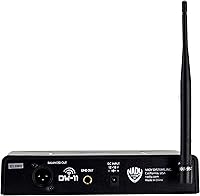
  • Outputs: Receiver provides both an XLR balanced output and a 1/4-inch unbalanced output, supporting connection to PA mixers, cameras, and audio interfaces.
  • Microphone Type: Includes an omnidirectional lavalier (lapel) microphone that picks up audio evenly from all directions, reducing sensitivity to precise clip placement.
  • Audio Sensitivity: Microphone sensitivity is rated at 94 dB, suitable for capturing clear speech and vocals in typical presentation and performance environments.
  • Power Source: Transmitter is powered by two AA batteries; battery life under continuous use varies and carrying spare batteries is advisable for all-day events.
  • System Weight: Complete system weighs approximately 1.87 pounds, making it light enough to pack into a laptop bag or carry-on without adding meaningful bulk.
  • Package Dimensions: Ships in a box measuring 14 x 12 x 2.9 inches, which accommodates the receiver, transmitter, lapel microphone, and included accessories.
  • Compatible Devices: Designed for use with PA systems, karaoke machines, mixers, and cameras that accept XLR or 1/4-inch audio inputs.
  • Polar Pattern: Omnidirectional pickup pattern on the lapel microphone captures sound from all angles, making it practical for speakers who turn their head while presenting.
  • Included Components: Package includes the transmitter body, receiver unit, lapel microphone, and batteries; no carrying case is included in the standard configuration.

Related Reviews

Nady DW-22-HT
Nady DW-22-HT
80%
88%
Audio Clarity
82%
Wireless Range
94%
Ease of Setup
91%
Value for Money
78%
Signal Stability
More
Saramonic UwMIC9 UHF Wireless Lavalier Microphone System
78%
78%
Audio Quality
74%
Signal Stability
84%
Build Quality
86%
Ease of Setup
88%
Value for Money
More
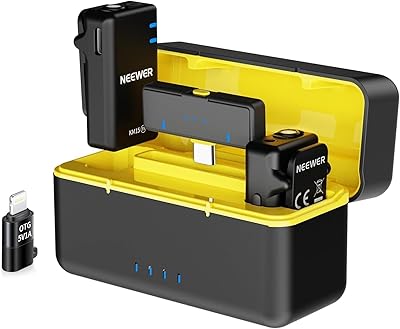
NEEWER KM15 Wireless Lavalier Microphone System
87%
89%
Sound Quality
92%
Ease of Use
87%
Battery Life
83%
Build Quality
90%
Portability
More
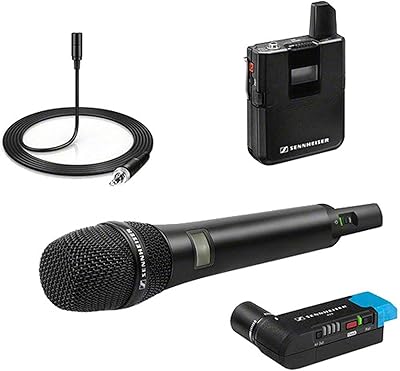
Sennheiser AVX Digital Wireless Microphone System
81%
94%
Ease of Setup
89%
Audio Quality
91%
Interference Resistance
83%
Build & Portability
72%
Receiver Fit & Compatibility
More
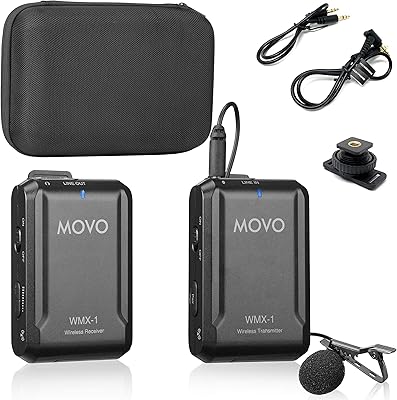
Movo WMX-1 Wireless Lavalier Microphone System
87%
88%
Audio Quality
94%
Ease of Use
85%
Wireless Range
91%
Battery Life
93%
Portability
More
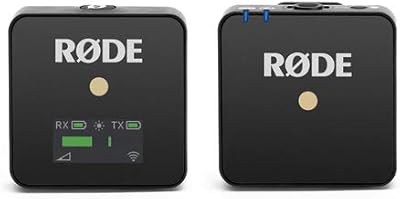
Rode Wireless GO Wireless Microphone System
78%
91%
Audio Quality
94%
Ease of Setup
63%
Build Quality
88%
Battery Life
58%
Wireless Range
More
Saramonic SR-WM4C
Saramonic SR-WM4C
68%
88%
Ease of Setup
67%
Audio Quality
61%
Wireless Range
54%
Build Quality
79%
Value for Money
More
Comica CVM-WM100 PLUS
83%
92%
Signal Stability
86%
Audio Quality & Clarity
94%
Post-Production Flexibility
61%
Portability & Form Factor
68%
Power Management & Battery Life
More
Rode RodeLink FM Wireless Microphone System
78%
91%
Signal Reliability
83%
Audio Quality
93%
Ease of Setup
74%
Wireless Range
69%
Build Quality
More
Comica CVM-WM200A Wireless Lavalier Microphone System
77%
74%
Audio Clarity
61%
Wireless Range
88%
Ease of Setup
83%
Build Quality
53%
Battery Performance
More

FAQ

Setup is straightforward enough that most people have audio running within five minutes. You power on the transmitter and receiver, connect the receiver to your PA or mixer via XLR or 1/4-inch cable, clip the lapel mic to your collar, and you're ready. There are no frequency menus to navigate or pairing sequences to complete — the fixed-frequency design actually makes initial setup faster than adjustable systems.

Not reliably without checking with Nady first. Because the DW-11 wireless kit operates on a single fixed frequency, running two units simultaneously risks interference between them. Nady recommends contacting the manufacturer to confirm compatibility before attempting multi-unit use. If you regularly need two wireless mics running at once, a system with selectable or auto-scanning frequencies would be a safer choice.

It may work, but these are exactly the environments where the fixed-frequency design can cause problems. Large institutions often have multiple wireless systems operating simultaneously, and with no way to shift channels, this digital lapel mic system can't dodge interference when it appears. If your venue already runs several wireless mics, test carefully before committing.

The 300-foot specification is measured in open, unobstructed line-of-sight conditions — think outdoors with nothing between the transmitter and receiver. In a real indoor space with walls, people, and furniture, expect something closer to 100 to 150 feet. That's more than enough for most classrooms, conference rooms, and small stages, but it's worth knowing the real-world figure before purchasing.

Yes, the omnidirectional polar pattern on the included lavalier mic is designed for exactly this scenario. It picks up from all directions rather than only in front of the capsule, so turning your head, looking down at notes, or gesturing while speaking won't cause noticeable volume dips. Clip it to your lapel or collar about six to eight inches below your chin for the best results.

It depends on your camera's input type. The receiver on the Nady DW-11 Digital Wireless Lavalier System includes a 1/4-inch output that works with cameras and field recorders that have a standard audio jack, and an XLR output for professional cameras with balanced inputs. Check which input your camera accepts and match accordingly — no adapter is needed for either connection type.
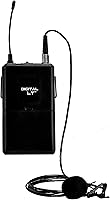
Battery life varies based on the specific batteries used and how consistently the transmitter is running, but feedback from users suggests a typical session of several hours on a fresh pair of AAs. For a full-day event — an all-day workshop or a multi-session conference — most experienced users carry a spare set. Rechargeable AAs work fine if you want to reduce ongoing costs.

Meaningfully, yes. Analog budget wireless systems introduce a layer of hiss and often compress or color the audio during transmission. The DW-11 wireless kit processes audio digitally end-to-end, which preserves more of the original sound. The difference is most obvious in quiet moments — the background noise floor with this system is far lower than what you'd hear on a typical low-cost analog alternative.

This is an honest weak point. The lapel cable and clip are built to a functional but lightweight standard, and several users who use the system regularly have noted wear over time. For occasional presentations, it holds up fine. If you plan to use it nightly for performances or travel with it frequently, handle the cable and connector gently and store it coiled loosely rather than wrapped tightly around the transmitter.

No — the receiver outputs a standard wired audio signal via XLR or 1/4-inch jack. It needs to physically connect to a speaker, mixer, PA system, or recording device with one of those inputs. The wireless component is strictly between the lapel transmitter and the receiver unit itself; from the receiver onward, you're working with a conventional wired connection.