Overview

The Rode RodeLink FM Wireless Microphone System is a complete, ready-to-shoot wireless audio kit built for independent filmmakers and video creators who need professional results without a dedicated sound team. Unlike analog wireless systems that rely on fixed frequencies, this wireless filmmaker kit runs on a digital 2.4GHz platform that constantly monitors and hops between channels to avoid interference. RØDE has been a trusted name in broadcast and film audio for decades, and this kit reflects that heritage. It is pitched squarely at the semi-pro to professional tier — not a casual purchase, but a serious investment for those who treat audio as a priority.
Features & Benefits

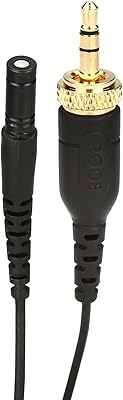
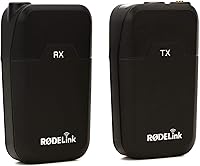
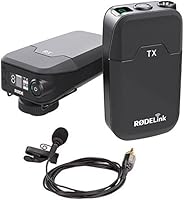
The RØDELink FM system ships with everything clipped and connected: the RX-CAM receiver slides onto your camera cold shoe or threads onto a 3/8-inch mount, keeping your rig compact. The small OLED display is genuinely useful on set — it shows battery levels for both the receiver and transmitter simultaneously, plus signal strength and mute status, so you always know what is happening before you roll. The locking 3.5mm connector on the transmitter is a detail that matters; a mic cable yanked loose mid-interview is a nightmare, and this design prevents exactly that. Both units run on standard AA batteries, which means no hunting for a charging cable in the field.

Best For

This lavalier wireless setup is an ideal match for solo videographers doing run-and-gun work — interviews, documentary shoots, event coverage — where stopping to troubleshoot a dropped signal simply is not an option. YouTubers and content creators who have outgrown consumer-grade clip-on mics will find the audio quality jump significant. Corporate video producers working in offices or conference spaces, where competing Wi-Fi and Bluetooth signals are everywhere, will appreciate the frequency-hopping reliability. That said, if you are just starting out or shoot casually on weekends, the price-to-need ratio may not work in your favor. This is a tool for people who shoot professionally or are actively building toward that level.

User Feedback

With a 4.6-star average across more than 1,200 ratings, the RØDELink FM system has earned a strong long-term reputation. Buyers consistently point to signal stability and effortless setup as the standout strengths — many report it working reliably straight out of the box with no fiddling required. The bundled lavalier mic also draws frequent praise for its clarity on dialogue. On the critical side, a handful of users flag that the 67dB signal-to-noise ratio is functional but not exceptional against higher-end rivals. The transmitter belt clip gets occasional criticism for feeling cheap given the kit price. And while 100 meters sounds generous, real-world range through walls and crowded venues is considerably shorter.

Pros

  • Digital 2.4GHz frequency hopping keeps the signal locked even in crowded wireless environments.
  • Arrives as a complete kit — transmitter, receiver, and lavalier mic — with no extra purchases needed to start shooting.
  • The OLED display gives you a real-time read on both units' battery levels, so dead-battery surprises mid-shoot are avoidable.
  • Standard AA batteries on both units mean you can grab replacements anywhere, anytime.
  • The locking TRS connector on the transmitter prevents the mic cable from pulling loose during active shoots.
  • Camera cold shoe mounting keeps the receiver integrated into your rig without extra rigging or cables.
  • The bundled lavalier mic punches above its weight for dialogue clarity and broadcast-grade sensitivity.
  • Setup is genuinely fast — multiple buyers report being up and running within minutes of unboxing.
  • The lightweight, compact form factor makes it practical for run-and-gun work where carrying less matters.
  • A 4.6-star average across more than 1,200 long-term buyers reflects consistent, sustained reliability.

Cons

  • The 67dB signal-to-noise ratio is workable but falls short of what higher-end wireless systems deliver.
  • Real-world range drops significantly when walls, crowds, or interference are in the picture — 100 meters is a best-case figure.
  • The transmitter belt clip feels noticeably cheap in hand given the overall cost of the kit.
  • Single-channel design limits you to one wireless feed at a time, which is a hard constraint for multi-subject shoots.
  • The 3.5mm TRS output requires an adapter for use with XLR-based recorders or mixers.
  • No built-in rechargeable battery means ongoing AA costs, which add up over high-volume shooting schedules.
  • The system operates only on the 2.4GHz band, which can become congested in Wi-Fi-heavy environments like conference venues.
  • No hard case is included, so protecting the kit during travel requires sourcing your own storage solution.

Ratings

The scores below for the Rode RodeLink FM Wireless Microphone System were generated by AI after analyzing verified purchase reviews from buyers worldwide, with spam, bot-submitted, and incentivized feedback actively filtered out. This kit has accumulated a substantial review base since 2015, giving us a reliable signal on both where it consistently delivers and where real-world frustrations tend to surface. Strengths and trade-offs are reflected transparently — nothing is glossed over.
Signal Reliability
91%
The automatic frequency hopping is the single most praised aspect of this system across hundreds of reviews. Videographers shooting in busy conference centers, wedding venues, and urban outdoor locations consistently report that the connection holds firm without manual intervention — a stark contrast to fixed-frequency analog systems that drop or buzz unpredictably.
A meaningful subset of users shooting in extremely dense RF environments — think packed convention floors with hundreds of active Wi-Fi networks — report occasional brief dropouts. The 2.4GHz band is shared with Wi-Fi and Bluetooth, and while the hopping logic handles most situations well, it is not immune to severe congestion.
Audio Quality
83%
The bundled RØDELink LAV microphone consistently draws praise for producing clean, natural-sounding dialogue that holds up well in post-production without heavy noise treatment. Creators stepping up from consumer clip-on mics describe the difference as immediately noticeable, particularly in how the system handles vocal presence and midrange clarity.
The 67dB signal-to-noise ratio is functional and adequate for most dialogue work, but experienced audio engineers and broadcast professionals note it sits below what higher-end digital wireless systems offer. In quieter recording environments where background noise is already low, the noise floor becomes more apparent and can require slight treatment in post.
Ease of Setup
93%
An unusually high number of reviewers specifically mention being up and running within minutes of opening the box — no complex pairing menus, no firmware headaches. For solo shooters who need to set up quickly before an interview subject arrives, this kind of frictionless workflow has real practical value on a tight schedule.
A small number of users report that after firmware updates or battery swaps, the transmitter and receiver occasionally need to be manually re-synced, which is a minor but mildly frustrating interruption. The process is not difficult, but it is not always instant either.
Wireless Range
74%
26%
For the most common use cases — interviewing a subject within 15 to 30 meters, covering a corporate event stage, or shooting a solo presenter — the effective range is more than sufficient and performs confidently without any signal coaxing. Open outdoor shoots benefit the most from the system's rated distance.
The 100-meter specification is a line-of-sight maximum, and many buyers discover this only after purchasing. Through walls, across floors in multi-story buildings, or in spaces filled with RF interference, real-world usable range can drop to 20 to 40 meters. Reviews from users working in larger venues with physical obstructions are noticeably more mixed.
Build Quality
69%
31%
The RX-CAM receiver feels solid and well-constructed, and the locking TRS connector on the transmitter is a genuinely thoughtful engineering detail that prevents the kind of accidental cable pull-out that ruins takes. The overall assembly inspires enough confidence for regular professional use.
The transmitter's belt clip is the most common build complaint by a wide margin — multiple reviewers describe it as feeling plasticky and fragile relative to what the kit costs overall. A few long-term users report the clip cracking or loosening with heavy daily use, which is a noticeable quality inconsistency when the rest of the system feels more premium.
Value for Money
78%
22%
For semi-professional and working videographers, the all-in-one nature of the kit — receiver, transmitter, and a legitimately capable lavalier mic included — means the effective cost per component is reasonable at the professional level. Buyers who use it regularly across paid projects tend to view the price as justified by the reliability and audio quality it delivers.
Hobbyists and infrequent shooters frequently flag the price as hard to justify against cheaper alternatives that meet their lighter demands. When stacked against competing systems at a similar price, some reviewers feel the SNR spec and belt clip quality should be stronger at this tier.
Camera Integration
88%
The cold shoe mounting system is clean and practical — the receiver sits flush on the camera without adding awkward bulk, and the two-position shoe mount lets you adjust orientation to keep the OLED display readable from your shooting position. Mirrorless and DSLR users in particular find the integration intuitive.
Users shooting with cameras that lack a hot or cold shoe — certain cinema cameras, action cams, or rigs with cages occupying the shoe — need to rely on the 3/8-inch thread or third-party mounting solutions, which adds complexity. The receiver also outputs only 3.5mm TRS, requiring an adapter for any XLR-input recorder.
OLED Display Usability
86%
Having real-time visibility into both units' battery levels from a single glance at the receiver is something reviewers consistently appreciate — it removes the guesswork that plagues wireless systems with no remote battery monitoring. Signal strength and channel info displayed simultaneously makes it genuinely useful during a live shoot.
The 1-inch display, while informative, can be difficult to read in bright outdoor sunlight even at full brightness. A few reviewers note that in harsh midday sun, glare makes it hard to quickly confirm status without physically shading the screen.
Battery Practicality
84%
Running on standard AA batteries is a deliberate and practical design choice that working shooters appreciate — replacements are available in every corner store worldwide, which matters when you are on a multi-day shoot in an unfamiliar city. No charging cables, no waiting for a proprietary pack to top up between setups.
Over a high-volume shooting schedule, the ongoing cost of AAs adds up, and some environmentally conscious users flag the disposable battery model as a drawback. Rechargeable AA cells work as a workaround, but battery life performance can vary across brands and charge cycles.
Lavalier Mic Included
81%
19%
The RØDELink LAV that ships with the kit is not a throwaway accessory — reviewers consistently note it outperforms the generic lavs bundled with competing systems. Its omnidirectional pickup handles subject movement naturally, which is important for interview subjects who do not stay perfectly still.
The included lavalier, while solid for dialogue, has limitations for more demanding audio applications — musical performances, wide dynamic range scenarios, or environments requiring higher sensitivity than 35dB. Users with existing high-end lavalier mics sometimes swap it out immediately, making the bundled mic a non-factor in their purchase decision.
Transmitter Wearability
72%
28%
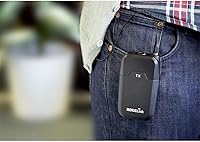
The TX-BELT transmitter is light enough that most subjects forget they are wearing it after a few minutes, which helps reduce unnatural body language during interviews. The locking mic connector means you can instruct a subject to clip it on themselves without worrying about a loose cable connection.
Concealing the transmitter under fitted or lightweight clothing can be tricky — the pack has a noticeable profile under thin fabrics. The belt clip design, while functional, does not offer many alternative attachment points, and subjects wearing dresses or clothing without a waistband require improvised solutions like an armband or pouch.
Long-Term Durability
77%
23%
The system has been on the market since 2015 and continues to receive strong ratings from buyers who have used it for years of regular professional work, which is a meaningful signal of sustained reliability. The core electronics appear to hold up well under consistent field use.
The mechanical components — particularly the belt clip and the cold shoe mounting contact — show wear over extended heavy use according to long-term owners. The system is not weatherproofed in any capacity, so even minor exposure to rain or humidity during outdoor shoots is a legitimate concern.
Multi-Unit Scalability
48%
52%
For single-presenter or single-subject shoots, the system works exactly as intended with no scalability concerns at all. Users who only ever need one wireless channel will never encounter this as a limitation in their workflow.
The kit is fundamentally a one-transmitter, one-receiver system with no native multi-channel expansion path. Productions that routinely need to mic two or more subjects simultaneously must purchase multiple complete kits, which drives up cost significantly and adds receiver complexity to the camera rig.
Compatibility & Adaptability
71%
29%
The standard 3.5mm TRS output and universal cold shoe or 3/8-inch thread mount mean the system drops into most existing camera setups without needing proprietary accessories. Swapping to a third-party lavalier is also straightforward for users with existing mic preferences.
Users working with professional audio recorders, mixers, or broadcast cameras that use XLR inputs will need a VXLR adapter — not included — to connect the receiver. The system is also locked to 2.4GHz, which is prohibited in certain licensed broadcast environments where only specific frequency bands are permitted.

Suitable for:

The Rode RodeLink FM Wireless Microphone System was built for creators who shoot in the real world, not in a controlled studio with a sound engineer standing by. Solo documentary filmmakers, ENG journalists, and corporate video producers will get the most out of it — particularly anyone working in environments where competing wireless signals make analog systems unreliable. YouTubers and content creators who have hit the ceiling of consumer-grade clip-on mics and want noticeably cleaner dialogue audio will find this a meaningful step up. The all-in-one kit design also makes it genuinely approachable for semi-pros who want professional results without having to source a transmitter, receiver, and lavalier mic separately. If reliable wireless audio on a camera-mounted rig is your core need, this system is purpose-built for exactly that workflow.
Not suitable for:

The Rode RodeLink FM Wireless Microphone System is not a smart buy for casual videographers or hobbyists who shoot occasionally and are primarily budget-conscious — the price-to-use ratio simply will not make sense for light, infrequent work. Audio engineers or seasoned broadcast professionals who demand the absolute highest signal-to-noise performance may find the 67dB SNR limiting compared to higher-tier wireless systems that push well beyond that threshold. Multicamera productions that require simultaneous wireless feeds from several subjects will also hit a ceiling here, as this is a single-channel kit by design. If you mostly shoot in controlled indoor settings close to your subject, a wired lavalier would deliver comparable or better audio at a fraction of the cost. And if you need XLR connectivity for professional mixers or recorders, the 3.5mm TRS output will require an adapter that adds another point of potential failure.
Specifications

  • Brand: Manufactured by RØDE Microphones, an Australian professional audio company with a long history in broadcast and film production.
  • Model: The unit carries the model designation RODELINKFM and has been available since February 2015.
  • Connectivity: Operates on a digital 2.4GHz wireless platform with automatic frequency hopping across 8 available channels.
  • Range: Rated for up to 100 meters in open, unobstructed conditions; real-world range will vary depending on walls, interference, and environment.
  • Connector Type: Uses a locking 3.5mm TRS connector on the transmitter to secure the lavalier mic cable and prevent accidental disconnection.
  • Polar Pattern: The included RØDELink LAV microphone uses an omnidirectional polar pattern to capture sound evenly from all directions.
  • Audio Sensitivity: The lavalier microphone offers an audio sensitivity rating of 35 dB, suitable for capturing clear spoken dialogue.
  • Signal-to-Noise Ratio: The system delivers a signal-to-noise ratio of 67 dB, which is adequate for professional dialogue recording in typical field conditions.
  • Display: The RX-CAM receiver features a 1-inch OLED screen showing battery status for both units, signal strength, mute state, and active channel.
  • Power Source: Both the transmitter and receiver are powered by standard AA batteries, allowing easy field replacement without proprietary charging hardware.
  • Included Components: The kit includes the TX-BELT transmitter, RX-CAM receiver, and one RØDELink LAV omnidirectional lavalier microphone.
  • Mount Options: The receiver supports mounting via a standard camera cold shoe, a 3/8-inch threaded mount, or a belt clip, with the shoe mount adjustable to two positions.
  • Dimensions: The overall kit measures 5 x 2 x 3 inches and weighs approximately 1 pound, keeping the total rig footprint compact.
  • Channels: The system supports 8 selectable channels, with the receiver automatically monitoring and switching to maintain the strongest available signal.
  • Platform Compatibility: Designed primarily for camera-based workflows; the receiver integrates directly into DSLR, mirrorless, and video camera setups via standard shoe or thread mounts.

Related Reviews
Rode Wireless GO Wireless Microphone System
78%
91%
Audio Quality
94%
Ease of Setup
63%
Build Quality
88%
Battery Life
58%
Wireless Range
More
RØDE Wireless GO II
RØDE Wireless GO II
84%
92%
Audio Clarity
86%
Signal Reliability
97%
Internal Backup Recording
94%
Portability & Weight
91%
Setup Speed & Ease of Use
More
BOYA BY-XM6-S2
BOYA BY-XM6-S2
87%
93%
Ease of Setup
91%
Visual Interface Quality
86%
Battery Endurance
82%
Wireless Range Stability
94%
Portability & Weight
More
Azden WMS-PRO Wireless Microphone System
70%
83%
Value for Money
67%
Audio Quality
88%
Ease of Setup
62%
Signal Reliability
57%
Build Quality
More
Shure BLX14/P31-H10
Shure BLX14/P31-H10
83%
94%
Setup & Ease of Use
88%
Wireless Range & Stability
91%
Battery Life
86%
Audio Clarity for Speech
78%
Headset Comfort & Fit
More
Xvive U3
Xvive U3
76%
93%
Ease of Setup
78%
Audio Quality
89%
Latency Performance
71%
Wireless Range
63%
Battery Life
More
Shure BLX24R/SM58-H11
87%
93%
Vocal Clarity
88%
Signal Stability
94%
Battery Efficiency
91%
Setup Simplicity
89%
Receiver Build Quality
More
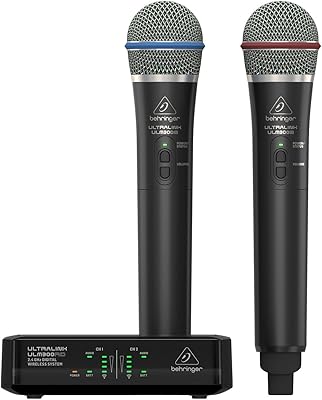
Shure BLX288/B58 Dual-Channel Wireless Microphone System
81%
91%
RF Performance
84%
Audio Quality
88%
Build Quality
82%
Battery Life
86%
Ease of Setup
More
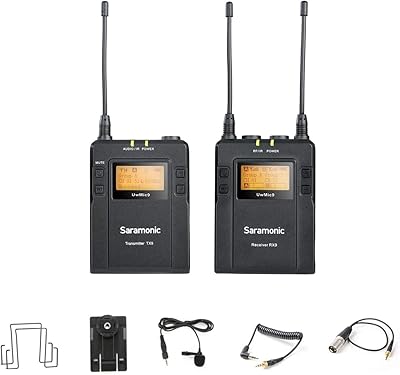
Saramonic UwMIC9 UHF Wireless Lavalier Microphone System
78%
78%
Audio Quality
74%
Signal Stability
84%
Build Quality
86%
Ease of Setup
88%
Value for Money
More
Godox WEC Kit2
Godox WEC Kit2
81%
78%
Audio Clarity
73%
Noise Cancellation
82%
Wireless Range & Stability
71%
Build Quality & Durability
88%
Comfort & Wearability
More

FAQ

The RX-CAM receiver is designed to fit any camera with a standard cold shoe mount or a 3/8-inch threaded socket, which covers the vast majority of DSLRs, mirrorless cameras, and camcorders on the market. The audio output is a standard 3.5mm TRS plug, so as long as your camera has a 3.5mm microphone input, you are compatible. No proprietary connectors or brand-specific adapters are required.

Yes, and this is actually one of the stronger use cases for this kit. Because the RØDELink FM system operates on 2.4GHz with automatic frequency hopping, it actively scans and avoids congested channels rather than locking onto a single fixed frequency like older analog systems. That said, extremely dense RF environments — such as large conference halls with hundreds of active devices — can still create challenges, so it is worth monitoring the OLED display's signal indicator if you are working in a particularly crowded space.

Honestly, 100 meters is an open-air, line-of-sight figure. Indoors, you should plan for considerably less — typically somewhere between 20 and 50 meters depending on the number of walls, the building materials involved, and how much wireless interference is present. For most interview and event work, that is more than sufficient, but do not count on the full rated range if you need to operate across multiple rooms.

Both the transmitter and receiver run on standard AA batteries, which is a practical choice because you can buy them anywhere. Battery life varies by brand and usage, but most users report getting several hours of continuous operation per set. Keeping a spare pair of AAs in your kit bag is a sensible habit for longer shooting days.

Yes. The transmitter uses a locking 3.5mm TRS input, so any compatible lavalier microphone with a 3.5mm TRS connector can be used in place of the bundled RØDELink LAV. This is useful if you already own a preferred lav mic or need a different form factor for a specific shoot. Just confirm the connector type and impedance compatibility before purchasing a third-party mic.

Not directly in its standard configuration. The receiver outputs via a 3.5mm TRS connector designed for camera microphone inputs, which carry a different signal level than a smartphone mic input. You would need a suitable adapter or interface to use it with a phone or tablet, and results may vary. It is really optimized for camera-based recording rather than mobile device workflows.

The TX-BELT transmitter is reasonably compact and designed to clip onto a belt or waistband, or tuck into a pocket. Under a jacket or blazer it is generally unobtrusive. The main consideration is cable routing — getting the lavalier mic wire hidden cleanly under a shirt takes a bit of practice, but that is true of any wireless lav system at this level.

No. Once the transmitter and receiver are paired, they remember each other and reconnect automatically when powered on. Initial setup is straightforward and most users report being operational within a few minutes out of the box. The OLED display makes it easy to confirm they are linked and reading signal before you start rolling.

This lavalier wireless setup is a single-channel system — one transmitter, one receiver. If you need to mic two subjects simultaneously, you would need to purchase a second complete kit or look at a multi-channel wireless system instead. It is worth factoring that into your budget if dual-mic setups are a regular part of your workflow.

No hard case or carry pouch is included in the standard kit. You get the transmitter, receiver, and lavalier mic, but protective storage is on you. Many users pick up a small padded pouch or pelican-style case separately, which is a worthwhile addition if you are travelling regularly with the kit or storing it in a bag with other gear.