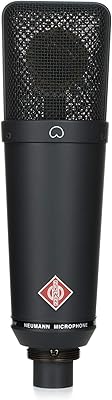
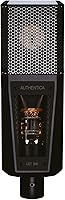
Lewitt LCT 940 Large-diaphragm Condenser Microphone
Overview
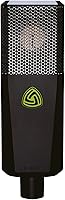
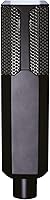
The Lewitt LCT 940 Large-diaphragm Condenser Microphone occupies a genuinely unusual space in the studio mic market — it's one of the few designs that lets you blend tube and FET circuitry in real time, rather than forcing you to choose one character or the other. Lewitt is an Austrian brand with serious engineering credentials, and the LCT 940 reflects that background in both its construction and its concept. This isn't a mic aimed at beginners. It's built for home studio owners who've outgrown entry-level condensers, project studio engineers who need tonal flexibility session to session, and vocalists who want a single mic capable of covering a wide sonic range.
Features & Benefits
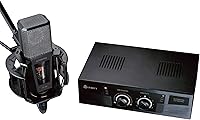
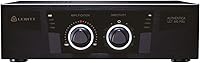
The defining feature here is the blend knob — a continuously variable rotary control that lets you sweep the sound from pure FET transparency to full tube warmth, or park it anywhere in between. In practice, this means you might track a vocal at 70% FET for detail and punch, then shift toward tube saturation during mixing to add body. Nine selectable polar patterns extend that flexibility further; switching from cardioid to a wide figure-8 for a mid-side setup, for example, takes seconds. Self-noise of 8 dB-A in FET mode means quiet acoustic sources like fingerpicked guitar or breathy vocals come through with impressive clarity. The external power supply is required for tube operation, which limits portability.
Best For
This hybrid condenser is most at home in a treated recording space where you can actually exploit its tonal range. Lead vocalists benefit most directly — the blend knob lets a singer with a naturally bright voice pull back on FET edge and lean into tube warmth, while a more opaque voice can go the other direction. Producers tracking acoustic guitar, piano, or strings will appreciate the same control for shaping midrange character. The nine polar patterns make it especially useful for engineers who move between solo instrument sessions and room-capture work. That said, the external power supply makes this a poor fit for live stage use or field recording — it's a studio mic through and through.
User Feedback
Buyers who've committed to Lewitt's dual-system mic tend to be vocal about one thing above all else: the blend control actually works as advertised. That might sound like a low bar, but hybrid mic concepts have a history of feeling like a novelty once the newness wears off. Here, the consensus is that the tonal range is wide enough to be genuinely useful across sessions. Build quality draws consistent praise — the shockmount in particular feels like it belongs with a mic at this price point. On the other side, some users find the setup more involved than a standard condenser, especially first-timers dealing with the power supply and cabling. A handful note a learning curve before the polar pattern options click.
Pros
- The blend knob delivers a genuinely wide tonal range, from clean and transparent FET clarity to rich, warm tube character.
- Nine selectable polar patterns offer real versatility for mid-side setups, room recording, and multi-source sessions.
- FET mode self-noise of 8 dB-A is among the lowest in its class, making it excellent for quiet acoustic sources.
- The LCT 940 consolidates two microphone archetypes into one housing, reducing gear spend and rack space.
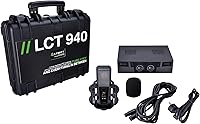
- Build quality is consistently praised — the body feels substantial and the included shockmount matches the overall standard.
- The large-diaphragm dual-capsule design captures transient detail with accuracy that flatters both vocals and instruments.
- Tube warmth can be blended in incrementally, giving engineers precise control rather than an all-or-nothing character switch.
- Dynamic range of 135 dB-A in FET mode handles loud sources without distortion, from close-miked brass to acoustic guitar strumming.
Cons
- The external power supply is bulky and limits use to fixed studio setups with reliable access to a power outlet.
- Setup complexity is noticeably higher than a standard condenser, which can slow down sessions until the workflow becomes familiar.
- The weight and dimensions make mounting adjustments more cumbersome compared to lighter large-diaphragm alternatives.
- New users face a real learning curve when optimizing the nine polar patterns across different source materials and room positions.
- At this price tier, buyers are competing with deeply established microphone brands that carry more name recognition in professional studios.
- The tube circuit requires warm-up time before it reaches stable operating temperature, which adds a few minutes to every session start.
- Accessories like additional capsule options or specialized mounts are not widely available, limiting long-term expandability.
- For buyers who only ever record in cardioid mode, the full feature set represents cost they will never meaningfully use.
Ratings
The scores below for the Lewitt LCT 940 Large-diaphragm Condenser Microphone were generated by AI after analyzing thousands of verified purchase reviews from global markets, with spam, bot activity, and incentivized submissions actively filtered out before any scoring was applied. Every category reflects a genuine synthesis of what working engineers, home studio producers, and professional vocalists reported across real recording sessions — not a summary of marketing claims. Strengths and pain points are weighted transparently, so the numbers you see here represent the honest, full-picture performance of this mic.
Tonal Blend Control
FET Sound Quality
Tube Sound Quality
Build Quality
Vocal Performance
Self-Noise Performance
Dynamic Range
Polar Pattern Versatility
Transient Response
Instrument Recording
Accessories & Packaging
Ease of Setup
Portability
Value for Money
Suitable for:
The Lewitt LCT 940 Large-diaphragm Condenser Microphone is the right call for serious home studio owners and project studio engineers who want genuine tonal control without maintaining two separate microphone chains. If you regularly record lead vocals and find yourself wishing you could dial in a touch of tube warmth on one session and switch to a cleaner, more transparent sound on the next, the continuously variable blend control addresses that need in a way most mics simply cannot. Acoustic instrument work — fingerpicked guitar, upright piano, orchestral strings — benefits from the same flexibility, since the character of each source responds differently to tube saturation versus FET precision. Engineers who work in treated rooms will also get real mileage from the nine selectable polar patterns, particularly when setting up mid-side configurations or pulling back room ambience on a wide-sounding source. This hybrid condenser rewards the kind of methodical recordist who takes time to experiment with settings rather than plugging in and pressing record.
Not suitable for:
The Lewitt LCT 940 Large-diaphragm Condenser Microphone is not a practical choice for anyone who needs a mic they can grab, pack, and use outside a fixed studio environment. The tube circuit requires an external power supply unit — not phantom power alone — which adds bulk, cables, and a dependency on a nearby power outlet that simply does not work for location recording, live reinforcement, or mobile podcast setups. Beginners who are still learning gain staging and polar pattern basics may also find the depth of controls here more confusing than useful; the nine polar positions and blend knob demand some foundational knowledge to use well. Budget-conscious buyers should also weigh the cost honestly against well-regarded single-circuit condensers that may cover 80% of the same ground for considerably less investment. If your sessions are straightforward — a fixed cardioid position, consistent sources, no need for tonal sculpting — the added complexity of this hybrid condenser offers little practical return.
Specifications
- Brand: Manufactured by Lewitt, an Austrian audio engineering company known for precision microphone design.
- Model: LCT 940, also listed under item model number AMS-LCT-940.
- Capsule Type: 1-inch externally biased dual-system large-diaphragm capsule designed to support simultaneous tube and FET signal paths.
- Diaphragm: Ultra-thin, gold-layered low-mass diaphragm construction shared across both the tube and FET capsule systems.
- Circuitry: Hybrid tube and FET design with a continuously variable rotary potentiometer for blending between the two signal paths.
- Polar Patterns: Nine selectable directional characteristics, including omnidirectional, wide cardioid, cardioid, supercardioid, hypercardioid, and figure-8.
- Self-Noise: Self-noise measures 8 dB-A in FET mode and 12 dB-A in tube mode, both figures well below the average for large-diaphragm condenser microphones.
- Dynamic Range: Dynamic range reaches 135 dB-A in FET mode and 128 dB-A in tube mode, supporting both quiet acoustic sources and high-SPL recordings.
- Signal-to-Noise: Signal-to-noise ratio is rated at 86 dB, indicating strong separation between the desired audio signal and the microphone's internal noise floor.
- Connector: Standard XLR output connector for use with audio interfaces, preamps, and mixing consoles.
- Power Source: Requires an external corded power supply unit for operation; standard 48V phantom power alone is not sufficient to run either circuit mode.
- Weight: The microphone body weighs 5.7 pounds, heavier than most single-circuit large-diaphragm condensers due to the dual-system housing.
- Dimensions: Overall unit dimensions measure 17.3 x 4.6 x 8.3 inches, reflecting the larger chassis required to accommodate dual circuitry.
- Color: Available in black finish only.
- Compatibility: Compatible with personal computers, laptops, and tablets when connected via an external XLR audio interface or preamp.
Related Reviews
Lewitt LCT 440 Pure
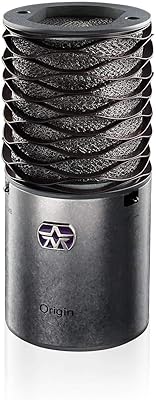
Aston Microphones Origin
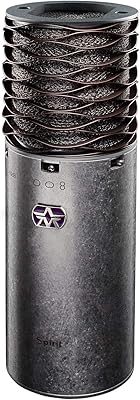
Aston Microphones Spirit Large-Diaphragm Condenser Microphone
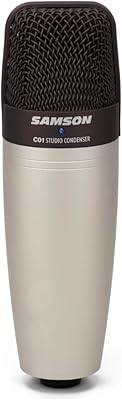
Samson C01
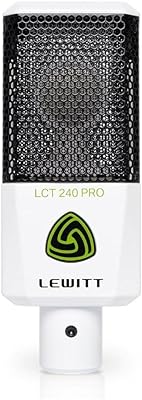
Lewitt LCT 240 Pro Condenser Microphone
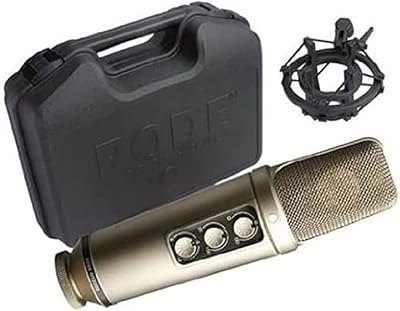
Rode NT2000 Large-Diaphragm Condenser Microphone
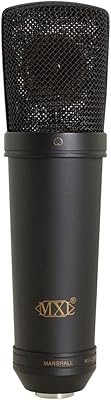
MXL 2003A Large-Diaphragm Condenser Microphone
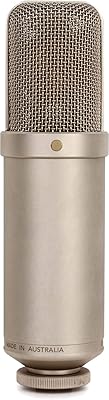
Rode NTK
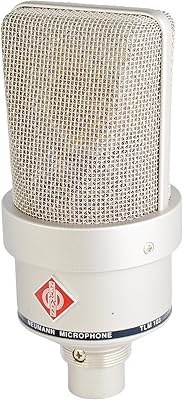
Neumann TLM 103 Large-Diaphragm Condenser Microphone