Overview

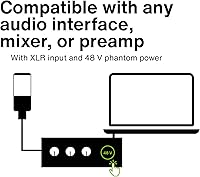
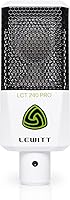
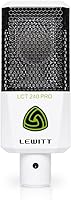
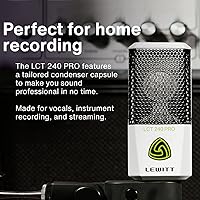
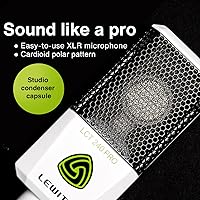
The Lewitt LCT 240 Pro Condenser Microphone comes from an Austrian brand with serious studio credentials, and this model sits at an interesting spot in their lineup — capable enough to satisfy hobbyists ready to move past entry-level gear, yet accessible enough not to overwhelm someone setting up their first home studio. It's a compact cardioid condenser with an all-metal body and XLR connection, which already puts it a tier above the plastic USB mics cluttering this price range. One thing to know upfront: it requires phantom power, meaning you'll need an audio interface or mixer to run it. That's not a drawback — it's a sign of what it's designed to do.
Features & Benefits

The cardioid polar pattern is one of the LCT 240 Pro's most practical advantages — it picks up sound from the front while rejecting noise from the sides and rear, which genuinely helps in home spaces that aren't acoustically treated. The condenser capsule handles high-frequency detail well, adding clarity and presence to vocals that dynamic mics at this price rarely match. With a 78 dB signal-to-noise ratio, the background noise floor stays impressively quiet, so recordings don't arrive pre-seasoned with hiss. The all-metal housing feels substantial, and its compact size means it sits comfortably on a standard boom arm without pulling everything sideways.

Best For

This compact XLR mic hits a sweet spot for a fairly specific type of buyer. If you're a home studio vocalist who's done with USB mics and wants a real XLR condenser workflow, it's a strong fit. Acoustic guitarists in particular tend to get excellent results — the high-end clarity adds air and definition to fingerpicked or strummed recordings without sounding thin. Podcasters and voice-over artists recording in a quiet room will also find it performs well for spoken word. That said, if your space has a lot of ambient noise or echo, a dynamic mic might serve you better — condensers pick up everything, and this one is no exception.

User Feedback

Across 500-plus ratings, this Lewitt condenser holds a 4.5-out-of-5 average, and reading through the reviews reveals a consistent pattern. Vocal clarity comes up constantly — buyers who switched from budget USB mics are often surprised by the jump in presence and brightness. Acoustic guitar recordings also draw praise, with multiple reviewers noting how natural and full the capture sounds. The concerns are predictable but honest: condenser sensitivity means any hum, fan noise, or room echo will be caught. A few buyers also found that their entry-level interface limited the mic's potential — upgrading the preamp made a noticeable difference. On balance, the feedback reflects a mic that delivers when placed in the right setup.

Pros

  • Vocal recordings gain noticeable clarity and brightness compared to USB mics in a similar price range.
  • The cardioid polar pattern does a solid job rejecting background noise from sides and rear.
  • Acoustic guitar recordings sound full and natural, with real high-end air and definition.
  • All-metal construction feels durable and premium — nothing plastic or flimsy about it.
  • A 78 dB signal-to-noise ratio keeps the noise floor impressively quiet for this tier.
  • XLR connectivity future-proofs the setup and works with any professional interface or mixer.
  • The compact size sits comfortably on a standard boom arm without balance issues.
  • Unboxing and included accessories feel considered and premium relative to the price point.
  • Over 500 buyer ratings averaging 4.5 out of 5 reflects consistently positive real-world satisfaction.

Cons

  • Requires phantom power via an audio interface — not usable straight out of the box without one.
  • Room noise, echo, and ambient hum are picked up readily due to condenser sensitivity.
  • A weak or entry-level preamp visibly limits performance; the mic benefits from a quality signal chain.
  • Not suited to live or on-stage use under any circumstances.
  • Buyers in acoustically untreated spaces may struggle more than expected with background noise bleed.
  • No USB option exists, which adds cost and complexity for first-time buyers without existing gear.
  • The white finish, while clean-looking, may show handling marks or dust more readily than darker options.

Ratings

Our AI rating system analyzed verified buyer reviews for the Lewitt LCT 240 Pro Condenser Microphone from across global markets, actively filtering out incentivized, duplicate, and bot-generated feedback to surface what real users actually experience. The scores below reflect both the genuine strengths that keep this mic consistently well-rated and the honest trade-offs that affect certain buyers — nothing is glossed over.
Vocal Clarity
91%
Home studio vocalists repeatedly describe a noticeable jump in presence and brightness the first time they record with this Lewitt condenser compared to budget USB alternatives. The condenser capsule adds a natural airiness to the voice that makes recordings feel polished without heavy processing in post.
The same clarity that flatters a well-controlled vocal also exposes sibilance and breath noise more readily than a dynamic mic would, which means singers who are still developing mic technique may find the unforgiving capture a challenge.
Acoustic Instrument Recording
89%
Acoustic guitarists in particular single out the LCT 240 Pro as a genuine strength — fingerpicked passages retain detail and warmth, while strummed chords sound full rather than thin or harsh. It translates the natural resonance of an acoustic instrument more faithfully than most mics in this tier.
To get the best results, positioning and room acoustics still matter a great deal; buyers who simply point the mic at their guitar without any thought to placement often report results that underwhelm compared to what the capsule is actually capable of delivering.
Build Quality
88%
The all-metal housing immediately distinguishes this compact XLR mic from the plastic-bodied competition — it feels substantial in hand, shows no flex or rattle, and gives the impression it will hold up through years of regular home studio use without issue.
The white finish, while visually clean, shows fingerprints and dust more readily than darker alternatives, which is a minor but persistent annoyance for buyers who care about keeping their gear looking presentable on camera or in a shared studio space.
Background Noise Rejection
76%
24%
The cardioid polar pattern does a respectable job of rejecting sound from the sides and rear, which makes a genuine difference in home setups where the recording space isn't fully treated — a fan on the far side of the room or a noisy street outside registers noticeably less than it would on an omnidirectional mic.
Condenser sensitivity is a real trade-off here; buyers in acoustically challenging spaces quickly discover that HVAC noise, keyboard clatter, and room reflections still bleed into recordings. This is a fundamental limitation of the microphone type, not a flaw exclusive to the LCT 240 Pro, but it catches unprepared buyers off guard.
Value for Money
87%
At its price point, the combination of metal construction, a capable condenser capsule, XLR connectivity, and a brand with real studio credentials is genuinely hard to beat. Buyers who previously owned much cheaper gear consistently describe it as punching above its weight class.
The value calculation shifts slightly if you don't already own an audio interface, since adding that cost to the purchase price changes the entry barrier considerably — something first-time XLR buyers sometimes don't factor in until after purchase.
Podcasting & Voice-Over Performance
83%
For podcasters and voice-over artists recording in a quiet home office or treated space, this compact XLR mic delivers a clean, present sound that requires minimal post-processing — voices come across as natural and intelligible without the proximity mud that plagues some condensers.
Compared to a dynamic mic purpose-built for spoken word in imperfect rooms, the LCT 240 Pro demands a more controlled environment to shine; podcasters who record near windows or in echo-prone rooms will likely spend more time cleaning up recordings than they expect.
Preamp Compatibility
69%
31%
The mic pairs well with mid-range and quality interfaces, where the clean 78 dB signal-to-noise ratio comes through clearly and the full frequency response opens up in a way that justifies its positioning in the Lewitt lineup.
A meaningful segment of buyers with entry-level interfaces found the microphone sounded underwhelming until they upgraded their preamp — the LCT 240 Pro is sensitive enough to expose the limitations of a noisy or underpowered signal chain, which can be frustrating for buyers who assumed the interface they already owned would suffice.
Ease of Setup
84%
For anyone already owning an audio interface with phantom power, setup is genuinely straightforward — plug in the XLR cable, enable 48V on the interface, and the mic is ready to record. There is no driver installation, no app pairing, and no fiddly configuration to navigate.
Buyers new to XLR microphones sometimes underestimate the ecosystem required — phantom power, a decent cable, a stand, and a shock mount are all separate considerations — and a handful of reviews reflect the frustration of discovering these dependencies after the mic has already arrived.
Unboxing & Accessories
78%
22%
The packaging and included accessories are frequently described as feeling more premium than the price suggests, which creates a positive first impression that sets favorable expectations for the recording experience ahead.
The included accessories, while well-presented, may not cover everything a new buyer needs right away — additional investment in a quality shock mount or pop filter is often recommended by experienced users before serious recording begins.
Frequency Response Accuracy
86%
The 20 Hz to 20 kHz range is handled with notable accuracy for a mic in this class — the high-frequency extension adds presence and detail without becoming harsh, and the low end captures body without excessive boominess when positioned thoughtfully.
Some buyers who prefer a darker, warmer character for certain vocal styles find the brighter tilt of the LCT 240 Pro less flattering without EQ adjustment, meaning it suits a wide range of sources but isn't universally ideal for every voice type.
Durability
85%
The metal body has no soft points that typically fail first — there are no fragile plastic mounting tabs or flimsy grille sections — and buyers who have owned the mic for extended periods report no deterioration in sound quality or structural integrity under regular use.
Like any condenser microphone, the capsule is sensitive to moisture and physical shock; a single drop onto a hard surface can cause damage that the robust exterior won't prevent, so it still requires the careful handling expected of studio recording equipment.
Versatility Across Use Cases
82%
18%
The LCT 240 Pro handles the transition between vocal sessions and instrument recording without needing any adjustment — it is genuinely one mic that covers spoken word, singing, and acoustic instruments at a level of quality that justifies keeping just one microphone in a compact home studio setup.
Its versatility has limits; it is not a specialist mic and more purpose-built options will outperform it in niche roles like close-miking loud guitar amps or capturing room ambience, so buyers with very specific advanced recording needs may outgrow it faster than generalists.
Noise Floor
83%
A 78 dB signal-to-noise ratio is a concrete advantage in this price bracket — quiet passages in vocal or acoustic guitar recordings retain detail and clarity rather than disappearing into background hiss, which is a measurable step up from cheaper condensers with significantly higher self-noise.
While 78 dB is competitive here, buyers comparing it to higher-end condensers with lower self-noise will notice the difference on very quiet sources or when recording soft-spoken voices at a distance — acceptable for this tier, but not exceptional in absolute terms.

Suitable for:

The Lewitt LCT 240 Pro Condenser Microphone is a strong choice for anyone who has outgrown USB microphones and is ready to build a proper home studio workflow around an XLR setup. Vocalists who record in a dedicated space — even a small treated room or a quiet bedroom — will notice an immediate improvement in clarity and presence compared to budget alternatives. Acoustic guitarists and other instrumentalists are particularly well-served, as the condenser capsule captures the natural resonance and high-end detail that makes acoustic recordings feel alive. Podcasters and voice-over artists working in reasonably controlled environments will also find it performs reliably for spoken word, delivering a clean, professional sound without demanding a lot of post-processing. Content creators who need a single versatile mic that handles both vocals and instruments without switching gear are the ideal audience for this compact XLR mic.

Not suitable for:

The Lewitt LCT 240 Pro Condenser Microphone is not the right tool for every situation, and being honest about that will save some buyers real frustration. Condensers are inherently sensitive, and this one is no different — if your recording space has noticeable ambient noise, HVAC hum, street sounds, or significant echo, those problems will show up in your recordings more than they would with a dynamic microphone. It is strictly a studio or home-studio tool; live stage use is off the table entirely. Buyers who only have a very basic audio interface with a weak or noisy preamp may also find the mic underperforms their expectations — the LCT 240 Pro rewards a decent signal chain, and a poor one limits what it can deliver. Finally, anyone who needs a simple plug-and-play USB option without an interface should look elsewhere, since this mic runs entirely on phantom power supplied through an XLR connection.
Specifications

  • Brand: Manufactured by Lewitt, an Austrian professional audio company known for studio-grade microphone design.
  • Model: LCT 240 Pro, part of Lewitt's LCT Series of condenser microphones.
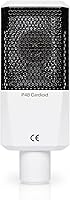
  • Color: Available in White; the body features an all-metal construction with a clean matte finish.
  • Polar Pattern: Cardioid (unidirectional), designed to capture sound from the front and reject off-axis noise from the sides and rear.
  • Connector: Standard XLR output, compatible with professional audio interfaces, mixers, and preamps.
  • Frequency Response: Covers 20 Hz to 20 kHz, spanning the full range of human hearing and typical instrument fundamentals.
  • Signal-to-Noise Ratio: Rated at 78 dB, indicating a low self-noise floor suitable for quiet studio recording environments.
  • Impedance: Output impedance is 200 Ohm, appropriate for use with standard professional XLR preamp inputs.
  • Power Source: Requires 48V phantom power supplied through the XLR connection via an audio interface or mixer.
  • Body Material: Full metal construction, contributing to durability and a low-resonance housing that minimizes handling coloration.
  • Form Factor: Compact mini condenser body, easy to position on a standard boom arm or microphone stand.
  • Weight: 1.5 pounds, making it lightweight enough for typical desktop or boom-arm setups without stability issues.
  • Dimensions: Measures 9.25 x 7.2 x 3.35 inches including any bundled mounting hardware in the packaging footprint.
  • Channels: Single-channel (mono) microphone; records one audio source per input as expected for an XLR condenser.
  • Recommended Uses: Designed for vocals, acoustic instruments, podcasting, voice-over recording, and video content production.

Related Reviews
Lewitt LCT 440 Pure
Lewitt LCT 440 Pure
89%
94%
Vocal Clarity
97%
Self-Noise Performance
91%
Build Quality
88%
Acoustic Instrument Capture
93%
Value for Money
More
Lewitt LCT 940 Large-diaphragm Condenser Microphone
81%
91%
Tonal Blend Control
92%
FET Sound Quality
87%
Tube Sound Quality
93%
Build Quality
91%
Vocal Performance
More
AKG P120 Condenser Microphone
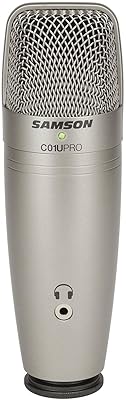
78%
88%
Sound Clarity
84%
Value for Money
74%
Build Quality
61%
Room Sensitivity
79%
Ease of Setup
More
Samson C01U Pro
Samson C01U Pro
83%
93%
Build Durability
88%
Vocal Clarity
82%
Background Noise Rejection
91%
Latency Performance
96%
Ease of Setup
More
Elgato Wave:3 USB Condenser Microphone
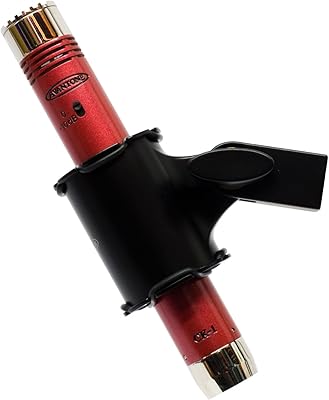
82%
91%
Audio Clarity
88%
Build Quality
93%
Ease of Setup
71%
Wave Link Software
78%
Noise Rejection
More
Avantone Pro CK-1 Small-Diaphragm Condenser Microphone
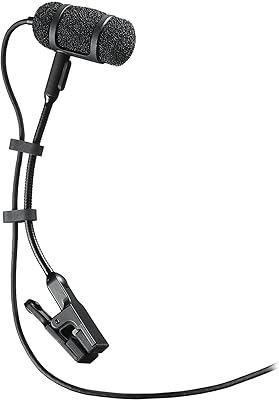
81%
88%
Sound Transparency
86%
Transient Response
81%
Capsule Versatility
84%
Build Quality
89%
SPL Handling
More
Audio-Technica PRO 35
88%
93%
Audio Clarity
96%
High-SPL Handling
89%
Mounting Security
91%
Isolation & Feedback Rejection
87%
Build Durability
More
Avantone Pro CV-12 Tube Condenser Microphone
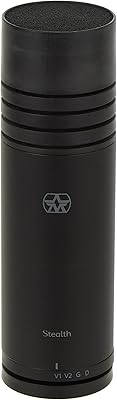
79%
88%
Vocal Sound Quality
83%
Tube Character
86%
Polar Pattern Versatility
81%
Build Quality
84%
Value for Money
More
Aston Microphones Stealth Condenser Microphone
79%
88%
Sound Quality
84%
Voice Mode Versatility
86%
Built-in Preamp
91%
Build Quality
83%
Value for Money
More
Blue Blueberry Cardioid Condenser Microphone
79%
93%
Tonal Character
91%
Vocal Performance
89%
Build Quality
94%
Capsule Quality
71%
Preamp Compatibility
More

FAQ

You will need an audio interface or a mixer that supplies 48V phantom power — the mic runs entirely on that and has no USB option or built-in preamp. If you already own an interface like a Focusrite Scarlett or similar, you are good to go. If not, budget for one alongside the mic.

Yes, it is one of the stronger options at this price tier for home vocal recording. Buyers consistently note the clarity and brightness it brings compared to USB mics they upgraded from. Just keep in mind that a quiet, reasonably controlled recording space will make a significant difference in the results you get.

The cardioid polar pattern does a decent job of rejecting noise coming from the sides and rear, which helps. That said, condensers are inherently more sensitive than dynamic mics, so prominent ambient noise like fans, air conditioning, or street sounds will still show up in your recordings. If your room is quite noisy, a dynamic mic might actually be a better fit.

Absolutely — acoustic guitar is actually one of the areas where this compact XLR mic gets the most praise from real users. The condenser capsule captures the high-end detail and natural resonance of acoustic instruments well, producing a full-bodied sound that budget dynamics rarely match.

It will work with an entry-level interface, but a few users have noted that the mic responds noticeably better when paired with a cleaner, more capable preamp. If you are using a very basic interface, it will still function — just don't expect to unlock the mic's full potential until you upgrade the signal chain eventually.

Yes, for podcasters recording in a reasonably quiet space it performs well for spoken word — the voice comes through clear and present without needing heavy processing. If your recording environment has a lot of echo or ambient noise, you may want to address those issues first, as the mic will pick them up faithfully.

No — this is strictly a studio and home-recording microphone. Condensers are too sensitive for live stage environments where feedback, monitor bleed, and high sound pressure levels are common. For live use, a dynamic microphone is the appropriate choice.

The mic ships with the microphone itself along with accessories that buyers have described as feeling premium for the price point. You should verify the current bundle contents on the product listing, as included accessories can vary by retailer or update over time.

The all-metal body is a genuine plus here — there is nothing flimsy or plastic about the construction, and it should hold up well under regular studio use. Handle it with the same care you would give any condenser microphone (avoid drops and moisture), and it should last for years.

Both are well-regarded condensers in a similar price bracket, and the comparison comes up often. The LCT 240 Pro is generally considered to have a slightly brighter character and a premium build experience, while the AT2020 has a longer track record and wider availability of user resources. Either is a solid choice; the LCT 240 Pro tends to appeal to buyers who want something that feels a step above the crowd.

Where to Buy