Overview

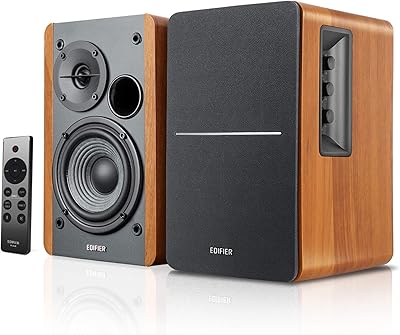
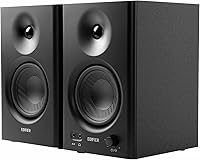
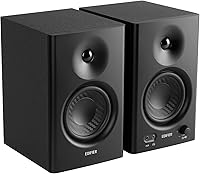
The Edifier MR4 Studio Monitor Speakers occupy a smart middle ground between basic computer speakers and serious professional monitors, making them a practical starting point for bedroom producers, podcasters, and anyone curious about more accurate audio playback. What sets the MR4 pair apart from many rivals at this price is a dual-mode design that lets you toggle between a flat monitor curve and a warmer, more consumer-friendly listen. The MDF wood cabinet keeps resonance in check, which genuinely matters when you're trying to trust what you hear. These are near-field desktop speakers — keep that in mind. They are not built for large rooms or professional mastering suites.
Features & Benefits

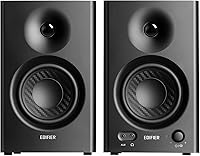
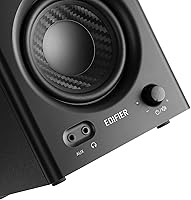
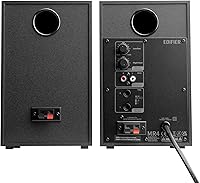
The driver pairing — a 1-inch silk dome tweeter and a 4-inch composite woofer — handles the frequency range with solid composure at normal listening volumes. Highs come across crisp without harshness, and the midrange, where most vocal and instrument detail lives, stays clear. Bass is present and reasonably defined for the cabinet size, but a 4-inch woofer has physical limits — deep sub-bass extension is not this Edifier monitor set's strength. Connectivity is genuinely flexible: a balanced TRS input, RCA, and AUX cover most setups, and the front-panel headphone jack is a welcome convenience. The separate treble and bass knobs let you make quick tonal adjustments without touching any software, which is more useful day-to-day than it might sound.

Best For

These studio monitors make the most sense for home studio beginners who want to hear their mixes more honestly than consumer headphones or desktop speakers will allow. Podcasters and video editors will appreciate the accurate midrange reproduction for voice work, and the mode-switching means you are not stuck in reference listening mode when you just want to unwind. The compact footprint fits naturally on most desks without demanding rearrangement. That said, if you are mixing for large-room playback, or if your work demands the precision of professional mastering, this Edifier monitor set is not the right tool. It is aimed squarely at the beginner-to-intermediate creator — and at that level, it genuinely delivers.

User Feedback

With a 4.6-star average across nearly 3,000 ratings, the MR4 pair has clearly earned its reputation. Buyers consistently praise the clear, detailed midrange and the punchy low end — impressive given the driver size — along with how straightforward the setup is, noting the multiple input options as a recurring plus. On the critical side, some users find that music mode leans into the bass a touch too much; monitor mode tends to be the more trusted setting for actual production work. A handful of buyers mention the headphone output lacks fine volume precision at the lower end of its range. Notably, the most negative reviews almost always come from people who expected room-filling output — an expectation these monitors were never designed to meet.

Pros

  • Monitor mode delivers a genuinely honest midrange that helps catch mix problems consumer speakers hide.
  • Three input types — balanced TRS, RCA, and AUX — cover nearly every desktop connection scenario without adapters.
  • The MDF cabinet keeps resonance noticeably lower than plastic-bodied competitors at the same price.
  • Dual listening modes let you switch from production work to relaxed listening without changing any cables.
  • Setup takes under ten minutes with no software, drivers, or acoustic calibration tools needed.
  • The MR4 pair punches harder in the low-mids than the driver size alone would suggest.
  • Front-panel treble and bass knobs allow quick tonal adjustments mid-session without touching a computer.
  • A front-panel headphone jack makes silent late-night monitoring genuinely convenient.
  • At nearly 3,000 verified ratings averaging 4.6 out of 5, long-term user satisfaction is consistently strong.
  • The compact footprint fits naturally on crowded desks without forcing a major workspace rearrangement.

Cons

  • Music mode bass boost can feel excessive rather than warm, making it less reliable for critical listening.
  • The headphone output volume jumps too aggressively at low levels, making quiet precision listening frustrating.
  • No center detents on the EQ knobs means returning to a neutral position requires guesswork.
  • Sub-bass below roughly 60Hz loses definition noticeably, which affects mix decisions for bass-heavy genres.
  • Front panel buttons have a plasticky feel that does not match the otherwise solid cabinet build.
  • Background hiss is faintly audible when powered on and idle in a very quiet room at night.
  • No Bluetooth connectivity limits wireless use cases that buyers in this category increasingly expect.
  • Isolated reports of one channel developing intermittent signal issues after extended use raise minor durability questions.
  • The included quick-start guide gives first-time monitor buyers little guidance on placement or input selection.
  • Stereo imaging narrows significantly if the pair is placed too close together on a cramped desk.

Ratings

The Edifier MR4 Studio Monitor Speakers have been evaluated by our AI system after analyzing thousands of verified global purchases, with spam, bot-submitted, and incentivized reviews actively filtered out to reflect genuine buyer experiences. The scores below cover everything from sound accuracy to build quality, capturing both the consistent praise and the recurring frustrations real users report. Strengths and limitations are weighted equally — no category is glossed over.
Sound Accuracy
83%
In monitor mode, the MR4 pair delivers a notably honest midrange that home producers genuinely trust for checking vocal clarity and instrument separation. Buyers coming from consumer-grade speakers consistently describe the step up in detail retrieval as immediately noticeable during mixing sessions.
The flat response is good for the price tier but experienced ears will catch slight colorations, particularly in the upper bass region. It is not a substitute for true reference-grade monitors when precision decisions — like mastering or final mix sign-off — are on the line.
Bass Performance
71%
29%
For a 4-inch woofer, the low end punches with more weight than buyers typically expect, making it satisfying for casual beat-checking and general music production at a desk. The cabinet construction keeps the bass relatively controlled and avoids the boxy bloom common in cheaper plastic-bodied speakers.
Deep sub-bass extension is physically limited by the driver size — frequencies below around 60Hz start to thin out noticeably. Users who mix bass-heavy genres like hip-hop or electronic music will find themselves second-guessing low-end decisions without a subwoofer supplement.
Treble Clarity
86%
The silk dome tweeter handles high frequencies smoothly without the harshness or sibilance that plagues cheaper monitor designs. Cymbals, acoustic guitar presence, and vocal air come through cleanly at typical near-field listening distances, which buyers editing audio for YouTube or podcasts especially appreciate.
At higher volume levels a small number of users report the highs can edge toward brightness, though this is manageable with the on-board treble knob. The tweeter does not quite match the resolution of pricier monitors when fine-detail work demands it.
Dual-Mode Design
78%
22%
The ability to toggle between a reference monitor curve and a warmer music mode is a practical convenience that most buyers in this category genuinely use. It removes the friction of constantly swapping cables or output devices when shifting from production work to relaxed listening.
Honest buyers note that music mode adds a noticeable bass boost that some find excessive rather than pleasantly warm. The mode-switching is a usability feature, not an acoustic engineering achievement — the gap between the two modes could be better calibrated.
Build Quality
81%
19%
The MDF wood cabinet feels substantive and well-assembled for the price, with no creaks or flex when handled. Buyers report that after a year or more of daily desk use, the finish holds up without visible degradation and the driver grilles remain securely attached.
The front panel buttons and knobs feel adequate but not premium — there is a slight plasticky give to them that reminds you of the product's price tier. A few users noted minor cosmetic scuffs arriving out of the box, suggesting packaging could be more protective.
Connectivity & Inputs
89%
Three distinct input types — balanced TRS, RCA, and 3.5mm AUX — cover nearly every desktop scenario without needing adapters, which buyers consistently highlight as a practical standout. Plugging in a laptop, a mixer, and a phone simultaneously and switching between them is genuinely frictionless.
There is no Bluetooth option, which some buyers only realize after purchase and consider a missed convenience for a desk-oriented speaker. The input switching is also not automatic — you manually select sources, which can feel dated compared to some competing designs.
Headphone Output
66%
34%
Having a headphone jack on the front panel is a real convenience for late-night sessions or shared spaces, eliminating the need to reach behind a computer. Output level is sufficient for most standard headphones at moderate impedances.
Volume control resolution at the lower end of the range is a recurring complaint — small adjustments produce larger-than-intended volume jumps, making it difficult to dial in a precise quiet level. High-impedance headphones may also find the output underpowered.
Front-Panel Controls
76%
24%
Separate high and low frequency knobs give users immediate hands-on tonal shaping without opening any software, which is a meaningful workflow advantage during active production sessions. The controls are logically placed and respond consistently.
The knobs lack center detents, so returning to a neutral position requires guesswork or careful listening rather than a tactile reference point. Users who frequently adjust and reset their EQ find this more frustrating than it may seem on paper.
Volume & Power Output
74%
26%
At 42 watts total, the MR4 pair reaches levels that are more than adequate for typical home office and bedroom studio use, with clean output well before the amplifier shows any strain. Most buyers report they rarely push past 60% volume in normal sessions.
Anyone expecting to fill a living room or monitor from across a larger studio space will be disappointed — these are near-field speakers by design and by physics. The power ceiling becomes a real limitation in any room larger than roughly 10 by 12 feet.
Signal-to-Noise Ratio
79%
21%
At 85 dB SNR, background hiss at normal listening volumes is minimal and rarely distracts during quiet playback or low-level mixing work. Buyers using these monitors in treated home studios or quiet home offices report no noticeable noise floor issues.
At very low volumes with sensitive ears — particularly in a silent room late at night — a faint hiss is audible when the speakers are powered on and idle. It is not a defect so much as a spec limitation, but it does surface in user feedback.
Setup & Ease of Use
92%
Buyers routinely describe unboxing to first sound in under ten minutes, with included cables covering the most common connection scenarios right out of the box. No drivers, no software, no acoustic calibration tools required — plug in and it works.
The manual is minimal, and first-time studio monitor buyers occasionally feel uncertain about optimal placement or which input mode to prioritize. A more informative quick-start guide covering basic near-field positioning would reduce early user confusion.
Desk Footprint & Placement
84%
The compact cabinet dimensions fit comfortably on most standard desks without dominating the workspace, and the weight is manageable enough to reposition easily. Buyers in small apartments or shared office setups consistently call out the size as a practical plus.
The pair configuration means you need reasonable horizontal spacing for a proper stereo image, which tight L-shaped desk setups occasionally cannot accommodate. Some buyers place them too close together and then wonder why the stereo field sounds narrow.
Value for Money
88%
Stacked against other actively powered monitors in the same price bracket, the MR4 pair offers a noticeably richer feature set — dual modes, multiple inputs, on-board EQ knobs — that competitors often omit to hit a similar price point. Most buyers feel the purchase is justified within the first week of use.
Buyers who stretch the budget slightly further into premium entry-level territory sometimes feel a meaningful performance gap opens up, particularly in stereo imaging and low-end accuracy. The value case is strong at this price but weakens if your expectations are calibrated against professional tools.
Longevity & Reliability
77%
23%
A meaningful portion of longer-term reviews — owners at the one-to-two year mark — report no degradation in driver performance or cabinet integrity with regular use. The brand's reputation for durability in the consumer audio segment carries over reasonably well here.
There are isolated reports of one channel developing intermittent signal issues after extended use, though these appear to be outliers rather than a systemic pattern. The limited warranty provides some reassurance, but long-term durability data beyond two years is still relatively sparse.

Suitable for:

The Edifier MR4 Studio Monitor Speakers are a genuinely smart buy for anyone building a home studio on a realistic budget who needs more honest playback than consumer speakers can offer. Bedroom producers recording vocals, guitars, or beats will appreciate the more accurate midrange reproduction when checking mixes, even if these are not professional-grade reference tools. Podcasters and video editors also get real value here — voice clarity and dialogue detail come through with enough accuracy to catch problems before publishing. The dual-mode design makes the MR4 pair equally comfortable for daily casual listening, so you are not stuck in a clinical-sounding monitoring environment all day. Anyone upgrading from standard desktop computer speakers or low-cost multimedia monitors will notice an immediate and meaningful improvement in both detail and stereo imaging. The compact footprint and plug-and-play setup also make this Edifier monitor set a practical fit for small apartments, dorm rooms, or shared home offices where space and setup time are both limited.
Not suitable for:

The Edifier MR4 Studio Monitor Speakers are the wrong tool if you are working in a room larger than a modest bedroom or home office — the 42-watt output and 4-inch woofer simply cannot project sound convincingly across larger spaces. Professional mastering engineers or anyone whose livelihood depends on truly flat, reference-accurate monitoring should look further up the price ladder, as these monitors carry enough coloration to affect critical mix decisions at that level. Bass-heavy producers working in hip-hop, electronic, or trap genres will find the low-end extension falls short below around 60Hz, which can lead to misleading mix decisions without a dedicated subwoofer. If wireless connectivity matters to you — Bluetooth for a phone or tablet without cables — this Edifier monitor set offers nothing in that direction. The headphone output, while convenient, lacks the precision volume control that late-night listeners or headphone-focused engineers expect from a dedicated amplifier.
Specifications

  • Woofer Driver: Each speaker houses a 4″ composite woofer designed to handle mid-bass and low-mid frequencies with controlled damping.
  • Tweeter Driver: A 1″ silk dome tweeter manages high-frequency reproduction, delivering smooth treble without the harshness typical of cheaper mylar alternatives.
  • Power Output: The built-in amplifier delivers a combined 42 watts, sufficient for near-field desktop listening at comfortable to moderately loud volumes.
  • Frequency Response: Rated frequency response spans 20Hz to 20kHz, covering the full audible range, though practical bass extension starts tapering meaningfully below roughly 60Hz.
  • Signal-to-Noise Ratio: An 85 dB signal-to-noise ratio keeps background hiss inaudible at normal listening levels in most room environments.
  • Input Connections: Three input options are provided: a 1/4″ balanced TRS jack, an unbalanced RCA stereo pair, and a 3.5mm unbalanced AUX input.
  • Headphone Output: A front-panel 3.5mm headphone jack allows direct silent monitoring without reaching behind the speaker or unplugging any source cables.
  • Cabinet Material: Cabinets are constructed from MDF wood, which reduces internal resonance and panel vibration compared to plastic-bodied speaker designs.
  • Listening Modes: A front-panel button toggles between monitor mode (flatter response curve) and music mode (enhanced bass and treble for casual listening).
  • EQ Controls: Two front-panel rotary knobs provide independent high-frequency and low-frequency adjustments without requiring any software or external equipment.
  • Configuration: The MR4 is a powered 2.0 stereo pair — both speakers contain built-in amplification, so no separate receiver or amplifier is needed.
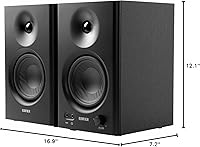
  • Dimensions: The combined pair measures 7.2″ deep by 16.9″ wide by 12.1″ tall, making it compact enough for most standard desktop setups.
  • Weight: The total weight of both speakers together is approximately 9.92 lbs, giving each cabinet a solid, stable feel on a desk surface.
  • Power Source: These are corded electric speakers requiring a standard AC wall connection; there is no battery or USB-power option.
  • Wireless Connectivity: No wireless connectivity of any kind is included — Bluetooth, Wi-Fi, and AirPlay are not supported.
  • Speaker Orientation: Designed for tabletop horizontal placement in a standard left-right stereo configuration at near-field listening distances of roughly 2 to 5 feet.
  • Included Accessories: The package includes both powered speakers, an RCA stereo cable, and a remote control for basic volume and mode adjustments.
  • Warranty: Edifier provides a limited warranty on this product; buyers should confirm current warranty terms directly with the manufacturer or retailer at time of purchase.

Related Reviews

Vanatoo Transparent Zero Plus Studio Monitor Speakers
84%
91%
Sound Quality
89%
Connectivity
85%
Ease of Setup
75%
Bass Performance
88%
Size & Design
More
Edifier M60 Multimedia Speaker
88%
94%
Sound Quality
91%
Bass Performance
88%
Connectivity Options
87%
Design & Aesthetics
89%
Setup & Installation
More
Edifier S2000MKIII Bookshelf Speakers
86%
92%
Sound Quality
89%
Bluetooth Performance
88%
Build Quality
85%
Ease of Use
91%
Connectivity Options
More
Edifier G2000
Edifier G2000
78%
78%
Sound Quality
71%
Bass Performance
86%
Build Quality
73%
EQ Modes
83%
Connectivity & Inputs
More
Polk Monitor XT20
Polk Monitor XT20
79%
88%
Sound Clarity & Detail
61%
Bass Performance
86%
Mid-Range Openness
83%
Build Quality & Materials
84%
Value for Money
More
Edifier P17 Passive Shelf Speakers
82%
88%
Sound Quality
85%
Bass Performance
90%
Build Quality
75%
Installation and Setup
60%
Amplifier Compatibility
More
Edifier P12
Edifier P12
78%
83%
Sound Clarity
61%
Bass Performance
79%
Treble Quality
86%
Build Quality
91%
Wall-Mount Bracket
More
Polk Monitor XT70 Tower Speaker
87%
91%
Sound Quality
88%
Bass Performance
90%
Immersive Audio Experience
87%
Build Quality
85%
Ease of Setup
More
Polk Audio Monitor XT15
80%
83%
Sound Quality
61%
Bass Extension
78%
Soundstage & Imaging
81%
Build Quality
84%
High-Frequency Clarity
More
Edifier S1000W
Edifier S1000W
79%
91%
Sound Quality
88%
Wireless Connectivity
67%
App Experience
84%
Build Quality
63%
Bass Performance
More

FAQ

No, the Edifier MR4 Studio Monitor Speakers are fully powered — the amplifier is built directly into the speaker cabinet. You just plug them into a wall outlet and connect your source device, and you are ready to go.
Yes, easily. Use the 3.5mm AUX input with a standard headphone cable from your laptop's audio output, or connect via RCA if your audio interface has those outputs. The balanced TRS input also works well with most audio interfaces that have line outputs.

Monitor mode aims for a flatter, more accurate frequency response — it is what you want when mixing or editing audio and need to hear things honestly. Music mode adds a bass and treble boost for a more enjoyable casual listening experience. For production work, stick with monitor mode; for background music while you work or relax, music mode is the more comfortable choice.

The low end is punchy and satisfying for most general listening and light production work at a desk. That said, a 4-inch driver has real physical limits — deep sub-bass below around 60Hz starts to roll off noticeably. If you regularly mix bass-heavy music genres like hip-hop or electronic, pairing the MR4 set with a small subwoofer would give you a much more complete picture of your low end.

At near-field distances of two to four feet, they reach genuinely loud levels with clean output. Most users never push past about 60 to 70 percent volume in normal desktop use. Beyond that the sound stays mostly clean, but these are not designed to fill a living room — they perform best as desktop near-field monitors.

At normal listening distances and volumes, the hiss is minimal and unlikely to bother most users. In a very quiet room late at night with the volume turned up and nothing playing, a faint hiss is audible if you listen for it — this is a function of the 85 dB signal-to-noise ratio spec. It is not a defect; it is just the practical limit at this price tier.

Yes, it works fine for general use and silences the speakers automatically when you plug in. The main limitation reported by users is that the volume control lacks fine precision at very low levels, so dialing in a truly quiet headphone listening volume can be tricky. High-impedance headphones above about 150 ohms may also find the output slightly underpowered.

An RCA stereo cable and a remote control are included in the box. If you want to connect via the 3.5mm AUX input or the balanced TRS input, you will need to supply those cables yourself — they are standard and inexpensive, but it is worth having them ready before setup day.

They work well in apartment settings precisely because they are near-field speakers — you get a satisfying, detailed listening experience at low to moderate volumes without needing to push them loud. The front-panel headphone output also gives you a quick silent monitoring option for late-night sessions.

The MR4 pair stands out from many direct rivals by offering dual listening modes, three distinct input types, and on-board EQ knobs — features that competing monitors at a similar price often omit. Sound quality is competitive and in some areas — particularly midrange clarity — it edges ahead of several alternatives buyers commonly compare it against. The main trade-off is that buyers willing to spend a bit more will find a meaningful step up in stereo imaging precision and low-end accuracy from higher-tier options.

Where to Buy