Overview

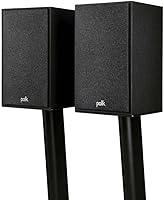
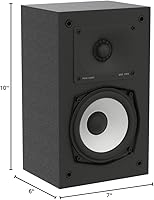
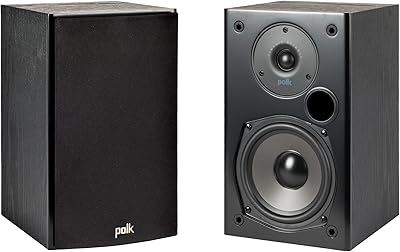
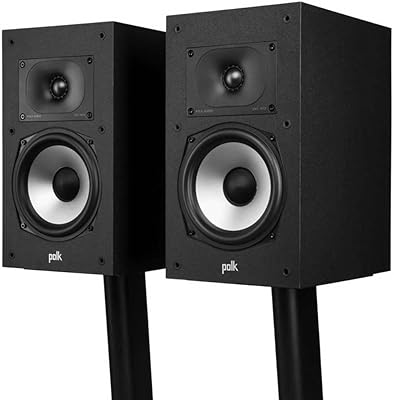
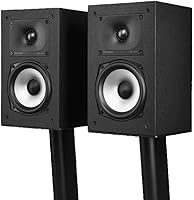
The Polk Audio Monitor XT15 is Polk's updated take on a speaker line that has earned genuine respect among budget-conscious audio enthusiasts over many years. These bookshelf speakers sit squarely in the mid-range passive category — meaning you will need an AV receiver or amplifier to drive them, which is worth knowing upfront. At roughly 6.5 inches deep and just under 11 inches tall, they fit comfortably on a shelf or stand without dominating a room. Dolby Atmos and DTS:X compatibility is a legitimate plus at this price point, not just a checkbox.
Features & Benefits

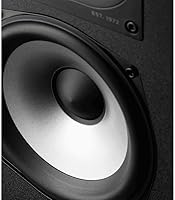
The Terylene dome tweeter sets the high-frequency character of the XT15 pair apart from cheaper alternatives. Terylene — a type of polyester — produces a slightly warmer, more relaxed top end compared to metal tweeters, which means extended listening sessions are less fatiguing. The 5.25-inch woofer uses a dynamically balanced design: a process of carefully tuning cone resonances during manufacturing so that midrange coloration stays minimal. Both drivers support Hi-Res Audio certification, confirming they can reproduce frequencies up to 40kHz — genuinely useful when streaming lossless audio from Tidal or Amazon Music HD. The dual 4- and 8-ohm impedance also broadens the range of receivers these will pair well with.

Best For

The XT15 pair makes the most sense for people building a first home theater on a budget — particularly as surround or rear channels in a 5.1 setup. Stereo music listeners who value clear mids and a reasonably wide soundstage will also find these bookshelf speakers rewarding, especially in smaller rooms where larger floor-standers would overwhelm the space. Apartment dwellers and compact living areas are natural fits. They slot neatly into existing Polk Monitor XT systems for listeners already invested in that ecosystem. If you prefer wired passive speakers over Bluetooth or powered alternatives, these deliver solid performance for the category.

User Feedback

Owners consistently praise the natural midrange reproduction and comment on how wide the soundstage feels given the cabinet dimensions — a common thread among buyers upgrading from entry-level sound bars. Build quality also earns real appreciation; the cabinets feel dense and well-finished. That said, the grilles tend to draw criticism for feeling cheaper than the rest of the enclosure. The biggest practical concern is bass extension: without a subwoofer, anything below roughly 60Hz gets thin fast, so budget for one if low-end impact matters to you. Some users also note that amplifier matching matters — a weak receiver can make them sound noticeably flat.

Pros

  • The midrange clarity is a genuine standout — vocals, dialogue, and acoustic instruments sound natural and open.
  • Build quality feels noticeably solid and premium relative to what similar-priced speakers typically offer.
  • The Terylene tweeter keeps treble smooth and non-fatiguing during long movie nights or extended listening sessions.
  • Dual 4- and 8-ohm impedance compatibility means these pair reliably with a wide range of AV receivers.
  • Soundstage width is surprisingly convincing given how compact the cabinet is.
  • Hi-Res Audio certification translates into real performance gains when streaming lossless audio from quality sources.
  • Placement options are genuinely flexible — bookshelf, stand-mounted, or wall-mounted all work well.
  • Dolby Atmos and DTS:X compatibility is a meaningful feature, not just a spec sheet checkbox, at this price point.
  • The XT15 pair integrates cleanly into a broader Polk Monitor XT surround setup without tonal mismatches.

Cons

  • A separate AV receiver or amplifier is required — the total system cost is higher than the speaker price alone suggests.
  • Bass extension drops off meaningfully below 60Hz, making a subwoofer a near-necessity rather than an optional extra.
  • The speaker grilles feel noticeably cheaper and more plasticky than the cabinet quality would lead you to expect.
  • In larger rooms at high volumes, the 5.25-inch woofer can start to sound thin when used as front mains.
  • Amplifier quality matters — a weak or poorly matched receiver will hold back performance noticeably.
  • Some buyers report a minor break-in period before the drivers settle and sound their best.
  • Upper midrange can take on a slightly forward character in acoustically live rooms at elevated volumes.

Ratings

Our scores for the Polk Audio Monitor XT15 were generated by AI after systematically analyzing thousands of verified buyer reviews from global markets, with spam, bot-submitted, and incentivized feedback actively filtered out. The result is an honest picture of where these bookshelf speakers genuinely excel and where real-world buyers have run into frustrations. Both the standout strengths and the recurring pain points are reflected transparently in every category below.
Sound Quality
83%
Buyers consistently highlight the natural, open midrange as the standout characteristic — vocals and acoustic instruments come through with a clarity that surprises people used to speakers at this price point. The Terylene tweeter keeps high frequencies present without the sharpness that causes ear fatigue during longer movie or music sessions.
The low end thins out noticeably on bass-heavy content without a dedicated subwoofer in the chain. Listeners who enjoy hip-hop, electronic music, or cinematic action sequences often find the bottom octave underwhelming when these are run full-range.
Bass Extension
61%
39%
For acoustic genres, jazz, and dialogue-heavy content, the woofer performs well within its natural range, delivering punchy and reasonably controlled mid-bass. In a properly configured 5.1 system with a subwoofer handling the low frequencies, most buyers report a very satisfying overall sound balance.
Standalone, these speakers roll off meaningfully below 60Hz, which is a real limitation if you are using them as stereo mains without a sub. Multiple reviewers specifically note this as something Polk should communicate more clearly upfront, since not every buyer budgets for a subwoofer immediately.
Soundstage & Imaging
78%
22%
The soundstage width relative to the cabinet size earns genuine admiration from music-focused listeners — stereo placement feels wider than you would expect from a speaker this compact. In a well-treated room, instruments separate clearly and positioning feels convincing during both movies and two-channel listening.
Some home theater users report that while stereo imaging is strong, pinpoint directional accuracy as surround channels in a larger room is less convincing compared to dedicated surround-format speakers. The imaging performs best at moderate listening distances rather than in very large open spaces.
Build Quality
81%
19%
The cabinet construction earns consistent praise — it feels dense and solidly built, with a finish that looks noticeably more premium than what competing speakers in this bracket typically offer. Most buyers report that the overall enclosure inspires confidence that these will hold up well over years of regular use.
The speaker grilles are a recurring weak point, described by multiple users as feeling noticeably cheaper and more plasticky than the cabinet itself. It is a minor detail, but it does slightly undercut the otherwise positive first impression when unboxing.
High-Frequency Clarity
84%
The Terylene dome tweeter delivers smooth, extended treble that handles string sections, cymbals, and high-pitched sound effects without introducing harshness. Buyers who have previously owned metal-dome tweeter speakers often comment that these feel less fatiguing during long sessions.
A small subset of reviewers feel the treble is slightly too polite or rolled off for their taste — particularly those who prefer a more detailed, analytical presentation. Brightness preference is subjective, but listeners who like an airy, forward top end may find these a touch too relaxed.
Midrange Performance
88%
The midrange is the clear headline strength of these bookshelf speakers. Voices in movies, podcasts, and vocal-heavy music tracks come through with a warmth and presence that many buyers describe as immediately noticeable compared to their previous setup. The dynamically balanced woofer design visibly pays off here.
At very high volumes, a handful of reviewers note a slight boxiness creeping into the midrange, suggesting the cabinet tuning has limits. This tends to surface mainly in larger rooms where the receiver is pushed past comfortable levels.
Value for Money
86%
At its price point, the XT15 pair offers a combination of Hi-Res Audio certification, dual-impedance flexibility, and genuine build quality that is genuinely hard to match from competing brands. First-time home theater builders in particular consistently rate the perceived value as high.
The cost of ownership climbs once you factor in the required AV receiver and the strongly recommended subwoofer — buyers on a tight total budget sometimes feel the full system cost was not obvious at purchase. If those are already owned, the value argument is strong; if they are not, budget accordingly.
Ease of Setup
79%
21%
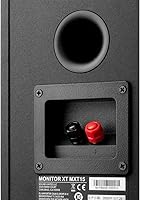
The binding posts are well-built and accept both bare wire and banana plugs cleanly, which makes initial wiring quick and tidy. The dual impedance compatibility means buyers rarely run into receiver-matching headaches that can plague some passive speakers at this price.
These are passive speakers, so first-time buyers who expected a plug-and-play experience have occasionally expressed frustration at needing a separate amplifier. The product listing does note this, but it still catches a meaningful number of buyers off guard based on review patterns.
Placement Flexibility
77%
23%
The compact footprint makes these genuinely easy to work into a range of room setups — on a bookshelf, on stands, or mounted on a wall bracket. Several buyers specifically praise how little space they occupy compared to the sound they produce.
Wall-mounting requires additional hardware not included, and the port design means they benefit from a few inches of clearance from the rear wall, which limits truly flush placement. In very small rooms, getting optimal positioning can require some trial and error.
Compatibility & Connectivity
82%
18%
The 4- and 8-ohm dual impedance is a practical advantage that gets called out by more technically minded buyers — it means these work reliably with a wide range of AV receivers without stressing the amplifier section. Dolby Atmos and DTS:X support is also a genuine feature, not just marketing language.
There is no wireless option, which is simply the nature of passive speakers but still draws occasional complaints from buyers who misread the listing. Bluetooth connectivity is not available, so buyers expecting a wire-free setup will need to look elsewhere.
Hi-Res Audio Performance
76%
24%
The Hi-Res Audio certification is backed by a tweeter capable of reproducing frequencies well above the standard 20kHz threshold, which is audible on high-quality lossless streams from Tidal or Amazon Music HD. Buyers who stream in high-resolution formats notice a tangible difference compared to compressed sources.
The benefit of Hi-Res Audio certification is dependent on the quality of the upstream signal chain — a weak DAC in the receiver or compressed streaming source will cap any advantage. Some buyers also question whether the improvement over standard-resolution playback justifies the certification as a purchasing decision.
Home Theater Integration
80%
20%
As rear or surround channels in a 5.1 or larger system, the XT15 pair blends naturally with other Polk Monitor XT components, which is meaningful if you are building out a matched system incrementally. The timbre consistency across the product family gets specific praise from buyers who expanded their setup over time.
As front mains in a dedicated home theater driving a full room, some buyers feel the 5.25-inch woofer runs out of authority at higher volumes. They perform better as supporting players in a larger system than as the primary speakers handling full-range duty alone.
Listening Fatigue
85%
The combination of the Terylene tweeter and the tuned midrange makes these particularly suited to long listening sessions — buyers who use them for background music during work or multi-hour movie nights rarely mention ear fatigue as an issue. The tonality leans warm rather than aggressive.
At elevated volumes in more reflective rooms, a small number of buyers note that the upper midrange can take on a slightly forward edge. Room acoustics play a bigger role than the speakers themselves, but it is worth noting for buyers with live-sounding spaces.
Aesthetic Design
74%
26%
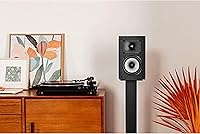
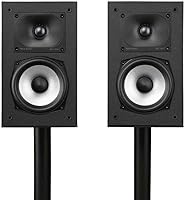
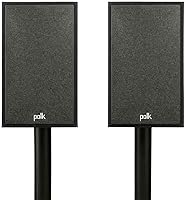
The Midnight Black finish has a clean, understated look that sits comfortably in most living room or media room setups without drawing attention to itself. The rectangular cabinet proportions are classic and avoid the dated appearance of some budget bookshelf speaker designs.
The design is functional rather than distinctive — buyers looking for a visually striking speaker will not find much here. The aforementioned grille quality gap also slightly damages the overall aesthetic impression, particularly for buyers who display these prominently on open shelving.

Suitable for:

The Polk Audio Monitor XT15 is a strong match for anyone building their first home theater system on a sensible budget — particularly buyers who already own or plan to buy an AV receiver and want capable surround or rear speakers without overspending. Stereo music listeners who care about midrange clarity and natural vocals but live in an apartment or smaller room will find these bookshelf speakers a practical fit, since they deliver genuinely good imaging without requiring the floor space or power of larger floor-standers. They also make real sense for existing Polk Monitor XT owners looking to expand a matched surround system incrementally, since the tonal consistency across the family is a tangible benefit rather than just a marketing talking point. If you stream lossless audio regularly through Tidal or Amazon Music HD, the Hi-Res Audio certification here is not just a badge — the Terylene tweeter actually handles that extended frequency content without sounding strained. Wired passive speaker enthusiasts who prefer the reliability and upgrade path of a traditional receiver-based system over wireless or powered alternatives will feel right at home with the XT15 pair.
Not suitable for:

Buyers expecting a plug-and-play audio solution should look elsewhere — the Polk Audio Monitor XT15 is a passive speaker that requires a separate AV receiver or stereo amplifier to function, and that additional cost needs to be factored into the total budget from the start. Anyone who listens primarily to bass-heavy genres like hip-hop, electronic, or cinematic soundtracks and plans to run these as standalone stereo speakers without a subwoofer will likely find the low-end performance frustrating; the roll-off below 60Hz is a genuine limitation, not a minor quibble. Buyers hoping to use these as full-range front mains in a large living room may also find them underpowered for that role — they punch above their weight in smaller spaces but can sound thin when tasked with filling a big room at higher volumes. Those who prioritize wireless convenience, Bluetooth connectivity, or a fully self-contained powered speaker setup will find nothing here for them. Finally, if your listening environment is highly reflective and you are sensitive to upper-midrange sharpness at loud volumes, be aware that room acoustics will interact with these speakers more than in a treated space.
Specifications

  • Speaker Type: Passive bookshelf speakers requiring an external amplifier or AV receiver to operate.
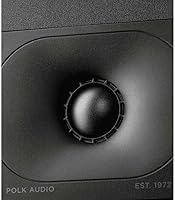
  • Tweeter: 1″ Terylene dome tweeter designed for smooth, extended high-frequency reproduction with reduced listening fatigue.
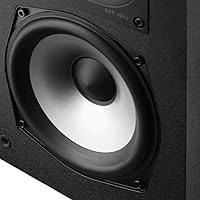
  • Woofer: 5.25″ dynamically balanced woofer tuned to minimize cone resonance and deliver open, accurate midrange performance.
  • Impedance: Compatible with both 4-ohm and 8-ohm amplifier outputs, broadening compatibility with a wide range of AV receivers.
  • Power Handling: Rated to handle up to 40 watts of continuous output power from a connected amplifier.
  • Frequency Response: Nominal frequency response reaches down to approximately 40Hz, though meaningful bass roll-off begins below 60Hz in practice.
  • Signal-to-Noise Ratio: Signal-to-noise ratio is rated at 70 dB, suitable for standard home listening environments.
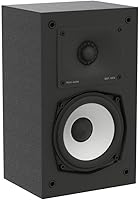
  • Dimensions: Each cabinet measures 6.5″ deep by 7.18″ wide by 10.6″ tall, making it compact enough for most shelves or stands.
  • Weight: The pair weighs a combined 9 pounds, light enough for straightforward shelf or stand placement without reinforcement concerns.
  • Connectivity: Wired passive connection via rear binding posts, accepting both bare speaker wire and banana plug terminations.
  • Certifications: Carries official Hi-Res Audio certification and is compatible with Dolby Atmos and DTS:X surround sound formats.
  • Surround Config: Suitable for use as surround or rear channels in 5.1, 7.1, or larger home theater configurations.
  • Unit Count: Sold as a matched pair of two speakers in a single package.
  • Color: Available in Midnight Black with a clean, understated rectangular cabinet finish.
  • Series: Part of the Polk Monitor XT family, which is timbre-matched across the MXT15, MXT60, MXT30, MXT90, and MXT12 components.
  • Mounting: Supports wall mounting via a standard wall-mount bracket, though mounting hardware is sold separately.
  • Warranty: Covered by a Polk Audio limited warranty; buyers should confirm current term details directly with Polk or the retailer at time of purchase.

Related Reviews

Polk Audio MM6502 Mobile Monitor Series Component Speaker System
85%
89%
Sound Quality
93%
Durability
65%
Ease of Installation
88%
Performance at High Volumes
90%
Bass Response
More
Polk Audio MM572 Mobile Monitor Series 5″ x 7″ Coaxial Speaker
88%
91%
Sound Quality
88%
Durability
87%
Ease of Installation
93%
Waterproof Performance
84%
Bass Response
More
Polk Monitor XT10 Subwoofer
87%
91%
Bass Performance
88%
Ease of Setup
89%
Sound Quality
85%
Design and Build Quality
90%
Compatibility with Other Speakers
More
Polk Monitor XT20
Polk Monitor XT20
79%
88%
Sound Clarity & Detail
61%
Bass Performance
86%
Mid-Range Openness
83%
Build Quality & Materials
84%
Value for Money
More
Polk Audio T15
Polk Audio T15
82%
88%
Sound Clarity
61%
Bass Response
79%
Build Quality
93%
Value for Money
91%
Ease of Setup
More
Polk Monitor XT12 Powered Subwoofer
85%
94%
Bass Performance
90%
Sound Quality
88%
Build Quality
86%
Ease of Setup
89%
Connectivity Options
More
Polk Monitor XT70 Tower Speaker
87%
91%
Sound Quality
88%
Bass Performance
90%
Immersive Audio Experience
87%
Build Quality
85%
Ease of Setup
More
Polk Monitor XT60 Tower Speaker
86%
93%
Sound Quality
90%
Bass Performance
88%
Build Quality
85%
Setup & Installation
82%
Design & Aesthetics
More
Polk Audio DB6502 Component Speaker System
86%
93%
Sound Quality
90%
Bass Performance
88%
Waterproof Durability
85%
Ease of Installation
84%
Mounting Flexibility
More
Polk Audio Signa S4 Soundbar with Subwoofer
85%
88%
Sound Quality
75%
Bass Performance
92%
Setup Ease
90%
Voice Clarity
83%
Build Quality
More

FAQ

You will need a separate AV receiver or stereo amplifier to power them — the Polk Audio Monitor XT15 is a passive speaker with no built-in amplification. Once you connect them to a receiver via speaker wire, they are ready to use. If you do not already own a receiver, factor that into your total budget.
Technically no, but practically speaking, yes — especially if you listen to movies, gaming audio, or bass-heavy music. These bookshelf speakers roll off noticeably below around 60Hz, so without a sub, bass-heavy content will sound thin. For dialogue-heavy shows, podcasts, or acoustic music, they hold up fine on their own.

The XT15 pair is quite easy to drive thanks to its dual 4- and 8-ohm impedance compatibility. Most mid-tier AV receivers from brands like Denon, Yamaha, or Onkyo will handle them without issue. Very underpowered or aging receivers may limit their dynamic range, but you are unlikely to run into compatibility problems with mainstream home theater receivers.

They can work as front mains in a small to medium-sized room and many users do exactly that. In a larger room, though, the 5.25-inch woofer can start to sound underpowered when tasked with full-range front duty at higher volumes. For a big room, consider pairing them as surrounds alongside a larger front speaker or tower.

Music listeners — particularly those who enjoy vocals, acoustic guitar, jazz, or classical — tend to get more out of these speakers than home theater users running them as mains. The midrange clarity and soundstage imaging are genuine strengths for two-channel stereo listening. For movies, they shine most as part of a full surround setup rather than as standalone front speakers.

Some buyers report that the drivers loosen up and sound slightly more open after 20 to 40 hours of regular use. The difference is subtle, and you should not expect a dramatic transformation — but if they sound a little stiff or slightly congested in the first few days, give them time before drawing conclusions.

Yes, wall mounting is supported, but you will need to purchase a compatible wall bracket separately as nothing is included in the box. Keep in mind that placing them very close to a wall can affect the bass response, so a few inches of clearance from the rear wall is generally recommended for best sound.

These bookshelf speakers are passive, so they work with any audio source your receiver supports — there is no built-in streaming or Bluetooth. The Hi-Res Audio certification is relevant when your receiver is connected to a high-resolution audio source like Tidal HiFi, Amazon Music HD, or Apple Music Lossless. The speakers themselves do not care where the signal comes from.

The grilles attach magnetically or via friction pegs depending on the generation, and they come off easily without tools. The honest caveat is that the grilles feel noticeably less premium than the cabinet itself — the plastic used is thinner than you might expect given the solid feel of the enclosure. Many users simply remove the grilles permanently and find the speakers look cleaner without them.

No speaker wire or cables are included in the package — the box contains the two speakers and basic documentation. You will need to pick up speaker wire separately, and the length you need depends on your room layout and receiver placement. Standard 16-gauge or 14-gauge copper speaker wire works well with these at typical home listening distances.