Overview

The Edifier M60 Desktop Bookshelf Speakers arrived in late 2024 as a mid-to-premium option for anyone tired of the plastic, uninspired desktop speakers that dominate this category. The Classic Oak wood-and-aluminum enclosures look genuinely sharp on a desk — they feel closer to furniture than electronics. Worth setting expectations upfront: this is an active stereo pair designed to sit on a desk, not a soundbar or portable device. Despite being relatively new, the M60 speakers have already cracked the top 10 in Amazon computer speaker rankings, which says something about how quickly they have resonated with home office upgraders and audiophile-curious listeners alike.
Features & Benefits

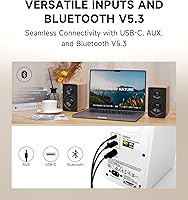
The M60 speakers pack a genuine 66W RMS output through Class-D amplification — more headroom than most people will use at a desk, but that surplus translates to clean, uncompressed sound at moderate volumes rather than strain. The 3-inch aluminum mid-bass drivers and 1-inch silk dome tweeters work alongside a built-in DSP and two-way active crossover, keeping the sound balanced rather than just loud. Connectivity is well-covered: USB-C digital input, 3.5mm AUX, and Bluetooth 5.3 with LDAC support for wireless audio up to 24-bit/96kHz. Bundled angled aluminum stands and a proximity-sensing touch panel round out a genuinely thoughtful hardware package.

Best For

This Edifier desktop pair makes the most sense for remote workers and students who have outgrown basic monitor speakers and want something that handles both music and video calls without compromise. Android users are the clear beneficiaries of the LDAC codec, which brings wireless audio quality meaningfully closer to wired — iOS users are limited to SBC only, which is worth knowing before buying. The triple-input setup genuinely suits anyone juggling a laptop, phone, and desktop at the same desk. The Classic Oak finish also appeals to buyers who care about how their workspace looks, not just how it sounds — a practical and aesthetic upgrade in one.

User Feedback

Buyers consistently praise sound clarity and build quality, with many noting the wood finish looks even better in person than in product photos. The 66W output draws divided opinions — some appreciate the volume ceiling, while others find it easy to overshoot comfortable levels at close desk distances. A recurring complaint is the lack of a physical volume knob; the touch controls work, but they are not for everyone. Relying on the EDIFIER ConneX app for advanced settings adds a step some buyers resent. Bluetooth pairing is widely reported as reliable, and the bundled cable kit and stands are called out by multiple reviewers as a genuine value-add rather than an afterthought.

Pros

  • Hi-Res Audio certified for both wired and wireless use — rare at this price point for desktop speakers.
  • LDAC Bluetooth support delivers noticeably cleaner wireless audio quality for Android users.
  • 66W RMS output provides substantial headroom, keeping sound clean at moderate listening volumes.
  • The Classic Oak wood-and-aluminum build looks and feels premium compared to plastic rivals.
  • USB-C digital input future-proofs the setup for modern laptops and devices.
  • Bundled angled aluminum stands are a practical inclusion, not a throwaway accessory.
  • Triple-input design handles Bluetooth, USB-C, and AUX without requiring manual switching hassle.
  • The proximity-sensing touch panel is a tactile, modern control upgrade over basic dial or button setups.
  • Built-in DSP and active crossover produce a tuned, balanced sound rather than raw driver output.
  • Strong early sales ranking suggests reliable quality control and broad buyer satisfaction.

Cons

  • iOS users are limited to SBC Bluetooth — LDAC is Android-only, which is a real limitation for Apple device owners.
  • No physical volume knob; touch-only controls frustrate users who prefer quick, tactile adjustments.
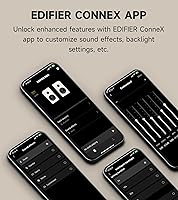
  • Some advanced features require downloading and using the EDIFIER ConneX app, adding unwanted dependency.
  • At 66W, volume levels can get uncomfortably loud before reaching the midpoint of the control range on a small desk.
  • The mid-to-premium price makes it a harder recommendation for casual listeners who would not use the hi-res features.
  • No battery — these are strictly wired-to-power speakers, ruling out any portable or patio use case.
  • Relatively new to market means long-term durability data is still limited compared to established competitors.
  • The wood finish, while attractive, may not suit buyers with all-black or industrial-style desk setups.

Ratings

The scores below for the Edifier M60 Desktop Bookshelf Speakers were generated by our AI engine after analyzing verified purchase reviews from buyers worldwide, with spam, bot-submitted, and incentivized feedback actively filtered out before any scoring took place. The M60 speakers earned strong marks in several key areas, but real buyer pain points — particularly around controls and iOS compatibility — are reflected honestly rather than smoothed over. Both the highlights and the trade-offs are weighted into every score you see here.
Sound Quality
91%
Buyers consistently describe the sound as punchy, clear, and well-separated for a desktop setup — notably better than what most people expect at this size. The DSP tuning keeps the balance stable across genres, and at moderate volumes the M60 speakers rarely sound strained or compressed.
Some listeners find the low-end extension limited at higher volumes, which is a natural constraint of the 3″ driver in a compact sealed cabinet. Audiophiles comparing these to larger bookshelf separates will notice the bass rolls off earlier than they would like.
Build Quality
93%
The wood-and-aluminum construction draws consistent praise from buyers who have handled plastic-heavy alternatives in this price range. The cabinets feel dense and well-assembled, and the Classic Oak finish looks significantly more premium than product photos suggest.
A few buyers note that the capacitive touch panel surface shows fingerprints easily and requires occasional wiping to stay looking clean. The inter-speaker cable, while functional, has been flagged by some users as feeling slightly thin relative to the overall build standard.
Wireless Performance
84%
Bluetooth 5.3 pairing is widely reported as fast and reliable, with minimal dropout complaints in typical home and office environments. Android users streaming via LDAC describe a noticeable jump in wireless clarity compared to standard SBC connections on previous desktop speakers.
iOS and macOS users are limited to SBC only, which is a meaningful step down from the LDAC experience and effectively locks Apple device owners out of the hi-res wireless capability. A small number of Android users also report that maintaining stable LDAC specifically — rather than Bluetooth generally — occasionally requires re-pairing after extended idle periods.
Connectivity & Inputs
89%
The combination of USB-C digital, 3.5mm AUX, and Bluetooth 5.3 means these bookshelf speakers cover virtually every device scenario a desk user encounters day to day. Buyers who switch regularly between a laptop, a phone, and a desktop highlight the multi-input flexibility as one of the more practical design decisions Edifier made here.
There is no optical or RCA input, which limits integration into setups that use older source equipment or dedicated DACs with those output types. Input switching is functional but not automatic — users must manually select the active source, which a few buyers found mildly inconvenient in fast-switching workflows.
Volume & Power Output
82%
18%
At 66W RMS, the M60 speakers have far more headroom than a typical near-field desktop pair, and buyers appreciate that the sound stays clean and controlled well before the volume limit. For larger home offices or small rooms, this output level handles background music and focused listening without any strain.
The high ceiling becomes a usability issue for some: even at one-quarter volume, the output can be too loud for a quiet late-night session, and the touch-panel controls make fine low-volume adjustments fiddlier than a physical knob would. A handful of reviewers mention accidentally overshooting their intended level more than once.
Control & Usability
67%
33%
The proximity-sensing backlight on the touch panel is a thoughtful detail — it activates as your hand approaches and dims automatically, which feels modern and unobtrusive in a dark workspace. Basic day-to-day controls like volume and input selection work without any app involvement.
The absence of a physical volume knob is the most frequently mentioned frustration across verified buyer reviews, with many users saying it makes quick, precise adjustments genuinely awkward. Touch sensitivity inconsistency — where a light graze registers unintended input — also comes up regularly as a daily annoyance.
App Experience
63%
37%
The EDIFIER ConneX app gives access to EQ presets and deeper customization that would otherwise be unavailable, and buyers who engage with it tend to appreciate the added flexibility for tuning the sound to their room or preferences.
Requiring a mobile app to unlock what some users consider standard features feels like an unnecessary barrier, and this is the most polarizing aspect of the ownership experience. The app itself has received mixed reviews for stability, and buyers who prefer to keep their audio setup app-free find the dependency frustrating.
Setup & Out-of-Box Experience
88%
The bundled accessory kit is unusually complete — a USB-C cable, two types of 3.5mm cables, and the inter-speaker cable mean most buyers can get the M60 speakers running without hunting for extra cables. The included angled aluminum stands are a practical inclusion that meaningfully improves desktop imaging right out of the box.
Initial Bluetooth pairing and app setup involve more steps than a simple plug-and-play speaker, which may feel like more overhead than expected for buyers who just want music immediately. The quick start guide covers basics adequately but leaves some setup nuances to the app or online documentation.
Aesthetics & Design
94%
The Classic Oak finish stands out sharply in a category dominated by generic black plastic enclosures, and buyers routinely comment that the speakers look better in person than in listing photos. The compact footprint combined with the premium materials makes this Edifier desktop pair a genuinely attractive desk accessory.
The single available colorway limits appeal for buyers with all-black, white, or industrial-themed setups who would prefer a finish that blends differently. The touch panel's LED backlight, while subtle, can be slightly distracting in very dim environments during late-night use.
Value for Money
79%
21%
Buyers who prioritize hi-res audio certification, LDAC wireless support, and premium materials feel the pricing is justified and competitive against similarly equipped alternatives from brands like Audioengine. The bundled stands and full cable kit add tangible value that similar competitors often charge extra for.
For listeners who will not use LDAC or do not care about Hi-Res Audio certification, the price premium over capable entry-tier desktop speakers is harder to rationalize. iOS-only households in particular get fewer of the marquee features, making the value proposition weaker for that segment.
Bass Performance
72%
28%
The 3″ long-throw aluminum diaphragm drivers produce more low-end presence than compact speakers of this size typically manage, and at desk distances the bass feels full and adequate for most music genres and movie audio.
Dedicated bass enthusiasts and buyers accustomed to subwoofer-assisted setups will find the low-end extension noticeably limited, particularly with electronic music or bass-heavy content at higher volumes. The sealed cabinet design prioritizes accuracy over deep extension, which is a deliberate trade-off but not one every buyer expects.
Treble & Detail
87%
The 1″ silk dome tweeter handles high frequencies smoothly without introducing harshness or sibilance, which is a common complaint at this price point with lesser tweeters. Buyers describe vocal clarity and instrument separation as two of the most impressive aspects of the listening experience.
At the very top of the volume range, a small number of buyers describe the treble as becoming slightly forward or fatiguing over long sessions, though this is not a widespread complaint. The silk dome's naturally rolled-off top extension means extremely high-frequency detail is not this speaker's primary strength.
Bluetooth Stability
83%
Day-to-day Bluetooth reliability is rated highly by the majority of users, with fast reconnection to paired devices and stable connections reported across typical home office distances of up to around 10 meters. Very few buyers report chronic dropout issues under normal use conditions.
A subset of users — mostly those streaming LDAC specifically — note that the codec can step down to SBC in environments with significant wireless interference, such as crowded Wi-Fi bands in apartments or office buildings. This is partly a Bluetooth physics issue rather than purely an M60 hardware fault, but it affects the real-world LDAC experience.
Desk Footprint
86%
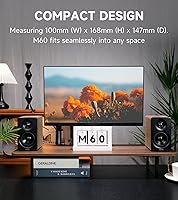
At 100mm wide per cabinet, these bookshelf speakers take up considerably less horizontal desk space than most competing active bookshelf pairs with comparable power, making them practical even on modestly sized work surfaces. Buyers with compact or dual-monitor setups specifically mention the slim profile as a deciding factor.
The 168mm height means the speakers are tall enough to partially obstruct sightlines on lower desk setups if not positioned carefully to the sides of the monitors. Adding the angled stands increases the effective height slightly, which is worth accounting for before finalizing placement.

Suitable for:

The Edifier M60 Desktop Bookshelf Speakers are a strong fit for home office workers, students, and enthusiast listeners who want a meaningful audio upgrade without building out a full separate stereo system. If your current setup relies on monitor speakers or a cheap USB speaker bar, this Edifier desktop pair will feel like a significant step forward in clarity, stereo separation, and overall presence. Android users in particular get the most from these bookshelf speakers, since LDAC support enables genuinely high-resolution wireless streaming at up to 24-bit/96kHz — something very few desktop speakers at this price offer wirelessly. The triple-input design also suits anyone who regularly switches between a phone, a laptop, and a desktop without wanting to fumble with cables constantly. Finally, if your desk aesthetic matters to you — warm wood tones, clean lines, minimal clutter — the Classic Oak finish genuinely complements a thoughtfully arranged workspace rather than clashing with it.
Not suitable for:

The Edifier M60 Desktop Bookshelf Speakers are not the right call for buyers who want a simple plug-and-play experience with no app involvement, since some advanced settings and features require the EDIFIER ConneX mobile app. iPhone and iPad users should also think carefully before purchasing — without LDAC support on iOS, wireless audio is limited to the SBC codec, which negates one of the M60 speakers' headline advantages entirely. If you are looking for speakers for a large living room or a home theater setup, this Edifier desktop pair is designed for near-field desktop listening and will likely feel underpowered or improperly sized for that context. Buyers who strongly prefer a physical volume knob for quick, tactile adjustments may find the capacitive touch panel frustrating in daily use. And if your budget ceiling is firm at the entry-level tier, there are capable alternatives that cost considerably less — these bookshelf speakers sit at a price point that assumes you genuinely want the hi-res audio certification and build quality that justify it.
Specifications

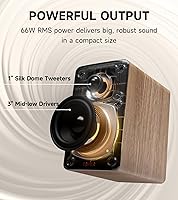
  • Total Output: The M60 speakers deliver 66W RMS in total, split as 18W+18W for mid-bass and 15W+15W for the tweeters per channel.
  • Mid-Bass Driver: Each speaker uses a 3″ long-throw aluminum diaphragm mid-bass driver for detailed low-to-mid frequency reproduction.
  • Tweeter: A 1″ silk dome tweeter handles high-frequency output, tuned for smooth, non-fatiguing treble at desktop listening distances.
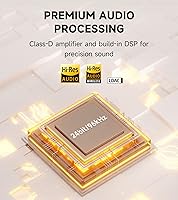
  • Amplifier Class: Both channels use Class-D amplification, which runs efficiently at low heat while maintaining clean output at higher volumes.
  • Bluetooth Version: Bluetooth 5.3 is supported, providing a stable wireless connection with lower latency compared to older Bluetooth standards.
  • Audio Codecs: Supported Bluetooth codecs are SBC and LDAC; LDAC enables transmission up to 990 kbps for 24-bit/96kHz hi-res audio on compatible Android 8.0+ devices.
  • Wired Inputs: Wired connectivity includes a USB-C digital input and a 3.5mm AUX input, accommodating both modern and legacy source devices.
  • DSP & Crossover: A built-in DSP handles dynamic range control and drives a two-way active crossover for accurate frequency distribution between drivers.
  • Certifications: The M60 speakers carry both Hi-Res Audio and Hi-Res Wireless Audio certifications, covering both wired and Bluetooth playback standards.
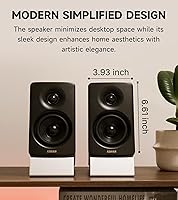
  • Dimensions: Each speaker cabinet measures 100mm (W) x 168mm (H) x 147mm (D), making them compact enough for most standard desktop setups.
  • Weight: The combined weight of the pair is approximately 10.47 lbs (4.76 kg), giving the cabinets a solid, well-built feel without being unwieldy.
  • Materials: Cabinets are constructed from wood with an aluminum front baffle, finished in Classic Oak for a warm, furniture-grade appearance.
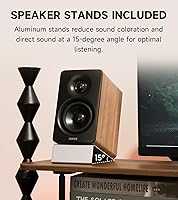
  • Speaker Stands: Two 15-degree angled aluminum stands are included in the box, designed to tilt the drivers upward toward ear level on a desk surface.
  • Controls: A capacitive touch panel with proximity-activated backlighting serves as the primary control interface, with no physical knobs or buttons.
  • Companion App: The EDIFIER ConneX mobile app (iOS and Android) provides access to extended settings such as EQ adjustments beyond what the touch panel offers.
  • Included Cables: The package includes a USB-C to USB-C cable, a 3.5mm-to-RCA cable, and a 3.5mm-to-3.5mm cable, along with an inter-speaker connecting cable.
  • Power Supply: The M60 speakers require a wired power connection and do not include any internal battery or portable power option.
  • Warranty: Edifier provides a limited warranty with the M60 speakers; buyers should confirm the specific duration and terms through the official Edifier support channels.

Related Reviews
Edifier S2000MKIII Bookshelf Speakers
86%
92%
Sound Quality
89%
Bluetooth Performance
88%
Build Quality
85%
Ease of Use
91%
Connectivity Options
More
Edifier R1850DB
Edifier R1850DB
79%
83%
Sound Quality
93%
Connectivity & Inputs
86%
Build Quality
67%
Bluetooth Performance
81%
Value for Money
More
Edifier R2000DB Bluetooth Bookshelf Speakers
86%
89%
Sound Quality
91%
Bluetooth Connectivity
85%
Ease of Setup
88%
Build Quality
92%
Value for Money
More
Edifier P12
Edifier P12
78%
83%
Sound Clarity
61%
Bass Performance
79%
Treble Quality
86%
Build Quality
91%
Wall-Mount Bracket
More
Edifier R1280DBs
Edifier R1280DBs
77%
83%
Sound Quality
67%
Bass Performance
79%
Build Quality
91%
Connectivity & Input Options
72%
Bluetooth Performance
More
Edifier R1700BTs Bluetooth Bookshelf Speakers
82%
86%
Sound Quality
83%
Bass Response
71%
Bluetooth Performance
89%
Build Quality
88%
Value for Money
More
Edifier S360DB Bluetooth Bookshelf Speaker with Subwoofer
86%
88%
Sound Quality
92%
Bass Performance
89%
Connectivity & Compatibility
85%
Ease of Setup
87%
Build Quality
More
Edifier S1000MKII
Edifier S1000MKII
81%
91%
Sound Quality
68%
Bass Performance
88%
Build Quality
74%
Bluetooth Performance
93%
Connectivity & Inputs
More
Edifier R980T 4″ Active Bookshelf Speakers
85%
87%
Sound Quality
72%
Bass Performance
91%
Build Quality
93%
Ease of Setup
85%
Connectivity Options
More
Edifier D12
Edifier D12
83%
88%
Sound Quality
71%
Bass Performance
86%
Build Quality
91%
Connectivity & Inputs
84%
Bluetooth Stability
More

FAQ

They will connect and play audio just fine over Bluetooth, but iOS devices do not support LDAC, so the wireless connection falls back to SBC. That is still functional, but you will not get the hi-res wireless quality that Android users enjoy. For the best experience with Apple devices, consider using the USB-C or AUX input instead.

No, the speakers work out of the box without the app for standard playback and volume control via the touch panel. The app is only needed if you want to access extended EQ settings or additional customization options. That said, some buyers do find the app dependency annoying for what they consider basic features.

The M60 speakers support one active input at a time — Bluetooth, USB-C, or AUX — but switching between them is straightforward. You cannot have two devices playing simultaneously, so if you leave your phone connected via Bluetooth while switching to USB-C from a laptop, you will need to manually change the input.

It can be, if you push the volume control toward the upper end. In practice, most desk users report listening at well under half the available volume, which means the extra headroom keeps the sound clean and unstrained rather than compressed. Just be aware that the touch controls make fine adjustments feel less precise than a physical knob would.

The aluminum stands angle each speaker backward at 15 degrees, which points the drivers upward toward ear level when the speakers sit on a standard desk. This matters more than people expect — a speaker firing straight ahead at desk height often hits your chest instead of your ears. Most buyers who use the stands report a noticeable improvement in imaging and clarity compared to placing the cabinets flat.

LDAC works on Android devices running Android 8.0 or later, which covers the vast majority of modern Android phones and tablets. It is not supported on Windows, macOS, or iOS natively. If you are on a Mac or PC and want high-quality wired audio, the USB-C digital input is a better option than relying on Bluetooth.

The proximity-sensing backlight is a nice touch — it activates when your hand gets close and dims automatically afterward. The controls themselves are functional, but reviewers note that sensitivity can vary, and it is easier to overshoot your intended volume step compared to a physical dial. It is not a dealbreaker, but worth knowing if tactile control is important to you.

Technically yes, but they are designed and optimized for near-field desktop listening. In a larger living room, the 3″ mid-bass driver will struggle to fill the space convincingly, and the compact cabinet volume limits low-end extension. For desk use or a small bedroom, they are well-suited; for a TV setup from across a room, a different speaker category would serve you better.

The USB-C input on this Edifier desktop pair carries digital audio, not just power. This means you get a clean digital signal path from a laptop or device that supports USB audio output, bypassing the source device's internal DAC and letting the M60's own audio processing handle the conversion. It is one of the more practical features for laptop users specifically.

The Classic Oak wood-and-aluminum construction holds up well against competitors in this price range. Audioengine products are well-regarded for build quality, and buyers who have compared the two tend to call it close, with some preferring the M60's aesthetics and others valuing Audioengine's established track record. The M60 speakers are relatively new, so long-term durability data is still building, but the materials and finish quality draw consistent praise from current owners.

Where to Buy