Overview

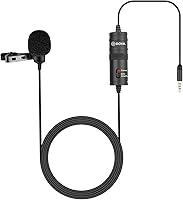
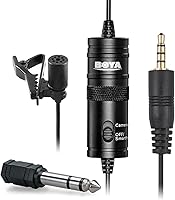
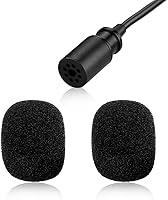
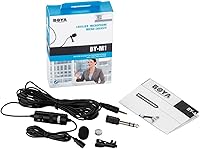
The BOYA BY-M1 Lavalier Microphone has been quietly holding its ground in the budget audio space since 2014 — over a decade is a long run for any gadget to stay relevant. It consistently ranks among the top sellers in Professional Video Microphones on Amazon, which reflects just how many creators keep reaching for it. The clip-on design connects via a standard 3.5mm jack, making it compatible with smartphones, DSLRs, camcorders, and PCs. Inside the box you get the mic itself, a foam windscreen, and a clip. Build quality is honest about its price tier — plastic, lightweight, functional. That is the deal here.

Features & Benefits

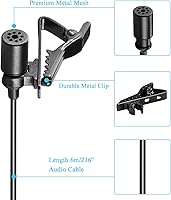
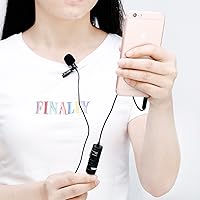
The clip-on mic runs on a single LR44 battery, which matters for cameras and recorders that do not supply plug-in power through their mic jack. Its omnidirectional condenser capsule picks up audio from every direction, so you do not need to angle it perfectly — just clip it to a shirt collar and go. The signal-to-noise ratio is strong enough that in a reasonably quiet room, background hiss stays unobtrusive. The cable runs generously long, giving on-camera subjects real freedom to move. A foam windscreen handles light breath puffs and indoor air conditioning reasonably well. Usable, practical, no fuss.

Best For

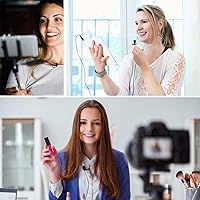
This lavalier mic makes the most sense for creators stepping up from built-in phone or camera audio for the first time. YouTube vloggers recording talking-head content, teachers shooting online courses on a laptop, and journalists doing quick field interviews will all find it a capable, affordable companion. It is also a smart pick for travelers — at this weight, you barely notice it in a bag. If you are chasing studio-grade audio, look elsewhere. But if your goal is simply to sound noticeably better than the person who forgot to bring a mic, the BY-M1 delivers that without any drama.

User Feedback

Buyers consistently praise plug-and-play setup — most report being up and recording within minutes of opening the box, and the audio jump over built-in device mics earns genuine appreciation from first-time lav users. On the flip side, the cable tends to be stiff and can transmit handling noise if it rubs against clothing without being clipped down carefully. Android users occasionally run into a compatibility wall if their device expects a TRRS signal and the right adapter is not handy. A handful of long-term owners mention connector wear after heavy daily use. Most negative reviews, though, trace back to expecting professional results from an entry-level tool.

Pros

  • Dramatically better audio than built-in phone or camera microphones for everyday recording.
  • Omnidirectional pickup means you clip it on and record — no careful angling required.
  • The long cable gives on-camera subjects comfortable freedom of movement.
  • Runs on a common LR44 battery, so it works with cameras that lack plug-in power.
  • Genuinely lightweight and easy to slip into any bag or pocket.
  • Broad device compatibility covers smartphones, DSLRs, camcorders, and PCs.
  • Plug-and-play setup — most users are recording within minutes of unboxing.
  • Foam windscreen is included, handling light breath noise and indoor air movement.
  • Has maintained consistent bestseller status for over a decade, signaling real-world reliability at scale.
  • A low-risk starting point for beginners who want to learn lav mic technique without expensive stakes.

Cons

  • The cable is noticeably stiff and transmits rustling noise if not clipped down carefully along clothing.
  • No adapter is included, which catches many Android and USB-C smartphone users off guard.
  • Omnidirectional pickup captures room noise and background hiss along with the intended voice.
  • Build quality feels plastic and utilitarian — the connector and cable joint can wear out with heavy daily use.
  • Not suited for outdoor recording in even mild wind; the foam windscreen has limited effectiveness outside.
  • Audio quality hits a ceiling quickly, leaving no room to grow if your production standards rise.
  • Mono output only, which may be a limitation for certain editing workflows.
  • The included windscreen can deteriorate or fall apart faster than the mic itself with regular handling.
  • Some Android devices with stricter audio input requirements produce low volume or distorted output.
  • No carrying case or pouch included, making safe storage and transport entirely the buyer's responsibility.

Ratings

Our AI rating system analyzed thousands of verified global purchases of the BOYA BY-M1 Lavalier Microphone, actively filtering out incentivized, bot-generated, and spam reviews to surface what real buyers actually experience. The scores below reflect a balanced picture — genuine strengths alongside recurring frustrations — so you can make an informed decision without wading through noise.

Audio Quality
73%
27%
For creators stepping up from a built-in phone or camera mic, the improvement is immediately noticeable — voices come through with clarity and warmth that built-in capsules simply cannot match. In quiet indoor settings like a home office or classroom, the recording sounds clean and presentable without any post-processing.
The omnidirectional pickup captures everything in the room, not just the speaker, so air conditioning hum and ambient noise appear in recordings taken in less-than-ideal spaces. At this budget tier, the audio ceiling is reached quickly, and anyone doing critical listening will detect a thinness in the low-mid frequencies.
Value for Money
88%
Few entry-level lav mics have stayed relevant for over a decade the way this clip-on mic has, and buyers consistently feel they received more than their money's worth compared to alternatives at the same price. The long cable, included windscreen, and broad device compatibility make the package feel complete for a first-time buyer.
The value proposition weakens for buyers who discover they also need a TRRS adapter to use it with their smartphone, since that is an unplanned extra cost. Users who outgrow it within a few months may feel retrospectively that a slightly higher initial spend on a better mic would have been smarter.
Ease of Setup
82%
18%
Plug-and-play operation is a genuine strength — the vast majority of users with a compatible 3.5mm input are recording within minutes of unboxing, with no drivers, apps, or configuration required. Teachers, presenters, and vloggers who are not technically inclined particularly appreciate how little friction stands between them and their first recording.
The experience falls apart for buyers whose devices need a TRRS adapter, since there is zero guidance in the packaging about when or why an adapter might be required. Android users especially report a confusing first experience when the mic records at very low volume or produces distortion without explanation.
Device Compatibility
69%
31%
When the connector matches the device, compatibility is excellent — DSLRs, camcorders, audio recorders, and older smartphones all accept the 3.5mm jack without complaint. The long history of this lavalier mic means compatibility information is well-documented online, and solutions to common issues are easy to find.
Modern iPhones and USB-C Android devices require an adapter that is not included, and some Android phones with non-standard audio configurations never work reliably regardless of adapters used. This single issue accounts for a disproportionately large share of the negative reviews this mic receives.
Build Quality
58%
42%
The mic is light enough that you barely register it on a collar or lapel during a shoot, and for occasional recording sessions the construction holds together without any obvious weak points. The plastic capsule housing feels adequate for the price, and the clip mechanism grips clothing securely.
Buyers who use this clip-on mic daily over months report connector wear and cable fraying, particularly at the point where the cable meets the 3.5mm jack. The foam windscreen degrades faster than the mic itself and often needs replacement before the microphone shows any signs of age.
Cable Quality
54%
46%
The cable length is genuinely generous, giving on-camera subjects room to move without feeling tethered. For studio or controlled-environment shoots where the cable can be managed and taped down, the length is a real practical advantage.
The cable is notably stiff and has a tendency to hold its coiled shape from the packaging, which makes it prone to brushing against clothing and transmitting handling noise directly into the recording. Routing it carefully under a shirt and securing it with additional clips is almost mandatory to get clean audio.
Portability
91%
At just 3.52 ounces, the BY-M1 is light enough to forget it is in a kit bag, making it a natural companion for journalists, travelers, and mobile creators who do not want audio gear to add bulk or weight. It fits easily in a shirt pocket for quick-grab use.
The long cable, while useful during recording, can become a tangled nuisance in transit since no cable wrap, pouch, or case is included in the box. Buyers who carry it daily tend to improvise storage solutions to prevent the cable from kinking or twisting over time.
Wind & Noise Rejection
51%
49%
The included foam windscreen does a serviceable job at reducing breath pops and the light air movement from indoor HVAC systems, which is the most common scenario this mic faces in a home studio or classroom setup.
Outdoor recording in any real wind is a significant weakness — the foam cover offers minimal protection once the breeze picks up, and the omnidirectional capsule has no inherent noise-rejection pattern to fall back on. Users recording outside consistently describe wind rumble as a serious problem without an aftermarket furry windscreen.
Handling Noise
47%
53%
When the cable is properly routed and anchored with the clothing clip, handling noise is manageable in controlled settings. Users who take the time to dress the cable carefully during setup report noticeably fewer issues.
This is the most reported technical frustration with this lavalier mic — the stiff cable picks up every shift, rustle, and brush against fabric and sends it straight to the recording. Buyers doing run-and-gun or documentary-style shooting where cable management is not always possible find this a persistent and hard-to-solve problem.
Microphone Placement Flexibility
84%
The omnidirectional polar pattern means positioning is forgiving — clip it anywhere on the upper chest area and it will pick up the speaker's voice without needing to be pointed precisely at the mouth. This makes it accessible for users who are new to working with external microphones.
That same omnidirectional design means the mic cannot be strategically aimed away from a noise source the way a directional mic can. In environments with a loud background, there is no placement trick that will isolate the speaker's voice from the surrounding audio.
Battery Life
86%
A single LR44 cell delivers well over 100 hours of recording time under typical conditions, meaning most casual creators go weeks or even months between battery changes. The battery is also inexpensive and available virtually everywhere.
There is no battery indicator or low-battery warning, so the mic can cut out unexpectedly during a session without any advance notice. Buyers who rely on it for longer shoots or important recordings are advised to replace the battery preemptively rather than trust it to last.
Long-Term Durability
55%
45%
For occasional users — someone recording a weekly video or monthly presentation — the BY-M1 holds up reasonably well over the course of a year or more without any significant degradation in performance.
Users who record daily for professional purposes consistently flag connector fatigue and cable damage after several months of intensive use. The construction was clearly designed for light-to-moderate use, and heavy daily workflows push it past its intended lifespan faster than the price might suggest.
Packaging & Accessories
62%
38%
The box includes everything the absolute basics demand: the mic, a foam windscreen, and a clothing clip. For a buyer who just needs to get started, nothing critical is missing for a device with a native 3.5mm jack.
No adapter, no carrying pouch, no spare windscreen, and no documentation about compatibility requirements are included — gaps that frustrate buyers who expected a more complete kit. The omission of even a basic cable tie or wrap feels like a missed opportunity at this price point.

Suitable for:

The BOYA BY-M1 Lavalier Microphone is a strong match for anyone taking their first serious step away from built-in device audio without committing serious money to the upgrade. YouTube creators shooting talking-head videos, teachers recording online courses on a laptop or smartphone, and students producing class projects will all get genuinely useful results from this clip-on mic. Journalists doing quick field interviews and podcasters who record on the go will appreciate how light and packable it is — there is almost no reason not to toss it in a bag. It also suits video conference presenters who want to sound cleaner on calls without buying dedicated streaming gear. If your current benchmark is the microphone already built into your phone or camera, this lavalier mic will be a clear and immediate improvement.

Not suitable for:

The BOYA BY-M1 Lavalier Microphone is not the right tool for anyone who needs broadcast-quality or studio-grade audio. Filmmakers recording dialogue for narrative projects, musicians capturing acoustic performances, and content creators working in noisy or windy outdoor environments will quickly run into its ceiling. The omnidirectional capsule that makes placement forgiving also means it picks up room noise, air conditioning hum, and ambient sound without discrimination. Buyers who primarily shoot with newer smartphones using USB-C or Lightning connectors should know upfront that they will need a separate adapter to use this clip-on mic, and that adapter is not included. If you are already using a decent mid-range lav mic and hoping to upgrade, this will likely feel like a lateral move or a step back.

Specifications

  • Microphone Type: Omnidirectional condenser capsule that picks up sound equally from all directions rather than focusing on a single axis.
  • Form Factor: Compact lavalier (clip-on) design intended to be attached to clothing near the speaker's mouth.
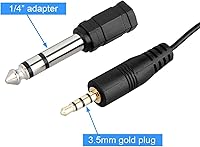
  • Connector: Single 3.5mm auxiliary jack compatible with standard TRS and TRRS inputs found on cameras, smartphones, and PCs.
  • Power Source: Requires one LR44 alkaline button-cell battery, which is included and enables use with devices that do not supply plug-in power.
  • Signal-to-Noise Ratio: Rated at 74 dB, which produces clean, low-hiss audio in quiet indoor recording environments.
  • Audio Sensitivity: Sensitivity is rated at 30 dB, suited to close-range voice capture typical of lavalier microphone placement.
  • Impedance: Output impedance is 2200 ohms, compatible with the microphone inputs found on consumer cameras and mobile devices.
  • Frequency Response: Captures audio up to 18 kHz, covering the full range of human speech and most vocal content with adequate clarity.
  • Channels: Mono single-channel output, meaning both left and right audio tracks will carry the same signal when recorded.
  • Cable Length: The cable runs approximately 20 feet (around 6 meters), giving subjects considerable freedom of movement during recording.
  • Item Weight: The complete unit weighs 3.52 ounces, making it light enough to carry daily without adding noticeable bulk to a kit bag.
  • Dimensions: The packaged unit measures 3.39 x 4.33 x 4.25 inches, compact enough to fit in a shirt pocket or small accessory pouch.
  • Windscreen: A foam windscreen is included in the box and attaches directly over the capsule to reduce breath pops and minor indoor air movement.
  • Compatible Devices: Works with smartphones, DSLR cameras, camcorders, portable audio recorders, and PCs that have a 3.5mm microphone input.
  • Color: Available in black with a discreet matte finish designed to be visually unobtrusive when clipped to dark clothing.
  • Material: The capsule housing and windscreen are constructed from lightweight plastic and foam respectively, consistent with an entry-level build.
  • Market Availability: This clip-on mic has been available on Amazon since August 2014, giving it over a decade of continuous sales and user feedback history.
  • Best Sellers Rank: Holds a rank of approximately number 60 in the Professional Video Microphones category on Amazon, reflecting sustained high purchase volume.

Related Reviews
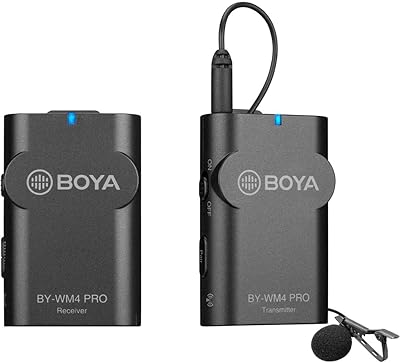
BOYA BY-WM4 Pro K2 Wireless Lavalier Microphone
65%
58%
Audio Quality
54%
Wireless Stability
83%
Ease of Setup
67%
Value for Money
51%
Build Quality
More
Shure WL185 Cardioid Condenser Lavalier Microphone
80%
91%
Audio Clarity
88%
Feedback Rejection
86%
Wearability & Comfort
61%
Compatibility & Setup
85%
Clip & Attachment
More
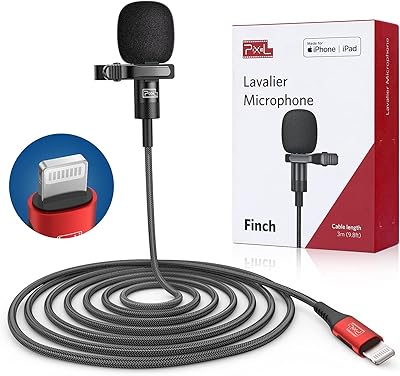
PIXEL Lightning Lavalier Microphone
80%
83%
Audio Clarity
67%
Noise Filtering
91%
iOS Compatibility
74%
Build Quality
88%
Cable Length & Usability
More
Shure MVL Lavalier Microphone
80%
83%
Audio Clarity
88%
Build Quality
91%
Plug-and-Play Simplicity
79%
RF & Interference Rejection
71%
Omnidirectional Performance
More
VEZQUA USB-C Wireless Lavalier Microphone
75%
93%
Ease of Setup
81%
Audio Clarity
74%
Noise Cancellation
72%
Battery Life
83%
Wireless Stability
More
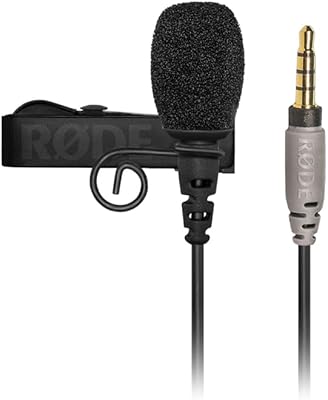
Rode SmartLav+
Rode SmartLav+
80%
92%
Audio Quality Upgrade
54%
Modern Device Compatibility
88%
Vocal Clarity & Placement
87%
Ease of Use and Setup
84%
Value for Money
More
Sony ECM77B Lavalier Condenser Microphone
78%
91%
Audio Clarity
83%
Build Quality
58%
Cable Quality
88%
Discreetness
74%
Versatility
More
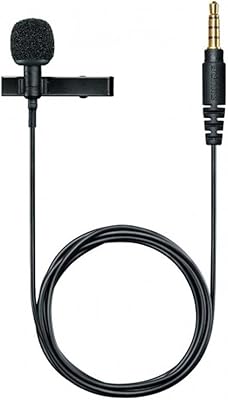
Shure SM11 Dynamic Lavalier Microphone
77%
84%
Audio Clarity
89%
Build Quality
76%
Clothing Noise Rejection
49%
Compatibility
71%
Value for Money
More
Boya BY-BM3031 Supercardioid Condenser Microphone
76%
74%
Audio Clarity
78%
Noise Rejection
88%
Gain Control
41%
Wind Performance
82%
High-Pass Filter
More
Audio-Technica AT831B Cardioid Lavalier Microphone
70%
91%
Audio Clarity
83%
Noise Rejection
78%
Build Quality
54%
Ease of Setup
72%
Value for Money
More

FAQ

If your iPhone uses a Lightning or USB-C port, you will need an adapter to connect this clip-on mic since it terminates in a 3.5mm jack. Older iPhones with a built-in headphone jack should work without anything extra. The adapter is not included in the box, so it is worth sourcing one before your first shoot.

It works with many Android devices, but compatibility is not universal. Android phones that use a TRRS audio standard should recognise the mic automatically. If your phone expects a specific pin configuration that differs from the mic, you may get low volume, distorted sound, or no signal at all. A TRRS adapter or a small inline converter often fixes the issue.

Cable noise is the most common complaint with this lavalier mic, and the fix is usually straightforward. Run the cable under your shirt where possible, and use additional clips or tape to anchor it so it cannot rub freely against fabric. Creating a small stress-relief loop near the capsule also helps absorb movement before it travels up the cable.

Yes, most Canon and Nikon DSLRs have a standard 3.5mm TRS microphone input and the BY-M1 plugs straight in. Just make sure to enable the external microphone input in your camera settings, otherwise it may continue recording from the built-in mic. The battery inside the mic handles power independently, so you do not need to worry about plug-in power from the camera.

Under normal recording conditions, a fresh LR44 battery typically lasts somewhere between 100 and 150 hours of use, so it is not something you will be replacing constantly. It is still worth keeping a spare on hand since LR44 cells are inexpensive and widely available at pharmacies and electronics shops.

Outdoors is where this lavalier mic struggles most. The included foam windscreen handles very light breezes, but anything stronger than a calm day will introduce audible wind rumble into the recording. If you plan to record outside regularly, a furry windscreen cover (sometimes called a dead cat) designed for small lav capsules will make a noticeable difference.

The BY-M1 records in mono, so both audio channels will carry an identical signal. For most talking-head videos, interviews, and online courses, this makes no practical difference. If you are producing music or content where stereo separation matters, this is not the right tool.

It works well for this use case as long as your laptop has a 3.5mm combo headphone and microphone jack. Plug it in, clip it to your shirt collar, and your voice will be substantially clearer than the built-in laptop mic. If your laptop only has USB ports or a headphone-only jack, you will need a USB audio adapter with a microphone input.

It is honest about being an entry-level product. For occasional recording it holds up well, but buyers who use it every single day over many months have reported wear around the cable connector and some degradation of the foam windscreen. It is not built for punishing professional use, but for the price, getting a year or two of regular service is a reasonable expectation.

You get the lavalier microphone itself with its attached cable, a foam windscreen that slides over the capsule, a clothing clip, and a battery already installed or included in the packaging. There is no carrying case, no adapter, and no secondary cable, so if you need a 3.5mm to TRRS adapter for your device, plan to order that separately.

Where to Buy