Overview

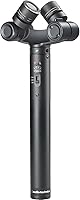
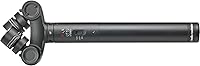
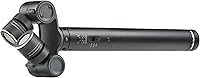
The Audio-Technica AT2022 X/Y Stereo Condenser Microphone has been around since 2004, which says something about its staying power in a market that moves fast. Built around a pair of pivoting electret condenser capsules arranged in an X/Y configuration, this stereo field mic was designed with mobile recordists in mind — not studio engineers chasing perfection in a treated room. A single AA battery powers the whole thing, meaning no audio interface, no phantom power supply, no extra cables required. The 3.5mm output plugs straight into recorders, DSLRs, laptops, and smartphones. Practical, portable, and positioned squarely in the mid-range tier.
Features & Benefits

One of the more useful design choices on the AT2022 is the ability to switch between 90-degree and 120-degree stereo capture angles. The narrower setting tightens focus for performances or speeches; the wider angle opens up the soundstage for ambient recording or large ensembles. A low-frequency roll-off switch helps cut rumble from handling or wind — genuinely useful in unpredictable environments. The signal-to-noise ratio sits at 77 dB, and the mic handles up to 122 dB SPL, so it copes well with loud acoustic sources. Because it runs on a single AA battery, no phantom power is needed. Worth noting: output levels can vary by recorder, and some preamps may need a gain bump to get the best signal.

Best For

This X/Y condenser is a natural fit for anyone who records away from a desk. Field recordists chasing ambient soundscapes — wind through trees, crowds, rushing water — will appreciate the wide-angle stereo imaging it can produce. Musicians wanting to capture a quick rehearsal or acoustic demo without setting up a full interface will find it refreshingly low-friction. It also suits content creators covering live events or concerts where spatial depth matters more than clinical precision. Journalists and on-location podcasters benefit from the compact size and total battery independence. Compared to options like the Rode Stereo VideoMic or Zoom SSH-6, the AT2022 trades some raw performance for genuine grab-and-go convenience.

User Feedback

With only around 33 ratings on Amazon and a 3.7-star average, the reception here is genuinely mixed — and that is worth being upfront about. Positive reviewers tend to praise the stereo imaging and the freedom of not needing any additional power gear. Critics, on the other hand, raise concerns about build quality feeling a little lightweight for the price, and some flag that output levels run low when paired with cameras or recorders that have modest preamp gain. A fair number of those frustrations likely trace back to mismatched equipment rather than any fundamental flaw in the mic itself. Go in with realistic expectations for a mid-range field tool and the results tend to make a lot more sense.

Pros

  • Battery-only operation means truly portable stereo recording with zero dependency on interfaces or phantom power supplies.
  • Switching between 90-degree and 120-degree stereo angles gives real flexibility across different recording scenarios.
  • The 3.5mm output plugs directly into DSLRs, portable recorders, and laptops with no adapter fuss.
  • A 77 dB signal-to-noise ratio and 122 dB max SPL handling make it capable in loud, live environments.
  • The low-frequency roll-off switch actively helps tame wind and handling rumble in unpredictable field conditions.
  • X/Y stereo imaging produces a cohesive, natural soundstage that built-in camera mics simply cannot replicate.
  • Compact and light enough to slip into a bag without adding meaningful weight to a travel kit.
  • Audio-Technica's long production history with this model suggests reliable availability of parts and support.

Cons

  • Output levels can run noticeably low with cameras or recorders that have modest onboard preamp gain.
  • Build quality feels underwhelming relative to the price point, with some users noting a plasticky construction.
  • The 3.5mm connection is prone to interference and is less robust than a balanced XLR output in noisy environments.
  • Self-noise levels, while acceptable, are not competitive with higher-end stereo condensers at a similar price.
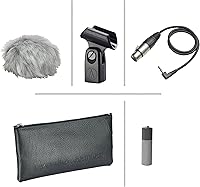
  • No carrying case or mount adapter is included, which feels like a meaningful omission for a field-use mic.
  • The modest Amazon review count — just over 30 ratings — makes it difficult to draw firm conclusions about long-term reliability.
  • Buyers coming from XLR-based workflows will find the 3.5mm-only output a genuine limitation.
  • Competing options at a similar price offer stronger preamp compatibility and more rugged physical construction.

Ratings

The scores below reflect an AI-driven analysis of verified buyer reviews for the Audio-Technica AT2022 X/Y Stereo Condenser Microphone, sourced globally and filtered to remove incentivized, spam, and bot-generated feedback. Both the strengths that keep field recordists coming back and the frustrations that push some buyers toward competing options are reflected transparently in each category. With a relatively modest review pool, scores lean on pattern analysis rather than sheer volume, and every rating has been weighted against real-world use cases rather than ideal lab conditions.

Stereo Imaging Quality
78%
22%
Users recording live acoustic performances, nature soundscapes, and ambient environments consistently note that the X/Y capsule arrangement produces a convincing, cohesive stereo image with good left-right separation. For field recordists who previously relied on mono solutions, the spatial depth was a meaningful upgrade.
At higher gain settings or in acoustically reflective spaces, the stereo image can feel slightly smeared rather than precise. Buyers comparing the AT2022 directly against higher-end stereo condensers notice the imaging lacks the pinpoint accuracy of more expensive capsule pairs.
Portability & Setup Speed
86%
The battery-powered design genuinely removes friction from field recording sessions — no interface, no phantom power box, no wall outlet required. Journalists and documentary recordists appreciated being able to drop it into a bag and have it ready to record within seconds on location.
The physical size is larger than some competing on-camera stereo mics, so it does not disappear into a jacket pocket as easily as more compact rivals. The lack of an included pouch or case means sourcing your own protective solution before travel.
Build Quality
54%
46%
The mic feels solid enough for careful studio or desktop use, and the pivoting capsule mechanism holds its selected angle reliably during normal recording sessions without drifting.
A recurring complaint across buyer feedback is that the overall construction feels plasticky and underwhelming for the price. Several users noted the capsule pivot point felt fragile under regular field handling, raising durability concerns for anyone using it frequently in outdoor or travel environments.
Output Level & Preamp Compatibility
51%
49%
When paired with a recorder or interface that has clean, high-gain preamps — such as a dedicated field recorder with good headroom — the AT2022 can deliver acceptably clean results that reward careful gain staging.
This is the most consistent pain point in buyer feedback: the 3.5mm output runs notably quiet, and cameras or budget recorders with weak preamps struggle to bring the signal up to a usable level without adding noise. Users connecting directly to DSLR cameras frequently reported having to crank input gain uncomfortably high.
Low-Frequency Roll-off Usefulness
73%
27%
Recordists working outdoors found the switchable roll-off genuinely helpful for managing wind interference and handling rumble, reducing the amount of post-processing cleanup needed in the edit. Nature recordists in particular praised it for taming low-end environmental noise.
The roll-off is a simple switch with no adjustability, so it either removes too much low end for some sources or not quite enough for extreme wind conditions. Users in very windy environments still reported needing a dedicated windscreen on top of the roll-off filter.
Stereo Angle Flexibility
77%
23%
Having two distinct capture angles in one mic — 90 degrees for focused sources and 120 degrees for wide ambient capture — adds genuine real-world versatility without any additional accessories. Musicians recording a choir or ensemble found the wider setting particularly natural-sounding.
The two-position switch offers only binary choices, which leaves a gap for users who want something between tight and wide. Competing stereo mics with continuously adjustable capsules offer more nuanced control for experienced recordists with specific soundstage requirements.
Value for Money
58%
42%
For buyers who specifically need battery-powered stereo capture without investing in a full portable recording rig, the AT2022 fills a niche that few other mics address at any price point, which justifies part of the cost for that specific audience.
Against similarly priced competition, the build quality and output level performance make it harder to recommend without hesitation. Several buyers felt the price positioned it as a professional tool while the execution delivered more of a prosumer experience, which left a sense of unmet expectations.
Ease of Use
83%
The plug-and-play 3.5mm connection and self-contained battery power mean almost anyone can get up and running without reading a manual. Content creators new to external microphones found the learning curve essentially nonexistent compared to interface-dependent setups.
While the mic itself is simple to operate, diagnosing and fixing the quiet output issue requires technical knowledge that beginners do not always have, leading to frustrating early experiences for users who expect it to simply work well out of the box with any device.
Self-Noise Performance
62%
38%
Under controlled conditions and with a well-matched recorder, the 77 dB signal-to-noise ratio holds up reasonably well for capturing moderately loud sources like live music or outdoor ambient sound where some background noise is expected anyway.
In quiet recording environments — a hushed forest, a still room, or a low-volume acoustic instrument — the self-noise floor becomes audible and distracting. Users who compared it against higher-spec stereo condensers in the same price range found the noise floor to be a clear step behind the competition.
Wind & Handling Noise Rejection
66%
34%
The combination of the roll-off switch and the relatively stable capsule housing means that light wind and gentle handling are manageable in practice, especially for users who hold the mic steady on a stand or boom arm rather than hand-holding it while moving.
No windscreen is included, which is a significant omission for a mic marketed toward outdoor use. Hand-holding the AT2022 while walking or moving produces audible handling noise that the roll-off switch alone cannot fully address without additional accessories.
Compatibility Range
69%
31%
The 3.5mm TRS stereo output covers a wide range of consumer and prosumer devices, including portable recorders, laptops, and tablets, making the AT2022 broadly usable across different recording setups without format-specific accessories.
The 3.5mm connection is the weakest link in professional workflows — unbalanced, susceptible to interference over longer cable runs, and incompatible with XLR-only interfaces without adapters. Users who later moved to XLR-based recording systems found the mic essentially incompatible with their upgraded gear.
Frequency Response Accuracy
71%
29%
For capturing the natural tonal character of acoustic instruments, choral performances, and outdoor soundscapes, the frequency response is smooth enough to sound transparent and lifelike in the context of video projects and field recordings.
Critical listeners and musicians recording demos for serious evaluation found the high-frequency detail slightly soft compared to higher-tier condensers, and the low-mid range can sound slightly congested on complex sound sources like a full band in a room.
Long-term Reliability
61%
39%
Audio-Technica's brand reputation and the fact that this model has been in production since 2004 give some confidence that parts and service support remain accessible, which matters for buyers who want longevity from their gear.
Individual buyer reports of capsule pivot loosening over time and connector wear at the 3.5mm jack suggest that durability under regular field use is a legitimate concern. The long production run reflects consistent demand rather than a warranty against wear in demanding conditions.

Suitable for:

The Audio-Technica AT2022 X/Y Stereo Condenser Microphone is a practical choice for anyone who records outside the studio and needs a reliable stereo mic without hauling extra gear. Field recordists capturing nature audio, urban soundscapes, or environmental sound for film and documentary work will find the switchable stereo angle genuinely useful for adapting to different acoustic environments on the fly. Musicians who want to document rehearsals or rough acoustic demos without setting up an audio interface will appreciate how quickly this X/Y condenser gets up and running on a single AA battery. Content creators covering live events, small concerts, or panel discussions benefit from the spatial depth that a proper stereo mic delivers over any built-in camera microphone. Journalists and on-location podcasters who need a compact, battery-independent recording option will also find the AT2022 fits that brief well.
Not suitable for:

The Audio-Technica AT2022 X/Y Stereo Condenser Microphone is not the right tool for buyers who need studio-grade fidelity or who plan to record in acoustically controlled environments where a large-diaphragm condenser would simply outperform it. Voiceover artists, podcasters recording at a fixed desk, or musicians tracking serious demos should look at dedicated cardioid condensers instead, since this stereo field mic is optimized for capturing a sound field, not isolating a single source with precision. The 3.5mm output, while convenient, can run on the quiet side with certain cameras and portable recorders that have weaker preamps, which means you may need to push gain and introduce unwanted noise. Buyers who compare it against similarly priced competitors like the Rode Stereo VideoMic X or Zoom SSH-6 may find those options offer better build quality or output levels for the money. If you need XLR connectivity, balanced outputs, or phantom power compatibility, this X/Y condenser simply was not designed for that workflow.
Specifications

  • Mic Type: X/Y stereo electret condenser with two pivoting capsules arranged for coincident stereo recording.
  • Polar Pattern: Bidirectional stereo capture using an X/Y capsule configuration.
  • Stereo Angle: User-selectable between 90° and 120° to suit narrow or wide soundstage recording needs.
  • Frequency Response: The AT2022 captures audio across a broad frequency range suited to acoustic instruments and ambient environments.
  • Signal-to-Noise Ratio: 77 dB, providing clean audio reproduction with a good margin above the noise floor for field recording applications.
  • Maximum SPL: Handles up to 122 dB SPL, giving sufficient headroom for loud live sources such as amplified instruments or crowd noise.
  • Connector: 3.5mm stereo mini-jack output for direct connection to portable recorders, DSLR cameras, laptops, and smartphones.
  • Power Source: Operates on a single AA battery; no phantom power supply or audio interface is required.
  • Roll-off Switch: Includes a switchable low-frequency roll-off to reduce wind rumble, handling noise, and low-end environmental interference.
  • Weight: 1.66 pounds, reasonably compact for a stereo microphone intended for mobile and field use.
  • Dimensions: Measures 9.7 × 9.6 × 2.7 inches, making it practical to pack alongside portable recording gear.
  • Compatibility: Compatible with portable recorders, personal computers, DSLR cameras, and most devices accepting a 3.5mm stereo input.
  • Phantom Power: Phantom power is not required and not supported; the mic is entirely self-powered via its AA battery.
  • Included Items: Ships with one AA battery and the microphone unit; no carrying case or shock mount is included in the box.
  • Model Number: AT2022, part of Audio-Technica's AT20 series of affordable condenser microphones.
  • Manufacturer: Designed and produced by Audio-Technica U.S., a brand with a long-standing history in professional and consumer audio equipment.
  • First Available: The AT2022 has been available since April 2004, indicating a mature and long-running product design.
  • Channels: Records in stereo (2-channel) via a single 3.5mm TRS output, encoding both left and right channels in one cable.

Related Reviews
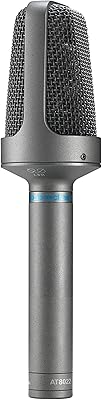
Audio-Technica AT8022 X/Y Stereo Microphone
79%
91%
Stereo Imaging Accuracy
86%
Build Quality
54%
Wind Sensitivity
88%
Compatibility & Flexibility
77%
Value for Money
More
Audio-Technica BP4025 X/Y Stereo Field Recording Microphone
77%
91%
Stereo Image Accuracy
88%
Build Quality
84%
Self-Noise Floor
89%
SPL & Headroom
54%
Setup Complexity
More
Rode NT4 Stereo Condenser Microphone
81%
91%
Sound Quality
89%
Stereo Imaging
87%
Build Quality
74%
Value for Money
88%
Ease of Use
More
Audio-Technica AT8024
84%
93%
Versatility of Modes
88%
Setup & Ease of Use
76%
Audio Clarity & Detail
82%
Build Quality & Durability
79%
Shock Mount Performance
More
Audio-Technica AT875R
83%
93%
Sound Rejection
94%
Form Factor & Compactness
88%
Vocal Clarity
82%
Handling Noise Reduction
86%
Build Quality & Durability
More
Audio-Technica AT2021 Cardioid Condenser Microphone
77%
91%
Instrument Recording
84%
Sound Quality
86%
Value for Money
61%
Ease of Setup
63%
Vocal Performance
More
Audio-Technica AT4022 Omnidirectional Condenser Microphone
82%
93%
Sound Accuracy
89%
Build Quality
91%
Noise Floor
78%
Polar Pattern Utility
84%
Compatibility
More
Audio-Technica AT2010
85%
93%
Vocal Clarity & Articulation
91%
High-Frequency Detail
84%
Feedback Resistance
78%
Handling Noise Suppression
88%
SPL Handling
More
Audio-Technica AT4040
83%
92%
Sound Transparency
88%
Build Quality
86%
Transient Response
83%
Value for Money
84%
Off-Axis Rejection
More
Audio-Technica BP4029 Stereo Shotgun Microphone
79%
91%
Audio Quality
93%
Stereo Flexibility
88%
Build Quality
54%
Wind Noise Rejection
62%
Value for Money
More

FAQ

It plugs straight into any camera with a standard 3.5mm stereo microphone input, so no adapter is required for most DSLRs and mirrorless cameras. Just be aware that some camera preamps are fairly weak, and you may need to push the input gain higher than expected to get a healthy signal level.

No, the AT2022 runs entirely off a single AA battery, which is one of its most practical qualities for location work. You can connect it directly to a recorder, camera, or laptop without any additional gear in the chain.

The 90-degree setting produces a tighter, more focused stereo image, which works well for recording a specific source like a musical performance or a speaker at a podium. The 120-degree setting opens the pattern wider to capture a broader sense of space, which suits ambient recording, room sound, or large ensembles where you want the listener to feel immersed in the environment.

It is a reasonable choice for that kind of work. The wide 120-degree stereo setting captures a convincing sense of space, and the low-frequency roll-off switch helps cut wind and handling rumble when you are outside. That said, a windscreen — which is not included — is highly recommended for outdoor use in anything beyond very calm conditions.

Audio-Technica does not publish a specific battery life figure for this model, but electret condenser mics of this type are generally quite efficient and a fresh AA battery should last through many hours of continuous recording. Carrying a spare AA when doing long field sessions is a sensible habit regardless.

Technically yes, but it is not what this stereo field mic was designed for. X/Y stereo condensers capture a wide sound field, meaning they will pick up room reflections and ambient noise along with your voice. A dedicated cardioid condenser or dynamic mic will give you more focused, polished results for seated voice recording.

This is a common issue with the AT2022 and recorders or cameras that have weaker preamps. The 3.5mm output level can run on the low side, and some devices simply do not have enough clean gain to compensate without introducing noise. If your recorder has a plug-in power setting, make sure it is disabled, since this mic uses its own battery and does not need it. Upgrading to a recorder with stronger preamps, or adding an inline preamp booster, can also help.

No, the box only includes the microphone itself and one AA battery. A windscreen is strongly recommended if you plan to record outdoors, and a shock mount or boom arm adapter would be a useful addition for reducing handling noise when hand-holding the mic.

The Rode Stereo VideoMic and Zoom SSH-6 are both strong alternatives in the same general category and are worth comparing carefully. The Rode tends to offer a more polished output signal for on-camera use, while the Zoom SSH-6 adds the versatility of working as a modular attachment. The AT2022 has the advantage of true battery independence without needing a camera to supply power, which matters for certain field setups, but the competition generally edges it out on build quality and preamp compatibility at the same price tier.

The capsule housing is designed to hold the selected position — either 90° or 120° — during normal use, but it is a mechanical adjustment rather than a hard locking mechanism. It is sturdy enough for standard recording sessions, though you should avoid putting sideways pressure on the capsule arm during use to keep the angle consistent.