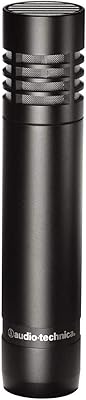
Overview

The Audio-Technica BP4025 X/Y Stereo Field Recording Microphone is a professional-grade stereo condenser built for broadcast and location work — not a hobbyist pickup. Its coincident X/Y capsule design places both pickup points at the same physical location, producing a coherent stereo image without the phase issues that can undermine spaced-pair setups. The housing is compact enough for camera mounting, a real-world advantage that studio-only alternatives rarely offer. Audio-Technica has kept this mic in production since 2001, which speaks to its durability and continued relevance in the field. Worth noting upfront: it demands phantom power and outputs via XLR, so anyone expecting USB convenience should look elsewhere.
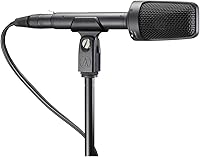
Features & Benefits

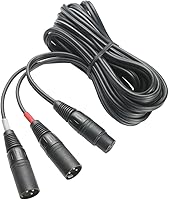
What sets the BP4025 apart is how much capability Audio-Technica packed into a housing that fits on a camera shoe. The large-diaphragm capsules produce low self-noise and offer 131dB of dynamic range — real headroom for unpredictable location conditions. The X/Y configuration keeps both capsules at the same point in space, handling stereo capture cleanly without the phase complications that often haunt spaced-pair setups in post-production. A switchable 80Hz low-cut filter rolls off wind rumble and traffic noise at 12dB per octave. The 10dB pad pushes maximum SPL tolerance to 155dB, useful for loud stages or heavy machinery. The included dual-output XLR cable and stand clamp mean you are ready to work straight out of the box.

Best For

This X/Y condenser is most at home in the hands of documentary and ENG videographers who need professional stereo audio from a compact rig without managing a separate boom operator. Nature recordists will appreciate how well the low-noise floor preserves the texture of ambient environments — birdsong, forest ambience, open water. Broadcast journalists covering live events will get mileage out of the high SPL handling. Advanced hobbyists stepping up from consumer stereo mics will notice the jump in imaging accuracy immediately. Where it struggles: it is not a studio vocal mic, it will not work with phantom-power-free consumer cameras, and the dual-XLR output is overkill for anyone recording into a laptop without a proper audio interface.

User Feedback

With around two dozen reviews in, the sample size is small — so take these impressions as directional, not definitive. Owners who return tend to praise the stereo image accuracy and rugged metal build, noting that both have held up over years of consistent use. The most common frustration centers on cable management: the 5-pin to dual-XLR output creates a two-cable tether that gets awkward on a run-and-gun camera rig. There is also a recurring note about phantom power compatibility — those who assumed their consumer camera could power it often discovered it cannot. On balance, this stereo field mic earns its reputation among users who came to it with the right expectations.

Pros

  • The X/Y coincident capsule design delivers a precise, phase-coherent stereo image that holds up well in post-production.
  • Large-diaphragm capsules in a compact body give the BP4025 a noise floor that rivals far larger studio condensers.
  • A switchable 10dB pad keeps recordings clean in high-SPL environments up to 155dB, covering loud concerts and heavy machinery alike.
  • The built-in 80Hz low-cut filter effectively reduces wind rumble and handling noise without any additional post-processing.
  • Camera-mount compatibility makes this X/Y condenser a practical all-in-one stereo solution for solo video operators in the field.
  • Metal construction and over two decades of continuous production suggest this is a mic built to withstand real working conditions.
  • Comes ready to use with a 5-pin to dual-XLR cable and stand clamp included straight out of the box.
  • An 80dB signal-to-noise ratio means recordings stay clean and detailed even in demanding, low-level ambient recording scenarios.

Cons

  • The dual-XLR cable output requires a two-channel input, which complicates cable management on run-and-gun camera rigs.
  • Phantom power dependency makes this mic incompatible with most consumer cameras without adding external hardware to the chain.
  • Recording into a laptop or mobile device requires a dual-input audio interface, adding cost and complexity to an already involved setup.
  • The 5-pin XLR output is a proprietary connector format; losing or damaging the included cable creates a genuine sourcing problem.
  • With fewer than 25 published reviews, there is not enough user data to draw confident conclusions about long-term durability.
  • Frequency response rolls off above 17kHz, which may fall short for recordists who need extended high-frequency air in their captures.
  • At 9.5 ounces, it adds noticeable front-end weight to lightweight mirrorless rigs where balance and portability are a priority.

Ratings

The scores below were generated by AI after analyzing verified buyer reviews for the Audio-Technica BP4025 X/Y Stereo Field Recording Microphone worldwide, with active filtering applied to remove spam, bot activity, and incentivized feedback. Each category reflects the honest consensus of real users — from professional documentary crews who rely on this mic daily, to first-time buyers who ran into compatibility surprises. Both the standout strengths and the recurring pain points are reflected transparently in every score.
Stereo Image Accuracy
91%
The coincident X/Y capsule arrangement is this mic's defining strength — documentary shooters and nature recordists consistently report a stereo image that feels spatially honest, placing sounds where they actually were in the room or field. Even when recordings are collapsed to mono, the image holds together without the phase smearing that plagues spaced-pair alternatives.
The X/Y pattern produces a somewhat narrower stereo spread compared to wider-angle configurations, which can feel limiting when trying to capture a broad, expansive soundscape like a canyon or open coastline. Users chasing a wider stereo field may find the image a touch conservative for purely cinematic ambience work.
Build Quality
88%
The all-metal housing has earned consistent praise from working journalists and documentary crews who have run this mic through years of regular field use without signs of wear or mechanical failure. The compact body feels solid and does not exhibit the creaking or flex found in lighter plastic-bodied alternatives.
The 5-pin XLR connector, while robust in normal use, is a proprietary format that creates a single point of failure — if the included cable is lost or damaged, sourcing a replacement is not as straightforward as picking up a standard XLR cable from any audio shop. The capsule housing also offers no integrated shock isolation.
Self-Noise Floor
84%
An 80dB signal-to-noise ratio means recordings stay clean and detail-rich even in quiet field scenarios — nature recordists capturing pre-dawn birdsong or the ambient texture of a forest interior note that the background stays quiet rather than filled with electronic hiss. This is a meaningful step up from consumer-grade stereo mics.
At 80dB SNR, the BP4025 is solid but not class-leading by current standards — some modern small-diaphragm stereo condensers now offer self-noise figures that edge it out in pure technical terms. For extremely low-level ambience capture, experienced users sometimes pair it with a dedicated low-noise preamp to extract the last bit of headroom.
SPL & Headroom
89%
The switchable 10dB pad pushes maximum SPL tolerance to 155dB, which is enough to handle a loud rock stage or heavy industrial machinery without clipping — a genuine practical advantage for field recordists who work across wildly different volume environments within a single shoot day.
Switching the pad in or out mid-session requires physically handling the mic body, which can introduce brief handling noise on sensitive recording setups since there is no remote control for either switch. Users recording in fast-moving situations may find this a minor but real inconvenience.
Setup Complexity
54%
46%
Experienced audio professionals with an established XLR-based recording chain will find the setup familiar and entirely logical — the dual-output cable is supplied, the mic requires no firmware updates or pairing process, and it integrates with any two-channel phantom-powered recorder. No apps, no drivers, no configuration menus.
The dual-XLR output is a recurring frustration for camera operators who expected a simpler on-camera audio solution — managing two separate cables from a mic mounted on a hot shoe creates an untidy rig and makes fast, run-and-gun documentary shooting considerably more cumbersome. First-time buyers frequently underestimate this practical reality.
Phantom Power Compatibility
48%
52%
For professional field recorders that already supply phantom power as standard — such as the Zoom H6, Sound Devices MixPre series, or Tascam DR-701D — this X/Y condenser integrates cleanly with no additional hardware required. The 11–52V phantom power range is broad enough to work across most professional recording equipment.
This is the most frequently cited source of buyer disappointment: consumer mirrorless and DSLR cameras cannot power this mic, and many buyers discover this only after purchase. Adding an external preamp or powered recorder to the chain adds meaningful cost and weight to what some assumed would be a straightforward camera-mount upgrade.
Value for Money
73%
27%
For professional documentary crews and broadcast teams already running an XLR-based recording chain, the performance-to-price ratio holds up well — large-diaphragm X/Y stereo in a camera-mountable housing is not cheap to engineer, and long-term owners who have used the mic across years of serious work tend to view it as a sound investment.
Buyers who factor in the cost of a compatible phantom-powered recorder or two-channel interface will find the effective entry price considerably higher than the mic's list price alone. At a similar combined budget, a portable recorder with a built-in stereo mic covers comparable territory with far less signal chain complexity.
Wind & Rumble Rejection
77%
23%
The switchable 80Hz low-cut filter at 12dB-per-octave does a respectable job on location — traffic rumble, air conditioning hum, and light wind all see meaningful attenuation without noticeably thinning the overall sound character, a balance that cheaper mics with blunter filters often fail to strike.
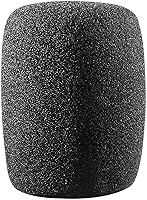
The mic ships without a windscreen, and the low-cut filter alone is insufficient for anything beyond the lightest breeze — outdoor recording in exposed or gusty conditions requires adding a foam cap or full blimp-style wind system, which is additional cost and bulk that buyers planning outdoor use should budget for upfront.
On-Camera Integration
79%
21%
The compact metal body is well-suited for camera mounting — it fits on a standard cold or hot shoe without imposing the front-heavy imbalance that larger boom-mounted solutions create, and the included stand clamp adds useful flexibility for positioning on a standard microphone stand between takes.
The dual-XLR cable tether is this setup's weak point — two cables running from a camera-mounted mic becomes unwieldy quickly during handheld shooting, and some operators end up using gaffer tape just to keep the rig tidy. This is a workaround that should not be necessary on a professional-grade piece of equipment.
Frequency Response
76%
24%
The 20Hz to 17kHz response covers the vast majority of real-world recording scenarios competently, from low-frequency room tone and ambience to midrange dialogue and the upper frequencies of most musical instruments. For broadcast and documentary work, this spectral range is entirely adequate and practically transparent in everyday use.
Rolling off at 17kHz means the top-end air that fidelity-focused recordists listen for — the shimmer above cymbals, the breath of high woodwinds — is slightly curtailed compared to mics extending to 20kHz. This is unlikely to matter in broadcast contexts but may disappoint sound designers who depend on extended high-frequency detail.
Included Accessories
68%
32%
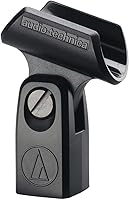
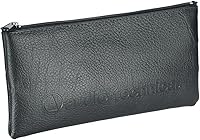
The package covers the critical items needed to start working immediately: the proprietary 5-pin to dual-XLR cable, an AT8405a stand clamp compatible with standard 5/8-27 threaded stands, and a protective pouch for transport — more than many competing professional mics at this price tier include in the box.
There is no windscreen included, which is a notable omission for a mic explicitly marketed toward location and field use where wind exposure is practically guaranteed. The protective pouch offers no hard-shell protection, leaving the capsule potentially vulnerable inside a fully packed kit bag during transit.
Long-Term Reliability
86%
The BP4025 has been in continuous production since 2001 — over two decades without discontinuation — and owners who have maintained the mic through years of professional field use report consistent performance with no capsule degradation or connector issues under normal working conditions.
The limited total review count makes it difficult to draw statistically confident conclusions about real-world failure rates or long-term capsule stability. A cable failure after years of use also means tracking down a specific 5-pin XLR replacement rather than simply grabbing a standard cable, which is an avoidable long-term dependency.
Mono Compatibility
82%
18%
Because the X/Y capsules share the same physical point in space, summing both channels to mono produces a clean, coherent center image without the comb-filtering artifacts that make mono-summed spaced-pair recordings sound hollow or phashy — a practical advantage for broadcast workflows where mono delivery remains standard.
The X/Y design's inherently narrower stereo spread means there is less stereo information to work with if users try to widen the image in post-production compared to what a spaced or ORTF configuration would capture. Users expecting aggressive stereo width in their raw recordings may find the capture more restrained than anticipated.

Suitable for:

The Audio-Technica BP4025 X/Y Stereo Field Recording Microphone was built for working professionals who record outside the studio and need dependable stereo capture in unpredictable conditions. Documentary filmmakers and ENG videographers will find it particularly well-matched — it mounts directly on a camera, delivers professional-quality stereo imaging, and handles the kind of ambient noise and wide dynamic swings that location work regularly throws at you. Nature and wildlife recordists benefit from the low self-noise floor, which lets quiet environmental details — distant bird calls, subtle water movement — come through cleanly rather than getting buried in hiss. Broadcast journalists and field reporters covering live events will appreciate the switchable pad, which keeps recordings clean even in loud crowd environments or near amplified sound sources. Semi-professional recordists who have outgrown consumer stereo mics and are ready to invest in a proper XLR-based workflow will also find this a meaningful and worthwhile step up.
Not suitable for:

The Audio-Technica BP4025 X/Y Stereo Field Recording Microphone is a poor fit for anyone who needs a simple plug-and-play solution — it outputs via a 5-pin XLR connector that splits into two separate XLR cables, meaning you need a dual-channel audio interface or a recorder with dual XLR inputs just to get signal into your system. Consumer camera owners are frequently caught off guard by the phantom power requirement, since many entry-level DSLR and mirrorless cameras cannot supply adequate phantom power, which means adding an external preamp or portable recorder to your signal chain. This is not a studio microphone in any traditional sense — its X/Y pattern is tuned for capturing a spatial sound field, not isolating a single close-up source like a voice or instrument. Anyone still learning the basics of audio production may find the dual-cable rig, phantom power dependency, and professional XLR chain more complexity than they bargained for. If your workflow is entirely mobile, laptop-only, or USB-based, there are more appropriate and less expensive options available.
Specifications

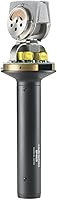
  • Polar Pattern: X/Y coincident stereo configuration with both capsules fixed at the same physical point, delivering a phase-accurate stereo image without the comb-filtering risks of spaced-pair setups.
  • Transducer Type: Fixed-charge back plate permanently polarized condenser capsules requiring no external polarization voltage.
  • Frequency Response: 20Hz to 17kHz, covering the full audible range with a gradual roll-off approaching the upper limit.
  • Dynamic Range: 131dB typical dynamic range at 1kHz, providing substantial headroom for unpredictable loud-to-quiet field recording scenarios.
  • Signal-to-Noise: 80dB signal-to-noise ratio at 1kHz, reflecting a low self-noise floor capable of capturing quiet ambient detail without audible hiss.
  • Max SPL: Handles up to 145dB SPL at 1% THD, extendable to 155dB SPL with the switchable -10dB pad engaged.
  • Low-Cut Filter: Switchable high-pass filter at 80Hz with a 12dB-per-octave slope, reducing low-frequency wind rumble and handling vibration on location.
  • Pad: Switchable -10dB pad reduces input sensitivity to prevent clipping when recording high-SPL sources such as amplified music or heavy machinery.
  • Output Connector: Single 5-pin XLR output with a supplied cable that splits into two standard 3-pin XLRM connectors for dual-channel balanced recording.
  • Power Requirement: Requires phantom power between 11V and 52V DC, drawing approximately 7mA total across both channels combined.
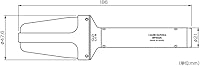
  • Dimensions: Body measures 7.32 x 1.87 inches (185.92 x 47.49mm), compact enough for direct camera-shoe or boom-pole mounting.
  • Weight: 9.5 oz (269.32g) without cable, light enough for camera-mount use without significantly upsetting rig balance.
  • Output Impedance: 170 ohms output impedance, compatible with standard professional balanced XLR inputs on field recorders and mixing consoles.
  • Body Material: Full metal construction throughout the housing, contributing to durability under the physical demands of regular field recording.
  • Capsule Size: Large-diaphragm capsules housed within the compact body, delivering improved sensitivity and lower self-noise compared to typical small-diaphragm stereo microphones.
  • Channels: Two-channel stereo output providing discrete left and right signals through the included dual-XLR cable for independent gain control on each channel.
  • Compliance: Fully RoHS-compliant and free from all substances restricted under the EU directive on the reduction of hazardous substances.
  • In the Box: Includes the 5-pin to dual 3-pin XLR output cable, an AT8405a stand clamp compatible with 5/8-27 threaded stands, and a protective storage pouch.

Related Reviews

Audio-Technica AT8022 X/Y Stereo Microphone
79%
91%
Stereo Imaging Accuracy
86%
Build Quality
54%
Wind Sensitivity
88%
Compatibility & Flexibility
77%
Value for Money
More
Audio-Technica AT2022 X/Y Stereo Condenser Microphone
68%
78%
Stereo Imaging Quality
86%
Portability & Setup Speed
54%
Build Quality
51%
Output Level & Preamp Compatibility
73%
Low-Frequency Roll-off Usefulness
More
Audio-Technica BP4029 Stereo Shotgun Microphone
79%
91%
Audio Quality
93%
Stereo Flexibility
88%
Build Quality
54%
Wind Noise Rejection
62%
Value for Money
More
Rode NT4 Stereo Condenser Microphone
81%
91%
Sound Quality
89%
Stereo Imaging
87%
Build Quality
74%
Value for Money
88%
Ease of Use
More
Tascam TM-2X
Tascam TM-2X
86%
92%
Stereo Image Width
88%
Audio Clarity
74%
Handling Noise Isolation
94%
Portability and Weight
86%
Loud Environment Performance
More
Audio-Technica AT8024
84%
93%
Versatility of Modes
88%
Setup & Ease of Use
76%
Audio Clarity & Detail
82%
Build Quality & Durability
79%
Shock Mount Performance
More
Audio-Technica AT831B Cardioid Lavalier Microphone
70%
91%
Audio Clarity
83%
Noise Rejection
78%
Build Quality
54%
Ease of Setup
72%
Value for Money
More
Audio-Technica AT875R
83%
93%
Sound Rejection
94%
Form Factor & Compactness
88%
Vocal Clarity
82%
Handling Noise Reduction
86%
Build Quality & Durability
More
Audio-Technica AT829CW Lavalier Microphone
80%
88%
Sound Quality
89%
Voice Intelligibility
84%
Noise Rejection
93%
Discreetness
91%
Wearability
More
Audio-Technica AT2035
87%
91%
Audio Transparency
88%
Build Durability
86%
Self-Noise Levels
93%
High SPL Handling
74%
Environmental Isolation
More

FAQ

Most consumer mirrorless and DSLR cameras do not supply phantom power through their 3.5mm audio inputs, so the BP4025 will not work plugged straight into your camera body. You need an external field recorder with XLR inputs and phantom power — something like a Zoom H5, H6, or Tascam DR-70D — then sync the audio to your video footage in post. If your camera has a dedicated XLR module with phantom power support, check the specs carefully before assuming it will work.

You need a device with two XLR inputs that can supply phantom power, since the mic outputs two separate channels through a Y-style cable. Field recorders like the Zoom H6, Sound Devices MixPre-3, or Tascam DR-701D are popular choices for location work. Desktop users can use a two-channel USB audio interface with phantom power, such as a Focusrite Scarlett 2i2. A single-input recorder will only capture one channel, which defeats the purpose of a stereo microphone.

You can physically connect only one XLR connector, but you will only record a single mono channel from one capsule — which is not what this mic is designed for. If you only have one XLR input available, you are better served by a mono microphone or a stereo mic with a mixed mono or 3.5mm output. The dual-XLR design assumes you have a two-channel recording setup.

X/Y places two cardioid capsules at the same point in space, angled apart at roughly 90 degrees, which produces a coherent stereo image with minimal phase issues and reliable mono compatibility. Spaced-pair setups can create a wider, more immersive image but introduce phase inconsistencies that can cause problems when the recording is collapsed to mono. Mid-side uses a figure-8 capsule and requires a decode step in post, but gives you adjustable stereo width after the fact. For field recording where reliability and mono compatibility matter, X/Y is generally the safest and most consistent approach.

It does not include a dedicated windscreen or shock mount. What is in the box is a stand clamp, the dual-output XLR cable, and a protective pouch. For outdoor recording, you will almost certainly want to source a foam windscreen or a full blimp-style wind protection system separately. A shock mount or suspension cradle is also worth adding if camera vibration or handling noise is a concern on your rig.

Yes — both the Zoom H5 and H6 output 48V phantom power through their XLR inputs, which is well within the 11V to 52V range this mic accepts. The H6 is a particularly convenient pairing because it has multiple XLR inputs and can record both stereo channels simultaneously onto separate tracks. Just make sure phantom power is enabled on both input channels before you start rolling, since it defaults to off on most recorders.

It works very well for that kind of work. The low self-noise floor means quiet environmental details — distant birdsong, subtle water movement, insect activity in undergrowth — come through cleanly without hiss undermining the recording. The compact housing is also less obtrusive in a natural setting than a pair of mics mounted on a wide stereo bar. The switchable low-cut filter helps manage low-frequency wind noise in open, exposed environments.

Yes, both switches are independent and can be engaged simultaneously. Using both at once is standard practice in situations where you are dealing with high SPL and low-frequency rumble at the same time — recording a loud live band outdoors, for example, or capturing industrial ambience near heavy machinery. There is no penalty for running both switches together.

The Rode Stereo VideoMic Pro outputs via a 3.5mm connector and runs on a battery, making it a genuine plug-and-play option for consumer cameras with no additional gear required. The BP4025 demands phantom power and a dual-XLR recording chain, but in exchange offers large-diaphragm capsules, a higher dynamic range, and significantly better SPL handling. If you are shooting with a consumer mirrorless and want to keep things simple, the Rode is the easier tool. If you are already running a professional field recorder and want the best stereo quality in a compact on-camera housing, the BP4025 is the more capable performer.

The Audio-Technica BP4025 X/Y Stereo Field Recording Microphone is listed as not discontinued by the manufacturer and has been in continuous production since it first became available in 2001. Its longevity in the market is a reasonable indicator that support, cable sourcing, and parts availability are not immediate concerns. That said, stock levels vary by retailer and region, so it is worth confirming availability with your supplier before committing to it as part of a larger kit purchase.
Where to Buy