Overview

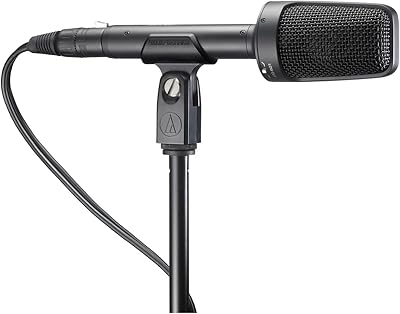
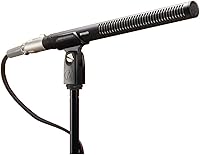
The Audio-Technica BP4029 Stereo Shotgun Microphone has earned a serious reputation among broadcast professionals, and its origins tell you a lot — it was developed around the 2000 Sydney Olympics broadcast, where reliable stereo capture under real pressure was non-negotiable. This stereo shotgun mic runs on an MS configuration, delivering broadcast-grade stereo imaging in a body compact enough to live on a camera hot shoe without unbalancing your rig. It requires phantom power and connects via XLR, which puts it squarely in the professional camp — not a plug-and-play option for casual video creators.
Features & Benefits

The BP4029's defining strength is its three switchable output modes: you can record in discrete M-S for maximum post-production flexibility, or dial into wide or narrow left-right stereo directly from the mic — a level of on-the-fly control you rarely find in a single camera-mount unit. The independent line-cardioid and figure-of-eight condenser elements span a full 40Hz to 20kHz, and in L/R stereo mode the dynamic range reaches around 102dB, making it capable in challenging acoustic environments. The switchable 80Hz roll-off handles low-end rumble effectively, and at just 3.6oz it stays practical on a rigged camera body.

Best For

This MS microphone is built for professionals who need stereo capture without hauling a separate boom operator into the field. Documentary filmmakers will appreciate being able to flip between wide and narrow stereo on location depending on the scene — tight interview or expansive landscape, the mic adapts. ENG crews and broadcast journalists get a compact, camera-mountable solution that meets real broadcast standards. Field recordists, particularly those capturing wildlife ambience or environmental sound, benefit most from the discrete M-S mode, which keeps both channels separate for precise width control in post. If you already own a dual-channel XLR recorder, this mic slots into that workflow naturally.

User Feedback

Owners of this stereo shotgun mic consistently praise its build quality and the flexibility of its stereo modes — many report that the ability to switch between M-S and matrixed L/R in the field saves significant time in post. The on-camera performance draws particular appreciation from ENG users and corporate video teams. On the critical side, the included breakout cable gets mixed reviews; some professionals swap it for a higher-quality third-party option fairly quickly. Wind sensitivity is a genuine concern outdoors — experienced users typically pair it with a proper blimp or dead cat. New-to-M-S users sometimes find the format's learning curve steeper than expected.

Pros

  • Switchable M-S and L/R stereo modes give you rare flexibility to adapt your stereo image before or after the shoot.
  • The compact 9.29-inch body and 3.6oz weight make it genuinely practical on a camera rig all day.
  • Broadcast-level dynamic range of around 102dB in stereo mode handles loud, unpredictable environments well.
  • Build quality is consistently praised by professionals who have used it across heavy production schedules.
  • The switchable 80Hz low-cut filter is effective at cleaning up low-end rumble without coloring the mid-range.
  • Phantom power acceptance across a wide 9–52VDC range makes it compatible with most professional field recorders.
  • Wide-to-narrow stereo switching on location saves significant time compared to fixing the stereo image purely in post.
  • The included breakout cable lets you connect directly to a dual-channel recorder straight out of the box.
  • Its lineage in real broadcast use — including major live events — gives it credibility backed by practical field testing.

Cons

  • The included 5-pin breakout cable is considered adequate by some but disappointing by professionals used to premium accessories.
  • Wind sensitivity is a real limitation outdoors; a blimp or dead cat windshield is practically a required additional purchase.
  • The M-S format requires post-production knowledge that will trip up anyone unfamiliar with stereo decoding workflows.
  • This stereo shotgun mic carries a professional price tag that is difficult to justify for occasional or hobbyist use.
  • It requires a dual-channel XLR recorder to take full advantage of discrete M-S output, adding to the total system cost.
  • No included shock mount or windscreen means the out-of-box kit feels incomplete relative to the investment.
  • Handling noise can be noticeable without a proper mount, particularly during run-and-gun or handheld shooting scenarios.
  • Users shooting exclusively dialogue or single-subject interviews may find stereo capture unnecessary for their actual workflow.

Ratings

Our AI-generated scores for the Audio-Technica BP4029 Stereo Shotgun Microphone were produced by analyzing verified buyer reviews from multiple global markets, with spam, bot-submitted, and incentivized feedback actively filtered out before scoring. The results reflect a genuine cross-section of professional users — from broadcast journalists to wildlife field recordists — and both the strengths and the real frustrations are represented transparently in every category below.
Audio Quality
91%
Professionals consistently describe the stereo image as clean, accurate, and remarkably well-defined for a camera-mountable mic. Wildlife recordists and documentary crews in particular note how naturally the mic captures spatial depth across a wide frequency range without introducing coloration.
A small number of users working in very quiet studio environments note that the side channel's 68dB SNR — slightly lower than the mid — becomes perceptible during extreme post-processing or heavy gain amplification, which can be a concern in critical listening contexts.
Stereo Flexibility
93%
The ability to switch between discrete M-S and two internally-matrixed L/R stereo modes on the mic itself is consistently cited as a standout advantage. ENG crews appreciate being able to commit to a ready-to-use stereo image on a fast-moving shoot, while documentary editors value having discrete M-S tracks when time allows a proper post workflow.
A recurring frustration is that the stereo width range of the two L/R modes — wide and narrow — is fixed by the internal matrix and cannot be fine-tuned, which leaves some users wishing for a middle-ground option without having to decode M-S manually in their DAW.
Build Quality
88%
The chassis feels solidly constructed and punches above its weight for a mic this light. Users who have carried it across multiple broadcast seasons report no functional degradation, and the sleek matte black finish holds up well to the everyday handling of a working production kit.
A handful of users note that the physical switch mechanism for output mode selection feels slightly stiff at first and takes some getting used to in low-light conditions or when wearing gloves on outdoor shoots.
Wind Noise Rejection
54%
46%
The switchable 80Hz low-cut filter does a competent job of reducing low-frequency handling vibration and stationary environmental rumble — useful during corporate event shoots or interiors where HVAC hum is the main concern.
Outdoor wind sensitivity is the single most common criticism from field users. Even moderate breezes introduce noticeable noise, and the mic essentially requires a proper blimp and fur windshield for any location work — an added cost and bulk that frustrates users who expected better bare-mic performance at this price level.
Value for Money
62%
38%
For broadcast journalists, ENG crews, and working documentary filmmakers who will genuinely exploit the M-S format and dual-output capability, the investment makes sense given how few competitors offer this combination of features in a camera-mountable body.
For anyone who does not regularly work in M-S or who primarily needs mono or simple stereo dialogue capture, the cost is difficult to rationalize against far less expensive mono shotgun alternatives that would cover most real-world needs just as effectively.
On-Camera Usability
86%
At 3.60oz and 9.29 inches long, the BP4029 sits comfortably on a camera hot shoe without significantly affecting balance on a DSLR or mirrorless rig. Users shooting run-and-gun documentary or news content frequently praise how unobtrusive it is compared to larger boom arrangements.
The 5-pin XLR output requires the included breakout cable to connect to standard dual-channel recorders, and the cable hangs visibly from the mic body — something that bothers operators who prioritize a clean, minimal on-camera setup.
Included Cable Quality
58%
42%
The bundled 24-inch 5-pin to dual 3-pin XLR breakout cable is functional and gets most users up and running without an immediate additional purchase, which is appreciated in a professional product at this tier.
A meaningful portion of experienced users replace the included cable fairly quickly, citing concerns about connector durability and overall cable flexibility compared to aftermarket options. For a mic at this investment level, the cable quality feels like a corner was cut.
Ease of Setup
74%
26%
For professionals already comfortable with XLR signal chains and phantom power, the physical setup is straightforward — mount, connect the breakout cable, engage phantom power, and select your output mode. The switch positions are clearly labeled and logical.
Users unfamiliar with M-S recording often describe a steeper-than-expected learning curve, particularly around setting up their DAW to properly decode discrete M-S tracks. The mic itself offers no guidance on this, and the documentation is minimal.
Handling Noise
67%
33%
When properly mounted in a quality shock mount, handling noise is well-controlled and rarely an issue even during active handheld operation. The low-cut filter provides an additional layer of protection against low-frequency vibration transmitted through a camera body.
Without a shock mount — which is not included — handling noise is noticeable, particularly on shoulder-mounted or handheld rigs where the operator is moving. Several users mention this as a surprise given the mic's positioning as a camera-mount solution.
Phantom Power Compatibility
92%
The wide 9 to 52VDC phantom power acceptance range means this stereo shotgun mic works reliably with virtually any professional recorder or mixer, from older 12V legacy gear to modern 48V professional preamps, without any compatibility surprises in the field.
The mic does draw phantom power continuously, and on battery-powered field recorders running in power-saving modes, a small number of users have noted that phantom power delivery at the lower end of the range can occasionally cause subtle gain inconsistencies.
Frequency Response Accuracy
89%
The 40Hz to 20kHz response is consistently described as natural and even-handed, without the hyped high-frequency presence that some camera shotguns add to make dialogue sound artificially crisp. Field recordists capturing ambient nature sound appreciate this balanced character.
Some users working primarily on dialogue note that the mic lacks the subtle presence boost around 8–12kHz that helps voice cut through in a mix, meaning additional EQ work in post is sometimes needed compared to mics specifically voiced for speech.
Size & Portability
87%
The compact 9.29-inch body is one of the more practical stereo shotgun options available for camera-mounted use, and the sub-4oz weight means it can stay on a rig all day without causing fatigue or requiring a counterweight adjustment.
While compact for a stereo shotgun, it is still noticeably longer than a typical mono camera mic, and users working in tight indoor spaces or low-ceiling environments occasionally find it catches on doorframes or overhangs.
Durability Over Time
83%
Long-term users — including several who have worked with this MS microphone for multiple broadcast seasons — report consistent performance with no significant sensitivity drift or mechanical failure. The metal body resists cosmetic damage well under field conditions.
There are occasional reports of the mode-selection switch becoming harder to move after extended use in dusty or sandy outdoor environments, suggesting the switch mechanism may benefit from periodic careful cleaning to maintain smooth operation.

Suitable for:

The Audio-Technica BP4029 Stereo Shotgun Microphone is purpose-built for working professionals who need reliable, flexible stereo capture without adding bulk to a camera rig. Documentary filmmakers shooting in the field will find real value in being able to switch between wide and narrow stereo on the fly, adapting to whatever a location demands — a sprawling outdoor scene or a tight sit-down interview. Broadcast journalists and ENG crews benefit from its camera-mountable form factor and the kind of build quality that holds up across heavy production schedules. Field recordists capturing natural ambience, wildlife sound, or environmental textures will particularly appreciate the discrete M-S output mode, which preserves full stereo-width control in post rather than locking them into a fixed image at the time of recording. If you already run a dual-channel XLR recorder and understand phantom power workflows, this stereo shotgun mic plugs into that chain with minimal friction.

Not suitable for:

The Audio-Technica BP4029 Stereo Shotgun Microphone is not the right tool for anyone just getting started in video production or audio recording. The M-S format has a learning curve — if you have never decoded Mid-Side in post or are unfamiliar with how phase-based stereo imaging works, this mic will feel needlessly complex before it feels useful. It also demands proper phantom power and a dual-channel XLR recording chain, so anyone relying on a basic on-camera mic input or a consumer-grade recorder will run into compatibility walls immediately. Budget-conscious buyers looking for a solid mono shotgun for dialogue or vlogging will find the investment hard to justify when simpler, less expensive options cover those bases effectively. Outdoor shooters who work regularly in windy environments should also factor in the additional cost of a proper blimp or dead cat windshield, as the mic alone is genuinely sensitive to wind noise.

Specifications

  • Transducer Type: Fixed-charge back plate permanently polarized condenser, providing stable sensitivity without requiring an external polarizing voltage.
  • Polar Pattern: Dual-element design using an independent line-cardioid (Mid) and figure-of-eight (Side) condenser element configured in an MS arrangement.
  • Frequency Response: The mic captures a full 40Hz to 20kHz range, suitable for everything from low environmental rumble to the upper edge of human hearing.
  • Dynamic Range: Dynamic range measures approximately 101dB on the Mid channel and reaches around 102dB in the L/R stereo output mode.
  • Signal-to-Noise Ratio: The Mid channel delivers a 72dB SNR (SPL, 1kHz at 1Pa), with the Side channel rated at 68dB and L/R stereo at 70dB.
  • Max Sound Level: The Mid element handles up to 123dB SPL at 1% THD, while the Side element tolerates up to 127dB SPL under the same conditions.
  • Output Modes: Three switch-selectable modes are available: discrete M-S output, wide internally-matrixed L/R stereo, and narrow internally-matrixed L/R stereo.
  • Low-Cut Filter: A switchable low-frequency roll-off operates at -12dB per octave from 80Hz, reducing wind, handling, and environmental low-end noise.
  • Power Requirement: Requires phantom power in the range of 9 to 52VDC, compatible with most professional field recorders and camera-mounted preamps.
  • Output Impedance: Output impedance is rated at 200 Ohms, consistent with professional balanced XLR signal chain standards.
  • Output Connector: The microphone outputs via a 5-pin XLR-M connector and includes a 24-inch (0.61m) breakout cable terminating in two standard 3-pin XLR-M connectors.
  • Dimensions: The mic body measures 9.29 inches long by 0.83 inches in diameter (235.96 x 21.08mm), compact enough for standard camera-mount use.
  • Weight: The mic weighs just 3.60oz (102.05g), keeping camera rig balance manageable during extended handheld or shoulder-mount shoots.
  • Color: Finished in matte black, suitable for low-profile on-camera use in broadcast and production environments.
  • RoHS Compliance: This microphone is RoHS compliant, meaning it is free from the hazardous substances specified under the relevant EU directive.
  • Included Accessories: Package includes the microphone body and one 5-pin XLRF to dual 3-pin XLRM breakout cable measuring 24 inches in length.

Related Reviews
Audio-Technica ATR6550X Condenser Shotgun Microphone
72%
81%
Audio Clarity
78%
Directionality Control
67%
Build Quality
91%
Ease of Setup
83%
Value for Money
More
Audio-Technica AT8022 X/Y Stereo Microphone
79%
91%
Stereo Imaging Accuracy
86%
Build Quality
54%
Wind Sensitivity
88%
Compatibility & Flexibility
77%
Value for Money
More
Audio-Technica AT2022 X/Y Stereo Condenser Microphone
68%
78%
Stereo Imaging Quality
86%
Portability & Setup Speed
54%
Build Quality
51%
Output Level & Preamp Compatibility
73%
Low-Frequency Roll-off Usefulness
More
Audio-Technica BP4025 X/Y Stereo Field Recording Microphone
77%
91%
Stereo Image Accuracy
88%
Build Quality
84%
Self-Noise Floor
89%
SPL & Headroom
54%
Setup Complexity
More
Audio-Technica AT8024
84%
93%
Versatility of Modes
88%
Setup & Ease of Use
76%
Audio Clarity & Detail
82%
Build Quality & Durability
79%
Shock Mount Performance
More
Audio-Technica AT829CW Lavalier Microphone
80%
88%
Sound Quality
89%
Voice Intelligibility
84%
Noise Rejection
93%
Discreetness
91%
Wearability
More
Audio-Technica AT831B Cardioid Lavalier Microphone

70%
91%
Audio Clarity
83%
Noise Rejection
78%
Build Quality
54%
Ease of Setup
72%
Value for Money
More
Audio-Technica AT875R
83%
93%
Sound Rejection
94%
Form Factor & Compactness
88%
Vocal Clarity
82%
Handling Noise Reduction
86%
Build Quality & Durability
More
Audio-Technica AT2021 Cardioid Condenser Microphone
77%
91%
Instrument Recording
84%
Sound Quality
86%
Value for Money
61%
Ease of Setup
63%
Vocal Performance
More
Audio-Technica AT4040
83%
92%
Sound Transparency
88%
Build Quality
86%
Transient Response
83%
Value for Money
84%
Off-Axis Rejection
More

FAQ

You will need a recorder or preamp that supplies phantom power — ideally in the 9 to 52VDC range — and a dual-channel XLR input if you want to capture discrete M-S or split-channel stereo. Most professional field recorders like the Sound Devices MixPre series or Zoom F-series handle this without any issues. Standard consumer cameras with a single 3.5mm mic input will not work properly with this mic.

In M-S mode, the mid and side signals are kept completely separate on two channels, giving you full control over the stereo width in post-production — you can decode and adjust the image however you like in your DAW. The two L/R modes (wide and narrow) do the matrixing internally inside the mic itself, delivering a ready-to-use stereo image straight to your recorder. Most field recordists prefer M-S when they have time to edit, while the L/R modes are useful when you need a finished result quickly.

Yes, physically it fits a standard cold or hot shoe mount and at 3.60oz it will not throw most rigs off balance. The catch is that most DSLRs and mirrorless cameras only offer a single 3.5mm stereo input, which means you would need an adapter and would likely lose the benefit of discrete M-S recording. For best results, pair the camera with an external dual-channel XLR recorder mounted on the rig.

It can be, yes. Like most condenser shotgun mics, the BP4029 is sensitive to wind, and even a light breeze can introduce noticeable noise. The built-in low-cut filter helps with low-frequency rumble, but it is not a substitute for physical wind protection. Most professionals who use this mic outdoors invest in a quality blimp-style windshield with a fur cover for anything beyond calm indoor conditions.

No, neither is included in the box — just the mic and the 5-pin to dual 3-pin XLR breakout cable. If you plan to use it on a camera hot shoe or boom pole, budgeting for a compatible shock mount is strongly recommended to reduce handling noise.

The main advantage of this MS microphone over a traditional spaced pair or X/Y configuration is convenience and phase coherence. Because both elements are co-located in a single body, you get a naturally phase-stable stereo image without the comb-filtering issues that can come with spaced microphones. The trade-off is that you are committed to this one stereo approach, whereas two separate mics offer more flexibility in how you position them relative to the sound source.

It gets the job done, but feedback from working professionals is mixed. It is functional and adequate for getting started, but some users replace it with a higher-quality aftermarket cable, particularly for demanding productions where cable reliability is critical. If you are doing critical location recording, it is worth having a spare cable on hand regardless.

Yes, 48V falls well within the mic's 9 to 52VDC phantom power range, so standard professional phantom power supplies are fully compatible. The mic draws phantom power in the normal way and does not require any special power conditioning.

It is a capable tool for learning M-S, but it may not be the most forgiving entry point given the investment involved and the technical demands of the format. That said, if you have access to a dual-channel recorder and a DAW that supports M-S decoding — which most modern DAWs do — the learning curve is manageable. Starting with the built-in L/R stereo modes while you get comfortable with the mic, then gradually experimenting with discrete M-S, is a practical approach.

It was designed primarily for broadcast and field production, and that is where it excels. It can certainly be used in a studio context — for capturing room ambience, live ensemble performances, or as a spot mic — but it is not optimized for close-miking or the kind of hyper-detailed studio work where a large-diaphragm condenser would be a more natural fit. Think of it as a field-first tool that happens to be flexible enough for select studio applications.

Where to Buy