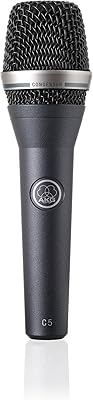
AKG C414 XLS


Overview
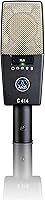
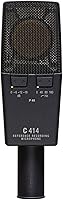
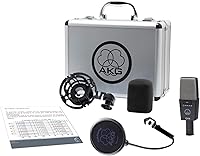
The AKG C414 XLS has been a benchmark in professional studio recording for decades, and it has earned that reputation without needing to reinvent itself. AKG positions it as a workhorse at the upper end of their condenser lineup — the kind of mic that shows up in serious home studios and professional tracking rooms alike. The solid aluminum body tells you immediately this is built to last, not a shelf decoration. It ships with a hard carrying case and windscreen, which matters when you are transporting gear regularly. Be clear about expectations, though: this is a premium investment aimed at engineers and vocalists who already know what they need.
Features & Benefits
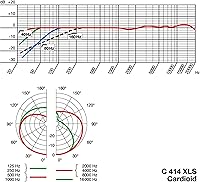
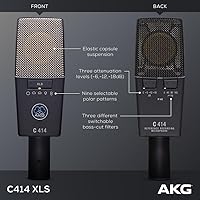
What separates this AKG condenser from most competitors at this price is the sheer number of usable configurations it offers. Nine polar patterns — including cardioid, omni, figure-eight, hypercardioid, and wide cardioid — mean you can adapt to almost any room layout or source placement without reaching for a different mic. The 6 dB-A self-noise floor is genuinely exceptional, capturing quiet acoustic sources with clarity that cheaper mics simply cannot match. On-board pad and bass cut switches give you real signal control before audio ever hits your interface. The peak hold LED is a small but practical touch for solo sessions where no one else is watching your levels.
Best For
The C414 XLS is a natural fit for studio vocalists who want honest, uncolored capture — if your voice sounds good, this mic will show it. Acoustic instrument recording is another strong suit: guitar, violin, piano, and woodwinds all respond well to the flat frequency curve. Drum overhead work benefits directly from the pad options and pattern switching. It also works for podcasters and broadcasters, though only if your room is treated — this studio mic will expose every flaw in an untreated space. Engineers who need one mic to handle tracking, overheads, and room recording without compromise will find this the most practical long-term purchase they make.
User Feedback
Most buyers land on the same conclusions: the transparency and build quality are hard to fault, and the pattern flexibility routinely surprises people who expected to use only cardioid. The honest criticisms are worth knowing. A good preamp is not optional — this AKG condenser will reveal weaknesses in your signal chain and your room equally. Some users note the physical controls can feel stiff, causing accidental changes during setup. The ongoing comparison to the C414 XLII comes up constantly: the XLS is flatter and more neutral, while the XLII carries a subtle presence lift. Choose based on your sources. Long-term reliability is rarely questioned — years of heavy use without failure is the consistent report.
Pros
- Nine polar patterns offer real flexibility across vocals, instruments, and room recording in a single session.
- A 6 dB-A self-noise floor captures delicate acoustic sources with exceptional clarity and a clean background.
- The aluminum body feels built for decades of use, not just years — durability is a consistent long-term strength.
- Onboard pad and bass cut filters let you shape the signal at the source before it ever hits your interface.
- The hard carrying case provides genuine protection during transport, not just decorative packaging.
- Peak hold LED simplifies solo gain staging without requiring a second pair of eyes on the meters.
- Lockable controls prevent accidental setting changes during live sound or rental applications.
- Resale value holds up well — this studio mic retains strong market value if you ever choose to upgrade or change direction.
- Flat frequency response means recordings sit naturally in a mix with minimal corrective EQ needed.
- Long-term owners consistently report no meaningful capsule degradation even after years of regular studio use.
Cons
- Requires a quality preamp to perform at its potential — entry-level interfaces will noticeably hold it back.
- Sensitivity to room acoustics means untreated recording spaces will be exposed rather than forgiven.
- The price is a significant barrier; buyers who only need cardioid mode can achieve similar results for far less.
- Physical control switches are small and can shift accidentally during mic positioning or cable management.
- Some users report subtle tonal differences between units purchased at different times, complicating matched-pair use.
- The included elastic mount provides basic isolation only — a dedicated shockmount is an additional cost worth factoring in.
- Heavier than many competitors, which can cause mic stand drift over long sessions without a properly weighted stand.
- Buyers expecting a warm or colored sound will find the neutral character underwhelming without additional processing.
Ratings
The AKG C414 XLS consistently ranks among the most reviewed and debated large-diaphragm condensers in its class, and our AI-generated scores reflect a thorough analysis of verified buyer feedback from studios, home recording setups, and live sound applications worldwide — with spam, bot activity, and incentivized reviews actively filtered out. The result is an honest picture of where this studio mic genuinely excels and where real-world buyers have run into friction. Both the praise and the frustrations are represented fairly below.
Audio Transparency
Polar Pattern Versatility
Self-Noise & Quiet Source Capture
Build Quality & Durability
Onboard Signal Shaping
Value for Money
Preamp Compatibility & Chain Sensitivity
Accessories & Packaging
Ease of Use for New Owners
Low-Frequency Handling
High SPL Handling
Consistency Across Units
Live Sound Suitability
Frequency Response Flatness
Suitable for:
The AKG C414 XLS is built for buyers who already understand what they need from a microphone and are ready to invest in a tool that will not limit them as their skills grow. Studio vocalists who want honest, uncolored capture — the kind that reveals the true character of a voice rather than flattering it — will find this mic fits naturally into a serious tracking workflow. Acoustic instrument players, particularly guitarists, pianists, and string players, benefit directly from the flat frequency response, which preserves the natural timbre of the instrument without adding unwanted character. Sound engineers who need a single mic capable of handling vocals one hour and drum overheads the next will appreciate the nine selectable polar patterns and the onboard pad, which eliminate the need to swap gear mid-session. Home studio owners building a long-term collection should also consider this seriously — it is the kind of purchase you make once and do not revisit for a decade. Podcasters and broadcasters with acoustically treated rooms rounding out their signal chain will find it a significant step up from anything in the entry-level or mid-range condenser category.
Not suitable for:
The AKG C414 XLS is not the right call for buyers who are still building the foundational parts of their recording setup. If your audio interface has a modest built-in preamp, this studio mic will expose that limitation clearly — and the recording quality will reflect the weakest link in the chain, not the mic's potential. Buyers in untreated rooms face a similar problem: the mic's sensitivity and low noise floor capture everything, including flutter, room reflections, and ambient noise that cheaper microphones would simply obscure. This is also not the right buy for someone who records exclusively in a single polar pattern and has no plans to expand their recording techniques — the pattern flexibility is a major part of what you are paying for, and if you will never use it, the value case weakens considerably. Beginners who are still learning mic placement, proximity effect, and basic gain staging may find this mic unforgiving and frustrating rather than educational. Finally, buyers expecting a mic with built-in warmth or a flattering presence lift should look at the C414 XLII instead — this version is engineered for accuracy, not character.
Specifications
- Polar Patterns: Offers 9 selectable polar patterns including cardioid, wide cardioid, hypercardioid, figure-eight, and omnidirectional, switchable directly on the mic body.
- Self-Noise: Equivalent noise level of 6 dB-A, placing it among the quietest large-diaphragm condensers available for professional studio use.
- Signal-to-Noise Ratio: 88 dB-A signal-to-noise ratio ensures detailed, low-floor audio reproduction across a wide range of recording applications.
- Sensitivity: Sensitivity rated at 23 mV/Pa, providing strong output levels suitable for both quiet acoustic sources and louder instruments with appropriate pad settings.
- Frequency Response: Full 20 Hz to 20,000 Hz frequency range with a characteristically flat, linear response designed to capture sources without added coloration.
- Pad Settings: Three-position switchable attenuation pad at -6, -12, and -18 dB allows safe capture of high-SPL sources without capsule overload.
- Bass Cut Filter: Three-position high-pass filter at 40, 80, and 160 Hz provides onboard low-end control to reduce proximity effect or room rumble at the source.
- Output Impedance: Electrical output impedance of 200 Ohms with a recommended minimum load impedance of 2,200 Ohms for optimal signal transfer.
- Connector: Standard 3-pin XLR connector requiring 48V phantom power from a compatible audio interface, preamp, or mixing console.
- Body Material: Full aluminum construction throughout the mic body and grille, contributing to both its robust feel and long-term resistance to physical wear.
- Weight: Weighs 300 g (10.6 oz), which is substantial for a handheld condenser and requires a sturdy mic stand with adequate counterbalancing.
- Dimensions: Measures 11.3 x 3.9 x 5.5 inches, reflecting the standard large-diaphragm form factor designed for stand-mounted studio and stage use.
- Included Accessories: Ships with a hard aluminum carrying case, a foam windscreen, an elastic suspension mount, and a mic clip adapter for immediate deployment.
- Peak Hold LED: Integrated peak hold LED indicator allows visual monitoring of signal overload peaks during recording, particularly useful during unsupervised solo sessions.
- Control Lock: All onboard switches can be locked in position to prevent accidental changes during live sound performances or rental and installation applications.
- Manufacturer: Designed and marketed by AKG Pro Audio, a brand with a decades-long heritage in professional microphone engineering originally founded in Vienna, Austria.
- Availability: First made available in April 2004 and remains in active production with no discontinuation announced by the manufacturer as of current listings.
Related Reviews

AKG C1000S Condenser Microphone
AKG K812PRO Audiophile Headphones
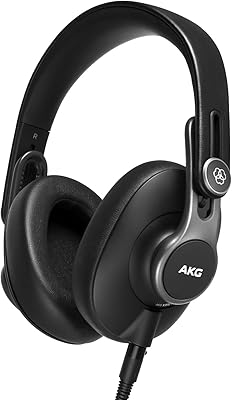
AKG K371
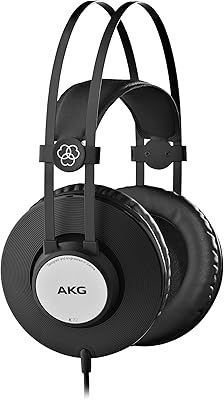
AKG K72 Over-Ear Headphones
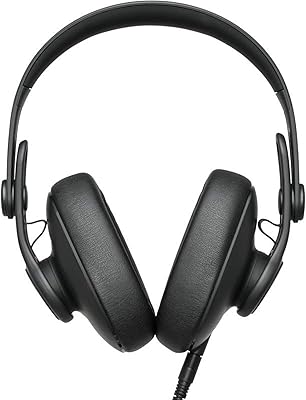
AKG K361 Studio Headphones
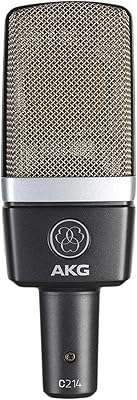
AKG C214
AKG K702 Over-Ear Headphones
AKG D7