Overview

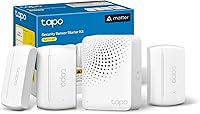
The Tapo T31 KIT Smart Door Sensor Kit is TP-Link's answer to how you start a home security setup without overspending or overcomplicating things. The box ships with three contact sensors and a hub that doubles as an audible chime — everything you need right out of the package. One thing to flag upfront: the sensors do not work without the hub, so this is not a standalone Wi-Fi device situation. The kit is also Matter certified, which means it can talk to Apple HomeKit, Google Home, Alexa, and SmartThings — genuinely useful if your household runs on more than one smart home platform.

Features & Benefits

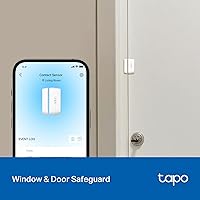
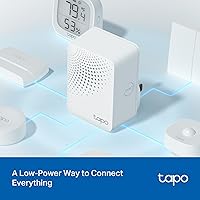
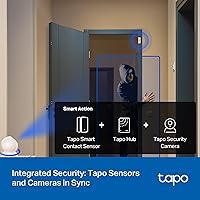
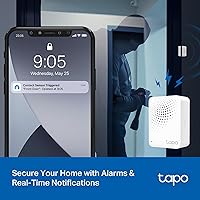
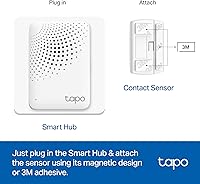
What separates this contact sensor bundle from cheaper Wi-Fi alternatives is the Sub-G wireless protocol the sensors use to communicate with the hub. It draws far less power than Wi-Fi, which is why TP-Link claims up to two years of battery life per sensor and why the hub can handle up to 64 devices without issue. The hub also packs a 90-decibel alarm loud enough to startle anyone and deter casual intrusion, though it should be said plainly that this is not a monitored alarm system. If you own Tapo cameras, you can configure them to trigger recording automatically when a sensor opens. Mounting is tool-free, using magnets or adhesive strips.

Best For

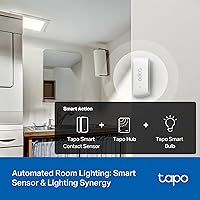
The Tapo starter kit makes the most sense for renters and homeowners who want entry monitoring without signing up for a monthly security plan. It is also a natural fit for anyone already in the Tapo ecosystem — if you have Tapo smart bulbs or cameras, adding this kit lets you build automations like lights turning on when a door opens. The Matter certification makes it worth considering even for non-Tapo households; Matter is essentially a shared language that lets devices from different brands work together, so your HomeKit or SmartThings setup does not need to stay in a separate silo. The compact sensor size is a bonus for anyone monitoring cabinets, mailboxes, or appliances.

User Feedback

Feedback on this contact sensor bundle skews positive on the basics: setup is consistently described as fast and frustration-free, app notifications arrive quickly, and the sensors are small enough that most people forget they are even there. Where opinions diverge is around the hub requirement — buyers who skimmed the listing feel surprised, even though it is clearly stated. Range in larger homes is mostly solid, though a handful of users in multi-story layouts report occasional signal inconsistency. The Matter integration earns decent marks across platforms, though a few HomeKit users note some early configuration friction. Bundle pricing is widely considered good value, and most buyers treat the three-sensor-plus-hub format as a practical starting point rather than a constraint.

Pros

  • Three sensors plus a hub included in one box — you are covered on multiple entry points from day one.
  • Setup is fast and does not require any tools; adhesive and magnetic mounts handle most surfaces.
  • Battery life on the sensors is rated at around two years, so you are not swapping cells constantly.
  • The built-in hub chime doubles as a 90-decibel alarm, eliminating the need for a separate siren.
  • Matter certification means this contact sensor bundle works natively with Alexa, Google Home, Apple HomeKit, and SmartThings.
  • The hub scales to 64 connected devices, so your initial investment grows with your smart home.
  • Real-time notifications and a full activity log in the Tapo app keep you informed even when you are away.
  • Sensor footprint is tiny, making placement discreet on doors, cabinets, mailboxes, and appliances.
  • Camera integration with Tapo pan/tilt models lets you automate recording when a sensor triggers.
  • Competitively priced for a hub-plus-multi-sensor bundle compared to buying components individually.

Cons

  • Sensors are completely dependent on the hub — lose power to the hub and you lose all monitoring.
  • A Tapo account is required for full functionality, which is a dealbreaker for privacy-focused buyers.
  • The hub needs to be plugged in near a router, which can limit where you place the central unit.
  • Some users in larger or multi-story homes report occasional signal inconsistency in distant rooms.
  • Matter integration, while present, has caused initial setup friction for some Apple HomeKit users specifically.
  • The alarm is hub-based only — there is no local siren option on the sensors themselves.
  • No professional monitoring option exists, so all alerts depend on you seeing and acting on app notifications.
  • The system requires 2.4 GHz Wi-Fi; homes with 5 GHz-only networks will need to adjust router settings.

Ratings

The Tapo T31 KIT Smart Door Sensor Kit earns its place near the top of the home security sensor category, and the scores below reflect what real buyers actually experience — not marketing promises. Our AI has analyzed verified global user reviews, actively filtering out incentivized submissions and bot activity, to surface an honest picture of where this contact sensor bundle genuinely delivers and where it falls short. Strengths and frustrations are both represented here without sugarcoating.

Ease of Setup
91%
The vast majority of buyers describe the initial setup as refreshingly painless — open the box, plug in the hub, attach the sensors with the included adhesive strips, and scan a code in the Tapo app. Most users report being fully operational within fifteen minutes, even without any prior smart home experience.
A small but consistent group of users found that pairing sensors to Apple HomeKit via Matter required a few extra steps and occasional re-pairing attempts. The app also requires account creation, which adds friction for buyers who prefer a local-only setup.
Notification Reliability
88%
Real-time open and close alerts reach most users within one to three seconds of a trigger event, which buyers consistently praise for day-to-day peace of mind — whether monitoring a front door, a medicine cabinet, or a child's bedroom. The activity log in the app also gives a useful historical record without any subscription fee.
A handful of users report occasional delayed or missed notifications, particularly during periods of heavy network traffic or when the hub is placed at the far edge of the Wi-Fi router range. These incidents appear infrequent but do surface in feedback from larger households.
Battery Life
86%
The Sub-G wireless protocol is a genuine advantage here: buyers who switched from Wi-Fi-based sensors frequently note how rarely they think about battery replacement with this contact sensor bundle. The two-year claim appears credible in light of real-world feedback, especially for doors that open and close a moderate number of times daily.
High-traffic entry points — like a busy back door used dozens of times a day — can deplete batteries faster than the rated estimate suggests. A few users also note that the app's low-battery warning does not always provide enough lead time before a sensor goes offline.
Hub Dependency
63%
37%
The centralized hub model does offer real advantages: a single device manages up to 64 sensors, keeps the per-sensor cost lower, and dramatically extends battery life by offloading the wireless heavy lifting. For buyers who understand this architecture upfront, it works exactly as intended.
This is the most common source of negative reviews — buyers who expected standalone Wi-Fi sensors feel misled when they discover the hub is non-optional. Any hub outage, whether from a power cut or router issue, takes down all monitoring simultaneously, which is a meaningful single point of failure for a security-oriented product.
Value for Money
84%
Purchasing three sensors and a capable hub together in one box represents solid value compared to assembling the same setup piece by piece. Buyers who compare the per-sensor cost against competing Matter-compatible alternatives consistently rate this Tapo starter kit favorably for what you get at this price tier.
Buyers who already own a compatible Tapo hub may feel they are paying for hardware they do not need. There is no hub-only or sensor-only discounted variant readily available, which limits flexibility for those looking to expand an existing setup economically.
Wireless Range
74%
26%
In standard residential layouts — single-story homes, apartments, and average two-story houses — the Sub-G signal holds up well and barely registers as a concern in user feedback. Sensors placed on mailboxes, detached garages, and outbuildings closer to the hub also tend to perform without issue.
Multi-story homes and properties with thick concrete or brick walls generate more range-related complaints. A portion of users in larger spaces report intermittent signal drops from sensors installed in rooms furthest from the hub, and repositioning the hub is not always practical given its Wi-Fi tether.
App Experience
77%
23%
The Tapo app is generally considered clean and approachable by users who are not deeply technical — finding sensor status, reviewing history, and setting up basic automations are all achievable without consulting a manual. Cross-platform availability on both iOS and Android is consistently appreciated.
Power users looking to build more complex conditional automations sometimes find the app logic limiting compared to platforms like Home Assistant. Account dependency is a recurring complaint, and a few users note that the app occasionally requires a manual refresh to display the most current sensor state.
Matter Integration
72%
28%
For households running mixed smart home ecosystems, the Matter certification is a meaningful practical benefit — this door sensor kit can operate inside Apple HomeKit, Google Home, Alexa, or SmartThings without a separate bridge device. Buyers who successfully configure it this way tend to be quite satisfied with the resulting reliability.
Matter setup is not universally smooth: Apple HomeKit users in particular report the most friction, sometimes requiring multiple attempts or a full factory reset of the hub to complete pairing. The Matter experience also varies noticeably across firmware versions, suggesting that software polish in this area is still catching up.
Build Quality
79%
21%
The sensors feel appropriately solid for their size and purpose — not flimsy or cheap despite the compact form factor. Most buyers who have had the kit installed for several months report no physical degradation, adhesion failures, or contact reliability issues under normal indoor conditions.
The hub casing feels slightly lightweight in hand compared to competing devices at a similar price point, which some buyers interpret as a durability concern even if it has not translated into widespread failure reports. The sensor magnet alignment also requires careful initial placement to ensure reliable detection.
Alarm Effectiveness
68%
32%
At 90 decibels, the hub alarm is genuinely loud enough to be heard throughout most apartments and smaller homes, and buyers report that it has deterred at least opportunistic intrusion attempts. The ability to customize the chime sound for normal door events versus alarm events through the app is a practical touch.
The alarm originates exclusively from the hub, which means its effectiveness depends entirely on where the hub is physically located — a hub in a back bedroom does little to deter someone entering through the front door. There is no way to route the alarm through the sensors themselves or through external speakers without additional smart home configuration.
Camera Integration
76%
24%
For buyers who already own Tapo pan/tilt cameras, the ability to trigger automatic recording and hub alarm activation when a sensor opens is a genuinely useful security layer that works reliably in testing. Setting up these cross-device automations is straightforward within the Tapo app and does not require any third-party tools.
This feature is limited to Tapo-brand cameras, which means buyers with cameras from Wyze, Ring, Arlo, or other brands cannot leverage the same direct integration. It functions more as an incentive to stay within the Tapo ecosystem than a universally available capability.
Installation Flexibility
83%
Tool-free mounting with both adhesive and magnetic options gives this contact sensor bundle genuine versatility — buyers have successfully installed sensors on metal refrigerators, wooden cabinet doors, sliding windows, and aluminum mailbox lids. Renters especially appreciate not needing to leave any permanent marks.
The adhesive strips, while convenient, have drawn some complaints about longevity on textured or painted surfaces — a small number of users report sensors falling off after several weeks in humid environments like laundry rooms or bathrooms. Repositioning the sensor after initial adhesive placement also risks leaving residue.
Privacy & Account Requirements
58%
42%
For buyers comfortable with cloud-connected smart home apps, the Tapo account system works reliably and syncs sensor history and settings across devices without noticeable issues. The app does not feel intrusive in daily use and does not surface unnecessary data requests during normal operation.
There is no local-only operation mode — the hub requires an active Tapo account and internet connection for remote monitoring and automation to function. Privacy-conscious buyers who prefer data to stay on their local network have no supported path to achieve that with this system as currently designed.
Scalability
87%
The hub supporting 64 devices is not just a spec number — it genuinely future-proofs the investment for buyers who plan to expand beyond the three included sensors. Adding more Tapo-compatible sensors, buttons, or switches later follows the same simple pairing process without any hub upgrade required.
Scalability is limited to the Tapo and Matter-compatible device ecosystem, so buyers wanting to integrate sensors from niche brands or non-Matter Zigbee and Z-Wave devices will hit a wall. The hub also does not support local automations if the cloud connection drops, which limits its reliability as a true hub for complex setups.

Suitable for:

The Tapo T31 KIT Smart Door Sensor Kit is a strong fit for renters and homeowners who want practical entry monitoring without committing to a monthly security subscription or a complicated installation process. If you already own Tapo smart devices — cameras, smart plugs, or bulbs — this kit slots right in and lets you build genuinely useful automations, like lights switching on when a closet door opens or a camera starting to record when a back door is triggered. It also makes sense for households running mixed smart home ecosystems; the Matter certification means the sensors and hub can communicate with Apple HomeKit, Google Home, Alexa, and SmartThings without workarounds. People monitoring more than just front doors will find three sensors a practical starting point — think garage side doors, a medicine cabinet, a basement entry, or even a refrigerator in a shared space. And because the hub can eventually support up to 64 devices, this contact sensor bundle is a reasonable long-term investment rather than a dead-end purchase.

Not suitable for:

The Tapo T31 KIT Smart Door Sensor Kit will frustrate buyers who expect each sensor to work independently over Wi-Fi — these sensors communicate only through the included hub, and without it, they are inoperable. If you live in a very large home with thick walls or multiple floors, the Sub-G wireless range is generally reliable but not guaranteed to cover every corner, and a handful of users in sprawling layouts have run into signal gaps. Anyone hoping to use this as a replacement for a professionally monitored alarm system will be disappointed; the 90-decibel hub chime is a deterrent, not a dispatch call. Users who prefer not to create a Tapo app account will also find the experience limited, since remote monitoring and automation setup both depend on it. Finally, buyers deeply invested in a non-Matter Zigbee or Z-Wave ecosystem may find integration more cumbersome than expected, since this system runs on its own Sub-G protocol rather than a universal mesh standard.

Specifications

  • Kit Contents: The kit includes three Tapo T110 contact sensors and one Tapo H100 smart hub with a built-in chime.
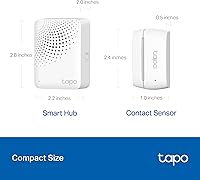
  • Sensor Dimensions: Each contact sensor measures 2.42 x 1.48 x 0.48 inches, making it compact enough for discreet placement on most door and window frames.
  • Hub Dimensions: The Tapo H100 smart hub measures 2.8 x 2.5 x 2 inches and plugs directly into a standard wall outlet.
  • Sensor Protocol: Sensors communicate with the hub using a Sub-G low-power wireless protocol, which offers longer range and significantly lower power consumption than standard Wi-Fi.
  • Hub Connectivity: The hub connects to your home network via 2.4 GHz Wi-Fi; 5 GHz-only networks are not supported.
  • Battery Life: Each T110 sensor is rated for up to two years of battery life under typical usage conditions.
  • Battery Type: Sensors are powered by lithium-ion batteries, which are included in the box and do not require a separate purchase.
  • Hub Capacity: The H100 hub supports up to 64 compatible Tapo sensors, switches, and buttons simultaneously.
  • Alarm Volume: The hub's built-in alarm reaches 90 decibels and can be customized through the Tapo app.
  • Mounting Type: Sensors attach using either magnetic mounts or included adhesive strips, requiring no drilling or tools.
  • Matter Certified: Both the sensors and hub carry Matter certification, enabling native integration with major smart home platforms without proprietary bridges.
  • Platform Support: The kit is compatible with Amazon Alexa, Google Home, Apple HomeKit, and Samsung SmartThings via Matter.
  • Camera Integration: Contact sensors can be paired with Tapo pan/tilt cameras to automatically trigger recording or sound an alarm when a sensor detects an open state.
  • Power Source: The contact sensors are fully battery-powered, while the H100 hub requires a constant AC wall outlet connection.
  • Manufacturer: The Tapo T31 KIT is designed and manufactured by TP-Link, a global networking and smart home hardware brand.
  • Item Weight: The total package weight is 8.8 ounces, inclusive of all included sensors and the hub unit.
  • Sound Level: The hub chime and alarm function operates at up to 90 decibels, audible across typical residential spaces.
  • Sensor Count: This starter kit ships with three individual contact sensors, suitable for monitoring three separate entry points simultaneously.

Related Reviews
YoLink LoRa Smart Door Sensor Starter Kit
79%
93%
Wireless Range
88%
Ease of Setup
79%
Battery Life
84%
Value for Money
61%
App Experience
More
YoLink LoRa Outdoor Motion Sensor Starter Kit
75%
93%
Wireless Range
88%
Ease of Setup
67%
App Reliability
62%
False Trigger Rate
79%
Battery Life
More
YoLink LoRa Smart Outdoor Contact Sensor & Hub Starter Kit
83%
93%
Battery Life
91%
Ease of Installation
89%
Range & Connectivity
87%
Smart Home Integration
88%
Value for Money
More
Actpe Wireless Motion Sensor Driveway Chime
69%
93%
Ease of Setup
88%
Value for Money
76%
Detection Reliability
81%
Wireless Range
61%
Battery Life
More
S&Z TOPHAND 48in x 80in MDF Barn Door with 8FT Sliding Door Hardware Kit
85%
85%
Assembly Ease
90%
Durability
70%
Weight/Installation
92%
Waterproof Surface
88%
Design & Aesthetics
More
Tapo SolarCam C403 Kit Solar Camera
78%
83%
Solar Charging Reliability
91%
Installation & Setup
78%
Night Vision Quality
77%
Person Detection Accuracy
74%
Video & Image Quality
More
DFRobot HuskyLens AI Vision Sensor
76%
88%
Ease of Setup
73%
Recognition Accuracy
58%
Documentation & Support
84%
Value for Money
79%
Build Quality & Form Factor
More
Onvis SMS2 Smart Motion Sensor
78%
83%
Motion Detection Accuracy
88%
Response Speed
79%
HomeKit Integration
81%
Temperature Accuracy
78%
Humidity Monitoring
More
YoLink YS7201 LoRa Vibration Sensor
72%
91%
Wireless Range
88%
Value for Money
83%
Setup & Installation
79%
App & Notifications
76%
Detection Reliability
More
Tapo C402 Kit Solar Outdoor Security Camera
78%
93%
Ease of Installation
76%
Solar Charging Performance
84%
Video Quality (Daytime)
81%
Night Vision & Color Performance
82%
Motion & Person Detection
More

FAQ

The sensors only work when paired with the Tapo H100 hub — they use a Sub-G wireless protocol to communicate with it rather than connecting directly to your Wi-Fi. If the hub loses power or your internet goes down, you will lose remote monitoring. It is worth keeping this in mind when deciding where to place the hub.

Yes, the hub supports up to 64 compatible devices total, so you can expand well beyond the three sensors included in this starter kit. Additional Tapo T110 sensors can be purchased separately and paired through the Tapo app in just a few steps.

It does, thanks to Matter certification. Matter is essentially a shared communication standard that lets devices from different brands work inside the same smart home platform, so you can add this contact sensor bundle to HomeKit without any workaround. A small number of users have reported minor friction during the initial HomeKit setup, but it generally works as expected once configured.

It is better understood as a monitoring and alert tool rather than a full security system. The hub has a 90-decibel alarm that can startle an intruder, but there is no professional monitoring, no emergency dispatch, and no backup cellular connection. If you want those features, you will need a dedicated security system alongside or instead of this kit.

The alarm reaches 90 decibels, which is comparable to a loud lawnmower — noticeable in most homes. Through the Tapo app, you can customize when alarms trigger and adjust notification settings, so you are not woken up every time a door opens. The chime function for normal open and close events can also be toggled separately.

Unfortunately, no. The hub requires a 2.4 GHz Wi-Fi connection to function. If your router supports both bands (which most modern routers do), you can connect the hub to the 2.4 GHz band specifically, but a 5 GHz-only setup will not be compatible.

No drilling needed. Each sensor comes with both magnetic mounts and adhesive strips, so installation is genuinely tool-free and reversible. This makes the kit a practical option for renters who need to avoid putting holes in walls or door frames.

TP-Link rates them at up to two years, which is credible given the Sub-G protocol's low power draw. In practice, battery life can vary based on how frequently your doors open and close and how many automations you have configured, but most buyers are not replacing batteries nearly as often as they would with Wi-Fi-based sensors.

Yes, that is one of the more practical use cases for this door sensor kit. You can set up automations in the Tapo app so that opening a closet door, pantry, or laundry room turns on a compatible smart light automatically. The automation rules are straightforward to configure and do not require any coding or third-party apps.

The Tapo app does flag devices that go offline or lose connection, so you would receive a notification if a sensor drops out. The Sub-G protocol has solid range for most homes, but in very large or multi-story layouts, some users have reported occasional connectivity gaps in areas far from the hub. Placing the hub as centrally as possible helps minimize this.