Overview

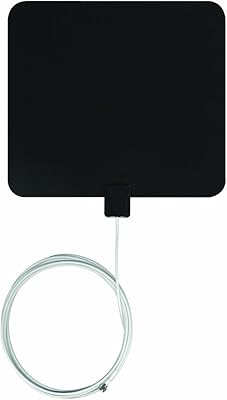
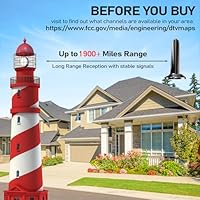
The Yirkais BJ001 Indoor Outdoor TV Antenna is a straightforward cord-cutting option aimed at anyone tired of paying for cable just to watch local news and network TV. The headline range claim is marketing shorthand, not a realistic expectation — actual performance depends almost entirely on your proximity to broadcast towers and what physically stands between you and them. Check the FCC broadcast map before purchasing. That said, it handles 4K and 1080p signals natively and works with virtually any modern HDTV, making it a reasonable starting point for over-the-air viewing. Its dual indoor/outdoor design gives it more placement flexibility than most flat antennas in this price range.
Features & Benefits

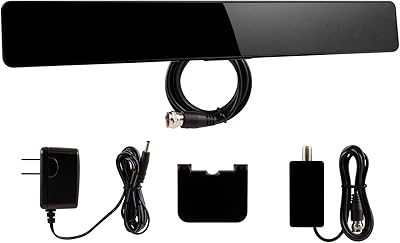
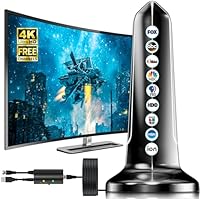
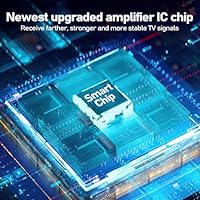
The built-in amplifier is the centerpiece here, using an upgraded IC chip designed to pull in weaker signals for those on the edge of broadcast range — useful in semi-rural zones or buildings with thick walls. The antenna claims 360-degree omnidirectional reception, which in practice means you won't need to spend time aiming it precisely, though window placement still tends to outperform other spots. Setup is genuinely simple: plug the coaxial cable into your TV's ANT/IN port and run a channel scan. The included cable is long enough to reach most windows comfortably, and the compact 8.8-ounce unit mounts flat against nearly any surface without fuss.

Best For

This OTA antenna makes the most sense for cord-cutters who live in suburban or semi-rural areas within roughly 30 to 50 miles of a broadcast tower cluster. It's also a practical pick for renters and apartment dwellers who can't install anything on a roof or run cables through walls. If you're outfitting a secondary bedroom TV and only need ABC, CBS, NBC, Fox, and PBS without a monthly fee, this fits that use case well. It's less suited to anyone in deeply rural territory expecting long-distance miracles — the amplifier helps, but geography wins. Think of it as a solid entry-level option, not a universal fix.

User Feedback

Buyer sentiment around the Yirkais amplified antenna tends to split along geographic lines. People in urban and suburban areas within range of multiple towers consistently report strong channel counts and genuinely easy setup. The frustrations cluster around two things: the range claims don't hold up in remote locations, and a notable share of buyers close to broadcast towers found the amplifier actually introduced signal noise, reducing their channel count compared to a passive antenna. Cable durability for extended outdoor use is a recurring concern as well. On balance, satisfaction skews positive for the intended use case, but results track closely with tower proximity rather than the packaging promises.

Pros

  • Plug-and-scan setup takes only a few minutes with no tools or technical knowledge required.
  • Pulls in all major network channels cleanly in suburban areas within a reasonable distance of towers.
  • Omnidirectional design means no manual aiming or repositioning after initial placement.
  • Works flat on a windowsill, stuck to a wall, or positioned outdoors — genuinely flexible.
  • Compatible out of the box with virtually any modern HDTV or set-top box via standard coaxial connection.
  • Uncompressed OTA signal delivers noticeably sharper local channel picture quality than cable or satellite.
  • Compact and lightweight enough to reposition and re-test spots without any permanent commitment.
  • Included coaxial cable is long enough to reach most window placements without buying an extension.
  • Eliminates monthly fees for local channels entirely once purchased.

Cons

  • Real-world reception range falls well short of the headline figure in most non-ideal environments.
  • The built-in amplifier can cause signal overload and reduce channel count for users near broadcast towers.
  • Cable construction is thin and prone to kinking, making neat routing along walls more difficult than expected.
  • Outdoor durability is questionable — connector sealing is minimal and weather exposure accelerates wear.
  • Channel count varies so dramatically by location that buyer experiences are difficult to predict.
  • Adhesive mounting strips lose grip over time, particularly on smooth glass surfaces in warmer rooms.
  • Customer support troubleshooting tends to be generic and does not address weak-signal situations effectively.
  • Buyers in smaller broadcast markets may find the channel yield underwhelming regardless of placement effort.
  • No bypass option to easily switch off the amplifier, which limits utility in strong-signal households.

Ratings

The Yirkais BJ001 Indoor Outdoor TV Antenna has been scored across multiple performance and usability dimensions by our AI system, which analyzed verified global buyer reviews while actively filtering out incentivized, bot-generated, and spam submissions. The scores below reflect honest patterns from real cord-cutters — suburban households, apartment renters, and first-time OTA users alike — capturing both what works well and where the antenna genuinely falls short. Nothing has been smoothed over to flatter the product.
Signal Reception Quality
71%
29%
In urban and close-in suburban areas, buyers consistently pull in the major networks — ABC, CBS, NBC, Fox, PBS — with stable, clear pictures. Many users near mid-sized cities report channel counts in the 30 to 50 range after a single scan, which covers everyday viewing needs without any fuss.
Reception quality drops off noticeably as distance from broadcast towers increases, and the marketed range figure bears little resemblance to real-world results in fringe or rural areas. Users more than 40 miles out frequently report missed channels or intermittent dropouts, particularly in bad weather.
Amplifier Performance
63%
37%
The built-in amplifier does provide a measurable boost for buyers in weak-signal zones — particularly those in semi-rural areas or in buildings with brick or concrete walls that block signal. Several users who struggled with passive antennas reported picking up additional channels after switching to this amplified model.
The amplifier is a genuine liability for anyone who lives close to broadcast towers. Signal overload is a documented issue: buyers within 15 to 20 miles of transmitters often see channel counts drop compared to a simple passive antenna, and some report pixelation that disappears entirely when the amplifier is bypassed or replaced.
Ease of Setup
93%
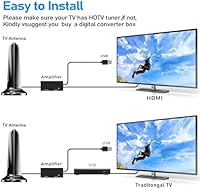
Setup is about as straightforward as it gets. Plug the coaxial cable into the ANT/IN port, run a channel scan, and you are watching TV within minutes. Buyers with no technical background consistently call this out as a strong point, and there are no apps, accounts, or remote pairing steps involved.
A small share of users report that the initial channel scan yields fewer channels than expected, requiring repositioning and rescanning — which, while not difficult, is more trial-and-error than the packaging implies. Finding the optimal window spot can take a few attempts.
Placement Flexibility
84%
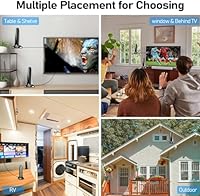
The compact footprint and low weight make it genuinely easy to move around and test different spots without committing to a permanent mount. It works flat on a desk, stuck to a window with the included adhesive strip, or positioned outdoors — which gives it real versatility compared to rigid panel-style antennas.
Outdoor durability over extended periods is a recurring concern in reviews. The housing and cable connector points are not built to the standard of dedicated outdoor antennas, and users in rainy climates report signal degradation and physical wear after a few months of continuous outdoor exposure.
4K and HD Signal Clarity
78%
22%
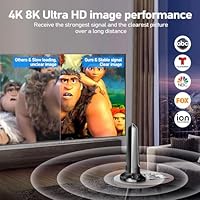
When the signal lock is clean, picture quality on 4K and 1080p broadcasts is sharp and consistent — several buyers specifically noted how much better local channels looked compared to their old cable feed, which was often compressed. The antenna passes through uncompressed OTA signals that cable providers routinely degrade.
Picture clarity is inherently tied to signal strength, so in marginal reception areas, viewers experience blocking artifacts and brief freezes rather than a gracefully degraded image. There is no middle ground with digital OTA — either the picture is excellent or it breaks up entirely.
Build Quality
58%
42%
The unit feels reasonably solid for its price tier, and the matte black finish looks neutral enough to blend into most rooms. The coaxial connector is snug and does not wobble loose with normal handling, which is a basic but appreciated reliability checkpoint.
The overall plastic construction feels lightweight in a way that raises durability questions for long-term use, and the cable — while functional — has a stiffness that makes routing it neatly along walls or baseboards more difficult than it should be. A few buyers noted fraying at the connector end within a few months.
Cable Length and Quality
67%
33%
The included coaxial cable is long enough to reach from a typical interior wall to a window or even an exterior mounting point without needing an extension, which saves buyers an extra purchase out of the box. Most users found the length sufficient for bedroom and living room configurations.
The cable itself is on the thinner and less shielded side for a coaxial, which can introduce signal loss over longer runs or in environments with electrical interference. Buyers who needed to route the cable around corners or through tight spaces found it prone to kinking.
Channel Count
72%
28%
In well-covered metro and suburban markets, channel counts land comfortably in the range that covers all the major networks plus a healthy selection of subchannels — weather, shopping, classic TV, and multilingual programming. For viewers who primarily want local news and prime-time network shows, the count is more than sufficient.
Channel availability is entirely location-dependent, and buyers in smaller markets or rural areas sometimes end up with only a handful of channels regardless of antenna positioning. The product cannot change broadcast geography, and unmet expectations here generate most of the negative reviews.
Value for Money
74%
26%
For viewers in the right location — suburban, reasonably close to towers, in a space that allows for window placement — this OTA antenna delivers a strong return relative to what it costs. Eliminating a cable or streaming subscription pays for the antenna many times over within a single year.
For buyers in fringe areas who end up with poor reception, the value calculation falls apart quickly. At this price point, there are passive antennas that outperform it in strong-signal markets, and better-built amplified options for those who genuinely need the boost in weak-signal zones.
Weather Resilience
54%
46%
Under normal indoor conditions, weather has no meaningful impact on the antenna itself. Several users report that window-placed units hold a clean signal through mild rain and overcast conditions without any noticeable degradation.
Sustained outdoor exposure to rain, humidity, and temperature swings is where the design shows its limits. The sealing around the cable entry and connector areas is minimal, and buyers using it outdoors long-term in wet climates report both physical deterioration and increasing signal instability over time.
Compatibility with TV Models
88%
The standard 75-ohm coaxial connection works with virtually every modern HDTV, smart TV, and set-top box on the market. Buyers report clean plug-and-play compatibility across Samsung, LG, Sony, TCL, Hisense, and most other mainstream brands without any adapter or additional hardware.
A small number of users with older or budget televisions report that the built-in tuner sensitivity varies and affects how many channels the TV can lock in, which is a TV limitation rather than an antenna flaw but still contributes to uneven experiences across households.
Size and Discretion
86%
At under nine ounces and with a profile that sits flat against a window or wall, this is an antenna that disappears into a room. Renters and minimalist households appreciate not having a bulky or conspicuous device sitting on the TV stand, and the all-black design suits most modern interiors.
The vertical orientation when wall-mounted can look slightly awkward in rooms with horizontal layout constraints, and the adhesive strips included for mounting are reported to lose grip over time — particularly on smooth surfaces like glass in warmer rooms.
Customer Support Experience
61%
39%
Buyers who reached out with questions report that the brand responds within the promised window and generally provides troubleshooting guidance rather than just deflecting. For a smaller brand at this price tier, the responsiveness is noted positively by a portion of reviewers.
The practical help provided tends to be limited to generic repositioning advice, which does not resolve the underlying issue for buyers in weak-signal areas. There are also scattered reports of difficulty with returns and replacement processing, suggesting the after-sale experience is inconsistent.
Omnidirectional Reception
66%
34%
Not having to aim the antenna toward a specific tower is a genuine convenience, especially in markets where broadcast towers are spread across different compass directions. Users report picking up channels from multiple directions without rotating or repositioning the unit after the initial setup.
Omnidirectional designs inherently sacrifice some focused gain compared to a directional antenna pointed at a known tower cluster. In weaker signal environments, a well-aimed directional antenna often outperforms this one, so the convenience trade-off is real and worth considering based on your local broadcast geography.

Suitable for:

The Yirkais BJ001 Indoor Outdoor TV Antenna is a practical fit for renters, apartment dwellers, and anyone who physically cannot mount a rooftop or attic antenna — it requires no drilling, no landlord approval, and no installer visit. Suburban households within roughly 25 to 50 miles of a broadcast tower cluster tend to get the most out of it, picking up ABC, CBS, NBC, Fox, and PBS in clean HD without a monthly bill attached. It also works well as a secondary antenna for a bedroom or guest room TV where convenience matters more than squeezing out every available channel. First-time cord-cutters who want a low-risk entry point into over-the-air television will find the plug-and-scan setup genuinely approachable, and the omnidirectional design removes the frustration of manual aiming that trips up less experienced users. If your primary viewing consists of local news, live sports on network TV, and prime-time programming, this OTA antenna covers that territory without unnecessary complexity.
Not suitable for:

The Yirkais BJ001 Indoor Outdoor TV Antenna will disappoint buyers who live in genuinely rural areas far from broadcast tower infrastructure — no amplifier at this price tier can compensate for fundamental geography, and the marketed range figures should not factor into a rural buyer's decision. Viewers who live very close to broadcast towers should also think twice: the built-in amplifier can cause signal overload in strong-signal environments, which paradoxically reduces channel count and introduces pixelation that a simple passive antenna would not. Anyone planning to mount it outdoors year-round in a wet or high-humidity climate should know the housing and cable connections are not sealed to a standard that holds up well under sustained weathering. Power users who want to maximize their channel count across a wide geographic spread, or households that need a directional antenna pointed at a known tower cluster for maximum gain, will outgrow this indoor-outdoor antenna quickly. It is also not the right call for buyers who have already tried a basic amplified antenna without success — a more targeted or higher-gain solution is what those situations require.
Specifications

  • Brand: Manufactured by Yirkais under model number BJ001.
  • Antenna Type: Amplified indoor/outdoor television antenna with omnidirectional signal reception.
  • Signal Support: Compatible with 4K UHD and 1080p HDTV over-the-air broadcast signals.
  • Impedance: Standard 75 Ohm impedance, matching the input specification of virtually all modern televisions.
  • Signal Direction: 360-degree omnidirectional design intended to receive signals from multiple tower directions without manual aiming.
  • Channel Capacity: Rated to support reception of up to 800 channels depending on local broadcast availability.
  • Product Dimensions: The antenna unit measures 3.4″ long by 3.2″ wide by 7.8″ high.
  • Package Dimensions: Retail packaging measures 7.52 x 3.62 x 3.58 inches for shipping and storage reference.
  • Weight: Complete unit weighs 8.8 ounces, making it lightweight enough to mount on windows or walls without heavy hardware.
  • Connectivity: Connects to any television or set-top box via a standard ANT/IN coaxial port with no adapter required.
  • Amplifier: Built-in active amplifier with an upgraded IC chip designed to boost weak signal reception in fringe coverage areas.
  • Placement Options: Designed for use on a desktop surface, wall-mounted, window-mounted, or positioned outdoors.
  • Color: Available in matte black, suitable for blending into most modern home interiors.
  • Coaxial Cable: Includes a thick coaxial cable of sufficient length to reach from an interior wall location to a window or outdoor mounting point.
  • Network Compatibility: Receives free broadcast signals from major networks including ABC, CBS, NBC, PBS, Fox, Univision, and the CW where locally available.
  • First Available: Product was first listed for sale in April 2025, representing a recently released model iteration.
  • Sales Rank: Holds a Best Sellers Rank of approximately #603 in the TV Antennas category on Amazon at time of review.
  • Item Model Number: Official manufacturer model number is BJ001, used for warranty and support identification.

Related Reviews
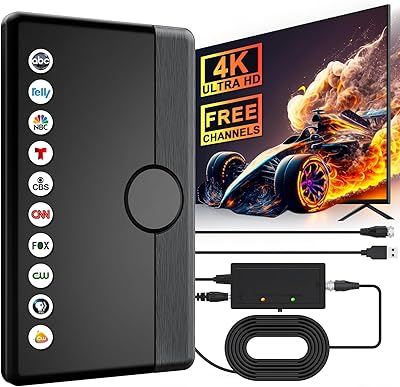
iGENJUN ANT-CS8218 Amplified Indoor Outdoor TV Antenna
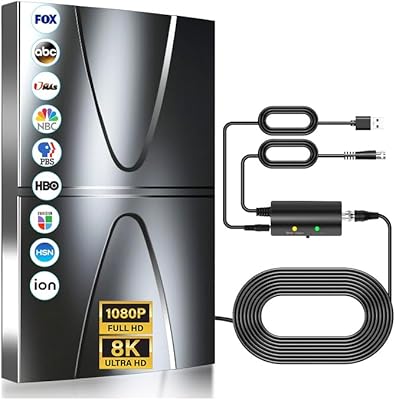
72%
73%
Signal Reception Quality
67%
Amplifier Performance
88%
Ease of Installation
48%
Range Accuracy vs. Claimed Specs
71%
Build Quality & Materials
More
Vragey HD012 Indoor/Outdoor TV Antenna
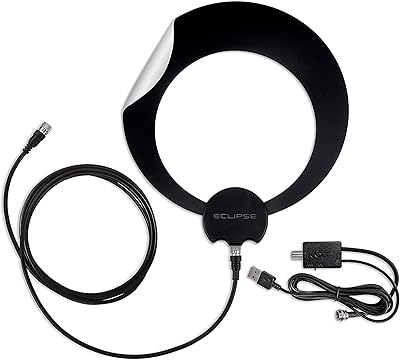
70%
71%
Signal Reception Quality
88%
Ease of Setup
63%
Amplifier Performance
34%
Range Accuracy vs. Marketing Claims
67%
Build Quality & Durability
More
Antennas Direct ClearStream Eclipse Indoor TV Antenna
77%
74%
Signal Reception
67%
Amplifier Performance
93%
Design & Profile
91%
Ease of Setup
62%
Cable Length
More
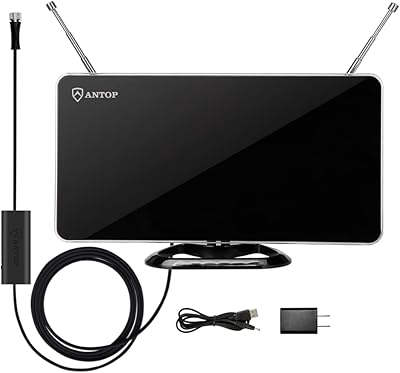
ANTOP AT-211B Indoor TV Antenna
71%
72%
Signal Reception
67%
Amplifier Performance
91%
Ease of Setup
63%
Build Quality
58%
VHF Channel Support
More
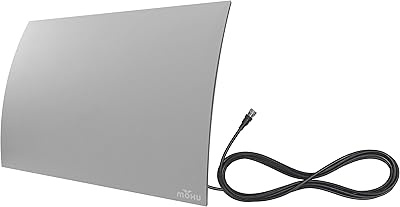
Mohu Gateway Indoor TV Antenna
86%
87%
Signal Reception
92%
Setup and Installation
89%
Design and Aesthetics
90%
Value for Money
84%
Durability and Build Quality
More
Winegard FlatWave FL-5000 Indoor TV Antenna
79%
78%
Reception Quality
93%
Ease of Setup
72%
Signal Stability
84%
Build Quality
88%
Design & Aesthetics
More
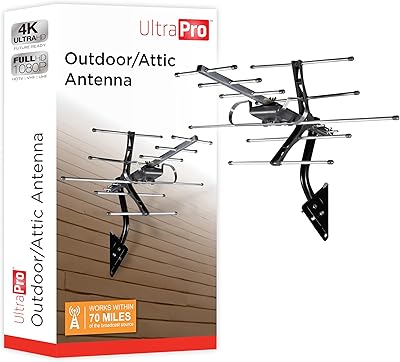
UltraPro Outdoor 70-Mile HD TV Antenna
76%
73%
Signal Reception
61%
Range Accuracy
82%
Installation Ease
78%
Build Quality
81%
Weather Resistance
More
PIBIDI UHD-8903 Outdoor TV Antenna
77%
73%
Signal Range & Reception
67%
VHF Band Performance
84%
UHF Band Performance
78%
Build Quality & Durability
81%
Lightning & Grounding Protection
More
UltraPro 47331 Amplified Indoor TV Antenna
77%
74%
Signal Reception Quality
91%
Ease of Setup
88%
Design & Aesthetics
67%
Amplifier Performance
71%
Channel Count
More
YiziAifsion 2024 Upgraded Indoor TV Antenna
84%
88%
Signal Reception
85%
Picture Quality
91%
Setup & Installation
80%
Build Quality
87%
Range & Coverage
More

FAQ

It depends heavily on where you live. In a well-covered suburban area within 30 to 40 miles of a broadcast tower cluster, channel counts in the range of 30 to 60 are common after a full scan. In smaller markets or areas farther from towers, that number drops significantly. Check the FCC DTV reception maps website before purchasing — it gives you a realistic picture of what signals are available at your address.

Honestly, results in rural settings are mixed and often disappointing. The built-in amplifier helps in weak-signal zones, but it cannot compensate for being 60 or 80 miles from the nearest broadcast tower. If you are in a genuinely remote area, a larger directional outdoor antenna with a higher gain rating will serve you much better than any compact indoor amplified model.

This is an important point that most listings gloss over. If you are within 15 to 20 miles of your local towers, the amplifier can actually work against you by overloading the tuner in your TV, which reduces channel count and causes pixelation. In strong-signal areas, a passive antenna often outperforms an amplified one. Unfortunately, this unit does not have a bypass switch, so if overload is an issue, you may need a different antenna altogether.

Window placement — particularly a window facing toward your nearest broadcast towers — consistently produces the strongest and most stable signal. Walls, ceilings, and building materials all attenuate the signal, so getting the antenna as close to an exterior wall or glass surface as possible makes a real difference. Use a free tool like AntennaWeb or TVFool to identify the direction of your local towers before deciding on placement.

It is rated for outdoor use, but the build quality reflects its price tier. The housing is not sealed to the standard of a dedicated outdoor antenna, and the cable connector points are not weatherproofed. In a dry climate or under a covered porch, it holds up reasonably well. In a rainy or high-humidity environment, expect physical degradation and signal issues within several months of continuous outdoor exposure.

Yes, as long as your smart TV has a built-in ATSC tuner — which almost all TVs sold since the mid-2000s do. Just plug the coaxial cable into the ANT or ANT/IN port on your TV, go into your settings, and run a channel scan. No streaming account, app, or internet connection is needed for over-the-air channels.

The omnidirectional design means you do not have to point it precisely toward any single tower, which is convenient in markets where transmitters are spread across different directions. That said, positioning it closer to a window facing your primary tower cluster will still improve results. Omnidirectional is a useful feature, but it does not mean placement is irrelevant.

For most standard room configurations — living room or bedroom with the TV on an interior wall and the antenna placed at a nearby window — the included cable length is sufficient. If your TV is positioned far from any exterior wall or you need to route the cable around a large room, you may need a coaxial extension, which is inexpensive and widely available.

Each TV needs its own antenna connection. You can split the signal from one antenna using a coaxial splitter, but splitting weakens the signal for each connected TV — which can be a problem if your reception is already borderline. For a bedroom TV, it is often simpler and more reliable to use this OTA antenna as a dedicated unit for that room rather than splitting from a shared source.

Start by repositioning the Yirkais amplified antenna closer to a window, ideally one facing toward your nearest broadcast towers. Run a fresh channel scan after each move rather than relying on cached results. If you are in a strong-signal area and suspect amplifier overload, try connecting without the amplifier if the design allows, or test a passive antenna as a comparison. If repositioning does not help, your location may simply be outside practical reception range for any compact indoor antenna.