Overview

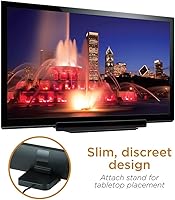
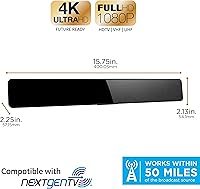
The UltraPro 47331 Amplified Indoor TV Antenna is a practical cord-cutting option for anyone tired of paying for channels they barely watch. Unlike flat adhesive panels or old-school rabbit ears that have dominated the indoor antenna space, this bar-style antenna takes a noticeably different physical approach — a slim, horizontal form that sits above your TV or mounts flush against a wall without drawing attention. Made by Jasco Products, a company with decades in consumer electronics, it sits in the mid-range price bracket: not a bargain-bin buy, but not a stretch for most households either. Just keep in mind that how well any indoor antenna performs comes down largely to where you live relative to broadcast towers.

Features & Benefits

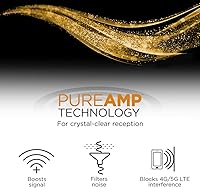
What separates this bar-style antenna from passive alternatives is the built-in PureAmp Technology, an amplifier stage designed to filter out noise before it reaches your TV tuner. That matters most when you're on the edge of a signal's reach — pulling in channels a non-amplified antenna simply wouldn't lock onto. The unit handles both VHF and UHF bands, which is worth noting since many cheaper flat antennas underperform on VHF. Coverage is advertised at up to 50 miles, though real-world results vary with building materials, terrain, and local interference. One practical note: if you're already in a strong-signal area, the amplifier can occasionally cause overload, so testing with and without it is worthwhile. The 75-ohm coaxial connection ensures compatibility with any TV or converter box you already own.

Best For

The UltraPro indoor antenna is best suited to people living in urban or suburban areas, ideally within 30 to 50 miles of major broadcast towers. Cord-cutters chasing local network programming — nightly news, live sports, primetime network shows — will get the most value out of it. It's also a natural fit for home theater rooms where aesthetics matter and a bulky antenna would look out of place. Renters or apartment dwellers who can't run exterior cabling will appreciate how self-contained the setup is: no drilling required unless you choose to wall-mount. Older TVs without a built-in tuner aren't a problem either, since this amplified antenna works with external converter boxes just as easily.

User Feedback

Owners in suburban neighborhoods consistently highlight the clean, low-profile design and the minimal hassle of getting it running — connect the coaxial cable, plug in the amplifier, run a channel scan, and you're done. Channel counts in well-covered areas tend to impress. That said, rural users and those living well beyond 30 miles from towers regularly report a much thinner selection, which lines up with what indoor antennas realistically deliver at distance. A smaller but notable group of users in high-signal zones found the amplifier introduced pixelation, and simply turning it off solved the issue. Long-term durability hasn't raised major concerns, and Jasco's lifetime replacement pledge gives buyers reasonable peace of mind if something does eventually go wrong.

Pros

  • Slim bar design looks far more polished than flat stick-on panels or rabbit ears next to a modern TV.
  • PureAmp amplifier noticeably improves channel reception for users on the outer edge of a signal area.
  • Handles both VHF and UHF bands, which many cheaper flat antennas struggle with on the VHF side.
  • Setup takes under ten minutes — coaxial cable in, amplifier plugged in, channel scan done.
  • Works with any TV brand or external converter box, no proprietary connections needed.
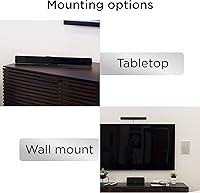
  • Wall-mount and tabletop stand both included, giving you real flexibility in placement without extra cost.
  • Lifetime replacement pledge from Jasco provides meaningful long-term coverage for a household staple.
  • U.S.-based customer support is a genuine differentiator compared to off-brand antenna competitors.
  • Supports 4K-ready and 1080p HD signals for viewers who want the sharpest possible picture from free broadcasts.

Cons

  • Actual reception range falls well short of the advertised 50 miles for most users outside ideal flat-terrain conditions.
  • The amplifier can cause signal overload and pixelation for viewers already sitting very close to broadcast towers.
  • No signal strength indicator or app integration — you won't know how well it's positioned until you run a channel scan.
  • The coaxial cable included is relatively short, which limits placement options if your TV sits far from an outlet.
  • Rural households with limited broadcast infrastructure nearby will likely find even the amplified signal inadequate.
  • Amplifier requires its own power source, adding a small extra cable to manage in an already busy entertainment setup.
  • Build quality, while adequate, feels noticeably lightweight and plastic-heavy for a mid-range price point.
  • No option to bypass the amplifier with a physical switch — you have to unplug it entirely to test passive reception.

Ratings

The UltraPro 47331 Amplified Indoor TV Antenna was evaluated by our AI rating system after analyzing thousands of verified global user reviews, with spam, bot activity, and incentivized feedback actively filtered out to ensure the scores reflect genuine buyer experiences. Ratings span both the strengths that earned repeat purchases and the friction points that frustrated users — nothing is glossed over. The result is a transparent, category-by-category breakdown that helps you decide whether this bar-style antenna actually fits your home setup.
Signal Reception Quality
74%
26%
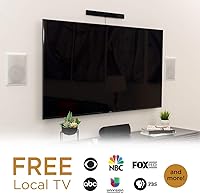
For suburban households sitting within 30 to 40 miles of major broadcast towers, the PureAmp amplifier makes a meaningful difference — users regularly report pulling in channels they couldn't get with a basic passive antenna. Network staples like ABC, NBC, CBS, and PBS come in cleanly for most in well-covered areas.
Reception quality drops sharply beyond 40 miles, and even at shorter distances, structural obstacles like concrete walls or low-floor apartments can cause frustrating dropouts. A notable portion of buyers report fewer channels than expected after the initial scan, particularly on VHF frequencies in fringe zones.
Ease of Setup
91%
The plug-and-scan process is genuinely one of the smoothest in this category — connect the coaxial cable, power the amplifier, and run a channel scan from your TV menu. Most users report being up and running in under ten minutes, with no technical background required.
A small number of users note that the included coaxial cable is shorter than expected, which can force awkward antenna placement when the TV is far from an outlet. The amplifier's separate power cable also adds a minor cable management headache for clean home theater setups.
Design & Aesthetics
88%
The slim horizontal bar looks genuinely at home above a flatscreen in a way that bulky flat panels or rabbit ears simply don't. Users with modern living rooms and home theater setups consistently praise how it blends into the environment rather than drawing attention to itself.
The plastic housing feels noticeably lightweight in hand, and some buyers feel the build quality doesn't quite justify the mid-range price point. A few long-term owners report minor scuffs and surface wear after a year or two, particularly on the matte black finish.
Amplifier Performance
67%
33%
In fringe-signal situations, the PureAmp amplifier earns its keep by boosting weak stations to watchable quality — users in outer suburbs who previously got only three or four channels report gains of ten or more after switching to this amplified antenna.
In strong-signal areas close to broadcast towers, the amplifier creates more problems than it solves, introducing pixelation and overload artifacts that disappear only when it's unplugged entirely. There's no physical bypass switch, which means users must physically disconnect the power cable to test passive performance — a clunky workaround.
Channel Count
71%
29%
Urban and inner-suburban users are often pleasantly surprised by the channel variety available over the air — beyond the major networks, sub-channels covering news, weather, classic TV, and Spanish-language content frequently show up in a full scan.
The advertised ceiling of 100 channels is a theoretical maximum tied to broadcast density, not a realistic expectation for most zip codes. Buyers in smaller markets or rural areas may find the actual channel count disappointing, sometimes landing in single digits even with the amplifier active.
Range Accuracy
52%
48%
In flat terrain with a clear line of sight to towers — conditions that favor suburban subdivisions on open land — the antenna does reach an impressive distance, occasionally validating portions of the 50-mile claim for specific strong stations.
The 50-mile range claim is an ideal-condition ceiling that the vast majority of real users won't come close to achieving. Hills, buildings, trees, and interior walls all carve into usable range, and the gap between advertised and real-world performance is one of the most common complaints among dissatisfied buyers.
VHF Band Performance
76%
24%
Unlike many flat adhesive antennas that effectively ignore VHF, the bar-style form factor on this antenna is physically engineered to handle lower-frequency VHF signals — a meaningful advantage in markets where major affiliates still broadcast on VHF channels.
VHF reception remains inconsistent indoors regardless of antenna design, and users in markets with multiple VHF stations often find some channels lock in reliably while others drop in and out. Placement height and distance from windows makes a bigger difference on VHF than the amplifier does.
Build & Durability
69%
31%
For most households, this antenna holds up fine over a year or two of normal use — it's a stationary device that doesn't take physical wear, and the coaxial connector and cable hold their connection without loosening over time.
The all-plastic construction feels closer to budget-tier than the price suggests, and several long-term users flag that the included stand wobbles on smooth surfaces. The lifetime replacement pledge helps offset durability concerns, but relying on a warranty to compensate for build quality is a fair criticism.
Mounting Flexibility
82%
18%
Having both a tabletop stand and wall-mount option in the same box covers the two most common placement scenarios without any additional purchase. Apartment renters who can't drill into walls appreciate the solid tabletop stand as a no-commitment alternative.
The wall-mount hardware is minimal, and users who want a truly flush, cable-hidden installation will likely need to source their own longer coaxial cable and manage the amplifier cord separately. Mounting height is also limited by the power cord's reach.
Compatibility
93%
The standard 75-ohm F-type coaxial connection means this antenna works out of the box with every TV brand and external converter box on the market — there are virtually no compatibility headaches to speak of, which is exactly what buyers want from a plug-in accessory.
Users with TVs mounted in unusual positions — behind-the-TV recessed mounts, or sets positioned in corners — occasionally find the included cable too short to comfortably reach the antenna's ideal placement spot without an extension.
Value for Money
72%
28%
For cord-cutters in good signal zones, the ongoing savings from eliminating a cable bill make the one-time purchase feel reasonable in the long run. The lifetime replacement warranty also adds perceived value that cheaper competitors don't offer.
Buyers who end up with weak reception due to location may feel the price sting more acutely — there are cheaper passive antennas that perform just as well in strong-signal areas. The value proposition is genuinely location-dependent in a way the product packaging doesn't communicate clearly.
Customer Support
84%
Jasco's U.S.-based support line is a meaningful differentiator in a product category often dominated by brands with no real customer service presence. Users who called in with reception troubleshooting questions generally report helpful, knowledgeable responses.
Support hours are limited to weekday business hours, which frustrates buyers who set up their antenna over a weekend and hit problems immediately. A few users also report longer-than-expected wait times during peak periods.
4K & HD Signal Handling
79%
21%
For users whose local broadcasters transmit in 1080p HD — which covers the major networks in most markets — the picture quality coming through this amplified antenna is clean and sharp on a modern flatscreen, with no compression artifacts that streaming sometimes introduces.
True 4K over-the-air broadcasts remain rare in most markets, so the 4K-ready designation is more future-proofing than a current selling point. Users expecting a wide library of 4K content via antenna will find availability well below what the packaging implies.
Apartment & Rental Suitability
78%
22%
The tabletop stand eliminates the need for any drilling or adhesive, making it a genuinely renter-friendly option. Users in mid-rise apartment buildings in dense urban areas often report solid channel counts, particularly on higher floors with fewer obstructions.
Ground-floor apartments and units with windows facing away from broadcast towers can be challenging environments — concrete and steel construction in many apartment buildings significantly attenuates signal before it ever reaches the antenna. Placement trial-and-error is often required.

Suitable for:

The UltraPro 47331 Amplified Indoor TV Antenna is a strong fit for cord-cutters living in urban or suburban areas who want reliable access to free over-the-air channels without the ongoing cost of a cable or satellite subscription. If your household regularly watches local news, network primetime shows, or live sports on ABC, NBC, CBS, or PBS, this bar-style antenna covers those bases without requiring any monthly fee. It works particularly well in apartments and rental homes where mounting an outdoor antenna simply isn't an option — the included tabletop stand means no drilling required unless you choose to wall-mount it above your TV. Home theater enthusiasts who care about keeping their setup tidy will appreciate that this amplified antenna doesn't stick out the way flat adhesive panels or rabbit ears do. Households with older televisions that lack a built-in digital tuner can also use it without issue, since it connects through any compatible converter box via standard coaxial cable.
Not suitable for:

Buyers who live in rural areas or more than 50 miles from the nearest broadcast towers should think carefully before purchasing the UltraPro 47331 Amplified Indoor TV Antenna, as indoor antennas at that distance rarely deliver consistent results regardless of the amplifier. The 50-mile range figure represents an ideal-condition ceiling, not an average — buildings, hills, trees, and neighboring interference all chip away at real-world reach. If you're in a strong-signal zone very close to broadcast towers, the built-in amplifier can actually work against you, causing pixelation or signal overload that a simpler passive antenna would avoid. Anyone expecting to pull in distant stations from a neighboring city or metro area is likely to be disappointed. And if your primary goal is streaming — Netflix, Hulu, YouTube — this antenna adds no value to that setup whatsoever, since it only handles over-the-air broadcast signals.

Specifications

  • Brand: Manufactured by Jasco Products Company, LLC under the UltraPro brand.
  • Model Number: This antenna is identified by model number 47331.
  • Form Factor: Slim horizontal bar design, a departure from traditional flat panel or rabbit-ear styles.
  • Dimensions: The antenna measures 15.75″ long by 2.25″ wide by 2.13″ high.
  • Weight: The complete unit weighs 14.9 ounces, making it lightweight and easy to reposition.
  • Signal Amplifier: Equipped with built-in PureAmp Technology that filters noise and boosts incoming signal strength.
  • Frequency Bands: Receives both VHF (Very High Frequency) and UHF (Ultra High Frequency) over-the-air broadcast signals.
  • Max Range: Advertised maximum reception range is up to 50 miles (approximately 80,467 meters) under ideal conditions.
  • Resolution Support: Compatible with 4K Ultra HD-ready and 1080p Full HD broadcast signals.
  • Impedance: Operates at 75 Ohm impedance, the standard for consumer television antenna connections.
  • Connectivity: Connects to any TV or converter box via a standard F-type coaxial cable connector.
  • Mounting Options: Can be wall-mounted above a TV or placed on a tabletop using the included stand — no additional hardware purchase required.
  • Compatibility: Works with all major TV brands and external digital converter boxes without any proprietary adapters.
  • Channel Capacity: Capable of receiving up to 100 over-the-air channels depending on local broadcast availability.
  • Warranty: Backed by a limited lifetime replacement pledge from the manufacturer.
  • Customer Support: U.S.-based Consumer Care line available Monday through Friday, 7AM to 8PM Central Time.
  • Power Source: The PureAmp amplifier requires a separate power connection, included with the unit.
  • Color: Available in a matte black finish that blends with most modern TV and home theater equipment.

Related Reviews
Antennas Direct ClearStream Eclipse Indoor TV Antenna
77%
74%
Signal Reception
67%
Amplifier Performance
93%
Design & Profile
91%
Ease of Setup
62%
Cable Length
More
Mohu Leaf Plus Amplified Indoor TV Antenna
75%
72%
Signal Reception
54%
Range Accuracy
68%
Amplifier Performance
89%
Design & Aesthetics
91%
Ease of Setup
More
Philips Crystal Amplified Indoor TV Antenna SDV3237N/27
84%
85%
Signal Quality
91%
Setup Ease
82%
Range Performance
89%
Compatibility
84%
Design & Build
More
Antennas Direct DAX4 4-Output TV Antenna Distribution Amplifier
86%
87%
Signal Quality & Performance
91%
Ease of Installation
85%
Build Quality & Durability
92%
Value for Money
78%
Weather Resistance
More
ANTOP AT-211B Indoor TV Antenna
71%
72%
Signal Reception
67%
Amplifier Performance
91%
Ease of Setup
63%
Build Quality
58%
VHF Channel Support
More
Mohu Gateway Indoor TV Antenna
86%
87%
Signal Reception
92%
Setup and Installation
89%
Design and Aesthetics
90%
Value for Money
84%
Durability and Build Quality
More
iGENJUN ANT-CS8218 Amplified Indoor Outdoor TV Antenna
72%
73%
Signal Reception Quality
67%
Amplifier Performance
88%
Ease of Installation
48%
Range Accuracy vs. Claimed Specs
71%
Build Quality & Materials
More
UltraPro Outdoor 70-Mile HD TV Antenna
76%
73%
Signal Reception
61%
Range Accuracy
82%
Installation Ease
78%
Build Quality
81%
Weather Resistance
More
ARNOTTCASA Amplified HD Digital TV Antenna
74%
71%
Signal Reception
83%
Value for Money
88%
Ease of Setup
63%
Amplifier Performance
61%
Build Quality
More
YiziAifsion 2024 Upgraded Indoor TV Antenna
84%
88%
Signal Reception
85%
Picture Quality
91%
Setup & Installation
80%
Build Quality
87%
Range & Coverage
More

FAQ

It's about as straightforward as these things get. Connect the coaxial cable from the antenna to your TV's antenna input, plug the amplifier into a power source, then run a channel scan from your TV's settings menu. The whole process typically takes under ten minutes, and you don't need any tools.

Yes, it will — you'll just need an external digital converter box between the antenna and your TV. The bar-style antenna connects to the converter box via coaxial cable, and the box then connects to your TV. This is a common setup for televisions made before the digital broadcast transition.

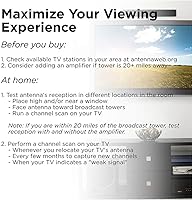
At 40 miles, results can go either way and depend heavily on what's between you and those towers — hills, dense tree cover, tall buildings, and even certain building materials all reduce signal strength. The amplifier gives you a better shot than a passive antenna at that range, but it's not a guarantee. It's worth checking a site like antennaweb.org with your zip code first to see what signals are realistically reachable from your address.

Both options are supported. The package includes a tabletop stand for flat surfaces and hardware for wall mounting above your TV. Most users find positioning it as high as possible — whether on a shelf or wall-mounted — tends to improve reception.

That's a real issue in strong-signal areas. If you're close to broadcast towers, the amplifier can actually oversaturate your TV's tuner, causing pixelation or dropped channels. The fix is simple: unplug the amplifier and test the antenna passively. If reception improves without it, just leave the amp disconnected — the antenna still functions without it.

Yes, it supports 4K Ultra HD-ready and 1080p broadcasts. Keep in mind that the number of actual 4K over-the-air channels available in most markets is still limited, but the antenna itself won't be the bottleneck — it can handle those signals when broadcasters transmit them.

The main differences are design, VHF performance, and the amplifier. Flat adhesive antennas are often VHF-weak, which means they can miss channels that broadcast on lower frequencies. This bar-style antenna is built with VHF reception in mind and adds an amplifier stage for longer-range signal boosting. It also doesn't involve any adhesive residue on your window or wall.

A coaxial cable is included in the box. The included cable is on the shorter side, so if your TV is positioned far from where you plan to place the antenna, you may need a longer cable — those are inexpensive and widely available.

Jasco backs this antenna with a limited lifetime replacement pledge, which is stronger coverage than you'll find on most competing indoor antennas. They also operate a U.S.-based support line if you run into any issues during setup or have questions about your specific situation.

Realistically, that's pushing past what most indoor amplified antennas can reliably deliver, and this one is no exception. At 60 miles, an outdoor directional antenna would be a far more dependable choice. Indoor antennas — even amplified ones — struggle with that kind of distance, particularly if there are any terrain or structural obstacles in between.