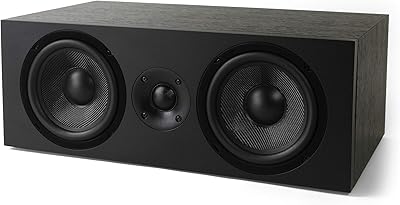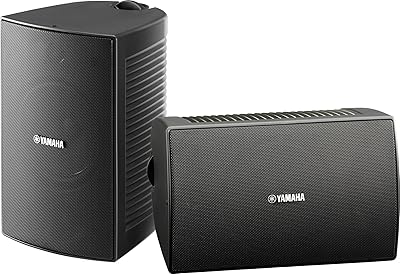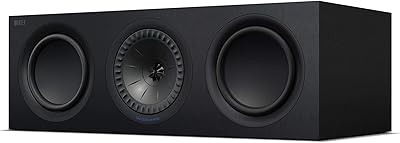
Overview

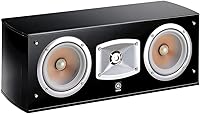
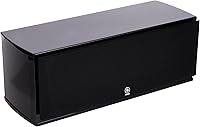
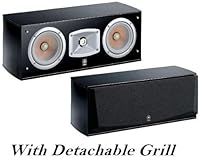
The Yamaha NS-C444 Center Channel Speaker is Yamaha's mid-range answer to the center channel role in a home theater system — the position responsible for anchoring dialogue, vocals, and on-screen action. Unlike the plastic-bodied speakers flooding the budget end of this category, this center channel speaker uses a wood enclosure that lends it a noticeably more solid feel and helps keep cabinet resonance in check. Its elliptical cabinet shape is purpose-built for horizontal placement beneath or above a display. The 2-way driver configuration — woofers handling the mids, a dedicated tweeter covering the highs — keeps vocal reproduction clean and distinct without muddying the signal.

Features & Benefits

At the heart of this Yamaha center speaker are dual 5-inch PDM woofers teamed with a 1-inch aluminum dome tweeter — a combination that keeps midrange vocals present and highs articulate without harshness. The waveguide horn design is a practical touch: it directs sound toward your listening position rather than letting it scatter around the room, which makes a real difference in larger spaces. With a 100W nominal rating and 250W music power, it handles demanding action sequences without strain. The 6-ohm impedance is broadly compatible with most AV receivers, and the wood cabinet absorbs rather than amplifies unwanted vibration, keeping the overall output clean.

Best For

This center channel speaker is a natural fit for anyone building or upgrading a 5.1 or 7.1 system who needs a reliable, well-matched anchor in the middle. It makes particular sense if you already own Yamaha NS bookshelf or floor-standing speakers — the tonal consistency across the series is hard to replicate by mixing brands. Rooms on the larger side benefit from its broader dispersion and higher power headroom. One practical note: because the NS-C444 rolls off around 55 Hz, pairing it with a dedicated subwoofer is strongly recommended. That is standard practice for any properly configured home theater, not a shortcoming unique to this speaker.

User Feedback

Owners of this Yamaha center speaker consistently point to dialogue clarity as the standout quality — voices in movies and TV shows come through cleanly even in complex, effects-heavy scenes. Those running a full Yamaha NS system frequently note how well it blends tonally, with no obvious mismatch in character between channels. On the critical side, a few buyers mention the 20.3-inch width requires advance planning, particularly in tighter media setups. The included grill earns positive marks for fit and finish. The most repeated constructive note: do not skip the subwoofer. Without one, the bottom end feels thin — but that applies to virtually any center channel in this class.

Pros

  • Vocal and dialogue clarity is a genuine standout — voices stay crisp and natural even during dense, effects-heavy scenes.
  • The wood cabinet construction keeps resonance low and gives the speaker a more solid, premium feel than plastic-bodied rivals.
  • Waveguide horn design directs sound toward the listening position, which pays off noticeably in larger rooms.
  • At 100W nominal power, this center channel speaker handles demanding content without audible strain or distortion.
  • 6-ohm impedance plays well with a wide range of AV receivers, so compatibility is rarely an issue.
  • Tonal matching with other Yamaha NS series speakers is excellent, making multi-channel blending almost effortless.
  • The included grill fits securely and looks finished — it does not feel like an afterthought.
  • Setup is straightforward for anyone familiar with wired home theater configurations.
  • The elliptical cabinet shape sits naturally on a media console or shelf without awkward overhang.

Cons

  • Low-frequency response cuts off around 55 Hz, so a subwoofer is not optional if you want a full sound.
  • At over 20 inches wide, it will not fit comfortably in compact or narrow media cabinet setups.
  • Buyers outside the Yamaha NS ecosystem may struggle to achieve consistent tonal matching across their surround channels.
  • The weight of 15.4 pounds makes repositioning or wall-adjacent placement more cumbersome than lighter alternatives.
  • No wireless connectivity — purely wired, which may be limiting in cleaner or cable-managed installs.
  • For buyers who rarely watch dialogue-heavy content, the specific strengths of this center channel speaker may not justify the price over cheaper options.
  • The mid-range price point puts it in direct competition with newer models that offer updated driver technology.

Ratings

Our scores for the Yamaha NS-C444 Center Channel Speaker are generated by AI after analyzing verified buyer reviews from multiple global markets, with spam, bot activity, and incentivized feedback actively filtered out. The result is an honest, balanced picture — strong scores where this center channel speaker genuinely earns them, and lower ones where real buyers have flagged consistent frustrations.

Dialogue Clarity
93%
This is where the NS-C444 consistently earns its keep. Buyers watching dialogue-heavy films, TV dramas, and live sports commentary report that voices cut through cleanly even during loud action sequences — no muddiness, no strain. The aluminum dome tweeter and PDM woofer combination handles the critical midrange frequency band with real precision.
A small number of users running the speaker without proper receiver calibration report that sibilance can creep in at higher volumes. This is largely a setup issue rather than a hardware flaw, but it does require some EQ attention on the receiver side to fully optimize.
Build Quality
88%
The wood enclosure sets this center channel speaker apart from the sea of plastic-cabinet alternatives at a similar price point. Buyers consistently mention that it feels substantial and well-assembled, and the cabinet does not develop the buzzing or rattling that cheaper builds often show after a year of use.
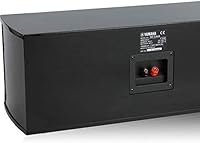
A few buyers note that the binding posts feel slightly less premium than the rest of the cabinet construction, and one or two mention minor cosmetic inconsistencies in the finish on early units. Nothing that affects performance, but worth noting for buyers who care about visual polish.
Tonal Matching
91%
For anyone running a Yamaha NS bookshelf or floor-standing setup, the tonal consistency across channels is one of the most praised aspects of this speaker. Buyers describe the center blending into the soundstage naturally, with no obvious tonal jump when sound pans from the front left or right channel to the center.
Outside the Yamaha NS ecosystem, achieving that same level of blend requires more receiver calibration work, and some users mixing brands find the NS-C444 sits slightly warmer than their non-Yamaha surrounds. It is not a dealbreaker, but it reinforces that this speaker is optimized for use within its own family.
Bass Performance
54%
46%
Within its operating range — which starts around 55 Hz — the low-midrange output is clean and controlled. Voices carry natural body and warmth, and mid-bass elements like ambient room tone or lower vocal registers come through without bloat.
Below 55 Hz, there is simply nothing there, and buyers who skipped a subwoofer in their setup report that action movie soundtracks and bass-heavy music feel noticeably hollow. This is a fundamental constraint of the driver configuration, not a defect — but it is a real limitation that affects perceived value for buyers who underestimated the need for a sub.
Waveguide Performance
84%
The waveguide horn design earns genuine appreciation from buyers in larger rooms. Rather than sound dispersing loosely around the space, it arrives focused and direct at the primary listening seat, which improves perceived clarity without needing to crank the volume.
In smaller or acoustically treated rooms, the benefits of the waveguide are less obvious, and a handful of buyers in compact spaces felt it was not a meaningful differentiator for their use case. The advantage is real but room-dependent.
Value for Money
72%
28%
For buyers committed to a Yamaha NS system, the pricing feels justified — the tonal cohesion and build quality together deliver a result that cheaper alternatives simply do not replicate. Long-term owners who have run this center channel speaker for several years generally feel it has held up well relative to its cost.
For buyers outside the Yamaha ecosystem, or those building a budget-first system, the price-to-performance ratio looks less compelling when compared to newer center channel options that have entered the market since this model launched. The value case depends heavily on system context.
Placement Flexibility
63%
37%
The elliptical cabinet sits cleanly on a media console or AV shelf without protruding awkwardly, and the tabletop form factor means no additional mounting hardware is needed for standard setups. Buyers with wide TV stands find it fits naturally beneath most display configurations.
At 20.3 inches wide and 15.4 pounds, it is a large, heavy speaker that does not suit compact living spaces or narrow furniture. Several buyers report having to rearrange their media setup to accommodate its footprint, and wall-adjacent placement adds complexity due to the weight.
Grill & Accessories
79%
21%
The included grill is one of the small but appreciated details that buyers mention — it snaps on firmly, does not rattle during playback, and looks like it was designed alongside the speaker rather than added as an afterthought. A clean finish overall.
There is no wall-mount bracket included, and buyers wanting to mount it above or below a display need to source third-party hardware. Some also note that the grill fabric, while well-fitted, picks up dust and lint visibly in lighter ambient light.
Ease of Setup
86%
Wiring and integrating this center channel speaker into an existing AV receiver setup is as straightforward as passive speakers get. Buyers with even modest home theater experience report being up and running within minutes, with no compatibility surprises from the 6-ohm load.
First-time home theater buyers occasionally find receiver crossover configuration confusing, particularly setting the 80 Hz cutoff to compensate for the speaker's 55 Hz low-end limit. This is a receiver setup task, not a hardware issue, but it does require some learning for less experienced users.
High-Frequency Detail
82%
18%
The 1-inch aluminum dome tweeter handles high-frequency content cleanly and without the brittle edge that cheaper tweeters often introduce. Buyers watching orchestral film scores or content with detailed ambient effects note that the high end is present and articulate without becoming fatiguing.
At very high volumes, a small number of users detect a slight brightness in the upper registers that becomes noticeable during extended listening sessions. Dialing back the tweeter level slightly via receiver trim settings typically resolves this.
Longevity & Durability
87%
The wood cabinet construction and Yamaha's build standards translate into a speaker that buyers report holds up well over time. Multiple long-term owners note that units purchased years ago still perform without any degradation in driver response or cabinet integrity.
The 2-year warranty is adequate but not exceptional for a mid-range speaker at this price, and buyers who encounter issues outside that window are on their own. There are no widely reported failure patterns, but the warranty period leaves something to be desired for a speaker expected to anchor a system for many years.
Amplifier Compatibility
89%
The 6-ohm impedance rating makes this center channel speaker a practical match for the overwhelming majority of home theater receivers on the market. Buyers across Yamaha, Denon, Marantz, and Onkyo setups all report clean, stable performance with no receiver stress under normal listening conditions.
Vintage or lower-end amplifiers that specify 8-ohm minimum loads may technically struggle, though real-world reports of actual problems are rare. Buyers with older or budget receiver hardware should verify load specifications before committing.

Suitable for:

The Yamaha NS-C444 Center Channel Speaker is purpose-built for home theater enthusiasts who take their surround sound seriously and want a center channel that earns its place in a real system. It is an especially smart choice for anyone already running Yamaha NS bookshelf or floor-standing speakers — matching the same series across all channels produces a tonal consistency that mixed setups rarely achieve. Buyers who spend a lot of time watching dialogue-heavy content, whether films, TV dramas, or sports commentary, will notice an immediate improvement in vocal presence and clarity. It also suits medium to large living rooms where a speaker needs genuine power headroom and wider dispersion to fill the space properly. Anyone pairing this with a quality AV receiver and a dedicated subwoofer will get the full benefit of what this center channel speaker is designed to deliver.

Not suitable for:

The Yamaha NS-C444 Center Channel Speaker is not the right call for buyers on a tight budget who are assembling a basic entry-level system — there are cheaper options that get the job done at a lower cost. Its 20.3-inch width and 15.4-pound build also make it a poor fit for compact media setups where horizontal space is limited, such as small apartments or narrow TV stands. Those expecting meaningful bass output from the center channel alone will be disappointed; this Yamaha center speaker rolls off around 55 Hz and genuinely requires a subwoofer to round out the low end. If you are running a simple 2.1 stereo setup with no AV receiver, this speaker has no practical role in that configuration. Buyers who mix and match brands across their surround system may also find it harder to achieve a seamless tonal blend, as the NS-C444 is voiced to complement other speakers within Yamaha's own NS lineup.

Specifications

  • Speaker Type: 2-way center channel speaker designed for horizontal placement in a surround sound system.
  • Woofers: Dual 5-inch PDM cone woofers handle midrange frequencies and vocal reproduction.
  • Tweeter: 1-inch aluminum dome tweeter delivers clear, detailed high-frequency output with reduced harshness.
  • Nominal Power: Rated at 100W nominal power handling for continuous, everyday listening use.
  • Music Power: Handles up to 250W music power for dynamic peaks during demanding content.
  • Impedance: 6-ohm impedance ensures broad compatibility with most standard AV receivers and home theater amplifiers.
  • Frequency Response: Covers approximately 55 Hz to 35 kHz, with usable output across the critical midrange and high-frequency bands.
  • Cabinet Material: Wood enclosure construction reduces unwanted resonance and contributes to a cleaner overall output.
  • Dimensions: Measures 8.4″ deep, 20.3″ wide, and 7.5″ tall in its elliptical tabletop form factor.
  • Weight: Weighs 15.4 pounds, reflecting the solid wood construction rather than a lightweight plastic build.
  • Mounting Type: Tabletop mount configuration suited for placement on a media console, shelf, or AV furniture.
  • Connectivity: Wired connection via standard speaker terminals compatible with AV receiver binding posts.
  • Waveguide Design: Integrated waveguide horns direct sound toward the listener and minimize acoustic reflections in the room.
  • Color: Available in black with a matching fabric grill included in the box.
  • Included Items: Package includes the speaker unit and a fitted protective grill.
  • Series: Part of Yamaha's NS 444 series, voiced to match tonally with other NS-series bookshelf and floor-standing speakers.
  • Warranty: Covered by a 2-year manufacturer warranty from Yamaha Audio.
  • Surround Config: Designed as the center channel in a 2.0 configuration within a larger 5.1 or 7.1 surround setup.

Related Reviews
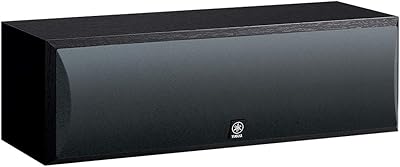
Yamaha NS-C210 Center Channel Speaker
82%
93%
Dialogue Clarity
88%
Value for Money
86%
Build Quality
58%
Bass Response
91%
System Compatibility
More
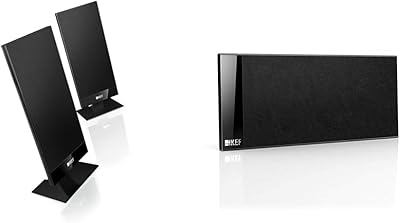
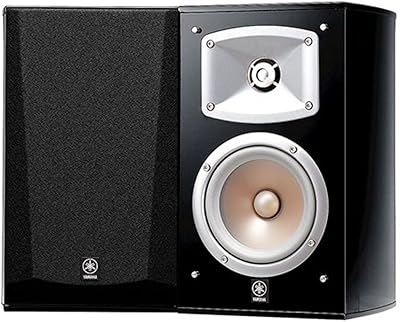
KEF T101 Satellite and Center Channel Speakers
80%
88%
Sound Clarity
91%
Build Quality
94%
Design & Aesthetics
89%
Dialogue Intelligibility
62%
Value for Money
More
KEF T301C Center Channel Speaker
80%
93%
Dialogue Clarity
96%
Design & Aesthetics
88%
Build Quality
67%
Value for Money
48%
Bass Performance
More
KEF Q250c Center Channel Speaker
80%
93%
Dialogue Clarity
88%
Build Quality
91%
Off-Axis Performance
79%
Value for Money
67%
Bass Performance
More
Yamaha NS-P150 Speaker Package
84%
85%
Sound Quality
90%
Ease of Setup
88%
Design & Build Quality
92%
Value for Money
87%
Dialogue Clarity
More
Yamaha NS-AW294BL Outdoor Speakers
86%
88%
Sound Quality
92%
Durability
83%
Ease of Installation
90%
Water Resistance
89%
Build Quality
More
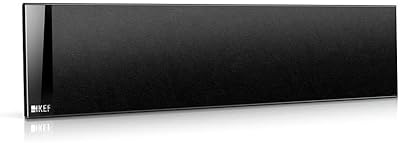
Yamaha NS-F210BL Floorstanding Speaker
78%
83%
Sound Quality
67%
Bass Performance
81%
Value for Money
78%
Build Quality
86%
Dialogue Clarity
More
NEUMI CS5 Center Channel Speaker
74%
88%
Dialogue Clarity
84%
Value for Money
57%
Bass Performance
67%
Build Quality
83%
Ease of Setup
More
Yamaha NS-333
Yamaha NS-333
79%
88%
Sound Clarity
86%
Soundstage & Imaging
58%
Bass Performance
84%
High-Frequency Performance
83%
Build Quality
More
Klipsch R-52C Center Channel Speaker
80%
93%
Dialogue Clarity
88%
Sound Dispersion
89%
Build Quality
84%
Value for Money
81%
Receiver Compatibility
More

FAQ

You will want a subwoofer alongside it. The low-frequency response starts rolling off around 55 Hz, which means bass-heavy movie soundtracks and music will sound thin without one. That said, pairing a center channel with a dedicated sub is standard practice in any properly configured home theater — it is not a flaw specific to this speaker.

Yes, and that is one of the strongest reasons to choose this center channel speaker if you are already in the Yamaha NS ecosystem. The NS 444 series is voiced consistently across its lineup, so blending this center with NS bookshelf or floor-standing models produces a natural, well-matched soundstage across all channels.

Not in any practical sense. This Yamaha center speaker uses passive speaker terminals, which means it needs an amplified source — typically an AV receiver or a home theater amplifier — to drive it. Most modern TVs do not have speaker output terminals capable of powering a passive speaker like this one.

Most modern AV receivers will work fine given the 6-ohm impedance rating. Yamaha's own receiver lineup is a natural pairing, but units from Denon, Marantz, Onkyo, and similar brands are all broadly compatible. Just confirm your receiver supports 6-ohm loads, which the vast majority do.

Not at all — setup is straightforward for anyone familiar with wired home theater systems. You run speaker wire from your AV receiver's center channel output to the binding posts on the back of the speaker, set your receiver's crossover to direct bass below around 80 Hz to your subwoofer, and you are done.

Ideally, directly above or below your TV, centered on your listening axis. Its elliptical cabinet is designed for horizontal placement, and the waveguide horn helps focus sound toward your seating position rather than scattering it around the room. Avoid placing it inside an enclosed cabinet if possible, as that can restrict sound and trap heat.

It is 20.3 inches wide, which is on the larger side for a center channel. Most standard media consoles will accommodate it, but measure your available space first — especially if your TV stand has a recessed shelf or limited horizontal clearance. Its depth of 8.4 inches is also worth checking against shallower furniture.

Owners consistently report that the grill fits well and feels like it belongs on the speaker rather than being an afterthought. It snaps on securely and does not rattle during playback, which is more than can be said for some budget-tier alternatives.

Its strengths — vocal clarity and natural midrange presence — actually translate well to music with strong vocal content. That said, the 55 Hz low-end limit means it will not satisfy anyone looking for full-range music reproduction on its own. Used as part of a surround setup with a subwoofer, it performs well across both movies and music.

No, this is a purely wired passive speaker with no wireless capability. It connects via standard binding post terminals to an AV receiver. If you are looking for a wireless center channel solution, this is not the right product for that use case.

Where to Buy