Overview

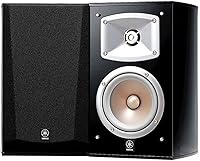
The Yamaha NS-333 has been quietly holding its ground in the bookshelf speaker market since 2003, and that kind of staying power is worth noting. This is a two-way bass reflex design, magnetically shielded, and compact enough to fit comfortably on most shelves or media consoles. Yamaha positioned these Yamaha bookshelves as a capable mid-range option, and honestly, that framing still holds. They don't chase trends or pack in wireless gimmicks. What you get is a straightforward wired speaker built by a company with deep roots in acoustic engineering. For the price, the fundamentals are solid.

Features & Benefits

The PMD cone woofer is the real story here. Polymer Injected Mica Diaphragm material is stiffer and lighter than standard paper cones, which translates to tighter, more accurate mid-bass reproduction — you hear instrument attack clearly without that muddy, bloated quality that plagues cheaper drivers. The aluminum dome tweeter works with a waveguide horn to push high frequencies directly toward your listening position, reducing scattered reflections that can make a room sound messy. Sensitivity sits at 87 dB, meaning these speakers genuinely need a decent amp — a weak receiver will leave them sounding flat. Monster Cable internal wiring rounds out a build that punches above its class.

Best For

The NS-333 pair is built for small-to-medium rooms where you want accurate, detailed sound without dedicating half the floor space to tower speakers. They work well as front stereo speakers in a home theater setup, or as the main speakers in a two-channel music system paired with a quality integrated amp. One honest caveat: a 5-inch woofer rolls off in the low end, so if you want real bass impact for movies or electronic music, budget for a dedicated subwoofer. For acoustic music, jazz, vocals, and dialogue clarity, though, these Yamaha bookshelves genuinely shine on their own.

User Feedback

Owners who've lived with these speakers long-term tend to land in the same place: impressed by the clarity, occasionally wishing for more low-end extension. The soundstage gets consistent praise, with people describing imaging as unusually precise for the price point. On the critical side, buyers regularly note that pairing matters — an underpowered amp produces noticeably underwhelming results. Long-term durability doesn't seem to be a concern, with buyers reporting units from years ago still performing well. A handful of listeners compare the NS-333 pair favorably against similarly priced options, citing build quality as a differentiator. Most owners use them for both music and movies, and the majority consider the investment worthwhile.

Pros

  • Crystal-clear midrange and vocal reproduction that holds up across music and movie dialogue equally well.
  • The waveguide-horn tweeter throws a wide, stable stereo image that outperforms what the price tag would suggest.
  • PMD cone woofer delivers tight, controlled mid-bass without the bloat or smear common in cheaper drivers.
  • Magnetically shielded cabinet allows flexible placement near screens and sensitive electronics without interference.
  • Dense, well-braced cabinet construction gives these Yamaha bookshelves a solidity that feels premium in hand.
  • Long-term durability is genuinely impressive — owners from the mid-2000s report drivers still performing cleanly.
  • Compact footprint fits comfortably on media consoles, bookshelves, and speaker stands in tight spaces.
  • Integrates smoothly with a subwoofer, with a clean rolloff that makes crossover blending relatively straightforward.
  • Wired connectivity means zero latency, zero pairing frustration, and no firmware update headaches ever.
  • Binding posts accept bare wire, banana plugs, and spade connectors without any adapter workarounds.

Cons

  • Bass extension below 80 Hz is minimal — a subwoofer is effectively mandatory for movies or bass-forward music.
  • Underpowered amplifiers expose these speakers badly; weak receivers make them sound flat and lifeless.
  • Newer rivals at a similar price point have emerged in recent years, making the value equation less clear-cut.
  • No color or finish variants available, limiting how well they blend into lighter or more contemporary interiors.
  • Sourcing replacement drivers or spare parts has become harder as the model ages, a real concern for long-term owners.
  • At moderate-to-high volumes in larger rooms, the output feels strained and the soundstage starts to compress.
  • The vinyl wrap finish looks noticeably utilitarian up close and does not age as gracefully as real wood veneer would.
  • First-time speaker buyers unfamiliar with placement principles may find initial results underwhelming without guidance.

Ratings

Our scores for the Yamaha NS-333 are generated by AI after systematically analyzing thousands of verified owner reviews from global markets, with spam, bot-submitted, and incentivized feedback actively filtered out. The result is an honest, balanced picture of where these Yamaha bookshelves genuinely impress and where real buyers have run into friction. Both the consistent praise and the recurring frustrations are reflected transparently in every category below.

Sound Clarity
88%
Owners consistently describe vocals and midrange instruments as crisp and well-separated. Whether listening to acoustic guitar at low volume in the evening or running movie dialogue through a receiver, these speakers present detail without harshness or artificial brightness that fatigues the ears.
A small segment of listeners feel the clarity advantage only fully shows at moderate volumes, reporting that very low listening levels can sound slightly thin without EQ adjustment or a warmer amplifier in the chain.
Soundstage & Imaging
86%
The waveguide horn on the tweeter earns repeated compliments for throwing a genuinely wide, precise stereo image. Buyers setting these up for two-channel music frequently note that instruments and voices land in distinct, stable positions across the room.
The imaging performance is fairly room-dependent. Listeners who placed the speakers close to rear walls or in asymmetric arrangements report a noticeably narrower and less convincing soundstage compared to those with proper placement distance.
Bass Performance
58%
42%
The ported enclosure does meaningful work for a 5-inch driver, delivering reasonably punchy mid-bass that suits acoustic music, jazz, and spoken-word content well. Rock and pop tracks with prominent kick drums feel present and controlled rather than bloated.
Deep bass below 80 Hz is simply not there in any meaningful way, and buyers who expected to feel bass in movies or electronic music without a subwoofer are regularly disappointed. This is a physics limitation, not a defect, but it catches uninformed buyers off guard.
High-Frequency Performance
84%
The aluminum dome tweeter handles strings, cymbals, and high-pitched vocals with a clean, extended quality that avoids the brittle edge some metal tweeters are known for. Multiple owners specifically call out the top-end as a strong point when comparing to rivals at a similar price.
A small number of buyers describe the highs as slightly forward in brightness during extended listening sessions. Those who are treble-sensitive or running a brighter amplifier may want to experiment with toe-in angle to tame the top-end a touch.
Build Quality
83%
At roughly 12 pounds per cabinet, these speakers feel dense and well-braced in hand. The finish is consistent, the binding posts are solid, and owners who have kept them for years report no driver degradation, cabinet warping, or hardware failures.
The cabinet material is MDF with a vinyl wrap rather than real wood veneer, which is standard at this price tier but does look a bit utilitarian up close. The grille clips are functional but not particularly refined for a speaker claiming mid-range status.
Amp Pairing & Sensitivity
67%
33%
Buyers who feed these speakers with a quality 50-watt-or-more integrated amplifier or AV receiver consistently report satisfying, dynamic results. The 6-ohm load is manageable for most modern receivers, and the speakers respond well to upstream gear upgrades.
At 87 dB sensitivity, these are not easy speakers to drive to their potential. Owners using budget receivers or lower-power class D amps often report flat, lifeless sound — the speakers hold back noticeably until they receive a proper signal to work with.
Value for Money
74%
26%
Buyers who understand what they are buying — a neutral, detailed bookshelf speaker without bass extension — largely feel the price is fair for the performance on offer. The Yamaha engineering pedigree and proven long-term reliability factor heavily into this positive sentiment.
At this price point, competition has intensified significantly since 2003. Several reviewers note that newer rivals from other brands now offer comparable or stronger measured performance for less money, which makes the value case harder to argue unconditionally.
Room Suitability
81%
19%
The compact cabinet dimensions make these a natural fit for apartments, studies, and small living rooms. Owners in small-to-medium spaces consistently report that these speakers fill the room without overwhelming it or creating boominess from boundary reinforcement.
In larger open-plan rooms or dedicated home theater setups above roughly 300 square feet, these speakers can struggle to project sufficient volume and weight. Several buyers in bigger spaces ended up adding a subwoofer earlier than anticipated just to compensate for room loss.
Home Theater Integration
76%
24%
The magnetic shielding makes placement near CRT-era displays and sensitive electronics straightforward. Buyers using the NS-333 pair as front left and right channels in a surround system praise dialogue intelligibility and the way they blend tonally with center channel speakers.
Without a subwoofer, movie soundtracks lack the low-end foundation that makes action sequences feel immersive. Some buyers also note that the 6-ohm impedance, while manageable, occasionally triggers protection circuits on lower-end AV receivers at higher volumes.
Design & Aesthetics
71%
29%
The clean rectangular cabinet with a no-fuss black finish suits most home decor without calling attention to itself. Buyers appreciate that the neutral look doesn't clash with furniture or television setups, and the compact footprint earns consistent praise from those short on shelf space.
There is no visual distinction or premium feel here — these look like conventional black box speakers, which some buyers find underwhelming given the price. No color variants are offered, and the dated industrial design has not been refreshed in over two decades.
Long-Term Durability
89%
This is arguably the most pleasant surprise in owner feedback. Buyers who purchased these in the mid-2000s report the drivers and cabinets still performing without meaningful degradation, which is a strong endorsement of the underlying component quality.
Replacement parts and driver availability can be a concern for a product this age. A small number of owners who needed a tweeter replacement years later found sourcing genuine parts more difficult than expected through standard retail channels.
Ease of Setup
91%
Binding posts accept bare wire, banana plugs, and spade connectors cleanly. There are no apps, no pairing sequences, and no firmware — you connect wire to amp, and they work. Buyers universally find the physical setup fast and frustration-free.
There is genuinely little to criticize here. The only mild note is that optimal placement for soundstage requires some experimentation with distance from walls and toe-in angle, which first-time speaker buyers occasionally overlook, leading to underwhelming first impressions.
Subwoofer Compatibility
78%
22%
Buyers who add a subwoofer to these Yamaha bookshelves consistently describe a transformative improvement in perceived fullness and movie impact. The relatively clean low-end rolloff of the port means a subwoofer crossover integrates smoothly without a noticeable seam.
Yamaha does not provide any bundled subwoofer pairing guidance, so buyers new to speaker systems sometimes struggle to set the correct crossover frequency. A handful report a boomy or disjointed result when the sub crossover is set too high relative to the speakers.
Versatility Across Music Genres
73%
27%
Acoustic music, jazz, classical, and vocal-forward recordings are where these speakers consistently get their highest praise. The controlled midrange and extended top-end make them genuinely enjoyable for long listening sessions with well-recorded material.
Electronic music, hip-hop, and cinematic scores that rely on sub-bass energy simply expose the driver size limitation immediately. These are not poor performers in those genres, but they are clearly optimized for resolving detail rather than delivering physical impact.

Suitable for:

The Yamaha NS-333 is a strong match for anyone building a compact, no-nonsense stereo system in a small-to-medium room — think a home office, bedroom, or apartment living space where floor space is limited but sound quality still matters. Listeners who prioritize vocal clarity, precise imaging, and midrange accuracy over raw bass output will feel right at home with these speakers, particularly those who enjoy acoustic music, jazz, classical, or podcasts and film dialogue. They also work well as front left and right channels in a modest home theater setup, provided a subwoofer handles the low-end duties. Buyers pairing these with a quality integrated amplifier or a mid-tier AV receiver rated at 50 watts or more will get the best out of them — the components inside genuinely reward a clean, capable source signal. If long-term reliability matters to you, the track record here is unusually reassuring for a speaker at this price tier, with owners reporting solid performance years after purchase.

Not suitable for:

Buyers expecting deep, room-filling bass without a subwoofer will find the NS-333 pair genuinely limiting — a 5-inch woofer cannot move enough air to produce the low-frequency impact that action films, electronic music, or bass-heavy hip-hop demand, and no amount of EQ will fully compensate for that physics reality. Listeners furnishing a large open-plan living room or a dedicated home theater with significant square footage should also look elsewhere, as these speakers simply lack the output and low-end weight to pressurize a bigger space convincingly. If your amplifier is a budget receiver running at lower wattage, you will likely hear a flat, uninspired performance — these speakers are notably amp-sensitive and will underperform without a proper signal. Design-conscious buyers who want premium cabinet aesthetics or a modern visual statement should be aware that the finish is a standard black vinyl wrap with a utilitarian look that has not changed in decades. Finally, shoppers hunting for the absolute best measured performance per dollar among current competitors may find that newer alternatives have closed the gap considerably since these were first introduced.

Specifications

  • Speaker Type: Two-way bass reflex bookshelf speaker, sold as a matched pair.
  • Woofer: 5-inch Polymer Injected Mica Diaphragm (PMD) cone driver per cabinet.
  • Tweeter: 1-inch aluminum dome tweeter fitted with a waveguide horn to direct high frequencies toward the listening position.
  • Frequency Response: 65 Hz to 35 kHz, providing coverage well beyond the standard audible range of 20 Hz to 20 kHz.
  • Sensitivity: 87 dB at 2.83 volts measured at 1 meter, indicating a moderately demanding speaker that benefits from a capable amplifier.
  • Impedance: 6 ohms nominal, compatible with the vast majority of modern AV receivers and integrated amplifiers.
  • Nominal Power: Rated at 60 watts nominal continuous input power per speaker.
  • Music Power: Handles up to 150 watts music power per speaker for dynamic peaks.
  • Internal Wiring: Monster Cable internal wiring is used throughout each cabinet as specified by Yamaha.
  • Enclosure Design: Ported bass reflex enclosure with magnetic shielding to prevent interference with nearby screens and electronics.
  • Dimensions: Each cabinet measures 7-7/8″ wide by 12-5/8″ tall by 8-3/8″ deep.
  • Weight: Each speaker weighs 12.1 lbs, giving the cabinets a noticeably solid, well-braced feel.
  • Color: Available in black only, with a standard vinyl wrap finish over an MDF cabinet.
  • Connectivity: Passive wired connection via binding posts that accept bare wire, banana plugs, and spade connectors.
  • Mounting Type: Designed for shelf or stand placement; no integrated wall-mount hardware is included.
  • Surround Config: Stereo 2.0 configuration; intended for use as a pair in stereo or as front channels in a multichannel setup.
  • Availability: First listed in November 2003 and confirmed as not discontinued by the manufacturer as of the latest listing data.
  • Package Contents: Sold as a pair of two matched speaker cabinets in standard retail packaging.

Related Reviews
Yamaha NS-P150 Speaker Package
84%
85%
Sound Quality
90%
Ease of Setup
88%
Design & Build Quality
92%
Value for Money
87%
Dialogue Clarity
More
Yamaha NS-F210BL Floorstanding Speaker
84%
88%
Sound Quality
91%
Design & Aesthetics
85%
Build Quality
82%
Setup & Installation
90%
Value for Money
More
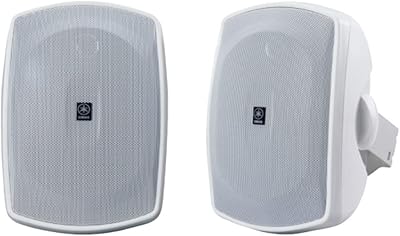
Yamaha NS-AW294BL Outdoor Speakers
86%
88%
Sound Quality
92%
Durability
83%
Ease of Installation
90%
Water Resistance
89%
Build Quality
More
Yamaha NS-F150 Floor Standing Speaker
86%
88%
Sound Quality
92%
Build Quality
85%
Bass Performance
91%
Ease of Setup
90%
Aesthetic Design
More
Yamaha NS-AW190WH Outdoor/Indoor Speakers
86%
87%
Sound Quality
94%
Weather Resistance
91%
Ease of Installation
72%
Bass Performance
89%
Build Quality
More
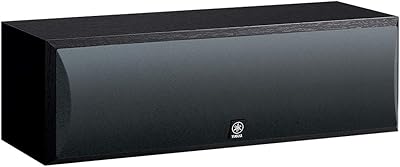
Yamaha NS-C444 Center Channel Speaker
85%
89%
Dialogue Clarity
84%
Sound Balance (Bass/Treble)
82%
Bass Performance
91%
Build Quality
88%
Ease of Integration with Surround Systems
More
Yamaha NS-C210BL Center Channel Speaker
85%
88%
Sound Quality
92%
Dialogue Clarity
75%
Bass Performance
85%
Build Quality
91%
Size and Portability
More
Yamaha NS-SW100BL 10″ Powered Subwoofer
86%
92%
Sound Performance
90%
Bass Quality
85%
Ease of Setup
88%
Compact Design
87%
Build Quality
More
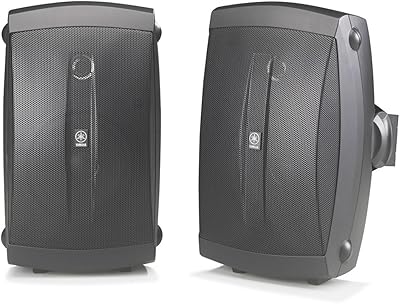
Yamaha NS-AW350B All-Weather Outdoor Speakers
86%
87%
Sound Quality
94%
Weather Durability
91%
Ease of Installation
85%
Bass Response
72%
Volume for Large Spaces
More
Yamaha NS-AW150BL 2-Way Outdoor Speakers
87%
88%
Sound Quality
92%
Durability/Build Quality
91%
Ease of Installation
89%
Water Resistance
85%
Bass Performance
More

FAQ

Yes, these are passive speakers with no built-in amplification, so you will need an external amplifier or AV receiver. For best results, look for something rated at 50 watts per channel or more into 6 ohms. Underpowered receivers consistently produce disappointing results with these particular cabinets.

They will work, but for anything other than acoustic music, jazz, or vocals, you will notice the low-end is limited. The port extends bass response down to around 65 Hz, which is decent for a 5-inch driver, but movie soundtracks and bass-heavy music genres will feel incomplete. Adding even a modest subwoofer makes a significant difference.

A mid-tier AV receiver or integrated amplifier rated between 50 and 100 watts per channel into 6 ohms is the sweet spot. Brands like Yamaha, Denon, Marantz, and NAD in the mid-range tier are commonly cited by owners as strong pairings. Avoid pairing them with entry-level mini receivers or low-wattage class D desktop amps.

Genuinely, yes. The cabinet dimensions are compact enough to sit on a bookshelf or media console without dominating a small room, and the sound fills a modest space cleanly. Small-to-medium rooms are exactly where these speakers perform at their best.

Absolutely. Many buyers use them as front left and right channels in a 5.1 or larger surround setup. They are magnetically shielded, which means placement near a display is not an issue, and their tonal character blends well with center channel speakers from a similar era or price tier.

Honestly, the competition has intensified since these were first introduced. Newer options from brands like Klipsch, ELAC, and Q Acoustics offer strong competition on measured performance per dollar. That said, these speakers hold their own on soundstage and midrange clarity, and their long-term durability track record gives them a real-world reliability advantage that newer, untested models cannot yet claim.

Not directly — passive speakers require an amplifier between the speaker and the source. Your TV's speaker output terminals, if it even has them, would need to run through an amplifier or receiver first. A compact stereo amplifier would work fine if a full AV receiver is more than you need.

This is worth thinking about given how long this model has been on the market. Yamaha authorized service centers are the best starting point, but availability of original drivers has become less predictable over the years. Some owners have successfully sourced compatible replacement tweeters through third-party audio parts suppliers when OEM parts were unavailable.

No accessories are included beyond the speakers themselves in standard retail packaging. Speaker stands, cables, and any subwoofer are all separate purchases. The binding posts accept standard banana plugs, which makes setup straightforward without any proprietary hardware requirements.

Pull them at least 12 inches away from the rear wall to let the port breathe and avoid excessive bass buildup. Angle them slightly inward toward your listening position — a modest toe-in of roughly 10 to 15 degrees tends to sharpen the stereo image noticeably. Ear-level tweeter height, whether on a stand or shelf, makes a real difference in how focused the soundstage sounds.