Overview

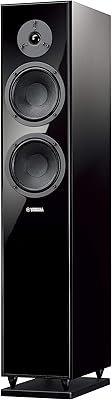
The Yamaha NS-F210BL Floorstanding Speaker has been a steady presence in the mid-range audio market since 2009 — and that longevity says something. This isn't a flashy newcomer riding a marketing wave; it's a speaker that's earned its place through consistent performance. One critical detail buyers often miss: sold as a single unit, not a pair. If you're building a stereo setup, you'll need to order two. The slim tower profile is genuinely unobtrusive next to a flat-panel TV, and the 2-way bass-reflex design means you're getting a real attempt at full-range sound without necessarily needing a separate subwoofer right out of the gate.
Features & Benefits

The aluminum cone woofers are one of the more practical engineering choices here — lighter cones respond faster to signal changes, which translates to tighter, more controlled bass rather than the bloomy low end you sometimes get from cheaper drivers. The bass-reflex port builds on that by extending how low the speaker reaches, giving movies and music a bit more body in the room. A dedicated tweeter handles the upper frequencies, keeping vocals and high-frequency detail reasonably clear. At 120 watts maximum output, there's enough headroom to fill a medium-sized room without straining, and the included steel bass anchor stand keeps everything stable on hard floors.

Best For

This Yamaha tower speaker makes the most sense for someone stepping up from a soundbar who wants real stereo separation without committing to a high-end audiophile system. If you're putting together a budget home theater, this is a reasonable anchor for left-right channels. The slim design genuinely helps in tighter living spaces where a bulky cabinet speaker would feel intrusive. It also works well for casual music listening — everyday genres like pop, rock, or film scores sound full and engaging at moderate volumes. Those who prioritize a trusted brand with longevity will appreciate that Yamaha's support and community around this model have had years to mature.

User Feedback

Owners consistently praise sound quality here, particularly noting that dialogue clarity and midrange warmth hold up well during movies and TV. Build quality earns positive marks too — several long-term users report their units still performing reliably years after purchase, which aligns with the speaker's age on the market. That said, recurring feedback points to limited deep bass compared to larger tower competitors; listeners who want serious sub-bass presence will likely still want a subwoofer alongside. A common setup tip from owners: pulling the NS-F210BL a foot or so away from the wall noticeably opens up the soundstage. And once more — it ships as one speaker, a detail that catches buyers off guard more often than it should.

Pros

  • Yamaha is a well-respected audio brand with decades of engineering credibility behind it.
  • The slim tower design fits naturally in modern living rooms without eating up valuable floor space.
  • Aluminum cone woofers deliver noticeably tighter, faster bass response compared to heavier cone materials.
  • At 120W maximum output, this Yamaha tower speaker handles dynamic movie soundtracks without audible strain.
  • The bass-reflex port adds meaningful low-end body, reducing the urgency of adding a subwoofer right away.
  • Build quality holds up well over time — long-term owners frequently report years of reliable, trouble-free use.
  • The included steel bass anchor stand is sturdy and keeps the speaker stable on hard or smooth floors.
  • Midrange clarity makes dialogue in films and TV shows easy to follow at comfortable listening levels.
  • A well-established product with a long owner community means plenty of real-world setup advice is available.
  • Competitively priced for a reputable-brand tower speaker that covers a broad frequency range.

Cons

  • Sold as a single unit — buying a stereo pair means doubling the cost, which trips up many first-time buyers.
  • Deep sub-bass performance falls short of larger competing tower speakers in the same general price range.
  • Requires a separate amplifier or AV receiver; there is no built-in amplification whatsoever.
  • Placement matters more than you might expect — poor room positioning noticeably narrows the soundstage.
  • The product design dates back to 2009 and lacks any modern connectivity features like Bluetooth or Wi-Fi.
  • Not well-suited for large rooms or open-plan spaces where higher output and deeper bass extension are needed.
  • The 6-ohm impedance may not pair ideally with every budget-tier receiver, so amp matching is worth checking.
  • At 16 pounds per unit, relocating or frequently repositioning the speaker is mildly inconvenient.

Ratings

The Yamaha NS-F210BL Floorstanding Speaker has been scored by our AI system after analyzing verified global buyer reviews, with spam, bot activity, and incentivized feedback actively filtered out. The scores below reflect a genuine cross-section of real-world experience — strengths and frustrations alike — to give you the clearest possible picture before you buy. Where owners consistently agree, the scores lean decisively; where experiences genuinely split, that tension is reflected too.

Sound Quality
83%
For a mid-range tower at this price tier, owners frequently note that the overall tonal balance is more refined than expected — midrange warmth comes through clearly on vocals and dialogue, and the speaker handles a wide variety of content from evening TV to weekend music sessions without feeling strained or hollow.
Listeners coming from higher-end towers or dedicated audiophile setups will notice the ceiling fairly quickly, particularly in terms of soundstage width and fine high-frequency detail. It performs well within its class, but it doesn't punch above that class with any consistency.
Bass Performance
67%
33%
The bass-reflex design does meaningful work here — for everyday TV watching, casual music, and lighter action sequences, the low-end extension adds genuine body to the sound that you simply don't get from a soundbar or bookshelf speaker at a similar price point.
Owners who enjoy bass-heavy music genres or theatrical home cinema with deep sub-bass effects consistently flag the limits of this speaker's low-end reach. Without a dedicated subwoofer alongside it, the NS-F210BL falls short in the sub-60Hz range that makes explosions and bass drops feel physical.
Value for Money
81%
19%
Buyers repeatedly highlight how much usable, daily-enjoyable sound this Yamaha tower speaker delivers relative to its cost. For someone stepping off a soundbar for the first time, the perceived improvement in audio quality feels disproportionately large given the price difference.
The value calculation changes once you account for needing to purchase two units for stereo use plus a compatible AV receiver. The total system cost climbs faster than many buyers initially anticipate, which makes the per-unit price feel less straightforward in practice.
Build Quality
78%
22%
Long-term owners — some reporting five or more years of regular use — describe the cabinet and driver assembly as holding up without rattles, loosened components, or noticeable degradation. The steel bass anchor stand feels sturdy and well-engineered rather than an afterthought.
The cabinet finish, while visually clean, shows fingerprints and light surface scuffs more readily than some competing speakers at a similar price. A few buyers also note that the cabinet material feels slightly less premium to the touch than the speaker's overall performance level might suggest.
Dialogue Clarity
86%
This is one of the most consistently praised aspects across owner feedback — voices in films, TV dramas, and documentary content come through with natural presence and intelligibility even at lower listening volumes, which matters a lot for evening viewing without disturbing others.
At higher volume levels in larger rooms, some buyers note that upper-midrange frequencies can occasionally edge toward brightness on certain content, which affects the naturalness of voices slightly. It's a minor issue for most, but worth noting for those particularly sensitive to forward-sounding speakers.
High-Frequency Detail
72%
28%
The dedicated tweeter handles cymbal shimmer, acoustic guitar strings, and high-end clarity well enough for relaxed and moderate-volume listening. Buyers who primarily use the speaker for TV and mainstream music rarely raise complaints about treble quality.
Audiophiles or listeners accustomed to premium tweeters — ribbon drivers or high-quality soft domes — will find the treble resolution adequate but unremarkable. Fine spatial detail and air around instruments is where the speaker's mid-range engineering shows its limits most transparently.
Design & Aesthetics
84%
The slim tower profile is genuinely one of this speaker's quiet strengths — it sits flush alongside a modern flat-panel TV without creating visual tension in the room, and several owners specifically mention that partners or housemates who were skeptical of floor-standing speakers accepted this one without complaint.
The speaker is only available in black, which limits flexibility for buyers with lighter-toned interiors or Scandinavian-style decor. The overall styling is clean but conservative — it reads as functional rather than distinctively designed.
Room-Filling Ability
71%
29%
In small to medium living rooms — roughly up to 200 square feet — the NS-F210BL fills the space with convincing presence at moderate listening levels. Movie nights and background music both benefit from the speaker's ability to project sound without requiring high amplifier output.
Push this floorstanding speaker into a large open-plan space or a room with high ceilings and the limitations surface quickly. Volume headroom drops, bass thins out, and the sense of room-filling sound that works well in a contained environment becomes noticeably less satisfying.
Ease of Setup
88%
Assembly is minimal — attach the stand, connect speaker wire to the binding posts, and you're done. Buyers with no prior experience setting up passive speakers consistently report having the unit running within 15 to 20 minutes of opening the box.
The passive nature of the speaker means first-time buyers still need to separately source and configure an amplifier or AV receiver, which adds complexity outside the speaker itself. The binding post terminals, while functional, are not the most premium-feeling connection point at this price.
Packaging & Delivery
74%
26%
Most buyers report the speaker arriving well-protected, with foam inserts that keep the cabinet and stand from shifting during transit. Damage-on-arrival complaints are relatively uncommon given the unit's size and fragility risk.
The single-unit packaging remains a persistent source of buyer frustration — not from poor packaging quality, but from the expectation mismatch when only one speaker emerges from the box. Clearer labeling or retailer-side callouts would eliminate a significant portion of negative first impressions.
Amplifier Compatibility
69%
31%
The 6-ohm impedance pairs well with the majority of mid-range and upper-tier AV receivers, and owners using mainstream brands like Yamaha, Denon, or Onkyo report clean, stable performance with no matching issues across a range of listening volumes.
Budget-tier receivers rated strictly for 8-ohm loads can run warmer or behave less predictably with this speaker, and a small number of buyers have reported receiver protection circuits triggering at higher volumes. Checking amplifier specs before purchasing is a step too many buyers skip.
Long-Term Durability
82%
18%
The product's 15-plus years on the market is reflected in owner feedback — buyers who purchased early iterations report their units still performing without driver failure, cabinet delamination, or port deterioration. For a passive speaker at this price, that track record is reassuring.
Occasional reports of the cabinet finish wearing around high-contact areas like the base and stand attachment point suggest the cosmetic durability lags slightly behind the acoustic durability. It's a minor concern, but visible on units that have seen years of regular handling.
Placement Flexibility
66%
34%
Owners who experiment with speaker positioning consistently find a sweet spot roughly one to two feet from the rear wall, where bass response tightens and the stereo image widens perceptibly. The slim footprint makes it physically easy to try different positions.
This speaker is noticeably more sensitive to placement than some competing designs — poor positioning in corners or flush against walls produces a boom-heavy, congested sound that can make buyers initially think the speaker is underperforming. Setup guidance in the packaging is minimal on this point.
Brand Reliability
89%
Yamaha's reputation in both consumer and professional audio carries genuine weight here. Buyers reference brand trust as a meaningful factor in their purchase decision, and the availability of community knowledge, reviews, and long-term owner forums adds practical value beyond the hardware itself.
Brand reputation alone doesn't compensate for the reality that this is an older design with no recent engineering updates. Buyers hoping Yamaha's name signals cutting-edge driver or cabinet technology in this specific model may be slightly disappointed by the absence of any modern acoustic refinements.

Suitable for:

The Yamaha NS-F210BL Floorstanding Speaker is a strong fit for anyone who's been living with a soundbar and finally wants to hear what genuine stereo separation actually feels like in a living room. It suits home theater builders working with a moderate budget who need a reliable left-right channel foundation without overspending before they've even added a receiver or center channel. The slim tower profile makes it particularly practical for apartment dwellers or TV room setups where floor space is at a premium — it won't crowd the room or clash visually with a modern flat-panel display. Casual music listeners who enjoy pop, rock, or film scores at everyday volumes will find the midrange warmth and overall tonal balance satisfying for daily use. And because this Yamaha tower speaker has been on the market since 2009, there's a well-established owner community and a track record of durability that newer budget options simply can't offer yet.

Not suitable for:

The Yamaha NS-F210BL Floorstanding Speaker will disappoint buyers who expect chest-thumping, room-shaking bass without adding a dedicated subwoofer — the low-frequency extension is decent for a tower this size, but it has real limits compared to larger, heavier floor-standing designs. Serious audiophiles looking for studio-grade accuracy or high-resolution audio performance should look higher up the price ladder, as this is firmly a mid-range product with mid-range engineering. It's also a poor choice for anyone who assumes a single purchase covers a stereo pair — this floorstanding speaker ships as one unit only, and buyers who overlook that detail consistently end up frustrated. Large open-plan rooms or dedicated home theater spaces with high ceilings may find the NS-F210BL underpowered for the job, especially at higher listening volumes. Those who prefer wireless connectivity or smart speaker features won't find any of that here — this is a straightforward passive speaker that requires a separate amplifier or AV receiver to function.

Specifications

  • Brand: Manufactured by Yamaha, a Japanese audio company with decades of experience in consumer and professional sound equipment.
  • Model: The exact model designation is NS-F210BL, where BL indicates the black color finish.
  • Speaker Type: This is a 2-way bass-reflex floorstanding tower speaker designed for home theater and stereo listening environments.
  • Driver Config: The cabinet houses two driver types: a woofer for low-to-mid frequencies and a dedicated tweeter for high-frequency reproduction.
  • Woofer Material: The woofer uses a lightweight aluminum cone, chosen for its stiffness-to-mass ratio which supports faster transient response.
  • Max Output: Maximum output power is rated at 120W, providing sufficient headroom for dynamic content in small to medium-sized rooms.
  • Impedance: Speaker impedance is 6 ohms, which is compatible with most home theater receivers but worth confirming against your amplifier's specifications.
  • Dimensions: Each unit measures 9.4″ deep by 9.4″ wide by 41.4″ tall, making it a genuinely slim tower relative to its height.
  • Weight: Each speaker weighs approximately 16.1 pounds, light enough for one person to position and reposition without assistance.
  • Channel Config: Designed for 2.0 stereo configuration, functioning as a left or right channel speaker within a broader audio system.
  • Stand Included: Each unit ships with a heavy-duty round steel bass anchor stand that attaches to the base for floor stability.
  • Package Contents: The package contains one floorstanding speaker and one speaker stand — only a single speaker unit is included per order.
  • Power Source: Operates as a passive speaker powered via corded connection to an external amplifier or AV receiver; no built-in amplification.
  • Audio Driver Type: Uses a dynamic driver architecture, which is the most common and reliable driver type for home speaker applications.
  • Compatible Devices: Compatible with televisions, DVD and Blu-ray players, computers, and any audio source connected through an AV receiver or amplifier.
  • Color: Available in black (BL suffix), with a finish suited to complement dark-framed flat-panel televisions and modern furniture.
  • Waterproofing: This speaker is not waterproof or water-resistant and is intended exclusively for dry indoor use.
  • Warranty: Covered by a limited manufacturer warranty from Yamaha; buyers should verify current warranty terms directly with Yamaha at time of purchase.
  • First Available: This model was first listed for sale in July 2009, reflecting over 15 years of continuous market availability.
  • Connectivity: Connects to amplifiers and receivers via standard passive speaker wire terminals; no wireless, Bluetooth, or optical input is built in.

Related Reviews
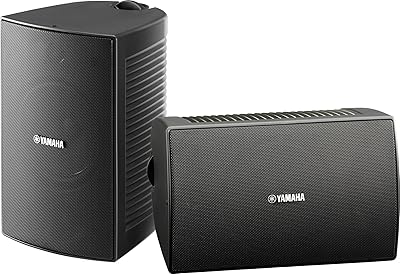
Yamaha NS-AW294BL Outdoor Speakers
86%
88%
Sound Quality
92%
Durability
83%
Ease of Installation
90%
Water Resistance
89%
Build Quality
More
Yamaha NS-P150 Speaker Package
84%
85%
Sound Quality
90%
Ease of Setup
88%
Design & Build Quality
92%
Value for Money
87%
Dialogue Clarity
More
Yamaha NS-333
Yamaha NS-333
79%
88%
Sound Clarity
86%
Soundstage & Imaging
58%
Bass Performance
84%
High-Frequency Performance
83%
Build Quality
More
Yamaha NS-AW350B All-Weather Outdoor Speakers
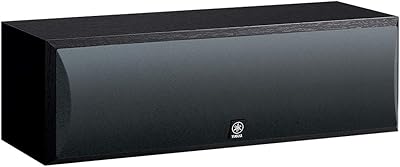
86%
87%
Sound Quality
94%
Weather Durability
91%
Ease of Installation
85%
Bass Response
72%
Volume for Large Spaces
More
Yamaha NS-F150 Floorstanding Speaker
81%
83%
Sound Clarity
61%
Bass Performance
88%
Build Quality
91%
Aesthetic Design
86%
Value for Money
More
Yamaha NS-C444 Center Channel Speaker
81%
93%
Dialogue Clarity
88%
Build Quality
91%
Tonal Matching
54%
Bass Performance
84%
Waveguide Performance
More
Yamaha NS-AW190WH Indoor/Outdoor Speakers
76%
83%
Sound Clarity
61%
Bass Response
74%
Weather Resistance
81%
Value for Money
88%
Ease of Installation
More
Yamaha NS-C210 Center Channel Speaker
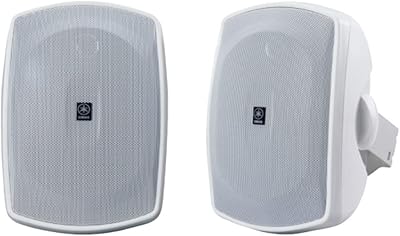
82%
93%
Dialogue Clarity
88%
Value for Money
86%
Build Quality
58%
Bass Response
91%
System Compatibility
More
Yamaha NS-IC800 8-Inch In-Ceiling Speakers
85%
88%
Sound Quality
91%
Installation Ease
85%
Build Quality
75%
Bass Response
89%
Frequency Range
More
Yamaha NS-AW150 Indoor/Outdoor Speakers
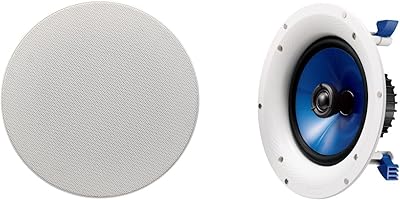
75%
83%
Sound Clarity
61%
Bass Performance
78%
Build Quality
67%
Weather Resistance
88%
Installation Ease
More

FAQ

You only get one speaker per order — this is a single-unit purchase. If you want a stereo left-and-right setup, you'll need to add two to your cart. It's one of the most common surprises buyers run into, so it's worth double-checking your order before checkout.

You'll need a separate amplifier or AV receiver. The NS-F210BL is a passive speaker with no built-in amplification, meaning it can't connect directly to a TV's headphone jack or USB port. Most home theater receivers will work fine, but check that yours can handle a 6-ohm load, as some budget receivers are only rated for 8 ohms.

A standard stereo amplifier works perfectly well. You don't need a multi-channel AV receiver unless you're building a surround sound system. For simple two-channel stereo listening — music, TV, movies — any decent stereo amp rated for 6-ohm speakers will drive the Yamaha NS-F210BL Floorstanding Speaker without issue.

For casual TV watching and everyday music, most people find the built-in bass satisfying enough to get started without a subwoofer. That said, if you enjoy action movies with deep rumbling effects or bass-heavy music genres, you'll likely want to add a sub eventually. The bass-reflex design does extend low-end reach, but it has natural physical limits at this cabinet size.

The included steel bass anchor stand screws into the base of the cabinet and is really meant to be used — it keeps the speaker stable and prevents tipping, especially on smooth hard floors. Skipping it isn't recommended, particularly if you have kids or pets around.

Pulling it roughly 1 to 2 feet away from the rear wall tends to open up the soundstage noticeably and reduces bass buildup from the reflex port. Placing it too close to a corner can make the low end sound boomy and less controlled. It doesn't need a lot of space, but a little breathing room goes a long way.

For most people, yes — the jump from a soundbar to a proper stereo pair of floor-standing speakers like these is significant. You get real left-right channel separation, better dynamic range, and a more immersive listening experience for both movies and music. The difference is most noticeable during dialogue-heavy scenes and live music recordings.

For passive speaker design, age matters far less than it does for electronics like TVs or smartphones. A well-engineered passive speaker doesn't go obsolete the way a smart device does — the physics of drivers and cabinets don't change. The longevity of this Yamaha tower speaker on the market is actually a reasonable sign of consistent demand and build reliability.

Standard 16-gauge or 14-gauge speaker wire is what most people use and works well here. The terminals on the back accept bare wire, banana plugs, or spade connectors. Thicker 14-gauge wire is slightly better for longer cable runs, but for typical living room distances, 16-gauge is perfectly adequate.

Technically it will work as a single-speaker mono source, but this floorstanding speaker is designed to function as a left or right stereo channel — it's a tall, front-facing tower, not an ideal center channel form factor. For a center channel role, a dedicated horizontally oriented center speaker will deliver much better dialogue imaging in a home theater setup.

Where to Buy

B&H Photo-Video-Audio
In stock $229.95
ProjectorScreen.com
In stock $229.95
Audiolab Stereo & Home Theater
In stock $229.95