Overview

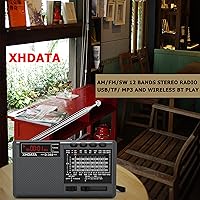
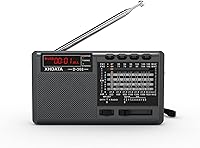
The XHDATA D368 Portable Shortwave Radio is a surprisingly capable little device from RADIWOW that punches well above its budget price tag. At under five inches long and barely half a pound, it slips into a jacket pocket without a second thought. What makes this pocket shortwave radio stand out in a crowded entry-level field is the combination it offers: FM, AM, and twelve shortwave bands, plus Bluetooth streaming and MP3 playback from SD card or USB — all in one unit. A rechargeable lithium-ion battery means no scrambling for AA cells on a camping trip, and it already ranks among the top portable shortwave radios on Amazon — not bad for a newcomer.
Features & Benefits

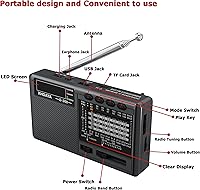
The D368 runs on a DSP tuner covering FM, AM, and shortwave from 4.75 to 22.0MHz — a wide enough sweep to pull in international broadcasts from Europe, Asia, and beyond. The antenna rotates a full 360 degrees, and if you're in a rural area or chasing a faint signal late at night, the external antenna jack gives you a real upgrade path without buying a new radio. Bluetooth streaming works well for casual phone audio, and loading MP3s via a Micro SD card or USB drive makes this multiband portable useful even when you can't find a signal worth keeping. The headphone jack rounds things out for quiet listening.

Best For

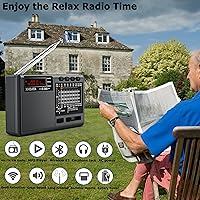
If you're just getting into shortwave listening and don't want to spend hundreds on a dedicated receiver, this pocket shortwave radio is a smart starting point. It's equally at home on a campsite as it is on a bedside table — the all-in-one nature means you can leave a separate Bluetooth speaker at home. Emergency preparedness folks will appreciate the rechargeable battery and multi-band reception when cell towers go quiet. Gift buyers looking for something practical and low-fuss for an older relative will find it approachable: no subscription, no app, just an antenna and a dial. Travelers packing light will value carrying one less gadget.

User Feedback

Buyers generally come away positive, particularly about FM reception clarity and the way shortwave picks up distant stations once the sun goes down — that nighttime improvement is a real phenomenon, not just marketing copy. On the downside, AM performance in dense urban areas frustrates some users; the radio struggles with interference that a dedicated AM receiver handles more gracefully. A handful of long-term owners note the plastic casing feels light but holds up to regular handling without issues. One honest caveat: Bluetooth audio sounds adequate for background listening, but anyone expecting hi-fi wireless performance from a device this size will be disappointed. Overall, sentiment leans favorable for what it costs.

Pros

  • Covers FM, AM, and twelve shortwave bands in a package that fits in a jacket pocket.
  • The rechargeable built-in battery eliminates the need for disposable cells on trips.
  • DSP tuning delivers noticeably cleaner FM reception than analog-tuned competitors at this price.
  • Shortwave reception improves meaningfully at night, rewarding evening listening sessions.
  • External antenna jack gives you a real upgrade path without buying a new radio.
  • MP3 playback from SD card or USB drive works without a phone or data connection.
  • The 360-degree rotatable antenna lets you optimize signal direction quickly and easily.
  • Bluetooth pairing is fast and stable for casual background streaming at short range.
  • At under 10 oz, the D368 is light enough that carrying it daily never feels like a burden.
  • Headphone listening via the 3.5mm jack brings out cleaner audio than the speaker alone.

Cons

  • AM reception in urban environments is frequently degraded by electrical interference.
  • Daytime shortwave performance is weak compared to dedicated receivers even at modest price points.
  • The speaker driver produces thin bass and brittle highs at higher volume settings.
  • Mode-switching between radio, Bluetooth, and MP3 playback is not intuitive without reading the manual.
  • Battery capacity may fade noticeably after 12 to 18 months of regular daily use.
  • No protective sleeve or carrying pouch is included despite the risk of antenna or screen damage in a packed bag.
  • Button spacing is tight enough to cause accidental presses for users with larger hands.
  • Bluetooth range drops indoors with walls between the radio and the paired device.
  • MP3 file navigation is cumbersome with large SD card libraries and no track-name display.
  • The manual offers minimal guidance for shortwave beginners on bands, timing, or propagation basics.

Ratings

The XHDATA D368 Portable Shortwave Radio earned its scores through AI analysis of verified global buyer reviews, with spam, incentivized posts, and bot activity actively filtered out before any category was scored. What you see here reflects the honest spread of real-world experience — the things buyers consistently praise, the frustrations that crop up repeatedly, and the edge cases worth knowing before you decide. Both the strengths and the genuine shortcomings are represented without softening either side.
FM Reception Quality
84%
FM performance is where the D368 earns the most consistent praise. Buyers in suburban and rural areas report pulling in stations cleanly with the built-in antenna, and the 360-degree rotation lets you fine-tune signal direction in a way fixed-antenna radios simply cannot match.
In dense urban environments, multipath interference can muddy otherwise strong stations, and a few users note occasional stereo separation issues at the edges of a station's coverage area. It is competitive for the price but not quite at the level of a dedicated FM tuner.
Shortwave Reception
71%
29%
For a first shortwave radio, the D368 genuinely delivers. Evening and nighttime listening sessions tend to reward patience — users report picking up BBC World Service, Radio Romania International, and various Asian broadcasters with acceptable clarity once propagation conditions cooperate.
Daytime shortwave performance is noticeably weaker, and compared to dedicated shortwave receivers in a higher price bracket, selectivity suffers when strong stations are broadcasting on adjacent frequencies. Beginners may not notice, but experienced SWLs likely will.
AM Reception Quality
58%
42%
In quiet, low-interference environments — rural cabins, open campsites, suburban bedrooms — AM reception is functional and picks up local and regional stations without much fuss. Repositioning the radio to optimize the internal ferrite antenna can make a meaningful difference.
Urban AM performance is a recurring complaint. Electronic noise from appliances, LED lighting, and city infrastructure creates interference the DSP chip struggles to filter cleanly. Users in apartments or near busy infrastructure report significant static even on strong local stations.
Build Quality & Durability
66%
34%
The plastic housing is lightweight by design, and the fit of buttons and dials feels acceptably tight for the price tier. Several buyers who have carried the D368 in bags and backpacks for a year or more report no cracking, loose controls, or degraded battery contacts.
It does not feel premium in hand — the shell flexes slightly under pressure, and the antenna pivot point concerns some users over the long term. Nobody expects aluminum construction at this price, but buyers should treat it as a travel companion rather than a rugged field tool.
Battery Life
78%
22%
The built-in rechargeable lithium-ion cell earns genuine appreciation from buyers who use the D368 regularly. Typical radio-only sessions at moderate volume comfortably reach several hours of playback, and the USB charging design means topping it up from a power bank while hiking is straightforward.
Running Bluetooth streaming alongside the radio draws noticeably more power, and a handful of users flag that battery capacity seems to fade after 12 to 18 months of daily use — not unusual for lithium cells but worth noting since the battery is not user-replaceable.
Bluetooth Performance
62%
38%
Bluetooth pairing is quick and stable within a typical 20 to 30 foot range, making it practical for streaming music from a phone while cooking or relaxing outdoors. Buyers who treat it as a casual wireless speaker for background audio generally come away satisfied.
The Bluetooth audio quality ceiling is limited by the small speaker driver, so anyone accustomed to even a mid-range dedicated Bluetooth speaker will hear the difference immediately. Range drops indoors with walls between devices, and a few users report intermittent dropouts when the phone is more than 15 feet away.
Speaker Audio Quality
61%
39%
For spoken-word content — news broadcasts, talk radio, shortwave voice transmissions — the speaker performs well enough that fatigue-free listening is entirely achievable. Volume output is louder than the compact chassis suggests, and it can fill a small tent or bedroom without straining.
Music reproduction reveals the physical limits of a small single driver: bass is thin, and highs can become brittle at higher volume levels. This is a radio speaker doing a secondary job, not an audio product, and buyers who mentally frame it that way report far fewer disappointments.
MP3 Playback via SD & USB
73%
27%
The ability to load a Micro SD card with MP3 files and treat the D368 as a standalone music player is a legitimately useful feature for travelers and campers. It works without a phone, without a data connection, and without any pairing steps — buyers appreciate the simplicity.
File navigation is basic and not ideal for large libraries; there is no display to show track names clearly, which makes browsing a multi-folder SD card somewhat tedious. Supported formats are limited to MP3, so users with FLAC or AAC files will need to convert first.
Portability & Size
89%
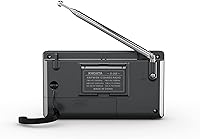
This is one of the D368's clearest wins. At 9.5 oz and barely larger than a deck of cards, it disappears into a jacket pocket or the side pouch of a daypack. The included lanyard makes hands-free use during outdoor activities practical, and buyers consistently mention it as one of the smallest multiband radios they have owned.
The compact size does create one minor ergonomic issue: the buttons are small and closely spaced, and users with larger hands occasionally report pressing adjacent controls by mistake. This is a minor annoyance rather than a dealbreaker, but worth flagging for users with dexterity challenges.
Antenna Flexibility
76%
24%
The 360-degree rotating antenna is a practical advantage over fixed-antenna competitors, letting users optimize signal direction without repositioning the entire radio. The external antenna jack adds a meaningful upgrade path for shortwave listeners who want to string a long wire antenna outdoors.
The telescoping antenna itself feels a bit thin and requires careful handling at full extension to avoid stressing the pivot joint. Users who connect external antennas should avoid doing so during storms — the manual flags this, and it is a real consideration, not just legal boilerplate.
Ease of Use
82%
18%
Buyers consistently describe setup as intuitive — power on, extend the antenna, scan for stations. The manual scanning and auto-scan functions both work reliably, and older users or gift recipients new to shortwave radios report getting comfortable with the controls within an hour or two.
Switching between the radio, Bluetooth, and MP3 modes involves cycling through options in a way that is not immediately obvious without reading the manual. A few buyers find the mode-switching logic unintuitive at first, particularly when transitioning from SD card playback back to radio.
Value for Money
88%
Measured against what you actually get — twelve bands, DSP tuning, Bluetooth, MP3 playback, a rechargeable battery, and a rotatable antenna with external jack — the price-to-feature ratio is hard to argue with. Buyers shopping for a first shortwave radio routinely describe it as the most they expected for the cost.
The value equation does tilt if your primary need is serious shortwave DXing or high-fidelity audio; in those cases, spending more on a purpose-built device makes more sense. As an all-rounder at this price point it excels, but it should not be judged by standards it was never designed to meet.
Headphone Listening Experience
74%
26%
The 3.5mm headphone jack is a quiet upgrade that many buyers do not highlight but consistently use. Shortwave listening through headphones at night — in a tent, on a train, in a hotel room — is where the DSP tuner's noise-handling capabilities come across most clearly without room acoustics in the way.
Output volume through headphones is adequate but not generous; users with higher-impedance or less sensitive headphones may find the maximum volume underwhelming. There is also no separate headphone volume control, so audio level is tied to the main volume dial.
Package & Included Accessories
69%
31%
The inclusion of a USB charging cable, lanyard, rechargeable battery, and an English manual covers the basics well. Buyers appreciate not needing to source a battery separately, and the lanyard sees genuine use among hikers and outdoor listeners who want the radio accessible but hands-free.
No carrying pouch or protective sleeve is included, which is a common request in buyer feedback given how easy it would be to scratch the display or stress the antenna in a packed bag. The manual is functional but thin on shortwave listening tips that beginners would genuinely benefit from.

Suitable for:

The XHDATA D368 Portable Shortwave Radio is a natural fit for anyone stepping into shortwave listening for the first time without wanting to commit serious money to a hobby they are still exploring. It works particularly well for campers, hikers, and road-trippers who want a single lightweight device that covers emergency AM/FM reception, shortwave broadcasts, and casual Bluetooth streaming without carrying multiple gadgets. People building out emergency preparedness kits will appreciate the rechargeable battery and multi-band coverage — in a power outage, a radio that does not depend on disposable batteries has real practical value. Older listeners or family members who want a simple, subscription-free way to enjoy radio will find the controls approachable and the setup refreshingly straightforward. It also makes a thoughtful, practical gift for anyone curious about international broadcasting who has never owned a shortwave radio before.
Not suitable for:

The XHDATA D368 Portable Shortwave Radio is not the right tool for experienced shortwave DXers or hobbyists who need serious selectivity, strong adjacent-channel rejection, or the ability to chase weak, distant signals in the daytime. If your primary need is high-fidelity audio — whether for music through the speaker or Bluetooth streaming — you will almost certainly be underwhelmed; the small driver has physical limits that no software can overcome. Urban AM listeners should also temper expectations, as the internal circuitry struggles to filter out the dense electrical interference common in cities and apartment buildings. Anyone hoping to replace a dedicated Bluetooth speaker with this device will find the audio output functional at best, not satisfying. And if you need a rugged, drop-resistant radio for demanding field conditions, the lightweight plastic housing is not built for that kind of abuse.

Specifications

  • Brand & Model: Manufactured by RADIWOW under the model designation D368.
  • Dimensions: The unit measures 4.8″ long, 2.8″ tall, and 1.1″ deep — roughly the size of a large smartphone.
  • Weight: The radio weighs 9.5 oz, making it light enough for all-day carry in a jacket pocket or daypack.
  • Band Coverage: Covers 12 bands in total: FM (87–108MHz), AM (522–1620KHz), and shortwave SW (4.75–22.0MHz) across multiple sub-bands.
  • Tuner Technology: Uses DSP (Digital Signal Processing) tuning for improved noise filtering and signal clarity compared to traditional analog tuners.
  • Antenna: Features a built-in telescoping antenna that rotates a full 360 degrees, plus a 3.5mm external antenna jack for connecting a long-wire or aftermarket antenna.
  • Bluetooth: Supports wireless Bluetooth audio streaming from paired smartphones or tablets for use as a portable speaker.
  • Media Playback: Plays MP3 files from a Micro SD card or USB flash drive directly, without requiring a connected phone or internet access.
  • Headphone Output: Includes a standard 3.5mm headphone jack compatible with most wired earbuds and headphones.
  • Power Source: Powered by a built-in rechargeable lithium-ion battery that charges via the included USB cable.
  • Charging Interface: Charges through a USB port using the supplied USB charging cable, compatible with standard USB wall adapters and power banks.
  • Audio Output: Equipped with a single built-in speaker designed to prioritize voice and broadcast clarity over music reproduction.
  • In the Box: Package includes the D368 radio unit, one USB charging cable, one rechargeable battery, one lanyard, and one English-language user manual.
  • Supported Formats: MP3 playback via SD card and USB is limited to the MP3 format; other audio formats such as FLAC or AAC are not natively supported.
  • Connectivity Ports: Provides a Micro SD card slot, a USB port for flash drive playback and charging, and a 3.5mm combined headphone and external antenna jack.
  • Power Source Type: Battery-powered with no built-in AC adapter; mains use requires a separate USB wall charger (not included).

Related Reviews
XHDATA D808 Portable Multiband Radio
78%
91%
Reception Quality
93%
Band Coverage
86%
DSP Performance
67%
SSB Usability
82%
Display & Interface
More
Raddy RF75A Portable Shortwave Radio
84%
91%
Reception Quality
70%
Battery Life
95%
Portability
88%
Bluetooth Connectivity
84%
App Control Experience
More
Retekess TR629 Portable Shortwave Radio
83%
88%
Reception & Signal Quality
83%
Ease of Use
91%
Portability & Design
85%
Recording Function
80%
Battery Life
More
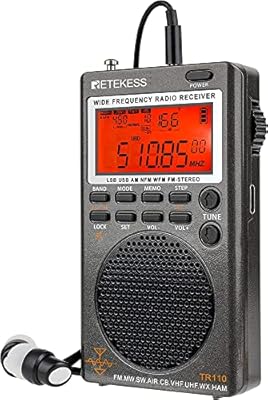
Retekess TR110 Portable Shortwave Radio
83%
88%
Reception Quality
91%
Portability
85%
Battery Life
83%
Ease of Use
89%
Weather Alert Functionality
More
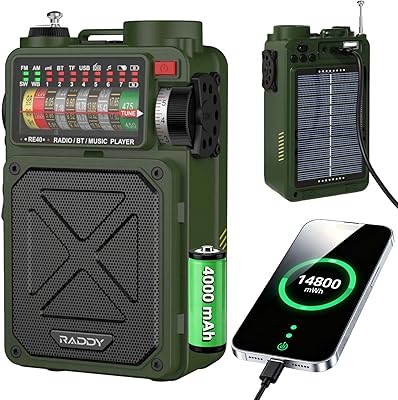
Raddy RE40 Portable Shortwave Radio
83%
88%
Battery Life
91%
Portability
85%
Charging Options
94%
Weather Alerts
62%
Bluetooth Performance
More
Greadio GR-T26 Portable AM FM Shortwave Radio
77%
93%
Ease of Use
88%
FM Reception
61%
Shortwave Reception
79%
AM Reception
72%
Speaker Quality
More
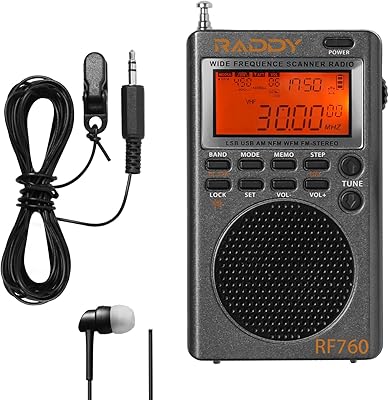
Raddy RF760 Portable Shortwave Radio Receiver
76%
83%
SSB Reception Quality
91%
Band Coverage Breadth
88%
NOAA Weather Alert
89%
Portability & Form Factor
52%
Audio & Speaker Quality
More
QODOSEN DX-286 Portable Shortwave Radio
76%
88%
Reception & Sensitivity
91%
Shortwave Band Performance
79%
AM & FM Everyday Usability
67%
Build Quality & Materials
62%
Battery Life
More
ZHIWHIS ZWS-8801 Portable AM/FM/Shortwave Radio
83%
88%
Reception Performance
90%
Portability & Size
85%
Ease of Use
75%
Sound Quality
82%
Battery Life
More
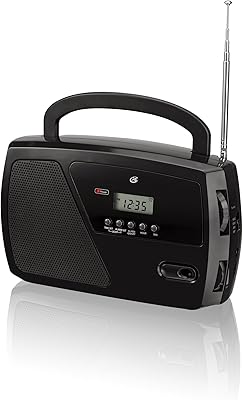
GPX R633B Portable Shortwave AM/FM Clock Radio
71%
83%
Value for Money
61%
Shortwave Reception
77%
AM/FM Performance
86%
Ease of Use
58%
Build Quality
More

FAQ

It does receive international shortwave broadcasts, but results depend heavily on timing and conditions. Evening and nighttime listening is significantly better — signals from Europe, Asia, and the Americas come in noticeably cleaner after dark due to how shortwave propagation works. Daytime reception is spottier, especially on higher frequency bands. Connecting a long-wire external antenna through the antenna jack makes a real difference if you want more reliable results.

Under typical radio-only use at moderate volume, most users report several hours of continuous playback per charge. Running Bluetooth streaming simultaneously draws more power and shortens that estimate meaningfully. The USB charging design means you can top it up from any standard power bank, which is handy on longer trips.

Yes, Bluetooth pairing works and the connection is generally stable within about 20 to 30 feet in open space. That said, the built-in speaker is sized for a portable radio, not a dedicated audio device, so the sound output is adequate for background listening but not particularly full or rich. Think of Bluetooth as a useful bonus feature rather than the main event.

For the most part, yes. FM and AM work exactly like any other portable radio — extend the antenna, power on, and scan. Shortwave takes a little more patience since you need to know which bands carry active stations at which times of day, but the radio itself does not add complexity to that learning curve. The included manual covers the basics, though it is fairly thin on shortwave listening tips for absolute beginners.

Honestly, urban AM reception is one of this radio's weaker points. Electronic interference from appliances, LED lighting, and building infrastructure tends to create static that the DSP chip cannot fully filter out. You may still receive strong local stations, but do not expect the clean audio you might get in a suburban or rural environment. Repositioning the radio and experimenting with orientation can help somewhat.

The radio accepts Micro SD cards and can read MP3 files stored on them. File navigation is basic — there is no screen capable of showing track names clearly, so managing a large, folder-heavy library is cumbersome. For best results, keep your card organized simply and limit it to the tracks you actually plan to listen to on a given trip.

The battery is not designed for straightforward user replacement the way a traditional removable cell would be. It is an internal lithium-ion pack that charges via USB. Some users with technical confidence have opened the unit to replace the cell after extended use, but that is not officially supported and voids any warranty. For most buyers, the battery should perform well for at least a year or two of regular use before any noticeable capacity drop.

The external antenna jack accepts a 3.5mm plug and is designed for use with a long-wire antenna — essentially a length of insulated wire strung up outdoors or near a window. This can noticeably improve FM and shortwave reception in weak-signal areas. One important note from the manual: do not connect an external antenna during thunderstorms, as lightning poses a real risk through a connected wire.

It is a solid choice for that purpose. The rechargeable battery means it does not depend on you having a fresh supply of AA or AAA cells when you actually need it. Multi-band coverage — including AM for local emergency broadcasts and shortwave for international news — gives you redundancy that single-band FM radios cannot match. Just make sure to charge it periodically so it is ready when you need it.

The plastic housing is lightweight rather than ruggedized, and it does flex slightly under pressure. That said, buyers who have carried the D368 in bags and packs for a year or more generally report that the body holds together without cracking and the controls stay firm. The antenna pivot is the most stress-prone part at full extension, so handle that with a bit of care. It is a travel companion built for careful daily use, not a drop-proof field radio.

Where to Buy