Overview

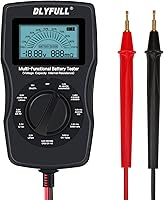
The X-cosrack B3 Universal Battery Tester is one of those tools you don't realize you need until you're elbow-deep in a junk drawer, shaking batteries hoping something will finally power the TV remote. Rather than relying on fixed slots that never quite fit every size, this handheld tester uses probe leads to contact virtually any cell you throw at it. The LCD screen reads clearly even in dim light, and at roughly the size of a TV remote itself, it slips easily into a drawer or toolbox. It won't replace precision lab equipment, but for everyday home use, it's considerably more capable than a basic go/no-go indicator.
Features & Benefits

What sets this battery tester apart is the combination of three readings in one shot: capacity percentage, voltage, and internal resistance. Capacity tells you how much charge remains, voltage gives a snapshot of current output, and internal resistance — the reading most buyers don't expect — reveals battery health at a deeper level. A high resistance reading signals a cell that's degrading even if voltage still looks acceptable, which is genuinely useful for managing rechargeable packs. Compatibility spans everything from AAA alkaline cells to 18650 lithium-ion and even tiny button cells like the CR2032. The lead-based testing approach handles oddly sized cells that would never fit a slotted tester without any fuss.

Best For

This handheld tester makes the most sense for everyday household use — think junk drawers overflowing with mixed AA, AAA, and 9V batteries of unknown age. It's equally well-suited for RC hobbyists and flashlight enthusiasts who cycle through 18650 packs and need a quick sanity check before a run. Caregivers managing hearing aid batteries will appreciate that it handles those tiny, awkward cells without any adapter gymnastics. It also works as a simpler alternative to a multimeter for people who find traditional meters intimidating. As a gift for a tinkerer or DIY-minded friend, it's the kind of practical tool that actually gets used rather than sitting on a shelf.

User Feedback

Buyers consistently praise the readable LCD display and the fact that it works accurately for common cell types right out of the box. The internal resistance readout tends to surprise people in the best way — it's not something most shoppers expected to find, and many highlight it as a standout discovery after using the B3 tester for a while. On the downside, a handful of users have raised concerns about the durability of the lead wires over extended use. Some buyers were also put off by the lack of included AAA batteries — minor in practice, but worth a heads-up before opening the box expecting to test right away. Overall, light household use reviews are strong; opinions grow more mixed for anyone running it hard on a daily basis.

Pros

  • Tests an unusually wide range of battery types, from tiny hearing aid cells to large D-size and 18650 lithium-ion packs.
  • The probe lead design eliminates the frustration of wrestling oddly sized cells into fixed slots.
  • Internal resistance readout gives a genuine sense of battery health beyond a simple voltage check.
  • Three simultaneous readings — capacity, voltage, and resistance — make each test genuinely informative.
  • The LCD screen is clear and easy to read without squinting, even in low-light conditions.
  • Compact and light enough to live permanently in a kitchen drawer or toolbox without taking up much space.
  • Works across multiple battery chemistries including alkaline, NiMH, and various lithium formats without any mode switching headaches.
  • Buyers consistently report accurate results for common cell types straight out of the box.
  • A practical, no-fuss alternative to a multimeter for users who just want quick battery health answers.

Cons

  • Requires two AAA batteries to operate, which are not included — mildly inconvenient on first use.
  • Probe lead wire durability has drawn concern from users who rely on the B3 tester frequently over time.
  • Internal resistance figures are useful as indicators but should not be mistaken for precision calibrated measurements.
  • No carrying case or protective sleeve is included, so the leads are vulnerable to tangling in storage.
  • The manual reportedly lacks clear guidance on interpreting resistance readings for less common battery types.
  • Not suitable for load testing, meaning a battery that reads decent at rest may still underperform under actual device demand.
  • No backlit display, which can make readings harder to interpret in very dim environments.
  • Capacity percentage readouts for aging or partially discharged cells can occasionally feel inconsistent between retests.

Ratings

The scores below for the X-cosrack B3 Universal Battery Tester were generated by AI after analyzing thousands of verified global purchases, with spam, incentivized reviews, and bot activity actively filtered out to reflect genuine buyer experiences. The results capture both what this handheld tester genuinely excels at and where real-world users have run into friction. You will find honest assessments of strengths and pain points across every major category that matters to practical buyers.
Battery Compatibility
93%
Users repeatedly highlight how this tester handles the full spectrum of everyday cells without any adapters or workarounds. From AAA alkaline batteries in TV remotes to 18650 Li-ion packs in flashlights and hearing aid cells, the coverage is broad enough that most households will rarely encounter a battery it cannot read.
A small number of users noted inconsistent results with older or less common lithium primary formats, particularly some specialty CRV3 cells. The voltage selector switch must be manually adjusted for each battery category, which adds a small but noticeable friction point when batch-testing mixed cells.
Ease of Use
88%
The probe-based approach means there is genuinely nothing to configure beyond flipping the voltage selector to the right range — most buyers report being fully operational within a minute of opening the box. For non-technical users who just want to know if a battery is worth keeping, the workflow is about as intuitive as it gets.
The manual voltage switch is the one point where newer users occasionally stumble, particularly when moving between alkaline and lithium cell types without reading the included guide. A small number of buyers found the selector labeling slightly ambiguous when testing 3.0V versus 3.7V lithium cells.
Reading Accuracy
79%
21%
For the most common cell types — AA, AAA, 9V alkaline, and standard 18650 lithium-ion — the capacity and voltage readings align well with what users expect, making it a reliable tool for sorting good batteries from depleted ones in everyday household scenarios. Most buyers treat the readings as trustworthy indicators and rarely feel misled.
The tester is better described as a directional health indicator than a precision instrument. Several technically inclined users noted that repeated readings on the same cell can vary slightly, and the internal resistance figures in particular should not be compared against calibrated reference equipment.
Internal Resistance Measurement
86%
This feature genuinely surprised a large portion of buyers who had never seen internal resistance on a consumer tester before. RC hobbyists and flashlight enthusiasts found it particularly valuable for identifying aging rechargeable cells that still show acceptable voltage but are quietly losing their ability to deliver current under real-world load.
Because this metric is uncommon on consumer testers, many buyers initially had no reference point for interpreting the numbers — the included documentation does not do enough to explain what constitutes a good versus poor resistance value for each chemistry. Without external context, the reading can feel informative but hard to act on.
LCD Display Clarity
82%
18%
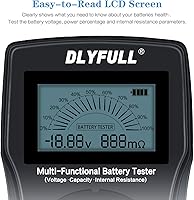
The screen is large enough to read all three metrics at a glance without squinting, which buyers consistently praise when sorting through a pile of batteries at the kitchen table or workbench. The simultaneous display of capacity, voltage, and resistance eliminates the need to toggle between reading modes.
The display has no backlight, which becomes a real limitation in dim garages, closets, or nighttime use. A handful of buyers noted that the contrast can wash out slightly under bright overhead lighting at certain viewing angles.
Build Quality
63%
37%
For light household use — occasional battery sorting a few times a week — the main body of this handheld tester feels adequately solid and has held up without issues for most buyers over months of regular home use. The grip is comfortable and the selector switch clicks positively between positions.
The probe lead wires are the most commonly cited durability concern, with a recurring pattern of buyers reporting fraying or weakening connections at the probe tips after sustained daily use. The wires feel noticeably thinner than the rest of the unit suggests, and heavy workshop users will likely encounter issues sooner than light household users.
Probe Lead Quality
58%
42%
For casual use, the included leads make contact reliably and are long enough to handle larger cells like D batteries and 26650 cylinders without awkward positioning. Buyers who use the tester a few times a week generally report no issues during the first several months of ownership.
This is the single most recurring complaint in user feedback. The insulation on the leads and the connection points at the probe tips have drawn consistent criticism for premature wear, with some buyers reporting failures within a few months of daily use. Replacement leads are not readily sold as accessories, which compounds the frustration.
Value for Money
81%
19%
For a tool that covers virtually every consumer battery type and delivers three meaningful health metrics simultaneously, most buyers feel the price is justified and then some. The inclusion of internal resistance testing at this price tier is a genuine differentiator that repeatedly shows up in positive buyer summaries.
Buyers who primarily test only one or two battery types occasionally feel they are paying for compatibility breadth they will never use. The probe lead durability concerns also factor into long-term value assessments — if the leads fail within a year of daily use, the effective cost per reliable test month climbs noticeably.
Portability & Form Factor
89%
At under 6.4 ounces and roughly the dimensions of a TV remote, this tester slips into a kitchen drawer, toolbox, or bedside table without claiming meaningful space. Buyers with multiple battery storage locations around the home appreciate that it is light enough to carry from room to room without feeling like a deliberate task.
No storage pouch or clip is included, which means the probe leads tend to tangle freely when the tester is tossed into a drawer. A few buyers noted that the leads getting caught on other items contributed to the wire wear they later experienced.
Setup & Out-of-Box Experience
71%
29%
Unboxing and getting to the first test is genuinely fast — the probe design means there is no learning curve around inserting cells into tricky slots, and most buyers are testing batteries within two or three minutes of opening the package. The overall first impression is positive for the majority of reviewers.
The omission of the two required AAA batteries is a recurring point of irritation in first-use reviews, particularly for buyers who expected to test immediately. It is a minor issue in practice but generates a disproportionate amount of early negative sentiment simply because the expectation gap catches buyers off guard.
Documentation & Guidance
54%
46%
For basic testing of common cell types, the included instructions are sufficient to get started without confusion. Buyers testing standard alkaline or NiMH batteries rarely need to consult the manual at all after the first use.
The documentation falls short for buyers who want to understand the internal resistance readings or interpret results for less common battery chemistries. Multiple users expressed frustration at the lack of reference tables or clear guidance on what resistance thresholds indicate a battery should be retired, leaving a key feature feeling underexplained.
Button Cell & Specialty Cell Handling
84%
Caregivers managing hearing aid batteries and users with large collections of CR2032 or AG-series cells consistently praise how the probe approach eliminates the adapter juggling that fixed-slot testers require. Being able to test a CR2016 and a CR2032 with the same tool and zero physical modification is a genuine time-saver.
Holding a small button cell steady against two probe tips simultaneously while reading the screen requires a bit of hand coordination that some older users or those with limited dexterity found fiddly. A stand or third-hand accessory would meaningfully improve the experience for this use case.
Long-Term Reliability
61%
39%
For buyers who use this tester a few times per week in a home environment, long-term satisfaction is generally solid — the main unit body shows little sign of wear over months of regular use, and the electronics perform consistently for casual household demands.
The picture changes for buyers who use the B3 tester more intensively. Workshop users, hobbyists, and anyone running it through dozens of test cycles per day are more likely to encounter probe lead degradation within the first year, which effectively determines the useful lifespan of the unit for heavier use patterns.

Suitable for:

The X-cosrack B3 Universal Battery Tester is a natural fit for anyone who accumulates batteries faster than they use them — households with kids' toys, remote controls, flashlights, and smoke detectors scattered across multiple rooms will get immediate value from being able to sort live cells from dead ones in seconds. RC hobbyists and flashlight enthusiasts who regularly work with 18650 and other lithium-ion cylindrical cells will appreciate the internal resistance readout, which gives a practical sense of whether a rechargeable cell is aging out before it fails mid-use. Caregivers managing hearing aid batteries for elderly family members will find the lead-based probe approach particularly helpful, since those tiny cells are notoriously awkward on fixed-slot testers. It also works well as a low-intimidation substitute for a basic multimeter — you get meaningful readings without needing to understand dial settings or probe polarity conventions. For a DIY-minded friend or family member who tinkers with electronics, this handheld tester makes a genuinely useful and affordable gift.
Not suitable for:

The X-cosrack B3 Universal Battery Tester is not the right tool for professionals or serious hobbyists who need lab-grade accuracy or data logging capabilities. If you are stress-testing battery packs for custom power builds, running discharge cycles, or need repeatable precision measurements for any technical application, this tester will leave you wanting more. The internal resistance readings are useful as a directional indicator, but they should not be treated as calibrated figures comparable to a dedicated impedance analyzer. Buyers who use battery testers daily in a workshop or repair environment should also take note of user feedback suggesting the probe lead wires may not hold up well under heavy, prolonged use. Finally, if you primarily use only one or two standard battery sizes and already own a basic voltage tester, this handheld tester may offer more breadth than you will realistically use.
Specifications

  • Brand: Manufactured by X-cosrack under model designation B3 (item model number M-BTB3-US).
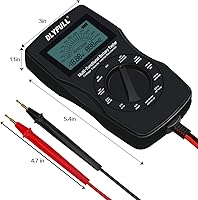
  • Dimensions: The unit measures 2.98 x 5.4 x 1.1 inches, making it compact enough to store in a standard kitchen or toolbox drawer.
  • Weight: The tester weighs 6.38 ounces, light enough for comfortable one-handed use during extended testing sessions.
  • Display: Readings are shown on an LCD screen that simultaneously displays capacity percentage, voltage, and internal resistance.
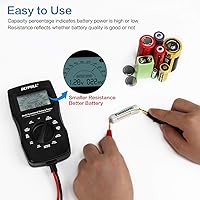
  • Testing Method: Testing is performed via two handheld probe leads rather than fixed battery slots, allowing contact with virtually any cell shape or size.
  • Metrics Measured: The tester reports three values per test: remaining capacity as a percentage, current voltage output, and internal resistance in milliohms.
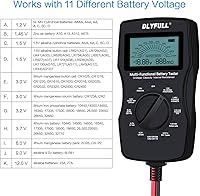
  • Voltage Range: Compatible input voltages span 1.2V, 1.5V, 3.0V, 3.2V, 3.7V, 9V, and 12V to cover the most common consumer and hobbyist battery formats.
  • Chemistries Supported: The tester is compatible with NiMH, alkaline, Li-ion, LiFePO4, and primary lithium battery chemistries.
  • Cell Formats: Supported physical formats include AAAA through D cylindrical cells, 9V blocks, 18650, 26650, and 32650 Li-ion cells, CR and AG series button cells, and hearing aid cells (A10, A13, A312, A675).
  • Power Source: The unit is powered by two AAA alkaline batteries, which are not included in the package.
  • Color: Available in black with a standard handheld grip form factor.
  • Availability: This product has been available on the market since August 23, 2019.
  • Selector Switch: A manual voltage selector switch on the unit must be set to the appropriate range before testing each battery type.
  • Portability: The handheld design requires no external power source or USB connection, making it fully portable for use anywhere in the home or workshop.
  • Use Case: Designed primarily as a household and hobbyist tool for assessing battery health; it is not intended as a precision laboratory or industrial instrument.

Related Reviews

Dlyfull B4 Universal Battery Tester
77%
92%
Battery Compatibility
86%
Display Clarity
74%
Ease of Use
71%
Reading Accuracy
67%
Build Quality
More
KKEANIC SL-049 Digital Battery Tester
80%
88%
Testing Accuracy
91%
Battery Type Coverage
93%
Ease of Use
69%
Display Readability
84%
Value for Money
More
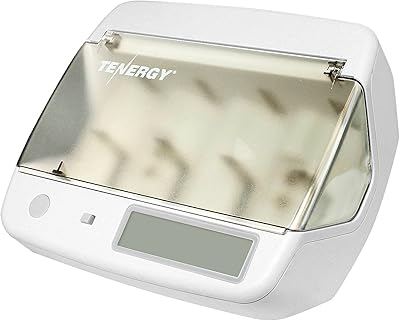
Tenergy TN299 Universal Battery Charger
74%
83%
Chemistry Compatibility
88%
Slot Independence
71%
Ease of Use
81%
Display & Monitoring
62%
Battery Fit & Compatibility
More
Intelligence 8 Bay Universal Battery Charger
86%
90%
Charging Speed
88%
Usability
93%
Safety Features
85%
Display Clarity
87%
Build Quality
More
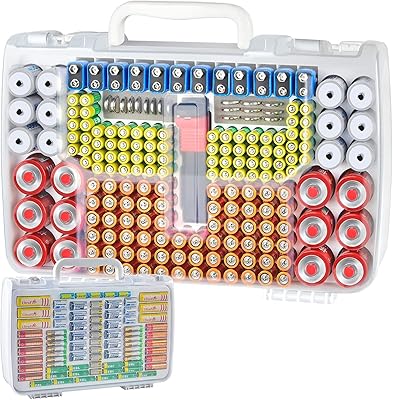
Xuerdon 269-Piece Double-Sided Battery Organizer Case
82%
93%
Storage Capacity
88%
Build Quality
71%
Slot Fit & Accuracy
74%
Battery Tester Utility
84%
Portability & Handle
More
Tenergy TN456 Universal Battery Charger
82%
93%
Battery Chemistry Compatibility
91%
Independent Slot Operation
88%
LCD Display & Data Readouts
86%
Capacity TEST Mode
79%
Charging Speed & Current Control
More
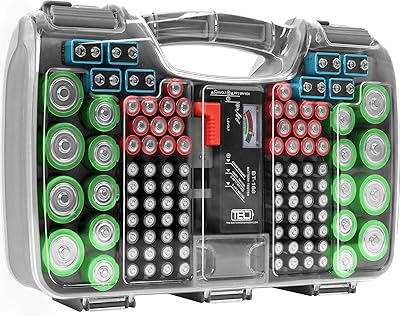
The Battery Organizer TBO2699 180-Battery Storage Case
78%
93%
Storage Capacity
78%
Build Quality
91%
Lid Design & Transparency
82%
Wall-Mount Usability
67%
Slot Fit & Battery Compatibility
More
Opus C3400 4-Channel Battery Charger Analyzer
79%
93%
Measurement Accuracy
91%
Multi-Channel Independence
89%
Chemistry Compatibility
88%
Capacity Test Reliability
82%
Internal Resistance Testing
More
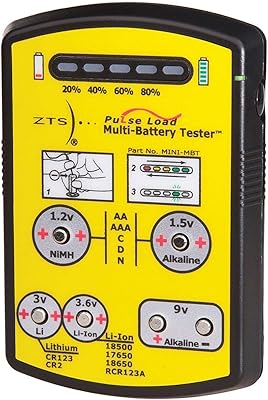
ZTS Mini-MBT Multi-Battery Load Tester
82%
93%
Testing Accuracy
96%
Ease of Use
88%
Battery Type Coverage
84%
Build Quality
91%
Portability
More
Bee Neat Battery Organizer and Storage Case with Tester
83%
92%
Storage Capacity
88%
Ease of Use
85%
Design and Build Quality
90%
Battery Tester Functionality
76%
Compactness and Space Efficiency
More

FAQ

No slots involved at all. The X-cosrack B3 Universal Battery Tester uses two handheld probe leads that you simply touch to the positive and negative terminals of any battery. This makes it much easier to handle oddly sized cells that would never fit a slotted tester, like large D cells or tiny CR2032 button cells.
Internal resistance is essentially a measure of how well a battery can deliver current under load. A low resistance value means the battery is healthy and can push power efficiently; a high value suggests the cell is aging or degraded, even if the voltage still looks acceptable. It's a more nuanced health indicator than voltage alone, and it's particularly useful for evaluating rechargeable cells that have been through many charge cycles.

Yes, 18650 cells are fully supported. The probe-based design handles the cylindrical format without any adapter, and the tester covers the 3.7V lithium-ion chemistry those cells use. It also works with 26650 and 32650 cells if you use larger-format lithium packs.

It does. Hearing aid battery formats including A10, A13, A312, and A675 are all listed as compatible. Because the tester uses probe leads instead of fixed slots, you just touch the probes to the flat faces of the cell, which is far less fiddly than trying to squeeze a small cell into an undersized slot.

Unfortunately, the two AAA alkaline batteries required to power the unit are not included. It's a minor but genuine inconvenience if you're opening it expecting to test right away. Keep a fresh pair of AAAs on hand when you unbox it, and you'll be up and running immediately.

The readings are reliable as general indicators rather than laboratory-precision figures. For common alkaline and NiMH cells, most users find the capacity and voltage numbers consistent and useful for sorting good batteries from weak ones. Where you should be a little more cautious is treating the internal resistance figures as exact calibrated measurements — they're directionally correct but not equivalent to a dedicated impedance analyzer.

It comes up often enough in user feedback to be worth mentioning. For light household use — checking remote control batteries, sorting a junk drawer — the leads hold up well for most people. If you plan to use this handheld tester heavily on a daily basis in a workshop setting, the wire connections at the probe tips may show wear over time. Being careful not to yank on the leads or leave them tangled in storage helps extend their lifespan.

For battery testing specifically, yes — it actually gives you more relevant information than a basic multimeter would. A standard multimeter measures voltage but won't give you capacity percentage or internal resistance. The B3 tester won't replace a multimeter for general electrical diagnostics, but for the specific job of assessing battery health across many different cell types, it's genuinely more practical.

It works with both. The tester supports NiMH rechargeable cells across the common cylindrical sizes, as well as alkaline disposables and various lithium formats including LiFePO4. Just make sure you set the voltage selector switch to match the battery type you're testing before taking a reading.

It's a genuinely practical gift rather than a novelty. Anyone who manages a large collection of batteries across multiple devices — remotes, power tools, hobby equipment, or emergency preparedness gear — will find real use for this tester on a regular basis. It's simple enough that no technical background is needed to operate it, which makes it a solid pick for a wide range of recipients.