Overview

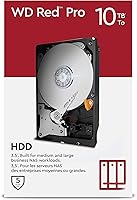
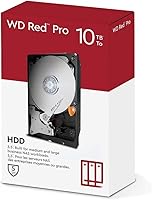
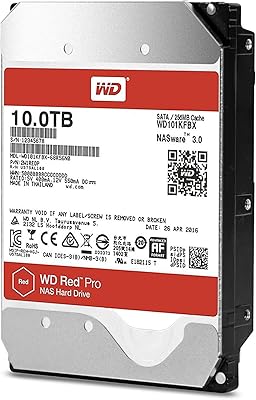
The WD Red Pro 10TB NAS Hard Drive occupies a specific and deliberate position within Western Digital's NAS lineup — sitting above the standard Red and Red Plus tiers, designed for businesses that need more than a prosumer drive can reliably deliver. At 10TB, it hits a practical capacity sweet spot for growing arrays: enough per bay to delay costly expansions without pushing into the upper pricing tiers. This NAS hard drive uses CMR recording technology, which holds a genuine advantage over SMR-based alternatives during RAID rebuilds and write-heavy operations. One thing to be clear on upfront: this is an internal drive engineered for NAS enclosures, not a desktop or portable storage solution.

Features & Benefits

Spin up a 7200 RPM drive in a multi-bay array and the throughput difference over slower NAS drives becomes obvious fast, especially during RAID rebuilds or concurrent multi-user file access. The WD Red Pro 10TB is rated for up to 300TB per year of workload — roughly three times the ceiling of the standard Red — meaning it won't be pushed beyond spec in 24x7 business environments. NASware 3.0 handles vibration compensation across densely packed enclosures, reducing the read errors that plague cheaper drives in multi-drive setups. A 256MB cache buffer keeps sequential transfers smooth, and the five-year limited warranty gives IT teams meaningful long-term protection.

Best For

This Pro-tier drive makes the most sense for small-to-medium businesses that have outgrown entry-level NAS setups and need hardware built for sustained, concurrent access. Think Synology or QNAP arrays in the 8-to-24 bay range, running video surveillance archives, creative asset libraries, or department-wide file sharing. IT admins building or expanding RAID 5 or RAID 6 arrays will especially value the CMR compliance here — SMR drives have caused enough painful rebuild failures to make that a hard requirement for many teams. If you are currently running a standard WD Red and hitting performance walls under heavier load, stepping up to this NAS hard drive is a well-reasoned move.

User Feedback

With around 91 ratings at the time of writing, the feedback pool for the WD Red Pro 10TB is smaller than you would expect for a drive in this class — so individual trends should be weighed with some caution. That said, the 4.2-star average reflects broadly positive ownership experiences: buyers consistently mention quiet operation, stable speeds in RAID, and plug-and-play compatibility with Synology, QNAP, and Terramaster enclosures. The less flattering feedback centers on a handful of early failures and some doubt about whether this Pro-tier drive holds up against WD Gold or Seagate Exos over a multi-year horizon. For most SMB use cases, the consensus leans reliably positive.

Pros

  • CMR recording technology makes RAID rebuilds predictable and far less risky than SMR alternatives.
  • The 7200 RPM spindle speed delivers noticeably better throughput in multi-drive arrays under concurrent load.
  • A 300TB per year workload rating supports genuine 24x7 business operation without warranty concerns.
  • NASware 3.0 firmware handles vibration compensation well in densely packed multi-bay enclosures.
  • Confirmed compatibility across Synology, QNAP, and Terramaster platforms with minimal setup friction.
  • The five-year limited warranty is longer than most NAS drives in this tier and adds real long-term value.
  • Quiet operation is a consistent positive note from buyers running it in office or shared workspace environments.
  • Supports arrays up to 24 bays, giving businesses room to expand without swapping drives mid-cycle.
  • 256MB cache keeps sequential transfers stable during large file operations and backup jobs.

Cons

  • The review pool of roughly 91 ratings is small for a storage drive, making long-term reliability harder to assess confidently.
  • A subset of buyers have reported early unit failures, which is a concern worth factoring in for critical data environments.
  • Priced at a premium that is harder to justify for light or infrequent NAS workloads.
  • Does not match the durability ceiling of true enterprise drives like WD Gold or Seagate Exos for the heaviest deployments.
  • Not suitable as a standalone desktop drive — the NAS-tuned firmware is a limitation outside its intended environment.
  • No included mounting hardware or accessories, which is standard but still an added cost for multi-bay build-outs.
  • Higher RPM and sustained workloads generate more heat than lower-tier NAS drives, requiring adequate enclosure airflow.
  • Buyers stepping up from WD Red Plus may find the performance gain modest unless their workload genuinely demands it.

Ratings

Our AI rating system analyzed verified global user reviews for the WD Red Pro 10TB NAS Hard Drive, actively filtering out incentivized, bot-generated, and low-signal feedback to surface what real buyers actually experience. Scores reflect both the genuine strengths that make this Pro-tier drive a trusted choice for business NAS environments and the friction points that temper an otherwise strong reputation. Every category below is weighted against real-world usage patterns, not manufacturer specifications alone.

RAID Reliability
88%
Users running RAID 5 and RAID 6 arrays consistently report stable, uneventful operation over extended periods. The CMR recording technology is the key reason: drives behave predictably during rebuilds, which is exactly what IT admins need when a drive fails in a live business array.
A small but notable subset of buyers reported unexpected drive failures within the first year, which is particularly stressful in RAID configurations where a second failure during rebuild can mean data loss. The sample size of roughly 91 ratings makes it difficult to determine whether this is a production batch issue or a broader pattern.
NAS Compatibility
91%
Compatibility across Synology, QNAP, and Terramaster platforms was smooth for the vast majority of buyers, with drives recognized immediately on first boot without manual firmware intervention. Users running TrueNAS and ZFS-based systems also reported clean integration, which matters when you are deploying multiple drives at once.
A handful of users with older or budget-tier NAS enclosures encountered recognition issues, though it is unclear whether the drive or the enclosure firmware was the root cause. Western Digital's compatibility list does not cover every enclosure model, so buyers with niche hardware should verify before committing.
Sustained Throughput
83%
The 7200 RPM spindle speed produces a tangible performance advantage over 5400 RPM NAS drives, particularly during large sequential transfers like media ingest or surveillance archive writes. Users moving multi-gigabyte files across a network share regularly noted faster completion times compared to their previous Red Plus drives.
Random read and write performance, as with all mechanical drives, lags behind what even a mid-range NAS SSD cache tier can deliver. Buyers who expected desktop-SSD-like responsiveness in mixed small-file workloads were sometimes disappointed, though that expectation misunderstands what this drive is designed to do.
Acoustic Performance
86%
Quiet operation came up repeatedly as an unprompted positive in user reviews, which stands out given that 7200 RPM drives typically generate more noise than their slower counterparts. Buyers running NAS units in shared office spaces or small server rooms found the acoustic footprint acceptable for a near-silent working environment.
Under heavy sustained load — particularly during long RAID rebuilds or large batch transfers — some users noticed increased vibration noise, especially in enclosures without rubber drive dampeners. This is not unusual for high-RPM drives, but it is worth noting for noise-sensitive deployments.
Long-Term Durability
69%
31%
The five-year warranty signals Western Digital's confidence in the drive's longevity, and many users in the feedback pool report months of trouble-free operation in always-on NAS environments. The NASware 3.0 error recovery controls are specifically tuned to reduce the kind of cumulative stress that shortens drive lifespan in multi-bay setups.
A recurring concern among more technically experienced buyers is whether the WD Red Pro 10TB truly holds up over a three-to-five year horizon compared to WD Gold or Seagate Exos drives. With only around 91 reviews available, there is simply not enough long-cycle ownership data to answer this confidently, and that uncertainty is reflected in the score.
Value for Money
71%
29%
For businesses that genuinely need the higher workload ceiling and CMR reliability, the premium over WD Red Plus is defensible — the five-year warranty alone offsets some of the cost delta when factoring in replacement logistics and downtime risk. Buyers who treat storage as a long-term infrastructure investment generally feel the price is justified.
Home users or small offices running light workloads frequently noted that the price felt steep relative to what their actual usage demanded. When Seagate IronWolf Pro drives regularly compete at similar or lower price points, buyers who did price comparisons before purchasing sometimes expressed mild regret at not shopping around more carefully.
Heat Management
74%
26%
Under typical business workloads in well-ventilated NAS enclosures, operating temperatures remain within a comfortable range and most users never flagged thermal behavior as a concern. The drive's internal components are rated for continuous operation, and NAS enclosures with active cooling handle the thermal load without issue.
In fully populated, high-density enclosures with passive or single-fan cooling, temperatures can climb under sustained writes — a natural consequence of the 7200 RPM design. Users who filled 12 or more bays simultaneously found that enclosure airflow became a more critical variable than it was with their previous slower drives.
Firmware Intelligence
84%
NASware 3.0 does real, observable work in multi-drive environments: vibration compensation between adjacent spinning drives reduces read errors that users of unoptimized drives frequently encounter. IT admins managing densely populated arrays specifically called out improved stability compared to running generic desktop drives in the same bays.
The same firmware tuning that makes this NAS hard drive excellent in enclosures makes it a poor fit for standalone desktop use, where error recovery timing can cause OS-level timeouts. This is a deliberate design trade-off, but buyers who did not read the fine print before purchasing for desktop use found themselves frustrated.
Workload Headroom
89%
The 300TB per year workload rating gives businesses meaningful room to grow without worrying about voiding the warranty through heavy use. Surveillance deployments with multiple high-resolution camera streams writing simultaneously — one of the most demanding NAS workloads — fall comfortably within spec for most reasonable camera counts.
For the majority of SMB buyers, 300TB per year is more headroom than they will ever realistically consume, which means they are partly paying for a ceiling they will never approach. Buyers with lighter workloads would find the Red Plus tier's lower workload rating entirely sufficient and more cost-effective.
Installation Experience
82%
18%
Physical installation is straightforward: standard 3.5-inch form factor, no proprietary connectors, and immediate recognition on major NAS platforms. Users deploying multiple drives in a new array reported that all drives in a batch were recognized and ready to format within minutes of powering on the enclosure.
No mounting hardware or screws are included in the box, which adds a small but real cost and logistics step for buyers populating a new enclosure for the first time. This is standard practice across the industry but remains a mild friction point, particularly for first-time NAS builders.
Vibration Resistance
81%
19%
The 3D Active Balance Plus technology meaningfully reduces the resonance feedback between adjacent spinning drives in a fully populated enclosure. Users who had previously experienced read errors or noise spikes from vibration coupling in cheaper drives noted a clear improvement after switching to this Pro-tier drive.
In enclosures with poor mechanical isolation — particularly budget NAS units with thin metal trays — vibration dampening at the drive level can only do so much. A few users in 12-plus bay setups found that enclosure-level vibration was still noticeable under load, suggesting the fix needs to come from both the drive and the chassis.
Warranty & Support
87%
Five years of limited warranty coverage is a genuine differentiator in a market where two-to-three year warranties are the norm. Business buyers in particular valued knowing that a replacement pathway exists for the majority of a typical NAS deployment cycle without additional extended warranty purchases.
Western Digital's RMA process drew mixed feedback from users who did encounter warranty claims — response times and replacement turnaround were inconsistent depending on region. For businesses running critical data infrastructure, the warranty's value depends heavily on how quickly a replacement arrives, and that experience varies.
Scalability
85%
Official support for up to 24-bay enclosures means businesses can build out a significant storage infrastructure without switching drive families mid-project. IT teams appreciated being able to standardize on a single drive model across both current and planned future bays, simplifying procurement and spare management.
Buyers scaling toward true enterprise territory — think 48-plus bay JBODs or SAN environments — will eventually need to step up to WD Gold or a proper enterprise line. The Red Pro tops out at the upper edge of prosumer and SMB NAS, and pushing it beyond its intended environment risks voiding the warranty.

Suitable for:

The WD Red Pro 10TB NAS Hard Drive is built for small-to-medium businesses that need more than a home NAS drive but do not yet require full enterprise-class hardware. IT administrators managing Synology, QNAP, or TrueNAS arrays in the 8-to-24 bay range will find it a natural fit, particularly where RAID 5 or RAID 6 configurations demand CMR recording for safe, predictable rebuilds. Teams dealing with high-volume workloads — surveillance footage retention, collaborative media storage, or shared design project repositories — will benefit from the 7200 RPM spindle speed and the 300TB per year workload ceiling, both of which translate to drives that hold up under continuous, concurrent access. It also makes strong sense for anyone upgrading from a standard WD Red who has started hitting performance walls as their team or data volume grows. The five-year warranty is a practical asset in business environments where drive replacement logistics carry real cost.

Not suitable for:

The WD Red Pro 10TB NAS Hard Drive is not the right call for home users or solo content creators running a basic two-to-four bay personal NAS — the capacity and workload rating exceed what those setups realistically need, and more affordable alternatives cover that ground without the premium. Desktop PC users looking for internal storage should look elsewhere entirely; this drive is engineered specifically for NAS enclosures and the firmware reflects that. Buyers who prioritize absolute data-center-grade durability and are comparing it against WD Gold or Seagate Exos drives should understand this Pro-tier drive sits below that class — it is prosumer and SMB-oriented, not rack-server grade. Organizations with very tight hardware budgets may also find the price-per-terabyte harder to justify when lighter workloads could be served by the Red Plus at a lower cost. Finally, anyone expecting the review volume of a widely consumer-tested product should note the relatively small feedback pool, which makes it harder to draw firm long-term reliability conclusions.

Specifications

  • Capacity: This drive offers 10TB of usable storage, formatted and ready for installation in a compatible NAS enclosure.
  • Form Factor: Standard 3.5-inch internal hard drive form factor, compatible with most desktop NAS enclosures and tower servers.
  • Interface: Uses a SATA 6 Gb/s interface, backward compatible with SATA 3 Gb/s controllers at reduced throughput.
  • Rotational Speed: Spins at 7200 RPM, placing it in the performance class above the 5400 RPM drives common in entry-level NAS products.
  • Cache Buffer: Equipped with a 256MB DRAM cache buffer to support consistent data transfer performance during sustained read and write operations.
  • Recording Type: Uses Conventional Magnetic Recording (CMR), which provides stable write behavior and reliable RAID rebuild performance compared to SMR drives.
  • Workload Rating: Rated for up to 300TB of data transferred per year, supporting continuous 24x7 operation in business NAS environments.
  • NAS Bay Support: Officially supports deployment in NAS systems with up to 24 drive bays, covering both mid-range and large-scale business enclosures.
  • Warranty: Backed by a 5-year limited warranty from Western Digital, longer than the 2-to-3 year coverage typical of consumer-grade drives.
  • Firmware: Ships with NASware 3.0 firmware, which includes vibration compensation, error recovery controls, and optimizations for multi-drive NAS operation.
  • Vibration Protection: 3D Active Balance Plus technology reduces the impact of rotational and non-rotational vibration in densely populated multi-drive enclosures.
  • Dimensions: Measures 5.78 x 4 x 1.03 inches, fitting standard 3.5-inch drive bays without adapters.
  • Weight: Weighs 1.85 pounds, consistent with other 3.5-inch mechanical hard drives in this capacity range.
  • OS Compatibility: Compatible with ZFS, Btrfs, ext4, and other common file systems used in NAS operating environments including DSM, QTS, and TrueNAS.
  • Brand & Series: Manufactured by Western Digital under the WD Red Pro series, positioned above Red Plus and below the enterprise-class WD Gold lineup.
  • Release Date: First made available in October 2020, with the 10TB variant remaining an active part of the current WD Red Pro lineup.

Related Reviews
Western Digital WD Red Pro 10TB NAS Hard Drive
86%
92%
Performance
90%
Reliability in RAID Environments
88%
Data Transfer Speed
85%
Long-Term Durability
87%
Shock Resistance
More
WD Red Pro 3TB NAS Hard Drive
86%
91%
Performance
88%
Reliability
92%
Compatibility with NAS Systems
65%
Noise Levels
89%
Ease of Setup
More
Western Digital WD Red 10TB NAS Hard Drive
83%
88%
Long-Term Reliability
91%
Noise & Acoustics
86%
Heat Management
89%
RAID Compatibility
67%
Sequential Read Speed
More
Western Digital 14TB WD Red Pro NAS Hard Drive
88%
92%
Performance
89%
Reliability
88%
Workload Handling (300TB/yr)
85%
Ease of Installation
90%
Build Quality
More
Western Digital WD Red Pro 16TB NAS Hard Drive
81%
88%
Long-Term Reliability
91%
RAID Performance
86%
Multi-User Throughput
67%
Value for Money
61%
Heat Management
More
Western Digital 26TB WD Red Pro NAS HDD (WD260KFGX)
86%
98%
Storage Density
94%
Write Consistency (CMR)
62%
Acoustic Profile
88%
Thermal Management
91%
Vibration Resistance
More
WD Red Pro 8TB NAS Internal Hard Drive
83%
88%
Long-Term Reliability
84%
Noise & Vibration
91%
RAID Compatibility
67%
Thermal Performance
72%
Value for Money
More
WD Red Pro 20TB NAS Hard Drive
83%
88%
Long-Term Reliability
91%
RAID Performance
86%
Sustained Throughput
93%
NAS Compatibility
63%
Thermal Management
More
Western Digital 12TB WD Red Pro NAS Hard Drive
86%
92%
Performance in RAID Environments
89%
Data Transfer Speed
94%
Reliability for 24/7 Operation
88%
Workload Capacity (550TB/year)
70%
Temperature Management
More
Western Digital WD Red Pro 6TB NAS Hard Drive
80%
88%
Long-Term Reliability
93%
RAID Compatibility
84%
Read & Write Performance
91%
NAS Platform Compatibility
67%
Value for Money
More

FAQ

In most cases, yes. The WD Red Pro 10TB NAS Hard Drive is confirmed compatible with current Synology and QNAP enclosures, and buyers have reported smooth recognition without manual configuration. That said, it is always worth checking your specific enclosure manufacturer's compatibility list before purchasing, especially for older models.

The standard WD Red lineup was largely phased out after controversy over undisclosed SMR usage. Red Plus uses CMR recording and targets home and small-office NAS setups with lighter workloads. The Red Pro steps up to 7200 RPM, a much higher workload rating of 300TB per year, and supports up to 24 bays — making it the right call for business environments with heavier, more sustained demands.

Physically it will fit and spin up in a desktop, but it is not the ideal choice. The NASware 3.0 firmware is tuned for multi-drive NAS behavior, including specific error recovery timing that can conflict with how desktop operating systems expect drives to respond. For desktop use, a standard WD Blue or Black would serve you better and cost less.

It is a genuine technical concern, not just marketing. SMR drives write data in overlapping tracks, which means any out-of-sequence write — exactly what happens during a RAID rebuild — requires a time-consuming read-modify-write cycle. This can cause drives to appear unresponsive and, in some cases, trigger RAID controllers to drop them from the array. CMR avoids this entirely, making it a practical requirement for RAID 5 and RAID 6 configurations.

Multiple buyers have specifically called out quiet operation as a positive. While no hard drive is completely silent, the vibration dampening built into the drive helps reduce acoustic impact in multi-bay enclosures. If you are running a NAS in a shared office space, it should not be a distraction.

It depends on your workload. 300TB per year works out to roughly 820GB of data written per day. For most SMB use cases — shared file storage, backups, and periodic large-file access — you are unlikely to hit that ceiling. Where it does matter is in environments running surveillance systems with multiple high-resolution camera feeds writing continuously, or media production shops doing heavy daily ingest.

Both drives are strong competitors at the SMB NAS level and share similar specs: CMR recording, 7200 RPM, multi-year warranties, and comparable workload ratings. The IronWolf Pro includes Seagate's IronWolf Health Management feature for enclosure-level monitoring on compatible NAS units. The WD Red Pro counters with NASware 3.0 and strong Synology integration. Choosing between them often comes down to which NAS ecosystem you are already invested in.

A small number of failure reports are present, but the sample size of roughly 91 ratings makes it hard to draw firm statistical conclusions. Early failures happen across all hard drive brands at some rate, and the 5-year warranty provides a meaningful safety net if you do encounter a defective unit. For mission-critical data, pairing this drive with a proper RAID configuration and an off-site backup remains essential regardless of drive brand.

Running at 7200 RPM, it does generate more heat than slower NAS drives — that is a straightforward physics trade-off for the higher performance. In well-ventilated enclosures with active cooling, temperatures should stay within safe operating range. If you are filling all bays in a high-density enclosure, make sure your NAS has adequate airflow; passive or single-fan cooling may not be enough under sustained load.

Yes, and in fact ZFS benefits directly from CMR drives. ZFS performs extensive background data integrity checks and occasional scrubs that generate non-sequential write patterns — the exact scenario where SMR drives struggle. The Pro-tier drive's higher workload ceiling and error recovery firmware also align well with how ZFS manages drives in a pool, making it a solid choice for TrueNAS Core, TrueNAS Scale, or any other ZFS-based NAS build.

Where to Buy