Overview

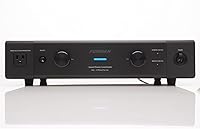
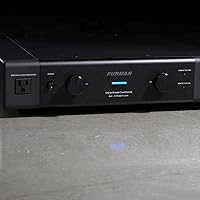
The Furman Elite-15 PF i AC Power Conditioner has been a fixture in serious audio and home theater racks since its introduction in 2008, and it continues to hold a top-five spot in its category for good reason. Furman has built its reputation across professional recording studios and dedicated listening rooms alike — this is not a company that makes mass-market strip surge protectors. This power conditioning unit is engineered for people who treat clean, stable AC power as a foundational requirement, not an afterthought. Rack-mount construction in a standard 2U chassis signals its professional intent before you even plug anything in.
Features & Benefits

What sets the Elite-15 PF i apart from basic surge strips is its approach to power delivery. Linear noise filtering on every outlet works to strip out the high-frequency interference that pollutes household AC lines — the kind of noise that can manifest as a faint hiss, hum, or subtle veiling in an audio system. Four outlets add a further layer of ultrasonic filtering specifically tuned for digital and video components, keeping their switching noise from bleeding into analog circuits. The Power Factor Technology is particularly meaningful for amplifier users: it maintains a reservoir of peak current that standard conditioners simply cannot supply during dynamic musical transients. Four outlets can also be toggled via 12V trigger for clean, automated system power-up.

Best For

This Furman conditioner makes the most sense for a specific kind of buyer. If you are running a high-end two-channel or multichannel system — separate amplifier, preamp, DAC, source components — and you have already addressed acoustics and cabling, power quality is a logical next step. Home theater enthusiasts with high-resolution video displays will also find value, as clean AC can reduce digital noise artifacts in sensitive processing hardware. It suits anyone who wants their equipment rack to look and function professionally. Those coming from a basic power strip or a cheap MOV-based surge protector will likely notice the most dramatic difference. If you are already running a competing linear conditioner, the upgrade case is more nuanced.

User Feedback

Owners of this power conditioning unit tend to be experienced and opinionated, which makes the feedback particularly useful. The most consistent praise centers on noise floor improvements — especially from users pairing it with high-current amplifiers, who describe a blacker background and more effortless dynamic swings. Build quality gets consistent marks; this is clearly a unit built to last a decade in a rack. The main point of contention is value: skeptics argue that power conditioning benefits are system-dependent and that audible differences can be subtle at best. That is a fair position. Long-term owners, however, report zero reliability issues over many years, which matters when you are protecting expensive components.

Pros

  • Linear noise filtering on every outlet produces a measurably lower noise floor in sensitive audio systems.
  • Power Factor Technology delivers a substantial peak current reserve that benefits high-current amplifiers during demanding passages.
  • Dedicated outlet groupings keep digital component noise isolated from analog circuitry — a detail that matters in mixed systems.
  • Non-sacrificial surge protection does not wear out over time, unlike standard MOV-based strips that degrade silently after each event.
  • Thirteen outlets give you room to grow a complex system without running secondary power strips.
  • 12V trigger support allows automated, sequenced power-up and power-down across your entire rack.
  • Telco and cable or satellite line protection covers often-overlooked entry points for transient voltage.
  • Rack-mount 2U form factor integrates cleanly into professional or custom home theater racks.
  • Long-term owners consistently report zero reliability issues over many years of continuous use.
  • Furman has a proven track record in professional studios, lending credibility that consumer-focused brands cannot match.

Cons

  • The price is substantial and hard to justify unless your components are genuinely high-resolution and resolving.
  • Audible improvements are system-dependent — some users in less sensitive setups will notice little to no difference.
  • Rack-mount form factor makes it impractical for anyone without an equipment rack or dedicated AV furniture.
  • At 15 lbs, it is heavy enough that positioning and cable management require real planning.
  • No built-in display showing real-time voltage or current draw, which some competing units at this tier offer.
  • Only compatible with 120V AC systems, limiting its use to North American installations without a step-down transformer.
  • The single front-panel outlet feels like an afterthought for a unit with this level of engineering elsewhere.
  • Setup and integration with 12V trigger systems assumes a degree of technical familiarity that novice buyers may lack.

Ratings

The Furman Elite-15 PF i AC Power Conditioner scores here reflect an AI-driven analysis of verified global user reviews, with spam, bot-generated, and incentivized submissions actively filtered out before scoring. Ratings capture the full picture — what this power conditioning unit genuinely excels at, where it falls short, and where buyer opinions are divided — so you can make a clear-eyed decision before spending at this level.
Noise Filtering Performance
91%
Owners running high-resolution two-channel systems consistently report a measurably quieter noise floor after installing this Furman conditioner — particularly noticeable during quiet passages in music or silent film scenes. The linear filtering approach earns trust from technically literate users who have tested it against competing designs.
Results are not universal. Buyers with already-clean power or less resolving systems sometimes report no audible difference whatsoever, which fuels ongoing skepticism in certain corners of the audiophile community about whether the improvement justifies the investment.
Build Quality
93%
The chassis feels immediately substantial — heavy-gauge steel, solid rear panel connectors, and a front panel that does not flex or creak under pressure. Long-term owners who have had this unit racked and running for five or more years rarely mention any physical degradation.
A minority of users note that the front panel display, while functional, looks dated compared to newer competitors offering color screens or real-time power monitoring readouts. It is purely cosmetic but noticeable on premium racks.
Surge Protection Design
89%
The non-sacrificial series protection design is genuinely different from the MOV-based strips most buyers are coming from. Because it does not degrade with each transient event, long-term owners feel confident their equipment remains protected years after installation without needing to replace the unit.
There is no visual indicator confirming protection status after a surge event, which makes some users anxious about whether the unit is still performing its protective function. Competitors at this price tier sometimes include event logging or indicator lights for added reassurance.
Power Delivery for Amplifiers
88%
Users pairing this power conditioning unit with high-current stereo or monoblock amplifiers frequently describe improved dynamic headroom — music sounds less compressed during loud, complex passages. The peak current reservoir built into the Power Factor Technology is the primary reason this unit outperforms basic conditioners for amplifier-heavy systems.
A small number of users running extremely high-powered amplifiers — those pulling sustained loads near the 15-amp circuit limit — report wanting more headroom. In those edge cases, the shared 15-amp total output becomes a real constraint rather than a theoretical one.
Outlet Organization
86%
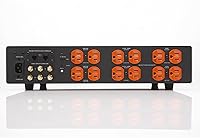
Having 13 outlets organized into functionally distinct groups — analog, digital or video, and a convenience outlet up front — is one of the practical strengths that experienced system builders appreciate most. It removes the need for secondary power strips, which introduce their own noise problems.
Four outlets being tied to 12V trigger control is a double-edged design: it adds automation convenience but means those outlets are not independently switchable without a trigger-compatible source component. Users without a trigger-equipped preamp lose that functionality entirely.
Value for Money
62%
38%
For buyers who already own high-end components and have exhausted other system optimizations, the Elite-15 PF i represents a logical and durable final step — one that does not need to be replaced every few years like cheaper alternatives. Its consistent top-five category ranking over 15 years suggests sustained buyer satisfaction at the point of commitment.
The price is a consistent sticking point in user reviews, and honestly so. Skeptical buyers who purchase expecting a transformative improvement on modest systems frequently feel let down, and negative reviews often center on price-to-performance disappointment rather than any product defect. This is a purchase that requires self-awareness about your system tier.
12V Trigger Integration
83%
For users whose preamplifiers or processors include 12V trigger outputs — which most separates-level gear does — the automation this feature enables is a genuine quality-of-life improvement. Powering an entire rack with a single button press is the kind of convenience that becomes difficult to give up once you have used it.
Setup requires some familiarity with trigger cabling and compatible component settings, and the manual guidance is thin on specifics. Users new to trigger-controlled systems occasionally report confusion during initial configuration, particularly around which outlet groups respond to which trigger input.
Rack Mount Practicality
84%
The standard 2U rack-mount form factor integrates cleanly into any professional or custom home theater rack without adapters or modifications. Users building serious equipment racks consistently praise the fact that it looks and installs like the professional unit it is designed to be.
At 15 lbs, the unit is heavier than it appears in product photos, and rear cable management becomes genuinely awkward given the number of outlets and protection connections available. Some users wish the depth were slightly shallower to accommodate shorter rack enclosures.
Digital Component Isolation
81%
19%
The four outlets with supplemental ultrasonic filtering for digital and video components are well-regarded by users running mixed analog-digital systems. Keeping a streaming device, DAC, or display processor on those outlets rather than the standard filtered outlets is a practical detail that benefits system coherence.
The distinction between outlet groups is not immediately obvious from the rear panel labeling, and the documentation does not do a thorough job of guiding buyers on optimal component assignment. A few users have inadvertently plugged analog gear into the digital outlets without realizing the filtering profile differs.
Telco and Cable Line Protection
77%
23%
The inclusion of coaxial and telephone line protection ports addresses a commonly overlooked vulnerability in home theater setups. Users with cable or satellite boxes connected appreciate that transients cannot enter the system through those signal lines, and the negligible insertion loss means signal quality is unaffected.
The coaxial protection ports accept only a single cable-in and cable-out connection, which limits their usefulness in setups where the cable signal is split before reaching multiple devices. Users with more complex cable routing have to make compromises.
Noise Floor Consistency Over Time
85%
Unlike MOV-based designs that lose effectiveness silently after each surge event, long-term owners of this Furman conditioner report that filtering performance feels consistent years into ownership. This reliability over time is a meaningful factor for buyers who view this as a permanent component in their system.
There is no objective way for an end user to measure filtering performance at home, so confidence in long-term consistency is essentially based on trust in the design and Furman's reputation. Users who like measurable, verifiable performance data will find that transparency lacking.
System Automation Compatibility
78%
22%
The 12V trigger ecosystem is broadly supported by high-end preamplifiers, AV processors, and control systems, making this unit compatible with most separates-based setups without additional hardware. Users integrating it into Crestron or Control4 environments report smooth compatibility.
There is no RS-232 or IP control option, which limits integration into more sophisticated home automation platforms that have moved beyond analog trigger signals. For buyers building fully networked smart home systems, this is a relevant gap.
Front Panel Usability
71%
29%
The front-panel outlet is genuinely useful during setup and reconfiguration, allowing a component to be powered temporarily without routing a cable to the rear of the rack. The power switch and indicator display are straightforward and require no learning curve.
The front panel display provides minimal real-time information — no voltage readout, no current draw, no protection status indicator. At this price point, buyers reasonably expect more visibility into what the unit is actually doing at any given moment.
Long-Term Reliability
92%
Multi-year ownership reviews are consistently positive on the reliability front — units purchased in the early 2010s are reported still functioning without issue, which is exactly what buyers at this investment level need to hear. The absence of sacrificial components means there is less to fail over time.
Given the unit's age in the market and the lack of a firmware or software layer, there is nothing to update or recalibrate if power standards or user needs change. It is reliable but fixed — what you buy is what it will always be.

Suitable for:

The Furman Elite-15 PF i AC Power Conditioner is purpose-built for audiophiles and home theater enthusiasts who have already invested significantly in their equipment and want their AC power to match that standard. If you are running a system with separate amplification — a dedicated stereo amp, multichannel processor, high-resolution DAC, or a mix of analog and digital sources — this is exactly the kind of unit that addresses the real-world noise problems those configurations introduce. Recording studio owners and serious listening room builders will appreciate its ability to isolate component groups, keeping digital switching noise away from sensitive analog circuits. It also suits anyone building a rack-based system who wants clean, organized power management with professional aesthetics and long-term reliability rather than a stopgap solution. Buyers who have already tested entry-level conditioners and found the results underwhelming will find this Furman conditioner operates in a meaningfully different league.
Not suitable for:

The Furman Elite-15 PF i AC Power Conditioner is not the right call for casual listeners or anyone powering a modest, entry-level audio or home theater setup. At its price point, the investment only makes practical sense when the components being protected and conditioned are themselves high-resolution and resolving enough to reveal AC-related shortcomings. Buyers expecting a dramatic, guaranteed improvement regardless of system quality may be disappointed — the audible benefits of power conditioning are real but system-dependent, and a mid-fi setup may show little to no perceptible change. It also requires rack-mount infrastructure; this is not a shelf-top unit, and buyers without an equipment rack will find its 2U chassis awkward to place. Those primarily concerned with basic surge protection for computers, televisions, or everyday electronics will find far simpler and more cost-effective solutions on the market. Finally, anyone on a tight budget should be honest with themselves: the Elite-15 PF i is a considered, long-term purchase, not an impulse buy.

Specifications

  • AC Input Capacity: The unit accepts up to 15 amps of AC input current, suitable for demanding high-current audio and home theater systems.
  • Total Output: Combined output across all outlets is rated at up to 15 amps RMS continuous, shared across the entire unit.
  • Total Outlets: 13 outlets are provided in total: 1 on the front panel and 12 on the rear panel, organized into functional groups.
  • Noise Filtering: All outlets feature linear noise filtering, with transverse mode attenuation exceeding 40 dB from 10 kHz to 100 kHz and exceeding 80 dB from 2 kHz up to 1 GHz.
  • Ultrasonic Filtering: Four rear outlets include an additional layer of ultrasonic filtering specifically optimized for digital and video components.
  • Surge Protection: Series multi-stage surge suppression is non-sacrificial and does not degrade after absorbing transient events, unlike standard MOV-based designs.
  • Voltage Shutdown: An Extreme Voltage Shutdown circuit automatically disconnects the load if incoming AC voltage rises to a potentially damaging level.
  • Peak Current Reserve: Power Factor Technology maintains a surplus peak charge reservoir exceeding 45 amps, designed to support the instantaneous current demands of high-power amplifiers.
  • Triggered Outlets: Four outlets — two analog and two digital or video — can be switched on and off remotely via a 12V trigger signal from a compatible preamplifier or processor.
  • Line Protection: Dedicated protection is included for telephone, cable, and satellite lines, with less than 0.1 dB of signal insertion loss on those connections.
  • Form Factor: The chassis is designed for standard equipment rack installation at 2U height, measuring 4″ H x 17″ W x 14.75″ D.
  • Weight: The unit weighs 15 lbs, reflecting its substantial internal transformer and linear power supply components.
  • Control Power Draw: Display and control circuitry consume 12 watts independently of any connected load, which should be factored into total system power budgeting.
  • Input Voltage: The Elite-15 PF i is designed exclusively for 120V AC power systems and is not compatible with 230V or 240V mains without additional voltage conversion.
  • Safety Certification: The unit carries an NRTL-C safety listing, indicating compliance with both U.S. and Canadian electrical safety standards.
  • Telco Protection: A dedicated rear-panel telco protection circuit guards connected telephone or modem lines against incoming transient voltages.
  • Front Outlet: One linearly filtered outlet is provided on the front panel, convenient for temporarily connecting a component during setup or testing.
  • Manufacturer: Furman, the manufacturer, is an established American brand with decades of experience supplying power management equipment to professional recording studios and broadcast facilities.

Related Reviews
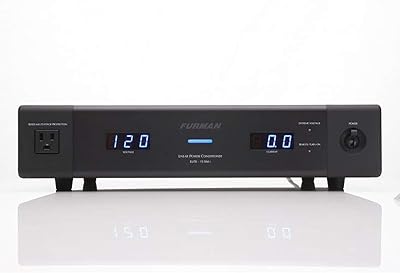
Furman Elite-15 DM i AC Power Conditioner
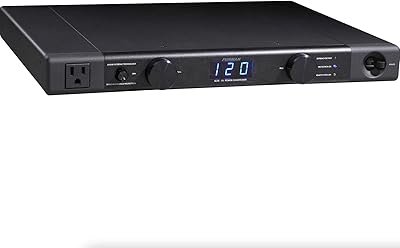
79%
88%
Noise Reduction Performance
93%
Build Quality
91%
Equipment Protection
61%
Value for Money
69%
Outlet Layout & Usability
More
Furman Elite-15i AC Power Conditioner
84%
93%
AC Noise Filtering
91%
Surge & Overvoltage Protection
88%
Build Quality
86%
Ground Loop Elimination
67%
Value for Money
More
Pailvens P10 Power Conditioner
77%
83%
Build Quality
74%
Noise Filtering Performance
88%
LED Display Usefulness
79%
Outlet Layout & Usability
81%
Overvoltage Protection
More
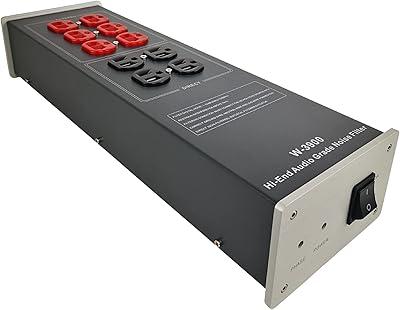
WAudio W-3900 AC Power Conditioner
76%
86%
Build Quality
79%
Noise Filtering
61%
Surge Protection
74%
Outlet Configuration
83%
Phase Detection
More
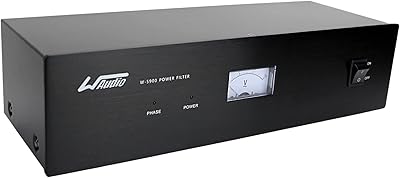
WAudio W-5900 AC Power Conditioner
77%
83%
Build Quality
77%
Noise Filtering Effectiveness
71%
Surge & Spike Protection
62%
Outlet Layout & Spacing
88%
Voltage Meter Usefulness
More
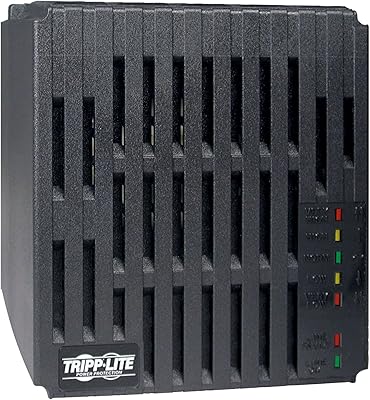
Tripp Lite LC2400 Power Conditioner

83%
93%
Voltage Regulation
88%
EMI/RFI Noise Filtering
86%
Surge Protection
91%
Build Quality
79%
Outlet Configuration
More
Fluance Ai81 Elite Powered Floorstanding Speakers
86%
94%
Sound Quality
90%
Bass Performance
88%
Ease of Setup
85%
Build Quality
93%
Connectivity Options
More
Biolage Volume Boost Conditioner 15.2oz
87%
88%
Effectiveness for Volume
92%
Lightweight Formula
83%
Fragrance
85%
Moisturizing Effect
90%
Suitability for Fine Hair
More
Panamax M5400-PM Power Conditioner
84%
94%
Surge & Spike Protection
78%
Noise Filtration Performance
93%
Build Quality & Durability
86%
Outlet Count & Layout
91%
Voltage Monitoring (AVM)
More
Panamax M5300-PM Home Theater Power Conditioner
86%
89%
Performance
94%
Surge Protection
88%
Build Quality
91%
Noise Reduction
84%
Usability
More

FAQ

It depends heavily on your existing system and the quality of power coming into your home. In resolving, high-sensitivity systems — particularly those with separate amplification — many users genuinely notice a quieter noise floor and more dynamic headroom. That said, if your components are mid-fi or your AC is already relatively clean, the difference may be subtle or inaudible. It is not a guaranteed sonic upgrade; it is a power quality tool that benefits systems capable of revealing AC-related shortcomings.

A standard surge protector — even a good one — is primarily reactive: it tries to clamp voltage spikes after they occur, usually by sacrificing MOV components that degrade over time. This Furman conditioner takes a fundamentally different approach by using linear filtering to actively clean AC noise before it reaches your components, while its series surge protection is non-sacrificial and does not wear out. The Power Factor Technology also maintains a current reserve that no surge strip can replicate.

This is a common concern and a legitimate one. The Power Factor Technology is specifically designed to address it by storing a reservoir of peak current — over 45 amps — that can be released during transient musical peaks. Most amplifiers, even large ones, only draw their rated current briefly and intermittently. Users with high-current amplifiers consistently report that this power conditioning unit does not compress dynamics, which is often the criticism leveled at cheaper, transformer-based conditioners.

No. The Furman Elite-15 PF i AC Power Conditioner is designed solely for 120V AC systems, which limits it to North American use without an external step-down transformer. If you are outside North America, you would need to verify that any voltage conversion solution you use can handle the full 15-amp load capacity, which adds both cost and complexity. For international installations, it is worth contacting Furman directly to ask about region-specific alternatives.

If your preamplifier or AV processor has a 12V trigger output — which most separates-level components do — you can connect it to this unit with a standard 3.5mm mono cable. When the preamp powers on and sends that 12V signal, the designated outlets on the conditioner switch on automatically, bringing up your amplifiers or other trigger-controlled gear in sequence. It is a convenient way to power a rack with a single button press rather than switching everything individually.

At 15 lbs, there is a real transformer inside, and some transformer hum is possible depending on local AC conditions — particularly if your mains voltage is slightly elevated or irregular. Most users report the unit is quiet in normal home environments. If your listening room is very quiet and your rack is near your seating position, it is worth keeping this in mind. Hum in linear transformers is largely a function of incoming power quality rather than a defect.

The standard linearly filtered outlets are designed for analog components like amplifiers and preamplifiers, where the priority is clean, unimpeded current delivery. The four outlets with additional ultrasonic filtering are tuned for digital and video components — devices that tend to generate high-frequency switching noise. Keeping digital gear on those dedicated outlets prevents that noise from contaminating the analog circuits on the same conditioner, which is one of the more practical design decisions on this unit.

Check the total power consumption of everything you plan to plug in — it is usually listed in watts or amps on the back panel of each component. Add those figures up and make sure the combined draw stays within 15 amps at 120V, which equates to roughly 1,800 watts. In practice, most home audio systems run well within that limit since amplifier ratings reflect maximum output power, not typical AC draw. If you are running multiple high-powered monoblock amplifiers, it is worth doing the math before purchasing.

Yes. There are dedicated rear-panel connections for coaxial cable or satellite lines and for telephone lines, each with their own protection circuitry. The coaxial protection is rated to introduce less than 0.1 dB of signal insertion loss, so it will not degrade picture or signal quality in any meaningful way. This is a detail often overlooked — transients can enter a system through cable and phone lines just as easily as through the AC outlets.

The Elite-15 PF i has been on the market since 2008, which is a strong indicator of both its design maturity and its ongoing relevance. As of current listings, Furman has not discontinued the model, and it continues to rank in the top five of its category. A product surviving and selling at premium pricing for over 15 years in a competitive market typically reflects genuine user satisfaction rather than marketing momentum.

Where to Buy