Overview

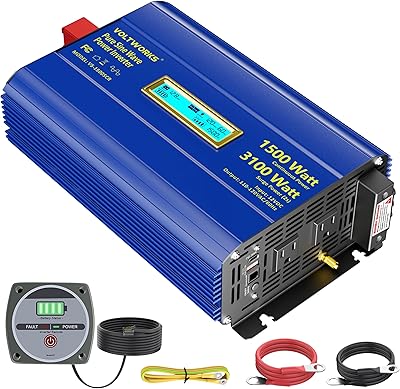
The VOLTWORKS VS-2000SCR 2000W Pure Sine Wave Inverter sits in the practical mid-range of the 2000W inverter market, targeting RV owners, off-grid solar enthusiasts, and anyone who needs reliable AC power when the grid disappears. It converts 12V DC to 110V/120V AC at up to 90% efficiency, producing a clean sine wave output with total harmonic distortion under 3% — which genuinely matters if you're running audio equipment, medical devices, or anything with a sensitive power supply. The aluminum alloy chassis handles heat better than plastic-bodied alternatives. A 2025 hardware refresh introduced adjustable input voltage support, making this inverter noticeably more compatible with modern lithium battery banks. An 18-month warranty and AIG product liability insurance back the purchase.

Features & Benefits

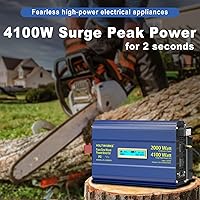
The headline spec is a 4100W surge peak lasting two seconds — enough to absorb the startup spike of a refrigerator compressor, water pump, or window AC unit without tripping. Once those loads are running, they draw far less, staying comfortably within the 2000W continuous ceiling. An LCD panel gives live readings on input voltage, output voltage, and current load, so you always know how hard you're pushing it. The 15-foot remote controller is a genuine convenience for installs where the inverter lives under a seat or inside a utility bay. Onboard USB-C at 36W and a 3.6A USB-A port handle phone and Starlink charging without a separate adapter. Eight onboard protection circuits — including reverse polarity and an output low-voltage guard added in 2025 — cover the most common failure points.

Best For

This pure sine wave inverter is a natural fit for RV and van builds where a 12V lithium bank powers a microwave, small coffee maker, or portable air conditioner. Off-grid solar users with LiFePO4 batteries will appreciate the adjustable input voltage feature, which keeps the battery chemistry from being pushed too hard during low-charge cycles. Boat owners benefit from the surge tolerance and robust aluminum housing. It also works well as a home backup during short outages — running a laptop, modem, and refrigerator simultaneously is realistic within the 2000W budget. That said, this inverter is not a whole-home solution; anyone needing to power central HVAC or multiple large appliances at once will need something considerably larger.

User Feedback

With a 4.6-star average across more than 370 ratings, the VOLTWORKS 2000W unit earns consistent praise, though not without nuance. Buyers frequently highlight the quiet fan operation — it only spins up when load crosses 1000W or temperatures climb — and several owners confirm the output runs CPAP machines and audio gear without interference. The included battery cables draw some criticism for being on the thinner side for high-draw applications, and a handful of reviewers mention a brief LCD learning curve before the display feels intuitive. Customers who contacted support generally report responsive service. The 2025 lithium compatibility update earns specific mention from owners who upgraded their battery banks and noticed improved voltage stability during sustained heavy draws.

Pros

  • Pure sine wave output keeps sensitive electronics — CPAP machines, audio gear, Starlink — running without interference.
  • The 4100W surge capacity handles compressor startups on fridges and AC units without nuisance tripping.
  • Adjustable low-voltage thresholds let you dial in protection specifically for lithium battery chemistry.
  • The 15-foot remote controller is a practical addition for installs where the unit is tucked out of reach.
  • Built-in PD 36W USB-C and 3.6A USB-A ports eliminate the need for a separate charging block.
  • The automatic cooling fan stays quiet at light loads and only spins up when temperatures or wattage actually require it.
  • Eight protection circuits — including reverse polarity — provide solid coverage against common wiring mistakes.
  • AIG-backed product liability insurance and an 18-month warranty add real purchasing confidence at this price tier.
  • Up to 90% efficiency means less wasted battery power during sustained operation.
  • The aluminum alloy chassis dissipates heat more effectively than plastic-bodied competitors in the same class.

Cons

  • The included battery cables are on the lighter side for sustained high-draw use and may need replacing.
  • No 24V or 48V input option limits compatibility with larger off-grid solar battery banks.
  • The LCD menu requires some manual reading to configure voltage thresholds — not truly plug-and-play.
  • At just under 12.5 pounds, this inverter is not the lightest option if portability is a priority.
  • The 2-second surge window, while sufficient for most startups, may not satisfy very large motor loads.
  • Cable management around the hardwire terminal can feel cramped depending on the install location.
  • Only two AC outlets are included, which may require a power strip for multi-appliance setups.
  • Brand recognition is limited compared to established names, which can make long-term parts support uncertain.

Ratings

The scores below were generated by our AI engine after analyzing verified buyer reviews for the VOLTWORKS VS-2000SCR 2000W Pure Sine Wave Inverter from multiple global sources, with spam, bot-submitted, and incentivized feedback actively filtered out. Each category reflects real-world usage patterns drawn from RV owners, off-grid solar builders, and emergency backup users — not marketing copy. Both the strengths that earned loyalty and the friction points that frustrated buyers are represented transparently.
Output Power & Reliability
88%
The vast majority of buyers report that this inverter holds its 2000W continuous rating without tripping or throttling under real sustained loads like microwaves and refrigerators. RV users in particular praise its consistency during extended off-grid trips where dependability is non-negotiable.
A small but vocal group of reviewers found that pushing the unit close to its ceiling for extended periods — running a demanding power tool alongside a fridge, for example — occasionally triggered thermal protection shutdowns. Managing total load headroom is essential to avoid this.
Sine Wave Quality
91%
Reviewers running CPAP machines, audio equipment, and laser printers consistently report zero interference or humming, which is the real-world proof that the sub-3% THD spec translates into practice. Starlink users specifically note clean, stable connectivity when powered through this inverter.
A handful of buyers with older or heavily sensitive medical equipment reported wanting independent waveform verification before fully trusting the output, which is a reasonable caution for any inverter at this price tier regardless of brand claims.
Surge Performance
83%
Most users successfully start refrigerator compressors, water pumps, and small window AC units without the inverter tripping — which is precisely the use case the 4100W surge rating is meant to address. Van-lifers report it handles a portable compressor fridge startup reliably every time.
The surge window is limited to two seconds, and buyers attempting to start particularly large or old motor-driven appliances with prolonged high-inrush demands have hit the protection circuit. It is a meaningful surge buffer, but not unlimited — load selection still requires planning.
Lithium Battery Compatibility
86%
The 2025 hardware revision earned genuine appreciation from buyers who had previously struggled with inverters that did not respect LiFePO4 discharge curves. The ability to customize low-voltage alarm and shutdown thresholds is cited repeatedly as a differentiating feature among off-grid solar builders.
The configuration process requires consulting the manual to adjust voltage thresholds correctly, and buyers who skip that step sometimes set defaults that are either too conservative or too aggressive for their specific battery bank. It works well, but it is not automatic.
Build Quality & Housing
79%
21%
The aluminum alloy shell earns consistent praise for feeling solid and substantially better than the thin plastic enclosures found on cheaper inverters in this wattage class. Several boat and van owners specifically mention that it has survived vibration and humidity without any visible degradation.
A few buyers noted that the terminal covers and some external fittings feel slightly less refined than the main chassis, suggesting cost-saving on secondary components. Nothing that compromises function, but noticeable to buyers used to premium-tier hardware.
Cooling & Fan Noise
84%
The temperature-triggered fan is a genuine quality-of-life feature — at light loads the unit sits completely silent, which matters a lot in a bedroom RV or overnight van setup. Most users never hear the fan unless they are actively running a heavy appliance.
When the fan does engage at high loads, a minority of buyers describe the noise as more prominent than expected, particularly in quiet overnight environments. It is not loud by objective standards, but in a small enclosed van it can be noticeable during late-night microwave use.
LCD Display & Usability
74%
26%
Buyers appreciate having live voltage, wattage, and fault code feedback without needing a separate battery monitor — it genuinely simplifies system oversight during off-grid use. The auto-shutoff after one minute of inactivity is seen as a smart power-saving touch.
The learning curve for navigating the menu to adjust protection thresholds is steeper than buyers expect from a unit at this price. Several reviewers mention needing to re-read the manual multiple times before feeling confident, and the manual itself could be better organized.
Remote Controller
87%
The 15-foot cable length hits a practical sweet spot for most installs — long enough to mount the panel on a dash or wall while the inverter lives in a utility compartment, without excess cable to manage. Buyers consistently describe setup as straightforward and the controller as reliable.
The RJ10 connector, while functional, is not a particularly robust interface for a device that may be installed in a vehicle subject to vibration. A small number of users report intermittent connection issues after extended mobile use, suggesting the jack could benefit from a more secure locking design.
USB Charging Ports
81%
19%
Having a PD 36W USB-C port built directly into the inverter is consistently called out as a convenience win — it eliminates one adapter from the cable chaos of a van or RV setup. Buyers powering Starlink via USB-C report clean, stable charging without any power negotiation issues.
The USB-A port at 3.6A is adequate for standard device charging but does not support the fastest charging protocols for newer flagship phones. Buyers who own multiple high-draw USB devices simultaneously may still want a supplementary USB hub.
Included Cable Quality
58%
42%
For initial testing and light-duty installs, the included 5AWG battery cables are functional and sufficient to get the inverter up and running immediately out of the box. Short-run installs near the battery bank where cable length is not an issue tend to have fewer complaints.
This is the most consistent pain point across buyer reviews — the supplied cables are widely considered undersized for sustained high-wattage use, generating noticeable heat and voltage drop when the inverter is pushed near its ceiling. Most experienced installers recommend budgeting for heavier gauge replacements upfront.
Installation Ease
77%
23%
Buyers with basic electrical knowledge describe the installation as straightforward — the terminal layout is logical, the remote wiring is simple, and the hardwire terminal option makes permanent mounting clean. The included manual covers the fundamentals adequately for most standard setups.
First-time inverter buyers with no electrical background report a steeper learning curve, particularly around cable sizing, fuse placement, and grounding best practices that the manual touches on only briefly. Online community support fills this gap, but it should not have to.
Value for Money
82%
18%
At its price point, buyers consistently feel they are getting more inverter than the cost suggests — particularly when comparing the aluminum housing, pure sine wave output quality, and the included remote controller against cheaper plastic-bodied competitors. The AIG insurance backing adds a layer of purchase confidence unusual at this tier.
A subset of buyers who have owned higher-end inverter brands feel that some finishing details — cable quality, manual clarity, connector robustness — reveal where costs were trimmed to hit the price target. The core electronics perform well, but accessories and documentation lag behind the asking price.
Warranty & Support
78%
22%
Buyers who have tested the warranty process report genuinely responsive customer service — multiple reviewers describe getting replacement units or troubleshooting assistance within a reasonable timeframe. The AIG product liability insurance is a meaningful differentiator that adds real-world financial protection.
The 18-month warranty period is shorter than the 24-month coverage some competing brands offer, which is a consideration for buyers planning long-term off-grid or marine installs. A handful of reviewers also mention that initial support contact required some persistence before reaching a technically knowledgeable agent.

Suitable for:

The VOLTWORKS VS-2000SCR 2000W Pure Sine Wave Inverter is an excellent match for RV owners, van-lifers, and overlanders who need dependable AC power from a 12V battery bank without carrying a bulky generator. If your daily draw includes a microwave, a small coffee maker, a CPAP machine, or a Starlink dish, this inverter sits comfortably within its working range and delivers the clean waveform those devices demand. Off-grid solar builders — particularly those running modern LiFePO4 battery systems — will find the adjustable input voltage thresholds genuinely useful for protecting battery health over the long term. Boaters and marine users benefit from the aluminum housing and solid surge tolerance when starting bilge pumps or refrigeration compressors. It also makes a practical short-term home backup for powering a refrigerator, modem, and a few lights during outages, assuming you have a suitable 12V battery source ready to go.

Not suitable for:

Anyone expecting to run a whole home — central air conditioning, electric water heaters, multiple large appliances simultaneously — should look elsewhere, because 2000W continuous is a hard ceiling that those loads will hit fast. The VOLTWORKS VS-2000SCR 2000W Pure Sine Wave Inverter is also not the right tool if your primary battery bank runs above 12V; it does not support 24V or 48V systems that are common in larger solar installations. Buyers who need a set-and-forget install with zero configuration may find the adjustable voltage settings and LCD menu slightly involved, especially without reading the manual first. The included battery cables, while adequate for moderate loads, may need upgrading if you plan to push the inverter close to its 2000W limit regularly — thinner cables at high current generate heat and voltage drop. If your project demands a permanent, high-capacity hardwired solution for a workshop or large vehicle, a higher-rated inverter from a more established industrial brand would be a safer long-term investment.

Specifications

  • Continuous Output: Delivers a steady 2000W of AC power for sustained use with appliances like microwaves, refrigerators, and power tools.
  • Surge Capacity: Handles peak startup loads up to 4100W for a 2-second window, enough to absorb the inrush current of compressors and motor-driven appliances.
  • Input Voltage: Accepts 12V DC input and is compatible with lithium, AGM, GEL, and flooded lead-acid battery banks.
  • Output Voltage: Produces 110V to 120V AC output within a ±10% tolerance, suitable for standard North American appliances.
  • Waveform: Outputs a pure sine wave with total harmonic distortion under 3%, making it safe for sensitive electronics and motor-driven devices.
  • Efficiency: Operates at up to 90% conversion efficiency, minimizing wasted battery capacity during extended use.
  • Dimensions: The unit measures 14.3 × 8 × 3.9 inches, fitting most under-seat or utility-bay install locations in RVs and vans.
  • Weight: Weighs 12.4 pounds, which is typical for an aluminum-chassis inverter in this power class.
  • USB Charging: Includes one PD 36W USB-C port and one 3.6A USB-A port for charging phones, tablets, and small devices directly.
  • AC Outlets: Features two standard AC outlets and a 40A hardwire terminal for direct high-power appliance connections.
  • Remote Controller: Ships with a 15-foot RJ10 4P4C remote controller for turning the unit on and off from a distance.
  • Display: An LCD panel shows live input voltage, output voltage, load wattage, and protection fault codes during operation.
  • Cooling System: An intelligent fan activates automatically when internal temperature exceeds 100°F or load surpasses 1000W, then shuts off when conditions normalize.
  • No-Load Draw: Draws approximately 0.6A (under 8W) when idle, helping preserve battery charge during standby periods.
  • Protections: Includes eight protection systems: reverse polarity, input over- and under-voltage, output short-circuit, overload, over-temperature, low-input alarm, and output low-voltage shutdown.
  • Housing Material: Built with a durable aluminum alloy shell that improves heat dissipation and resists damage from drops and vibration better than plastic enclosures.
  • Certifications: FCC approved for RF interference compliance, with an ETL-listed internal transformer and UL458-listed fuses and PCB board.
  • Battery Cables: Includes two 5AWG, 2-foot battery cables (one red, one black) and a 3-foot ground cable for initial installation.
  • Warranty: Covered by an 18-month manufacturer warranty, with product liability insurance underwritten by AIG.
  • Model: Manufactured by VOLTWORKS under model designation VS-2000SCR, first available in September 2024 with a 2025 hardware revision.

Related Reviews
VOLTWORKS VS-1500SCR 1500W Pure Sine Wave Inverter
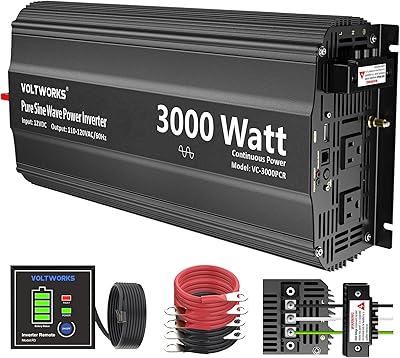
84%
87%
Performance
82%
Build Quality
91%
Ease of Use
88%
Reliability
79%
Portability
More
VOLTWORKS VS-3000PCR 3000W Pure Sine Wave Inverter
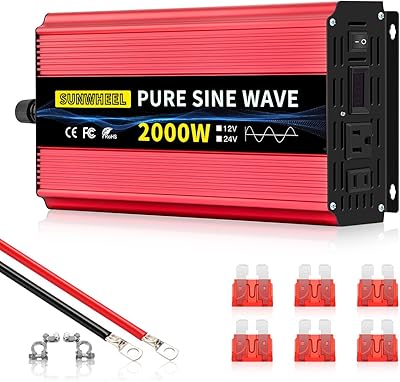
79%
83%
Output Power Accuracy
91%
Output Signal Quality
88%
Cooling & Noise Level
79%
Build Quality & Housing
86%
Installation Ease
More
SUNWHEEL 2000W Pure Sine Wave Inverter
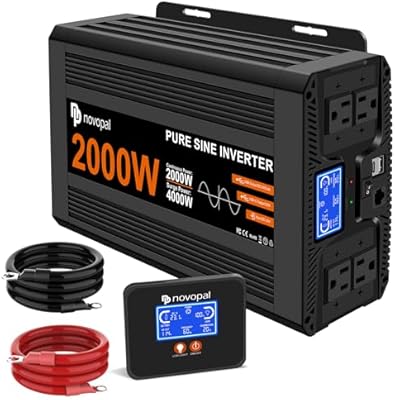
80%
86%
Power Output Reliability
91%
Waveform Quality
83%
Build Quality
88%
Noise Level
67%
LCD Display Usefulness
More
XYZ INVT 2000W Pure Sine Wave Inverter
75%
88%
Power Output Quality
58%
Thermal Management
83%
Surge Handling
91%
Portability & Size
86%
Conversion Efficiency
More
Novopal 2000W 24V Pure Sine Wave Inverter
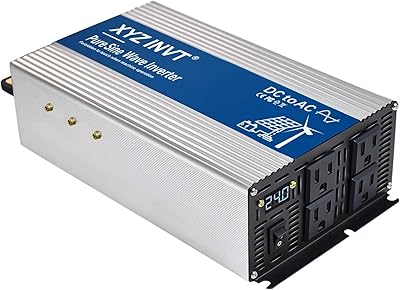
79%
88%
Power Output Quality
83%
Build Quality
79%
Value for Money
74%
Ease of Installation
81%
Remote Control Functionality
More
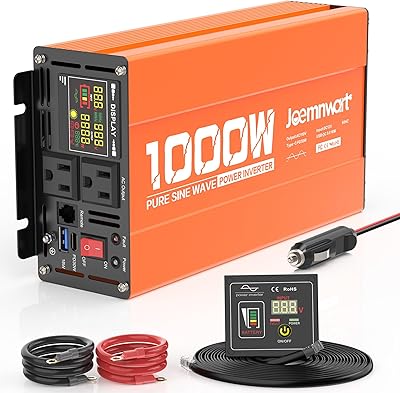
Joemnwart 1000W Pure Sine Wave Power Inverter
79%
88%
Power Output Quality
79%
Build Quality
84%
USB Charging Performance
86%
Safety Protection System
82%
Noise Level
More
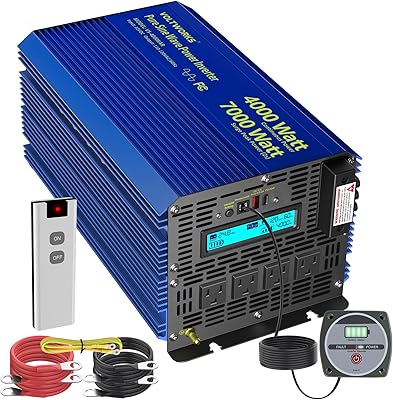
VOLTWORKS HS-4000KBR 4000W Pure Sine Wave Inverter
78%
88%
Power Output Reliability
91%
Pure Sine Wave Quality
86%
Lithium Battery Compatibility
61%
Installation Experience
74%
Thermal Management
More
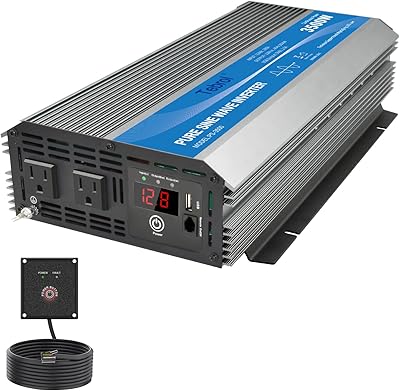
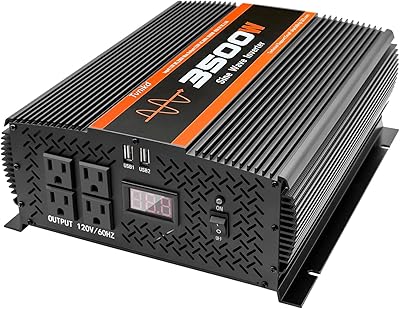
Tebrol 3500W Pure Sine Wave Inverter
79%
88%
Output Power Accuracy
92%
Pure Sine Wave Quality
79%
Build Quality
83%
Cooling & Thermal Management
81%
Ease of Installation
More
Novopal 1500W Pure Sine Wave Inverter
76%
83%
Power Output Accuracy
88%
Power Quality
74%
Build Quality
86%
Ease of Installation
89%
Remote Control Usability
More
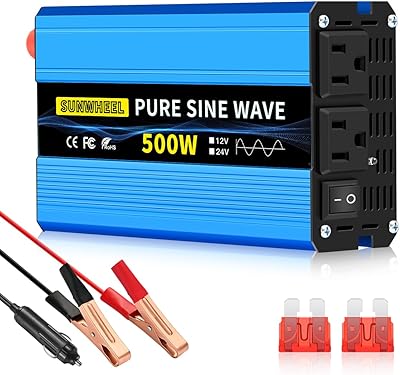
SUNWHEEL 500W Pure Sine Wave Inverter
86%
92%
Power Conversion Efficiency
88%
Noise Level
85%
Build Quality & Durability
80%
Cooling System
83%
Portability
More

FAQ

Yes, most standard countertop microwaves rated between 900W and 1200W will run fine on this inverter. Keep in mind that microwave ovens draw more power than their cooking wattage suggests — a 1000W cooking model may pull 1400–1600W from the wall — so check the input wattage on the appliance label before assuming it fits within the 2000W continuous limit.

Yes, and the 2025 hardware revision specifically improved lithium compatibility by adding an adjustable input voltage function. You can customize the low-voltage alarm and shutdown thresholds in the settings to match your lithium battery's recommended discharge floor, which helps protect the battery from being overdrained.

Surge power refers to the brief spike of electricity that motor-driven appliances — like refrigerator compressors, water pumps, or air conditioner units — need at the moment they switch on. This inverter can handle up to 4100W for a maximum of two seconds to absorb that startup spike, after which the appliance settles into its normal running draw. It does not mean the unit can sustain 4100W continuously — that limit is 2000W.

The fan only kicks in when the internal temperature climbs past 100°F or the load exceeds 1000W, so at light to moderate loads it stays completely silent. Most users describe the fan noise as modest when it does run — noticeable but not intrusive in an RV or van environment.

Yes, and the built-in USB-C port at 36W can power Starlink directly without a separate adapter. Alternatively, you can plug the Starlink power brick into one of the two AC outlets. The clean pure sine wave output is well-suited to Starlink and other network hardware that can be sensitive to waveform quality.

That is exactly what it is designed for. The 15-foot cable gives you enough reach to mount the remote panel on a wall or dashboard while the inverter stays tucked in a utility bay, under a bench seat, or in an engine compartment — anywhere that is ventilated but out of the way.

For occasional or moderate loads, the included 5AWG cables at two feet long are workable. However, if you plan to regularly draw close to 2000W, it is worth upgrading to heavier gauge cables — ideally 2AWG or 4AWG — to reduce resistive heat buildup and voltage drop under high current. Shorter cable runs are also better for efficiency at this power level.

A rough rule of thumb: at 2000W from a 12V bank, you are drawing roughly 167 amps per hour. A 100Ah lithium battery would sustain that load for under 30 minutes at full draw, so for extended use you will want at least a 200–300Ah bank, ideally more. For lighter loads — say 600–800W — a 100Ah battery gives you a more practical runtime.

No. The screen automatically turns off after about one minute of no activity, which helps reduce unnecessary power draw. It comes back on as soon as there is a change in load or you interact with the unit.

The inverter includes reverse polarity protection, which is one of the eight built-in safety systems. If the cables are connected backwards, the unit will not power on and will protect itself from damage. That said, always double-check polarity before connecting — red to positive, black to negative — as a good wiring habit regardless of any built-in protection.