Overview

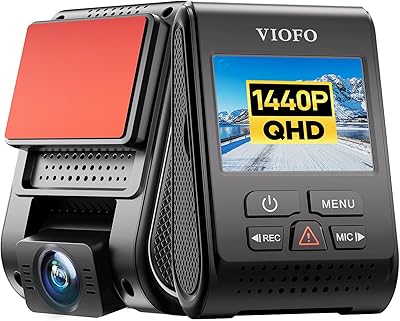
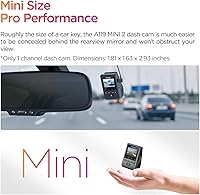
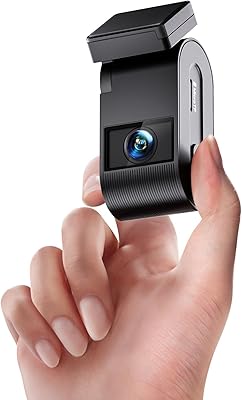
The VIOFO A119 Mini 2 is a front-only dash cam built around one clear idea: stay out of the way. At roughly the size of a matchbox, it tucks behind the rearview mirror and disappears into your cabin. VIOFO positioned this as a mid-range option — above bare-bones recorders but below fully loaded dual-channel systems. The headline hardware upgrade is the newer STARVIS 2 sensor, which promises cleaner footage across a wider range of lighting conditions. Worth knowing upfront: the GPS module ships in the box, but you'll need to budget separately for a memory card and, if you want parking mode, a hardwire kit.

Features & Benefits

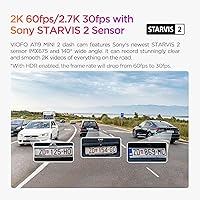
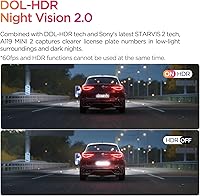
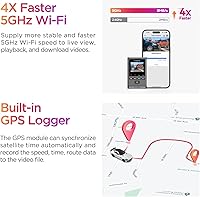
The sensor upgrade here is a real one. The STARVIS 2 IMX675 produces noticeably cleaner footage in low light, cutting the grainy, smeared look you get from cheaper sensors. In standard mode, this compact camera records at a fluid 2K 60fps — enough to freeze a frame and actually read a license plate. Enabling HDR drops the frame rate to 30fps but handles high-contrast scenes like tunnel entrances far more gracefully. The 5GHz Wi-Fi speeds up clip transfers to your phone considerably compared to older 2.4GHz dash cams. And running on a supercapacitor rather than a battery means extreme summer heat is far less likely to cause a failure mid-trip.

Best For

This mini dash cam suits drivers who want solid front coverage without cluttering their windshield with hardware. It's particularly well-matched for city commuters where lighting shifts constantly — tunnels, oncoming headlights, nighttime plate reads. If you pull clips regularly and want to transfer them quickly, the Wi-Fi setup genuinely rewards that habit. Drivers in hot climates who have watched battery-based cameras swell or die in summer will appreciate the supercapacitor design. The built-in GPS makes it a strong pick for anyone who wants speed and location data logged with every trip. Just be clear-eyed: if rear coverage matters to you, look elsewhere — this records front only.

User Feedback

Buyers generally praise the video sharpness and how unobtrusive the camera looks once installed, with night footage improvement over older VIOFO models drawing consistent positive comments. That said, two frustrations surface repeatedly. First, parking mode sounds compelling but requires purchasing and installing the HK4 hardwire kit separately — real extra cost and installation effort that catches buyers off guard. Second, no memory card is included, which remains a common sticking point across reviews. A handful of users also report initial friction pairing the app over Wi-Fi. The 1.5-inch screen handles quick spot-checks fine, but most owners end up relying almost entirely on the app for any serious clip review.

Pros

  • The VIOFO A119 Mini 2 captures 2K footage at 60fps — fluid, sharp, and detailed enough to freeze-frame a plate.
  • Night vision is a genuine step up, handling tunnel exits and dark streets better than most cameras at this price.
  • Compact enough to disappear behind the rearview mirror without blocking your sightline.
  • GPS module ships in the box, logging speed and route data into every video file automatically.
  • Supercapacitor design survives hot parked cars where battery-based rivals frequently fail.
  • 5GHz Wi-Fi makes transferring clips to your phone meaningfully faster than older 2.4GHz dash cams.
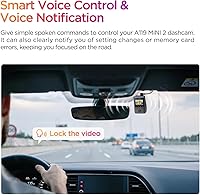
  • Voice commands let you lock footage or snap a photo without taking your hands off the wheel.
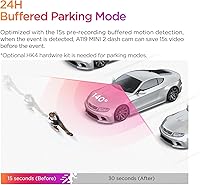
  • Buffered parking mode saves footage starting 15 seconds before an impact, not just after.
  • 140-degree lens captures a wide road view without excessive edge distortion.
  • Supports microSD cards up to 512GB, giving plenty of storage headroom for extended trips.

Cons

  • No microSD card included — you cannot record a single clip until you buy one separately.
  • Parking mode requires purchasing and installing the HK4 hardwire kit, adding real cost and installation effort.
  • Initial Wi-Fi pairing can be frustrating, particularly on some Android devices.
  • The VIOFO app is functional but noticeably less polished than competing camera apps.
  • Enabling HDR drops the frame rate from 60fps to 30fps, a trade-off that affects fast-motion footage.
  • Voice recognition becomes unreliable in noisy cabin conditions — highway wind or loud music can cause missed commands.
  • The 1.5-inch screen is too small for comfortable clip review without relying on a smartphone.
  • Mount adhesive can weaken over time in extreme heat, requiring the spare sticker sooner than expected.
  • Firmware and app updates are not automatic, leaving inattentive users stuck on older, buggier versions.
  • GPS signal acquisition is slow or intermittent in dense urban areas and underground parking structures.

Ratings

The VIOFO A119 Mini 2 scores are generated by our AI engine after analyzing thousands of verified global buyer reviews, actively filtering out incentivized, duplicate, and bot-flagged submissions to surface what real drivers actually experience day-to-day. This compact camera earns genuinely strong marks in several areas, but the analysis also surfaces a few recurring frustrations that prospective buyers deserve to know before committing. Both the highs and the friction points are reflected transparently in the scores below.

Video Quality
91%
Owners consistently report that 2K 60fps footage is sharp enough to freeze a frame and clearly read a license plate from a moving vehicle — something cheaper sensors routinely fail at. The fluid motion at 60fps also makes reviewing footage after a highway incident noticeably easier than with standard 30fps cameras.
A small number of buyers note that in extremely overcast or rainy conditions, fine detail softens slightly compared to premium single-lens cameras costing significantly more. Enabling HDR drops the frame rate to 30fps, which is a real trade-off some drivers find frustrating during fast-paced urban driving.
Night Vision Performance
88%
The updated sensor and wide-aperture lens handle the transition from a lit road into a dark tunnel — and back out again — far more gracefully than most dash cams in this price range. Urban drivers report that oncoming headlights no longer wash out the entire frame, and license plates on dark streets are readable in a meaningful percentage of clips.
On unlit rural roads with no ambient light whatsoever, detail still degrades noticeably, and this is not a camera that defies physics at night. A handful of reviewers also note that enabling DOL-HDR in low light can introduce a subtle processing lag visible when scrubbing through footage.
Build Quality & Durability
83%
The housing feels solid for its size, and the supercapacitor design removes one of the most common failure points seen in dash cams — a battery swelling or dying after a summer in a hot parked car. Owners in Arizona, Florida, and other warm-climate states specifically call this out as a reason they chose this model over rivals.
A few users report that the mount adhesive loses grip over time in extreme heat, requiring the spare sticker in the box sooner than expected. The camera body itself shows minor scuffing from repeated removal, suggesting the plastic finish is serviceable rather than premium.
Compact Design & Discreetness
93%
This is genuinely one of the smaller front dash cams available at this specification level. Most owners report that once tucked behind the rearview mirror, it disappears entirely from their sightline and is unnoticeable to people outside the vehicle — a real advantage for those who do not want to advertise that they are recording.
The compact body means the 1.5-inch LCD screen is quite small, and a few buyers find squinting at it in bright sunlight impractical for anything beyond confirming the camera is on. Anyone who prefers managing their camera entirely without a phone will likely find the screen limiting.
Wi-Fi & App Experience
72%
28%
When the 5GHz connection works well, transferring a 1–2 minute clip to a smartphone is noticeably faster than the sluggish 2.4GHz transfers owners report from older VIOFO models or budget competitors. For pulling evidence clips quickly after a fender bender, this speed difference is practically meaningful.
Initial pairing friction surfaces repeatedly in reviews — some Android users in particular report needing multiple attempts or an app reinstall before stable connection is achieved. The VIOFO app itself is functional but not polished, and a handful of owners report it crashing during longer playback sessions on older phones.
GPS Accuracy & Data Logging
86%
The included GPS module locks on quickly in open areas and embeds speed, coordinates, and timestamp data directly into video files, which is genuinely useful when sharing clips with insurers or legal contacts. Route playback in the app gives a clear visual of exactly where an incident occurred.
Signal acquisition in dense urban canyons or underground car parks can be slow or intermittent, which is a hardware limitation common across dash cam GPS modules rather than a specific flaw here. A small number of users report occasional speed readings that run slightly high compared to their vehicle's own speedometer.
Parking Mode Functionality
67%
33%
The buffered auto-event detection is a clever design — the camera is silently recording a short rolling buffer at all times while parked, so when something bumps your car, the saved clip actually starts 15 seconds before impact rather than after. This makes hit-and-run documentation far more useful than non-buffered alternatives.
The critical caveat is that parking mode requires the separately sold HK4 hardwire kit, which adds both cost and a real installation task that not everyone is comfortable tackling. Many buyers feel this should be flagged more prominently before purchase, and the additional outlay genuinely changes the total cost picture.
Value for Money
79%
21%
Relative to what you get — upgraded sensor, GPS module included, supercapacitor, 5GHz Wi-Fi, and voice control — the camera is competitive within the mid-range front-only segment. Buyers who do their homework report feeling satisfied with the hardware-to-price ratio compared to brand-name alternatives at similar price points.
The total cost of ownership is higher than the box price suggests. Once you add a quality high-endurance microSD card and the hardwire kit for parking mode, the real-world investment climbs noticeably. Buyers expecting a complete ready-to-use package out of the box are consistently surprised by these add-on requirements.
Voice Control Reliability
74%
26%
Voice commands for locking clips, snapping photos, and toggling Wi-Fi work well in quiet cabin conditions, which is a genuine convenience for solo drivers who do not want to take their hands off the wheel after a near-miss. Voice notifications for card errors are also a thoughtful touch that several owners specifically mention appreciating.
Recognition accuracy drops in louder environments — highway wind noise, music, or a car full of passengers can cause commands to be missed or misinterpreted. A few users report the system occasionally triggering on ambient sound, locking a clip unprompted during normal driving.
Installation Ease
81%
19%
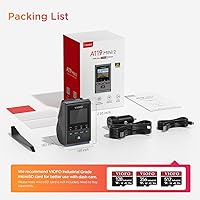
The windshield mount is straightforward, and VIOFO includes a trim removal tool in the box for routing the power cable cleanly along the headliner — a small but practical inclusion that makes a tidier install genuinely achievable without extra purchases. Most buyers report basic installation taking under 20 minutes.
Cable management to achieve a truly clean, professional-looking install takes considerably longer than the basic setup and can feel fiddly in vehicles with tight A-pillar trim. Connecting the optional hardwire kit for parking mode moves the difficulty level up significantly for anyone without some basic automotive electrical confidence.
Field of View
82%
18%
The 140-degree angle covers lane changes, adjacent vehicles, and pedestrians approaching from the sides without the extreme barrel distortion that wider-angle lenses often introduce. Urban drivers particularly value this balance for capturing the full width of busy intersections.
Buyers coming from 150-plus degree ultra-wide cameras may notice the slightly narrower capture, especially when reviewing footage of events that happened at the very edges of the frame. This is a deliberate trade-off for optical quality rather than a defect, but worth knowing.
Memory Card Compatibility
76%
24%
Support for microSD cards up to 512GB gives plenty of headroom for extended loop recording, and the camera handles high-endurance cards from reputable brands without formatting issues in most reported cases. Buyers using VIOFO-branded industrial cards report the fewest compatibility complaints.
No card is included in the box, which remains a common frustration in reviews from buyers who assumed at least a starter card would be present. The camera can also be fussy about certain budget third-party cards, occasionally throwing error notifications that disappear once a quality card is substituted.
HDR Performance
77%
23%
In genuinely high-contrast situations — exiting a dark tunnel into bright sunlight, or capturing a scene with deep shadows and bright streetlights — the HDR mode preserves detail in both extremes better than single-exposure recording, which is a meaningful practical benefit for urban night driving.
The drop from 60fps to 30fps when HDR is enabled is a real compromise, and some buyers feel the motion smoothness loss outweighs the exposure benefit for typical driving. HDR is best treated as a situational mode rather than a permanent setting, which requires active management.
App & Firmware Updates
68%
32%
VIOFO has a reasonable track record of releasing firmware updates that address reported bugs, and the app receives periodic updates that improve stability over time. Owners who stick with the ecosystem across multiple cameras benefit from a familiar interface.
The update process is not automatic and requires deliberate user action, which means a segment of owners never update at all and continue experiencing issues that have already been patched. The app UI remains noticeably less polished than what comparable cameras from larger brands offer.

Suitable for:

The VIOFO A119 Mini 2 is a strong fit for drivers who want capable, no-fuss front coverage without turning their windshield into a gadget display. City commuters who navigate variable lighting — tunnels, glare-heavy intersections, dark residential streets — will get the most out of the improved sensor and HDR capability, particularly when a readable license plate in a clip could make or break an insurance claim. If you live somewhere that gets genuinely hot summers and have already lost a dash cam to heat damage, the supercapacitor design is a legitimate reason to consider this over battery-powered alternatives. Tech-comfortable drivers who regularly pull clips to their phones will appreciate the faster Wi-Fi transfers, and anyone who wants GPS-stamped speed and route data embedded in their footage without buying a separate add-on will find that need covered out of the box. It also suits buyers who simply want the camera to be invisible — the compact footprint makes a discreet install behind the rearview mirror achievable without much effort.

Not suitable for:

If rear coverage is a priority, the VIOFO A119 Mini 2 is simply not the right tool — it records the front only, with no option to add a rear camera, and no amount of creative mounting changes that. Buyers expecting a fully ready-to-use system straight out of the box should also recalibrate their expectations: you will need to purchase a microSD card separately before the camera records anything, and unlocking parking mode requires an additional hardwire kit that involves routing cables into your vehicle's fuse box. Drivers who prefer managing a dash cam entirely through the device itself — rather than a smartphone app — may find the 1.5-inch screen limiting for anything beyond a basic power-on check. Anyone on a tight overall budget should factor in the real total cost, including a quality high-endurance card and the hardwire kit, before deciding whether this sits in the right tier for them. And if you are not comfortable with occasional app troubleshooting or firmware updates, the ownership experience may feel more hands-on than you want.

Specifications

  • Image Sensor: Uses the Sony STARVIS 2 IMX675 sensor, VIOFO's latest generation, delivering improved low-light clarity and reduced motion blur over the first-gen STARVIS.
  • Resolution: Records at 2560x1440P (2K) at 60fps in standard mode, or up to 2592x1944P at 30fps for maximum resolution.
  • HDR Mode: DOL-HDR is available at 2K 1440P 30fps, balancing highlight and shadow detail in high-contrast lighting environments.
  • Lens: 7-glass F1.6 large-aperture lens with a 140-degree wide angle, designed to reduce distortion at the frame edges while maximizing light intake.
  • Display: Built-in 1.5″ LCD screen suitable for basic status checks and settings navigation, though most detailed clip review is handled via the smartphone app.
  • Wi-Fi: Dual-band Wi-Fi supports both 5GHz and 2.4GHz connections, with 5GHz enabling significantly faster clip transfers to iOS and Android devices.
  • GPS: Integrated GPS module records vehicle speed, coordinates, and timestamp data directly into video files; no separate purchase required.
  • Power Source: Powered by a supercapacitor instead of a traditional lithium battery, making it substantially more resistant to failure in high-temperature parked environments.
  • Storage: Accepts microSD cards up to 512GB (not included); VIOFO recommends high-endurance cards for reliable long-term loop recording.
  • Channels: Front-only single-channel recording; no rear camera port or dual-channel capability is supported on this model.
  • Parking Modes: Offers three parking modes — buffered auto event detection (with 15-second pre-recording), low bitrate continuous recording, and time-lapse — all requiring the separately sold HK4 hardwire kit.
  • Voice Control: Responds to voice commands for locking footage, capturing photos, and toggling Wi-Fi on or off, with audio notifications confirming actions or flagging memory card errors.
  • Dimensions: Body measures 1.63 x 1.81 x 2.93 inches, making it one of the more compact options available at this specification level.
  • Mounting Type: Windshield-mount design using adhesive sticker; a spare mount sticker and two static windshield stickers are included in the box.
  • Connectivity: Uses a Type-C data cable for wired connection and power; compatible with both iOS and Android smartphones via the VIOFO app.
  • In the Box: Includes the camera unit, car charger, Type-C data cable, GPS module, trim removal tool, spare mount sticker, two windshield static stickers, and a printed manual — no microSD card or hardwire kit included.
  • App Compatibility: Connects to the VIOFO app on iOS and Android for live view, video playback, clip download, and remote settings adjustment.
  • Loop Recording: Supports continuous loop recording, automatically overwriting the oldest footage when the memory card reaches capacity.
  • G-Sensor: Built-in G-sensor detects sudden impacts or hard braking and automatically locks the current clip to prevent it from being overwritten during loop recording.
  • Model Number: Official model designation is A119 Mini 2, manufactured by VIOFO and first available from mid-2023.

Related Reviews
VIOFO VS1 Mini Dash Cam
85%
92%
Video Quality
88%
Ease of Installation
90%
Night Vision Performance
84%
GPS Accuracy
80%
Voice Control Functionality
More
Canon Ivy 2 Mini Photo Printer
84%
94%
Portability
92%
Ease of Use
88%
Print Quality
63%
Photo Paper Cost
85%
Battery Life
More
Harman Kardon Go+Play Mini 2
86%
92%
Sound Quality
87%
Battery Life
72%
Portability
94%
Build Quality
85%
Ease of Use
More
VIOFO A119 V3 2K Dash Cam
85%
94%
Video Quality
91%
Night Vision Performance
88%
Parking Mode Effectiveness
85%
Ease of Setup
90%
GPS Logging Accuracy
More
Amazfit GTS 2 Mini Smart Watch
86%
93%
Battery Life
89%
Comfort & Fit
85%
Build Quality
87%
Health & Fitness Tracking
91%
Display Quality
More
ClearClick Video2Digital 2.0 Mini Edition
85%
94%
Ease of Use
88%
Recording Quality
90%
Portability
95%
Setup Time
85%
Build Quality
More
Fujifilm Instax Mini Link 2 Smartphone Printer
84%
91%
Print Quality
94%
Portability
89%
Ease of Use
85%
Connectivity
92%
Customization Options
More
Fractal Design Era 2 Mini-Tower Case
88%
91%
Build Quality
88%
Cooling Performance
85%
Airflow Efficiency
90%
Ease of Assembly
89%
Cable Management
More
MOGINSOK MGCN51N 2.5GbE Linux Firewall Mini PC
86%
88%
Performance
91%
Value for Money
85%
Usability/Setup
94%
Fanless Design (Noise Level)
89%
Security Features (AES-NI)
More
NooElec NESDR Mini 2+
82%
93%
Frequency Accuracy & Stability
91%
Value for Money
88%
Signal Reception Quality
54%
Stock Antenna Quality
67%
Ease of Setup
More

FAQ

No, the VIOFO A119 Mini 2 does not include a microSD card. You will need to purchase one separately before the camera can record anything. VIOFO recommends a high-endurance card rated for continuous write cycles — standard cards designed for phones or cameras tend to wear out faster in a dash cam context.

Yes, parking mode requires the separately sold HK4 hardwire kit, which connects the camera directly to your vehicle's fuse box for continuous low-power operation while the engine is off. The kit is not included and adds both cost and a wiring installation step that some owners prefer to have done professionally.

The camera silently records a short rolling buffer at all times while parked. If the G-sensor detects an impact, it saves a 45-second clip — beginning 15 seconds before the trigger and continuing 30 seconds after. This means that if someone bumps your car in a parking lot, you get footage of what happened leading up to the hit, not just the aftermath.

No. This compact camera is a single-channel front-only recorder and has no port or support for a rear camera. If rear coverage is important to you, you would need to look at a different model in VIOFO's lineup that is built for dual-channel use.

For most users, the initial pairing process is straightforward, but a notable number of Android users in particular report needing a couple of attempts or an app reinstall to get a stable connection the first time. Once it is set up and working, the 5GHz connection transfers clips to your phone quickly — much faster than the 2.4GHz Wi-Fi on older dash cams.

It is significantly more heat-tolerant than battery-powered dash cams because it uses a supercapacitor instead of a lithium battery. Lithium batteries can swell, degrade, or fail permanently when exposed to the extreme heat inside a parked car in summer. The supercapacitor design sidesteps that issue, which is why owners in warm climates specifically call it out as a reason they chose this camera.

In good lighting conditions and at reasonable distances, yes — the 2K 60fps resolution gives you enough detail to freeze a frame and read a plate. Low-light plate capture is meaningfully better than budget cameras, though in very dark conditions with no ambient light, results still depend on how much light is available. HDR mode helps with high-contrast situations like oncoming headlights, but drops the frame rate to 30fps.

You can handle basic tasks — checking that it is recording, adjusting settings, reviewing a clip — using the 1.5-inch screen on the unit itself. In practice, most owners end up relying on the smartphone app for anything beyond a quick status check, because the small screen makes detailed clip review difficult. If you strongly prefer device-only management, the screen may feel limiting.

It works reliably in a quiet cabin. At highway speeds with wind noise, or if you have music playing at normal volume, recognition can get patchy and commands may be missed. A few users also report occasional false triggers where ambient sound accidentally activates a command. It is a useful feature for quiet city driving but should not be counted on as fully dependable in all conditions.

Not meaningfully, no. The whole point of the compact design is that it tucks behind the rearview mirror and essentially disappears. Once installed, most drivers report they forget it is there, and it is unobtrusive enough that passengers typically do not notice it either. Just make sure you route the power cable cleanly along the headliner — a dangling cable is more likely to draw attention than the camera itself.