

Overview

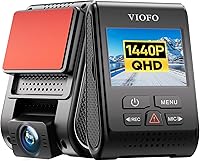
The VIOFO A119 V3 Dash Cam sits in a comfortable middle ground — not bargain-bin basic, but not loaded with features you'll never touch. It runs on a Sony IMX335 STARVIS sensor, capturing 2K 1440P footage at 60fps, which is a genuine step up from the 1080P cameras most drivers are replacing. The built-in GPS module is what really sets it apart at this price; plenty of cheaper cams skip it entirely or charge extra. It uses a supercapacitor instead of a battery, so summer heat and winter cold won't degrade it over time. No Wi-Fi, no rear camera, no app — just a front-facing recorder that does its job quietly.

Features & Benefits

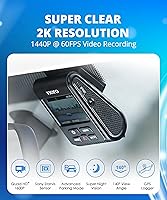
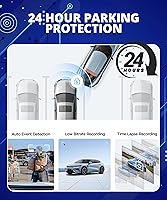
At its core, the A119 V3 records at a sharp enough resolution to read license plates a couple of cars ahead — that's the practical value of 2K at 60fps. One thing worth knowing upfront: enable HDR mode and the frame rate drops to 30fps. Both settings are useful, but you're choosing between smoother motion or better exposure handling in tricky lighting. The 140-degree glass lens covers a wide field without the heavy barrel distortion common in cheaper plastic optics. Parking mode is genuinely useful, with buffered recording capturing 15 seconds before an event — though you'll need to budget for the HK3 hardwire kit, sold separately, to make it work.

Best For

This front camera makes the most sense for commuters who want a reliable, no-subscription recorder they can install and forget. If you're coming from an older 1080P cam, the resolution upgrade is noticeable enough to matter in a real insurance dispute. Rideshare drivers and anyone who wants timestamped GPS evidence of their route will find the built-in logging genuinely practical. The supercapacitor also makes it well-suited for drivers in extreme climates where battery-based alternatives tend to fail early. It's less ideal for those who want rear-channel coverage or quick footage review via phone — if those are priorities, a more feature-heavy dual-channel setup would serve better.

User Feedback

Owners consistently praise daytime video clarity and how unobtrusive the camera looks on the windshield — the quick-release GPS mount also gets good marks for straightforward installation. On the critical side, the absence of Wi-Fi comes up often; without it, reviewing footage means pulling the SD card, which frustrates users who want quick mobile access. A handful of buyers were caught off guard by the parking mode requirement for a separate hardwire kit, which isn't obvious at purchase. Night footage is genuinely capable for the category, though some report mild light blooming around headlamps and streetlights. A few users also flag the need for a properly rated U3 card to avoid dropped frames.

Pros

  • 2K 60fps footage is sharp enough to read license plates and street signs in real driving conditions.
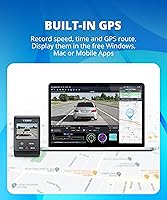
  • Built-in GPS logs speed and route data onto every clip, which is rare at this price point.
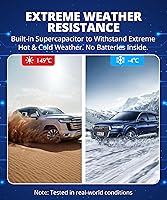
  • The supercapacitor holds up in extreme heat and cold where battery-powered cams often fail.
  • Compact and discreet on the windshield — most passengers won't even notice it.
  • Buffered parking mode captures 15 seconds before an event, not just after, which can be crucial evidence.
  • The 7-element glass lens keeps wide-angle distortion noticeably lower than budget plastic-lens alternatives.
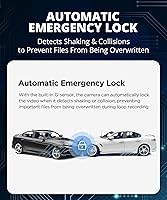
  • Loop recording with memory partitioning keeps emergency clips protected from being overwritten automatically.
  • No ongoing subscription or cloud fees — buy it once and it just works.
  • GPS mount is straightforward to install and the quick-release mechanism makes temporary removal easy.

Cons

  • No Wi-Fi means reviewing footage always requires physically removing the SD card.
  • Parking mode requires the HK3 hardwire kit, which is sold separately and adds installation effort.
  • Enabling HDR drops the frame rate to 30fps — you cannot run both HDR and 60fps simultaneously.
  • Front-only recording leaves the rear of the vehicle completely unmonitored.
  • Some users report mild light blooming around bright sources like headlamps in night footage.
  • Requires a U3 A2 V30-rated microSD card for reliable performance — budget cards can cause dropped frames.
  • No voice control, driver alerts, or any active safety features beyond impact detection.
  • The 2.0-inch LCD screen is functional but small, making in-camera playback review awkward.

Ratings

The VIOFO A119 V3 Dash Cam scores presented here are generated by AI after analyzing thousands of verified global buyer reviews, with spam, bot submissions, and incentivized feedback actively filtered out. Ratings reflect the full picture — where this front camera genuinely delivers and where real owners ran into frustration. Both standout strengths and recurring pain points are weighted equally to give you an honest, balanced view before you buy.

Video Clarity
91%
Daytime footage consistently impresses owners upgrading from 1080P cameras — license plates several cars ahead are legible, and street signs stay readable even at highway speeds. The 7-element glass lens keeps wide-angle distortion noticeably lower than what you get from budget plastic-lens competitors.
A small number of users note that fine detail softens slightly toward the edges of the 140-degree frame, which is common at this field of view. Footage sharpness also depends heavily on using a properly rated U3 A2 V30 microSD card — underspec cards cause visible degradation.
Night Vision
76%
24%
The Sony STARVIS sensor and F1.6 aperture combination performs well above average for this price tier — license plates and pedestrians are identifiable in low-lit suburban streets where cheaper cameras struggle completely. HDR mode adds meaningful dynamic range on roads with mixed lighting.
Bright oncoming headlights and streetlamps cause noticeable halo blooming in some night recordings, which is a hardware limitation rather than a settings issue. Low-light performance is solid for a front-only cam at this price, but buyers expecting clean cinematic night footage will be disappointed.
GPS Accuracy
88%
The built-in GPS module locks on reliably and embeds speed and coordinates directly into footage files, which makes it genuinely useful when submitting insurance claims or disputing a traffic incident. Satellite time sync happens automatically, so timestamps stay accurate without manual adjustment.
GPS signal acquisition on first boot can take a minute or two in dense urban areas surrounded by tall buildings. A small portion of users report occasional coordinate gaps in tunnels or underground car parks, though this is expected behavior for any passive GPS module.
Parking Mode
67%
33%
When fully set up, the buffered Auto Event Detection mode is one of the stronger features — capturing 15 seconds before an impact means you rarely miss the lead-up to a hit-and-run. Time Lapse mode is also a practical option for long parking periods without draining storage.
The biggest friction point here is the hidden cost and effort: parking mode requires the HK3 hardwire kit sold separately, and installation involves tapping into the vehicle fuse box, which puts off a significant number of buyers who expected plug-and-play functionality. This surprises many users after purchase.
Build Quality
83%
The housing feels solid and well-assembled for a mid-range dash cam — there is no flex or rattling when mounted, and the quick-release mechanism on the GPS mount is snappy and secure. Owners in hot climates specifically praise the supercapacitor design, which holds up where battery-based units have failed them before.
The plastic casing, while functional, does not feel premium at close inspection — a few users describe it as slightly hollow compared to higher-end brands. The Mini USB port placement is also noted as slightly awkward for routing cables discreetly along the headliner.
Ease of Installation
84%
Basic installation is genuinely straightforward — attach the mount, route the power cable along the windshield trim using the included clips, and the camera auto-starts with the ignition. The trim removal tool included in the box is a thoughtful addition that helps tuck cables cleanly.
Users who want parking mode face a noticeably steeper setup process, requiring either DIY fuse box wiring or a trip to an installer. The included windshield stickers also receive occasional criticism for losing adhesion in extreme summer heat over time.
HDR Performance
72%
28%
On roads with high-contrast lighting — bright sunlit sections mixed with deep shade, or driving into a setting sun — HDR mode makes a real difference in keeping both bright and dark areas readable within the same frame. Owners who commute through tunnels or shaded highways find it particularly useful.
The mandatory drop to 30fps when HDR is active is a genuine trade-off that frustrates buyers who assumed both could run together. At 30fps, fast-moving vehicles in adjacent lanes can appear slightly blurred, which partially undermines the clarity benefit HDR provides in busier traffic scenarios.
App & Connectivity
38%
62%
There is no subscription service or cloud requirement, which some privacy-conscious owners genuinely appreciate — footage stays entirely local on the SD card with no third-party access. For buyers who only ever review footage on a laptop, the lack of wireless connectivity is a non-issue.
The absence of Wi-Fi is the most frequently cited complaint across user reviews — removing the SD card every time you want to check a clip is a real inconvenience, especially for rideshare drivers who may need footage quickly after an incident. There is no companion app, no smartphone preview, and no remote access of any kind.
Loop Recording Reliability
86%
Continuous loop recording works consistently in day-to-day use — the camera manages storage quietly in the background without requiring intervention. Memory partitioning that separates locked emergency clips from regular footage is a practical feature that prevents important recordings from being accidentally overwritten.
Recording stability is closely tied to SD card quality — users running cards below the recommended U3 A2 V30 spec report occasional file corruption or recording gaps. A handful of owners also note that the camera occasionally requires a manual format after extended use to maintain stable write performance.
Value for Money
82%
18%
For what you pay, getting 2K 60fps recording alongside a built-in GPS module in a compact, temperature-resistant unit represents genuinely competitive value — many alternatives at this tier charge extra for GPS or omit it entirely. Owners who compare it against similarly priced cameras consistently call it a strong deal.
The true cost creeps up once you factor in a quality microSD card and the HK3 hardwire kit for parking mode — neither is included, and together they can add a meaningful amount to the total outlay. Buyers who want the full feature set should budget accordingly rather than treating the listed price as the final cost.
Low-Light Exposure Balance
74%
26%
The STARVIS sensor handles mixed urban lighting — streetlamps, neon signs, and traffic signals — better than most front cams at this price, keeping road markings and vehicle details visible in conditions where budget sensors wash out completely. Night highway driving in particular produces consistently usable footage.
Direct light sources like oncoming high beams can cause overexposure that temporarily obscures the center of frame, and the automatic exposure correction is not always fast enough to recover cleanly. This is a sensor-level limitation rather than something adjustable through settings.
Form Factor & Discretion
89%
At just over three inches tall, the A119 V3 sits compactly behind the rearview mirror on most vehicles without blocking meaningful sightlines. Owners frequently comment that passengers do not notice it at all, which matters to drivers who prefer a low-profile setup.
The 2.0-inch LCD display, while useful for initial setup, does add some bulk compared to truly minimal cameras with no screen. The red accent color on some units is also noted by a few buyers who would prefer a fully blacked-out appearance for maximum discretion.
G-Sensor Responsiveness
79%
21%
The impact detection triggers reliably during genuine hard braking and collision events, automatically locking the relevant clip so it cannot be overwritten by the recording loop. Most owners report it works accurately without needing manual sensitivity adjustment out of the box.
On the default sensitivity setting, speed bumps and rough road surfaces occasionally trigger false-positive emergency saves, gradually filling the locked clip partition with non-event recordings. Adjusting sensitivity to a lower setting typically resolves this, but it requires a small amount of initial configuration.
SD Card Compatibility
63%
37%
Support for cards up to 256GB gives plenty of recording headroom for long trips or extended parking surveillance without constant management. Users who purchase a correctly rated high-endurance card from the start report no storage-related issues across months of continuous use.
Compatibility is genuinely fussy — the camera requires U3 A2 V30-rated cards, and owners who use standard Class 10 or cheaper cards frequently report recording errors, dropped frames, or corrupted files. This spec requirement is not prominently communicated at purchase and catches a frustrating number of buyers off guard.

Suitable for:

The VIOFO A119 V3 Dash Cam is a strong fit for everyday commuters who want dependable front-facing evidence capture without managing subscriptions, apps, or complex setups. Rideshare and delivery drivers will particularly appreciate the built-in GPS, which logs speed and route data directly onto footage — exactly the kind of documentation that matters when a claim goes to dispute. Drivers upgrading from older 1080P cameras will notice a real difference in clarity, especially when footage needs to hold up to scrutiny for license plate identification. The supercapacitor power design also makes it a smart choice for anyone in a region with harsh summers or cold winters, where battery-based alternatives tend to degrade faster than expected. If you want a camera that starts recording when the engine turns on and stops when it turns off — no fuss — this front camera handles that reliably.

Not suitable for:

The VIOFO A119 V3 Dash Cam is not the right pick for drivers who want complete front-and-rear coverage, since it records only what is ahead of the vehicle. Anyone expecting to review footage on their phone without pulling the SD card will be frustrated — there is no Wi-Fi, no Bluetooth, and no companion app. Buyers who want parking mode out of the box should know the camera requires a separate hardwire kit to enable it, adding both cost and installation complexity that not everyone is prepared for. If quick smartphone access to clips matters to you — say, to share footage immediately after a minor incident — a Wi-Fi-enabled competitor would serve that need better. Tech-focused buyers who want voice control, driver alerts, or cloud backup will also find the A119 V3 too bare-bones for their expectations.

Specifications

  • Resolution: Records at 2K 2560x1440P at up to 60 frames per second for sharp, detailed footage.
  • Image Sensor: Uses a Sony IMX335 STARVIS 5MP sensor designed for improved low-light capture performance.
  • Aperture: F1.6 aperture allows more light into the lens, supporting clearer footage in dim conditions.
  • Lens: 7-element glass lens with a 140-degree field of view minimizes barrel distortion across the wide frame.
  • HDR Mode: True HDR is available but limits recording to 1440P at 30fps; it cannot run simultaneously with 60fps mode.
  • Display: Built-in 2.0″ LCD screen allows direct on-device playback and menu navigation without additional hardware.
  • GPS: Integrated GPS module records real-time speed, timestamp, and route coordinates embedded directly into video files.
  • Power Design: Powered by a built-in supercapacitor rather than a lithium battery, improving reliability in extreme hot and cold temperatures.
  • Parking Modes: Supports three parking modes: Auto Event Detection with buffered recording, Time Lapse, and Low Bitrate Recording.
  • Buffered Recording: Auto Event Detection captures 15 seconds of footage before a trigger and 30 seconds after for complete incident coverage.
  • Storage Support: Compatible with microSD cards up to 256GB; a U3 A2 V30-rated card is recommended for stable high-resolution recording.
  • Video Compression: Uses H.264 compression to balance file size and video quality across continuous and event recordings.
  • Connectivity: Connects via Mini USB for power and data transfer; there is no Wi-Fi or Bluetooth functionality.
  • Dimensions: The unit measures 2.1 x 1.91 x 3.25 inches, keeping a low-profile footprint on the windshield.
  • Weight: Weighs 10.6 ounces including the mount, making it light enough to avoid stress on windshield adhesive over time.
  • Hardwire Kit: Parking mode requires the VIOFO HK3 ACC hardwire cable, which is sold separately and not included in the box.
  • G-Sensor: Built-in G-sensor automatically triggers and locks an emergency recording clip during sudden impacts or hard braking events.
  • Loop Recording: Continuous loop recording overwrites the oldest footage automatically; memory partitioning keeps locked emergency clips separate and protected.
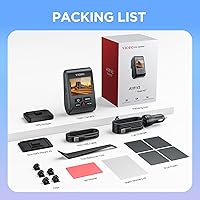
  • In-Box Contents: Includes the dash cam unit, GPS mount, car charger cable, Mini USB cable, trim removal tool, mounting clips, 3M stickers, windshield static stickers, and foam padding.
  • Power Source: Draws power from the vehicle via the included car charger cable, with auto start and stop tied to vehicle ignition.

Related Reviews
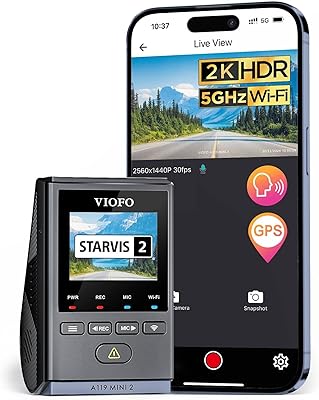
VIOFO A119 Mini 2
VIOFO A119 Mini 2
80%
91%
Video Quality
88%
Night Vision Performance
83%
Build Quality & Durability
93%
Compact Design & Discreetness
72%
Wi-Fi & App Experience
More
VIOFO VS1 Mini 2K Dash Cam
82%
88%
Video Clarity
82%
Night Vision Performance
94%
Form Factor & Discretion
67%
App & Wi-Fi Connectivity
86%
GPS Accuracy & Data Logging
More
VIOFO A129 Plus Duo Dash Cam
86%
91%
Video Quality
94%
Night Vision Performance
87%
GPS Functionality
79%
Wi-Fi Connectivity
88%
Ease of Setup
More
VIOFO A229 Pro Dual-Channel Dash Cam
79%
93%
Video Quality (Front)
86%
Video Quality (Rear)
88%
Night Vision Performance
89%
GPS Accuracy
74%
Parking Mode Effectiveness
More
VIOFO A229 Plus 2CH
VIOFO A229 Plus 2CH
79%
93%
Night & Low-Light Recording
88%
Video Clarity (Daytime)
91%
GPS Accuracy
74%
HDR Performance
71%
Wi-Fi & App Connectivity
More
VIOFO A329S 4K Dual Dash Cam
81%
93%
Front Video Quality
86%
Rear Camera Performance
88%
Low Light Performance
74%
Wi-Fi & App Experience
91%
Storage Flexibility
More
VIOFO A129 Pro Duo 4K Dual Dash Cam
85%
94%
Video Quality (4K Front, 1080p Rear)
88%
Parking Mode Performance
81%
Wi-Fi Connectivity
89%
Night Vision and Low-Light Footage
91%
GPS Accuracy and Data Logging
More
VIOFO A129 Plus Dash Cam 2K 1440P 60FPS
87%
96%
Video Quality
94%
Night Recording Performance
89%
GPS Accuracy
87%
Wi-Fi Connectivity
85%
Parking Mode Reliability
More
Wyze Cam v3 Indoor/Outdoor Security Camera
79%
88%
Night Vision Quality
83%
Video Clarity
86%
Weather Resistance
91%
Setup & Installation
89%
Value for Money
More
Nextbase 320XR Dash Cam
86%
93%
Video Quality
90%
Night Vision Performance
88%
Front & Rear Coverage
85%
Installation Ease
87%
Motion Detection Accuracy
More

FAQ

No, the A119 V3 does not come with a microSD card. You will need to purchase one separately, and VIOFO recommends a U3 A2 V30-rated card for reliable performance at 2K resolution. A low-speed card can cause dropped frames or recording errors, so it is worth spending a little extra on a quality card.

No, the VIOFO A119 V3 Dash Cam is a front-only camera. It does not support a rear camera channel. If rear coverage is important to you, you would need to look at a dual-channel dash cam system instead.

Yes. Parking mode on this front camera requires the VIOFO HK3 ACC hardwire cable, which is sold separately. The hardwire kit connects the camera directly to your vehicle's fuse box, allowing it to switch automatically between driving mode when the ignition is on and parking mode when the car is off. The standard car charger cable included in the box cannot enable parking mode.

Unfortunately, no. The A119 V3 has no Wi-Fi or Bluetooth, so there is no wireless way to view or transfer footage. To review clips, you need to physically remove the SD card and read it on a computer or a card reader. It is a real limitation if quick mobile access matters to you.

You cannot use both at the same time. When HDR is enabled, the camera automatically drops to 1440P at 30fps to handle the extra processing needed to balance highlights and shadows. At 60fps without HDR, motion is noticeably smoother and fast-moving objects like passing vehicles stay sharper in the frame. The right choice depends on your typical driving conditions — HDR helps in high-contrast lighting, while 60fps is better for capturing clean, smooth motion.

Battery-based dash cams can degrade quickly in very hot or very cold conditions, and in extreme cases they can swell or fail entirely. The supercapacitor in the A119 V3 handles temperature swings much better and has a significantly longer operational lifespan than a lithium cell. The trade-off is that it holds almost no charge on its own, so the camera relies entirely on your car's power supply rather than running independently.

The GPS module is built into the mount rather than the camera body itself, so you need to use the included GPS mount for location tracking to function. Once installed, the module syncs to satellites automatically and embeds speed and coordinates into the video file. No manual configuration is needed — it handles the time sync on its own as well.

A card rated U3, A2, and V30 is strongly recommended for stable 2K recording — these ratings indicate the card can sustain the write speeds needed for continuous high-resolution footage. Cards up to 256GB are supported. Brands like Samsung Endurance, SanDisk High Endurance, or Kingston Canvas series are commonly paired with this type of dash cam and tend to perform reliably in automotive environments.

The Sony STARVIS sensor and F1.6 aperture do make a meaningful difference in low-light situations compared to budget cameras with weaker sensors. In real-world use, the camera captures legible license plates and road signs at night better than most options in this price range. That said, some users notice mild blooming or halo effects around bright light sources like oncoming headlights or streetlamps, which is normal for a single-lens front cam at this tier. It is capable, but not comparable to a premium dual-lens setup with a dedicated infrared sensor.

The A119 V3 uses a quick-release mount that attaches to the windshield via a 3M adhesive sticker or a static cling sticker depending on your preference. Removing the camera from the mount is quick and tool-free, which is handy if you park in areas where leaving electronics visible is a theft risk. The GPS mount and a standard non-GPS mount are both included in the box, so you have options depending on whether you want location logging enabled.

Where to Buy

Walmart
In stock $119.99
TikTok Shop
In stock $106.58
BlackboxMyCar
In stock $109.99
VIOFO
In stock $114.49
Techinn.com
In stock $121.99