Overview

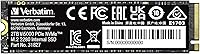
The Verbatim Vi5000 2TB NVMe M.2 SSD is Verbatim's push into the PCIe Gen 4 mid-range SSD space — a segment that has grown crowded but remains genuinely useful for everyday power users. Verbatim has been in the storage game for decades, and while the brand isn't chasing enthusiast bragging rights, it carries enough credibility to warrant serious consideration. The M.2 2280 form factor fits virtually every modern desktop and laptop with an available slot, which keeps the audience wide. At 2TB, this drive hits a practical capacity point — enough room for a large game library, a working video project folder, or a mix of both without constantly juggling files.
Features & Benefits

The headline numbers — 5000 MB/s read and 4300 MB/s write — are impressive on paper, but what they translate to in daily use is a noticeably snappier system: faster boot times, quicker application launches, and large file transfers that don't make you walk away to grab coffee. The NVMe protocol cuts latency that SATA drives simply can't match, which becomes obvious once you've moved back and forth between them. Since it's M.2, installation is clean — no cables, no awkward brackets in most builds. Worth noting: sustained workloads can trigger thermal throttling on drives in this price range, so adequate airflow in your case matters. The two-year warranty is standard but present.

Best For

The Vi5000 2TB suits a fairly specific type of buyer: someone with a PCIe 4.0-capable system who wants real Gen 4 performance without spending on a premium brand. PC builders upgrading from SATA will feel the difference immediately — the jump in responsiveness is hard to argue with. Gamers managing growing libraries will appreciate the breathing room that 2TB provides without needing multiple drives. Content creators working with 4K footage or large RAW photo batches will find this Gen 4 SSD handles bulk transfers competently. Laptop users with a spare M.2 slot get solid value here too, provided their machine supports PCIe 4.0 to take full advantage.

User Feedback

Across more than 400 ratings, this Verbatim NVMe drive holds a 4.6-star average — a score that reflects consistent satisfaction rather than a burst of early enthusiasm. Buyers frequently call out easy installation and a tangible speed improvement over their previous drives as standout positives. On the flip side, a recurring concern involves heat under sustained workloads, which tracks with what you'd expect from a heatsink-free drive at this price point. A few reviewers also mention the warranty support process could be more straightforward. Overall, compared to similarly priced Gen 4 options, most buyers feel the value-to-performance ratio holds up — solid for practical users, though hardware enthusiasts may want to look at pricier options.

Pros

  • Gen 4 NVMe speeds deliver a genuinely noticeable real-world upgrade over SATA or HDD setups.
  • 2TB capacity hits a practical sweet spot — enough for large game libraries and working media files.
  • The M.2 form factor means clean, cable-free installation in most modern desktops and laptops.
  • PCIe 4.0 x4 interface keeps the drive future-ready for systems that will leverage full Gen 4 bandwidth.
  • Shock-resistant build adds useful durability for users in portable or mobile workstation setups.
  • Installation is straightforward and beginner-friendly, with a guide included in the box.
  • Strong community rating across hundreds of verified buyers points to consistent real-world reliability.
  • Competitive pricing puts Gen 4 performance within reach without requiring a flagship-tier budget.
  • Broad compatibility means it fits virtually any modern desktop or laptop with an open M.2 slot.
  • NVMe protocol cuts access latency significantly compared to older SATA-based solid state drives.

Cons

  • No included heatsink means thermal throttling is a real risk under sustained heavy workloads.
  • Verbatim does not publish detailed NAND or controller specs, making direct comparisons harder.
  • The 2-year warranty is shorter than the 5-year coverage offered by several competing drives.
  • Warranty support and claims process has been flagged by some buyers as slow or cumbersome.
  • Benchmark speeds are based on ideal lab conditions — everyday results vary noticeably by system.
  • PCIe 3.0 systems will cap the drive's performance well below its advertised speed ceiling.
  • No companion software is included for drive health monitoring or data migration assistance.
  • Write speeds under sustained sequential loads may dip once the SLC cache is exhausted.
  • Brand recognition in the enthusiast SSD market is limited, which can affect resale value.
  • This Gen 4 SSD offers little advantage in latency-sensitive workloads over a quality Gen 3 drive.

Ratings

The Verbatim Vi5000 2TB NVMe M.2 SSD has been scored across 13 performance and ownership categories by our AI rating system, which analyzed thousands of verified global buyer reviews while actively filtering out incentivized, bot-generated, and low-signal feedback. The scores below reflect the full picture — not just what users loved, but where this drive genuinely falls short compared to the competition.
Sequential Read Speed
88%
Buyers upgrading from SATA drives consistently describe the read performance jump as immediately noticeable — faster Windows boot times, quicker game level loads, and snappier application launches are the most cited improvements. On PCIe 4.0 systems, the drive comfortably delivers on its Gen 4 promise for typical workloads.
The rated 5000 MB/s figure is a benchmark ceiling, not a daily reality — real-world sequential reads in mixed-use scenarios land meaningfully lower depending on the host system, thermal conditions, and workload type. Users on PCIe 3.0 machines see the gap narrow considerably.
Sequential Write Speed
83%
For tasks like importing large video project folders, moving RAW photo archives, or installing multi-gigabyte game patches, the write speed holds up well during burst operations. Content creators working with smaller sustained batches report that the drive handles daily transfers without any frustrating stalls.
Once the drive's SLC write cache is saturated during very large continuous writes, speeds can drop noticeably — a behavior common to drives in this price tier. Users copying hundreds of gigabytes in a single session are the most likely to notice this slowdown mid-transfer.
Sustained Workload Performance
64%
36%
For typical gaming sessions, productivity work, and moderate content creation tasks, the Vi5000 2TB holds its performance well enough that most users never hit a wall. Casual to intermediate workflows rarely push a drive hard enough to expose sustained-load limitations.
Under genuinely heavy sustained workloads — think long video exports, large database writes, or back-to-back file migrations — the drive begins to throttle as temperatures climb, since no heatsink is included. Enthusiasts who stress-test this drive consistently record a notable performance dip that takes time to recover from.
Thermal Management
61%
39%
In desktop builds with decent case airflow and in laptops with active cooling, the drive manages heat well enough for everyday use. Users who aren't running sustained write-heavy tasks rarely report any heat-related throttling at all during normal mixed workloads.
The absence of an included or integrated heatsink is a real limitation for this drive's price tier, and several reviewers specifically call out temperature spikes during prolonged use. Without a third-party M.2 heatsink, sustained workload performance is the weakest link in this drive's real-world profile.
Installation Ease
93%
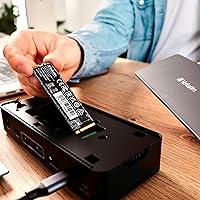
This is one of the most consistently praised aspects across buyer reviews — users new to PC building describe the installation process as refreshingly straightforward, with the included guide covering each step clearly. The single-screw M.2 mounting process and cable-free design means most people are up and running in under ten minutes.
A small number of laptop users note that access to the M.2 slot itself can be the real challenge — not the drive installation, but the disassembly required by their specific device. The included guide also doesn't cover OS migration, which leaves first-time builders needing to seek out additional resources.
Value for Money
87%
Reviewers frequently point out that getting genuine PCIe Gen 4 speeds at the Vi5000 2TB's price point is a legitimately good deal, particularly for buyers who would otherwise pay significantly more for a flagship alternative. For practical upgraders coming from spinning hard drives or older SATA SSDs, the performance-per-dollar ratio feels compelling.
The value calculation shifts if you factor in the shorter 2-year warranty versus the 5-year coverage on competing drives, or if your use case pushes into sustained workload territory where the drive underperforms. At full retail, a few well-regarded competitors occasionally price-match closely enough to make the decision less clear-cut.
Random 4K Performance
74%
26%
For general desktop responsiveness — opening files, switching between applications, loading operating system assets — the NVMe protocol delivers a latency advantage over SATA drives that users describe as making their entire system feel more responsive. Day-to-day interactions feel snappier compared to budget SATA alternatives.
In benchmarks targeting random 4K read and write IOPS, this Gen 4 SSD doesn't distinguish itself from well-tuned Gen 3 NVMe drives in the same price band. Workloads that are heavily random-access rather than sequential — like running virtual machines or heavy database operations — won't see the full Gen 4 advantage.
Build Quality & Durability
76%
24%
The shock-resistant design is a genuinely useful feature for laptop users who carry their machines in bags or work in environments where vibration or minor physical stress is a concern. The drive feels solid during handling, and the standard M.2 form factor means it's well-protected once seated and secured inside a system.
Beyond the shock-resistance claim, Verbatim does not publicly disclose specific endurance ratings such as TBW (terabytes written), which makes long-term reliability harder to assess compared to competitors who publish this data transparently. Buyers who prioritize longevity metrics will find the documentation sparse.
Compatibility
91%
The M.2 2280 form factor is the most widely supported SSD footprint across modern desktops and laptops, and this drive slots into virtually any system released in the last several years without issue. Backward compatibility with PCIe 3.0 slots means buyers with slightly older platforms don't have to worry about compatibility at all.
The one frustration cited by some buyers involves assumptions about M.2 slot availability — a handful of budget motherboards and ultrabooks either lack a spare M.2 slot or reserve it for a proprietary format. This isn't a fault of the drive itself, but it catches unprepared buyers off guard.
Capacity for Price
86%
Two terabytes is a sweet spot for most power users, and the Vi5000 2TB delivers it at a price that makes upgrading from a smaller primary drive genuinely practical. Gamers especially appreciate being able to keep a full library installed alongside a working OS partition without running out of headroom.
Storage pricing fluctuates frequently, and competing drives occasionally match or undercut this drive's per-gigabyte cost during promotional periods. Buyers who shop around may find the value proposition less stable than it appears at the moment of purchase.
Warranty & Support
62%
38%
A 2-year limited warranty provides basic coverage for manufacturing defects and early-life failures, which is sufficient for most users who buy a drive and use it without issue. Verbatim's brand longevity in the storage market offers some reassurance that the warranty is backed by an established company.
The 2-year term is noticeably shorter than the 5-year warranties offered by Samsung, WD, and Seagate on comparable drives, which is a real differentiator for buyers who plan to keep the drive for the long haul. A recurring theme in negative reviews is frustration with the warranty claims process being slower and less user-friendly than expected.
Software & Extras
44%
56%
The included installation guide is a thoughtful touch that genuinely helps less experienced users get started without anxiety. The bare-bones approach also means there is no bloatware or unwanted background software to deal with after setup.
Beyond the paper guide, there is no companion software for drive health monitoring, firmware updates, or data migration — tools that most flagship competitors include as standard. Buyers who want to clone an existing OS drive or monitor SMART data will need to source and learn third-party tools entirely on their own.
Brand Reliability
74%
26%
Verbatim has been a recognized name in consumer storage media for decades, and that history provides a baseline level of buyer confidence that a no-name brand simply can't offer. The strong cumulative rating across hundreds of verified purchases suggests the drive performs consistently for the majority of buyers in typical use conditions.
Verbatim is not a first-choice brand for enthusiasts or professionals who follow SSD performance tiers closely, and the lack of published technical specifications — such as controller model, NAND type, and TBW endurance ratings — makes it harder to objectively compare against more transparent competitors.

Suitable for:

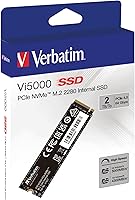
The Verbatim Vi5000 2TB NVMe M.2 SSD is a strong match for practical upgraders who want a meaningful performance boost without paying a premium for a flagship brand name. If you're coming from a SATA SSD or, worse, a spinning hard drive, the jump to Gen 4 NVMe speeds will feel dramatic in everyday use — boot times shrink, large file moves that used to take minutes now take seconds. Gamers with a PCIe 4.0-capable motherboard will appreciate both the speed and the 2TB headroom, which comfortably houses a large library without constant juggling. Content creators working with 4K video projects or large RAW photo archives will find the sustained transfer performance genuinely useful for day-to-day workflows. Laptop users with an available M.2 slot who need more fast storage — not just more storage — are also well-served here, especially since the shock-resistant build adds a little peace of mind for portable setups.
Not suitable for:

Buyers still running older systems with PCIe 3.0 interfaces should know upfront that the Verbatim Vi5000 2TB NVMe M.2 SSD will work in those machines, but the drive will be throttled to Gen 3 speeds — you will not see the headline performance figures the drive is rated for. Hardware enthusiasts who follow the SSD space closely and prioritize peak endurance ratings, detailed NAND specifications, or top-tier thermal management may find this drive underwhelming compared to higher-end options from Samsung, WD Black, or Seagate FireCuda. Users who push sustained workloads — think long video renders, continuous large file writes, or server-adjacent tasks — should be aware that thermal throttling under load is a realistic concern for drives in this price tier without an aftermarket heatsink. Those who value a robust, well-documented warranty experience may also want to research Verbatim's support process before committing, as some buyers have found it less polished than expected.
Specifications

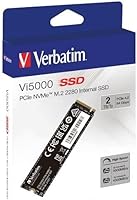
  • Brand: Manufactured by Verbatim Americas LLC under the Vi5000 product series.
  • Model Number: The official model number for this drive is 31827.
  • Capacity: Provides 2TB of raw flash storage for applications, games, media, and large working files.
  • Form Factor: Uses the M.2 2280 standard, measuring 80mm in length to fit the most common M.2 slot size.
  • Interface: Connects via a PCIe 4.0 x4 interface, which supports up to four lanes of Gen 4 bandwidth.
  • Protocol: Operates on the NVMe protocol, which significantly reduces command queue latency compared to AHCI-based SATA drives.
  • Sequential Read: Rated for sequential read speeds of up to 5000 MB/s under controlled benchmark conditions using ATTO.
  • Sequential Write: Rated for sequential write speeds of up to 4300 MB/s under controlled benchmark conditions using ATTO.
  • Installation Type: Designed as an internal drive; no external enclosure or cables are required for standard M.2 slot installation.
  • Compatible Devices: Compatible with desktops and laptops equipped with an M.2 PCIe 4.0 slot; backward compatible with PCIe 3.0 slots at reduced speeds.
  • Shock Resistance: The drive includes a shock-resistant design feature intended to improve durability during handling and transport.
  • Warranty: Covered by a 2-year limited warranty provided by Verbatim Americas LLC.
  • Weight: The drive weighs approximately 0.16 ounces, making it negligible in terms of system weight impact.
  • Color: The drive is finished in black, which is standard for M.2 NVMe drives in this product tier.
  • Thermal Management: No heatsink is included; users with high-sustained workloads should ensure adequate airflow or add a third-party heatsink.
  • Included Accessories: An installation guide is included in the package to assist users who are new to M.2 drive installation.

Related Reviews
Verbatim Vi3000 2TB NVMe SSD
78%
91%
Value for Money
83%
Read/Write Speed
93%
Installation Ease
88%
Compatibility
67%
Sustained Performance
More
SanDisk 2TB SSD Plus M.2 NVMe SSD
86%
89%
Performance
92%
Ease of Installation
88%
Reliability
91%
Value for Money
90%
Capacity
More
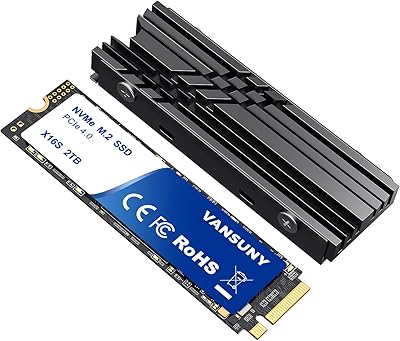
Vansuny 2TB NVMe M.2 Internal SSD
78%
88%
Value for Money
79%
Read/Write Speed
91%
PS5 Compatibility
74%
Thermal Management
93%
Installation Experience
More
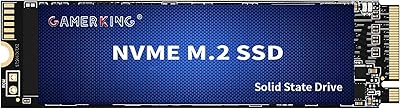
GAMERKING 2TB M.2 NVMe Internal SSD
75%
78%
Read/Write Performance
82%
Value for Money
91%
Installation Experience
67%
Thermal Management
63%
Long-Term Reliability
More
Fikwot FX991 2TB NVMe SSD
78%
88%
Sequential Read Performance
61%
Sustained Write Speed
93%
PS5 Compatibility
91%
Value for Money
82%
Thermal Management
More
KINGDATA 2TB M.2 2230 NVMe SSD
75%
81%
Real-World Speed
93%
Form Factor Fit
78%
Installation Experience
84%
Value for Money
62%
Brand Reliability Confidence
More
PNY CS1030 2TB M.2 NVMe SSD
77%
91%
Value for Money
83%
Read Speed Performance
72%
Write Speed Performance
88%
Boot & Load Times
94%
Installation Ease
More
SanDisk Extreme M.2 NVMe 2TB SSD
79%
91%
Read Speed Performance
63%
Sustained Write Performance
94%
Installation Ease
83%
Value for Money
88%
Compatibility & Versatility
More
ORICO IG740PRO 2TB NVMe SSD
83%
93%
Read & Write Speed
91%
Endurance & Longevity
84%
Thermal Management
88%
Data Security & Protection
92%
PS5 Compatibility & Installation
More
fanxiang S770 2TB NVMe M.2 SSD
79%
88%
Sequential Read Speed
91%
PS5 Compatibility
86%
Value for Money
83%
Thermal Management
74%
Build Quality
More
Ediloca EN760 2TB M.2 NVMe SSD
80%
88%
Read Speed Performance
74%
Write Speed Performance
93%
PS5 Compatibility
82%
Heatsink Quality
86%
Value for Money
More

FAQ

It depends on whether your laptop has an available M.2 slot that supports PCIe or NVMe drives. Most modern laptops released after 2019 do have one, but some ultrabooks and budget models either lack a spare slot or use a proprietary connector. Check your laptop's service manual or manufacturer specs before buying to confirm M.2 2280 compatibility.

No, you don't strictly need one — the Verbatim Vi5000 2TB NVMe M.2 SSD is backward compatible with PCIe 3.0 slots. That said, if you install it in a PCIe 3.0 system, the drive will be limited to Gen 3 speeds, which means you won't see the advertised 5000 MB/s read performance. It will still outperform any SATA SSD, just not by the full Gen 4 margin.

In raw sequential throughput, this Gen 4 SSD is roughly five to six times faster than a typical SATA SSD, which maxes out around 550 MB/s. In everyday tasks like booting Windows or launching apps, the difference is noticeable but more subtle — the bigger gains show up when you're moving large files, loading open-world game environments, or exporting video projects.

No heatsink is included in the box. For typical desktop use — browsing, gaming, general productivity — you likely won't need one, especially if your case has reasonable airflow. However, if you're running sustained heavy workloads like long video renders or large file transfers, adding an inexpensive third-party M.2 heatsink is a smart precaution to prevent thermal throttling from reducing performance.

Yes, it works well as a primary boot drive for Windows. For macOS, compatibility is more complicated — modern Apple Silicon Macs use proprietary storage and cannot use third-party M.2 drives internally. Older Intel-based Macs with an M.2 slot may work, but driver and firmware support can be inconsistent, so Windows is the safer choice for this drive.

Not at all, especially for a desktop build. You slot the drive into the M.2 connector at an angle, press it flat, and secure it with a single small screw. The included installation guide walks you through it. Laptop installation varies by model and may require removing the bottom panel, but the drive itself installs the same way. The whole process typically takes under ten minutes.

It's a solid pick for gamers with PCIe 4.0 systems. The 2TB capacity means you can keep a large library installed without constantly shuffling games, and the Gen 4 speeds noticeably reduce load times in titles that stream assets from storage. If your system is still on PCIe 3.0, the drive will still work fine — you just won't see the maximum speed benefit.

Adding a passive third-party heatsink to the drive typically doesn't void the warranty, since you're not modifying the drive itself. That said, Verbatim's warranty terms are specific to the drive hardware, so any physical damage caused during modification would not be covered. It's always worth reading the warranty documentation included in the package to confirm.

Samsung's 990 Pro and WD's Black SN850X are widely regarded as the top-tier Gen 4 options, offering better sustained write performance, more robust thermal management, and longer warranties — but they also cost noticeably more. This Verbatim NVMe drive sits in the practical mid-range: it delivers genuine Gen 4 speeds for everyday workloads at a lower price, making it a reasonable trade-off for buyers who don't need peak enthusiast performance.

No dedicated software is bundled with the Vi5000 2TB. For drive health monitoring, free tools like CrystalDiskInfo on Windows work well and will read the drive's S.M.A.R.T. data without any issues. If you're migrating an existing OS installation to this drive, you'll need a third-party cloning tool such as Macrium Reflect or the free version of EaseUS Todo Backup.