Overview

The Vansuny 512GB Portable External SSD USB 3.2 Gen 2 arrived in late 2024 as a budget-conscious entry in an increasingly crowded portable storage market. Vansuny isn't a household name, but the drive makes a reasonable first impression — a zinc alloy shell and slim racing-inspired profile look noticeably more refined than the generic plastic drives cluttering this price tier. At 512GB, it lands in a practical sweet spot: enough capacity for most users without demanding a premium outlay. For a listing only a few months old, earning 136 ratings at 4.5 stars and climbing to #61 in External Solid State Drives suggests buyers are responding positively so far.
Features & Benefits

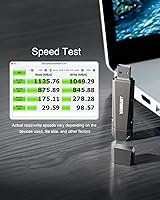
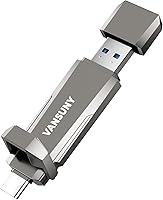
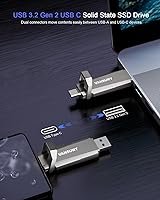
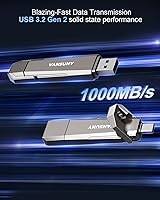
What makes this dual-interface SSD worth considering over a standard single-port drive is its built-in flexibility. Both USB-A and USB-C connectors are physically integrated into the body — no dongle required, no adapter to lose. The USB 3.2 Gen 2 interface supports theoretical read speeds up to 1000MB/s, which in practice means large video files and photo batches move considerably faster than on older USB 3.0 drives, though real-world speeds depend on your host device. Weighing under two ounces and measuring roughly 3.1 inches long, it disappears easily into a jacket pocket. The rotating connector covers protect the plugs during transit without requiring a separate case.

Best For

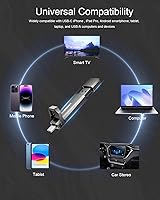
The Vansuny drive makes the most sense for people who regularly bounce between devices with different port types. Photographers shooting on a USB-C camera and editing on an older USB-A desktop will appreciate not needing a hub. Students toggling between a Windows laptop in class and an iPad at home get the same benefit. It also works well as a solid flash drive upgrade — anyone still moving large files on slow USB sticks will notice the difference immediately. Android users who need expandable storage directly from their phone are a natural fit too. That said, professional editors with demanding throughput needs will likely want a more established brand at higher capacity.

User Feedback

Across roughly 136 reviews, the most repeated compliment is how effortlessly this portable SSD works across different devices — buyers mention plugging it into phones, MacBooks, and desktop PCs without issues. Actual transfer speeds generally earn positive remarks, though a handful of users note real-world numbers fall short of the theoretical ceiling depending on the port and cable used. Build quality draws mixed signals: many find the zinc alloy casing reassuringly solid, while a few report it runs warmer than expected during longer transfers. Usable storage after formatting comes in slightly under 512GB, which is standard practice but worth knowing upfront. Overall sentiment skews favorable, though the rating pool is still relatively small for firm long-term conclusions.

Pros

  • Built-in USB-A and USB-C connectors mean no adapters, ever — just plug in and go.
  • Zinc alloy casing feels noticeably more solid than competing plastic drives in this price tier.
  • Plug-and-play across Windows, macOS, Android, and Linux with zero software installation required.
  • At under two ounces, this portable SSD genuinely disappears into a pocket or small bag.
  • Rotating connector covers protect both plugs during travel without needing a separate case.
  • Backward compatible with older USB 3.0 and 2.0 ports, so no device gets left behind.
  • Android users can plug directly into their phone to offload media without any extra hardware.
  • Early buyer ratings are strong for a drive this new, suggesting real-world satisfaction among early adopters.
  • 512GB offers enough room for photo libraries, coursework archives, or a solid media collection in one go.

Cons

  • Real-world transfer speeds fall well short of the marketed 1000MB/s ceiling on most consumer devices.
  • The drive runs noticeably warm during sustained large file transfers, which may trigger throttling.
  • Vansuny has no established warranty reputation or proven customer service track record to lean on.
  • Formatted usable storage lands closer to 476GB, which surprises buyers expecting the full labeled capacity.
  • Finish picks up visible micro-scratches after just a few weeks of regular pocket carry.
  • No bundled encryption or backup software, unlike some competing drives at a comparable price.
  • Connector covers have been reported to loosen on some units after extended daily use.
  • Long-term durability and flash cell endurance remain unproven given how recently the product launched.
  • USB-A plug fits loosely in worn ports on older machines, causing occasional unexpected disconnections.

Ratings

The Vansuny 512GB Portable External SSD USB 3.2 Gen 2 has been scored across key performance and usability categories by our AI engine after parsing verified buyer reviews from global markets — with spam, bot-submitted, and incentivized feedback actively filtered out. Scores reflect the honest distribution of real user sentiment, capturing both what this dual-interface drive does well and where it leaves some buyers wanting more. Strengths and friction points are weighted equally so you get a transparent picture before committing.
Cross-Device Compatibility
93%
The built-in dual-connector design earns consistent applause from buyers who plug it into everything from aging USB-A desktops to modern USB-C smartphones in a single day. No adapter hunting, no extra cable — users repeatedly call this the drive's single most practical feature in daily use.
A small number of buyers report the USB-A plug fitting loosely in worn-out ports on older machines, causing occasional disconnections. It is a minor issue but worth noting if your primary machine has heavily used ports.
Transfer Speed Performance
78%
22%
Users offloading large batches of RAW photos or 4K footage from their phones report noticeably faster transfers compared to previous flash drives or older USB 3.0 SSDs. For typical day-to-day file movement, the speed improvement is real and tangible.
The advertised 1000MB/s is a theoretical ceiling, and real-world results land considerably lower depending on the host device and port quality. Several buyers measured speeds more in the 400–600MB/s range, which is still good but tempers expectations set by the marketing.
Build Quality & Materials
81%
19%
The zinc alloy casing genuinely surprises buyers in this price range — most expected something that felt hollow or plasticky and instead got a drive with reassuring heft and a cool, solid feel in hand. The slim racing-car profile also draws compliments for looking more premium than the price suggests.
Some users note the finish shows micro-scratches after a few weeks of pocket carry, and a handful found the rotating connector covers feel slightly stiff initially. Neither issue affects function, but it takes the edge off the premium first impression over time.
Portability & Form Factor
94%
At under two ounces and barely three inches long, this portable SSD disappears into a jeans pocket or laptop bag without adding any noticeable weight. Travelers and commuters especially appreciate being able to carry 512GB of storage without dedicating a pouch or case to it.
The drive's slim profile, while great for portability, means there is very little surface area to grip when pulling it from a tight port. A few buyers with larger hands find it fiddly to remove cleanly, particularly from rear USB ports.
Connector Protection
82%
18%
The rotating covers over both USB-A and USB-C plugs are a thoughtful detail that buyers genuinely use — particularly travelers who toss the drive loose in a bag. It removes the anxiety of exposed metal contacts picking up lint or getting bent during transit.
The cover mechanism on a small number of units has been reported to loosen after several weeks of daily rotation, making the cap feel wobbly. It still functions, but the tactile confidence drops noticeably compared to a brand-new unit.
Smartphone Compatibility
79%
21%
Android users in particular respond positively to direct plug-in use without needing a hub or OTG adapter — the drive mounts reliably on most modern Android phones and works well for moving large media libraries off internal storage. Several buyers specifically tested it with Samsung and Pixel devices with good results.
Performance with smartphones is noticeably lower than with a full laptop, which is expected but not always made clear upfront. iPhone users with older Lightning ports are left out entirely, and even newer USB-C iPhone compatibility appears inconsistent across reviews.
Heat Management
67%
33%
Under typical workloads — copying a folder of documents, transferring a few videos — the drive stays comfortably cool. Most buyers never encounter a heat issue in normal day-to-day use, which covers the majority of use cases this drive is designed for.
Extended transfers of large files, particularly sustained writes over several minutes, cause the zinc alloy body to become noticeably warm to the touch. A handful of buyers report thermal throttling during long backup sessions, which stretches transfer times unpredictably.
Plug-and-Play Ease
92%
No software installation, no driver prompts, no format dialogs on first use across Windows, macOS, and Android — buyers consistently report the drive just works the moment it is connected. This is a meaningful advantage for less technically confident users.
Linux compatibility works for most users but is not universally confirmed across all distributions. A small subset of buyers on older Linux setups report needing a manual mount step, which breaks the plug-and-play promise slightly in edge cases.
Storage Capacity Value
86%
512GB sits in a genuinely useful range for most buyers — enough to hold a full photo library, a semester of coursework files, or a sizable media collection without constantly managing what to keep. Users upgrading from 128GB or 256GB drives feel an immediate sense of relief.
Formatted usable capacity comes in closer to 476GB, which is standard across all storage devices but still catches some buyers off guard. Those expecting the full 512GB available on day one occasionally leave a frustrated note about it in their reviews.
OS & Software Compatibility
88%
The broad compatibility across Windows, macOS, Android, and Linux without any proprietary software or driver installation is genuinely appreciated by multi-platform households. Students who use a Windows PC at school and a Mac at home call it one less thing to worry about.
There is no bundled backup software or encryption utility, which competing drives at slightly higher prices sometimes include. Power users who want built-in security features will need to source third-party solutions independently.
Value for Money
89%
Buyers repeatedly express surprise at how much drive they get for the asking price — solid metal construction, dual connectors, and genuine SSD speeds at a cost that competes with basic flash drives from bigger brands. The price-to-performance ratio is the most cited reason for recommending it.
The brand carries no established warranty reputation, and customer service responsiveness is largely untested at scale given how new the product is. Buyers investing in long-term storage reliability may feel the lower brand equity introduces risk that a small price premium to a known brand would eliminate.
Durability & Longevity
71%
29%
The zinc alloy enclosure offers better drop and crush resistance than plastic-bodied competitors, and the lack of moving parts means the drive itself is inherently resilient. Short-term durability feedback is positive across the review pool.
With the product only a few months old and just over 130 reviews collected, there is simply not enough long-term data to rate durability with high confidence. Questions about flash cell endurance and controller reliability after a year or two of heavy use remain unanswered.
Aesthetic Design
84%
The racing-car-inspired silhouette and gray zinc alloy finish make this one of the more visually distinctive drives in the budget tier. Several buyers mention it looks more expensive than it is, which adds to the satisfaction of the purchase.
Design preference is subjective, and a few buyers find the aggressive styling unnecessary for a storage device — they would have preferred a simpler, more understated look. The gray-only color option also limits personalization for buyers who color-match their gear.
Backward Compatibility
87%
Working reliably on USB 3.0 and even USB 2.0 ports makes this a future-proof purchase for households with mixed-age hardware. Buyers who use the drive on an older family PC as well as a new laptop appreciate not having to think about port generation.
On USB 2.0 connections, transfer speeds drop dramatically to the hardware ceiling of that standard, which can frustrate buyers who did not realize their older machine was the bottleneck. The drive performs fine, but the speed gap versus USB 3.2 is jarring without context.

Suitable for:

The Vansuny 512GB Portable External SSD USB 3.2 Gen 2 is a strong fit for anyone who regularly works across devices with different port types and cannot be bothered carrying adapters. Students splitting time between a university Windows PC and a personal MacBook or iPad will find the built-in dual-connector design genuinely liberating in practice. Photographers and videographers who shoot on USB-C devices and need to offload large batches quickly — without sitting at a desk — will appreciate the speed improvement over a traditional flash drive. Android users wanting to free up internal phone storage for media libraries get direct plug-in access without extra hardware. Travelers and commuters who need a lightweight, durable backup drive that can handle being tossed into a bag daily will value both the zinc alloy construction and the rotating connector covers. If you are upgrading from a slow USB flash drive and want real SSD performance at an accessible price, this portable SSD sits comfortably in that sweet spot.
Not suitable for:

The Vansuny 512GB Portable External SSD USB 3.2 Gen 2 is not the right call for professional video editors, data hoarders, or anyone whose workflow depends on sustained high-speed transfers over long sessions. The advertised 1000MB/s ceiling is a theoretical figure — real-world speeds vary considerably based on your host device, and during extended writes the drive can run warm enough to throttle performance noticeably. Users who need more than 512GB of capacity will hit the wall quickly, since there is no larger variant available in this lineup. Buyers who prioritize brand-backed warranties, established customer service track records, or built-in hardware encryption should look toward more mature brands, as Vansuny is still a relatively new name with limited long-term reliability data. iPhone users on Lightning ports are not supported, and USB-C iPhone compatibility has shown inconsistent results across buyer reports. Anyone running a heavily write-intensive workload — like continuous security camera recording or large database backups — should invest in a drive with a verified endurance rating from a known manufacturer.

Specifications

  • Storage Capacity: The drive offers 512GB of raw storage, with approximately 476GB available after standard formatting overhead.
  • Interface: Uses USB 3.2 Gen 2 technology, which supports theoretical read speeds of up to 1000MB/s under ideal conditions.
  • Connector Types: Features two physically integrated connectors — one USB-A and one USB-C — both built directly into the drive body with no adapter required.
  • Dimensions: The drive measures 79.7×21.2×8.5 mm (approximately 3.14×0.83×0.33″), making it smaller than most standard USB sticks.
  • Weight: Weighs 1.76 oz (approximately 50g), light enough to carry daily without adding noticeable bulk to a bag or pocket.
  • Shell Material: Enclosure is constructed from zinc alloy, offering better resistance to drops and pressure compared to typical plastic-bodied drives in this category.
  • Color: Available in gray only; the finish has a brushed metallic appearance consistent with the zinc alloy construction.
  • OS Compatibility: Compatible with Windows, macOS, Android, and Linux operating systems without requiring any driver or software installation.
  • Backward Compatibility: Functions on USB 3.1, USB 3.0, and USB 2.0 ports, though maximum transfer speeds are capped by the host port generation.
  • Connector Protection: Both the USB-A and USB-C connectors are shielded by rotating protective covers that physically enclose the plugs when not in use.
  • Installation: Plug-and-play on all supported operating systems — no software download, no formatting wizard, and no driver installation needed out of the box.
  • Form Factor: Classified as an external portable SSD; the drive requires no external power source and draws power entirely from the connected host device.
  • Smartphone Support: Supports direct connection to Android smartphones and tablets via the USB-C plug, enabling file transfers without an OTG adapter or hub.
  • Availability Date: First listed on Amazon in November 2024, making this a recently released product with a still-developing long-term reliability track record.
  • Market Ranking: Ranked #61 in the External Solid State Drives category on Amazon at time of review, with 136 verified ratings averaging 4.5 out of 5 stars.

Related Reviews

Patriot Transporter Lite 512GB Type-C USB 3.2 Gen 2 External SSD
85%
91%
Performance
88%
Ease of Use
94%
Portability
90%
Speed
81%
Build Quality
More
Timetec 1TB Pro Portable USB 3.2 Gen 2 SSD
88%
93%
Performance
90%
Portability/Size/Weight
92%
Compatibility/Connectivity
95%
Speed (Read/Write)
85%
Value for Money
More
Netac Zslim 250GB Portable SSD USB 3.2 Gen 2
87%
90%
Performance
88%
Portability
85%
Build Quality
91%
Ease of Use
92%
Compatibility
More
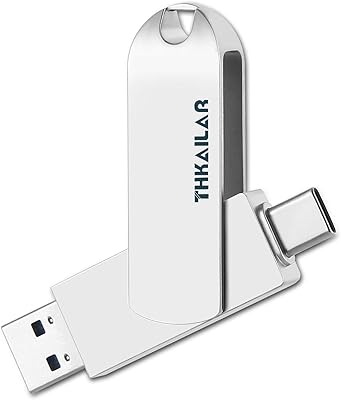
THKAILAR 1TB USB 3.2 Gen 2 External SSD Flash Drive
85%
89%
Data Transfer Speed
91%
Build Quality & Durability
93%
Portability & Size
88%
Compatibility & Connectivity
92%
Ease of Use (Plug-and-Play)
More
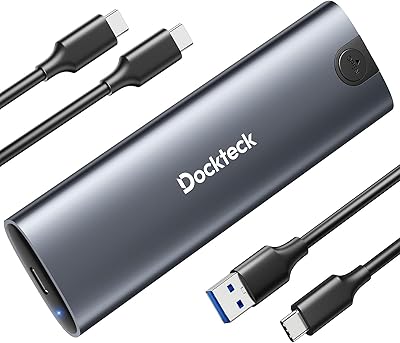
dockteck DH0002 M.2 NVMe/SATA SSD Enclosure
84%
88%
Transfer Speed (NVMe)
76%
SATA Drive Performance
83%
Build Quality
93%
Ease of Setup
79%
Thermal Management
More
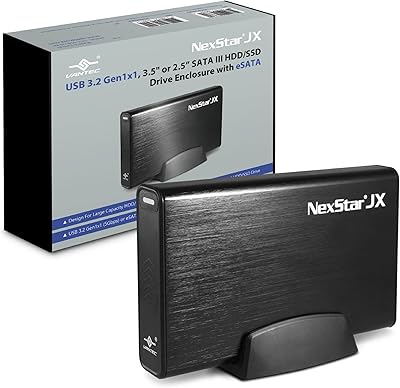
Vantec NexStar JX NST-358SU3-BK USB 3.2 Gen 1 eSATA 3.5″/2.5″ SATA III HDD/SSD Enclosure
86%
92%
Performance & Data Transfer Speeds
90%
Ease of Setup
87%
Build Quality & Durability
78%
System Compatibility
85%
Thermals & Cooling
More
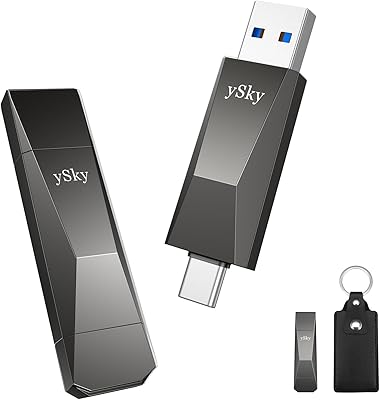
ySky 512GB USB-C/USB 3.2 SSD
88%
91%
Read Speed Performance
88%
Write Speed Performance
92%
Build Quality & Durability
89%
Portability
95%
Ease of Use / Setup
More
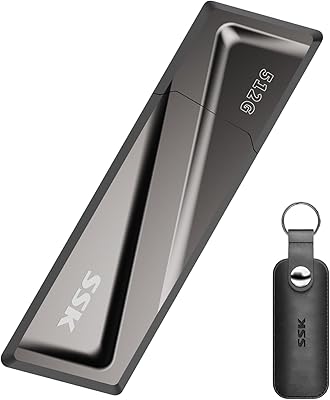
SSK 512GB USB 3.2 Gen 2 Flash Drive
84%
91%
Performance & Speed
88%
Build Quality & Durability
95%
Ease of Use (Plug-and-Play)
87%
Compatibility (USB-A & USB-C)
80%
Portability & Size
More
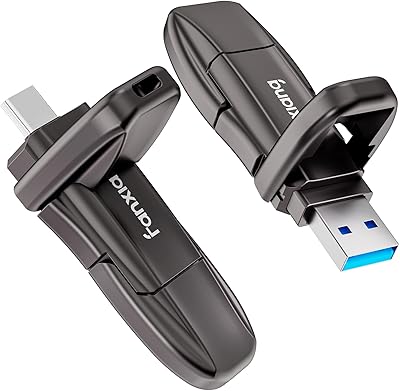
fanxiang FF952 512GB USB 3.2 Gen 2 Flash Drive
88%
94%
Data Transfer Speed
89%
Portability
90%
Build Quality
92%
Ease of Use
77%
Compatibility with Devices
More
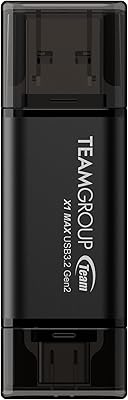
TEAMGROUP X1 MAX 512GB USB 3.2 Gen 2 Flash Drive
88%
94%
Data Transfer Speed
90%
Portability/Size/Weight
91%
Compatibility/Connectivity
85%
Build Quality/Durability
88%
Value for Money
More
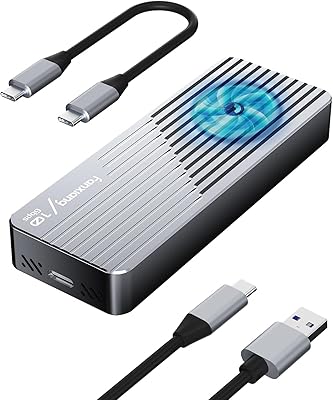
fanxiang MD85 SSD Enclosure with Cooling Fan, 4TB, USB 3.2 Gen 2
87%
91%
Cooling Performance
88%
Transfer Speed
85%
Portability & Design
93%
Ease of Use (Plug-and-Play)
90%
Compatibility with M.2 SSDs
More

FAQ

Yes, it works directly — plug the USB-C end into your Android phone and it mounts like any external storage. No OTG adapter needed. Most modern Android phones running Android 6 or later will recognize it automatically within a few seconds.

The Vansuny 512GB Portable External SSD USB 3.2 Gen 2 is rated up to 1000MB/s, but that is a theoretical maximum under perfect lab conditions. On a real laptop with a USB 3.2 Gen 2 port, most users see read speeds in the 400–700MB/s range, which is still a substantial improvement over older USB 3.0 drives. If your laptop only has USB 3.0 ports, speeds will be capped at that standard regardless of the drive.

Yes, the USB-C connector plugs straight into any MacBook Pro with a Thunderbolt or USB-C port, and macOS will recognize it without any software install. Just be aware that Thunderbolt 3 or 4 ports will not give you Thunderbolt speeds — the drive runs at USB 3.2 Gen 2 speeds regardless of the port type it connects to.

After standard formatting, you can expect around 476GB of usable space rather than the full 512GB. This is completely normal for all storage devices — manufacturers measure capacity in decimal gigabytes while operating systems report in binary, which creates the apparent gap. It is not a defect.

The casing is noticeably more solid than the plastic shells common in this price range and holds up well to everyday carry. That said, some buyers report fine surface scratches developing after a few weeks in a pocket alongside keys or coins. The internal storage is not affected by cosmetic wear, but if appearance matters to you, a small sleeve or pouch helps.

Yes, the drive is backward compatible with USB 2.0, so it will function on older machines. However, transfer speeds will drop dramatically — USB 2.0 caps out around 60MB/s under real-world conditions, which is far below what the drive is capable of. For moving large files regularly, it is worth using the fastest port available on your machine.

During short transfers it stays cool, but sustained writes over several minutes — like backing up a full photo library — can make the zinc alloy body noticeably warm to the touch. In some cases this leads to thermal throttling, which slows transfers until the drive cools down. For occasional use this is rarely an issue, but for frequent large backups it is worth factoring in.

No software installation is required on Windows, macOS, Android, or Linux. On most systems the drive arrives pre-formatted as exFAT, which is readable across all major platforms. If you want to reformat it to a specific file system like APFS for Mac-only use or NTFS for Windows, you can do that through your operating system's built-in disk utility.

They are both physically part of the drive body, but you use one at a time — you connect it to a device via whichever plug fits that port. The other connector simply folds away under its protective cover. You cannot connect two devices simultaneously; it is a single-device drive.

Vansuny is a smaller brand without the established track record of names like Samsung or SanDisk, which is worth acknowledging honestly. That said, the early review pool — around 136 ratings at 4.5 stars — is encouraging for a drive that launched in late 2024. The main unknowns are long-term durability and how reliably the company handles warranty claims, neither of which has been tested at scale yet. If peace of mind from a brand warranty matters more to you than price, a more established name is the safer bet.