Overview

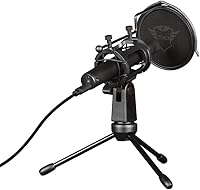
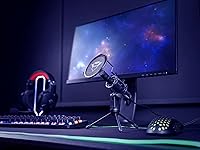
The Trust Gaming GXT 241 Velica USB Microphone is one of those rare budget picks that actually makes a reasonable case for itself — not by overpromising, but by covering the basics well. It ships with a tripod stand and pop filter already in the box, so you are not hunting for accessories before your first recording session. Plug it into any PC or laptop via USB-A and it just works — no drivers, no software, no fuss. The metal body construction is genuinely surprising at this price point; most competitors at this tier hand you a plastic shell that creaks. Just go in with realistic expectations: this is a solid entry-level condenser, not a broadcast-quality studio mic.
Features & Benefits

The cardioid polar pattern is the Velica's most practical feature for everyday use — it pulls in audio from directly in front while rolling off sound from the sides and rear, which means keyboard noise and room chatter stay relatively contained. In real terms, a 79 dB signal-to-noise ratio means your voice comes through clean rather than buried under a hiss floor. The 1.8m USB cable gives you enough slack to position the mic comfortably without the cable fighting you. That included pop filter does real work on plosive-heavy consonants, and the metal construction keeps handling noise lower than you would expect. Worth noting: there is no onboard gain control or mute button, so you will manage levels through your OS or streaming software.

Best For

The GXT 241 hits its stride with a specific kind of buyer: someone stepping up from a headset mic for the first time without wanting to untangle audio interfaces and XLR cables. Beginner streamers on Twitch or YouTube will hear an immediate difference, and so will colleagues on video calls who have been enduring your laptop microphone for months. It works well for casual podcasting too, provided your space is reasonably quiet — a bare-walled room will expose some reverb. For gamers, in-game voice clarity is a genuine improvement over built-in solutions. If you want something that covers the fundamentals right out of the box, no extra spending required, this USB condenser mic is a very capable starting point.

User Feedback

With a 4.6-star average across 270 ratings, the Velica sits in genuinely well-regarded territory for its category. Buyers consistently highlight ease of setup and how much cleaner it sounds compared to whatever they were using before — that relative context matters a lot when weighing the praise. Build quality gets frequent mentions too, with owners noting the mic feels solid rather than disposable. On the critical side, several users flag that without onboard controls, level management feels clunky, especially mid-stream. Room acoustics come up as well: buyers in untreated spaces notice more echo than expected. Long-term durability looks encouraging from the feedback patterns, and most buyers feel it holds its own against comparably priced rivals.

Pros

  • Ships with a tripod stand and pop filter included, so nothing extra needs to be purchased before the first session.
  • Plug-and-play USB-A connection works instantly on any PC or laptop with zero driver installation required.
  • Cardioid polar pattern keeps keyboard noise and ambient room sound from cluttering the voice pickup.
  • Metal body construction feels noticeably more solid and durable than the plastic-shelled rivals at this price point.
  • A 79 dB signal-to-noise ratio delivers clean, low-hiss voice capture well beyond what a typical headset mic can manage.
  • The 1.8m USB cable gives comfortable desk reach without forcing awkward cable management.
  • Compact tripod keeps the desk footprint small — no need for a boom arm or extra mounting hardware.
  • USB bus-powered design eliminates the need for an external power adapter or any batteries.
  • Buyer satisfaction is consistently strong, with the mic holding a 4.6-star average across a meaningful number of ratings.
  • Long-term durability holds up well based on owner feedback, with no widespread reports of early build failure.

Cons

  • No onboard mute button means silencing yourself mid-stream requires switching focus to software controls.
  • The absence of a headphone monitoring jack makes real-time voice monitoring impossible without a separate device.
  • No physical gain knob means input level adjustments rely entirely on your operating system or streaming application.
  • Noticeably sensitive to room acoustics — untreated or reflective spaces will introduce echo that the mic cannot filter out.
  • The tripod stand offers limited height adjustment, which may not position the mic ideally for every desk or chair height.
  • Some users find the fixed sensitivity either slightly too hot or too quiet for their specific room and voice combination.
  • Not suited for recording music or instruments — the design is optimized for spoken voice, not broader frequency capture.
  • No status LED or mute indicator makes it easy to lose track of whether the mic is live during a broadcast.
  • The included cable cannot be swapped for a shorter run without buying a replacement separately.
  • In noisy or shared environments, the cardioid pattern alone is not strong enough to cleanly isolate a single voice.

Ratings

The scores below were generated by AI after analyzing verified buyer reviews for the Trust Gaming GXT 241 Velica USB Microphone across multiple global markets, with spam, bot-generated, and incentivized feedback actively identified and filtered out. Each category reflects a genuine synthesis of what real users praised most and what consistently frustrated them. Both the strengths and the recurring pain points are represented transparently so you can make a fully informed decision.
Audio Clarity
78%
22%
For a mic in this price range, voice comes through noticeably cleaner and fuller than what a gaming headset delivers. Streamers and remote workers consistently report that colleagues and viewers comment on the improved sound quality without any post-processing applied.
In direct comparison with mid-range USB mics costing significantly more, the Velica's treble can sound slightly harsh and the low-end warmth is limited. It is a clear step up from a headset, but not a replacement for a purpose-built podcasting or broadcast microphone.
Build Quality
83%
The metal housing is the first thing buyers notice when they take this mic out of the box — it feels legitimately solid in a category where most competitors ship hollow plastic bodies. Long-term feedback suggests the build holds up well over months of daily use without joints loosening or the finish degrading noticeably.
The tripod stand, while sturdy enough for standard desk placement, feels less robust than the mic body itself, with some users noting it can shift position if the desk gets bumped. A threaded mount option for boom arm compatibility would improve the overall package considerably.
Value for Money
89%
Getting a microphone, a pop filter, and a tripod stand in a single box at this price point is genuinely hard to argue against, especially when comparable bundles from other brands cost noticeably more for equivalent hardware. Most buyers frame their satisfaction in terms of what they expected versus what arrived, and the Velica consistently overdelivers on that front.
The value proposition weakens slightly for buyers who already own a boom arm or pop filter, since they are effectively paying for accessories they will not use. Those needing onboard controls or headphone monitoring will need to spend extra on workarounds that quietly erode the savings.
Ease of Setup
94%
Plug the USB cable in and you are recording within thirty seconds — there is genuinely nothing else to do. Windows and Mac both recognize it immediately as a standard audio device, and every streaming or communication platform tested accepts it from the input dropdown without issue.
The only friction point some users encounter is manually setting the mic as the default input device in system sound settings, which is a one-time step but is not always obvious for first-time microphone buyers making the jump from a headset.
Onboard Controls
34%
66%
There are no physical controls to break, miscalibrate, or accidentally knock mid-session, which is a minor silver lining for those who prefer a set-and-forget approach once they have dialed in their software input levels.
The complete absence of a physical mute button, gain knob, and headphone monitoring jack is the single most common complaint across buyer feedback. Streamers who need to silence themselves instantly during a live broadcast must tab out to software, which is a real and disruptive limitation in fast-moving scenarios.
Noise Rejection
71%
29%
The cardioid pattern does a solid job of reducing bleed from sources positioned at the sides and rear — a fan, air conditioner, or TV in another room stays comfortably in the background during typical sessions. Buyers in moderately quiet environments report clean voice isolation for gaming chat and video calls.
Against louder ambient sources — a mechanical keyboard positioned nearby, open windows with street noise, or shared room environments — the rejection is noticeably less impressive. The polar pattern cannot compensate for noise that originates close to or directly alongside the speaker's position in front of the capsule.
Room Acoustics
58%
42%
In naturally dampened environments such as furnished bedrooms, offices lined with bookshelves, or rooms with carpet and curtains, this condenser mic captures voice with satisfying clarity and minimal room coloration. Buyers recording in these kinds of spaces are frequently among the most satisfied with the audio results.
Buyers recording in bare, hard-surfaced spaces — tile floors, undecorated walls, small bathrooms — report audible echo and reverb that the GXT 241 cannot filter out on its own. This is the most environment-dependent limitation of the mic, and it catches many first-time buyers off guard.
Bundle Completeness
91%
The included tripod, pop filter, and USB cable mean the setup is genuinely complete out of the box — no secondary orders, no waiting for accessories to arrive separately before your first recording session. For beginners, this frictionless start matters more than many buyers anticipate.
The pop filter attachment mechanism is functional but basic, and the tripod's fixed height limits positioning flexibility. Buyers who progress quickly past entry-level use will likely outgrow these included accessories sooner than the microphone itself.
Cable Quality
73%
27%
The 1.8m USB-C to USB-A cable is a comfortable length for most desk setups, reaching from the mic to a PC tower or laptop without pulling taut or creating clutter, and the connector fit on the mic end feels secure in daily use.
The cable is a basic build rather than a premium braided or cloth-sheathed design, and some buyers report it can kink near the connectors after months of repeated coiling and uncoiling. It is functional, but longevity under heavy-use conditions is not its strong suit.
Long-term Durability
79%
21%
The metal construction is a meaningful advantage over time — there are no reported patterns of the body cracking, the capsule housing rattling loose, or the USB port degrading, which is a common failure point on cheaper all-plastic mics after extended use.
Long-term feedback on the tripod and pop filter is less uniformly positive, with a subset of buyers noting these accessories show wear before the microphone itself does. Repeated plug-unplug cycles can also cause the cable connector to loosen gradually at the mic end.
Software Compatibility
87%
Because it registers as a generic USB audio device, this condenser mic works with every major platform without additional setup — OBS, Streamlabs, Discord, Zoom, Teams, and Audacity all recognize it immediately and accept it from the input dropdown in seconds.
There is no proprietary companion app for EQ adjustments, compression, or noise gating, meaning buyers who want to shape their sound further must learn third-party tools. For first-time users, that additional learning curve can feel unexpectedly steep.
Voice Isolation
76%
24%
In ideal conditions — seated directly in front of the mic at a natural speaking distance — voice is captured with good separation from background elements, and the included pop filter reduces burst artifacts that make close-proximity recording messy.
Isolation quality is highly dependent on user positioning; drifting off-axis or speaking at an angle causes a noticeable drop in presence and an increase in room sound bleed. Users who move around naturally while speaking will find this limitation more pronounced than those maintaining a fixed, stationary posture.
Form Factor
81%
19%
The compact tripod keeps the desk footprint smaller than any boom arm setup, and the mic itself is unobtrusive enough that it does not dominate a streaming background frame or crowd a busy work-from-home desk with limited surface space.
The fixed tripod height works well for standard seated positions but requires improvised propping for non-standard desk heights or standing setups. Buyers wanting to position the mic at a precise upward angle for a classic broadcast look will need a separate mounting adapter.

Suitable for:

The Trust Gaming GXT 241 Velica USB Microphone is a strong fit for anyone making their first serious step up from a built-in or headset microphone. Beginner streamers on Twitch or YouTube will find the audio quality jump immediately noticeable without needing to learn anything about audio engineering. Remote workers and students who want clearer voice on video calls get a genuinely practical solution — plug it in and the difference is instant. Casual podcasters recording in a reasonably treated space, even just a furnished bedroom, will get clean enough results to publish without embarrassment. Gamers who want their teammates to actually hear them clearly, rather than through the muffled filter of a headset boom mic, will appreciate the improvement in voice separation. The bundled tripod and pop filter mean there is nothing else to buy before getting started, making it a sensible choice for anyone on a tight budget who still wants a complete, functional setup.

Not suitable for:

The Trust Gaming GXT 241 Velica USB Microphone is not the right call for anyone who records in acoustically untreated spaces and expects broadcast-clean results — cardioid mics at this tier pick up room echo more than people anticipate, and a bare or reflective room will expose that limitation quickly. Serious podcasters or voice-over artists who depend on nuanced audio control will find the lack of onboard gain adjustment and the absence of a headphone monitoring jack genuinely limiting in day-to-day practice. Musicians looking to capture vocals or instruments should look further up the price ladder; the GXT 241 was simply not built for that level of tonal fidelity. Anyone who needs a dedicated hardware mute button for live streaming will have to work around that gap through software, which can be disruptive mid-broadcast. If your workflow demands real-time monitoring of your own voice through a headphone feed, this mic will frustrate you from day one. Buyers already running an audio interface and an XLR microphone setup have no practical reason to step sideways to a USB solution.

Specifications

  • Polar Pattern: The microphone uses a cardioid (unidirectional) polar pattern, capturing sound primarily from directly in front while rejecting noise originating from the sides and rear.
  • Connectivity: Connects to PC or laptop via USB Type-A and operates as a plug-and-play device requiring no drivers or companion software.
  • Cable Length: Includes a 1.8m USB-C to USB-A cable, providing comfortable desk reach without significantly restricting microphone placement.
  • Signal-to-Noise: Rated at a 79 dB signal-to-noise ratio, delivering clean voice capture with minimal residual hiss under standard recording conditions.
  • Frequency Response: Covers a frequency range of 20 Hz to 20 kHz, spanning the full spectrum of human hearing and suitable for spoken-word vocal recording.
  • Impedance: Output impedance is rated at 2.2 kilohms, consistent with standard USB condenser microphone specifications at this product tier.
  • Body Material: The microphone housing is constructed from metal, providing greater durability and reduced handling resonance compared to all-plastic alternatives in this price range.
  • Weight: The microphone unit weighs 360 g (12.7 oz), substantial enough to feel premium on a desk without being difficult to reposition.
  • Dimensions: Overall assembled dimensions measure 4.53 x 15.91 x 10.91 inches, reflecting the microphone mounted on its included tripod stand.
  • Power Source: Entirely USB bus-powered, drawing operating power directly from the connected host device with no external adapter or batteries required.
  • In the Box: Package contents include the microphone, compact tripod stand, clip-on pop filter, 1.8m USB-C to USB-A cable, and a printed user guide.
  • Onboard Controls: The microphone body has no gain knob, mute button, or headphone monitoring jack; all input level management is handled through the host operating system or software.
  • Microphone Type: Uses a condenser capsule design, which provides greater sensitivity to vocal nuance than dynamic microphones typically available at a comparable price point.
  • Channel Output: Records in mono (single channel), which is the standard output format for spoken-word, streaming, gaming voice, and podcast applications.
  • Platform Support: Compatible with Windows and Mac PCs and laptops; the manufacturer does not list dedicated support for gaming consoles or mobile devices.

Related Reviews
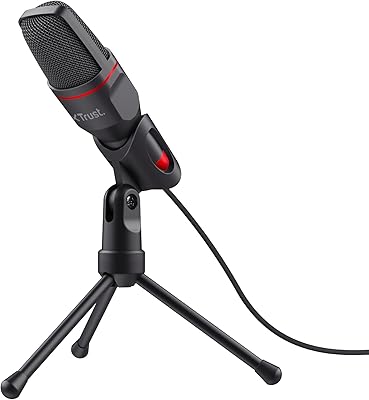
Trust Gaming GXT 212 Mico USB Microphone
71%
83%
Value for Money
94%
Ease of Setup
67%
Audio Quality
58%
Build Quality
72%
Noise Rejection
More
Trust Gaming GXT 252 Emita Streaming Microphone
76%
76%
Audio Clarity
88%
Build Quality
93%
Ease of Setup
61%
Background Noise Rejection
82%
Value for Money
More
Trust Gaming GXT 258 Fyru USB Microphone
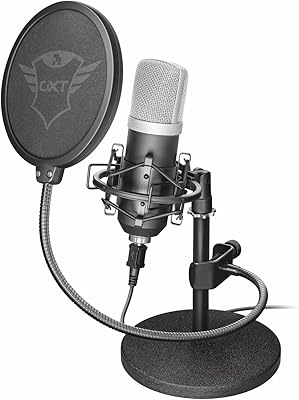
76%
76%
Audio Clarity
88%
Build Quality
93%
Ease of Setup
81%
Polar Pattern Versatility
54%
Background Noise Rejection
More
Trust Gaming GXT 144 Rexx Vertical Ergonomic Gaming Mouse
85%
89%
Ergonomics & Comfort
92%
Precision & Performance
85%
RGB Customization
78%
Software & Configuration
84%
Build Quality & Durability
More
UHURU UM2S
UHURU UM2S
79%
78%
Sound Quality
71%
Noise Cancellation
94%
Ease of Setup
66%
Build Quality
88%
Value for Money
More
Movo UM700
Movo UM700
82%
83%
Audio Clarity
89%
Polar Pattern Versatility
94%
Ease of Setup
81%
Build Quality
86%
Gain Control & Mute Function
More
HyperX SoloCast
HyperX SoloCast
84%
89%
Audio Clarity
97%
Ease of Setup
93%
Mute Functionality
42%
Vibration Isolation
86%
Build Quality
More
KingSom Mic-1
KingSom Mic-1
76%
91%
Value for Money
74%
Audio Clarity
94%
Ease of Setup
58%
Build Quality
66%
Boom Arm Usability
More
Neat Microphones Skyline USB Desktop Condenser Microphone
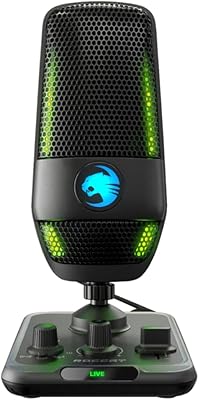
89%
94%
Audio Quality
91%
Ease of Use
89%
Build Quality
90%
Mute Button Functionality
92%
Value for Money
More
Logitech USB Desktop Gooseneck Microphone
73%
93%
Ease of Setup
79%
Voice Clarity
71%
Noise Isolation
68%
Build Quality
82%
Gooseneck Flexibility
More

FAQ

The Trust Gaming GXT 241 Velica USB Microphone works on both platforms without any drivers. It registers as a standard USB audio device, so Mac and Windows both recognize it the moment you plug it in. Just make sure to set it as your default input device in your system sound settings, which takes about ten seconds.

No installation is needed at all. The mic is true plug-and-play — your operating system handles recognition automatically. You can use it with any software that accepts a standard USB audio input straight away, whether that is OBS, Discord, Zoom, or anything else.

The cardioid polar pattern does reduce noise coming from the sides and rear, so a keyboard positioned behind the mic will be less prominent than it would be on an omnidirectional mic. That said, loud peripherals sitting right next to the capsule will still be audible. Positioning the mic close to your mouth and pushing noisy gear to the side makes a noticeable difference.

Unfortunately not — the Velica has no headphone jack, so direct zero-latency monitoring is not possible. If you want to hear yourself in real time, you can enable software monitoring through your recording application, but that will introduce a small delay. For most streamers and gamers this is not a problem, but voice-over professionals who rely on instant playback will find the omission frustrating.

Yes, it earns its place. Pop filters are specifically designed to disperse bursts of air from hard consonants — particularly P and B sounds — before they hit the capsule and cause a distortion thump. The included clip-on filter handles that job effectively. If you tend to speak close to the mic or have a naturally breathy delivery, you will hear a clear difference with it attached.

The improvement is real and noticeable to anyone on the other end of a call or stream. Headset microphones are small, low-sensitivity elements that often produce a thin, compressed sound. The GXT 241 captures a fuller, more natural representation of your voice because of its larger condenser capsule and cardioid design. You should not expect professional broadcast quality, but the step up from a headset is significant enough that people will immediately notice.

No — there are no physical controls on the microphone body at all. Input level management happens entirely through Windows sound settings, Mac Audio MIDI Setup, or your streaming or recording software. It works fine once you dial it in, but if your environment is unusually quiet or loud you may need a few minutes of adjustment to find the right input level.

For standard desk use it holds up well. The tripod base spreads wide enough to support the microphone without toppling under normal conditions. The height is fixed, which suits most seated desktop setups, but if you want the mic elevated higher or positioned at a precise angle, a separate boom arm with a compatible thread adapter would be necessary.

Honestly, yes, and it is worth knowing this before buying. Bare walls, hard floors, and reflective surfaces create reverb that any condenser mic will pick up, regardless of its quality tier. Even simple acoustic improvements help significantly — a furnished room, bookshelves, heavy curtains, or even a thick rug behind you will reduce echo noticeably. If your space sounds lively when you clap your hands, expect some of that character to appear in your recordings.

Yes, it is compatible with any software that accepts a standard USB audio device, which covers OBS, Discord, Zoom, Skype, TeamSpeak, Twitch Studio, and most communication or streaming platforms. It shows up in device dropdowns just like any other microphone — select it as your input source and you are ready to go, no additional setup required.