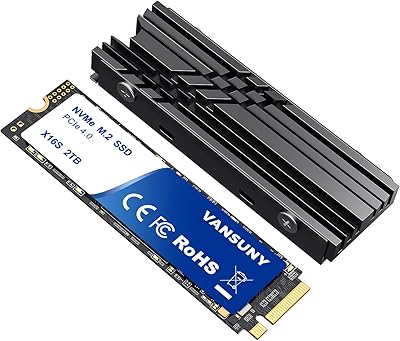
Transcend MTE310 2TB M.2 2230 NVMe SSD

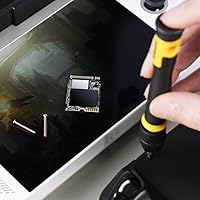
Overview
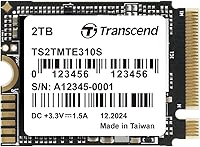
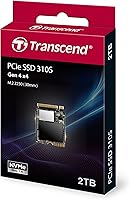
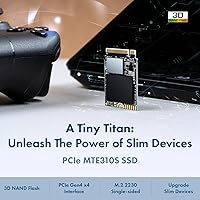
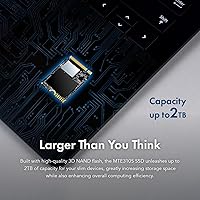
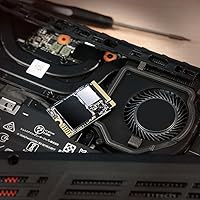
The Transcend MTE310 2TB M.2 2230 NVMe SSD entered a crowded but demanding market in December 2024, targeting a specific group of users that full-size drives simply cannot serve: owners of handheld gaming consoles and ultra-slim laptops. The M.2 2230 form factor — just 30mm long — is what most desktop-focused drives ignore entirely, which is exactly why this drive matters. At 2TB, it offers serious storage headroom for people who have watched their Steam Deck's factory drive fill up after a handful of AAA titles. This sits in the mid-to-premium tier, and the spec sheet backs that positioning with PCIe Gen4 credentials that go well beyond what most 2230 competitors offer.
Features & Benefits
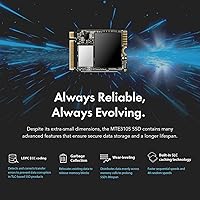
What makes the MTE310 2TB stand out technically starts with its PCIe Gen4 x4 interface, pushing sequential reads up to 5,000 MB/s and writes up to 4,000 MB/s on this particular capacity. Those numbers matter less in isolation and more in context: loading game assets, transferring large files, and cloning an existing drive all feel noticeably faster than on Gen3 alternatives. The single-sided PCB is non-negotiable for Surface Pro and Steam Deck compatibility — a double-sided drive simply will not fit. Rather than dedicated DRAM, Transcend uses HMB alongside SLC caching, which handles typical workloads well, though sustained write speeds can dip once the SLC cache fills under heavy sequential transfers.
Best For
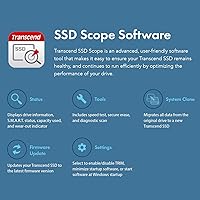
This 2230 NVMe drive is built around a very specific use case, and it excels when matched to the right device. Handheld gaming owners — Steam Deck, ROG Ally, Legion Go — who have run out of room will find 2TB gives enough space to stop rotating titles constantly. Surface Pro and slim ultrabook users needing a drop-in replacement without chassis modifications will find installation straightforward. It is also a strong pick for anyone upgrading from SATA or Gen3 2230 drives who wants a real performance jump. The bundled SSD Scope software removes the need to hunt for separate cloning utilities before migration, which is a genuinely useful inclusion.
User Feedback
Across its 237 ratings, this Transcend SSD holds a 4.4-star average, and the praise is consistent: buyers highlight installation ease and compatibility across multiple handhelds, particularly the Steam Deck OLED. Real-world speed reports are generally positive for everyday use, though a handful of users note that write performance drops noticeably once the SLC cache saturates — expected behavior for an HMB-based drive, but worth knowing if large file transfers are part of your regular workflow. Thermal throttling inside sealed handheld chassis gets occasional mentions, less as a dealbreaker and more as a caution. Some buyers raised early skepticism about Transcend versus better-known NVMe names, but most report the drive holding up reliably over time.
Pros
- PCIe Gen4 speeds up to 5,000 MB/s make it one of the fastest 2230 drives available today.
- The 2TB capacity is genuinely rare in the M.2 2230 form factor, giving handheld gamers real breathing room.
- Single-sided PCB ensures compatibility with tight-chassis devices like the Steam Deck and Surface Pro without modification.
- The MTE310 2TB includes SSD Scope software for cloning, S.M.A.R.T. monitoring, and firmware updates at no extra cost.
- LDPC error correction and a 2,000,000-hour MTBF rating offer solid long-term reliability confidence.
- Installation is consistently reported as straightforward across multiple handheld and ultrabook platforms.
- HMB support helps offset the lack of dedicated DRAM for typical everyday workloads.
- At just 4g, this 2230 NVMe drive adds virtually no weight to compact or portable devices.
Cons
- No dedicated DRAM means sustained write speeds drop after the SLC cache is exhausted during heavy transfers.
- The 2230 form factor premium puts this Transcend SSD at a higher cost per gigabyte than comparable 2280 drives.
- Thermal throttling inside sealed handheld consoles has been flagged by some users during extended gaming sessions.
- Transcend carries less brand prestige in the enthusiast NVMe market compared to Western Digital or Samsung.
- The 512GB variant offers significantly lower speeds, so buyers should verify they are purchasing the correct capacity tier.
- Community resources and third-party benchmarks for this specific model remain limited given its recent December 2024 launch.
- HMB relies on system RAM, which can slightly reduce available memory headroom on devices with limited RAM, like entry-level handhelds.
Ratings
The scores below reflect an AI-driven analysis of verified global buyer reviews for the Transcend MTE310 2TB M.2 2230 NVMe SSD, with spam, bot-generated, and incentivized submissions actively filtered out before scoring. Each category is assessed against real-world usage patterns reported by owners of handheld gaming consoles, ultrabooks, and compact devices. Both the strengths that earned consistent praise and the friction points that drew genuine criticism are transparently reflected in every score.
Sequential Read Speed
Sustained Write Performance
Device Compatibility
Installation Experience
Thermal Management
4K Random Performance
Build Quality & Durability
Software & Tooling
Value for Money
Brand Trust & Reputation
Capacity Availability
Power Efficiency
Packaging & Presentation
Suitable for:
The Transcend MTE310 2TB M.2 2230 NVMe SSD was built for a narrow but underserved group of buyers, and if you fall into that group, it is a strong match. Handheld gaming console owners — particularly those running a Steam Deck OLED, ROG Ally, or Legion Go — will find the 2TB capacity transforms how they manage their library, eliminating the constant shuffle of uninstalling titles to make room. Surface Pro users and ultrabook owners who specifically need a single-sided 2230 drive to fit their device's constrained chassis will also find this one of the few drives that simply works without workarounds. If you are currently on a SATA 2230 or an older PCIe Gen3 drive, the jump to Gen4 speeds here is substantial enough to feel meaningful in daily use. The bundled SSD Scope software is a practical bonus for anyone who wants to clone their existing drive before swapping, rather than starting a fresh install from scratch.
Not suitable for:
The Transcend MTE310 2TB M.2 2230 NVMe SSD is not the right call for every buyer, and it is worth being direct about where it falls short. If your system takes a standard M.2 2280 drive, you will find larger capacities and better-value options from established names at a lower cost per gigabyte — the 2230 form factor commands a pricing premium that only makes sense when your device requires it. Users who regularly push large sequential workloads — think bulk video transfers or continuous backup streams — should know that without dedicated DRAM, write speeds will dip noticeably once the SLC cache fills, which can be frustrating in those specific scenarios. Buyers who prioritize brand recognition and an extensive track record in the enthusiast NVMe space may feel more comfortable with alternatives from Western Digital or Samsung, both of which have deeper community support and longer-standing reputations in this category. If thermal performance inside a sealed handheld is a top concern, it is worth researching device-specific throttling reports before committing.
Specifications
- Form Factor: The drive uses the M.2 2230 format, measuring 22 x 30 x 2.38 mm, making it compatible with compact devices that cannot accommodate the more common 2280 length.
- Interface: It connects via NVMe over a PCIe Gen4 x4 bus, delivering significantly higher bandwidth than PCIe Gen3 or SATA-based M.2 drives.
- Capacity: This model offers 2TB of usable storage, with additional variants available at 512GB and 1TB for buyers with different budget or space requirements.
- Sequential Read: The 2TB configuration achieves sequential read speeds of up to 5,000 MB/s under optimal conditions.
- Sequential Write: Sequential write speeds on the 2TB model reach up to 4,000 MB/s, though sustained writes beyond the SLC cache will see reduced throughput.
- Random Read: 4K random read performance is rated at up to 600,000 IOPS on the 2TB model, supporting responsive multitasking and fast application launches.
- Random Write: 4K random write performance reaches up to 500,000 IOPS, which is well-suited to the mixed workloads typical of gaming and general productivity use.
- Flash Type: The drive uses 3D NAND flash memory, which stacks storage cells vertically to improve density, endurance, and power efficiency compared to planar NAND.
- Cache Architecture: Storage caching relies on SLC caching combined with Host Memory Buffer (HMB), borrowing a portion of system RAM in place of a dedicated DRAM chip.
- Error Correction: Low-Density Parity-Check (LDPC) coding is used for error correction, alongside automated garbage collection and dynamic wear-leveling to extend NAND longevity.
- Reliability: Transcend rates the drive at a Mean Time Between Failures of 2,000,000 hours, indicating a high confidence threshold for long-term operational stability.
- PCB Design: The drive uses a single-sided PCB, which is a hard requirement for installation in certain devices such as the Steam Deck, Surface Pro, and ROG Ally.
- Weight: At just 4g, the drive adds negligible mass to any host device, which matters for portable and weight-sensitive builds.
- Operating Temp: The rated operating temperature range is 0°C to 70°C, covering standard consumer use environments including extended gaming sessions.
- Included Software: Transcend SSD Scope is provided free of charge and supports S.M.A.R.T. diagnostics, TRIM initiation, firmware updates, secure data erasure, and full system cloning.
- Certifications: The drive carries CE, FCC, UKCA, BSMI, KC, and RCM certifications, confirming regulatory compliance across major international markets.
- Operating Voltage: The drive operates at 3.3V with a plus or minus 5% tolerance, consistent with the standard M.2 slot power specification.
- OS Compatibility: The drive is compatible with Microsoft Windows 7 and later, as well as Linux Kernel 2.6.31 and later, covering the vast majority of modern desktop and handheld operating environments.
Related Reviews
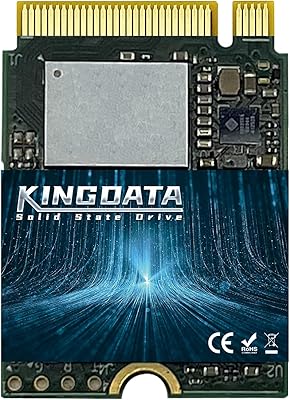
KINGDATA 2TB M.2 2230 NVMe SSD
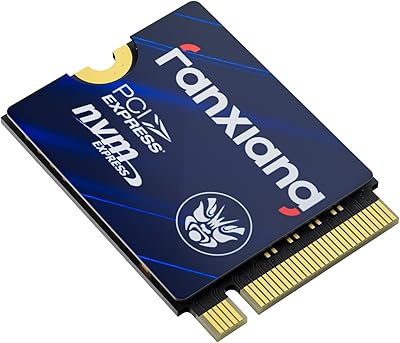
fanxiang S630 2TB M.2 2230 NVMe SSD
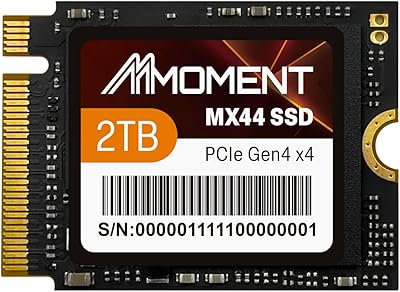
MMOMENT 2TB MX44 M.2 2230 NVMe SSD
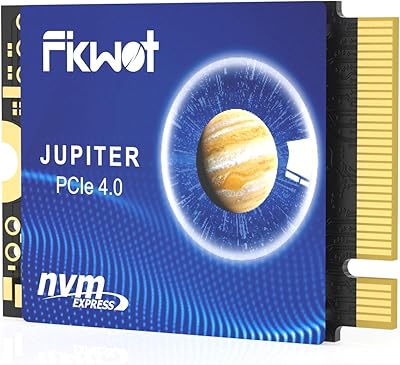
Fikwot FX953 2TB M.2 2230 NVMe SSD
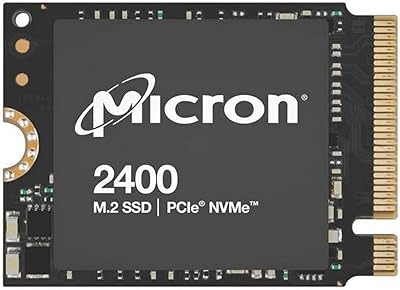
Micron 2400 2TB M.2 2230 NVMe SSD
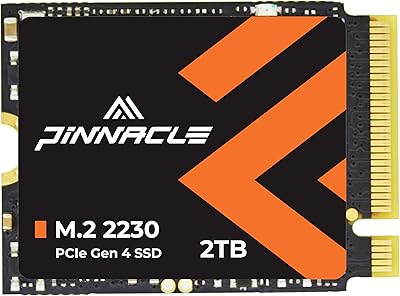
Timetec 2TB M.2 2230 NVMe Gen4 SSD
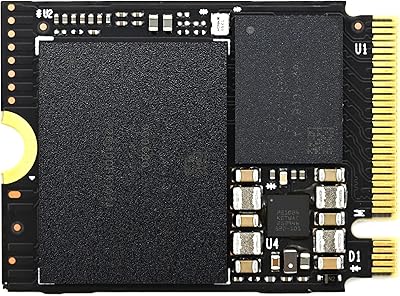
XPC Technologies SN740 2TB M.2 2230 NVMe SSD
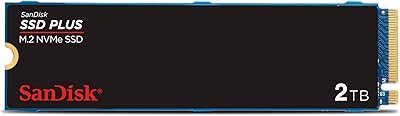
SanDisk 2TB SSD Plus M.2 NVMe SSD
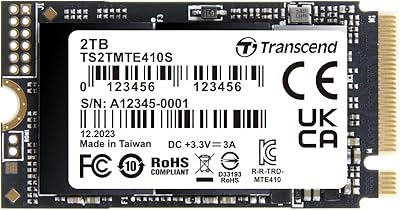
Transcend MTE410S 2TB M.2 NVMe SSD