Overview

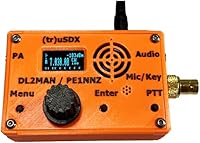
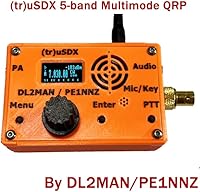
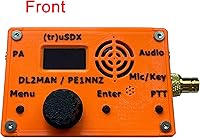
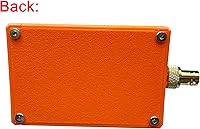
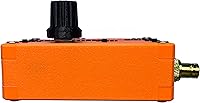
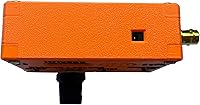
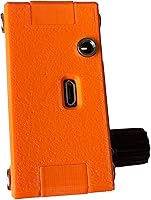
The Malahit uSDX 5-Band QRP HF Transceiver arrives ready to operate — no soldering iron required, no bare PCB to puzzle over. Designed by open-source developers PE1NNZ and DL2MAN, this compact HF radio ships with its bootloader and firmware already installed, tucked inside a 3D-printed orange case with raised lettering. That out-of-box readiness is genuinely appreciated in a segment where many alternatives arrive as kits. One critical note upfront: no battery is included, so you will need to source a compatible power pack before your first QSO. It sits squarely in the mid-range QRP market — capable enough for serious portable use, accessible enough for any licensed operator ready to get on air fast.

Features & Benefits

Five bands — 80, 60, 40, 30, and 20 meters — give this QRP transceiver real flexibility across shifting propagation conditions. Packed into a 4 x 2 x 2-inch chassis weighing just 8.1 ounces, it handles SSB, CW, AM, FM, and digital modes without requiring a separate rig for each. The 50-ohm impedance works with standard wire antennas, and the 3.5mm x 1.35mm power jack is worth noting before you build your cable kit. Firmware is where things get interesting: the stable official release is solid for everyday operating, while the beta firmware adds a spectrum display at the cost of a slightly trimmed main menu. The open-source codebase keeps the community actively pushing improvements.

Best For

This compact HF radio is purpose-built for licensed hams — that distinction matters. QRP operation requires an amateur radio license, and programming your call sign means reading the included documentation carefully rather than tapping through an intuitive menu. With that said, the uSDX rig fits naturally in the pack of any operator heading out for a SOTA activation or a portable field day. Backpackers and travelers wanting real HF capability without hauling full-sized equipment will appreciate the pocketable form factor. It also suits technically curious operators who want to explore open-source firmware development without committing to assembling a radio from a completely bare board.

User Feedback

Across 174 ratings averaging 4.3 stars, buyers are broadly positive about the uSDX rig, with consistent praise for receive sensitivity on 40m and 20m and satisfaction with how complete the package feels on arrival. Audio quality earns specific compliments from operators accustomed to pricier gear. On the critical side, the missing battery catches buyers off guard more often than it should — the listing mentions it, but real-world experience shows it still surprises. Call sign programming draws occasional complaints, mostly from users who skipped the documentation. The beta spectrum display divides opinion: some find it useful for monitoring band activity, while others report enough instability to push them back to the official stable release.

Pros

  • Ships fully assembled with firmware pre-loaded — you are on air faster than with any kit alternative.
  • Five-band coverage from 80 through 20 meters handles a wide range of daily propagation conditions.
  • Supports SSB, CW, AM, FM, and digital modes in a single pocketable unit.
  • At 8.1 ounces and 4 x 2 x 2 inches, this QRP transceiver is genuinely backpack-friendly.
  • Open-source design means ongoing community firmware updates and long-term modification potential.
  • Receive sensitivity on 40m and 20m draws consistent praise from buyers with demanding ears.
  • 50-ohm impedance works directly with standard wire and portable antennas without extra matching.
  • 4.3-star average across 174 reviews reflects real-world satisfaction at this price tier.
  • Two firmware options let operators choose between stability and added spectrum display functionality.
  • The 3D-printed case with raised lettering is sturdy enough for regular field use.

Cons

  • No battery included — you must source and purchase a compatible power pack before first use.
  • Call sign programming requires careful reading of the manual; the process is not self-explanatory.
  • Beta firmware spectrum display is useful in theory but has reported stability issues in practice.
  • The stable firmware lacks a spectrum display entirely, limiting band-monitoring capability.
  • Power jack spec (3.5mm x 1.35mm) is non-standard enough to require a purpose-built or adapted cable.
  • QRP output means range is highly propagation-dependent — do not expect consistent long-distance contacts.
  • Only five bands covered; operators needing 17m, 15m, 10m, or higher are out of luck.
  • Community support, while active, is spread across forums and may require some digging for answers.
  • The orange 3D-printed case, while functional, feels less refined than machined-aluminum alternatives.
  • No display backlight information confirmed — usability in low-light field conditions may be limited.

Ratings

Our AI rating system analyzed verified global buyer reviews for the Malahit uSDX 5-Band QRP HF Transceiver, actively filtering out incentivized, bot-generated, and outlier feedback to surface what real operators actually experience in the field. Scores reflect a balanced synthesis of recurring praise and documented pain points — nothing is glossed over. Where this compact HF radio earns trust, the numbers show it; where it falls short of expectations, that is reflected honestly too.

Out-of-Box Readiness
88%
Buyers consistently highlight that the radio arrives genuinely ready to use — bootloader flashed, firmware installed, case fitted. For operators who have dealt with bare-board uSDX kits before, the contrast is stark and appreciated. Getting from unboxing to first receive takes minutes rather than hours.
The battery omission undermines the otherwise strong first-impression. A surprising number of buyers did not realize until the package was open that they needed to source a power supply separately, which stalls that first session entirely. It is a recurring frustration that a clearer product listing could prevent.
Receive Sensitivity
91%
On 40m and 20m in particular, receive performance draws genuine praise from operators who expected compromise given the form factor. Signals that weaker SDR dongles struggle to pull out of the noise come through cleanly here, which matters when chasing DX from a summit or a park bench.
Performance on 80m can be more variable, especially in urban environments where band noise is higher. A handful of reviewers noted that sensitivity on the lower bands felt noticeably softer compared to the mid-bands, which is partly a physics constraint but still worth setting expectations around.
Band Coverage
84%
Five bands from 80 through 20 meters gives a licensed operator genuine flexibility across different propagation windows throughout the day. Switching between 40m for regional contacts and 20m for longer paths without changing rigs is a practical advantage during a portable activation.
The absence of higher bands — 17m, 15m, 12m, and 10m — is a real limitation for operators who like to exploit upper HF openings. When conditions push activity above 20m, this QRP transceiver simply cannot follow, which may frustrate operators in certain solar cycle phases.
Portability
93%
At 8.1 ounces and the footprint of a thick smartphone, this is about as portable as an assembled HF multimode rig gets. SOTA activators and backpackers report it disappears into a pack without a second thought, leaving weight budget for antenna wire and a battery pack.
The power jack spec — 3.5mm x 1.35mm — is uncommon enough that sourcing or fabricating the right cable adds friction to an otherwise tidy portable setup. Operators used to standard barrel connectors may find this mildly irritating until they have the right cable sorted.
Firmware Stability
67%
33%
The official stable firmware earns its name — users running it report consistent, reliable operation across modes with no unexpected crashes or behavioral quirks during extended operating sessions. For anyone who wants to activate and operate rather than troubleshoot, it is the right choice.
The beta firmware, which adds the spectrum display, divides opinion sharply. Some users find it indispensable for monitoring band activity; others report menu instability and occasional resets that are disruptive mid-QSO. The trade-off is real and Malahit Tech is transparent about it, but it makes firmware selection a meaningful decision rather than a trivial one.
Audio Quality
82%
18%
Received audio on SSB in particular is described as clean and intelligible, with enough fidelity that operators are not straining to copy calls during pile-ups. Several reviewers noted the audio held up better than expected compared to other budget-tier SDR-based transceivers they had used previously.
Speaker output volume can feel limited in outdoor environments with ambient noise — wind or nearby activity on a hilltop activation can mask audio without headphones. A small external speaker or earpiece is effectively a required accessory for any noisy operating environment.
Build Quality
74%
26%
The 3D-printed orange enclosure is more robust than it looks in listing photos. Regular field use does not seem to cause structural issues, and the raised lettering keeps labeling legible even with handling. For a mid-range assembled unit, the physical construction is respectable.
It is visibly a printed plastic case, not a machined enclosure, and the fit and finish reflects that. Operators used to premium transceivers will notice the difference immediately. Sharp impacts or drops could damage it, and there is no meaningful water resistance — a padded case is a sensible addition.
Multimode Capability
86%
Having SSB, CW, AM, FM, and digital modes in one unit that weighs under half a pound is genuinely useful for an operator who wants to be flexible in the field. Switching modes is straightforward once you are familiar with the menu structure, and each mode performs competently for its intended use.
AM and FM feel like secondary modes here — they work, but this is clearly a rig optimized around SSB and CW. Operators expecting broadcast-quality AM reception or FM performance comparable to a dedicated VHF radio will find those modes serviceable but not impressive.
Call Sign Setup
61%
39%
The process is well-documented in the included instructions, and operators who take the time to read through carefully report completing it without issues. Once configured, the call sign is stored reliably and does not need to be re-entered between sessions.
The setup is not intuitive enough to navigate without the documentation, and that documentation requires careful attention rather than a quick skim. Several one and two-star reviews trace directly to this step — not because the process is flawed, but because it punishes buyers who approach it casually.
Value for Money
83%
For a fully assembled, firmware-loaded, multimode five-band QRP transceiver from a credible open-source platform, the price represents solid value. Building a comparable uSDX kit yourself and sourcing a case would likely cost similar or more in time and parts.
The missing battery pack means the effective cost of getting on air is higher than the listing price implies. Factor in a compatible power source and a correct power cable, and the total outlay rises. Buyers who do not price that in upfront may feel the value proposition is slightly overstated.
Community & Support
79%
21%
The uSDX platform has a well-established global community of developers and operators actively sharing firmware builds, operational tips, and modification guides across forums and amateur radio groups. That ecosystem adds long-term value well beyond what Malahit Tech provides directly.
Official product support from the seller is limited — most troubleshooting leads back to community resources rather than direct manufacturer assistance. New operators unfamiliar with navigating ham radio forums may find the support experience fragmented and slower than they would like.
Mode Switching Ergonomics
71%
29%
Experienced operators who have spent time with the menu structure report that switching bands and modes becomes second nature fairly quickly. The interface is functional and consistent once the learning curve is past, which matters during time-sensitive portable activations.
The menu depth and navigation logic take real adjustment, especially coming from commercial transceivers with dedicated front-panel controls. The compact form factor means few physical controls, so new users will spend their first sessions learning the interface rather than operating.
Spectrum Display
58%
42%
When it works as intended under the beta firmware, the spectrum display adds useful visual context for identifying band activity and spotting signals before tuning in. Operators who monitor busy contest bands particularly appreciate having a panadapter-like view in such a small package.
Accessing the spectrum display requires running the less stable beta firmware, which introduces its own reliability risks. The display is not available in the official release at all, meaning operators must choose between stability and this feature — a compromise that feels unnecessary at this price tier.
Antenna Compatibility
88%
Standard 50-ohm impedance means the uSDX rig works directly with the wire antennas most portable operators already carry — a simple end-fed, a linked dipole, or even an EFHW with a matching unit. No exotic matching requirements complicate a field setup.
The antenna connection implementation on the uSDX platform has historically drawn some criticism for robustness under repeated connector cycling, though this assembled version appears better in that regard. Operators doing frequent connect-disconnect cycles in the field should inspect the connection periodically.

Suitable for:

The Malahit uSDX 5-Band QRP HF Transceiver is built for licensed amateur radio operators who want real HF capability in a package small enough to fit in a jacket pocket. It hits a sweet spot for SOTA activators and portable field operators who need multimode coverage across 80 through 20 meters without hauling a full-sized rig. Hams who have always been curious about the uSDX open-source platform but did not want to tackle a bare-board kit build will find the pre-assembled, firmware-loaded format a practical entry point. Experimenters who enjoy tinkering with open-source firmware will appreciate the active development community and the option to run the beta build with its spectrum display. Travelers and backpackers who are licensed and want a capable HF radio that adds almost nothing to their pack weight will find this compact HF radio hard to beat at its price tier.

Not suitable for:

The Malahit uSDX 5-Band QRP HF Transceiver is not a radio for unlicensed buyers — HF operation requires a valid amateur radio license, and there is no shortcut around that. Anyone expecting a truly plug-and-play experience should know upfront that programming your call sign involves reading through the included documentation carefully, and skipping that step leads to frustration. The radio ships without a battery, which means you cannot power it up on arrival without sourcing a compatible external pack first — a detail that catches more buyers off guard than it should. Operators who depend on a spectrum display as part of their workflow should weigh the trade-off carefully: the stable firmware does not include one, and the beta version that does has reported stability issues. If you need coverage beyond the five included bands, or require the output power of a full-sized transceiver, this compact HF radio will feel limiting regardless of how well it performs within its intended scope.

Specifications

  • Band Coverage: Covers five HF bands: 80m, 60m, 40m, 30m, and 20m via local oscillator tuning.
  • Supported Modes: Operates in SSB, CW, AM, FM, and digital modes from a single integrated unit.
  • Impedance: RF output impedance is 50 Ohm, compatible with standard coaxial-fed antennas.
  • Power Jack: Uses a 3.5mm x 1.35mm DC power jack — a non-standard size that requires a matched cable or adapter.
  • Dimensions: The assembled unit measures 4 x 2 x 2 inches, making it genuinely pocketable for field use.
  • Weight: Complete assembled weight is 8.1 ounces, including the 3D-printed enclosure.
  • Enclosure: Ships in a 3D-printed orange case with raised lettering, providing basic physical protection out of the box.
  • Mainboard Version: Mainboard is version 1.2, with the RF board at version 1.0.
  • Firmware Options: Two firmware builds are available: the official stable release and a beta version that adds a spectrum display with some feature trade-offs.
  • Bootloader Status: Bootloader and initial firmware come pre-installed on the mainboard — no flashing required before first use.
  • Call Sign Storage: User call sign can be programmed into the unit by following the instructions included in the package.
  • Channels: The unit supports 2 channels as specified in the product configuration.
  • Battery: No battery or battery case is included; a compatible external power source must be sourced separately before operation.
  • Designers: The uSDX platform was developed by PE1NNZ and DL2MAN as an open-source amateur radio project.
  • Manufacturer: Produced and sold by Malahit Tech, which also offers a separately sold battery case accessory.
  • Open Source: Firmware and hardware schematics are open-source, enabling community-driven updates and personal modifications.
  • First Available: This assembled variant was first listed on Amazon in October 2022.
  • Max Range: Rated maximum range is 1000 meters, though actual HF range varies considerably with propagation conditions and antenna setup.

Related Reviews
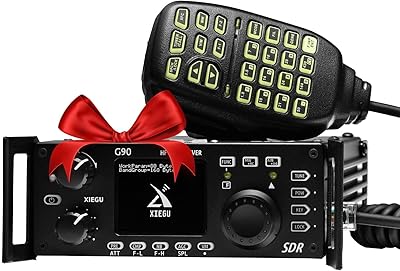
Xiegu G90 HF Amateur Radio Transceiver
80%
88%
Value for Money
91%
Built-in Antenna Tuner
89%
SDR Spectrum Display
92%
Portability & Form Factor
84%
Remote Head / Mobile Install
More
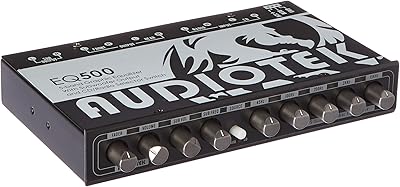
Audiotek At-eq500 5-Band Graphic Equalizer
84%
88%
Audio Performance
91%
Ease of Use
89%
Bass Control
60%
Build Quality
87%
Sound Clarity
More
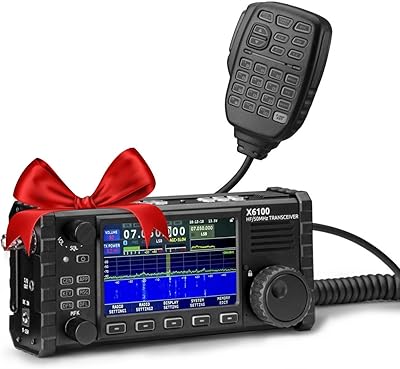
Xiegu X6100 HF Radio Transceiver 10W
86%
88%
Value for Money
85%
Performance
90%
Bluetooth Functionality
92%
Portability
89%
Ease of Use
More
AnyTone AT-5888UV Dual Band Mobile Radio
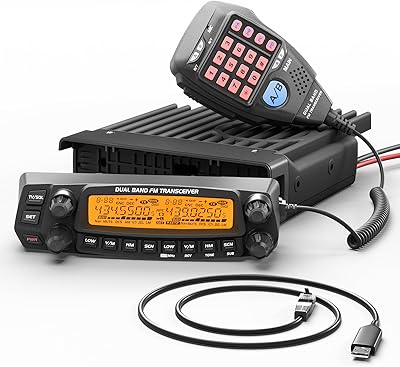
69%
83%
RF Performance
78%
Build Quality
86%
Value for Money
81%
Cross-Band Repeat
74%
Display & Interface
More
Yaesu FT-65R Dual-Band Handheld Transceiver
81%
91%
Build Quality
88%
Audio Clarity
86%
Battery Life
58%
Ease of Programming
61%
Antenna Performance
More
AnyTone AT-778UV Dual Band Mobile Radio
79%
83%
Build Quality
88%
Audio Clarity
86%
Dual-Band Coverage
79%
Display & Interface
51%
Programming Software
More
Gipsy 5-50MHz HF Horizontal Dipole Antenna
86%
91%
Ease of Setup
88%
Signal Performance
89%
Build Quality
93%
Durability in Weather
85%
Installation Flexibility
More
Pyle PLE550BS 5-Band Bluetooth Car Equalizer
74%
88%
Value for Money
83%
Sound Quality Improvement
79%
Bluetooth Performance
86%
Subwoofer Integration
54%
Build Quality
More
Radioddity DB50 Dual Band Mobile Radio Transceiver
79%
88%
Transmit Power & Range
91%
Receiver Coverage
86%
Audio Clarity
84%
Channel Management
89%
Chirp Compatibility
More
TYT TH-8600 Dual Band Mobile Transceiver
76%
88%
Waterproof Protection
79%
RF Performance
83%
Build Quality
81%
Audio Clarity
61%
Ease of Programming
More

FAQ

It arrives fully assembled and pre-flashed — the bootloader and firmware are already installed. The only thing you need before your first transmission is a compatible power source, since no battery is included in the box.

The radio runs off an external DC supply via a 3.5mm x 1.35mm power jack. Malahit Tech sells a matching battery case separately. The omission catches a lot of buyers off guard, so budget for that accessory or a suitable LiPo pack before you expect to operate.

Yes, absolutely. This is an HF transceiver intended for licensed amateur radio operators. Transmitting on HF bands without a valid license is illegal in virtually every country. If you are still studying for your license, this is not the right purchase yet.

That depends on what matters more to you. The official stable release is reliable and recommended for regular operating, but it does not include a spectrum display. The beta firmware adds that display, though some users report occasional instability and a slightly reduced main menu. Most operators stick with the stable build unless they specifically want the spectrum feature.

The process is documented in the instruction sheet included in the package. It is not especially complicated, but it does require reading through the steps carefully rather than guessing at menu navigation. Skipping the documentation is the main reason buyers run into trouble with this step.

Any standard 50-ohm antenna should work fine — a simple wire dipole or end-fed half-wave cut for your target band is a natural pairing for a portable QRP setup like this. The radio connects via the 3.5mm x 1.35mm DC jack for power; antenna connection follows standard coaxial practices for the uSDX platform.

It is well-suited for that use case. At 8.1 ounces and roughly the size of a large smartphone, it adds very little weight to a summit pack. Five-band coverage gives you options if one band is not performing, and multimode operation means you can work SSB, CW, or digital depending on conditions and your preference.

Yes — the uSDX platform is fully open-source. Firmware source code is publicly available, and there is an active community of developers contributing updates and improvements. If you are comfortable with Arduino-style flashing, you have full access to customize and experiment.

Those two bands draw the most consistent praise from buyers. Receive sensitivity on 40m and 20m is frequently called out as a strong point, and audio quality gets positive mentions from operators who expected less at this price tier. Performance naturally varies with antenna and propagation, but feedback on those bands is notably positive.

It holds up adequately for typical field use — it is not fragile. That said, it is a printed plastic enclosure, not machined aluminum, so it will show wear over time and offers limited protection against hard impacts or water. A small padded pouch is a sensible addition if you are carrying this in a pack regularly.