Overview

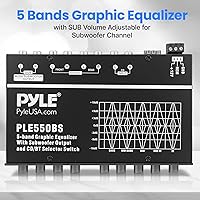
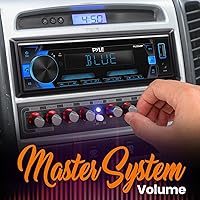
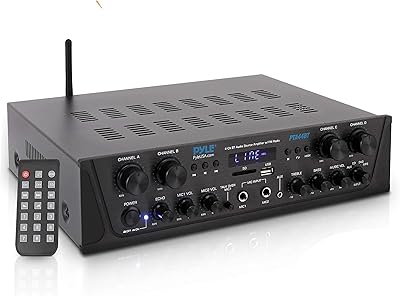
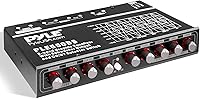
The Pyle PLE550BS 5-Band Bluetooth Car Equalizer is a compact signal processor aimed at drivers who want real tone control without replacing their entire head unit. Made by SoundAround and on the market since mid-2022, it sits in-line between your head unit and amplifier — handling the EQ work your factory stereo almost certainly skips. It is not an amplifier, so do not expect it to push speakers on its own. What it does offer is wireless Bluetooth streaming alongside traditional RCA connectivity, giving older stereos a practical audio upgrade path. The form factor is small enough to mount in a dash pocket or tuck neatly into a trunk build.
Features & Benefits

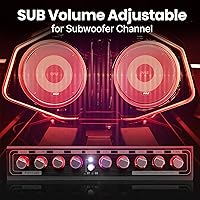
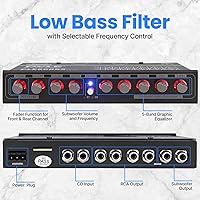
The real appeal of this car EQ unit is how much tone-shaping it packs into one box. Five graphic EQ bands cover the full frequency range — from deep low end through mid-bass, mids, upper-mids, and treble — each adjustable by up to 12dB in either direction. That range makes a genuine difference, especially when correcting the baked-in sound profile of factory speaker setups. The dedicated subwoofer channel has its own volume knob and a selectable low-pass filter, so you can dial in bass cleanly without disrupting the rest of the mix. A front/rear fader rounds out the control set, letting you shift audio balance between cabin zones as needed.

Best For

This in-car graphic EQ is a strong fit for anyone working within a tight budget who still wants meaningful control over how their system sounds. If you are running an older head unit with no EQ section — or a factory stereo that sounds flat and lifeless — this gives you an immediate, practical fix. It also suits subwoofer integration well, since the built-in low-pass filter and sub volume control remove the need for a separate crossover unit. DIY builders setting up both front and rear speakers will appreciate the fader. Just keep in mind the output voltage is modest, so it pairs best alongside an external amplifier rather than driving speakers directly.

User Feedback

With around 76 ratings and a 4.2-star average, the Pyle equalizer holds up reasonably well for what it costs — though that sample size is modest, so treat the consensus as a general signal rather than a definitive verdict. Buyers tend to appreciate how straightforwardly it pairs over Bluetooth and the audible improvement it delivers over a stock stereo flat output. On the downside, slider build quality is a recurring concern at this price level, and a handful of buyers have flagged wiring confusion during installation, suggesting the included manual could be clearer. The blue LED lighting divides opinion — some find it a nice touch, others consider it distractingly bright in a dark cabin.

Pros

  • Five EQ bands with a wide 24dB swing per channel give real, audible control over how your car sounds.
  • The built-in Bluetooth means no extra adapters or line-in hacks just to stream from your phone.
  • A dedicated subwoofer channel with its own volume knob makes bass tuning straightforward and independent.
  • The selectable low-pass filter removes the need to buy a separate crossover when adding a sub.
  • Front and rear fader control is a handy tool for multi-zone speaker setups in larger vehicles.
  • RCA inputs and outputs make it compatible with most existing aftermarket car audio wiring.
  • The compact footprint fits comfortably in a dash pocket or a trunk install without taking over the space.
  • At its price point, the feature set is hard to beat for drivers upgrading from a flat factory sound profile.
  • Setup is relatively plug-and-play for anyone comfortable with basic RCA wiring.

Cons

  • Slider build quality feels light and plasticky, raising questions about how well it holds up over years of use.
  • The 5V RMS output voltage may underwhelm when paired with amplifiers that expect a hotter input signal.
  • Installation documentation is reportedly thin, which can create wiring confusion for first-time installers.
  • The blue LED cannot be switched off, which some drivers find distracting in a dark cabin at night.
  • With only 76 ratings to draw from, the reliability picture is still somewhat limited compared to more established units.
  • No parametric EQ option means you cannot pinpoint problem frequencies as precisely as a more advanced processor would allow.
  • Bluetooth connectivity, while convenient, lacks the codec depth of higher-end wireless audio solutions.
  • There is no display or numeric readout, so dialing in precise EQ adjustments relies entirely on feel and ear.

Ratings

Our AI rating system analyzed verified global buyer reviews for the Pyle PLE550BS 5-Band Bluetooth Car Equalizer, actively filtering out incentivized, bot-generated, and duplicate feedback to surface what real drivers actually experienced. The scores below reflect an honest composite of both the genuine strengths and the recurring frustrations buyers reported across multiple markets. Where this car EQ unit excels and where it falls short are both represented transparently in each category.

Value for Money
88%
For drivers on a tight budget, the sheer number of functional features packed into this price tier consistently surprises buyers. Getting five adjustable EQ bands, a dedicated sub channel, Bluetooth, and a fader all in one unit is a combination that would cost significantly more from competing brands.
A handful of buyers felt the unit underdelivered after extended use, suggesting the initial value perception fades if components wear out sooner than expected. Longevity concerns do put a small asterisk on the overall value equation.
Sound Quality Improvement
83%
Drivers upgrading from a completely flat factory stereo report a genuinely noticeable improvement in tonal balance once the EQ bands are dialed in. The ability to push or pull each band by up to 12dB gives enough range to compensate for the acoustic shortcomings of most stock speaker placements.
Buyers with more experienced ears note that the sonic improvement has a ceiling — this is a budget-grade signal path, and transparency at high output levels is not on par with mid-range or premium processors. Some report a slight noise floor increase depending on the source and amp pairing.
Bluetooth Performance
79%
21%
Most users find the Bluetooth connection quick to establish and stable enough for daily commute use. The convenience of cutting the wire to a phone without buying a separate adapter is a genuine draw for drivers with older head units.
A portion of buyers note the connection does not always auto-reconnect reliably after the car is restarted, requiring a manual re-pair. Bluetooth range and codec quality are also basic compared to newer dedicated Bluetooth receivers, so audiophiles streaming lossless audio may hear compression artifacts.
Subwoofer Integration
86%
The dedicated subwoofer channel with its own volume knob and selectable low-pass filter makes adding a sub to an existing system genuinely straightforward. Buyers building their first subwoofer setup particularly appreciate not needing a separate crossover component to manage the bass rolloff cleanly.
The 5V RMS output ceiling can become a limiting factor when paired with amplifiers that prefer a hotter input signal, which may result in the subwoofer channel not hitting its full potential. Users with higher-powered sub setups may find themselves maxing out the volume control without getting the output level they want.
Build Quality
54%
46%
The unit feels solid enough out of the box for initial setup, and the slider controls move smoothly when new. For occasional adjustment rather than constant fiddling, the physical construction holds up reasonably well in the short term.
This is the most consistently flagged concern across buyer feedback. The slider faders feel lightweight and plasticky, and multiple users report them becoming loose or imprecise after months of regular use. At this price point some compromise is expected, but the tactile quality of the controls is noticeably below average even within the budget segment.
Ease of Installation
71%
29%
For anyone already familiar with RCA-based car audio wiring, connecting this in-car graphic EQ into an existing signal chain is a relatively painless process. The unit fits logically between a head unit output and amplifier input, and the connector layout is sensibly organized.
First-time installers have repeatedly flagged the included documentation as insufficient, leading to wiring confusion and forum questions about proper signal chain placement. The lack of clear setup guidance is a recurring frustration that adds unnecessary friction to what should be a simple install.
EQ Flexibility
77%
23%
Five bands spanning low through high frequencies cover the most practically useful EQ adjustment points for a car audio environment. The 24dB total swing per band gives enough headroom to make real corrections to a problematic stock speaker response curve.
Buyers who have used parametric or higher band-count equalizers will notice the limitations quickly — five fixed-frequency graphic bands cannot pinpoint narrow problem frequencies the way a parametric EQ can. There is no display or numeric readout either, so repeating a specific EQ setting from memory is guesswork.
Front/Rear Fader
74%
26%
Drivers running speakers in both front and rear zones find the fader genuinely useful for adjusting the soundstage to their preference, particularly on longer drives where rear-seat passengers want more presence. It works as advertised and requires no technical knowledge to operate.
The fader control is a single rotary or slider adjustment with no channel-level metering, so precise calibration between zones is entirely by ear. In a noisy cabin environment, finding a balanced setting can take more trial and error than it should.
LED Lighting
61%
39%
Buyers building custom aftermarket audio setups with a visual theme tend to appreciate the blue LED accent, which adds a cohesive look to a lit-up dash installation. For that specific use case, it is a thoughtful cosmetic detail.
The LED cannot be disabled, which is a consistent complaint from drivers who prefer a dark, uncluttered dashboard at night. In certain mounting positions the light can reflect off the windshield or become a peripheral distraction during nighttime driving.
Compatibility
82%
18%
RCA inputs and outputs make this equalizer compatible with the vast majority of aftermarket head units and amplifiers on the market. The rear auxiliary input further broadens its usefulness by supporting older line-level source devices that lack Bluetooth output.
The unit is not designed for OEM factory integration without additional line output converters, which limits its plug-and-play appeal for drivers who want to retain a factory head unit. Speaker-level input support is absent, which is a gap compared to some competing units in the same price range.
Bluetooth Pairing Simplicity
76%
24%
Initial Bluetooth pairing is consistently described as quick and fuss-free, with the blue LED indicator giving clear visual feedback that a connection has been established. For non-technical users, this aspect of the setup rarely causes any confusion.
The pairing experience is less polished when switching between multiple devices, and some users report the unit drops to a discoverable state unexpectedly. It handles a single primary device reliably but does not behave like a smart multi-device Bluetooth system.
Form Factor & Mounting
81%
19%
The compact 7 x 4.72 x 1.18-inch chassis gives installers genuine flexibility in where they place the unit — it fits in dash pockets, under seats, or in trunk builds without demanding a dedicated large mounting space. At just over a pound and a half, it adds negligible weight to any install.
The unit does not fit a standard single-DIN slot natively, so dashboard flush-mounting requires a custom bracket or creative fabrication. Buyers expecting a direct DIN-slot drop-in should verify their mounting plan before purchasing.
Output Signal Cleanliness
66%
34%
At moderate output levels and with a well-matched amplifier, the signal path is clean enough for casual listening and everyday use. The 0.05% THD spec at rated voltage is acceptable for the price tier and typical for budget-grade signal processors.
At higher EQ boost settings, some users detect added noise or coloration in the signal, particularly in the low-frequency bands. The output quality is sensitive to the quality of the source and the grounding of the installation, meaning a poor ground can introduce audible hum that is difficult to troubleshoot.
Longevity & Reliability
57%
43%
A number of buyers report trouble-free use over the first six to twelve months of ownership, particularly those who installed it in a stable, permanent position where the unit is not handled repeatedly. For short-to-medium-term use the reliability is adequate.
Reports of slider degradation, intermittent Bluetooth dropout, and unit failure beyond the first year appear often enough to flag as a genuine pattern. The long-term durability picture is less reassuring than the initial experience suggests, which is a meaningful concern for buyers expecting multi-year service.

Suitable for:

The Pyle PLE550BS 5-Band Bluetooth Car Equalizer is a practical pick for budget-conscious car audio fans who want real sonic control without the expense of a full head unit swap. It suits drivers running an older stereo that lacks any built-in EQ — the kind of setup where everything sounds flat and mid-heavy straight from the factory. If you are adding a subwoofer to your car for the first time, the built-in low-pass filter and dedicated sub volume knob make integration noticeably cleaner and simpler than trying to manage it at the amplifier alone. DIY builders who want to balance output across front and rear speaker zones will find the fader function genuinely useful. It also works well for anyone whose car lacks Bluetooth, since this unit quietly solves that problem alongside the tone-shaping duties.
Not suitable for:

Buyers expecting audiophile-grade components or long-term durability from heavy daily use should look elsewhere — the Pyle PLE550BS 5-Band Bluetooth Car Equalizer sits firmly in the budget tier, and the physical slider controls reflect that. This is a signal processor, not an amplifier, so anyone hoping it will drive speakers directly will be disappointed; an external amp is still required for that. The output voltage ceiling is modest, which means it may not pair ideally with high-powered amplifiers hungry for a stronger input signal. If you already own a modern head unit with a built-in parametric or graphic EQ, this car EQ unit adds little you do not already have. Drivers who prioritize a clean, unlit interior at night may also find the always-on blue LED more of an annoyance than an asset.
Specifications

  • Brand: Manufactured by SoundAround and sold under the Pyle brand name.
  • Model Number: The unit carries the model designation PLE550BS.
  • EQ Bands: Five graphic equalizer bands cover low, mid-bass, mid, upper-mid, and high frequencies.
  • EQ Range: Each of the five bands is adjustable from -12dB to +12dB for a total swing of 24dB per channel.
  • Bluetooth: Built-in Bluetooth module supports wireless audio streaming with a blue LED indicator confirming an active connection.
  • Subwoofer Channel: A dedicated subwoofer output channel includes an independent volume knob for separate bass level control.
  • Low-Pass Filter: A selectable low-pass filter on the subwoofer channel allows clean frequency rolloff for subwoofer integration.
  • Fader Control: A front and rear fader function enables independent output balancing between front and rear speaker channels.
  • RCA Connectivity: The unit includes both RCA inputs and RCA outputs, plus a rear auxiliary input for connecting external source devices.
  • Input Voltage: The unit operates on a standard automotive DC voltage range of 11V to 14.5V.
  • Output Voltage: Line output is rated at 5V RMS measured at 0.05% total harmonic distortion.
  • Dimensions: The chassis measures 7 x 4.72 x 1.18 inches, suitable for dash-pocket or surface-mount installation.
  • Weight: The unit weighs approximately 1.53 lbs, making it light enough for flexible mounting positions.
  • LED Lighting: Blue ambient LED lighting is built into the unit and remains active during operation.
  • Signal Type: This is a signal processor only and does not include any internal amplification stage.
  • Source Compatibility: The auxiliary rear input supports connection from phones, MP3 players, DVD players, and similar line-level devices.
  • Available Since: The product was first made available for purchase in August 2022.

Related Reviews

Douk Audio EQ5 Tone
Douk Audio EQ5 Tone
82%
88%
Build Quality
83%
Sound Quality
67%
EQ Flexibility
69%
Bluetooth Performance
91%
VU Meter Display
More
Pyle PPHP266B.5 Bluetooth Karaoke Speaker
83%
86%
Sound Quality
88%
Bass Performance
91%
Portability
85%
Ease of Use
80%
Battery Life
More
Audiotek At-eq500 5-Band Graphic Equalizer
84%
88%
Audio Performance
91%
Ease of Use
89%
Bass Control
60%
Build Quality
87%
Sound Clarity
More
Pyle PLTR25UB Single DIN Car Stereo Receiver
67%
74%
Value for Money
78%
Ease of Installation
57%
Bluetooth Reliability
61%
Sound Quality
52%
Build Quality
More
Stetsom EQX764 7-Band Car Audio Equalizer
85%
91%
Sound Quality Enhancement
89%
Ease of Installation
93%
Bass Control
85%
Frequency Band Flexibility
88%
Output Channels
More
TOPSTRONGGEAR TSG7EQ 7-Band Car Graphic Equalizer
76%
84%
Sound Quality Improvement
61%
Build Quality
78%
Installation Ease
82%
Value for Money
88%
RCA Output Performance
More
Clarion EQS755 7-Band Car Audio Equalizer
85%
89%
Sound Quality
85%
Connectivity Options
92%
Ease of Installation
87%
Build Quality
90%
Subwoofer Control
More
Audiotek AT-EQ700 7 Band Car Audio Equalizer
85%
91%
Bass Control
84%
Ease of Installation
87%
Sound Quality
85%
Compatibility with Audio Devices
92%
Customizability (Frequency Bands)
More
Pyle PTA44BT.5 Karaoke Amplifier
71%
76%
Value for Money
67%
Sound Quality
74%
Microphone Performance
81%
Bluetooth Connectivity
88%
Input Versatility
More
Pyle PDMR6 6.5″ Car Midrange Speaker
74%
88%
Value for Money
71%
Sound Quality
67%
Build Quality
62%
Power Handling
83%
Ease of Installation
More

FAQ

It is purely a signal processor — it shapes and routes audio signals but does not amplify them. You will still need a separate external amplifier to power your speakers. Think of this car EQ unit as sitting between your head unit and your amp, adjusting the sound before it gets boosted.

Pairing follows the standard Bluetooth process: put the unit into pairing mode, find it on your phone, and connect. Most users report the process is quick and straightforward. Whether it stores pairing memory between power cycles depends on the firmware, so expect to re-pair occasionally if you switch between devices frequently.

Technically you can pass signal through it to factory speakers if your head unit is driving them directly, but the 5V RMS output means it is really designed to feed an amplifier input, not speaker-level outputs. Running it incorrectly into speaker-level connections without proper impedance matching could cause issues, so check your wiring setup carefully before doing this.

Yes, and this is honestly one of the more practical features on the Pyle equalizer. The selectable low-pass filter lets you roll off higher frequencies before they hit your subwoofer, which keeps the bass sounding tighter and more defined. For a budget subwoofer build, it removes the need to buy a separate crossover unit.

No — the blue LED is always on when the unit is powered. Some drivers enjoy the look, especially in a custom build, but others find it genuinely distracting in a dark cabin at night. If a lit-up dash bothers you, that is worth factoring into your decision before buying.

The rear auxiliary input accepts standard line-level signals, so you can plug in a phone, a portable MP3 player, a DVD player, or most other devices with a standard RCA or auxiliary output. It broadens your source options beyond just Bluetooth, which is handy if you are working with older equipment.

They are functional but feel lightweight — consistent with what you would expect from a unit in this price bracket. They do the job for setting your preferred EQ curve, but they are not the silky, precision sliders you would find on a higher-end processor. Handle them with reasonable care and they should hold up fine for typical use.

Probably not. If your head unit already has a decent graphic or parametric EQ section, adding the Pyle PLE550BS 5-Band Bluetooth Car Equalizer on top of it does not offer much that you cannot already do from the source. Where this unit really earns its place is in older or factory stereo setups that have no EQ control at all.

Yes, that is exactly the kind of setup the fader is designed for. You can shift the output balance toward the front speakers for a more stage-focused sound, or spread it evenly front and rear depending on how you want the cabin to feel. It is a straightforward control and works as expected.

If you are comfortable working with RCA cables and basic 12V wiring, the installation is manageable as a DIY project. The main thing to know upfront is how this in-car graphic EQ fits into your signal chain — head unit out to EQ in, EQ out to amplifier in. The included documentation has been flagged by some buyers as sparse, so watching a few installation walkthrough videos beforehand is a smart move.