Overview

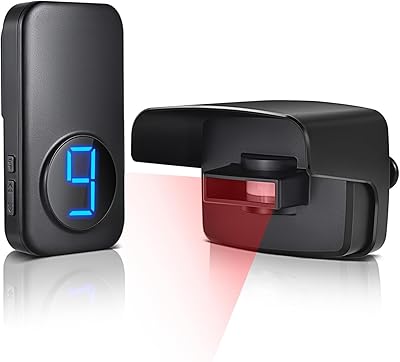
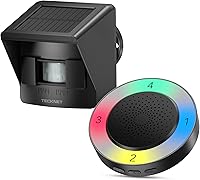
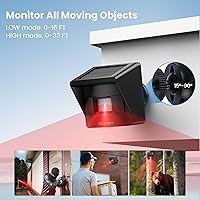
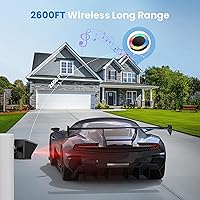
The TECKNET EMD01001BA01 Solar Wireless Driveway Alarm is a practical, wire-free security option aimed at homeowners who want reliable motion alerts without running cables or calling an electrician. It ships as a pre-paired kit — one receiver, one sensor — but supports expansion up to four zones, making it a reasonable starting point for larger properties. One thing worth clarifying upfront: the much-advertised 2600 ft figure refers to how far the signal travels between sensor and receiver, not how wide an area the PIR detector sweeps. That detection width tops out around 33 ft on high sensitivity. Rural driveways, backyard gates, and remote outbuildings are exactly where this solar driveway alarm tends to shine.
Features & Benefits

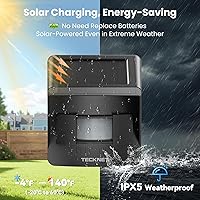
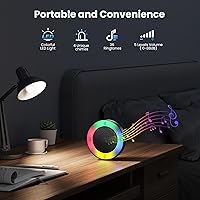
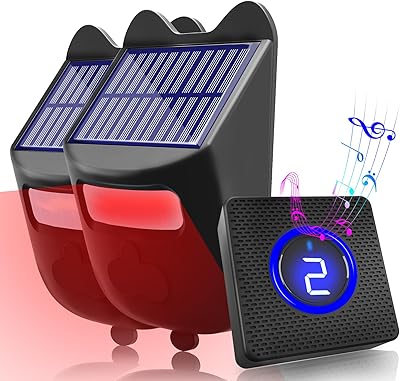
The solar panel keeps the sensor charged without any intervention, and a built-in backup battery provides a buffer during extended cloudy periods — though buyers in consistently overcast climates should keep that dependency in mind. The PIR sensor offers two sensitivity settings: the lower one reduces false triggers from small animals, while the higher setting picks up movement across a wider sweep. Alerts are genuinely customizable — 36 melodies across five volume levels means you can assign a distinct chime to each entry point so you know where to look before you even glance at the receiver. The RGB LED indicator on the receiver also flashes in sync, a quiet but useful feature for noisy or hard-of-hearing households.

Best For

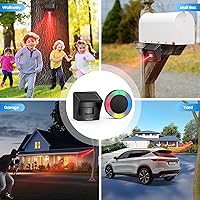
This wireless motion alert system is a strong fit for rural homeowners or anyone with a long driveway who wants a heads-up before visitors — or intruders — get close to the house. Renters will appreciate that installation involves nothing more than a screw or two into a post or fence panel. Battery-swap fatigue is real, and the solar recharge genuinely solves that. Properties with multiple entry points benefit most from the four-zone support, where each zone can ring a different melody. The synchronized LED flash also makes it a thoughtful option for users with hearing loss who need a visual cue alongside the chime.

User Feedback

Buyers generally respond well to the TECKNET driveway sensor, with quick pairing and minimal setup effort being the most repeated positives. Those with straightforward driveway setups and clear sightlines report consistent, reliable alerts. The criticism worth noting: properties with heavy wildlife traffic — deer, raccoons, even large birds — can generate a fair number of false triggers, especially on the high sensitivity setting. A few buyers in thick-walled homes also mention signal dropoff when the receiver is placed on an upper floor. The 36 melody count sounds like a lot, and honestly, most users settle on one or two favorites quickly. Overall satisfaction leans positive, but setting realistic expectations around detection accuracy matters.

Pros

  • Solar charging eliminates battery replacement entirely, keeping the sensor running without regular maintenance.
  • The pre-paired kit is ready to use out of the box, with most buyers reporting setup in under 15 minutes.
  • A signal range stretching roughly half a mile makes this solar driveway alarm practical for large rural lots.
  • Two PIR sensitivity levels let you dial in detection to reduce false alerts from small animals.
  • Assigning different chimes to different zones means you always know which entry point triggered the alert.
  • IPX5 weatherproofing handles rain, snow, and summer heat without needing shelter or covers.
  • The RGB LED flash on the receiver provides a silent visual cue that works well in loud environments or for hearing-impaired users.
  • Supports expansion up to four zones, so the system grows with your property needs.
  • Compact and lightweight design makes repositioning or relocating the sensor straightforward.
  • Operating temperature range covers most North American climates without performance issues.

Cons

  • PIR detection width tops out around 33 ft, so wide driveways or open yards may have coverage gaps.
  • Properties near wooded areas or wildlife corridors can experience frequent false triggers on high sensitivity.
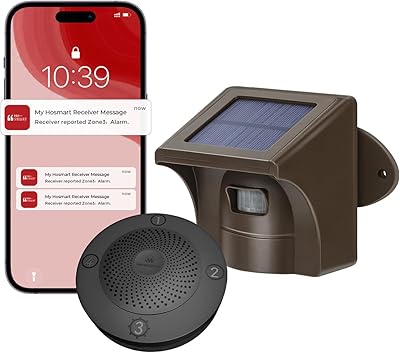
  • No smartphone app or smart-home integration means alerts stay local to the receiver only.
  • Solar performance in consistently overcast or northern climates may require monitoring the backup battery more closely than expected.
  • The starter kit includes only one sensor, so covering multiple zones means purchasing additional sensors separately.
  • Indoor receiver placement through thick walls or across multiple floors can cause signal dropoff.
  • The 36-melody library sounds impressive but most users realistically use one or two chimes long-term.
  • No tamper detection or alert if the sensor is physically moved or blocked by someone on your property.
  • The sensor must have a clear sightline to work reliably — dense foliage or tall grass in front can limit detection accuracy.

Ratings

The scores below reflect AI-driven analysis of verified global user reviews for the TECKNET EMD01001BA01 Solar Wireless Driveway Alarm, with spam, bot-submitted, and incentivized feedback actively filtered out before scoring. Each category is weighted against real-world usage patterns, not manufacturer claims, so both the standout strengths and the recurring frustrations are represented honestly. If a score looks lower than you might expect, there is a genuine reason behind it.

Ease of Setup
91%
Buyers consistently report that the pre-paired sensor and receiver combination eliminates the most frustrating part of driveway alarm installation. Most users describe mounting the sensor on a fence post or tree and being fully operational within 10 to 15 minutes, with no technical knowledge required.
A small number of users found the quick-start guide printed on the unit too small to read comfortably outdoors, particularly in low light. Those unfamiliar with adjusting PIR sensitivity brackets occasionally needed a second attempt to get the detection angle right.
Solar Charging Performance
74%
26%
In sunny or mixed-weather climates, the solar charging works largely as advertised — users in the southern US and Australia report going months without any manual intervention or charging concerns. The backup battery provides a meaningful buffer that keeps the sensor alive through brief overcast stretches.
Buyers in the Pacific Northwest, northern Canada, and the UK report noticeably faster battery drain during winter months when sunlight hours drop significantly. A handful of users in persistently cloudy climates found the system needed a manual charge top-up more often than they expected for a solar-powered device.
Detection Accuracy
68%
32%
In clear sightline installations — a straight driveway, an open gate lane, or a backyard path — the PIR sensor performs reliably and catches human-sized movement consistently. The two sensitivity settings give users a meaningful way to tune out smaller animals without completely sacrificing detection width.
Properties with active wildlife, dense ground-level vegetation, or heat-radiating surfaces nearby tend to generate false triggers, sometimes repeatedly throughout the night. Users with deer trails crossing their driveway or chickens roaming their yard report that even the low sensitivity setting does not fully resolve the nuisance alerts.
Wireless Signal Range
86%
For open-air rural properties and long driveways, the signal performance is one of this system's clearest strengths. Buyers on hobby farms and large semi-rural lots consistently report solid, uninterrupted alerts reaching the receiver indoors without dropped signals.
Real-world signal strength drops noticeably when the path between sensor and receiver includes thick masonry walls, multiple floors, or large metal structures. Users in older stone or brick homes have reported unreliable reception when the receiver is placed beyond one or two interior walls from a direct line to the sensor.
Alert Customization
83%
The combination of 36 melodies and four independent zones gives multi-entry property owners a genuinely practical way to distinguish alerts by location without looking at anything. Assigning a distinct chime to the front gate versus the back shed is a small but meaningful feature that regular users say they rely on daily.
The melody selection process requires cycling through chimes on the receiver, which a few users found tedious when trying to audition all 36 options. Some buyers also noted that several of the available melodies sound similar enough at higher volumes that the zone-differentiation benefit gets muddied in practice.
Volume & Audio Quality
77%
23%
The five-step volume range covers genuinely quiet to genuinely loud, and most buyers land comfortably on mid-range settings that alert without startling. Users in larger homes report that the upper volume levels carry well across open floor plans.
At the highest volume setting, some users describe the chime tone as slightly tinny or sharp rather than clear and pleasant. A few buyers in open-plan living spaces also noted that reverb from hard surfaces at maximum volume made the alert less distinct than they expected.
Weatherproof Durability
88%
IPX5 protection proves sufficient for most real-world outdoor conditions, and buyers in rainy climates like the US Pacific Northwest and the UK report the sensor continuing to function normally through sustained wet seasons. Users who mounted units in direct sun exposure for extended periods report no visible degradation of the housing.
The IPX5 rating covers water jets and rain but does not account for submersion, so sensors installed near ground-level drainage paths or in areas prone to flooding are at risk. A small number of buyers also reported that the mounting bracket showed early signs of UV weathering after a full summer in intense direct sunlight.
RGB Visual Alerts
79%
21%
Hard-of-hearing users and those in noisy shop or garage environments specifically call out the synchronized RGB LED flash as a feature they genuinely rely on rather than just a novelty. The multi-color display is bright enough to catch peripheral attention in a lit room.
The RGB indicator is only on the receiver unit, so it requires you to be in visual range of the receiver to benefit from it. Users who wanted the visual alert to extend to multiple rooms noted they would need additional receivers, which adds cost.
Build Quality & Materials
72%
28%
The sensor housing feels solid enough for a mid-range outdoor device, and buyers generally report that the physical construction meets expectations for the price tier. The rotating bracket feels secure once tightened and holds its angle well through wind and vibration.
Compared to premium security brands, the plastic housing and bracket materials feel noticeably lighter, and a handful of buyers express mild concern about long-term structural integrity in harsh environments. The mounting screws included in the box drew criticism for being slightly undersized for tougher installation surfaces like hardwood fence posts.
Value for Money
84%
For the combination of solar charging, long signal range, multi-zone support, and no ongoing battery costs, most buyers feel the price lands comfortably within fair territory for what they receive. Users who compared it against wired alternatives consistently mention the installation savings alone justify the purchase.
Buyers who discover the four-zone capability after purchase and then realize additional sensors cost extra sometimes feel the base kit pricing undersells the full system cost. Those expecting smart-home connectivity or app integration at this price point tend to feel the value proposition weakens considerably.
PIR Sensitivity Controls
66%
34%
Having two selectable sensitivity levels gives users a practical knob to turn when fine-tuning detection, and switching from high to low is simple enough to do without instructions. For driveways with clear foot traffic patterns, the high setting works well at catching purposeful movement.
Two sensitivity levels is a fairly coarse adjustment range, and some users feel there is no ideal middle ground — low sensitivity misses some legitimate detections while high sensitivity picks up too much. More granular control, like a slider or three-step adjustment, is a feature buyers frequently wish the system offered.
Indoor Receiver Placement
63%
37%
The compact receiver plugs into any standard outlet and does not require any mounting or setup beyond powering on, making it flexible to position wherever the chime needs to be heard. Users who placed it centrally in an open-plan home report reliable sound coverage without additional hardware.
Thick walls, especially masonry or double-brick construction, significantly limit where the receiver can usefully be placed relative to the outdoor sensor. Several buyers report that upper-floor or basement placement resulted in inconsistent alert delivery, requiring them to relocate the receiver closer to an exterior wall to maintain a reliable connection.
False Trigger Rate
58%
42%
In controlled environments — a straight driveway with no cross-traffic, no nearby heat sources, and minimal wildlife — the false trigger rate stays low and the system behaves as expected. Users in suburban neighborhoods with clear detection paths report a reliable signal-to-noise ratio.
Properties near wildlife corridors, tree canopies that move in wind, or reflective heat surfaces like gravel and pavement see a meaningful false trigger rate that several buyers describe as frustrating enough to reconsider the system. Night-time temperature shifts, which cause PIR sensors to misread ambient heat changes, are a specific trigger pattern users mention repeatedly.

Suitable for:

The TECKNET EMD01001BA01 Solar Wireless Driveway Alarm is a natural fit for rural homeowners, hobby farmers, and anyone managing a property with a long driveway or multiple entry points who wants advance notice before someone reaches the front door. Because installation requires only basic mounting hardware and no wiring, renters and people who move frequently will find it easy to set up and take down without leaving a mark. The solar charging removes the ongoing chore of swapping outdoor batteries, which makes it particularly appealing to anyone who has dealt with dead sensors at the worst possible moments. Multi-entry properties benefit from the four-zone support, where assigning a unique chime to each area — front gate, side yard, back shed — lets you know exactly where to look without a second thought. The synchronized RGB flash on the receiver also makes this a genuinely practical option for hard-of-hearing users who need a visual alert alongside an audible one.
Not suitable for:

Buyers hoping this wireless motion alert system will cover a wide perimeter with a single sensor will likely be disappointed — the PIR detector sweeps a path roughly 33 ft wide at most, so dense or sprawling properties will need additional sensors to avoid obvious blind spots. The TECKNET EMD01001BA01 Solar Wireless Driveway Alarm also relies on sunlight to sustain its charge, which means households in regions with long, cloudy winters should monitor battery levels more closely, as the backup buffer has its limits. Anyone with significant wildlife activity nearby — deer trails, raccoon corridors, or roaming livestock — may find the sensor triggers more often than intended, especially on the higher sensitivity setting. This system is also not a smart-home device; there is no app, no push notification, no integration with platforms like Alexa or Google Home, so buyers expecting that kind of connectivity should look elsewhere. Finally, thick interior walls or multiple floors between the sensor and receiver can weaken the signal, meaning indoor receiver placement deserves some thought before committing to a mounting spot.
Specifications

  • Brand: Manufactured and sold under the TECKNET brand, model number EMD01001BA01.
  • Power Source: The outdoor sensor is powered by an integrated solar panel that continuously charges a built-in rechargeable backup battery.
  • Signal Range: The wireless signal between the sensor and receiver transmits reliably up to approximately 2600 ft (roughly half a mile) in open conditions.
  • Detection Width: The PIR motion sensor covers up to 16 ft wide on low sensitivity and up to 33 ft wide on high sensitivity.
  • Weatherproofing: The outdoor sensor carries an IPX5 waterproof rating, protecting it against rain, splashing water, and outdoor moisture exposure.
  • Temperature Range: The system operates reliably in temperatures ranging from -15°C to 50°C, covering most seasonal extremes in North America.
  • Alert Melodies: The receiver offers 36 selectable chime melodies, allowing users to assign distinct alert sounds to different monitored zones.
  • Volume Levels: Alert volume on the receiver is adjustable across 5 discrete levels to suit different indoor environments and hearing needs.
  • Zone Support: The system supports up to 4 independent zones, with each zone configurable to a different melody for easy identification.
  • Visual Alert: The receiver features multi-color RGB LED indicators that flash in sync with audio alerts to provide a visual notification layer.
  • Mounting Type: The sensor unit is designed for pole mounting and is also compatible with walls, fence posts, and trees using basic hardware.
  • Dimensions: The sensor unit measures 4″ deep by 3.5″ wide by 3″ tall, making it compact enough to mount discreetly in most locations.
  • Weight: The complete sensor unit weighs 0.42 kg (14.9 oz), light enough for single-person installation without additional support.
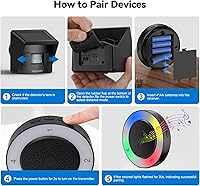
  • Kit Contents: Each package includes one receiver unit and one outdoor sensor, which come pre-paired from the factory and require no manual frequency matching.
  • Batteries Required: No disposable batteries are required; the sensor relies entirely on solar charging with a built-in rechargeable cell as backup.

Related Reviews
Chesbung Solar Driveway Alarm System
87%
93%
Ease of Installation
88%
Detection Range
90%
Battery Life
85%
Reliability of Motion Detection
87%
Build Quality and Durability
More
1byone Wireless Driveway Motion Sensor Alarm
71%
91%
Ease of Setup
67%
Wireless Range
63%
Detection Accuracy
88%
Alert Volume & Clarity
71%
Build Quality
More
eMACROS HS002W Solar Driveway Motion Alarm
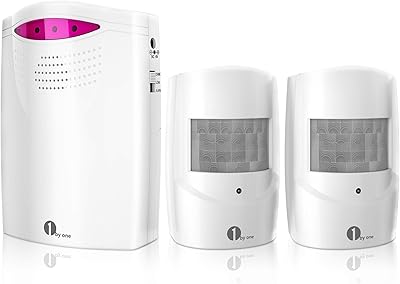
72%
83%
Solar Charging Reliability
76%
App Notification Speed
71%
Ease of Setup
62%
Motion Detection Accuracy
67%
Transmission Range
More
Bistee Wireless Driveway Alarm with Microwave-Infrared Sensor
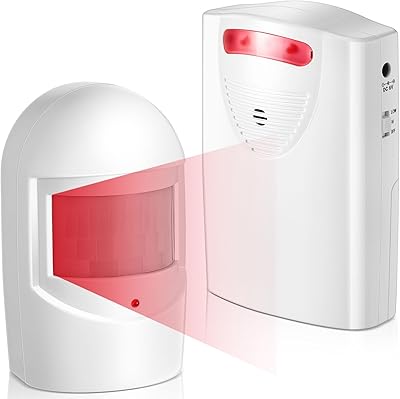
83%
92%
Wireless Range
88%
Ease of Installation
85%
Motion Detection Performance
80%
Build Quality
89%
Weatherproof Design
More
Qualirey Driveway Alarm Wireless Motion Sensor System
86%
92%
Value for Money
94%
Ease of Installation
89%
Range of Detection
88%
Weather Resistance
85%
Alert Customization
More
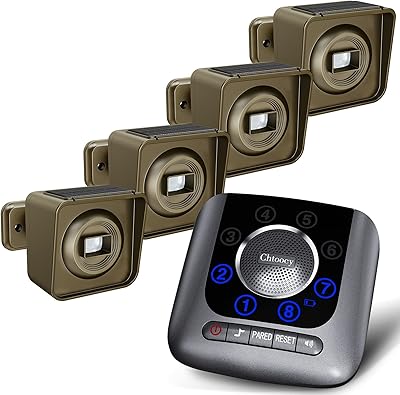
Chtoocy Solar Driveway Alarm 4 Sensors 1 Receiver
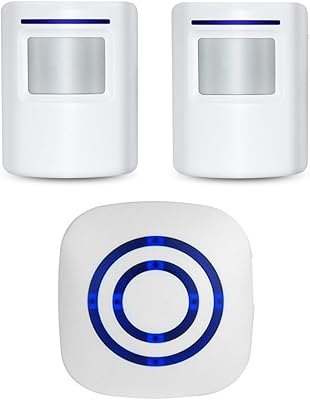
85%
88%
Value for Money
91%
Range & Detection Performance
85%
Battery Life
82%
Build Quality
89%
Weather Resistance
More
Enegg Wireless Driveway Motion Sensor Alarm
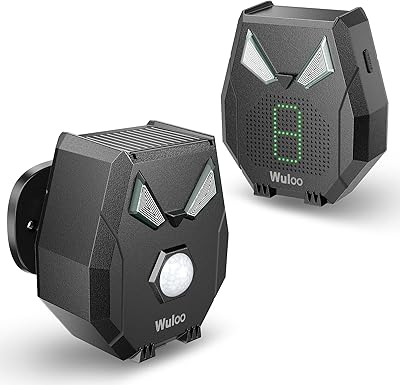
69%
93%
Ease of Setup
81%
Wireless Range
74%
Detection Reliability
63%
Sound Quality
79%
Volume Output
More
Wuloo WUL-MTY0102-1T1 Solar Driveway Alarm System

76%
91%
Ease of Installation
58%
Wireless Range
72%
Detection Accuracy
67%
Battery & Solar Performance
86%
Chime & Alert Customization
More
HTZSAFE 808A Wireless Driveway Alarm System
76%
83%
Wireless Transmission Range
91%
Ease of Installation
72%
Motion Detection Accuracy
61%
Battery Life
68%
Receiver Alert Volume
More
TECKNET TK-EKB01040BS01 Wireless Keyboard
76%
83%
Ergonomic Comfort
86%
Typing Noise Level
79%
Wireless Reliability
62%
Build Quality
88%
Value for Money
More

FAQ

The solar panel does continue to charge the internal battery even on overcast days, just at a slower rate. The built-in rechargeable backup battery acts as a buffer so the sensor stays active without direct sunlight for a reasonable stretch. That said, if you live somewhere with very long cloudy winters, it is worth keeping an eye on the charge level rather than assuming it will always self-sustain.

This is one of the most commonly misunderstood specs on this type of device. The 2600 ft figure refers to how far the wireless signal can travel between the outdoor sensor and the indoor receiver — not how wide an area the sensor can see. The actual motion detection sweep is much shorter, covering up to about 33 ft wide on the high sensitivity setting. Think of it as a narrow beam that can shout across a very large distance.

It can, depending on which sensitivity setting you use. On the high sensitivity setting, smaller animals moving close to the sensor may trigger an alert. Switching to low sensitivity reduces that sweep width and raises the effective detection threshold, which tends to filter out smaller creatures while still catching people and larger animals. You may need to experiment a bit based on your specific yard activity.

Yes, the system supports up to four separate zones, each of which can be assigned a different chime melody on the receiver. So if you buy additional sensors separately, you can monitor your front gate, back gate, driveway, and side yard all from one indoor receiver and tell them apart by sound alone.

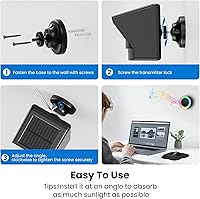
Installation is genuinely straightforward. The sensor mounts to a post, wall, fence, or tree using basic screws, and the receiver just plugs into a standard outlet indoors. The sensor and receiver come pre-paired, so there is no frequency programming or pairing process to deal with. Most people complete the whole setup in well under 20 minutes.

No, it does not. This system is entirely standalone — there is no Wi-Fi, no Bluetooth, no companion app, and no integration with platforms like Alexa or Google Home. Alerts are delivered through the receiver unit via audio chime and RGB LED flash only. If app-based notifications are important to you, this particular system would not meet that need.

The system has no tamper detection built in. If the sensor is physically obstructed, rotated away, or covered, it simply stops detecting motion without sending any kind of alert. For most residential driveways this is not a concern, but it is worth factoring in if you are in a higher-risk area where tampering is a realistic worry.

Thick masonry walls, multiple floors, and dense building materials can all reduce signal strength. The 2600 ft figure is measured in open air, and real-world indoor penetration is shorter — sometimes significantly so. If your receiver needs to be on a different floor or across a long interior distance from the sensor, test placement before committing to a permanent mount location.

Yes, the sensor sits on a rotating bracket that lets you tilt and redirect the detection angle. This is useful for narrowing the field toward a specific path or driveway lane rather than sweeping a broader area that might catch unintended foot traffic from a sidewalk or neighbor's yard.

The receiver has five volume steps, and the lower settings are genuinely quiet — suitable for a bedroom or home office where you want a subtle notification rather than a full chime. The highest setting is loud enough to be heard across a reasonably sized home. Most buyers find the mid-range settings a comfortable everyday option.

Where to Buy