Overview

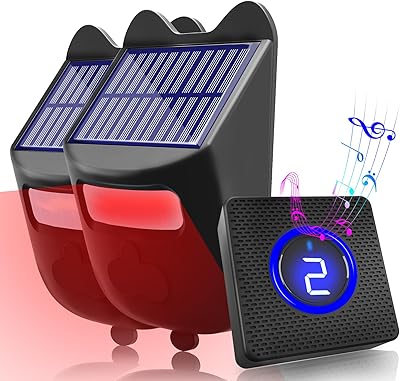
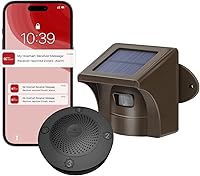
The eMACROS HS002W Solar Driveway Motion Alarm is a mid-range wireless security solution built for homeowners, rural property owners, and small business operators who want reliable perimeter detection without pulling a single cable. The core appeal is simple: the sensor charges itself via solar panel, pushes alerts directly to your smartphone, and can sit up to a half-mile from the indoor receiver. It handles real outdoor conditions across a wide temperature range, from freezing winters to hot summers. That said, one detail to flag upfront — this system is 2.4GHz only, so if your router runs exclusively on 5GHz, you will need to adjust your network settings before setup.
Features & Benefits

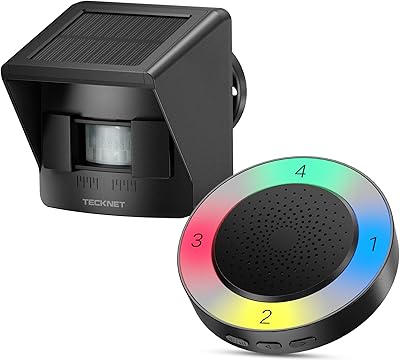
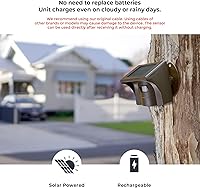
The sensor in this solar driveway alarm draws power from sunlight and stores it in a built-in lithium polymer battery, meaning you are not climbing a ladder every few months to swap out AAs. When motion is detected within 30 feet, the My Hosmart app sends a push notification to your phone almost instantly — useful when you are not home or have the receiver volume turned down. The system supports four channels and up to 16 sensors per channel, so larger properties can scale without buying an entirely new setup. You also get 38 alert tones and adjustable sensitivity, which helps reduce false triggers. One small but notable omission: the USB-C receiver needs a 5V adapter that is not in the box.

Best For

This wireless motion detector is a strong match for homeowners with long driveways who want to know when a car or visitor arrives before they reach the front door. It also works well for rural properties where running wired sensors would mean trenching through yards of earth — not practical, and not cheap. If you prefer a phone alert over a ringing chime inside the house, this setup covers that. The expandability also makes it appealing for anyone who wants to start with one sensor and add more over time. And for gift buyers, it strikes a balance between genuinely useful functionality and enough tech appeal to feel like a thoughtful, modern choice.

User Feedback

Most buyers find the eMACROS sensor system easy to install, and the app pairing process — done over Bluetooth initially — tends to go smoothly for people already on a 2.4GHz network. The solar reliability gets consistent praise; users report not having to touch the sensor for months at a time. Where opinions diverge is on false motion triggers — pets, blowing branches, and wildlife come up regularly in critical reviews. The 2.4GHz-only limitation frustrates some buyers during setup, particularly those with newer routers that default to 5GHz. Real-world range also varies; many users report reliable performance well short of the stated maximum, especially through walls or across dense terrain. App notification speed is generally considered solid, though a handful of users note occasional delays.

Pros

  • Solar charging keeps the outdoor sensor running for months with zero battery maintenance required.
  • Push notifications through the My Hosmart app arrive quickly and work reliably on standard 2.4GHz networks.
  • The system supports up to 16 sensors per channel, making it practical for larger or multi-zone properties.
  • A two-year warranty provides meaningful coverage and reduces the financial risk of long-term outdoor use.
  • Weatherproof construction handles a wide temperature range, from cold winters down to -20°C through hot summers.
  • 38 selectable alert tones mean you can distinguish between different sensor zones without confusion.
  • Bluetooth-assisted initial setup keeps the pairing process accessible, even for less tech-savvy users.
  • The wireless motion detector mounts on walls, trees, or posts, offering genuine flexibility for placement.
  • Adjustable Hi/Low sensitivity lets users tune detection aggressiveness to match their specific environment.
  • At its price point, the combination of solar power and app connectivity offers solid value for a no-wire setup.

Cons

  • The power adapter for the USB-C receiver is not included in the box, which catches many buyers off guard.
  • 2.4GHz-only Wi-Fi support is a hard barrier for anyone with a modern 5GHz-default router setup.
  • Advertised half-mile range is a line-of-sight maximum; real-world performance through obstacles is often significantly less.
  • False motion triggers from animals, blowing debris, or swaying branches are a recurring complaint from users.
  • The My Hosmart app has mixed reviews for long-term stability and occasional notification delays.
  • The sensor's 30-foot detection radius is relatively modest and may leave gaps on wide open driveways.
  • No recording or visual verification means you get an alert but no way to see what caused it.
  • Buyers in heavily shaded locations may find solar charging insufficient to maintain reliable battery levels year-round.

Ratings

The scores below for the eMACROS HS002W Solar Driveway Motion Alarm were generated by our AI rating engine after analyzing verified global buyer reviews, with spam, incentivized, and bot-flagged submissions actively filtered out before scoring. Each category reflects the honest consensus of real owners — from rural homeowners who rely on it daily to first-time security buyers navigating the setup for the first time. Both the strengths that keep buyers satisfied and the friction points that drive negative reviews are transparently represented in every score.
Solar Charging Reliability
83%
Owners who placed the sensor in well-exposed locations consistently report going months without any intervention — no battery swaps, no manual recharging, just reliable operation through summer and mild winters. For rural users monitoring a distant gate or barn, that hands-off reliability is one of the most valued aspects of the whole system.
Buyers in heavily shaded yards or high-latitude regions report noticeably shorter effective run times, particularly in winter when sunlight hours drop. A few users noted the battery depleted faster than expected during extended overcast stretches, which undermines the core promise of truly maintenance-free operation.
App Notification Speed
76%
24%
Under normal 2.4GHz conditions, most users describe push notifications arriving within a few seconds of motion being detected — fast enough to check a camera or step outside before a visitor reaches the door. The real-time alert experience is generally considered one of the more satisfying aspects of the setup.
A recurring minority complaint involves notification delays, sometimes stretching to 30 seconds or more, which reduces practical usefulness for security purposes. App stability has also drawn criticism, with some Android users reporting dropped connections or missed alerts after the phone sits idle for extended periods.
Ease of Setup
71%
29%
For buyers already running a 2.4GHz network, the Bluetooth-assisted pairing process tends to go smoothly and takes most users under 20 minutes from unboxing to first alert. The in-app guidance is reasonably clear, and the sensor itself pairs to the receiver with minimal steps.
The 2.4GHz-only requirement is a genuine barrier for buyers with newer routers defaulting to 5GHz, and many do not discover this until mid-setup. The missing power adapter also creates unnecessary friction — users expecting a plug-and-go experience have to hunt down a compatible 5V adapter before they can even begin.
Motion Detection Accuracy
62%
38%
When sensitivity is set to Low and the sensor is aimed at a defined path — a driveway lane, a gate opening — it does a reasonable job distinguishing meaningful motion from background noise. Buyers monitoring a single-lane driveway with minimal vegetation nearby report few false alerts and reliable vehicle detection.
False triggers are the single most common complaint across user reviews, with animals, blowing leaves, and swaying branches regularly setting the alarm off. Even on the Low sensitivity setting, buyers in wooded or wind-exposed locations report enough nuisance alerts to become a genuine annoyance over time.
Transmission Range
67%
33%
For typical residential properties, the signal holds up well across a few hundred feet even with walls, a garage structure, or a fence in between. Buyers using the receiver inside a home and the sensor near the end of a standard suburban driveway rarely report signal dropout as a problem.
The half-mile rating creates expectations that real-world performance rarely meets once obstacles enter the picture. Users on larger rural properties who placed the sensor near the advertised maximum distance reported unreliable connections, and several noted the signal struggled through dense vegetation or metal barn walls.
Build & Weather Resistance
78%
22%
The sensor handles genuine outdoor exposure well — rain, frost, and summer heat are all within its rated tolerance range, and most long-term owners report no physical deterioration after a year or more mounted outside. The wide operating temperature range of -20°C to 60°C covers nearly every residential climate zone.
While the weatherproofing holds up under normal conditions, a handful of users in high-humidity coastal regions reported moisture-related issues over time. The housing feels functional rather than robust, and a few buyers described it as lighter and less substantial than expected given the mid-range price point.
Expandability
86%
The ability to add up to 16 sensors per channel across 4 channels is a standout feature for buyers managing larger or multi-entry properties. Users who started with a single sensor and gradually added coverage to a second gate or a back fence describe the expansion process as straightforward and consistent.
Additional sensors are sold separately at a meaningful cost per unit, so scaling the system up adds up financially. Some users also noted that managing multiple sensors through the app becomes less intuitive as the number of zones increases, particularly when trying to identify which specific sensor triggered an alert.
Alert Customization
81%
19%
Having 38 tone options is more useful than it might initially sound — buyers with multiple sensors use different tones to identify which zone was triggered without looking at the app. The Hi/Low sensitivity toggle is simple but effective, giving users a quick way to recalibrate without navigating deep settings menus.
While the tone selection is generous, volume control on the receiver is limited, and some users in larger homes found the alert hard to hear from other rooms at the default level. There is no per-zone tone scheduling or quiet-hours feature in the app, which would meaningfully improve daily usability.
Value for Money
73%
27%
For a solar-powered wireless alarm with app connectivity and meaningful expandability at this price tier, buyers who fully use its features tend to feel the investment is justified. The two-year warranty adds confidence, particularly for an outdoor electronics purchase exposed to the elements year-round.
Buyers who encounter setup friction — especially those who need to sort out the 5GHz router issue and source their own adapter — feel the out-of-box experience does not match the price expectation. If false alerts require significant placement trial and error, the practical value proposition weakens noticeably.
App Usability
64%
36%
The My Hosmart app covers the essentials — pairing, notifications, sensitivity adjustment, and multi-sensor management — in a layout that most users can navigate without consulting the manual. First-time smart home users generally find it accessible rather than intimidating.
Longer-term users are more critical, citing an interface that feels dated and occasional bugs following app updates. Reviews mention that some settings changes do not save reliably, and the notification history log lacks the depth that security-focused buyers tend to want for reviewing past activity.
Installation Flexibility
84%
Wall, tree, and post mounting options give buyers genuine flexibility in finding the optimal detection angle without being constrained by a fixed mounting type. The sensor is light enough that a single person can manage the full install without assistance, even at elevated positions.
The mounting hardware included in the box is basic, and users who needed to mount on unconventional surfaces — curved fence posts, rough stone walls — report needing to source their own hardware. The sensor cable management also received minor criticism for looking untidy in finished outdoor spaces.
Long-Term Durability
69%
31%
Many buyers report trouble-free operation well past the one-year mark, and the solar panel itself shows no performance degradation in the majority of long-term reviews. The lithium polymer battery is rated to last around two years, which aligns with what most owners actually experience.
A segment of users report sensor faults or connectivity issues emerging after 12 to 18 months of outdoor use, sometimes just outside a convenient return window. Battery replacement is not user-serviceable on the current design, meaning a degraded internal battery effectively means replacing the whole sensor unit.
Package Completeness
44%
56%
The base unit, sensor, and USB-C cable are included, giving buyers everything needed for the sensor-side of the install right out of the box. The charging cable itself is a quality USB-C type, which is a minor but appreciated detail over older micro-USB designs.
Omitting the 5V power adapter from a product that requires one is a genuine problem that affects the out-of-box experience in a way that feels avoidable at this price point. Multiple reviewers flagged this as a frustrating discovery at install time, and it is one of the most consistent negative data points across the review pool.
Notification Reliability
68%
32%
When the Wi-Fi connection is stable and the phone's notification settings are correctly configured, the system delivers alerts dependably over extended periods. Buyers who spent time optimizing placement and router settings report a noticeably better experience than those who used default settings out of the box.
The system's reliance on a stable Wi-Fi connection means any home network interruption also interrupts alerts — there is no local fallback or offline alert mode. Users in areas with inconsistent internet service have found the alarm significantly less dependable than buyers with stable broadband connections.

Suitable for:

The eMACROS HS002W Solar Driveway Motion Alarm is a solid fit for homeowners with long driveways who want to know when someone pulls in before they ever reach the front door. Rural property owners will appreciate it most — if your nearest neighbor is a half-mile away and running wired detection isn't realistic, a solar-powered wireless sensor that charges itself and sends phone alerts is a genuinely practical solution. It also works well for anyone managing a small farm, workshop, storage lot, or rental property where you can't always be on-site but still want real-time motion awareness. The expandability is a real advantage here: starting with one sensor and gradually adding more to cover a barn entrance, a back gate, or a secondary driveway is straightforward without needing a whole new system. Anyone who wants smartphone notifications rather than relying on an indoor chime they might not always hear will find the app integration useful and responsive under normal conditions.
Not suitable for:

The eMACROS HS002W Solar Driveway Motion Alarm is not the right choice for buyers running a 5GHz-only Wi-Fi network and unwilling to adjust their router settings — this is a hard technical limitation, not a minor inconvenience. It is also a poor match for anyone expecting truly hands-free installation out of the box, since the USB-C receiver requires a 5V power adapter that is not included. Buyers who need precise, guaranteed detection at distances close to the half-mile maximum — especially through dense foliage, multiple walls, or large metal structures — should temper expectations, as real-world range typically falls well short of the rated figure in those conditions. Properties with significant wildlife activity, overhanging trees, or wind-exposed sensor placements are likely to experience frustrating false triggers, particularly on the high-sensitivity setting. Finally, this system is not a substitute for a full security camera or alarm system; it detects and alerts, but it does not record, deter, or verify what triggered it.

Specifications

  • Brand & Model: This unit is manufactured by eMACROS under the model designation HS002W.
  • Power Source: The outdoor sensor is solar-powered and backed by a built-in rechargeable lithium polymer battery for continuous operation during low-light periods.
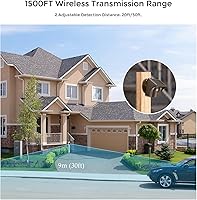
  • Transmission Range: The sensor can communicate with the receiver at distances up to 2640 ft (approximately 1/2 mile) under open, line-of-sight conditions.
  • Detection Range: The passive infrared motion sensor detects movement within a radius of up to 30 ft from the unit.
  • Wi-Fi Compatibility: The system connects exclusively to 2.4GHz Wi-Fi networks and does not support 5GHz bands.
  • App Support: The My Hosmart app, available for both iOS and Android, handles push notifications, settings, and device management.
  • Channels: The system supports 4 independent channels, allowing users to organize and identify multiple sensor zones separately.
  • Expandability: Each channel accommodates up to 16 sensors, enabling large or multi-zone properties to scale the system significantly.
  • Alert Tones: Users can choose from 38 selectable alert tones to distinguish between different sensors or simply set a preferred notification sound.
  • Sensitivity: Motion sensitivity can be toggled between Hi and Low settings to suit different environments and reduce unwanted triggers.
  • Radio Frequency: The sensor and receiver communicate wirelessly at 433 MHz, which offers solid obstacle-penetrating range across typical property structures.
  • Receiver Power: The indoor receiver is powered via USB-C cable using a 5V 1A adapter, which is not included in the package.
  • Operating Temperature: The sensor is rated to operate reliably in temperatures ranging from -20°C to 60°C, covering most outdoor climates.
  • Initial Connectivity: First-time setup uses Bluetooth to pair the device with your phone, after which it switches to Wi-Fi for ongoing communication.
  • Mounting Options: The sensor supports wall mount, tree mount, and post mount installation to accommodate varied outdoor placement needs.
  • Item Weight: The complete unit weighs approximately 14.88 oz, making it lightweight enough for easy single-person installation.
  • Warranty: eMACROS provides a two-year manufacturer warranty covering defects and malfunctions, along with a 30-day return window through Amazon.
  • Package Contents: The box includes the base receiver unit, the outdoor driveway sensor, and a USB-C data cable — no power adapter is included.

Related Reviews

Chesbung Solar Driveway Alarm System
87%
93%
Ease of Installation
88%
Detection Range
90%
Battery Life
85%
Reliability of Motion Detection
87%
Build Quality and Durability
More
TECKNET EMD01001BA01 Solar Wireless Driveway Alarm
76%
91%
Ease of Setup
74%
Solar Charging Performance
68%
Detection Accuracy
86%
Wireless Signal Range
83%
Alert Customization
More
COTINSE Solar Outdoor Motion Sensor Alarm
83%
90%
Alarm Volume & Effectiveness
87%
Ease of Installation
85%
Solar Charging Performance
75%
Remote Control Functionality
88%
Customization of Alerts & Sounds
More
Power Gear 36014-S1 Wireless Driveway Alarm
70%
91%
Ease of Installation
68%
Detection Reliability
54%
False Alert Frequency
72%
Wireless Range Performance
78%
Volume & Alert Audibility
More
PILSAMAS CT90Y Solar Motion Sensor Alarm
76%
88%
Custom Audio Feature
91%
Ease of Installation
58%
Solar Charging Performance
67%
Detection Reliability
83%
Alarm Volume
More
Anizoowu An-911S-02 Solar Motion Sensor Alarm
73%
88%
Sound & Siren Volume
74%
Motion Detection Coverage
63%
Solar Charging Reliability
81%
Custom Recording Feature
91%
Ease of Installation
More
ROYELLE Solar Outdoor Motion Detector Alarm
82%
88%
Value for Money
91%
Ease of Installation
85%
Sound Effectiveness
78%
Battery Life in Sunlight
62%
Battery Life in Low Sunlight
More
paipaimeiren P611N Solar Motion Sensor Alarm
73%
91%
Ease of Installation
72%
Alarm Volume
68%
Motion Detection Accuracy
61%
Solar Charging Performance
63%
Build Quality & Durability
More
1byone Wireless Driveway Motion Sensor Alarm
71%
91%
Ease of Setup
67%
Wireless Range
63%
Detection Accuracy
88%
Alert Volume & Clarity
71%
Build Quality
More
ChunHee SL07 Solar Strobe Alarm Siren
76%
88%
Ease of Installation
61%
Solar Charging Performance
83%
Siren Volume & Deterrent Effect
72%
PIR Motion Sensor Accuracy
67%
Remote Control Reliability
More

FAQ

No, and this is probably the most important thing to check before buying. The system only connects to 2.4GHz networks. If your router runs on 5GHz exclusively, you will need to enable a 2.4GHz band in your router settings before setup will work. Most modern dual-band routers support both, so it is usually a matter of activating it rather than buying new hardware.

It is not, and this catches a lot of buyers off guard. The package includes a USB-C cable for the receiver, but you will need to supply your own 5V 1A USB adapter — the kind used for many older phone chargers works fine. Just make sure you have one ready before you start the install.

Solar performance depends heavily on how much direct sunlight the sensor receives. In well-exposed locations, the built-in battery stays topped up reliably. If your sensor is mounted under dense tree cover or in a consistently shaded spot, charging may be slower than ideal, and the battery could drain during extended overcast periods. For shaded placements, keep an eye on battery levels through the app, especially in winter months.

Under ideal conditions — open air, no obstructions, sensor aimed correctly — yes, 30 feet is achievable. In practice, factors like sensor angle, the size of what is moving, and ambient temperature can affect how far out it reliably triggers. Mounting it at roughly waist-to-chest height and angling it slightly downward tends to give the best real-world results for vehicle and person detection.

The advertised half-mile figure is a line-of-sight maximum measured in open conditions. Once you add walls, floors, metal structures, or dense landscaping between the sensor and receiver, expect the effective range to drop considerably. Many users report solid, consistent performance in the 300 to 600 ft range through typical residential obstacles, which is still more than enough for most driveways.

You can definitely expand it. The eMACROS HS002W Solar Driveway Motion Alarm supports up to 16 sensors per channel across 4 channels, so the system can grow significantly. Additional sensors are sold separately by eMACROS, and pairing them follows the same process as the original unit.
Switch the sensitivity setting from Hi to Low — that is the quickest fix. Beyond that, think carefully about sensor placement: avoid pointing it at tree branches that sway in the wind, and angle it to focus on a specific path or lane rather than a wide open area. Some false triggering from wildlife is hard to eliminate entirely, but the Low sensitivity setting helps substantially.

No, push notifications work in the background. As long as your phone has an internet connection and notifications are enabled for the My Hosmart app, you will receive alerts even when the app is closed. That said, some users have reported occasional delays, so if instant notification is critical to your use case, it is worth testing response times in your specific environment.

The sensor is rated down to -20°C, which covers most North American and European winter conditions. It is designed to live outdoors year-round. Just make sure the solar panel stays reasonably clear of heavy snow accumulation, as a thick snow layer can block charging. The battery serves as a buffer during those periods, but prolonged darkness and cold can drain it faster than usual.

For most users, the setup process takes around 15 to 20 minutes start to finish. You start by connecting the receiver to power, then use Bluetooth on your phone to link it to the My Hosmart app, and finally connect to your 2.4GHz Wi-Fi network following the in-app steps. The sensor itself pairs to the receiver with a button press. eMACROS also provides an install video accessible from the product listing, which is worth watching before you begin.