

Overview

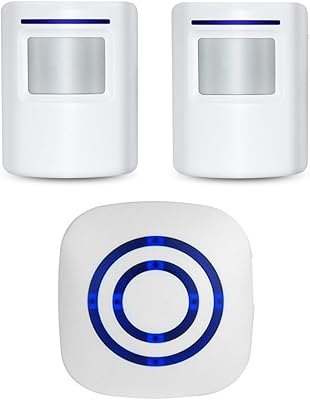
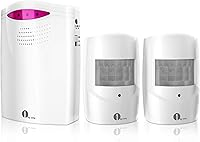
The 1byone Wireless Driveway Motion Sensor Alarm is a straightforward, no-frills perimeter alert system built for homeowners who want to know when someone — or something — is approaching their property. It ships with two passive infrared sensors and a plug-in receiver, with no app, hub, or monthly subscription required. The sensors run on AAA batteries, so you can mount them wherever makes sense without hunting for an outlet or running cable through walls. For a budget-tier device, the claimed 1,000 ft range is ambitious, and 1byone has built a decent reputation making accessible home security accessories that don't demand a big commitment.

Features & Benefits

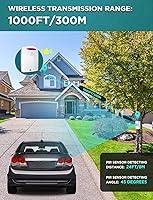
The headline spec here is the wireless range — up to 1,000 ft between each sensor and the receiver under open-air conditions. Each passive infrared sensor covers a 24 ft angled detection zone, practical for catching a car pulling in or a person walking up a path without triggering on distant street traffic. Alert options give real flexibility: choose an audible chime, an LED flash, or run both at once. The receiver lets you pick from multiple melody tones, useful if you want the driveway signal to sound distinct from a doorbell. The system expands up to five sensors, and installation takes minutes — mount, pair, done.

Best For

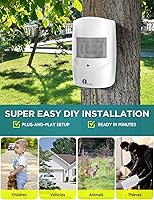
This motion sensor kit makes the most sense for homeowners watching a single entry point — a long driveway, a side gate, or a detached garage — where a wired system would be overkill. It's particularly well-suited to rural and suburban settings where distance matters more than smart-home compatibility. Renters appreciate the no-wiring setup that leaves walls and posts untouched. Parents who want a quiet heads-up when kids drift toward a pool or a restricted shed will find the LED-only alert mode genuinely useful. Small shop owners looking for a low-cost visitor chime at an entrance or parking area also get solid value without investing in a full commercial system.

User Feedback

Across thousands of reviews, the pattern is fairly consistent: people genuinely appreciate how fast setup is and how well the chime carries through a house. The gripes worth taking seriously, though, center on sensitivity — false alerts triggered by deer, cats, or wind-rattled branches are a recurring complaint. Real-world range through trees, walls, or uneven terrain tends to land noticeably below 1,000 ft. Some long-term owners report swapping batteries more often than expected, and a few flag weathering after frost or a brutal summer. The sensors are outdoor-rated, not fully waterproof, so sheltered mounting helps. Overall, satisfied buyers — but clear-eyed ones.

Pros

  • No subscription, no hub, and no app required — just plug in the receiver and go.
  • Battery-powered sensors can be placed virtually anywhere on your property without running cable.
  • The audible chime is loud enough to hear clearly from another room or floor.
  • Expanding coverage is straightforward — add up to five sensors to a single receiver over time.
  • Three alert modes let you tailor the system to your household, including a silent LED-only option.
  • At its price point, the range and feature set genuinely exceed most competing entry-level kits.
  • Setup from unboxing to first alert takes under 15 minutes for most users.
  • Multiple melody options make it easy to distinguish the driveway chime from a doorbell or other alert.
  • The angled 24 ft detection zone focuses on close-range movement, reducing random distant triggers.

Cons

  • Real-world wireless range through walls, trees, or uneven terrain often lands well below the marketed maximum.
  • Sensitivity calibration is limited, making false alerts from animals or wind-blown branches a recurring annoyance for some users.
  • Battery consumption can be higher than expected in active or high-traffic locations, requiring more frequent changes.
  • Sensors are outdoor-rated but not fully waterproof, so fully exposed mounting in harsh climates carries some risk.
  • No smartphone notifications mean you must be home and within earshot of the receiver to catch any alert.
  • Passive infrared detection can be fooled by extreme heat, direct sunlight, or thick foliage near the sensor.
  • The white housing is fairly visible outdoors and may not blend well into darker fence posts or natural settings.
  • No built-in logging or history feature, so missed alerts during sleep or noise leave no record of activity.

Ratings

Our AI-generated scores for the 1byone Wireless Driveway Motion Sensor Alarm were produced by systematically analyzing thousands of verified global buyer reviews, with spam, incentivized, and bot-flagged submissions actively filtered out before scoring. Each category reflects the honest distribution of real user experiences — not just the vocal majority — so both the genuine strengths and the recurring frustrations are weighted into every number. Where buyers consistently agreed, scores move confidently in either direction; where opinions split, that tension shows up too.

Ease of Setup
91%
Owners across skill levels consistently describe unboxing to first alert in under 15 minutes, with no tools, no wiring, and no app account to create. For renters and first-time buyers especially, the plug-and-pair simplicity is one of the most frequently praised aspects of the entire experience.
A small share of users report occasional pairing failures on first attempt, requiring a reset and re-pair cycle that adds a few minutes of frustration. Instructions could be clearer on mounting angle for optimal detection, which a few buyers only figured out through trial and error.
Wireless Range
67%
33%
In open suburban driveways with a clear path to the house, the sensor-to-receiver signal holds up reliably and users in those conditions rarely report dropouts. The range genuinely exceeds what competing budget kits offer, which matters for rural properties with longer approaches.
The 1,000 ft marketing figure is a best-case open-air number that many buyers in wooded, hilly, or multi-wall settings simply do not hit — real-world performance in obstructed environments often lands in the 200 to 400 ft range. This gap between spec and reality is the single most common source of disappointment in negative reviews.
Detection Accuracy
63%
37%
When the sensor is positioned correctly — at the right height and angle — it reliably picks up approaching vehicles and adult-sized pedestrians within its 24 ft zone. Users monitoring driveways with low animal traffic generally report very few missed alerts.
False triggers from deer, cats, and wind-blown foliage are a persistent complaint, particularly for buyers in rural areas who lack fine-grained sensitivity controls. The passive infrared technology also struggles in very hot weather, when the temperature contrast between a moving body and the surrounding air narrows enough to cause inconsistent detection.
Alert Volume & Clarity
88%
The chime volume earns consistent praise — buyers frequently mention hearing it clearly from a different floor or the back of the house, which is exactly the real-world use case it needs to deliver on. Multiple melody options let households set a tone that's distinct from a doorbell or phone notification.
A minority of users find the maximum volume too loud for small apartments or open-plan spaces where the receiver sits close to living areas. There is no volume fine-tuning between the available settings, so options are somewhat coarse.
Build Quality
71%
29%
The sensors feel solid enough for outdoor use and the housing design keeps basic moisture out during light rain and average seasonal conditions. Most buyers who mount them in sheltered spots — under an eave or facing away from prevailing weather — report no physical degradation over one to two years.
Units mounted fully exposed to driving rain, hard freezes, or intense summer sun show more wear, and some long-term owners flag cracked housings or corroded battery contacts after prolonged harsh-weather exposure. The build is outdoor-rated but clearly not engineered for extreme climates.
Weather Resistance
66%
34%
For moderate climates and sheltered installations, the sensors handle seasonal weather competently and owners in mild regions rarely raise durability complaints. The design keeps the electronics protected from incidental moisture during normal outdoor use.
There is no published IP rating, which makes it hard to know exactly where the limits are, and buyers in regions with heavy snowfall, freezing rain, or intense humidity have reported sensor failures after a single winter. It is outdoor-rated, not weatherproof in any rigorous sense.
Battery Life
61%
39%
In low-traffic monitoring situations — a secondary gate or a shed that sees occasional use — battery life can stretch to several comfortable months before a swap is needed. Buyers who size their placement to match actual traffic volume generally have fewer complaints here.
High-traffic spots like a busy driveway or a location plagued by animal-triggered false alerts drain AAA sets quickly, with some users replacing batteries every four to six weeks. Given that batteries are not included and three are needed per sensor, ongoing running costs add up faster than many buyers anticipate.
Expandability
84%
The ability to grow from two sensors to five on a single receiver is a genuine practical advantage, letting buyers start with the basics and add coverage to a back gate or pool perimeter without replacing any hardware. The additional sensors pair just as easily as the originals.
Five sensors per receiver is a firm ceiling, and buyers with larger properties who need more comprehensive coverage will eventually need multiple independent receiver units. The receivers do not communicate with each other, so managing several zones requires some manual coordination.
Value for Money
86%
At its price point, the combination of two sensors, a plug-in receiver, expandability to five units, and a legitimate long-range claim is genuinely competitive. Buyers shopping for a no-subscription perimeter alert on a tight budget consistently rank it as one of the better options in its tier.
When real-world range underperforms expectations or battery costs accumulate over time, the perceived value erodes for some buyers. Competitors with smart-home integration can be found in a similar price neighborhood, which makes the lack of any connectivity feel like a limitation for tech-leaning shoppers.
False Alert Rate
54%
46%
For buyers with paved driveways, low wildlife presence, and clear sensor sightlines, nuisance alerts are infrequent enough to not be a daily annoyance. Thoughtful placement and sensor angle adjustments do meaningfully reduce false triggers for users willing to experiment.
Without adjustable sensitivity settings, buyers cannot dial out animal movement or wind-blown vegetation the way higher-end systems allow. In rural or wooded settings this is a significant day-to-day friction point, and some buyers ultimately abandon the system because the false alert volume becomes too disruptive.
Mounting Flexibility
83%
Wall mount, fence post, or tree — the hardware accommodates all three without requiring extra brackets or proprietary accessories. Battery power means the mounting location is entirely driven by detection strategy rather than proximity to an outlet.
The mounting bracket is fixed rather than ball-jointed, which limits fine vertical angle adjustment and makes dialing in the optimal tilt a bit clumsy. Users on uneven terrain or non-standard surfaces sometimes resort to improvised shimming to get the angle right.
Receiver Usability
79%
21%
The plug-in receiver is compact, stays out of the way in a wall socket, and the melody selection process is simple enough to set once and forget. The LED flash mode gives households a visual alert option that works well in noisy environments or for users with hearing difficulties.
The receiver lacks a mute or do-not-disturb scheduling feature, which means alerts sound around the clock regardless of time. Buyers who install a sensor near a road or public footpath sometimes find themselves dealing with nighttime alerts they have no easy way to suppress without physically unplugging the unit.
Smart Home Compatibility
22%
78%
For buyers who specifically want a standalone offline system with zero connectivity requirements, the complete absence of Wi-Fi or app dependency is actually a feature — nothing to configure, nothing to update, no account to create.
There is no integration whatsoever with smart speakers, home automation platforms, or mobile apps, which is a hard dealbreaker for the growing share of buyers who expect their home security accessories to connect to their existing ecosystem. Remote alerts when away from home are simply not possible with this system.
Night Performance
74%
26%
Passive infrared detection is inherently non-optical, meaning the sensor performs the same whether it is pitch dark or broad daylight — a genuine practical advantage over camera-based systems that need infrared illuminators. Nighttime detection of vehicles and people within the 24 ft zone is consistent with daytime performance under normal temperatures.
In warm summer nights, when outdoor temperatures approach body heat levels, the thermal contrast that PIR sensors rely on narrows and detection can become less reliable. Buyers in hot climates notice this most in late summer, when the sensor may miss a slow-moving person walking close to a warm surface.

Suitable for:

The 1byone Wireless Driveway Motion Sensor Alarm is a strong fit for homeowners who want a simple, reliable heads-up when someone enters their property without the complexity of a full security system. If you have a long rural or suburban driveway where you genuinely can't hear a car approaching from inside the house, this motion sensor kit fills that gap cleanly. Renters are well-served here too — the battery-powered sensors mount without drilling into anything permanent, and the whole system comes down in minutes when you move out. Parents who want a discreet alert when children wander toward a backyard pool, a detached garage, or any off-limits area will find the LED-only alert mode particularly useful for staying aware without alarming the kids. Small shop owners or home-based businesses that just need a low-key visitor chime at an entrance or side gate also get real, practical value from this kit at a price that's hard to argue with.

Not suitable for:

The 1byone Wireless Driveway Motion Sensor Alarm is not the right tool if you need smart-home integration, app-based remote monitoring, or cloud alerts when you're away from home — it has none of that. Buyers expecting the full 1,000 ft wireless range in a wooded lot, a property with multiple walls between the sensor and receiver, or any setting with significant physical obstructions are likely to be disappointed; real-world range in those conditions can fall well short. This is a passive infrared system, which means dense foliage, direct sun exposure, and heavy rain can all affect detection reliability in ways a camera-based or microwave sensor system would handle better. If you need finely tuned sensitivity control to avoid constant false alerts from roaming wildlife or blowing branches, the limited calibration options here may frustrate you. And if weatherproofing is a top priority — say, a sensor mounted fully exposed to driving rain or hard freezes all winter — you will want a unit with a higher ingress protection rating than this outdoor-rated but not fully waterproof kit provides.

Specifications

  • Wireless Range: Each sensor communicates with the receiver at up to 1,000 ft under open, unobstructed line-of-sight conditions.
  • Detection Range: Each passive infrared sensor detects movement within a 24 ft angled field of view directly in front of the unit.
  • Sensor Count: The kit includes 2 weatherproof outdoor sensors as standard, with the system supporting up to 5 total sensors per receiver.
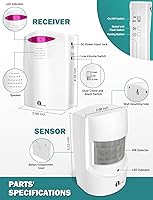
  • Receiver Type: The receiver plugs directly into a standard AC wall outlet and requires no battery power to operate.
  • Sensor Power: Each sensor runs on 3 AAA alkaline batteries, which are not included in the box.
  • Alert Modes: Users can select from three alert options: audible chime only, LED flash only, or a combination of both simultaneously.
  • Sensor Type: Both outdoor units use passive infrared (PIR) technology to detect heat signatures from people, vehicles, and large animals.
  • Dimensions: Each sensor unit measures 4.9″ deep by 4.2″ wide by 5.7″ tall.
  • Item Weight: The total kit weight is 13.4 oz, making individual sensors lightweight enough for easy single-person installation.
  • Mounting Options: Sensors can be mounted on walls, fence posts, or trees using the included hardware, with no specialist tools required.
  • Weather Resistance: The outdoor sensors are rated for exterior use and can withstand typical weather exposure, but they are not fully submersible or rated to a specific IP standard.
  • Expandability: A single receiver can be paired with up to 5 individual sensors, allowing gradual coverage expansion across gates, sheds, or secondary entry points.
  • Color: Both sensors and the receiver are finished in white, which blends with most exterior trim and interior wall surfaces.
  • Melody Options: The receiver offers multiple selectable chime melodies so the driveway alert can be set to a distinct tone from other alert devices in the home.
  • Compatible Uses: The system is designed for use across driveways, walkways, side gates, backyard sheds, swimming pool perimeters, and similar entry points.
  • Connectivity: The system operates on a dedicated wireless frequency between sensor and receiver with no Wi-Fi, Bluetooth, or smart-home hub required.

Related Reviews
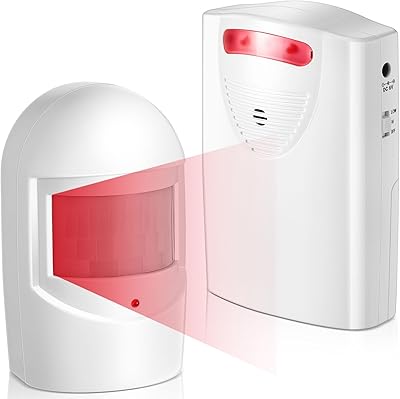
Qualirey Driveway Alarm Wireless Motion Sensor System
86%
92%
Value for Money
94%
Ease of Installation
89%
Range of Detection
88%
Weather Resistance
85%
Alert Customization
More
Enegg Wireless Driveway Motion Sensor Alarm

69%
93%
Ease of Setup
81%
Wireless Range
74%
Detection Reliability
63%
Sound Quality
79%
Volume Output
More
HTZSAFE 808A Wireless Driveway Alarm System
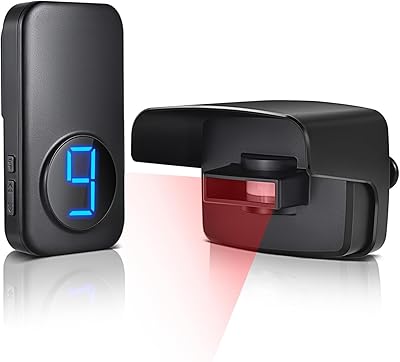
76%
83%
Wireless Transmission Range
91%
Ease of Installation
72%
Motion Detection Accuracy
61%
Battery Life
68%
Receiver Alert Volume
More
Bistee Wireless Driveway Alarm with Microwave-Infrared Sensor
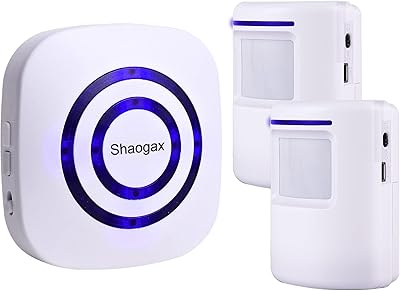
83%
92%
Wireless Range
88%
Ease of Installation
85%
Motion Detection Performance
80%
Build Quality
89%
Weatherproof Design
More
Shaogax Wireless Motion Sensor Driveway Alarm System
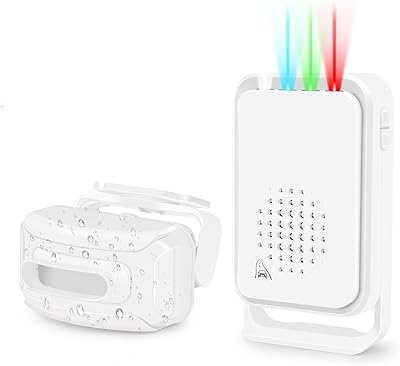
71%
91%
Ease of Setup
83%
Wireless Range
88%
Alert Customization
58%
False Alert Rate
61%
Build Quality
More
TECKNET EMD01001BA01 Solar Wireless Driveway Alarm
76%
91%
Ease of Setup
74%
Solar Charging Performance
68%
Detection Accuracy
86%
Wireless Signal Range
83%
Alert Customization
More
GREENCYCLE M-SF20R Wireless Driveway Alarm
78%
91%
Ease of Setup
78%
Detection Reliability
62%
Wireless Range
88%
Chime & Alert Volume
61%
Battery Life
More
COTINSE Solar Outdoor Motion Sensor Alarm
83%
90%
Alarm Volume & Effectiveness
87%
Ease of Installation
85%
Solar Charging Performance
75%
Remote Control Functionality
88%
Customization of Alerts & Sounds
More
PILSAMAS CT90Y Solar Motion Sensor Alarm
76%
88%
Custom Audio Feature
91%
Ease of Installation
58%
Solar Charging Performance
67%
Detection Reliability
83%
Alarm Volume
More
Power Gear 36014-S1 Wireless Driveway Alarm
70%
91%
Ease of Installation
68%
Detection Reliability
54%
False Alert Frequency
72%
Wireless Range Performance
78%
Volume & Alert Audibility
More

FAQ

It is genuinely straightforward. Mount the sensors to your chosen surface, insert batteries, plug in the receiver, and the pairing process takes a matter of minutes. Most users report being fully operational well within 15 minutes of opening the box.

That figure applies to open, unobstructed line-of-sight — think a flat field with nothing in the way. In real-world use, walls, dense trees, hills, or buildings reduce that range considerably. For a typical suburban driveway with a clear path to the house, most users find the range more than adequate, but don't count on hitting 1,000 ft through a wooded lot or multiple walls.

No. The 1byone Wireless Driveway Motion Sensor Alarm is a standalone system with no Wi-Fi or app connectivity, so alerts are only delivered through the plug-in receiver while you're home. If remote notifications are a priority, you'd need a different category of device entirely.

PIR sensors like these detect heat signatures, so small animals at close range can absolutely trigger them. Try angling the sensor slightly higher so its field of view clears the ground where small animals move, or reposition it to narrow the zone it covers. Sensitivity adjustment on this system is limited, so placement is your main tool for reducing nuisance alerts.

Yes, the system supports up to 5 sensors paired to a single receiver, so you can buy additional sensors separately and add them when needed. It is a genuinely flexible setup for phased expansion.

They are outdoor-rated and built to handle typical weather, but they are not fully waterproof in the submersible or high-pressure sense. For exposed locations that take the full brunt of driving rain or prolonged freezing temperatures, mounting them under a small overhang or eave is worth the effort to extend their lifespan.

Battery life varies quite a bit depending on how much traffic the sensor sees. In moderate-use locations, many owners report several months of life per set of batteries. High-traffic spots or areas with frequent animal movement will drain them faster, so it is worth keeping spares on hand.

Essentially, yes. The receiver functions like a long-range wireless chime, so if you mount a sensor near your front door, it will alert you whenever someone approaches — it just won't have a button for visitors to press. A number of users run it exactly this way in addition to monitoring their driveway.

It can. Passive infrared sensors work by detecting temperature differences between a moving object and its surroundings, so in very hot direct sunlight the contrast narrows and detection can become less reliable. If your mounting location gets intense afternoon sun, a slightly shaded or angled position will give you more consistent results.

The system is designed around pairing sensors to a single receiver, so operating two independent receivers reliably from the same sensor is not a supported configuration. If you need alerts in two different rooms simultaneously, a single receiver in a central location with the volume turned up tends to be the practical workaround most users land on.

Where to Buy