Overview

The HTZSAFE 808A Wireless Driveway Alarm System is a solid mid-range alert solution built for homeowners and small business owners who need reliable property coverage without running a single wire. Its most compelling feature is a transmission range that stretches up to half a mile — genuinely useful if you have a long rural driveway or a spread-out property. The kit ships with one plug-in receiver and two outdoor motion sensors, so you can be up and running quickly. It uses FSK+FHSS technology to cut down on interference from nearby devices. Worth noting upfront: actual range varies with terrain, and you will need to supply your own AA batteries before anything works.

Features & Benefits

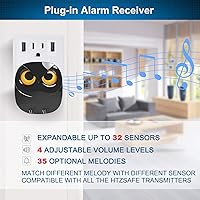
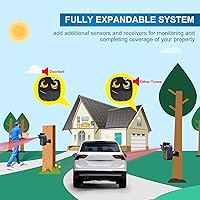
The driveway alert kit offers two sensitivity settings that let you dial detection distance between roughly 35 and 50 feet — useful for tuning out wandering cats or blowing leaves while still catching a car pulling in. It handles cold winters and hot summers without complaint, rated for a wide operating temperature range. Setup is refreshingly simple: mount the sensors to a fence post or wall, plug the receiver into any standard outlet, and you are done. The system is also highly expandable, supporting up to 32 sensors per receiver, so coverage can grow with your needs. Thirty-five melody options let you assign distinct tones to different zones, which turns out to be more practical than it first sounds.

Best For

This wireless motion alert setup makes the most sense for homeowners with long driveways or rural properties where a visitor can appear long before you would ever hear a knock. It is equally practical for small business owners who want to monitor a gate or storage yard without paying for professional installation or a monthly subscription fee. DIY-friendly buyers will appreciate the no-tools mounting and pre-programmed sensors straight out of the box. It also works well as a secondary awareness layer around pools or outbuildings. Because the system is expandable, you are not locked into a fixed configuration — you can start small and add sensors gradually as your needs develop.

User Feedback

With well over 18,000 reviews and a strong average rating, buyer sentiment toward this driveway alert kit leans clearly positive — most people point to effortless installation and reliable everyday detection as the standout strengths. That said, the criticism is real and worth knowing. Battery drain accelerates noticeably in cold climates, with some users swapping cells far more often than expected through winter. Occasional false triggers from large animals or nearby passing vehicles are a recurring complaint. Detection consistency also drops when sensors face dense shrubs or angled corners. A smaller but vocal group notes that even at higher volume settings, the receiver alarm can be easy to sleep through if it is located in a distant room.

Pros

  • No subscription fees or app required — just plug in and it works from day one.
  • Two included sensors cover the most common entry points right out of the box.
  • Pre-programmed pairing means installation rarely takes more than fifteen minutes.
  • The expandable design lets you add up to 32 sensors without replacing the core system.
  • Assigning different alert tones to different zones makes it easy to know exactly where motion occurred.
  • Weatherproof sensor housing holds up reliably through rain, heat, and seasonal temperature swings.
  • Dual sensitivity settings give practical control over detection distance and nuisance alert frequency.
  • Works across a wide temperature range, making it a year-round solution in most climates.
  • Strong long-term buyer satisfaction across tens of thousands of real-world reviews.
  • No tools or professional installation needed — a fence post or wall surface is all it takes.

Cons

  • Batteries are not included and drain significantly faster in cold weather, adding recurring costs.
  • Real-world transmission range can fall well short of the maximum on hilly or wooded terrain.
  • No smartphone notifications, app integration, or visual alert history of any kind.
  • False triggers from deer, large dogs, and passing road traffic are a persistent complaint.
  • Detection consistency drops when sensors face dense vegetation or are mounted at an angle.
  • The receiver alarm, even at maximum volume, may not carry reliably through a large or multi-floor home.
  • No display on the receiver to identify which zone triggered — tone recognition is the only cue.
  • Motion detection through corners or around physical obstructions is unreliable regardless of sensitivity setting.

Ratings

The HTZSAFE 808A Wireless Driveway Alarm System has been evaluated by our AI rating engine after processing thousands of verified global buyer reviews, with spam, bot-submitted, and incentivized feedback actively filtered out. Scores reflect the honest distribution of real-world experiences — where this driveway alert kit genuinely delivers and where it falls short. Both strengths and recurring pain points are weighted transparently in every category below.
Wireless Transmission Range
83%
For open, flat terrain, the half-mile range holds up well in practice. Buyers with long rural driveways consistently report getting alerts well before a vehicle reaches the house, which is exactly the use case this system is built for.
Range drops noticeably on hilly or heavily wooded properties, and a number of users found the real-world distance considerably shorter than the advertised maximum. Managing expectations around terrain is essential before buying.
Ease of Installation
91%
The out-of-box experience is genuinely quick. Most buyers report having both sensors mounted and the receiver plugged in within fifteen minutes, with no tools, no drilling in some cases, and no technical background required. The pre-programmed pairing is a real convenience.
A small but consistent group of reviewers ran into range or pairing issues they could not resolve through the basic instructions alone, and the manual is thin on troubleshooting detail. Edge-case setup problems can turn a quick install into a frustrating afternoon.
Motion Detection Accuracy
72%
28%
At the higher sensitivity setting, the sensors reliably catch cars and people approaching in clear sightlines during daylight. Users monitoring open driveways or flat parking areas tend to be the most satisfied with detection consistency day to day.
False triggers from large dogs, deer, and wind-blown debris are a recurring complaint even at the low sensitivity setting. Detection also weakens around corners or through dense shrubs, which limits placement flexibility on more complex properties.
Battery Life
61%
39%
In mild climates with moderate traffic, batteries last a reasonable stretch — several months according to lighter-use buyers. For properties with low daily trigger counts, the drain rate is manageable and not a dealbreaker.
Cold-weather performance is a notable weak point. Multiple reviewers report burning through batteries far faster than expected during winter months, with some needing replacements every few weeks in freezing conditions. The fact that batteries are not included adds a small but real friction point at first setup.
Receiver Alert Volume
68%
32%
Four adjustable volume levels give enough flexibility for most indoor environments. In average-sized homes, buyers find the highest setting audible from adjacent rooms, and the tone variety helps distinguish which sensor zone triggered the alert.
Heavy sleepers and buyers with larger homes report the receiver alarm is easy to miss, particularly at night. Even at maximum volume, the alert does not carry reliably across multiple floors or to the far end of a large house.
False Alarm Rate
67%
33%
The dual-sensitivity toggle is a practical tool for managing nuisance alerts. Buyers who set the sensor at lower sensitivity and mount it carefully above small-animal height report a noticeably cleaner alert experience compared to basic single-sensitivity competitors.
No passive infrared system at this price point is immune to false triggers, and this one is no exception. Sunlight angle changes, passing vehicles on nearby roads, and temperature swings in transitional seasons all produce spurious alerts for a meaningful share of users.
Build Quality & Weatherproofing
78%
22%
The sensor housing feels solid enough for outdoor use, and the weatherproofing holds up across rain, humidity, and direct sun exposure in the majority of reported cases. Long-term outdoor durability is generally praised by buyers in wet or humid climates.
A subset of reviewers notes that prolonged UV exposure causes cosmetic yellowing and some brittleness in the casing over time. The housing is functional rather than premium, and buyers in extreme desert heat have reported occasional performance degradation.
Expandability & Scalability
86%
The ability to add up to 32 sensors without replacing the receiver is genuinely useful for buyers who start with basic coverage and want to grow incrementally. Small business owners monitoring multiple entry points find this architecture practical and cost-efficient.
Buying additional sensors adds up, and the per-sensor cost at retail means a fully expanded setup represents a significant cumulative investment. Some buyers also note that managing many zones through a single receiver with shared volume settings has practical limits.
Melody & Zone Customization
81%
19%
Thirty-five tones with per-sensor assignment is more useful than it sounds. Buyers with multiple sensors quickly appreciate being able to tell from across the house whether the alert came from the front gate or the back shed, without looking at any display.
The melody options themselves are largely functional rather than pleasant — a few reviewers describe some tones as grating at higher volumes. There is no companion app or visual display to log which zone triggered, which limits utility for users managing multiple entry points.
Interference Resistance
79%
21%
The FSK+FHSS wireless technology does its job in most suburban and semi-rural environments. Buyers in areas with heavy Wi-Fi and smart-home device density report fewer dropped signals than they experienced with older single-frequency alarm systems.
In environments with very dense wireless traffic — dense apartment buildings or commercial zones with competing equipment — occasional missed alerts and signal hiccups do surface in reviews. It is more resilient than budget alternatives, but not entirely immune.
Value for Money
82%
18%
For a mid-range entry price with two sensors included, this driveway alert kit sits in a competitive spot. Buyers comparing it against professionally installed wired systems or subscription-based cameras consistently highlight the low ongoing cost as a meaningful advantage.
Factoring in the need to purchase batteries separately, plus the cost of additional sensors for larger properties, the total spend can exceed initial expectations. A few reviewers feel the battery drain rate specifically undermines the long-term cost case.
Receiver Design & Usability
74%
26%
The plug-in receiver is compact and unobtrusive enough to sit on a shelf or counter without drawing attention. Volume adjustment and melody selection are accessible without any app or pairing process, which keeps daily operation simple for less tech-savvy users.
There is no visual indicator showing which sensor triggered the alert — only the tone provides that information — which some buyers find limiting when managing more than two or three zones. A small LED display would meaningfully improve the user experience here.
Detection Range Consistency
65%
35%
When the sensor has a clear, unobstructed line of sight and is positioned at the recommended height, the stated detection distance is achievable in real-world conditions. Buyers who invest time in optimal placement generally report better consistency.
Placement sensitivity is higher than many buyers anticipate. Slight misalignment, nearby vegetation, or mounting on an angled surface can meaningfully reduce effective range. Users expecting plug-and-place performance without adjustment may be disappointed by the variance.
Temperature Range Performance
76%
24%
The wide rated operating temperature gives this system genuine year-round credibility in most North American and European climates. Summer heat and moderate winter cold generally do not affect sensor reliability in the majority of buyer reports.
Battery drain in sub-freezing conditions remains the practical limiting factor even if the hardware itself survives the cold. A few buyers in extreme northern climates report that consistent winter reliability requires lithium batteries rather than standard alkaline cells.

Suitable for:

The HTZSAFE 808A Wireless Driveway Alarm System is a practical fit for homeowners with long or rural driveways who want advance notice of approaching vehicles without dealing with wiring, permits, or monthly service fees. If your property stretches well beyond a typical suburban lot, the generous transmission range gives you a real head start — time to get to the door, secure a gate, or simply know someone has arrived. Small business owners managing a yard, storage lot, or secondary entrance will find the expandable architecture useful, since you can add sensors over time without replacing anything you already own. DIY-minded buyers will appreciate the pre-paired sensors and tool-free mounting, which genuinely deliver on the promise of a fast, no-fuss setup. It also works well as a secondary awareness layer for households that want motion coverage around a pool, detached garage, or backyard shed without investing in a full security system.

Not suitable for:

Buyers expecting consistent half-mile performance regardless of landscape will likely be disappointed — the HTZSAFE 808A Wireless Driveway Alarm System is honest about range on flat, open ground, but hilly terrain, dense tree lines, and building obstructions can cut that distance considerably. If you live in a cold climate, battery management becomes an ongoing chore rather than a set-and-forget convenience, and relying on standard alkaline cells through a harsh winter adds real maintenance overhead. Anyone wanting a visual log of alert history, zone-by-zone activity tracking, or smartphone notifications should look elsewhere, as this system offers no app connectivity and no display beyond the receiver itself. It is also not well suited for buyers who need near-zero false alarms — large animals, nearby road traffic, and shifting sunlight angles will occasionally trigger the sensors, and that trade-off is baked into the technology at this price level. Finally, if your primary receiver needs to cover a large multi-story home reliably at night, the alert volume ceiling may leave you sleeping through alerts in distant rooms.
Specifications

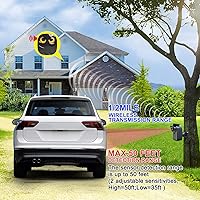
  • Transmission Range: The sensors communicate with the receiver over a wireless range of up to half a mile under open, unobstructed conditions, though actual range will vary based on terrain and obstacles.
  • Detection Range: Motion detection covers up to 50 feet at high sensitivity and approximately 35 feet at low sensitivity, allowing users to tune coverage to their specific environment.
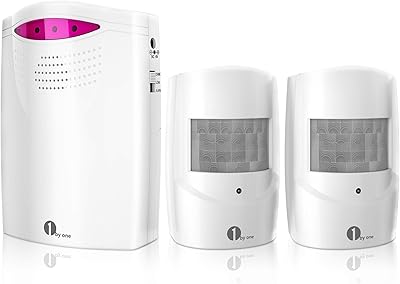
  • Sensors Included: The kit ships with two outdoor passive infrared motion sensors pre-programmed and ready to pair with the included receiver.
  • Receiver Included: One plug-in AC-powered receiver is included, which connects to any standard wall outlet and produces audible alerts when motion is detected.
  • Sensor Power: Each motion sensor requires three AA 1.5V alkaline batteries to operate; batteries are not included in the package.
  • Receiver Power: The receiver draws power directly from a standard AC wall outlet and does not require batteries.
  • Wireless Technology: The system uses FSK combined with frequency-hopping spread spectrum (FHSS) technology to resist interference from other nearby wireless devices.
  • Operating Temperature: The sensors are rated to function in temperatures ranging from -30°F to 150°F, supporting year-round outdoor deployment in most climates.
  • Alert Melodies: The receiver offers 35 selectable alert tones, allowing users to assign a distinct melody to each sensor zone for easy identification.
  • Volume Levels: Receiver alert volume is adjustable across four discrete levels to suit different home sizes and listening environments.
  • Expandability: The system supports expansion up to 32 sensors per receiver, and an unlimited number of additional receivers can be added to the same sensor network.
  • Sensor Mounting: Sensors can be mounted on walls, fence posts, trees, or similar surfaces using the included hardware, with no specialized tools required.
  • Weatherproofing: The sensor housing is weather-resistant and designed for permanent outdoor installation across all seasons.
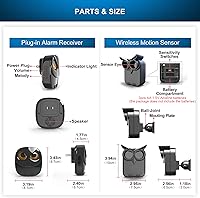
  • Product Dimensions: Each sensor unit measures 3.74″ deep by 2.95″ wide by 3.94″ tall.
  • Item Weight: The complete kit weighs approximately 1.1 pounds including both sensors and the receiver.
  • Sensitivity Settings: Each sensor offers two sensitivity modes — high and low — which adjust the effective detection distance and help reduce nuisance triggers from small animals or wind.
  • Compatibility: Additional HTZSAFE sensors and receivers within the same product family can be paired with this system to extend coverage without replacing existing components.
  • Batteries Included: No batteries are included; three AA alkaline batteries per sensor must be purchased separately before the sensors will operate.

Related Reviews
Qualirey Driveway Alarm Wireless Motion Sensor System
86%
92%
Value for Money
94%
Ease of Installation
89%
Range of Detection
88%
Weather Resistance
85%
Alert Customization
More
1byone Wireless Driveway Motion Sensor Alarm
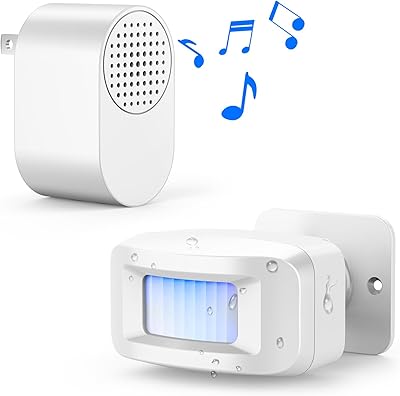
71%
91%
Ease of Setup
67%
Wireless Range
63%
Detection Accuracy
88%
Alert Volume & Clarity
71%
Build Quality
More
FREETIM Wireless Driveway Motion Sensor Alarm System
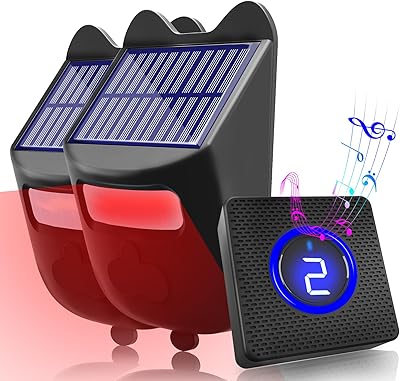
74%
91%
Ease of Setup
78%
Detection Reliability
67%
Wireless Range
72%
Weather Resistance
58%
Battery Life
More
Chesbung Solar Driveway Alarm System
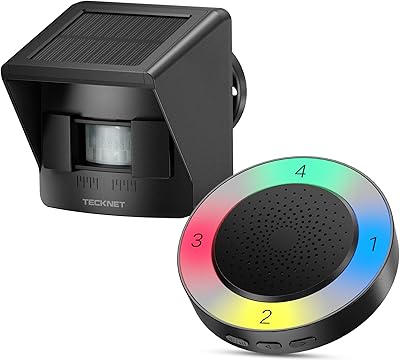
87%
93%
Ease of Installation
88%
Detection Range
90%
Battery Life
85%
Reliability of Motion Detection
87%
Build Quality and Durability
More
TECKNET EMD01001BA01 Solar Wireless Driveway Alarm
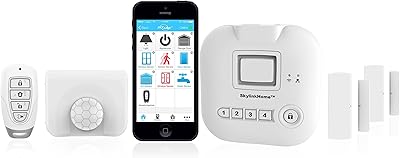
76%
91%
Ease of Setup
74%
Solar Charging Performance
68%
Detection Accuracy
86%
Wireless Signal Range
83%
Alert Customization
More
SKYLINK SK-200 Wireless Alarm System
82%
88%
Ease of Installation
85%
Smartphone App Experience
65%
Motion Sensor Accuracy
91%
Expandability and Flexibility
89%
Battery Life
More
D1D9 GF52 Wireless GSM Home Alarm System
67%
76%
Ease of Installation
71%
GSM Alert Reliability
83%
Siren Volume & Deterrence
58%
Sensor Build Quality
69%
Backup Battery Performance
More
Bistee Wireless Driveway Alarm with Microwave-Infrared Sensor
83%
92%
Wireless Range
88%
Ease of Installation
85%
Motion Detection Performance
80%
Build Quality
89%
Weatherproof Design
More
SKYLINK SK-250 Wireless Home Security Alarm System
75%
88%
Ease of Setup
67%
App Performance
82%
Sensor Reliability
54%
Camera Quality
83%
Smart Home Integration
More
Dakota Alert DCMA-4k Plus Driveway Alarm System
75%
83%
Wireless Range
58%
False Alarm Rate
88%
Battery Life
91%
Ease of Installation
79%
Signal Reliability
More

FAQ

Not really. The sensors arrive pre-programmed, so you mount them to a fence post, wall, or tree using the included hardware, plug the receiver into any wall outlet, and you are done. Most buyers report the whole process takes well under half an hour, even without any prior experience with security equipment.

That depends heavily on your terrain. On flat, open ground with no major obstructions, the half-mile range is achievable. Add hills, dense tree lines, or buildings between the sensor and receiver, and that distance can drop significantly. A good rule of thumb is to expect real-world range to be roughly half the advertised maximum on a typical residential property with moderate obstacles.

Each sensor takes three standard AA alkaline batteries, which are not included in the box. Battery life varies a lot depending on how frequently the sensors trigger and what the temperature is. In mild climates with moderate activity, many users get several months per set. In cold winters, though, drain accelerates noticeably, and some buyers switch to lithium AA batteries for better cold-weather longevity.

Yes, and this is one of the more practical aspects of the system. You can add up to 32 sensors per receiver, and you can also run multiple receivers simultaneously. That means you can start with the two included sensors and expand gradually as your needs grow, without replacing anything you already own.

No, it is not. This is a standalone alert system with no app, no Wi-Fi, and no integration with smart home ecosystems. Alerts are delivered only through the plug-in receiver as an audible tone. If smartphone notifications or voice assistant integration are important to you, you would need to look at a different product category entirely.

You assign a different melody to each sensor zone, so the tone you hear tells you which one fired. With 35 melody options available, there is plenty of variety to keep zones distinct. There is no visual display on the receiver, so the tone system is the only way to differentiate zones — it works well once you get used to it, but it does require a little setup thought upfront.

Probably not constantly, but false triggers from larger animals are a real and frequently reported issue. Switching to the low sensitivity setting raises the detection threshold and helps filter out smaller animals, but a large dog, deer, or even a passing car on a nearby road can still set it off. Mounting height and angle make a meaningful difference too — a bit of experimentation after install usually helps reduce nuisance alerts.

Yes, you can add as many receivers as you want to the same system. All receivers will alert simultaneously whenever a sensor detects motion, so placing one on each floor or in key rooms is a practical way to ensure you catch alerts regardless of where you are in the house. Additional receivers are sold separately.

The housing is weather-resistant and designed for permanent outdoor installation, and the vast majority of buyers report no issues through rain, humidity, and seasonal exposure. It is not rated for submersion, so do not place it somewhere that floods or collects standing water. Beyond that, it holds up well through normal outdoor conditions year-round.

The FSK+FHSS wireless technology is specifically designed to reduce cross-device interference by hopping across frequencies rather than locking onto a fixed channel. In practice, most users in suburban areas with neighbors close by report no interference issues. Extremely dense wireless environments can still cause occasional hiccups, but for typical residential use it is a non-issue.