Overview

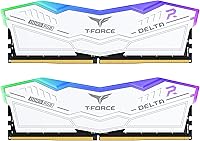
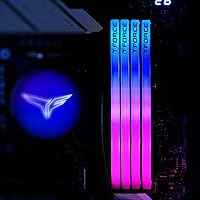
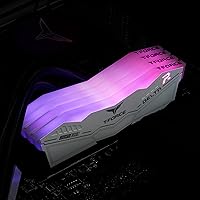
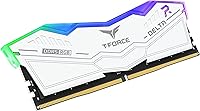
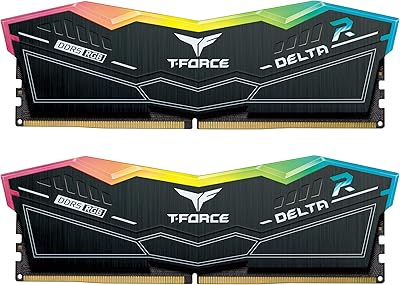
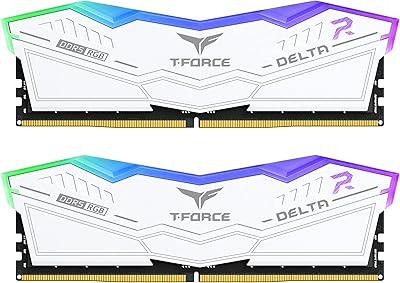
TEAMGROUP T-Force Delta RGB 96GB DDR5 RAM sits in a rare capacity tier that most desktop builders never reach — and that's exactly the point. The 2x48GB configuration isn't for the average user; it's for people who genuinely run out of headroom. At 6800MHz with CL36 timings, this DDR5 kit arrives at strong out-of-box speeds without requiring much from the user. The white finish and RGB diffuser are deliberate choices for builds where aesthetics carry weight. Whether the investment makes sense depends on your workload — and that's what we'll unpack here.

Features & Benefits

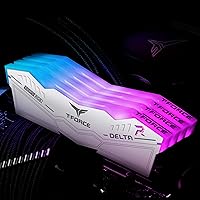
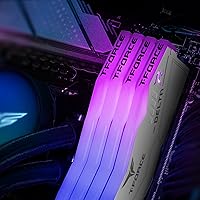
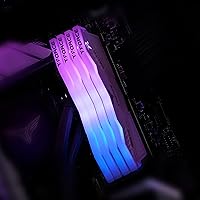
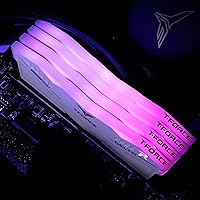
The standout convenience here is XMP 3.0 support, which lets you hit rated speeds with a single toggle in the BIOS — no manual sub-timing adjustments needed. That matters a lot for builders who want high performance without the learning curve of memory overclocking. TEAMGROUP also equips this DDR5 kit with an onboard PMIC for tighter voltage regulation, which contributes to stability at these elevated frequencies. The 120-degree RGB diffuser spreads light evenly across the stick rather than concentrating it in spots, making a visible difference in open cases. On-die ECC, a standard DDR5 feature, adds background error correction that quietly benefits system reliability.

Best For

The T-Force Delta RGB is built specifically for Intel 600/700 series desktop platforms — chipsets that pair with 13th and 14th Gen processors. If you're on AMD Ryzen, stop here; this kit won't help you, and chasing compatibility workarounds isn't worth it. Where it shines is in workstation-adjacent use cases: video editing timelines with heavy multicam layers, 3D scene files that bloat RAM usage fast, or development environments running multiple virtual machines simultaneously. For a gaming-only build, 96GB is overkill. But for a creative workstation that doubles as a high-end gaming rig, the headroom starts to make real sense.

User Feedback

With over 3,700 ratings averaging 4.6 stars, this 96GB memory upgrade earns its reputation among buyers. The most consistent praise focuses on hassle-free XMP activation and RGB quality that looks as good in person as in product photos. Stability after installation gets frequent mentions too, which suggests the PMIC investment pays off in practice. On the critical side, some users report needing a BIOS update before XMP profiles register correctly — a known friction point with DDR5 at high speeds. A smaller number mention fit concerns in tight cases. Overall, the negative feedback is mostly situational rather than indicative of product defects.

Pros

  • XMP 3.0 support means hitting rated speeds is a one-toggle BIOS operation — no manual tuning required.
  • The 96GB capacity handles memory-intensive creative workloads without throttling or swap file dependency.
  • Onboard PMIC contributes to stable voltage delivery, which pays off during extended high-load sessions.
  • At 6800MHz with CL36 timings, this DDR5 kit delivers strong out-of-box performance for its capacity tier.
  • The 120-degree RGB diffuser produces even, wide-coverage lighting rather than hot spots or uneven glow.
  • On-die ECC works quietly in the background, adding a layer of error correction standard to DDR5.
  • With over 3,700 ratings averaging 4.6 stars, real-world reliability holds up well across a large buyer base.
  • The white colorway and clean heatspreader design integrate naturally into neutral or white-themed builds.

Cons

  • Intel 600/700 series exclusivity rules out a large portion of potential buyers before they even check speeds.
  • Some users report needing a BIOS update before XMP profiles are recognized — an extra step that catches people off guard.
  • The price premium over 2x32GB or 2x64GB alternatives is steep for workloads that won't use the full capacity.
  • There is no officially verified IC source, so long-term binning consistency across production batches is unknown.
  • At these speeds, thermal output in dense or restricted airflow cases may require attention to placement.
  • RGB lighting software compatibility is not universal — some motherboard ecosystems sync better than others.
  • The 2x48GB stick format limits upgrade flexibility compared to kits using more common capacity increments.
  • Occasional reports of compatibility friction with specific boards suggest checking QVL lists before buying.

Ratings

The scores below reflect an AI-driven analysis of verified global buyer reviews for the TEAMGROUP T-Force Delta RGB 96GB DDR5 RAM, with spam, incentivized, and bot-flagged submissions actively filtered out before scoring. Each category is weighted against real user experiences across a broad range of system configurations and use cases. Both the genuine strengths and the recurring frustrations are represented transparently — no category has been inflated to flatter the product.

Memory Performance
91%
Buyers running video editing timelines and large 3D scene renders consistently report the 6800MHz speed translating into tangible responsiveness — faster scene loads, smoother RAM-heavy multitasking, and noticeably shorter export queues. The CL36 timings at this frequency drew specific praise from enthusiasts who compared it favorably to slower-clocked alternatives at the same capacity.
A handful of users note that without a proper BIOS update, speeds can default to a much lower JEDEC profile, meaning the rated performance is not always achieved straight out of the box. Real-world gains versus competing 6400MHz kits at the same capacity are narrower than the spec sheet gap might suggest.
XMP Setup Experience
88%
The one-toggle XMP 3.0 activation resonated strongly with builders who are not deep into manual memory tuning. Multiple users described their setup as completely painless — install, enter BIOS, flip the XMP switch, and the kit runs at full speed without any further intervention.
A recurring pattern in lower-star reviews points to boards requiring a firmware update before the XMP profile is recognized at all, which catches some users off guard. On a small number of Z690 boards, users reported the system defaulting back to base speeds after restarts until the BIOS was updated.
System Stability
89%
Long-term stability under sustained workloads is one of this DDR5 kit's most praised traits. Developers and creative professionals running memory-intensive processes for hours at a time — compilation builds, render queues, large dataset operations — report clean, crash-free sessions that give the onboard PMIC design real credibility.
Edge cases around specific motherboard and firmware combinations have produced occasional instability reports that are hard to predict without testing. Users on certain B660 boards noted that achieving stable operation at rated speeds required more BIOS trial and error than expected.
Capacity Value
74%
26%
For users who actually need 96GB — multicam 8K editors, architects running parametric models, or developers managing several simultaneous VMs — the 2x48GB configuration is one of the few consumer options delivering this headroom in a single clean dual-channel kit without resorting to four sticks.
The price premium over a 2x32GB or 2x64GB kit is steep, and for workloads that do not genuinely stress past 64GB, the extra outlay is difficult to rationalize. Several buyers admitted in reviews that they only purchased the 96GB config for future-proofing rather than immediate need, which is a costly way to hedge.
RGB Lighting Quality
87%
The 120-degree diffuser design receives consistent praise for producing a soft, even glow rather than a harsh spotlight effect that some RGB sticks suffer from. Builders with white-themed windowed cases specifically called out how well the lighting integrates without looking garish or mismatched.
RGB software sync reliability varies noticeably by motherboard ecosystem — users on some Gigabyte boards reported the sticks not appearing in RGB Fusion without manual workarounds. A few buyers also noted that the default rainbow cycle cannot be disabled without software, which is a minor annoyance in non-RGB builds.
Build & Heatspreader Quality
84%
The physical construction drew frequent positive comments for feeling solid and well-finished rather than cheap or flimsy. The white heatspreader surface holds its appearance after extended use and does not show fingerprints or discoloration as readily as some competing matte-finish options.
A small number of buyers noticed slight variation in the RGB diffuser panel fitting across sticks in the same kit, though this appears cosmetic rather than functional. The heatspreader height may cause clearance issues with larger air coolers that overhang the DIMM slots on some ATX boards.
Compatibility Range
62%
38%
Within its supported Intel 600 and 700 series ecosystem, the T-Force Delta RGB is broadly well-matched to current-generation platforms and qualified on QVL lists for many popular Z690 and Z790 boards from major manufacturers.
The hard Intel-only limitation is a significant restriction that eliminates this DDR5 kit entirely for AMD Ryzen users, who represent a large share of the enthusiast desktop market. Even within Intel platforms, some older 600 series board revisions required BIOS updates that were not clearly flagged at purchase, leading to frustrating compatibility troubleshooting for unprepared buyers.
Packaging & Unboxing
78%
22%
Most buyers describe the unboxing experience as appropriately premium for the price tier — the sticks arrive in a clearly branded, protective clamshell tray that keeps them secure during shipping. Several users noted the presentation added to the confidence that the product was genuine and handled with care.
A small but consistent thread of reviews mentions sticks arriving with minor cosmetic marks on the heatspreader, suggesting that transit protection could be tighter in some shipping configurations. Nothing that affects function, but noticeable enough that buyers planning to showcase the build found it frustrating.
Thermal Management
81%
19%
Under typical open-air ATX conditions with moderate case airflow, the heatspreader keeps operating temperatures in a comfortable range even during prolonged high-frequency workloads. Users running 24-7 render farms and compilation servers reported no thermal throttling under normal cabinet configurations.
In compact mATX or ITX cases with restricted airflow, a few users observed higher-than-expected DIMM temperatures during extended sustained loads. The heatspreader is not actively cooled, so builds with poor memory slot airflow may benefit from pointing a case fan directly at the sticks.
On-Die ECC Reliability
86%
Users running workstations in professional environments where silent data corruption is a real concern appreciated the DDR5 on-die ECC operating quietly in the background. While most buyers will never notice it directly, the peace of mind for financial modeling, scientific computing, and database workloads is a genuine differentiator over DDR4.
On-die ECC is a DDR5 platform standard rather than a TEAMGROUP-exclusive feature, so it should not be weighted as a unique selling point over competing DDR5 kits. Its benefits are also invisible in consumer gaming or casual use cases, meaning most buyers will never derive tangible value from it.
Installation Experience
83%
The physical installation process is clean and straightforward — standard DIMM slot placement, clear slot orientation, and no unusual fitment quirks reported beyond normal heatspreader height considerations. First-time builders appreciated not having to wrestle with the sticks or apply excessive force.
Dual-channel slot selection remains a stumbling block for some new builders who install in the wrong slots and then troubleshoot what appears to be a performance or stability issue. This is a platform education gap rather than a product defect, but it does show up in lower-star reviews with some regularity.
Long-Term Durability
82%
18%
The lifetime warranty backing and TEAMGROUP's track record in the DDR5 space give buyers reasonable confidence in the product's longevity. Users who have owned earlier T-Force DDR4 kits for several years report that TEAMGROUP's after-sales support is responsive and replacement processes are handled without excessive friction.
DDR5 at this speed and voltage operates closer to its headroom limits than more conservative configurations, which raises theoretical long-term questions about IC degradation at sustained high frequencies. No widespread failure reports exist for this specific kit, but the long-term DDR5 reliability dataset is still relatively young compared to mature DDR4 products.

Suitable for:

The TEAMGROUP T-Force Delta RGB 96GB DDR5 RAM is purpose-built for users whose workloads genuinely push memory limits on a regular basis. Video editors working with 4K or 8K multicam footage, 3D artists managing large scene files, and software developers running multiple virtual machines simultaneously are the clearest beneficiaries — these are tasks where 32GB or 64GB systems noticeably bottleneck, and 96GB provides real breathing room. Enthusiast desktop builders running Intel 13th or 14th Gen processors on 600 or 700 series chipsets will find this DDR5 kit slots in cleanly, especially with XMP 3.0 making the speed configuration practically effortless. It also appeals to builders who care about internal aesthetics: the white finish and broad RGB diffuser make it a natural fit for windowed builds with light or neutral color themes. If you want high capacity and strong out-of-box speed without spending hours in the BIOS, this kit is a coherent, well-rounded choice.

Not suitable for:

TEAMGROUP T-Force Delta RGB 96GB DDR5 RAM is firmly an Intel-only proposition — AMD Ryzen users should look elsewhere entirely, as compatibility is not supported regardless of the motherboard generation. Buyers on older Intel platforms outside the 600 and 700 series chipsets will face the same dead end, so verifying platform support before purchasing is non-negotiable. From a value standpoint, pure gaming builds have no practical use for 96GB; even the most demanding games top out well below that threshold, meaning the extra capacity sits idle and the cost premium brings no performance return. Budget-conscious upgraders comparing this against more conventional 2x32GB or 2x64GB configurations may find it harder to justify the significant price gap unless the workload truly demands it. If your use case is general productivity or casual gaming, this DDR5 kit is simply more kit than you need.

Specifications

  • Capacity: This kit provides 96GB of total memory across two 48GB DDR5 DIMM sticks.
  • Memory Type: Uses DDR5 SDRAM technology, the current-generation standard offering improved bandwidth and efficiency over DDR4.
  • Speed: Rated at 6800MHz (PC5-54400), delivering strong throughput for both productivity and demanding applications.
  • CAS Latency: Operates at CL36 primary timings, which is competitive for DDR5 at this frequency range.
  • Voltage: Runs at 1.4V, within the typical operating range for high-frequency DDR5 consumer kits.
  • Form Factor: Standard DIMM format designed exclusively for desktop motherboards; not compatible with laptops or small form factor SO-DIMM slots.
  • XMP Support: Supports Intel XMP 3.0, enabling automatic one-click speed profile activation directly from the BIOS.
  • Chipset Compatibility: Officially compatible with Intel 600 and 700 series chipsets, covering 12th, 13th, and 14th Gen Intel Core platforms.
  • RGB Lighting: Features a 120-degree ultra-wide diffuser that spreads RGB illumination evenly across the length of each stick.
  • PMIC: Each stick includes an onboard Power Management IC for stable, regulated voltage delivery during sustained high-speed operation.
  • On-Die ECC: Includes on-die error correction code as part of the DDR5 specification, providing passive background memory error mitigation.
  • Color: Available in white, with a heatspreader finish designed to complement neutral and white-themed builds.
  • Dimensions: Each stick measures 5.68 x 0.28 x 1.81 inches, consistent with standard full-height DDR5 DIMM sizing.
  • Weight: The kit weighs 4.2 ounces total, typical for a dual-stick DDR5 configuration with heatspreaders.
  • Brand Series: Part of TEAMGROUP's T-Force Delta RGB lineup, the brand's flagship consumer DDR5 performance series.
  • Release Date: First made available in May 2023, positioning it among the earlier high-capacity DDR5 consumer kits on the market.
  • Model Number: Identified by model number FF4D596G6800HC36DDC01, useful for cross-referencing motherboard QVL compatibility lists.

Related Reviews
TEAMGROUP T-Force Delta RGB 32GB DDR5 RAM
80%
88%
XMP Setup Ease
89%
Speed & Bandwidth
86%
System Stability
91%
RGB Aesthetics
71%
Value for Money
More
TEAMGROUP T-Force Delta RGB DDR5 48GB RAM
82%
88%
XMP Compatibility
91%
Stability & Reliability
84%
Performance at Rated Speed
86%
RGB Lighting Quality
74%
Value for Money
More
TEAMGROUP T-Force Delta RGB DDR5 32GB RAM
83%
88%
Performance at Rated Speed
91%
XMP 3.0 Compatibility
84%
AMD Expo Compatibility
83%
Out-of-Box Setup
89%
Stability & Reliability
More
TEAMGROUP T-Force Delta RGB 32GB DDR5 RAM
80%
91%
Installation Ease
88%
Stability & Reliability
86%
Performance at Rated Speed
84%
RGB Lighting Quality
83%
Thermal Performance
More
TEAMGROUP T-Force Delta Alpha 64GB DDR5 RAM
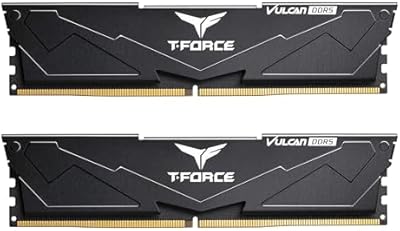
83%
91%
EXPO Activation & Setup
86%
Memory Performance
83%
Platform Compatibility
88%
RGB Lighting Quality
81%
Software Integration
More
TEAMGROUP T-Force Delta RGB 16GB DDR4 RAM
83%
91%
Value for Money
93%
RGB Lighting Quality
88%
Ease of Installation
86%
Performance at Rated Speed
67%
RGB Software Compatibility
More
TEAMGROUP T-Force Vulcan 64GB DDR5 Desktop RAM
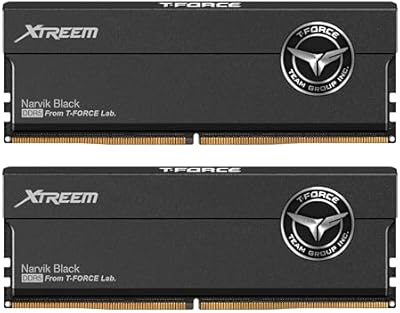
84%
88%
Value for Money
93%
XMP & EXPO Activation
91%
System Stability
72%
Motherboard Compatibility
86%
Build & Physical Quality
More
TEAMGROUP T-Force XTREEM 32GB DDR5 Desktop RAM
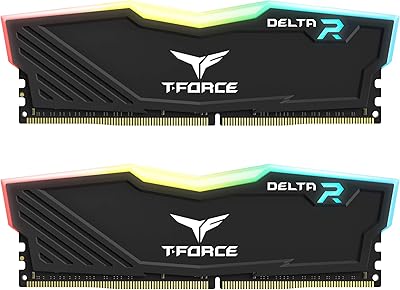
82%
71%
Out-of-Box Compatibility
88%
Rated Speed Performance
86%
System Stability
77%
Value for Money
89%
Platform Versatility
More
TEAMGROUP T-Force Vulcan Alpha DDR5 32GB (2x16GB) 5600MHz RAM
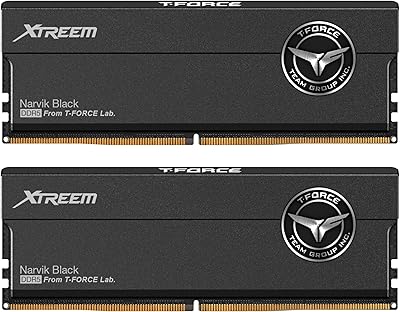
89%
94%
Gaming Performance
89%
Ease of Installation
90%
Compatibility with Intel Systems
91%
Compatibility with AMD Systems
87%
Overclocking Stability
More
TEAMGROUP T-Force Vulcan Alpha DDR5 32GB Desktop RAM
80%
88%
EXPO Setup Experience
71%
Compatibility Range
84%
Value for Money
86%
Stability & Reliability
79%
Thermal Performance
More

FAQ

No, it will not. This DDR5 kit is designed exclusively for Intel 600 and 700 series chipsets. If you are on an AMD Ryzen platform, you will need to look at kits that explicitly list AMD EXPO or Ryzen DDR5 compatibility.

You will need to enable the XMP 3.0 profile in your BIOS — it is usually a single toggle or dropdown selection. The sticks will default to a lower JEDEC speed on first boot, which is normal behavior for DDR5. Some boards may also require a BIOS update to fully recognize the XMP profile, so it is worth checking your motherboard manufacturer's latest firmware before installing.

For most users, honestly, yes — it is overkill. Pure gaming rigs, general productivity machines, and even moderate content creation workflows are well-served by 32GB or 64GB. The 96GB sweet spot is for video editors cutting high-resolution multicam projects, 3D artists working with large scene files, or developers running multiple virtual machines simultaneously. If those scenarios describe your day-to-day, the extra capacity earns its place.

It is strongly advised against mixing different memory kits. DDR5 dual-channel kits are tuned to operate together, and introducing a third-party stick with different timings or ICs can cause instability, boot failures, or force the system to run everything at the slowest common speed. Use this kit on its own in the correct paired slots for best results.

The T-Force Delta RGB supports most major RGB ecosystem software including ASUS Aura Sync, MSI Mystic Light, Gigabyte RGB Fusion, and ASRock Polychrome. You install the relevant software from your motherboard manufacturer and the sticks should appear as controllable devices. Sync quality can vary by board and software version, so checking compatibility on TEAMGROUP's website before purchasing is a smart move.

DDR5 at high frequencies does generate more heat than DDR4, but the heatspreader on the T-Force Delta RGB handles it adequately under normal conditions. In tightly packed cases with limited airflow, you may want to ensure there is some air movement over the memory slots. For the vast majority of standard ATX builds, thermal management is not a concern.

Always refer to your specific motherboard manual, but in most dual-channel Intel configurations the correct slots are A2 and B2 — typically the second and fourth slots from the CPU. Installing in the wrong slots can prevent dual-channel mode from activating, which would reduce memory bandwidth significantly.

TEAMGROUP backs this kit with a limited lifetime warranty, which is standard for their T-Force lineup. If you experience defects or failures under normal use, you can contact TEAMGROUP support directly for a replacement process. Keep your purchase receipt as proof of purchase — it is typically required for warranty claims.

Possibly, depending on your specific ICs and motherboard capability, but results vary widely and are not guaranteed. The kit is rated and validated at 6800MHz with XMP 3.0, and pushing beyond that enters enthusiast overclocking territory where stability, daily usability, and warranty coverage may all be affected. For most buyers, the rated speed is the sensible target.

Yes — the sticks will display a default rainbow cycling effect out of the box without any software installed. You only need software if you want to customize the colors, set static lighting, or sync the effect with the rest of your system.