Overview

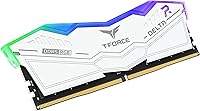
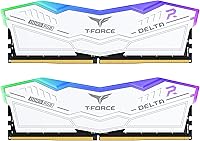
The TEAMGROUP T-Force Delta RGB DDR5 48GB RAM enters the market as a thoughtfully sized kit for Intel platform builders who find 32GB limiting but aren't ready to commit to a full 64GB configuration. The 2x24GB density is worth pausing on — it fills both memory channels while landing at a capacity that suits demanding workloads without the premium of a larger kit. Running at 6400MHz with CL32 latency, it sits comfortably in the upper-mid performance tier. The white heatspreader variant is clearly designed with aesthetically driven builds in mind, and its top-30 ranking in Computer Memory suggests this isn't a niche product — it's proven popular at real scale.
Features & Benefits

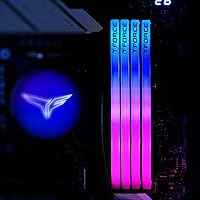
XMP 3.0 support is probably the most practical feature here — enable it in BIOS and this DDR5 kit jumps to its rated 6400MHz without any manual tuning. The M-DIE integrated circuits are a meaningful choice; they're known for stable operation across a wide range of motherboard configurations, which matters when pushing DDR5 at this frequency. Onboard PMICs handle voltage regulation efficiently at 1.35V, reducing thermal stress during sustained loads. The 120-degree RGB diffuser produces genuinely even lighting rather than the hot-spot glow common on cheaper modules. On-die ECC adds a quiet layer of data integrity that most users won't notice until they actually need it.

Best For

This 48GB memory upgrade makes the most sense for Intel 12th, 13th, or 14th gen desktop users on 600 or 700 series chipsets — that's the ecosystem it's tuned for, and AMD builders should look elsewhere since EXPO compatibility isn't part of the picture. It's a natural fit for video editors, 3D artists, and developers who've outgrown 32GB but don't want to overpay for 64GB they won't fully use. The white heatspreader makes it a strong candidate for monochrome themed builds or cases with tempered glass panels. First-time DDR5 buyers will also appreciate how much the XMP process removes the usual installation guesswork.

User Feedback

Across more than 3,600 ratings, the Delta RGB modules hold a 4.6-star average — a solid result for a memory kit, where compatibility issues can drag scores down quickly. The most consistent praise centers on easy XMP activation and stable operation at the rated speed straight out of the box. Build quality earns positive mentions too, with most buyers satisfied with the heatspreader finish on the white variant. That said, a handful of users report needing BIOS updates before hitting 6400MHz on certain boards, which is fairly standard behavior with high-speed DDR5. Warranty and support experiences appear largely uneventful, which is always a quiet reassurance.

Pros

  • XMP 3.0 activation brings this DDR5 kit to 6400MHz with a single BIOS toggle — no manual tuning required.
  • M-DIE ICs are known for solid stability across a wide range of Intel motherboards, reducing compatibility anxiety.
  • The 2x24GB configuration fills both memory channels and hits 48GB without the premium of a 64GB kit.
  • On-die ECC quietly protects data integrity during sustained workloads — a feature rarely found at this price tier.
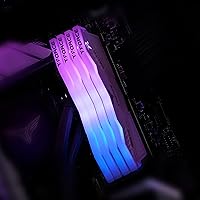
  • The 120-degree RGB diffuser produces even, consistent lighting without the patchy glow common on budget modules.
  • Onboard PMICs keep voltage regulation efficient at 1.35V, which matters for thermals during long sessions.
  • A 4.6-star average across thousands of real buyer ratings signals broad, consistent satisfaction.
  • Most users report successfully hitting the rated speed straight from box with a compatible Intel board.
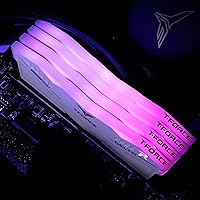
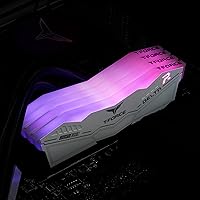
  • The white heatspreader finish is clean and well-executed — a genuinely good-looking module for themed builds.

Cons

  • No AMD EXPO support — Ryzen builders should look elsewhere for guaranteed rated-speed compatibility.
  • Some users report needing a BIOS update before the board recognizes 6400MHz, which can frustrate first-time builders.
  • CL32 latency, while solid, is not competitive for users who prioritize tight timings over raw frequency.
  • The 48GB capacity may feel limiting sooner than expected for workloads like large VM stacks or pro audio sample libraries.
  • RGB sync software compatibility varies — not every lighting ecosystem integrates without friction.
  • The kit is only available as a desktop DIMM, so laptop or small-form-factor builds are completely excluded.
  • Buyers who do not care about aesthetics are paying a premium for RGB hardware they will never use.
  • At this density and speed, pricing is higher than budget DDR5 options that perform similarly in everyday tasks.

Ratings

The scores below reflect AI analysis of thousands of verified buyer reviews for the TEAMGROUP T-Force Delta RGB DDR5 48GB RAM, with spam, bot activity, and incentivized feedback actively filtered out to protect the integrity of each result. Every category captures what real users across Intel desktop builds genuinely experienced — from first boot to months of daily use. Both the strengths that earned repeat praise and the friction points that drew legitimate criticism are transparently represented in every score.

XMP Compatibility
88%
The vast majority of buyers on Intel 600 and 700 series boards report that enabling XMP 3.0 in the BIOS is the only step needed to reach the full 6400MHz — no manual timing adjustments, no trial and error. For builders who aren't comfortable deep in BIOS settings, this one-click experience is a genuine confidence booster.
A meaningful minority of users, particularly those on older Z690 boards with outdated firmware, needed a BIOS update before the XMP profile posted stably. This is not unique to this kit, but it does mean the out-of-box experience isn't universally frictionless.
Stability & Reliability
91%
Once seated and running at the rated profile, the Delta RGB modules earn consistently positive feedback for rock-solid daily stability. Users running sustained workloads — long video renders, multi-hour gaming sessions, overnight backups — rarely report crashes or memory errors attributable to the kit itself.
A small number of reviews describe intermittent instability that required loosening subtimings or dropping to 6000MHz to resolve, often on boards at the edge of the compatibility list. These cases appear isolated rather than systemic, but they are worth factoring in for edge-case board configurations.
Performance at Rated Speed
84%
At 6400MHz with CL32, this 48GB memory upgrade delivers throughput that meaningfully improves render times, large file operations, and application load times compared to slower DDR5 kits. Content creators working with high-resolution timelines in Premiere or DaVinci Resolve will notice the bandwidth headroom in practice.
The CL32 primary latency, while acceptable for this frequency class, puts the kit behind tighter-timed alternatives in latency-sensitive benchmarks. Competitive overclockers chasing the lowest possible latency numbers will find the secondary and tertiary timings leave room for improvement without manual tuning.
RGB Lighting Quality
86%
The 120-degree diffuser genuinely distributes light evenly across the full module length, which is more than can be said for many competing kits that show obvious gaps or bright spots near the LED strip. Users building white or windowed cases specifically cite the lighting as a visual highlight of their finished build.
RGB sync reliability varies depending on the motherboard software ecosystem in use. Some users report that effects occasionally desync after a system restart, requiring a software re-launch to restore the chosen profile — a minor but recurring irritation in longer-term use.
Value for Money
74%
26%
For buyers who specifically need the 48GB capacity tier, this DDR5 kit sits at a reasonable position relative to what comparable 2x24GB kits from other brands command. The inclusion of on-die ECC, onboard PMICs, and premium ICs means the price reflects real engineering investment rather than pure brand markup.
Buyers who only need 32GB will find equally stable DDR5 kits at noticeably lower prices, making the cost harder to justify purely on performance grounds. Those who don't use or care about RGB are also effectively paying for aesthetic hardware they have no use for.
Build Quality & Finish
83%
The white heatspreader finish is clean and consistent across both sticks, with users noting that the aluminum feels solid rather than lightweight or plasticky. For builds where the DIMM slots are visible through a side panel, the physical presentation holds up well next to premium components.
The painted heatspreader surface picks up fingerprints during installation, and a few users report minor cosmetic scuffs on arrival from packaging contact. These are surface-level concerns that don't affect function, but buyers putting together a showcase build may find them mildly disappointing.
Motherboard Compatibility
79%
21%
The kit's M-DIE ICs and certified XMP 3.0 profile give it a broad compatibility record across the Intel 600 and 700 series ecosystem, covering Z690, Z790, B660, and B760 boards from all major motherboard vendors. Most users slot these in without consulting a compatibility list and it simply works.
AMD platform users are entirely excluded from the rated-speed experience, and even within Intel boards, a handful of H-series and entry B-series boards have shown inconsistent results at 6400MHz. Buyers on non-Z chipset boards should verify QVL listings before committing.
Installation Experience
89%
Physical installation is straightforward — standard DIMM slots, no unusual clearance issues with typical coolers, and the kit ships in secure packaging that keeps the modules protected. Builders report the whole process from unboxing to first boot taking under ten minutes on a prepared system.
A small number of users on very first DDR5 builds were caught off guard by the need to manually enable XMP in the BIOS after installation, having assumed the kit would run at advertised speeds automatically. This is an industry-wide DDR5 education gap rather than a product flaw, but it does generate occasional one-star reviews from frustrated newcomers.
Thermal Management
77%
23%
The onboard PMICs do meaningful work in regulating voltage delivery, and the heatspreader provides adequate passive cooling for typical daily workloads including gaming, browsing, and light content creation. Cases with reasonable airflow across the DIMM area keep module temperatures well within spec.
Under sustained heavy memory loads in a poorly ventilated case, temperatures on DDR5 modules with onboard PMICs can climb higher than DDR4 equivalents. Users with tight mid-tower builds and limited airflow across memory slots may want to monitor DIMM temperatures and consider adding targeted case fan coverage.
Capacity Usefulness
85%
The 48GB total hits a practical sweet spot for professionals running memory-hungry applications alongside background tasks — think Lightroom with a large catalog open, a browser with thirty tabs, and a Slack workspace all running simultaneously without the system reaching for the page file.
Pure gaming use cases rarely push past 32GB under current titles, which means casual gamers building a straightforward gaming rig are paying for capacity they may not use for years. The value of 48GB is genuinely workload-dependent and less universal than marketing might suggest.
Software Ecosystem
71%
29%
The modules connect to the major RGB control platforms — ASUS Aura Sync, MSI Mystic Light, Gigabyte RGB Fusion — allowing unified lighting across a full build without juggling multiple apps. Out of the box with no software, the default rainbow cycle runs reliably without any configuration required.
Software sync stability is inconsistent enough to surface repeatedly in user reviews, with some reporting that lighting profiles reset or lose sync after updates to motherboard firmware or RGB software. TEAMGROUP's own lighting utility is functional but less polished than the native motherboard software ecosystems.
Packaging & Unboxing
78%
22%
The retail packaging is sturdy and presents the white modules cleanly, which matters for buyers who enjoy the unboxing experience or are purchasing the kit as part of a gifted build. Both sticks arrive seated in individual protective trays rather than loose in foam.
A small number of buyers have flagged cosmetic issues with heatspreader contact marks from packaging material, suggesting the tray design could use refinement for the finish on the white variant specifically. Functional integrity is never affected, but the premium aesthetic expectation makes cosmetic arrivals a sore point.
On-Die ECC
82%
18%
The presence of on-die ECC is a genuinely underappreciated feature at this tier — it transparently corrects single-bit memory errors in the background, which matters for stability during prolonged workstation-style tasks like compiling code or processing large datasets over many hours.
On-die ECC is not the same as full server-grade ECC and is not surfaced to the operating system as a correctable error count, so users cannot actively monitor its activity. For most buyers this is invisible infrastructure, which means its value is only felt in the absence of problems rather than as an active observable benefit.

Suitable for:

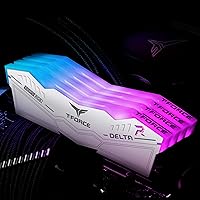
The TEAMGROUP T-Force Delta RGB DDR5 48GB RAM is built for Intel desktop users who have outgrown 32GB but want to avoid the significant cost jump that comes with a 64GB configuration. The 2x24GB layout is a smart middle ground — it preserves dual-channel operation while delivering a capacity that genuinely handles memory-intensive workloads like video editing, large Lightroom catalogs, browser-heavy development environments, and multitasking across demanding applications simultaneously. Gamers running modern open-world titles alongside streaming software and Discord will notice real headroom here. It's also a strong first DDR5 kit for builders upgrading from DDR4 who want XMP to just work without spending an afternoon in the BIOS. The white heatspreader makes it an obvious pick for anyone building around a light or monochrome aesthetic, particularly in cases with side panels where the RGB output is actually visible.
Not suitable for:

The TEAMGROUP T-Force Delta RGB DDR5 48GB RAM is firmly off the table for AMD platform builders — it carries no EXPO certification, and while it may post at JEDEC defaults, you won't get the advertised 6400MHz on a Ryzen system without significant manual tuning that isn't guaranteed to succeed. Users who need maximum memory bandwidth above all else may want to look at kits with tighter sub-timings, since the CL32 latency is respectable but not class-leading for competitive overclocking. If your workload genuinely demands 64GB or more — think large virtual machines, heavy sample libraries in music production, or professional 3D rendering — this kit's capacity ceiling will become a real limitation. Budget-focused builders who just need reliable daily performance and don't care about RGB or aesthetics can likely find a no-frills DDR5 kit at a lower price point that serves the same functional purpose.
Specifications

  • Capacity: This kit provides 48GB of total memory across two modules, each carrying 24GB, filling both memory channels on compatible Intel desktop motherboards.
  • Memory Type: Built on the DDR5 SDRAM standard, operating at a base JEDEC frequency before jumping to 6400MHz when XMP 3.0 is enabled in the BIOS.
  • Speed: Rated at 6400MHz (PC5-51200), placing this DDR5 kit in the upper-mid performance tier for Intel platform desktop builds.
  • CAS Latency: Primary latency is CL32, which represents a practical balance between high clock frequency and real-world memory responsiveness across varied workloads.
  • Voltage: Operates at 1.35V, managed by onboard Power Management ICs that regulate delivery efficiently to reduce thermal output under sustained load.
  • IC Type: Modules use M-DIE integrated circuits, selected for their established reputation for stability and compatibility across a wide range of Intel 600 and 700 series motherboards.
  • XMP Support: Fully certified for Intel XMP 3.0, allowing one-click activation of the rated 6400MHz profile directly from the BIOS without any manual timing adjustments.
  • On-Die ECC: On-die error-correcting code is present on each module, providing a background layer of data integrity protection that operates transparently during normal use.
  • PMIC: Each module is equipped with a dedicated Power Management IC, which handles voltage regulation onboard rather than relying solely on the motherboard's power delivery.
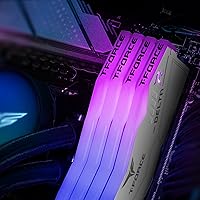
  • RGB Lighting: Features a 120-degree ultra-wide diffuser that spreads RGB illumination evenly across the full length of the heatspreader, minimizing the hot-spots common on narrower diffuser designs.
  • Software Sync: Compatible with major RGB lighting control ecosystems, allowing the modules to be synchronized with other components through supported motherboard software platforms.
  • Form Factor: Standard desktop DIMM form factor, physically measuring 5.68 x 0.28 x 1.81 inches and weighing 4.2 ounces per module.
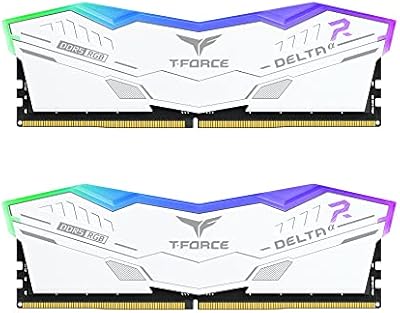
  • Color: Available in a white heatspreader finish, designed for builders constructing light-themed or monochrome PC builds with windowed or open-frame cases.
  • Chipset Support: Officially compatible with Intel 600 and 700 series chipsets, covering 12th, 13th, and 14th generation Intel Core desktop processor platforms.
  • Configuration: Ships as a dual-module kit in a 2x24GB arrangement, which is a less common density split designed to hit 48GB while maintaining true dual-channel memory operation.
  • Brand & Series: Manufactured by TEAMGROUP under the T-Force Delta DDR5 product line, a series positioned at the enthusiast segment with a focus on aesthetics and performance reliability.

Related Reviews
TEAMGROUP T-Force Delta RGB 32GB DDR5 RAM
80%
88%
XMP Setup Ease
89%
Speed & Bandwidth
86%
System Stability
91%
RGB Aesthetics
71%
Value for Money
More
TEAMGROUP T-Force Delta RGB DDR5 32GB RAM
83%
88%
Performance at Rated Speed
91%
XMP 3.0 Compatibility
84%
AMD Expo Compatibility
83%
Out-of-Box Setup
89%
Stability & Reliability
More
TEAMGROUP T-Force Delta RGB 32GB DDR5 RAM
80%
91%
Installation Ease
88%
Stability & Reliability
86%
Performance at Rated Speed
84%
RGB Lighting Quality
83%
Thermal Performance
More
TEAMGROUP T-Force Delta Alpha 64GB DDR5 RAM
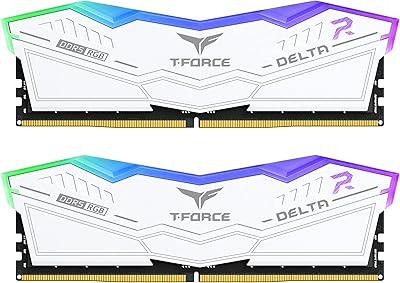
83%
91%
EXPO Activation & Setup
86%
Memory Performance
83%
Platform Compatibility
88%
RGB Lighting Quality
81%
Software Integration
More
TEAMGROUP T-Force Delta RGB 96GB DDR5 RAM
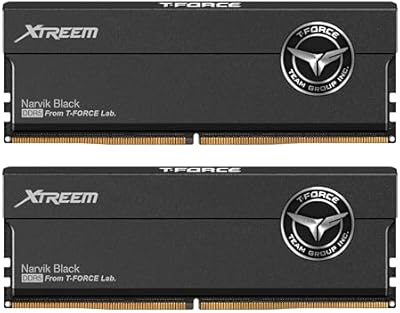
82%
91%
Memory Performance
88%
XMP Setup Experience
89%
System Stability
74%
Capacity Value
87%
RGB Lighting Quality
More
TEAMGROUP T-Force Delta RGB 16GB DDR4 RAM
83%
91%
Value for Money
93%
RGB Lighting Quality
88%
Ease of Installation
86%
Performance at Rated Speed
67%
RGB Software Compatibility
More
TEAMGROUP T-Force Vulcan 64GB DDR5 Desktop RAM
84%
88%
Value for Money
93%
XMP & EXPO Activation
91%
System Stability
72%
Motherboard Compatibility
86%
Build & Physical Quality
More
TEAMGROUP T-Force XTREEM 32GB DDR5 Desktop RAM
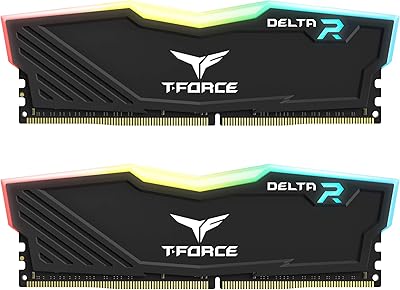
82%
71%
Out-of-Box Compatibility
88%
Rated Speed Performance
86%
System Stability
77%
Value for Money
89%
Platform Versatility
More
TEAMGROUP T-Force Vulcan Alpha DDR5 32GB (2x16GB) 5600MHz RAM
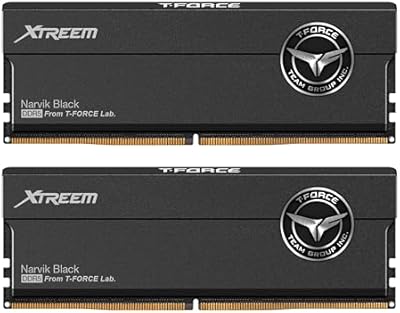
89%
94%
Gaming Performance
89%
Ease of Installation
90%
Compatibility with Intel Systems
91%
Compatibility with AMD Systems
87%
Overclocking Stability
More
TEAMGROUP T-Force XTREEM DDR5 32GB (2x16GB) 7600MHz
87%
94%
Performance
91%
Stability & Reliability
88%
Ease of Installation
89%
Heat Dissipation
93%
Overclocking Capability
More

FAQ

You need to enable XMP 3.0 in your BIOS manually — it does not activate by default. On most Intel 600 and 700 series boards this is a single setting toggle, and the vast majority of users report hitting the full 6400MHz without any additional tuning after that.

Not at the rated speed. This DDR5 kit supports Intel XMP 3.0, but AMD uses a different overclocking standard called EXPO, which these modules do not carry. You can install them in an AMD system and they will run at base JEDEC speeds, but you won't reliably reach 6400MHz on a Ryzen platform.

The 2x24GB split is a deliberate middle-ground density choice. It keeps you in dual-channel mode — which is important for memory bandwidth — while landing at 48GB total, a capacity that suits demanding workloads without the cost of a full 64GB kit. It's a less common configuration, but technically it works exactly the same as any other dual-stick setup.

It depends on your board and how old its current firmware is. Some users, particularly on older Z690 boards, have needed a BIOS update before the system would post stably at 6400MHz. It's worth checking your motherboard manufacturer's memory compatibility list before installing, just to avoid surprises.

The modules measure 1.81 inches tall, which is a fairly standard DDR5 heatspreader height. Most tower air coolers and all-in-one liquid coolers should clear these without any problem, but if you're running a particularly wide cooler with a low-profile overhang, it's worth double-checking the clearance spec for your specific cooler model.

The lighting will still function without any software — it defaults to a running RGB cycle out of the box. To sync it with other components or customize effects, you'll need your motherboard's RGB control software, such as ASUS Aura Sync or MSI Mystic Light, depending on your platform.

For pure gaming, 32GB is still more than enough for most titles today. Where this 48GB memory upgrade earns its place is in situations where you're gaming while streaming, running a browser with many tabs, or keeping a video editing project open in the background. If your PC doubles as a workstation, the extra headroom is genuinely useful rather than just a spec on paper.

TEAMGROUP does sell individual modules in some configurations, but getting an exact replacement that matches the IC binning and XMP profile of your current kit can be tricky. It's generally better to contact TEAMGROUP support directly in a failure scenario, as the kit carries a warranty and a matched replacement is the safest path to maintaining stable dual-channel operation.

DDR5 modules in general run warmer than DDR4, and the onboard PMICs contribute to that. The Delta RGB heatspreader does a reasonable job of passive dissipation for everyday use. If you're running sustained memory-intensive tasks for hours in a warm case, good airflow across the DIMM slots will help — active RAM cooling fans exist but are rarely necessary for typical use.

The finish is a painted aluminum heatspreader, so it can pick up light fingerprints during installation. Most users report it looks clean once seated and untouched inside a build. If you're handling the modules during a later reinstall, holding them by the edges rather than the face of the heatspreader keeps the finish in better shape long-term.