
Overview
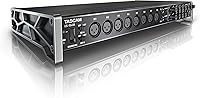
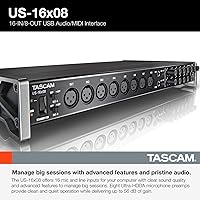
The Tascam US-16x08 serves as a versatile hub designed specifically for those complex multi-mic recording sessions that usually require much more expensive hardware. Its industrial design stands out immediately due to the angled side panels, which make the controls much easier to reach when the unit sits on a desk. This clever ergonomic touch is a welcome change from standard flat boxes. While it fits perfectly into a professional 19-inch setup using the included removable rack ears, it feels just as at home in a temporary desktop environment. This 16-channel unit effectively bridges the gap between basic entry-level interfaces and high-end studio consoles, offering a massive amount of connectivity without the typical high-end price tag. It is a rugged, metal-chassis workhorse built for serious duty.
Features & Benefits
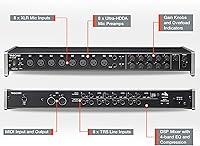
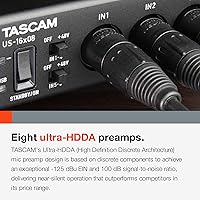
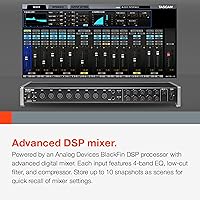
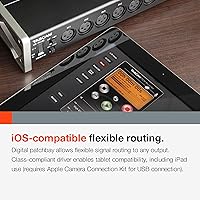
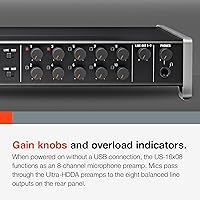
At the heart of this rackmount interface are eight Ultra-HDDA preamps that deliver remarkably transparent gain for both dynamic and sensitive condenser microphones. Beyond the physical inputs, the internal onboard DSP processing is a standout feature, allowing you to apply EQ and compression during tracking without taxing your computer CPU. This is particularly useful for setting up a polished monitor mix. Speaking of monitoring, the zero-latency direct monitoring capability ensures that performers hear themselves in real time, which is crucial for a natural performance. The rear panel is packed with extensive I/O options for complex routing to outboard gear or multiple monitor sets. Managing your levels is straightforward too, thanks to independent volume pots for both the headphones and the master outputs.
Best For
This USB recording hub is an ideal choice for home producers who need to track full drums using eight or more microphones simultaneously. Capturing a cohesive kit sound requires high input counts that most portable interfaces simply cannot provide. It is also a fantastic solution for small bands that want to record live rehearsal sessions in a single take, preserving the energy of a room performance. Project studios filled with hardware synthesizers and drum machines will appreciate the high count of line inputs, allowing everything to stay patched in and ready to record. Ultimately, it caters to budget-conscious creators who prioritize a high input-to-dollar ratio and need reliable, stable drivers for consistent performance on both Windows and Mac operating systems.
User Feedback
Many owners frequently highlight the rugged metal chassis and long-term durability as major selling points, noting that the unit feels built to last through years of studio use. The preamps receive consistent praise for providing plenty of clean headroom, even when paired with power-hungry microphones that usually require external boosters. However, some users have mentioned a slight learning curve when navigating the software mixing interface for the first time, as the routing options can be a bit deep. Despite this, the general consensus remains overwhelmingly positive. It is widely cited by the community as the best value for money in the high-input category, especially for those who need professional features without the steep investment typical of major studio brands.
Pros
- Provides sixteen simultaneous inputs, offering the best input-to-dollar ratio in its class for large-scale recording.
- The eight Ultra-HDDA preamps deliver surprisingly clean gain with very low noise, even for sensitive condenser microphones.
- Distinctive angled side panels tilt the controls upward, making desktop gain adjustments much more ergonomic.
- Includes dedicated MIDI In and Out ports to easily integrate vintage hardware without extra adapters.
- Onboard DSP processing allows for EQ and compression on monitor mixes without taxing the host computer CPU.
- The heavy-duty metal chassis is built to withstand the rigors of frequent transport between studio and rehearsal spaces.
- Comes with removable rack ears, allowing for easy transition between desktop use and permanent 19-inch rack installation.
- Independent volume controls for headphones and master outputs provide quick and easy monitoring management.
Cons
- The software mixer interface has a dated aesthetic and a learning curve that may frustrate new users.
- Lacks optical expansion ports like ADAT, meaning you cannot easily increase the channel count in the future.
- The front panel lacks detailed LED metering, making it harder to monitor input levels from a distance.
- External power is required via a wall adapter, which limits its portability compared to bus-powered interfaces.
- Some users report that the headphone output lacks sufficient power to drive high-impedance studio headphones at high volumes.
- Initial driver installation on certain Windows systems can be finicky and may require manual troubleshooting of USB settings.
- The Tascam US-16x08 has a fairly large physical footprint that might be cumbersome for smaller, cramped workspaces.
- Accessing the rear-mounted MIDI and line inputs can be difficult once the unit is mounted in a deep rack.
Ratings
Our specialized analysis of the Tascam US-16x08 synthesizes thousands of verified owner experiences worldwide while filtering out incentivized or low-quality feedback to ensure absolute transparency. These scores reflect the raw reality of using this 16-channel unit in demanding home and project studio environments, highlighting both its robust professional strengths and the common technical hurdles faced by real creators.
Input Count & Versatility
Preamp Clarity
Build Durability
Value for Money
Desktop Ergonomics
DSP Software Interface
Driver Stability
Monitoring Flexibility
MIDI Connectivity
Latency Performance
Instrument Inputs
Suitable for:
The Tascam US-16x08 is a specialized tool for home producers and small bands who need to capture complex, multi-microphone setups on a strict budget. It is particularly effective for tracking full drum kits, as the eight onboard preamps allow for a level of detail usually reserved for much more expensive studio setups. Project studios that rely heavily on hardware synthesizers and drum machines will also find this 16-channel unit invaluable for keeping all their gear patched in and ready for immediate recording. Its rugged construction and stable drivers make it a reliable centerpiece for anyone moving from a basic two-channel setup into serious multi-track production.
Not suitable for:
This interface is likely overkill for solo podcasters, singer-songwriters, or voice-over artists who only ever record one or two tracks at a time. The Tascam US-16x08 is a large, rackmount-oriented device that takes up significant desk real estate, making it a poor choice for minimalist setups or creators who need a highly portable, bus-powered solution for travel. Additionally, professionals who require high-end features like ADAT optical expansion or advanced front-panel metering may find the simplified interface and reliance on software control too limiting for high-stakes commercial sessions. If you do not plan on recording more than four microphones simultaneously, the extra inputs simply add unnecessary bulk to your workflow.
Specifications
- Total Input Count: The unit features sixteen independent inputs for simultaneous multi-track recording.
- Microphone Preamps: Eight high-quality Ultra-HDDA preamps provide clean gain for dynamic and condenser microphones.
- Analog Outputs: Eight balanced line outputs allow for complex monitoring and outboard gear routing.
- Recording Resolution: Supports high-resolution audio capture at up to 96kHz and 24-bit depth.
- Preamplifier Gain: Each of the eight microphone inputs offers up to 56dB of available gain.
- Digital Connectivity: Connects to Windows or Mac computers via a standard USB 2.0 hardware interface.
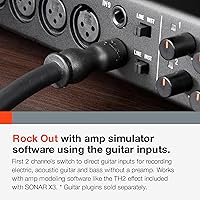
- Instrument Inputs: Two front-panel 1/4" inputs can be switched to high-impedance mode for direct guitar or bass recording.
- MIDI Interface: Includes dedicated 5-pin MIDI Input and Output ports for external controller integration.
- DSP Capabilities: An internal digital signal processor provides 4-band EQ and compression for low-latency monitor mixes.
- Rack Mounting: The 1U sized chassis includes removable metal rack ears for standard 19-inch studio installations.
- Desktop Design: Angled bio-cell side panels provide a natural tilt for easier desktop visibility and control access.
- Product Weight: The entire 16-channel unit weighs approximately 6.11 pounds.
- Physical Depth: The chassis depth measures 11.34″ to fit comfortably on most desks or in shallow racks.
- Physical Width: The total width of the unit is 22.09″ when measuring from the outer edges of the side panels.
- Physical Height: The unit stands 5.04″ tall, providing ample space for front-panel gain knobs and indicators.
Related Reviews
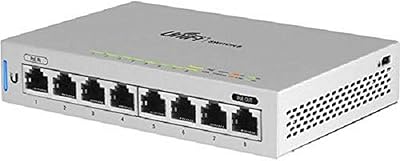
Ubiquiti UniFi US-8 8-Port Network Switch
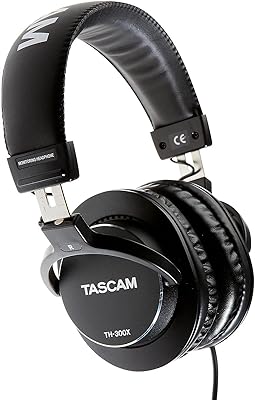
Tascam TH-300X Studio Headphones
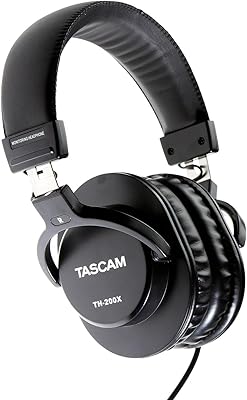
Tascam TH-200X Studio Headphones

Tecaki X5OTD Portable Projector
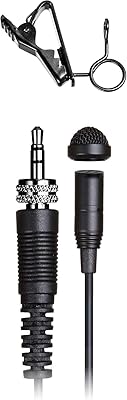
Tascam TM-10LB Lavalier Microphone
Tascam TM-80

US Organic Sesame Seed Oil 4oz

Ubiquiti LiteAP AC LAP-120 Sector Access Point
Solareye X1 Electric Air Duster