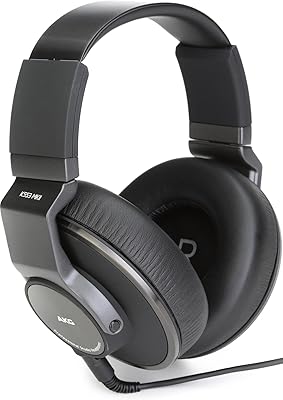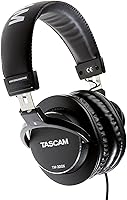
Overview

The Tascam TH-300X Studio Headphones represent Tascam's push into the monitoring headphone space — a brand better known for recorders and audio interfaces than ear gear. That background matters, though. When a company that builds recording equipment designs a pair of headphones, the tuning tends to prioritize accuracy over hype, not the pumped-up bass response you'd find in consumer pairs. This closed-back, over-ear design targets home studio users and semi-pros who want honest sound without spending a fortune. With a frequency range stretching from 10Hz to 26kHz, these studio headphones aim to cover the full audible spectrum — and then some.

Features & Benefits

The closed-back design is where the TH-300X earns its keep in a real recording setup. Pop these on during a vocal take and the passive isolation keeps your mic feed clean — no bleed from the headphone mix sneaking into the condenser. The large dynamic drivers deliver a balanced, full-range sound that holds up across bass, mids, and treble without obviously favoring any one range. The retractable, tangle-free cable is a small quality-of-life win in a messy studio, and the included adapter means you can plug straight into an audio interface without hunting for a converter. At just over 14 ounces, this closed-back pair won't wear you down mid-session.

Best For

These studio headphones are a natural fit for home studio beginners — someone stepping up from consumer earbuds and realizing they need something that tells the truth about their recordings. Podcasters and voice-over artists will appreciate the isolation during takes, and producers working off a laptop rig will find the setup genuinely convenient. Where the TH-300X is less ideal is deep critical mixing work; these are more honest tracking headphones than precision mixing tools. If you're chasing a flat response for final mix decisions, you'll likely want to spend more. But for everyday recording tasks and long comfortable sessions, they punch above their price tier.

User Feedback

Buyers consistently point to sound clarity and comfort as the standout positives — many note they're surprised by the accuracy at this price point, and extended wear rarely causes fatigue. Podcasters in particular seem happy with how well the isolation holds up in practice. On the flip side, some long-term owners have flagged concerns about build durability, specifically around the cable and hinge points showing wear over time. A few buyers coming from the Audio-Technica ATH-M20x found the two headphones closely matched in performance, suggesting the TH-300X holds its own against direct competition. The consensus is consistent: strong value for tracking and monitoring, less convincing for anyone needing mixing-grade precision.

Pros

  • Closed-back design provides solid passive isolation that keeps mic bleed under control during vocal and instrument tracking.
  • Sound tuning leans toward accuracy rather than consumer-style bass boost, making recordings easier to evaluate honestly.
  • Comfortable enough for multi-hour sessions thanks to padded leatherette ear cups and an adjustable headband.
  • The retractable cable keeps your studio desk tidy and reduces the frustration of tangled cords mid-session.
  • Includes a 3.5mm-to-6.35mm adapter, so these studio headphones work straight out of the box with audio interfaces.
  • Lightweight at just over 14 ounces, which helps during extended wear without neck or ear fatigue.
  • Inline volume control lets you quickly adjust monitoring levels without reaching for your interface or mixer.
  • Competitive sound quality relative to similarly priced rivals like the Audio-Technica ATH-M20x, making the TH-300X a credible option in its class.
  • Broad frequency range helps capture both the low-end rumble and high-frequency detail of a recording.
  • Tascam's recording-focused background means the tuning philosophy targets studio utility, not hyped consumer appeal.

Cons

  • Build quality concerns have surfaced among long-term users, particularly around hinge durability and cable wear over time.
  • Faux leather ear pads may cause discomfort or heat buildup during sessions in warmer environments.
  • Not suitable for final mixing decisions — the sound signature lacks the clinical flatness that reference-grade headphones provide.
  • The plastic construction feels less premium than the price point might lead some buyers to expect.
  • Passive isolation, while useful for tracking, does not approach the level of active noise-cancelling headphones for noisy environments.
  • The inline volume control uses a touch-style mechanism that some users may find imprecise compared to a physical dial.
  • No carrying case with hard protection is included, making transport riskier for gigging musicians.
  • Buyers seeking a significant upgrade path within the Tascam headphone line may find options limited compared to rival brands.

Ratings

The Tascam TH-300X Studio Headphones have been scored by our AI system after parsing verified buyer reviews from global markets, with spam, bot activity, and incentivized feedback actively filtered out. The scores below reflect what real users consistently praised and where they ran into genuine frustration — nothing is glossed over. From tracking session performance to long-term durability, these ratings give you a transparent, data-driven picture before you commit.

Sound Accuracy
78%
22%
For the price tier, the TH-300X delivers a surprisingly honest representation of recorded audio. Home studio users regularly note that switching from consumer headphones to this closed-back pair immediately reveals mix details they were missing — subtle reverb tails, low-mid muddiness, and transient clarity all become more apparent.
The sound signature isn't ruler-flat, which matters when buyers use these for mixing decisions. Some users noted a slight warmth in the low-mids that can mislead during critical EQ work, making the TH-300X more trustworthy for tracking than for finalizing a mix.
Passive Isolation
82%
18%
The closed-back design does genuine work in home recording environments. Vocalists and podcasters report that headphone bleed into condenser mics is kept firmly under control, and the over-ear seal reduces enough ambient noise to keep performers focused during takes.
Isolation has its limits — users in louder environments like shared apartments or home offices with HVAC noise report that some sound still bleeds through at lower listening volumes. It performs well for a passive design but shouldn't be compared to active noise-cancelling headphones.
Comfort & Wearability
76%
24%
The padded leatherette ear cups and adjustable headband make two-to-three-hour sessions manageable without significant pressure points. Multiple buyers specifically mention wearing these through full podcast recording sessions or long practice runs without needing to take them off.
Leatherette is a heat trap. In warmer rooms or during summer months, users report noticeable heat and moisture buildup around the ears after extended wear. The faux leather also shows wear over time, with a few long-term owners noting cracking or peeling after heavy daily use.
Build Quality
61%
39%
The headphones feel solid enough out of the box, and the lightweight plastic construction keeps overall weight low, which helps during long sessions. At this price point, the initial build quality is competitive with direct rivals like the Audio-Technica ATH-M20x.
Durability over time is the most consistent criticism in user feedback. Hinge points and the cable connection area are the most frequently reported failure zones, with some owners noting issues within a year of regular use. The plastic construction gives a budget feel that doesn't inspire confidence for heavy-duty daily use.
Cable Design
84%
The retractable, tangle-free cable is a practical win for studio setups where desk real estate is limited. Users who have owned headphones with long fixed cables consistently note how much cleaner their workspace feels with a cable that retracts when not fully needed.
The non-detachable cable design is a meaningful long-term risk. If the cable fails — and a handful of owners report exactly that — there's no user-replaceable option, effectively turning a cable fault into a headphone replacement situation.
Value for Money
88%
This is where the TH-300X consistently wins buyer approval. Users who compare it against rivals in the same price bracket repeatedly conclude that the combination of sound accuracy, isolation, and comfort features represents strong value for home studio beginners and casual tracking setups.
The value case weakens slightly when long-term durability is factored in. If the headphones need replacing after 12 to 18 months of regular use, the total cost of ownership starts to look less favorable compared to slightly pricier options with better build longevity.
Compatibility
91%
The included 3.5mm-to-6.35mm adapter means these studio headphones work straight out of the box with virtually any audio interface, mixer, or consumer device without hunting for additional accessories. Producers using laptop rigs especially appreciate the zero-friction setup experience.
The inline volume control may not function correctly on all smartphones or devices that use non-standard TRRS wiring configurations. It's a minor inconvenience but worth knowing if you plan to use these across multiple devices beyond your primary recording setup.
Sound Isolation Leakage
73%
27%
At moderate to high listening volumes, the closed-back cups contain audio well enough that nearby collaborators in a home studio won't be distracted. This makes the TH-300X a reasonable choice for shared recording spaces where open-back headphones would be disruptive.
At lower listening levels — which some tracking engineers prefer to protect hearing — isolation becomes noticeably less effective and low-frequency leakage can occur. Users in very quiet environments also report hearing a faint hiss from the drivers at lower signal levels.
Frequency Range Performance
74%
26%
The stated 10Hz to 26kHz range translates into audible benefits during real use — sub-bass elements in music production are represented, and the top-end extension helps with catching sibilance in vocal recordings before it becomes a mix problem.
Wide frequency specs on paper don't always mean linear performance throughout that range in practice. Some users with more technical audio backgrounds note that the extreme low and high ends are present but not always accurately represented at the level reference headphones would provide.
Low-End Response
71%
29%
Bass reproduction is full enough for general tracking and monitoring purposes. Drummers and bass players monitoring their own performances report that the low-end feels present and punchy, which helps with performance feel during live recording situations.
The low-end leans slightly warm compared to truly flat monitoring headphones, which can make bass-heavy mixes sound more satisfying than they actually are. This makes the TH-300X less reliable for making precise bass-level mixing decisions.
Treble Clarity
79%
21%
High-frequency detail is reproduced with enough clarity to catch harshness in vocal recordings, over-compressed cymbals, and bright synth patches before they become problems in a mix. Several users mention this as the strongest part of the TH-300X's sonic character.
On some program material, the upper treble can tip into brightness that causes listening fatigue over very long sessions. It's not a consistent complaint, but users with sensitivity to high-frequency content may find the top end slightly forward compared to warmer-voiced competitors.
Ease of Setup
93%
Plug in, adjust the headband, and you're recording — there's nothing complicated about getting the TH-300X into use. The adapter is screw-on rather than a loose friction fit, which prevents it from accidentally disconnecting from an interface mid-session.
There's no carrying pouch or case beyond a basic nylon bag, and the setup offers no cable management beyond the retractable mechanism itself. For users expecting a more polished unboxing and organization experience, the out-of-box presentation feels utilitarian.
Headband Adjustability
77%
23%
The adjustable headband accommodates a wide range of head sizes and stays in place once set, which matters during active tracking sessions where constant readjustment would be disruptive. Buyers with larger heads specifically mention a comfortable fit.
The headband padding is functional but not exceptional — users with pressure sensitivity at the top of the head may find it insufficient during sessions longer than three or four hours. There's no memory foam or advanced padding material at this price point.
Portability
66%
34%
At 14.4 ounces with a retractable cable, this closed-back pair is light enough to toss in a backpack or gear bag without much thought. Musicians who move between home and rehearsal studios find them easy to transport as part of a broader kit.
The headphones don't fold flat or collapse into a compact form, which limits portability compared to travel-focused designs. The included nylon case offers minimal protection, and there's a real risk of damage to the ear cups or hinges in a packed bag without additional padding.

Suitable for:

The Tascam TH-300X Studio Headphones are a genuinely smart pick for anyone building out a home studio on a realistic budget and needing a reliable pair of monitoring headphones for tracking sessions. If you're a singer-songwriter who records vocals at home, the closed-back design keeps your headphone mix out of the microphone — a practical necessity that consumer headphones simply don't address. Podcasters and voice-over artists will find the passive isolation equally useful, helping them stay focused on their performance without ambient noise creeping in. Beginners upgrading from earbuds or cheap consumer cans will immediately notice the difference in accuracy — these studio headphones present a more honest picture of how a recording actually sounds. Producers running mobile or laptop-based rigs will appreciate the plug-and-play setup and the included adapter that works with both consumer and professional gear. For anyone logging long hours in front of a DAW, the padded ear cups and adjustable headband make extended wear genuinely comfortable rather than something to endure.

Not suitable for:

The Tascam TH-300X Studio Headphones are not the right tool if your primary goal is critical, reference-level mixing. At this price tier, the frequency response — while wide on paper — won't deliver the flat, clinically neutral sound that serious mixing engineers rely on to make final decisions with confidence. Audiophiles looking for a premium listening experience will also find the faux leather construction and plastic build underwhelming compared to higher-end alternatives. If long-term durability is a top priority, some owners have reported wear on the cable and hinges over time, which is worth factoring in if you're expecting these to last years of daily heavy use. Anyone comparing this closed-back pair head-to-head with dedicated audiophile or professional mixing headphones in the same or slightly higher price range may find the competition offers a more refined experience. In short, if your workflow demands precision over tracking practicality, you'd be better served by investing more.

Specifications

  • Type: Closed-back, over-ear dynamic headphones designed for studio monitoring and tracking applications.
  • Driver Type: Dynamic audio drivers with large diameters tuned for balanced bass response and accurate treble reproduction.
  • Frequency Response: Covers a wide range from 10Hz to 26kHz, spanning the full audible spectrum and extending slightly beyond.
  • Connector: 3.5mm (1/8-inch) stereo jack with a screw-on 6.35mm (1/4-inch) adapter included for professional gear compatibility.
  • Cable Design: Retractable, tangle-free cable with an inline touch-style volume control for quick level adjustments.
  • Ear Pad Material: Plush faux leather (leatherette) ear pads designed to create a passive seal around the ear for sound isolation.
  • Headband: Adjustable headband with padded cushioning to distribute weight and reduce pressure during long wear sessions.
  • Weight: The headphones weigh 14.4 ounces, keeping them light enough for extended use without causing significant fatigue.
  • Dimensions: Overall dimensions measure 8.5 x 7.25 x 3.75 inches, suitable for desktop storage or transport in a bag.
  • Noise Control: Passive sound isolation via the closed-back ear cup design; no active noise cancellation technology is included.
  • Earpiece Shape: Over-ear (circumaural) design fully encircles the ear rather than resting on it, aiding both comfort and isolation.
  • Carrying Case: A nylon carrying case or pouch is included to protect the headphones during transport or storage.
  • Compatible Devices: Works with audio interfaces, music production equipment, laptops, desktops, and tablets via the included connectors.
  • Special Features: Tangle-free retractable cord and inline volume control are listed as key practical features for studio use.
  • Manufacturer: Made by Tascam, a brand under TEAC Corporation with a long history in professional and prosumer recording equipment.
  • Model Number: The official model designation is TH-300X, as listed by the manufacturer on product and packaging materials.
  • Availability: First made available in April 2015 and has remained an active, non-discontinued product in Tascam's lineup.
  • UPC: The product UPC is 043774031443, consistent across retail and distribution channels.

Related Reviews
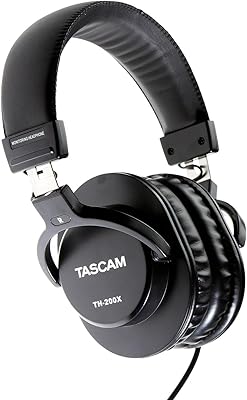
Tascam TH-200X Studio Headphones
74%
83%
Sound Isolation
79%
Build Quality
71%
Comfort & Fit
74%
Sound Accuracy
61%
Cable Quality
More
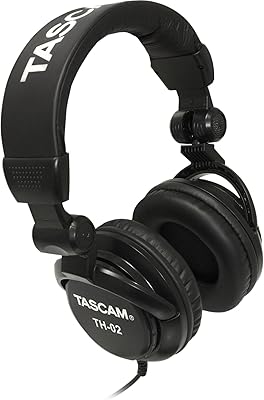
Tascam TH-02
Tascam TH-02
73%
83%
Sound Quality
91%
Value for Money
67%
Build Quality
63%
Comfort & Fit
74%
Passive Noise Isolation
More
Tascam TH-MX2 Closed-Back Studio Mixing Headphones
77%
83%
Sound Accuracy
78%
Sound Isolation
81%
Comfort & Fit
61%
Build Quality
88%
Value for Money
More
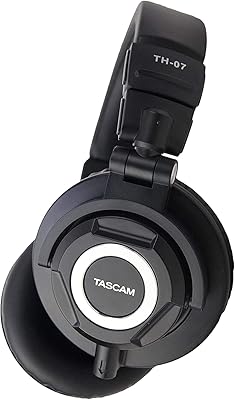
Tascam TH-07 High Definition Studio Monitor Headphones
85%
91%
Sound Quality
94%
Bass Response
88%
Comfort for Long Sessions
90%
Sound Isolation
85%
Build Quality
More
Koss Pro4S Studio Headphones
87%
93%
Sound Quality
88%
Comfort for Long Sessions
90%
Build Quality
81%
Noise Isolation
89%
Durability
More
Koss Pro4AA
Koss Pro4AA
72%
91%
Sound Accuracy
83%
Build Quality
67%
Comfort & Fit
74%
Noise Isolation
88%
Value for Money
More
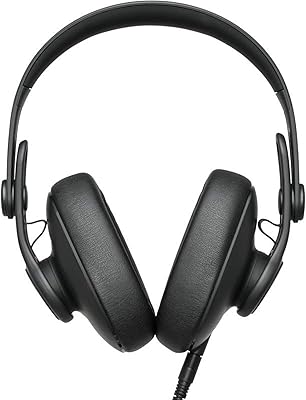
AKG K361 Closed-Back Studio Monitor Headphones
81%
91%
Sound Accuracy
89%
Driver Performance
92%
Frequency Balance
83%
Passive Isolation
88%
Value for Money
More
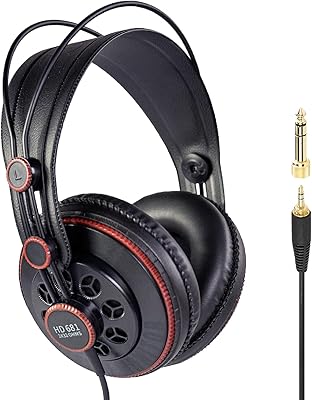
Superlux HD681
Superlux HD681
76%
91%
Audio Resolution
98%
Value for Money
88%
Soundstage Width
64%
Treble Accuracy
57%
Long-Term Comfort
More
Yamaha HPH-MT5 Studio Monitor Headphones
74%
83%
Sound Accuracy
71%
Bass Response
79%
Comfort & Fit
67%
Build Quality
74%
Passive Isolation
More
AKG K553 MKII Closed-Back Studio Headphones
75%
88%
Sound Accuracy
83%
Soundstage Width
62%
Comfort & Fit
66%
Build Quality
71%
Passive Isolation
More

FAQ

Yes, and it's straightforward. The headphones use a standard 3.5mm connector, and the included screw-on adapter converts that to a 6.35mm (quarter-inch) plug, which fits the headphone output on virtually every audio interface on the market. No extra cables needed.

Honestly, these studio headphones are better suited to tracking than critical mixing. The sound is accurate enough to give you a reliable picture of your recording, but if you're making final mix decisions — especially on low-end balance — you'd want a more neutral, reference-grade pair or to cross-check on monitors. For tracking vocals, instruments, or monitoring a podcast recording, they do the job well.

The closed-back design provides decent passive isolation. You won't hear much of the room around you at moderate listening volumes, and mic bleed during vocal takes is kept to a minimum. They're not going to seal out a loud HVAC system or a noisy street, but for a home studio environment they're more than adequate.

Most users find them comfortable for two to three hours of continuous wear. The leatherette pads create a good seal without feeling overly tight, and the adjustable headband distributes the weight reasonably well. That said, faux leather can trap heat, so in a warm room you may want to take short breaks.

The retractable cable design helps a lot here. It stays manageable and doesn't drape across your desk the way a fixed long cable does. It's one of those small quality-of-life features that becomes genuinely useful once you're actually using them in a workspace.

They're genuinely close competitors. Both sit in the entry-level studio monitoring category, both are closed-back dynamic headphones, and buyers who've used both tend to report similar levels of performance. The choice often comes down to brand preference or minor differences in fit and comfort rather than a clear winner on sound quality.

Yes. The 3.5mm connector works with any standard headphone jack. Keep in mind that most smartphones these days use USB-C or Lightning ports, so you may need a separate adapter on your end depending on your device. The inline volume control may not function on all phone models.

The retractable cable is built into the headphone design rather than being a detachable, user-replaceable cable. If the cable is damaged, repair options are limited and would likely require going through a service center or replacing the headphones entirely, which is a real consideration for heavy daily use.

They're not specifically designed as travel headphones and don't fold into a compact flat position the way some consumer pairs do. They come with a nylon carrying case, which offers basic protection in a bag, but if portability is your primary concern there are more travel-friendly options out there.

No, as of the latest product information available, this closed-back pair remains an active product in Tascam's lineup and has not been discontinued by the manufacturer. It has maintained a consistent presence in the market since its introduction and continues to be sold through major retailers.

Where to Buy