
Overview

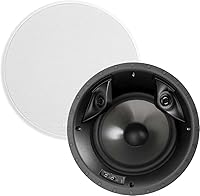
The Polk Audio 80 F/X RT In-Ceiling Speakers come from Polk's Vanishing Series — a line built specifically for home theater enthusiasts who refuse to compromise on sound but won't tolerate a cluttered room. These in-ceiling surrounds are designed strictly for left and right surround channels in 5.1 or 7.1 setups, not as front or center speakers. If you already run Polk's RTi floor or bookshelf speakers up front, this ceiling speaker set is the natural next step — Polk voices them to match. The circular grille is paintable, so once they're in the ceiling and painted over, they essentially vanish. Yes, this design dates to 2011, but the fundamentals hold up well.

Features & Benefits

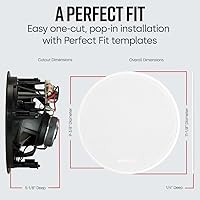
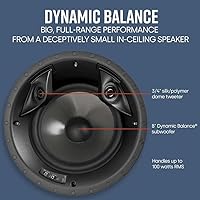
The Dynamic Balance woofer — at 8 inches — is the standout spec here. For a ceiling-mounted speaker, that driver size pulls considerably more low-end weight than the 5.5- or 6.5-inch woofers common at this form factor, though it's still a ceiling speaker, so don't expect subwoofer-level rumble from movie soundtracks. Each speaker also carries dual 0.75-inch tweeters, which broadens horizontal dispersion noticeably and helps surround effects land more naturally across a wide seating area. At 8-ohm impedance and 100 watts power handling, these in-ceiling surrounds pair without drama to virtually any mid-range AV receiver. The 4-3/4-inch mounting depth clears most standard ceiling cavities, though you'll want to measure before committing to the 9-3/8-inch cutout.

Best For

The Polk Vanishing Series pair makes the most sense for two kinds of buyers: those building a dedicated home theater from scratch, and Polk RTi owners who want their surrounds to match tonally. If you're wiring a purpose-built media room where wires go in the walls and aesthetics matter from day one, this ceiling speaker set is hard to beat on consistency. That said, be realistic about installation. Running speaker wire through ceiling joists is a genuine job — most buyers will want a professional installer, or at minimum, solid DIY experience with ceiling work. This is not a weekend afternoon project for someone who has never fished wire through a ceiling before.

User Feedback

Buyers who take the plunge on the Polk Vanishing Series pair generally come away satisfied with the sound — particularly the surround imaging and how cleanly these blend with RTi mains. The dual-tweeter design draws consistent praise for opening up the soundstage in a way that single-tweeter ceiling speakers rarely do. On the flip side, some installers flag that ceiling depth clearance can be tighter than the 4-3/4-inch spec suggests, depending on insulation and joist layout. A handful of long-term owners mention the grille paint adhesion can be finicky if surface prep isn't thorough. Value perception is split — buyers who prioritized tonal matching with their RTi setup feel it's justified, while those comparing purely on specs sometimes find the price premium hard to swallow.

Pros

  • The 8-inch woofer pulls noticeably more low-end presence than the 5.5- or 6-inch drivers found in most competing ceiling speakers.
  • Dual tweeters per speaker create wider, more even sound dispersion — surround effects actually travel across the room rather than pinpointing one spot.
  • Timber-matched voicing with the Polk RTi series makes front-to-back tonal consistency much easier to achieve than mixing brands.
  • The paintable grille is a genuine differentiator — once painted to match your ceiling, these in-ceiling surrounds are practically invisible.
  • At 8 ohms and 100 watts handling, they pair without fuss to virtually any mid-range AV receiver on the market.
  • The 4-3/4-inch mounting depth clears most standard ceiling cavities without requiring special framing work.
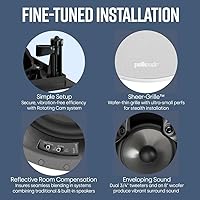
  • Each pair ships with a mounting template, which simplifies the cutout process considerably for DIY installers.
  • Long-term owners consistently report solid build durability, with no common complaints about driver failure or degradation over time.

Cons

  • Installation is a genuine project — running speaker wire through ceiling joists is not a job for first-time DIYers.
  • The 9-3/8-inch cutout diameter is on the larger side and requires careful planning before you start cutting drywall.
  • Grille paint adhesion can be finicky if the surface isn't properly prepped, and touch-ups after the fact are harder than they sound.
  • Bass performance, while above average for a ceiling speaker, still has real physical limits — don't expect these to replace a subwoofer.
  • Buyers without existing Polk RTi mains pay a premium for timber-matching they won't actually benefit from.
  • The design dates to 2011, and a few newer competitors offer updated driver technology at comparable or lower price points.
  • Ceiling depth clearance can occasionally run tighter than the spec suggests, depending on insulation thickness and joist layout.
  • The limited warranty coverage is modest relative to the premium positioning of this ceiling speaker set.

Ratings

The Polk Audio 80 F/X RT In-Ceiling Speakers earn their scores from an AI-driven analysis of verified global buyer reviews, with spam, incentivized feedback, and bot activity actively filtered out before scoring. Across thousands of real-world installations — from dedicated media rooms to living room theater builds — both the strengths and the friction points are reflected transparently in the ratings below. Buyers considering these in-ceiling surrounds will find an honest picture of where the Polk Vanishing Series pair genuinely delivers and where it asks for patience or compromise.

Sound Quality
88%
Reviewers consistently describe the surround imaging as precise and natural, particularly during movie playback where effects need to track across the room convincingly. The dual-tweeter layout earns frequent praise for producing an open, airy high-frequency presentation that single-tweeter ceiling speakers in this price range rarely match.
A portion of buyers note that the midrange can sound slightly forward at higher volumes, which becomes more apparent in smaller rooms with reflective surfaces. Those coming from high-end bookshelf surrounds occasionally find the overall resolution a step behind what a freestanding speaker at this price tier would deliver.
Bass Extension
74%
26%
For a ceiling-mounted speaker, the 8-inch woofer punches noticeably harder than the 5- and 6-inch drivers common at this form factor, giving action sequences and music a sense of body that genuinely surprises first-time listeners. Buyers who configure their receiver to cross over at 80Hz report that these in-ceiling surrounds hold their own convincingly within that range.
Expectations need to be calibrated going in — this is still a ceiling speaker in an open baffle environment, and low-frequency extension below 60Hz drops off noticeably without subwoofer support. Buyers who expected near-subwoofer bass from the 8-inch driver came away disappointed, and a handful of reviews flag that heavy LFE movie scenes reveal the woofer's physical limits quickly.
Surround Imaging
91%
This is where the Polk Vanishing Series pair earns its strongest marks — buyers in 5.1 and 7.1 setups consistently report that surround effects feel spatially convincing and wrap around the listening area rather than pinpointing a single spot overhead. The dual tweeters play a direct role here, spreading high-frequency cues across a wider arc than a single-tweeter design achieves.
In rooms with unusually high ceilings — above 10 feet — a few buyers note that the surround field can feel more diffuse than directional, which slightly undermines the precision of object-based audio formats. Placement relative to the primary seating position matters more than the product literature suggests, and off-axis listeners in wider rooms may notice the effect.
RTi Tonal Matching
93%
Buyers who specifically purchased these to complement existing Polk RTi floor or bookshelf mains report that the tonal handoff between front and surround channels is remarkably cohesive — voices and instruments carry consistent character as they pan across the room. This is a niche advantage, but for RTi owners it's a genuine differentiator that alternative ceiling speakers simply cannot replicate.
The timber-matching benefit is entirely irrelevant to buyers without RTi mains, and a few reviewers who purchased this ceiling speaker set without that context felt they were overpaying for a feature they couldn't use. Polk could do more to clarify this distinction in product positioning so buyers make informed decisions upfront.
Installation Experience
61%
39%
The included mounting template is genuinely useful and reduces layout errors during ceiling cutout — a detail that experienced DIYers appreciate. The spring-clip wiring terminals are straightforward to use once the speaker is in position, and the overall physical fit into a standard joist bay is manageable for anyone with prior ceiling installation experience.
Multiple reviews flag that the actual installation experience is significantly more demanding than the product description implies, particularly for buyers who underestimated the challenge of fishing wire through insulated ceiling cavities. Ceiling depth clearance also runs tighter than the 4-3/4-inch spec in some homes, and at least a portion of buyers needed professional help to complete what they thought would be a DIY weekend project.
Grille & Aesthetics
82%
18%
Once properly painted, the sheer grille essentially disappears into a white or off-white ceiling — buyers who invested the time in proper surface prep consistently describe the result as cleaner and less intrusive than they expected. The circular profile sits flush without any visible overhang, which matters in rooms where the ceiling is a design focal point.
Grille paint adhesion is a recurring complaint among buyers who skipped primer or used thick coats — peeling within six months is mentioned often enough to be a pattern rather than an outlier. Polk includes painting instructions, but they're easy to overlook in the box, and the margin for error is lower than most buyers anticipate.
Build Quality
84%
Long-term owners who have had this ceiling speaker set installed for three or more years report no driver failures, grille corrosion issues, or structural loosening in the majority of cases, which speaks to solid underlying construction for a 2011-era product. The metal grille feels substantially made compared to the plastic alternatives found on lower-tier in-ceiling speakers.
The speaker basket and internal bracing feel adequate rather than exceptional when handled directly, and a few buyers who installed multiple pairs noticed minor unit-to-unit variation in driver positioning that required adjustment. At this price point, a tighter manufacturing tolerance would be expected by some buyers.
Receiver Compatibility
89%
The 8-ohm nominal impedance and 100-watt power handling put these in-ceiling surrounds squarely in the compatibility sweet spot for virtually every major AV receiver brand — Denon, Yamaha, Onkyo, Marantz — without any impedance mismatch concerns. Buyers report clean, stable performance at moderate to high listening levels without audible strain.
A small number of buyers using older or budget receivers noticed slight brightness at higher volumes, suggesting the speakers reveal amplifier quality differences more than expected. There are no complex impedance dips reported, but pairing with a receiver below 50 watts per channel is not recommended for larger room installations.
Value for Money
67%
33%
For Polk RTi system owners, the tonal consistency benefit represents real, tangible value that justifies a portion of the premium over generic in-ceiling alternatives. Buyers who prioritize aesthetics and long-term build reliability over raw specification comparisons tend to feel their investment was well-placed after a year or more of use.
Buyers comparing purely on specs find the price hard to defend against newer in-ceiling competitors that offer comparable or updated driver configurations at meaningfully lower price points. The 2011 design origin is a recurring point of friction in value discussions, with several reviewers explicitly noting they felt they were paying for brand heritage as much as current engineering.
Packaging & Documentation
78%
22%
The box arrives well-protected, and the mounting template and owner's manual are practical additions that reduce guesswork during installation — small details that budget-tier ceiling speakers typically omit. The grille painting instruction sheet is a thoughtful inclusion that buyers with no prior experience genuinely appreciate finding.
Some buyers report that the documentation, while present, is brief on troubleshooting guidance for installation edge cases like insulated ceilings or non-standard joist spacing. A more detailed digital resource or QR-linked installation guide would meaningfully reduce the volume of installation-related complaints.
Dispersion & Coverage
86%
The dual-tweeter arrangement produces noticeably wider horizontal coverage than single-tweeter ceiling alternatives, which translates to a more consistent listening experience for viewers seated away from the center sweet spot. Buyers in open-plan living rooms specifically call out this characteristic as a practical day-to-day advantage.
Vertical dispersion — downward projection toward the floor — is less even in rooms with higher-than-standard ceiling heights, and buyers in rooms above 9 feet note that the sound can feel slightly distant and diffuse at the primary seating position. Angling the tweeters helps but requires careful adjustment during installation.
Longevity & Durability
83%
Buyers who installed these in-ceiling surrounds five or more years ago and left reviews report that the drivers and grilles remain in good functional condition in the majority of cases, which is a meaningful endorsement for a product that lives permanently in a ceiling. No widespread reports of spider or surround deterioration have emerged in long-term feedback.
A subset of long-term owners note that the grille's paint coat can develop hairline crazing over several years in rooms with significant humidity cycling — kitchens adjacent to media rooms being the most commonly cited environment. The limited warranty offers modest recourse for buyers who encounter issues outside the initial ownership period.

Suitable for:

The Polk Audio 80 F/X RT In-Ceiling Speakers are built for a specific kind of buyer, and that buyer knows exactly what they want: clean walls, a proper surround setup, and speakers that don't stick out like an afterthought. They're the right call for homeowners who are wiring a dedicated media room or a living room home theater and want the surrounds completely out of sight without sacrificing sound quality. Existing Polk RTi owners get the most obvious benefit — the timber-matched voicing means these ceiling surrounds blend with RTi floor or bookshelf mains in a way that mixing brands rarely achieves. They're also well-suited to buyers who are already hiring an AV installer or who are confident enough with ceiling work to run wire through joists themselves. If aesthetics and tonal consistency across your whole system matter as much as raw performance, this ceiling speaker set makes a compelling, well-reasoned choice.

Not suitable for:

The Polk Audio 80 F/X RT In-Ceiling Speakers are a poor fit for anyone expecting a casual, plug-and-play install — ceiling speaker runs require cutting drywall, fishing wire through joists, and sometimes dealing with insulation, and that's before you even think about painting the grille. Buyers on a tight budget will likely find the asking price difficult to justify when solid performing in-ceiling surrounds exist at considerably lower price points. These are also strictly surround speakers — using them as front left, right, or center channels is not what they're designed for, and the results would disappoint. Anyone who doesn't already own Polk RTi speakers loses much of the core value proposition, since the timber-matching advantage simply doesn't apply when your mains are from a different brand or family. Renters, apartment dwellers, or anyone in a room where ceiling modifications aren't an option should look elsewhere entirely.

Specifications

  • Speaker Type: 2-way in-ceiling design, sold as a matched pair intended for left and right surround channels in home theater configurations.
  • Woofer Size: Each speaker houses an 8-inch Dynamic Balance woofer for extended low-frequency response relative to typical ceiling-mount drivers.
  • Tweeter Count: Each speaker includes two 0.75-inch tweeters, providing broader horizontal sound dispersion than single-tweeter ceiling designs.
  • Power Handling: Rated at 100 watts maximum power handling per speaker, suitable for pairing with most mid-range and upper-tier AV receivers.
  • Impedance: Nominal impedance is 8 ohms, making these in-ceiling surrounds broadly compatible with standard home theater amplifiers and receivers.
  • Frequency Response: Upper frequency response reaches 25,000 Hz, covering the full audible range and extending slightly into ultrasonic territory.
  • Ceiling Cutout: Installation requires a circular ceiling cutout of 9-3/8-inch diameter; a mounting template is included in the box to guide cutting.
  • Mounting Depth: Required mounting depth is 4-3/4 inches, which fits most standard ceiling joist cavities but should be measured before cutting.
  • Grille: White sheer metal grille is included and designed to accept standard latex ceiling paint for blending with room interiors.
  • Connectivity: Wired connection via spring-clip or compatible binding post terminals; no wireless or Bluetooth capability is included.
  • Surround Config: Compatible with 5.1 and 7.1 surround sound channel configurations when used as designated surround speakers.
  • Package Contents: Box includes 2 round in-ceiling surround speakers, 2 white metal grilles, a mounting template, owner's manual, and grille painting instructions.
  • Item Weight: The pair weighs approximately 12.33 pounds total, reflecting the robust driver assembly inside each enclosure.
  • Speaker Shape: Circular profile with a flush-mount design intended to sit flat against the ceiling surface once installed.
  • Compatibility: Timber-matched to Polk Audio's RTi speaker series, ensuring consistent tonal character when used alongside RTi floor or bookshelf mains.
  • Warranty: Covered by Polk Audio's limited warranty; buyers should verify current warranty terms directly with Polk Audio or the point of purchase.
  • Product Dimensions: Packaged dimensions are approximately 12.75-inch depth by 25-inch width by 7.5-inch height for the boxed pair.
  • Manufacturer: Designed and sold by Polk Audio, a brand with decades of history in home audio speaker engineering based in the United States.

Related Reviews
Polk Audio 265-RT In-Wall Speaker
82%
91%
Sound Quality
88%
Installation Experience
86%
Build Quality
93%
Grille & Aesthetics
71%
Bass Performance
More
Polk Audio 65-RT 6.5-inch In-Wall Speaker
80%
88%
Sound Quality
83%
Bass Performance
71%
Installation Experience
79%
Value for Money
81%
Build Quality
More
Polk Audio MC60 6.5-inch In-Ceiling Speaker
80%
88%
Sound Clarity
91%
Installation Ease
83%
Moisture Resistance
72%
Value for Money
79%
Tweeter Performance
More
Polk Audio 255C-RT In-Wall Center Speaker
81%
91%
Dialogue Clarity
61%
Bass Performance
78%
Installation Experience
88%
Aesthetic Integration
83%
Build Quality
More
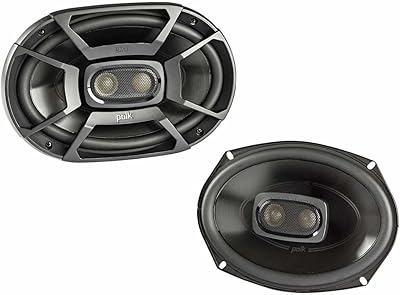
Polk Audio DB692 6x9 Marine Coaxial Speakers
81%
86%
Sound Clarity
71%
Bass Response
93%
Weather Resistance
81%
Build Quality
58%
Grille Quality
More
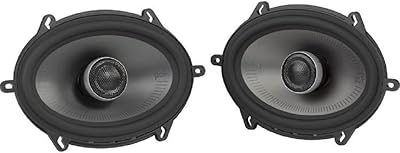
Polk Audio MM572 Mobile Monitor Series 5″ x 7″ Coaxial Speaker
88%
91%
Sound Quality
88%
Durability
87%
Ease of Installation
93%
Waterproof Performance
84%
Bass Response
More
Polk Audio T15
Polk Audio T15
82%
88%
Sound Clarity
61%
Bass Response
79%
Build Quality
93%
Value for Money
91%
Ease of Setup
More
Polk Audio TL1 Center Channel Speaker
78%
88%
Dialogue Clarity
52%
Bass & Low-End Response
83%
Value for Money
79%
Build Quality & Finish
91%
AV Receiver Compatibility
More
Polk Audio Reserve R700 Tower Speaker
86%
93%
Sound Quality
90%
Bass Performance
88%
Build Quality
82%
Ease of Setup
87%
Design and Aesthetics
More
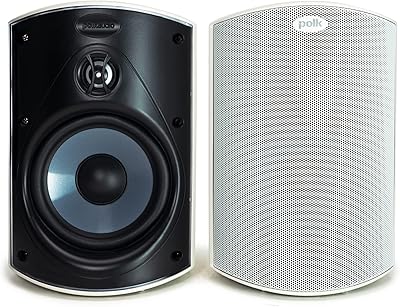
Polk Audio Reserve R200 Bookshelf Speaker
87%
94%
Sound Quality
89%
Bass Performance
90%
Build Quality
85%
Ease of Setup
92%
Value for Money
More

FAQ

They come as a matched pair — one left and one right surround speaker are included in a single purchase. Two grilles, a mounting template, and a manual are also in the box, so you have everything you need to get started on the physical installation.

Technically you can wire them that way, but it's not what they're designed for and the results will likely disappoint you. The Polk Vanishing Series pair is voiced and engineered specifically for surround channel duties in a 5.1 or 7.1 setup. For front channels, you'd be better served by dedicated in-ceiling speakers built for that role.

That's actually the strongest argument for choosing this ceiling speaker set if you're already in the Polk RTi ecosystem. Polk specifically voices these to match the RTi series tonally, so the transition from your front mains to the surround channels sounds consistent rather than jarring. It's one of the more practical advantages of sticking within a single brand family.

A confident DIYer with experience fishing wire through walls or ceilings can absolutely handle it, but don't underestimate the job. You'll need to run speaker wire through your ceiling joists, cut a precise 9-3/8-inch hole in the drywall, and deal with whatever insulation or framing is up there. If you've never done ceiling wire runs before, hiring an AV installer is a genuinely worthwhile investment.

Any standard home theater AV receiver with 8-ohm speaker outputs will work fine. At 100 watts power handling and 8-ohm impedance, the Polk Audio 80 F/X RT In-Ceiling Speakers are not particularly demanding — most mid-range receivers from brands like Denon, Yamaha, or Onkyo will drive them without issue.

Polk includes a grille painting instruction sheet in the box, and it's worth reading carefully before you start. The key is proper surface prep — light sanding and a bonding primer before applying latex ceiling paint. Skipping prep is the most common reason people end up with peeling or uneven results. Use thin coats and let each one dry fully.

For most standard drywall ceilings with open joist bays, yes — but it's not a universal guarantee. If your ceiling has blown-in insulation packed tightly, or if there's HVAC ductwork or other obstructions in the bay you planned to use, clearance can get tight quickly. Always measure the actual available depth in your specific installation location before cutting.

You'll want a subwoofer. The 8-inch driver does a credible job for a ceiling-mounted speaker, but a ceiling enclosure has real physical limits on bass extension. In a proper home theater setup, your AV receiver should be configured to send low-frequency effects to a dedicated sub rather than relying on these in-ceiling surrounds for it.

The age is worth acknowledging, but it doesn't make them a bad buy. Speaker driver technology doesn't move as fast as consumer electronics, and the core engineering here — the Dynamic Balance woofer, dual-tweeter layout, and RTi timber-matching — still holds up against current competitors at a similar price point. Where newer options might edge ahead is in tweeter material refinements or updated crossover designs, so it's worth comparing a few current alternatives before committing.

No — these are not rated for moisture exposure and Polk explicitly marks them as non-waterproof. Installing this ceiling speaker set in a bathroom, covered patio, or any humid environment risks driver corrosion and grille rust over time. For those locations, you'd need speakers specifically designed and rated for damp or wet conditions.

Where to Buy