Overview

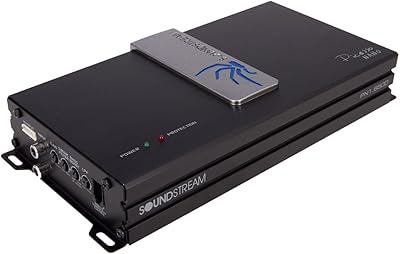
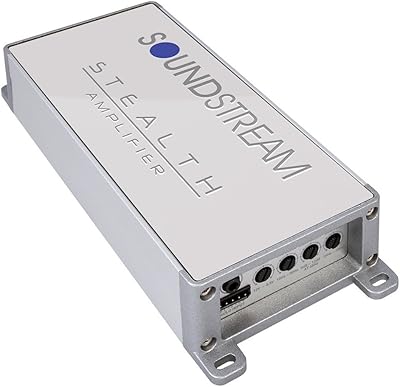
The Soundstream PN1.1000D 1000W Monoblock Amplifier is Soundstream's answer to a very real problem in car audio: how do you get serious bass output when you barely have room to work with? Part of the Picasso Nano Series, this mono amp was designed with Class D efficiency at its core, keeping heat low and current draw manageable without sacrificing output. The chassis measures just 10.25 x 4.75 x 1.5 inches — small enough to tuck under most seats. With a 4.2-star rating across 98 reviews, it has a decent track record, though that sample size warrants some caution. This is a capable mid-range unit, not a boutique audiophile build.
Features & Benefits

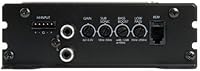
The Picasso Nano amplifier packs a lot of practical engineering into a small footprint. The variable low-pass filter, sweepable from 50 to 250 Hz, lets you dial in exactly where your subwoofer kicks in rather than accepting a fixed cutoff. There's also a subsonic filter running from 10 to 50 Hz, which protects drivers from damaging frequencies they can't really reproduce anyway. Power-wise, the amp scales with your wiring: 350 watts at 4 ohms, 600 at 2, and a full 1000 at 1 ohm RMS. The PWM MOSFET supply runs efficiently across a 9–16V operating range, and the wide input sensitivity handles everything from a stock radio output to a high-powered aftermarket deck.

Best For

This compact monoblock is a natural fit for anyone putting together their first or second car audio build while working within a real-world budget. If your install space is tight — under a seat, in a shallow trunk corner, or inside a custom enclosure — the slim profile makes placement far less of a headache than with full-size amps. It's particularly well-suited for single-sub setups wired to 1 or 2 ohms, where it delivers its strongest output. The filter controls are simple enough that you don't need a signal processor background to dial things in. Buyers coming from a factory system will notice an immediate and significant jump in bass presence.

User Feedback

With just under 100 ratings, the review pool for this mono amp is modest, so take the trends with appropriate perspective. That said, recurring positives focus on output relative to size — buyers are generally impressed that something this small moves that much air. Installation gets mixed marks; most DIYers found the wiring straightforward, but a few noted that the terminal blocks felt a bit lightweight for the power levels involved. Thermal performance rarely comes up as a major complaint, which speaks to the Class D design doing its job. Longer-term reliability data is thin, though some owners report years of trouble-free use. Real-world wattage seems to align reasonably well with rated specs, which is not always a given at this price tier.

Pros

  • Extremely compact chassis makes it one of the easier mono amps to fit in space-constrained vehicles.
  • Class D topology keeps heat manageable, which matters in enclosed install locations.
  • Scales cleanly across impedance loads, giving installers real flexibility in sub wiring choices.
  • The wide input sensitivity range plays nicely with both factory head units and aftermarket decks.
  • Subsonic filter helps protect your subwoofer from frequencies that cause damage without adding output.
  • Real-world wattage reportedly tracks close to rated specs, which is not always guaranteed at this price point.
  • Surface mount design simplifies install significantly compared to amps requiring recessed or bracketed mounting.
  • Solid value proposition for first or second car audio builds where budget discipline matters.

Cons

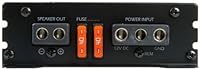
  • Wiring terminals feel lightweight relative to the power levels this mono amp is rated to handle.
  • With fewer than 100 reviews available, long-term reliability trends are difficult to assess with confidence.
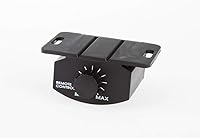
  • No wireless remote or bass knob included, which limits convenient level adjustments from the driver seat.
  • Build material quality reflects the price tier and may not hold up as well under years of heavy use.
  • Single-channel output limits this amp strictly to subwoofer duty; it cannot power full-range speakers.
  • Filter controls, while simple, lack the granularity that more experienced installers often want for fine-tuning.
  • Thermal performance under extended high-volume sessions in hot climates has not been thoroughly documented by reviewers.

Ratings

Our AI rating system analyzed verified global buyer reviews for the Soundstream PN1.1000D 1000W Monoblock Amplifier, actively filtering out incentivized, bot-generated, and outlier feedback to surface what real installers and car audio enthusiasts consistently experienced. Scores reflect a transparent picture of both where this compact monoblock punches above its weight and where it falls short of expectations. Every category below is grounded in patterns from actual ownership — not marketing claims.

Power Output
83%
Buyers running single subwoofers at 1 or 2 ohms consistently report that this mono amp delivers noticeably strong bass output relative to its price point. For daily drivers upgrading from a weak factory system, the real-world impact is immediate and satisfying without needing to chase exotic wiring configurations.
Some users found that rated wattage figures are optimistic under real-world vehicle electrical conditions, particularly at 4 ohms where output feels modest. Buyers expecting full competition-grade pressure at every impedance setting may come away slightly underwhelmed at higher loads.
Size & Form Factor
91%
The slim 1.5-inch height and compact footprint consistently draw praise from installers who manage space-constrained builds — under rear seats, shallow trunk walls, or tight custom enclosures. For many buyers this size advantage was the primary reason they chose this amp over similarly priced competitors.
The compact chassis, while a clear strength, does limit heat dissipation surface area compared to full-size amps, which a handful of users noticed during sustained high-volume sessions in hot climates. Installers in very warm regions should plan ventilation carefully.
Installation Ease
78%
22%
Most first-time and intermediate DIY installers found the setup process straightforward, appreciating the surface mount design and the generous input sensitivity range that eliminates the need for precise gain staging with a factory head unit. The labeling on controls is clear enough that most buyers did not need to reference a manual repeatedly.
A recurring complaint involves the wiring terminals, which several reviewers described as feeling undersized and slightly flimsy for higher-gauge power cables appropriate to this amp's output class. Torquing down thick wiring can feel uncertain, which is frustrating when you are confident in every other part of the install.
Build Quality
62%
38%
The chassis feels solid enough for daily use in a typical passenger vehicle, and the overall assembly does not rattle or flex under handling. For buyers treating this as a functional mid-tier component rather than a collector-grade unit, the construction is adequate for the price segment.
Longer-term owners are more divided — some report years of trouble-free operation while others note early failure points that suggest inconsistency in component tolerances. The terminal blocks and external housing materials reflect the cost-conscious manufacturing evident across this price tier.
Thermal Performance
74%
26%
Class D topology genuinely helps here, keeping the unit cooler than a comparable Class A/B amp under normal listening loads. Buyers who install it with reasonable airflow around the chassis rarely report heat-related shutdowns during typical daily driving.
Sustained high-volume use — particularly in summer heat with limited airflow — has caused thermal protection to engage for some users. The compact size limits how much heat the chassis can passively shed, so installation location planning matters more than it would with a larger unit.
Filter Controls
79%
21%
The sweepable low-pass filter covering 50 to 250 Hz gives users meaningful control over where their subwoofer kicks in, and the subsonic filter is a genuinely useful inclusion that many budget amps omit entirely. First-time builders especially appreciated having both tools available without needing an external processor.
Experienced installers who prefer more granular tuning options — adjustable crossover slopes, phase control, or a dedicated bass boost — will find the onboard controls fairly minimal. The controls do what they need to do, but there is not much room to fine-tune a demanding setup.
Compatibility
86%
The 200mV to 6V input sensitivity window is wide enough to work with a factory radio straight out of the box in most cases, which is a real convenience for buyers who are not ready to swap their head unit. Aftermarket deck owners report equally clean pairing without sensitivity or noise issues.
A small number of users running very low-output factory systems — particularly certain OEM amplified setups — needed a line output converter to get a usable signal level. This is a niche scenario, but worth flagging for buyers with unusual factory audio configurations.
Value for Money
84%
For buyers who need reliable mono amplifier power in a tight space without stretching their budget significantly, this compact monoblock delivers a strong return on investment. The combination of output at 1 ohm, the subsonic filter inclusion, and the compact size is genuinely hard to beat in this price range.
Buyers who push the amp to its limits regularly or expect it to last many years under demanding conditions may find they need to replace or upgrade it sooner than a higher-investment alternative. The value calculation shifts depending on how hard and how long you intend to run it.
Noise Floor
71%
29%
Under clean install conditions with properly routed power and signal cables, most users report a quiet background with no persistent hum or whine. The amp does not appear to introduce significant self-noise when the system is idle or at low volumes.
Alternator whine showed up in a handful of installs, which is often a grounding or cable routing issue rather than an inherent flaw in the amp — but it is worth noting since troubleshooting it can be tedious for less experienced installers. Proper grounding discipline is essential with this unit.
Impedance Flexibility
76%
24%
Supporting stable operation at 1, 2, and 4 ohms gives buyers useful flexibility when pairing this mono amp with different subwoofer configurations or dual voice coil drivers wired in series or parallel. You are not locked into a single setup if your plans change.
The power difference between impedance loads is significant — 350W at 4 ohms versus 1000W at 1 ohm is a substantial gap. Buyers who end up running a 4-ohm load without realizing the output drop may feel the amp underperforms relative to its rated maximum.
Packaging & Accessories
58%
42%
The unit arrives well-protected and is accurately represented in terms of physical size and included hardware. For buyers who just need the amplifier itself and already have their wiring kit sorted, the packaging does its job without issue.
No remote bass knob, no wiring kit, and no meaningful accessories are included in the box, which feels lean even for this price tier. First-time buyers may not realize they need to budget separately for a wiring kit, RCA cables, and potentially a bass controller before the system is functional.
Long-Term Reliability
61%
39%
A portion of owners report using this mono amp for multiple years without incident, suggesting that when installed correctly with adequate fusing and airflow, it can hold up reasonably well for moderate daily use. The Class D efficiency likely helps reduce thermal stress over time.
The review pool is still relatively small at under 100 ratings, which makes it difficult to draw confident conclusions about multi-year durability trends. A handful of accounts describe premature failures, and without a larger data set, it is impossible to determine whether those reflect isolated incidents or a systemic pattern.

Suitable for:

The Soundstream PN1.1000D 1000W Monoblock Amplifier is a strong match for DIY car audio builders who need real bass output but are working within a tight budget and tighter physical space. If your install location is under a rear seat, in a shallow trunk corner, or inside a snug custom box, the compact footprint means you're not compromising on placement. It's especially practical for single-subwoofer setups wired at 1 or 2 ohms, where the amp delivers its peak output and offers the most value. Buyers upgrading from a weak factory system will find the bass improvement substantial and immediately noticeable. The simple, approachable filter controls also make this a comfortable choice for first-time installers who don't want to wrestle with a complicated signal chain.
Not suitable for:

The Soundstream PN1.1000D 1000W Monoblock Amplifier is not the right tool for serious audio enthusiasts chasing precise, competition-grade sound quality or maximum build longevity under sustained heavy loads. If you're running multiple subwoofers or planning a high-demand system that pushes components hard day after day, the terminal build quality and thermal headroom of this amp may become limiting factors over time. Audiophiles who prioritize ultra-low distortion figures and refined internal components will find this compact monoblock underwhelming compared to higher-end alternatives. It's also not ideal for installers who need advanced signal processing features, as the onboard controls are intentionally basic. Buyers expecting a no-compromise, long-term workhorse for a demanding build should invest in a more robust unit.
Specifications

  • Amplifier Class: This amplifier uses a Class D topology, which prioritizes energy efficiency and reduced heat output compared to Class A/B designs.
  • Output Power: Rated at 1000W RMS at 1 ohm, 600W RMS at 2 ohms, and 350W RMS at 4 ohms on a single channel.
  • Channels: Single-channel monoblock configuration, intended exclusively for subwoofer or bass driver applications.
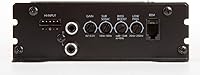
  • Low-Pass Filter: Variable low-pass filter sweeps from 50 to 250 Hz at a 12 dB/octave slope, allowing precise subwoofer frequency rolloff control.
  • High-Pass Filter: Variable subsonic high-pass filter ranges from 10 to 50 Hz at 12 dB/octave to block damaging infrasonic frequencies.
  • Input Sensitivity: Accepts input signals ranging from 200mV to 6V, making it compatible with both factory-installed and aftermarket head units.
  • Power Supply: Pulse Width Modulated MOSFET power supply manages current conversion efficiently across the supported operating voltage range.
  • Operating Voltage: Designed to operate reliably between 9V and 16V DC, covering standard automotive electrical system conditions.
  • Dimensions: The chassis measures 10.25 x 4.75 x 1.5 inches, making it one of the more compact options in its power class.
  • Weight: Unit weighs 5 pounds, which is notably light for a 1000W-rated monoblock amplifier.
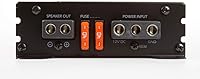
  • Mounting Type: Surface mount design allows the unit to be secured directly to flat surfaces such as trunk floors, panels, or custom enclosures.
  • Wireless Remote: No wireless remote or external bass level controller is included in the package.
  • Brand: Manufactured by Soundstream, a brand with a long presence in the consumer car audio market.
  • Model Number: Official model designation is PN1.1000D, part of the Picasso Nano Series product line.
  • UPC: The product UPC is 709483050204, with a Global Trade Identification Number of 00709483050204.

Related Reviews
Soundstream PN4.1000D 1000W 4-Channel Class D Amplifier
85%
87%
Performance
92%
Value for Money
85%
Build Quality
89%
Ease of Installation
83%
Power Output
More
Soundstream PN1.650D Monoblock Picasso Nano Class-D Amplifier
84%
88%
Sound Quality
91%
Ease of Installation
85%
Power Output
87%
Build Quality
76%
Thermal Performance
More
Soundstream ST2.1000D Stealth Series 1000W Class D 2 Channel Amplifier
85%
91%
Performance & Power Output
80%
Heat Dissipation & Durability
85%
Installation & Setup
88%
Design & Compactness
89%
Sound Clarity & Audio Quality
More
Soundstream SM4.1000D 4-Channel Marine Amplifier
71%
74%
Sound Quality
71%
Marine Durability
42%
Power Output Accuracy
88%
Ease of Installation
77%
Value for Money
More
Soundstream ST4.1000DB Stealth Series 1000W Class D 4-Channel Amplifier
85%
94%
Power Output
92%
Sound Clarity
88%
Installation Ease
58%
Heat Management
91%
Build Quality
More
NVX VAD27001 Monoblock Class D Amplifier
79%
91%
Power Output Accuracy
88%
Build Quality
72%
Thermal Management
69%
Installation Experience
86%
Bass Control & Tuning
More
Audiobank P1601 Monoblock Car Amplifier
73%
84%
Value for Money
57%
Power Output Accuracy
88%
Installation Experience
61%
Thermal Management
76%
Bass Quality
More
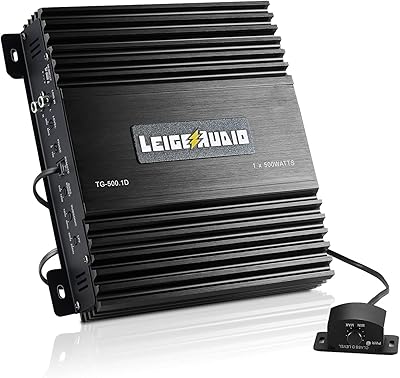
LEIGESAUDIO 500 Watts MonoBlock Amplifier
84%
91%
Power Output
89%
Bass Performance
62%
Ease of Installation
85%
Heat Management
90%
Build Quality
More
Soundstream T5.2500DL 5-Channel Amplifier
82%
91%
Power Output
88%
Speaker Compatibility
85%
Build Quality
62%
Thermal Performance
90%
Audio Clarity
More
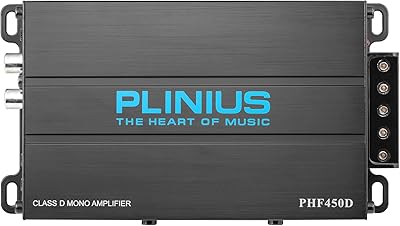
LKC PHF450D Car Audio Monoblock Amplifier
88%
91%
Power Output (2 Ohms)
87%
Power Output (4 Ohms)
93%
Heat Dissipation
88%
Build Quality
85%
Ease of Integration
More

FAQ

Yes, it should. The input sensitivity range runs from 200mV all the way up to 6V, which covers the low-voltage outputs typical of factory head units. You may need a line output converter if your factory radio lacks preamp outputs, but the amp itself is compatible on the sensitivity side.

You can, but keep in mind the amp produces 350W RMS at 4 ohms, which is considerably less than its 1-ohm rating. If you want to get closer to the full output potential, wiring your sub to a 1 or 2-ohm load will make a much bigger difference than the spec sheet numbers suggest.

Most DIY installers find it manageable. The controls are straightforward, the surface mount design means no complicated bracket work, and the wide input sensitivity removes the need for precise gain matching in most setups. The terminal blocks are functional, though a few users note they feel a bit lightweight for higher-gauge wiring.

Class D amps are generally efficient enough to stay cooler than Class A/B units under similar loads, and this mono amp follows that pattern. Under normal listening conditions most users don't report overheating issues, though like any amp it needs adequate airflow around it — avoid fully enclosing it without ventilation.

For a 1000W-rated amp, a 4-gauge power wire and a 100-amp inline fuse close to the battery are standard recommendations. Always check the manual for Soundstream's specific guidance, but those figures are the industry baseline for this power class.

No remote bass knob is included in the box, and there is no wireless controller either. If being able to adjust bass level from the driver seat is important to you, you would need to source a compatible aftermarket bass knob separately — check Soundstream's accessory lineup for compatibility.

No. This is already a monoblock amplifier, meaning it is a single-channel unit by design. Bridging only applies to stereo or multi-channel amplifiers. The PN1.1000D delivers its maximum output as a standalone mono unit at 1 ohm.

The subsonic filter cuts frequencies below around 10 to 50 Hz — sounds so low your subwoofer cannot meaningfully reproduce them anyway. Without a subsonic filter active, those frequencies cause your sub's cone to overexcite and move excessively, which can shorten driver life. If you are running a ported enclosure especially, using the subsonic filter is a smart habit.

At 10.25 x 4.75 x 1.5 inches, this compact monoblock is genuinely slim. Whether it fits under your specific seat depends on your vehicle's clearance, but in most sedans and many SUVs with seats that have at least 2 inches of ground clearance, it slides in cleanly. Measure your space before buying to be safe.

Soundstream has been around in the car audio space since the 1980s and occupies a mid-range position in the market. The Picasso Nano amplifier sits toward the more accessible end of their lineup, so it reflects that tier in build quality. For casual to moderate use, the brand has a reasonable track record, but it is not in the same league as higher-end specialist brands if long-term durability under heavy loads is your priority.

Where to Buy